JOYAL SAJI
JOYAL SAJI
 Definition :-
Marginal Costing is defined as the amount at any
given volume of output by which aggregate costs
can be changed if the volume of output is increased
or decreased by one unit.
 Meaning :-
Marginal Costing is the technique of controlling by
bringing out the relationship between profit &
volume.
 The concept of Marginal Costing is also known as
variable costing because it is based on the behavior of
costs that vary with the volume of output
 Hence, Marginal Costing classifies costs into 2 :-
1. Fixed Cost
2. Variable Cost
 Fixed Cost :-
The expenditure remains same irrespective of output.
This includes costs which a firm has to incur irrespective
of units of production
 Eg :- Building rent
 Variable Cost :-
As the name suggests variable cost varies directly with
output. It is directly proportional to volume of production
 Eg :- Cost of raw materials
 Fixed cost & Variable cost
 Only variable Costs are considered to calculate the
cost per unit of a product
 Cost Controlling
 Shows the difference between sales and variable
cost known as Contribution
 Fixed costs are excluded in marginal costing as they
are expenses belonging to P&L a/c
 Useful technique for Export firms
 Selling price is determined on the basis of marginal
costs
 Constant nature of marginal cost
 Pricing decisions
 Determination of profits
 Fixing responsibility
 Cost control
 Cost reporting
 Helps determine breakeven point
 Decision making
 Difficult to separate Fixed & Variable costs
 Over-emphasis on sales
 Fixed costs ignored
 Not suitable for long run & to huge industries
 Lacks efficiency in Cost control
 Not applicable to contract costing
 Ignores Fixed costs in valuation of stock of WIP &
finished goods
 Not recognized by Income tax authorities
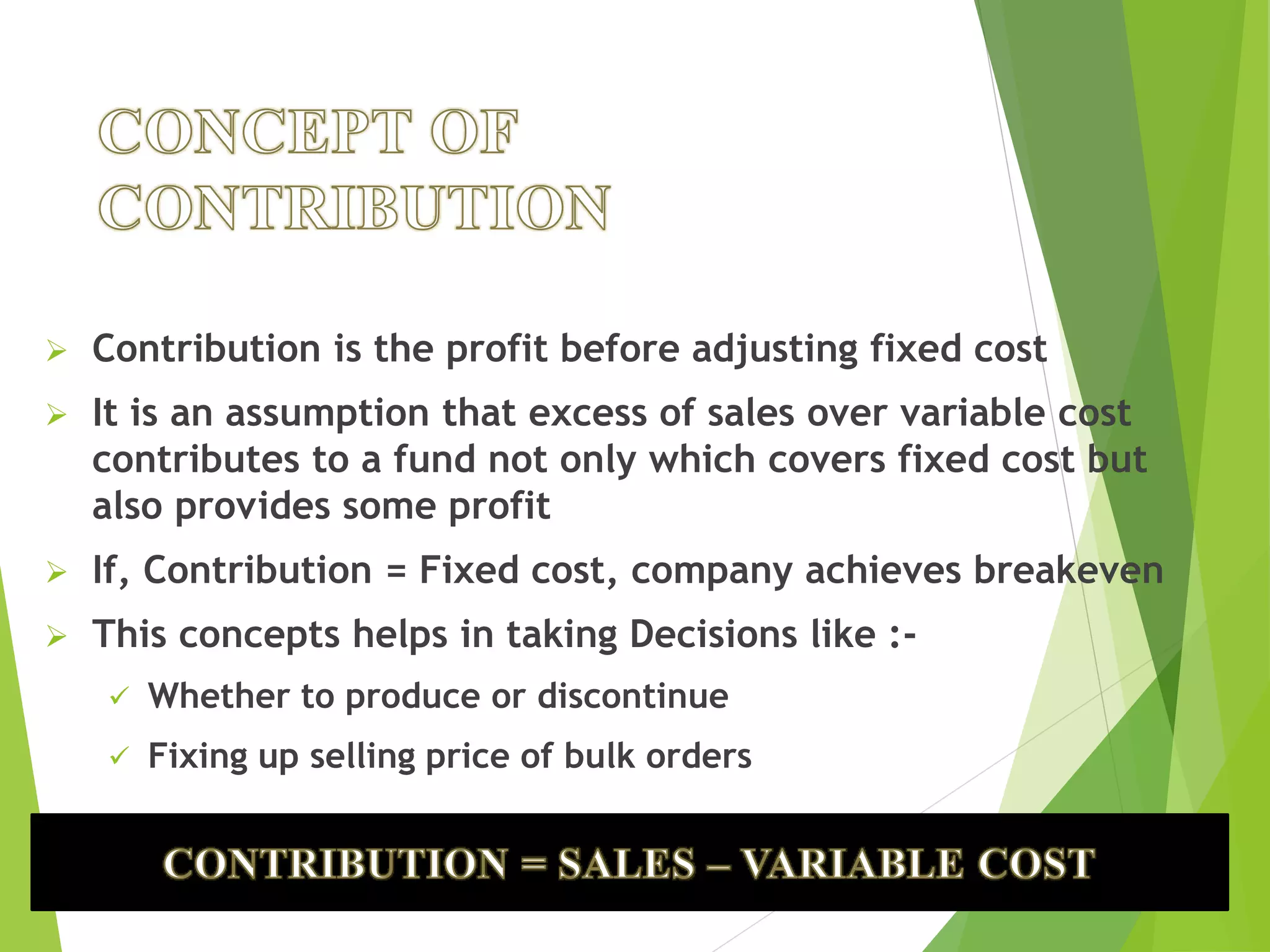
 Contribution is the profit before adjusting fixed cost
 It is an assumption that excess of sales over variable cost
contributes to a fund not only which covers fixed cost but
also provides some profit
 If, Contribution = Fixed cost, company achieves breakeven
 This concepts helps in taking Decisions like :-
 Whether to produce or discontinue
 Fixing up selling price of bulk orders
PARTICULARS AMT (Rs.) COST PER UNIT
SALES *** **
- VARIABLE COST *** *
CONTRIBUTION *** *
- FIXED COST *** *
PROFIT *** *
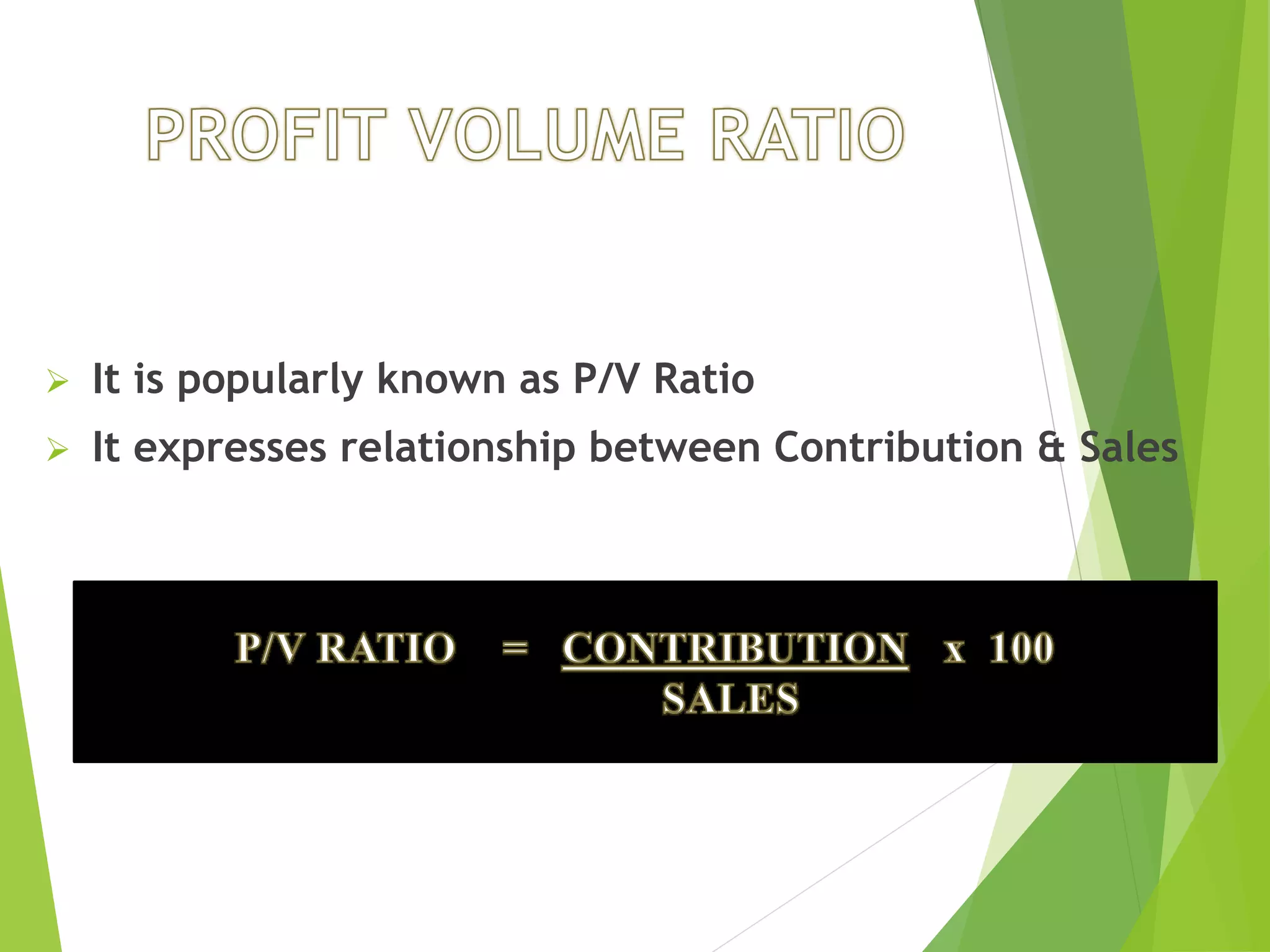
 It is popularly known as P/V Ratio
 It expresses relationship between Contribution & Sales
 It is that stage where firm is making NO PROFIT, NO LOSS
 Total sales revenue = Total costs incurred
 It is the actual sales over & above the breakeven sales
 Thus it is the difference between actual & breakeven sales
Marginalcosting

Marginalcosting

  • 1.
  • 2.
     Definition :- MarginalCosting is defined as the amount at any given volume of output by which aggregate costs can be changed if the volume of output is increased or decreased by one unit.  Meaning :- Marginal Costing is the technique of controlling by bringing out the relationship between profit & volume.
  • 3.
     The conceptof Marginal Costing is also known as variable costing because it is based on the behavior of costs that vary with the volume of output  Hence, Marginal Costing classifies costs into 2 :- 1. Fixed Cost 2. Variable Cost
  • 4.
     Fixed Cost:- The expenditure remains same irrespective of output. This includes costs which a firm has to incur irrespective of units of production  Eg :- Building rent  Variable Cost :- As the name suggests variable cost varies directly with output. It is directly proportional to volume of production  Eg :- Cost of raw materials
  • 5.
     Fixed cost& Variable cost  Only variable Costs are considered to calculate the cost per unit of a product  Cost Controlling  Shows the difference between sales and variable cost known as Contribution
  • 6.
     Fixed costsare excluded in marginal costing as they are expenses belonging to P&L a/c  Useful technique for Export firms  Selling price is determined on the basis of marginal costs
  • 7.
     Constant natureof marginal cost  Pricing decisions  Determination of profits  Fixing responsibility
  • 8.
     Cost control Cost reporting  Helps determine breakeven point  Decision making
  • 9.
     Difficult toseparate Fixed & Variable costs  Over-emphasis on sales  Fixed costs ignored  Not suitable for long run & to huge industries
  • 10.
     Lacks efficiencyin Cost control  Not applicable to contract costing  Ignores Fixed costs in valuation of stock of WIP & finished goods  Not recognized by Income tax authorities
  • 11.
     Contribution isthe profit before adjusting fixed cost  It is an assumption that excess of sales over variable cost contributes to a fund not only which covers fixed cost but also provides some profit  If, Contribution = Fixed cost, company achieves breakeven  This concepts helps in taking Decisions like :-  Whether to produce or discontinue  Fixing up selling price of bulk orders
  • 12.
    PARTICULARS AMT (Rs.)COST PER UNIT SALES *** ** - VARIABLE COST *** * CONTRIBUTION *** * - FIXED COST *** * PROFIT *** *
  • 13.
     It ispopularly known as P/V Ratio  It expresses relationship between Contribution & Sales
  • 14.
     It isthat stage where firm is making NO PROFIT, NO LOSS  Total sales revenue = Total costs incurred
  • 16.
     It isthe actual sales over & above the breakeven sales  Thus it is the difference between actual & breakeven sales