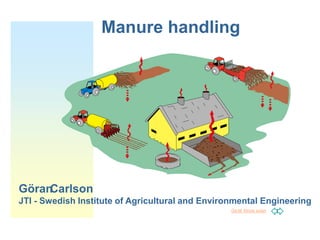


Manure handling 
GöranCarlson 
JTI - Swedish Institute of Agricultural and Environmental Engineering 
Gå till första sidan
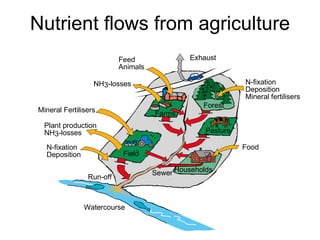
Nutrient flows from agriculture 
Exhaust 
Mineral Fertilisers 
Plant production 
NH3-losses 
N-fixation 
Deposition 
Run-off 
Sewer 
Food 
Watercourse 
Households 
Field 
Forest 
Pasture 
Feed 
Animals 
N-fixation 
Deposition 
Mineral fertilisers 
Farms 
NH3-losses
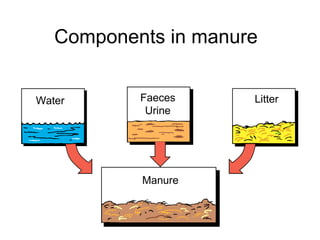
Components in manure 
Faeces 
Urine 
Water Litter 
Manure
Water 
• Spilt water 
• Dishwater 
• Cleaning water 
• Precipitation - evaporation 
• Litter 
• Bedding material 
• Feed residuals
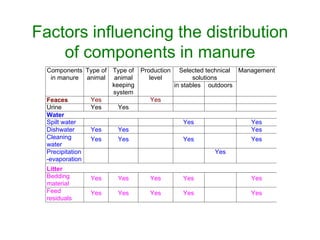
Factors influencing the distribution 
of components in manure 
Selected technical 
solutions 
Components 
in manure 
Type of 
animal 
Type of 
animal 
keeping 
system 
Production 
level 
in stables outdoors 
Management 
Feaces Yes Yes 
Urine Yes Yes Yes 
Water 
Spilt water Yes Yes 
Dishwater Yes Yes Yes 
Cleaning 
Yes Yes Yes Yes 
water 
Precipitation 
-evaporation 
Yes 
Litter 
Bedding 
material 
Yes Yes Yes Yes Yes 
Feed 
residuals 
Yes Yes Yes Yes Yes
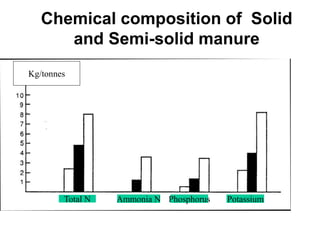
Chemical composition of Solid 
and Semi-solid manure 
Kg/tonnes 
Bild diagram flyt- resp fastgödsel 
Total N Ammonia N Phosphorus Potassium
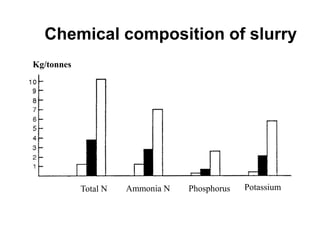
Chemical composition of slurry 
Kg/tonnes 
Total N Ammonia N Phosphorus Potassium
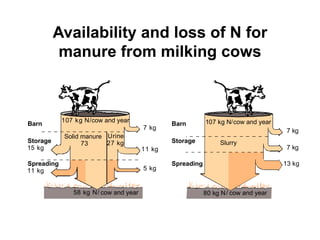
Availability and loss of N for 
manure from milking cows 
Barn 
15 kg 
11 kg 
58 kg N/ 
11 kg 
5 kg 
27 kg 
7 kg 
73 
7 kg 
7 kg 
13 kg 
Storage Slurry 
Spreading 
107 kg N/cow and year 
Solid manure Urine 
cow and year 
Barn 
Storage 
Spreading 
107 kg N/cow and year 
80 kg N/ cow and year
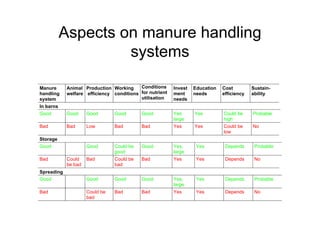
Aspects on manure handling 
systems 
Manure 
handling 
system 
Animal 
welfare 
Production 
efficiency 
Working 
conditions 
Conditions 
for nutrient 
utilisation 
Invest 
ment 
needs 
Education 
needs 
Cost 
efficiency 
Sustain-ability 
In barns 
Good Good Good Good Good Yes 
large 
Yes Could be 
high 
Probable 
Bad Bad Low Bad Bad Yes Yes Could be 
low 
No 
Storage 
Good Good Could be 
good 
Good Yes, 
large 
Yes Depends Probable 
Bad Could 
be bad 
Bad Could be 
bad 
Bad Yes Yes Depends No 
Spreading 
Good Good Good Good Yes, 
large 
Yes Depends Probable 
Bad Could be 
bad 
Bad Bad Yes Yes Depends No
Basic rules for planning manure 
handling systems 
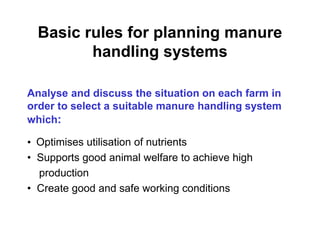
Analyse and discuss the situation on each farm in 
order to select a suitable manure handling system 
which: 
• Optimises utilisation of nutrients 
• Supports good animal welfare to achieve high 
production 
• Create good and safe working conditions
Basic rules for planning manure 
handling systems, cont. 
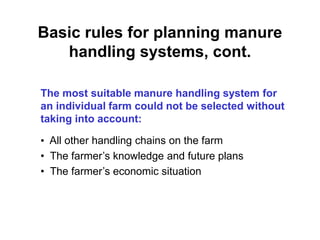
The most suitable manure handling system for 
an individual farm could not be selected without 
taking into account: 
• All other handling chains on the farm 
• The farmer’s knowledge and future plans 
• The farmer’s economic situation
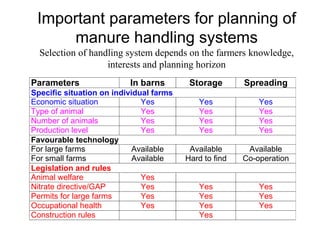
Important parameters for planning of 
manure handling systems 
Selection of handling system depends on the farmers knowledge, 
interests and planning horizon 
Parameters In barns Storage Spreading 
Specific situation on individual farms 
Economic situation Yes Yes Yes 
Type of animal Yes Yes Yes 
Number of animals Yes Yes Yes 
Production level Yes Yes Yes 
Favourable technology 
For large farms Available Available Available 
For small farms Available Hard to find Co-operation 
Legislation and rules 
Animal welfare Yes 
Nitrate directive/GAP Yes Yes Yes 
Permits for large farms Yes Yes Yes 
Occupational health Yes Yes Yes 
Construction rules Yes
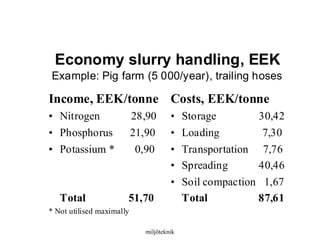
Economy slurry handling, EEK 
Example: Pig farm (5 000/year), trailing hoses 
Income, EEK/tonne 
• Nitrogen 28,90 
• Phosphorus 21,90 
• Potassium * 0,90 
Total 51,70 
JTI - Institutet för jordbruks- och 
miljöteknik 
* Not utilised maximally 
Costs, EEK/tonne 
• Storage 30,42 
• Loading 7,30 
• Transportation 7,76 
• Spreading 40,46 
• Soil compaction 1,67 
Total 87,61
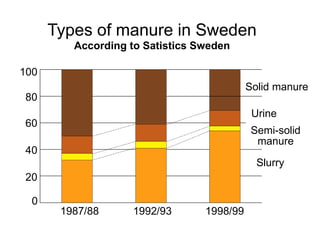
Types of manure in Sweden 
According to Satistics Sweden 
1987/88 1992/93 1998/99 
100 
80 
60 
40 
20 
0 
Solid manure 
Urine 
Semi-solid 
manure 
Slurry
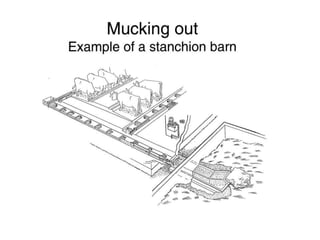
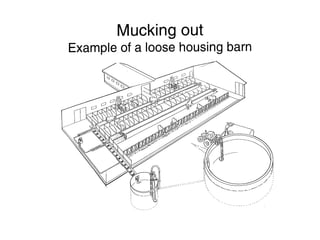
Mucking out
Why should I work for a well 
functioning manure handling 
system in my barn? 
• Higher production 
• Cleaner animals 
• Better animal health 
• Better hygienic status 
• Better working conditions
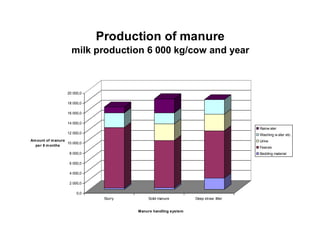
milk production 6 000 kg/cow and year 
20 000,0 
18 000,0 
16 000,0 
14 000,0 
12 000,0 
10 000,0 
8 000,0 
6 000,0 
4 000,0 
2 000,0 
0,0 
Amount of manure 
per 8 months 
Production of manure 
Slurry Solid manure Deep straw litter 
Rainw ater 
Washing w ater etc. 
Urine 
Feaces 
Bedding material 
Manure handling system
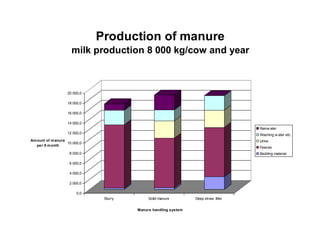
milk production 8 000 kg/cow and year 
20 000,0 
18 000,0 
16 000,0 
14 000,0 
12 000,0 
10 000,0 
8 000,0 
6 000,0 
4 000,0 
2 000,0 
0,0 
Amount of manure 
per 8 month 
Production of manure 
Slurry Solid manure Deep straw litter 
Rainw ater 
Washing w ater etc. 
Urine 
Feaces 
Bedding material 
Manure handling system
Manure Spreading
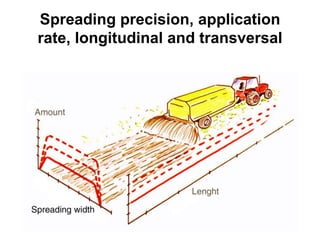
Spreading precision, application 
rate, longitudinal and transversal
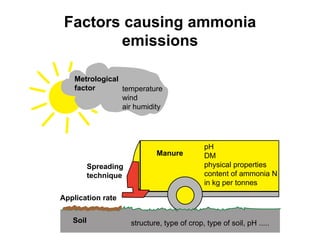
Factors causing ammonia 
emissions 
Metrological 
factor 
Manure 
Spreading 
technique 
Application rate 
Soil 
temperature 
wind 
air humidity 
pH 
DM 
physical properties 
content of ammonia N 
in kg per tonnes 
structure, type of crop, type of soil, pH .....
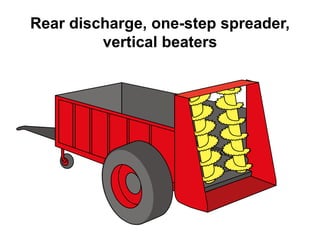
Rear discharge, one-step spreader, 
vertical beaters
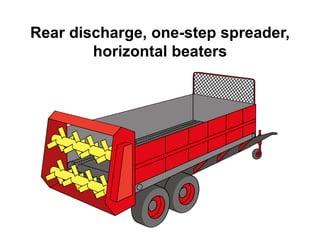
Rear discharge, one-step spreader, 
horizontal beaters
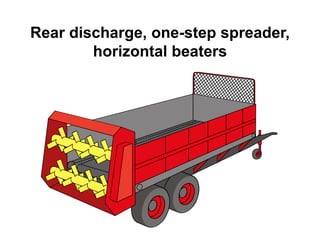
Rear discharge, one-step spreader, 
horizontal beaters
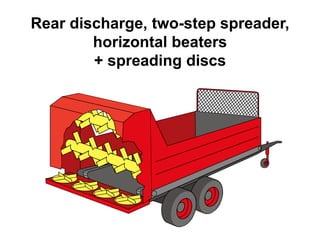
Rear discharge, two-step spreader, 
horizontal beaters 
+ spreading discs
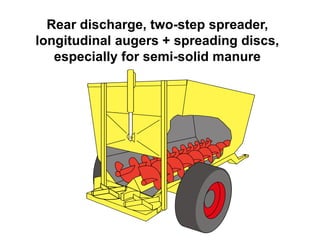
Rear discharge, two-step spreader, 
longitudinal augers + spreading discs, 
especially for semi-solid manure
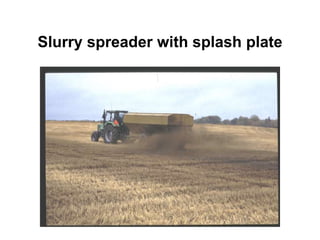
Slurry spreader with splash plate
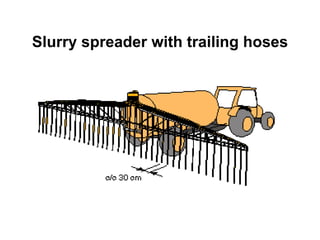
Slurry spreader with trailing hoses
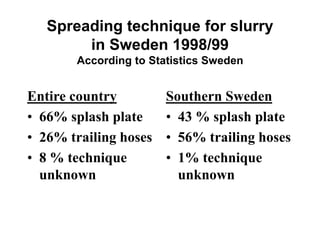
Spreading technique for slurry 
in Sweden 1998/99 
According to Statistics Sweden 
Entire country 
• 66% splash plate 
• 26% trailing hoses 
• 8 % technique 
unknown 
Southern Sweden 
• 43 % splash plate 
• 56% trailing hoses 
• 1% technique 
unknown
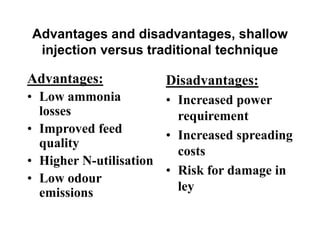
Advantages and disadvantages, shallow 
injection versus traditional technique 
Advantages: 
• Low ammonia 
losses 
• Improved feed 
quality 
• Higher N-utilisation 
• Low odour 
emissions 
Disadvantages: 
• Increased power 
requirement 
• Increased spreading 
costs 
• Risk for damage in 
ley
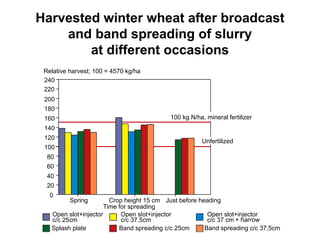
Harvested winter wheat after broadcast 
and band spreading of slurry 
at different occasions 
Relative harvest; 100 = 4570 kg/ha 
Spring Crop height 15 cm 
Time for spreading 
240 
220 
200 
180 
140 
120 
100 
80 
60 
40 
20 
0 
100 kg N/ha, mineral fertilizer 
Unfertilized 
160 
Just before heading 
Open slot+injector 
Open slot+injector 
Open slot+injector 
c/c 25cm 
c/c 37.5cm 
c/c 37 cm + harrow 
Splash plate Band spreading c/c 25cm Band spreading c/c 37,5cm
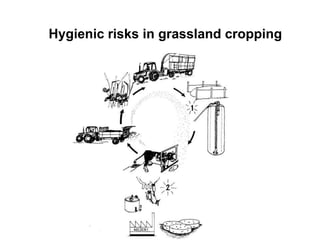
Hygienic risks in grassland cropping

Manure Handling Presentation

  • 1.
    Manure handling GöranCarlson JTI - Swedish Institute of Agricultural and Environmental Engineering Gå till första sidan
  • 2.
    Nutrient flows fromagriculture Exhaust Mineral Fertilisers Plant production NH3-losses N-fixation Deposition Run-off Sewer Food Watercourse Households Field Forest Pasture Feed Animals N-fixation Deposition Mineral fertilisers Farms NH3-losses
  • 3.
    Components in manure Faeces Urine Water Litter Manure
  • 4.
    Water • Spiltwater • Dishwater • Cleaning water • Precipitation - evaporation • Litter • Bedding material • Feed residuals
  • 5.
    Factors influencing thedistribution of components in manure Selected technical solutions Components in manure Type of animal Type of animal keeping system Production level in stables outdoors Management Feaces Yes Yes Urine Yes Yes Yes Water Spilt water Yes Yes Dishwater Yes Yes Yes Cleaning Yes Yes Yes Yes water Precipitation -evaporation Yes Litter Bedding material Yes Yes Yes Yes Yes Feed residuals Yes Yes Yes Yes Yes
  • 6.
    Chemical composition ofSolid and Semi-solid manure Kg/tonnes Bild diagram flyt- resp fastgödsel Total N Ammonia N Phosphorus Potassium
  • 7.
    Chemical composition ofslurry Kg/tonnes Total N Ammonia N Phosphorus Potassium
  • 8.
    Availability and lossof N for manure from milking cows Barn 15 kg 11 kg 58 kg N/ 11 kg 5 kg 27 kg 7 kg 73 7 kg 7 kg 13 kg Storage Slurry Spreading 107 kg N/cow and year Solid manure Urine cow and year Barn Storage Spreading 107 kg N/cow and year 80 kg N/ cow and year
  • 9.
    Aspects on manurehandling systems Manure handling system Animal welfare Production efficiency Working conditions Conditions for nutrient utilisation Invest ment needs Education needs Cost efficiency Sustain-ability In barns Good Good Good Good Good Yes large Yes Could be high Probable Bad Bad Low Bad Bad Yes Yes Could be low No Storage Good Good Could be good Good Yes, large Yes Depends Probable Bad Could be bad Bad Could be bad Bad Yes Yes Depends No Spreading Good Good Good Good Yes, large Yes Depends Probable Bad Could be bad Bad Bad Yes Yes Depends No
  • 10.
    Basic rules forplanning manure handling systems Analyse and discuss the situation on each farm in order to select a suitable manure handling system which: • Optimises utilisation of nutrients • Supports good animal welfare to achieve high production • Create good and safe working conditions
  • 11.
    Basic rules forplanning manure handling systems, cont. The most suitable manure handling system for an individual farm could not be selected without taking into account: • All other handling chains on the farm • The farmer’s knowledge and future plans • The farmer’s economic situation
  • 12.
    Important parameters forplanning of manure handling systems Selection of handling system depends on the farmers knowledge, interests and planning horizon Parameters In barns Storage Spreading Specific situation on individual farms Economic situation Yes Yes Yes Type of animal Yes Yes Yes Number of animals Yes Yes Yes Production level Yes Yes Yes Favourable technology For large farms Available Available Available For small farms Available Hard to find Co-operation Legislation and rules Animal welfare Yes Nitrate directive/GAP Yes Yes Yes Permits for large farms Yes Yes Yes Occupational health Yes Yes Yes Construction rules Yes
  • 13.
    Economy slurry handling,EEK Example: Pig farm (5 000/year), trailing hoses Income, EEK/tonne • Nitrogen 28,90 • Phosphorus 21,90 • Potassium * 0,90 Total 51,70 JTI - Institutet för jordbruks- och miljöteknik * Not utilised maximally Costs, EEK/tonne • Storage 30,42 • Loading 7,30 • Transportation 7,76 • Spreading 40,46 • Soil compaction 1,67 Total 87,61
  • 14.
    Types of manurein Sweden According to Satistics Sweden 1987/88 1992/93 1998/99 100 80 60 40 20 0 Solid manure Urine Semi-solid manure Slurry
  • 15.
  • 16.
    Why should Iwork for a well functioning manure handling system in my barn? • Higher production • Cleaner animals • Better animal health • Better hygienic status • Better working conditions
  • 17.
    milk production 6000 kg/cow and year 20 000,0 18 000,0 16 000,0 14 000,0 12 000,0 10 000,0 8 000,0 6 000,0 4 000,0 2 000,0 0,0 Amount of manure per 8 months Production of manure Slurry Solid manure Deep straw litter Rainw ater Washing w ater etc. Urine Feaces Bedding material Manure handling system
  • 18.
    milk production 8000 kg/cow and year 20 000,0 18 000,0 16 000,0 14 000,0 12 000,0 10 000,0 8 000,0 6 000,0 4 000,0 2 000,0 0,0 Amount of manure per 8 month Production of manure Slurry Solid manure Deep straw litter Rainw ater Washing w ater etc. Urine Feaces Bedding material Manure handling system
  • 21.
  • 22.
    Spreading precision, application rate, longitudinal and transversal
  • 23.
    Factors causing ammonia emissions Metrological factor Manure Spreading technique Application rate Soil temperature wind air humidity pH DM physical properties content of ammonia N in kg per tonnes structure, type of crop, type of soil, pH .....
  • 24.
    Rear discharge, one-stepspreader, vertical beaters
  • 25.
    Rear discharge, one-stepspreader, horizontal beaters
  • 26.
    Rear discharge, one-stepspreader, horizontal beaters
  • 27.
    Rear discharge, two-stepspreader, horizontal beaters + spreading discs
  • 28.
    Rear discharge, two-stepspreader, longitudinal augers + spreading discs, especially for semi-solid manure
  • 29.
  • 30.
    Slurry spreader withtrailing hoses
  • 31.
    Spreading technique forslurry in Sweden 1998/99 According to Statistics Sweden Entire country • 66% splash plate • 26% trailing hoses • 8 % technique unknown Southern Sweden • 43 % splash plate • 56% trailing hoses • 1% technique unknown
  • 32.
    Advantages and disadvantages,shallow injection versus traditional technique Advantages: • Low ammonia losses • Improved feed quality • Higher N-utilisation • Low odour emissions Disadvantages: • Increased power requirement • Increased spreading costs • Risk for damage in ley
  • 33.
    Harvested winter wheatafter broadcast and band spreading of slurry at different occasions Relative harvest; 100 = 4570 kg/ha Spring Crop height 15 cm Time for spreading 240 220 200 180 140 120 100 80 60 40 20 0 100 kg N/ha, mineral fertilizer Unfertilized 160 Just before heading Open slot+injector Open slot+injector Open slot+injector c/c 25cm c/c 37.5cm c/c 37 cm + harrow Splash plate Band spreading c/c 25cm Band spreading c/c 37,5cm
  • 34.
    Hygienic risks ingrassland cropping