Dehorning & Disbudding
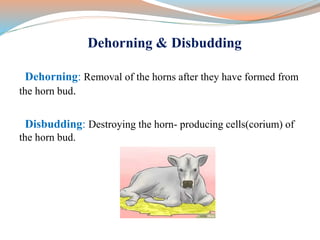
Dehorning: Removal of the horns after they have formed from
the horn bud.
Disbudding: Destroying the horn- producing cells(corium) of
the horn bud.
Indications
 To reduce the risk of injury to humans and bruising to herd
mates.
 To decrease risk of injury to farm workers.
 To decrease risk of death, illness.
 To improve the stock management.
 To gain a price advantage by offering hornless cattle at auction.
 To prevents potential aggressive behavior.
 To reduce traumatic damage( skin, udder).
Dehorning Age
 Many producers choose to dehorn new born calves because:
- easier
- less stressful
- animal welfare
 Hazards for calves and owners
- sickness or death
- decreased live weight gain
- loss of productivity
Timing of Operations
 Age
- Less than 8 weeks ( without opening the sinus).
- Older calves( Opening the sinus).
 Season
- Avoid the summer and autumn
- Suitable in early spring, late fall, winter
Welfare Significance
 Pain and side effects.
 Fewer complications.
 Without anesthesia is inhumane and unethical.
 Control of bleeding is essential.
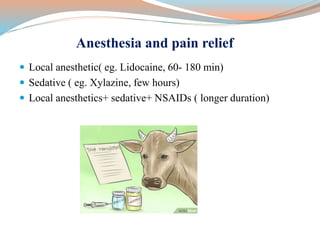
Anesthesia and pain relief
 Local anesthetic( eg. Lidocaine, 60- 180 min)
 Sedative ( eg. Xylazine, few hours)
 Local anesthetics+ sedative+ NSAIDs ( longer duration)
Methods
Dehorning
Mechanical method
-embryotomy wire
- dehorning knives, spoon, cups ,
tubes
- Barnes type scoop dehorner
 Rubber band method
- tight rubber ring
Disbudding
 Chemical methods
- caustic soda / potash
 Electrical method
- electrical dehorner
( tm: 540 degree celsius, time: 8-
10 sec)
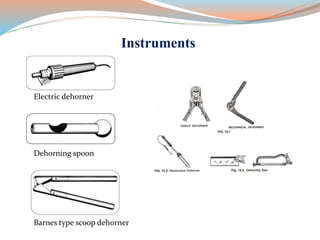
Instruments
Dehorning spoon
Barnes type scoop dehorner
Electric dehorner
Disinfection of Equipment
 To disinfect the tube and Barnes type scoop dehorner (cresol).
 Electric dehorners effectively disinfects between each calf.
 Diseases can be spread ( EBLV and wart virus)
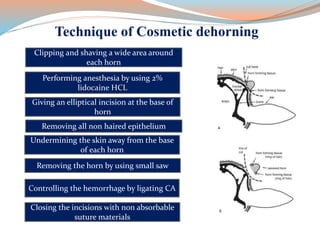
Technique of Cosmetic dehorning
Clipping and shaving a wide area around
each horn
Giving an elliptical incision at the base of
horn
Removing all non haired epithelium
Undermining the skin away from the base
of each horn
Removing the horn by using small saw
Controlling the hemorrhage by ligating CA
Closing the incisions with non absorbable
suture materials
Performing anesthesia by using 2%
lidocaine HCL
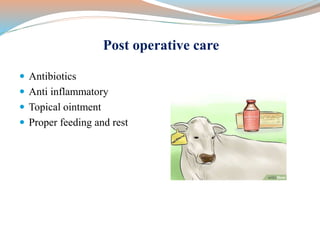
Post operative care
 Antibiotics
 Anti inflammatory
 Topical ointment
 Proper feeding and rest
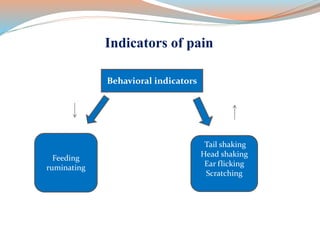
Indicators of pain
Behavioral indicators
Feeding
ruminating
Tail shaking
Head shaking
Ear flicking
Scratching
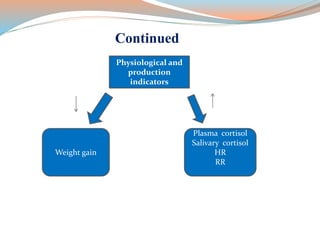
Continued
Physiological and
production
indicators
Weight gain
Plasma cortisol
Salivary cortisol
HR
RR
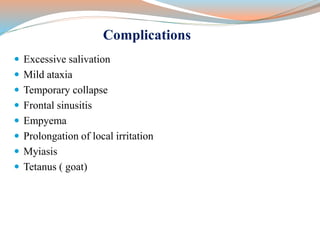
Complications
 Excessive salivation
 Mild ataxia
 Temporary collapse
 Frontal sinusitis
 Empyema
 Prolongation of local irritation
 Myiasis
 Tetanus ( goat)

Dehorning and disbudding

  • 1.
    Dehorning & Disbudding Dehorning:Removal of the horns after they have formed from the horn bud. Disbudding: Destroying the horn- producing cells(corium) of the horn bud.
  • 2.
    Indications  To reducethe risk of injury to humans and bruising to herd mates.  To decrease risk of injury to farm workers.  To decrease risk of death, illness.  To improve the stock management.  To gain a price advantage by offering hornless cattle at auction.  To prevents potential aggressive behavior.  To reduce traumatic damage( skin, udder).
  • 3.
    Dehorning Age  Manyproducers choose to dehorn new born calves because: - easier - less stressful - animal welfare  Hazards for calves and owners - sickness or death - decreased live weight gain - loss of productivity
  • 4.
    Timing of Operations Age - Less than 8 weeks ( without opening the sinus). - Older calves( Opening the sinus).  Season - Avoid the summer and autumn - Suitable in early spring, late fall, winter
  • 5.
    Welfare Significance  Painand side effects.  Fewer complications.  Without anesthesia is inhumane and unethical.  Control of bleeding is essential.
  • 6.
    Anesthesia and painrelief  Local anesthetic( eg. Lidocaine, 60- 180 min)  Sedative ( eg. Xylazine, few hours)  Local anesthetics+ sedative+ NSAIDs ( longer duration)
  • 7.
    Methods Dehorning Mechanical method -embryotomy wire -dehorning knives, spoon, cups , tubes - Barnes type scoop dehorner  Rubber band method - tight rubber ring Disbudding  Chemical methods - caustic soda / potash  Electrical method - electrical dehorner ( tm: 540 degree celsius, time: 8- 10 sec)
  • 8.
    Instruments Dehorning spoon Barnes typescoop dehorner Electric dehorner
  • 9.
    Disinfection of Equipment To disinfect the tube and Barnes type scoop dehorner (cresol).  Electric dehorners effectively disinfects between each calf.  Diseases can be spread ( EBLV and wart virus)
  • 10.
    Technique of Cosmeticdehorning Clipping and shaving a wide area around each horn Giving an elliptical incision at the base of horn Removing all non haired epithelium Undermining the skin away from the base of each horn Removing the horn by using small saw Controlling the hemorrhage by ligating CA Closing the incisions with non absorbable suture materials Performing anesthesia by using 2% lidocaine HCL
  • 11.
    Post operative care Antibiotics  Anti inflammatory  Topical ointment  Proper feeding and rest
  • 12.
    Indicators of pain Behavioralindicators Feeding ruminating Tail shaking Head shaking Ear flicking Scratching
  • 13.
  • 14.
    Complications  Excessive salivation Mild ataxia  Temporary collapse  Frontal sinusitis  Empyema  Prolongation of local irritation  Myiasis  Tetanus ( goat)

Editor's Notes

  • #2  Main difference after and before
  • #5 Dehorning at an early age , reduce infection,bcz horn bud is removed without opening the sinus
  • #10 Enzootic bovine leukosis virus