Manufacturing
 Practice 2
   J 4121
SECTION 1 − SAFETY PRECAUTIONS
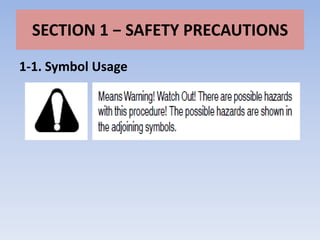
1-1. Symbol Usage
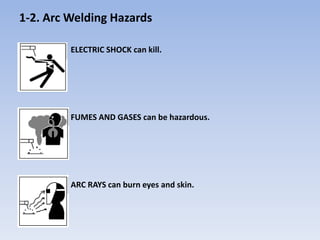
1-2. Arc Welding Hazards

         ELECTRIC SHOCK can kill.


         FUMES AND GASES can be hazardous.


         ARC RAYS can burn eyes and skin.
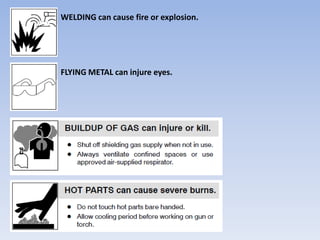
WELDING can cause fire or explosion.


FLYING METAL can injure eyes.
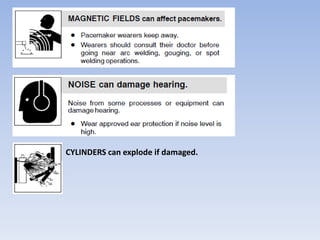
CYLINDERS can explode if damaged.
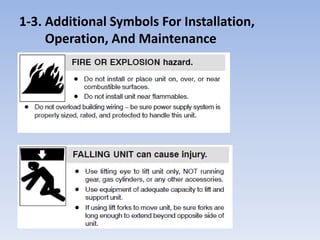
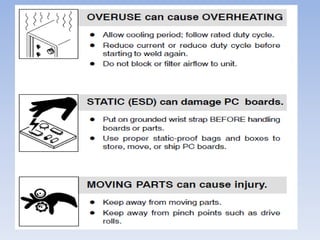
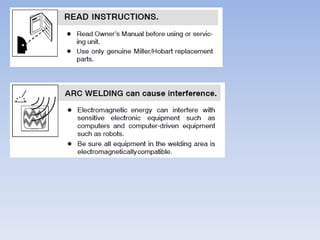
1-3. Additional Symbols For Installation,
     Operation, And Maintenance
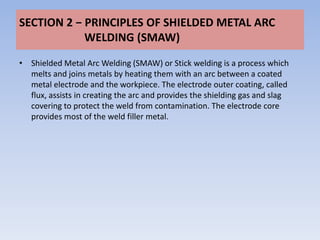
SECTION 2 − PRINCIPLES OF SHIELDED METAL ARC
            WELDING (SMAW)
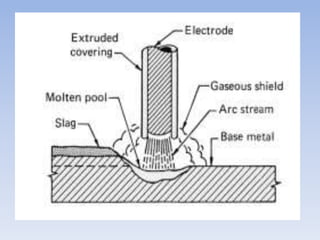
• Shielded Metal Arc Welding (SMAW) or Stick welding is a process which
  melts and joins metals by heating them with an arc between a coated
  metal electrode and the workpiece. The electrode outer coating, called
  flux, assists in creating the arc and provides the shielding gas and slag
  covering to protect the weld from contamination. The electrode core
  provides most of the weld filler metal.
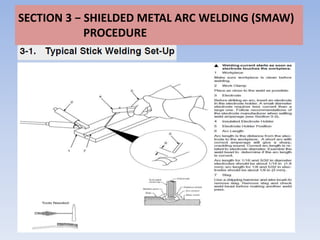
SECTION 3 − SHIELDED METAL ARC WELDING (SMAW)
            PROCEDURE
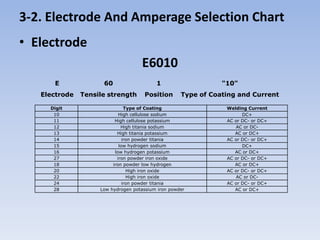
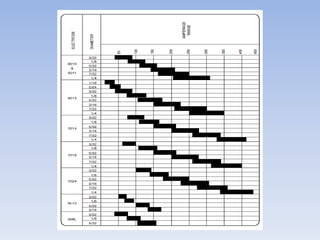
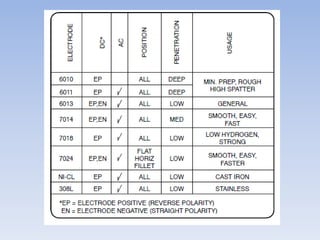
3-2. Electrode And Amperage Selection Chart
• Electrode
                                    E6010
      E              60                   1                    "10"
   Electrode   Tensile strength      Position       Type of Coating and Current

     Digit                     Type of Coating                  Welding Current
      10                    High cellulose sodium                     DC+
      11                  High cellulose potassium              AC or DC- or DC+
      12                     High titania sodium                   AC or DC-
      13                   High titania potassium                  AC or DC+
      14                      iron powder titania               AC or DC- or DC+
      15                    low hydrogen sodium                       DC+
      16                  low hydrogen potassium                   AC or DC+
      27                   iron powder iron oxide               AC or DC- or DC+
      18                 iron powder low hydrogen                  AC or DC+
      20                        High iron oxide                 AC or DC- or DC+
      22                        High iron oxide                    AC or DC-
      24                      iron powder titania               AC or DC- or DC+
      28            Low hydrogen potassium iron powder             AC or DC+
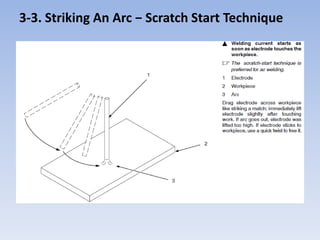
3-3. Striking An Arc − Scratch Start Technique
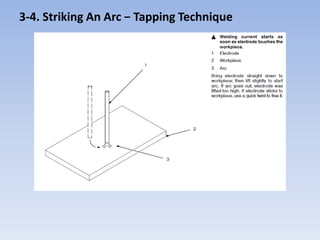
3-4. Striking An Arc − Tapping Technique
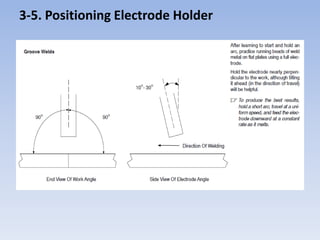
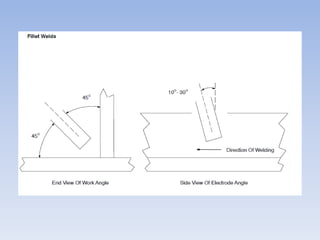
3-5. Positioning Electrode Holder
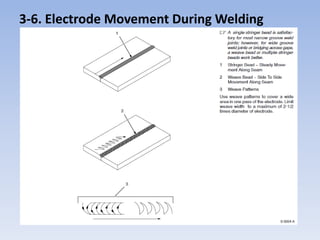
3-6. Electrode Movement During Welding
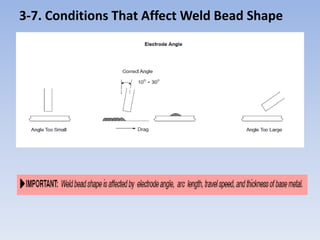
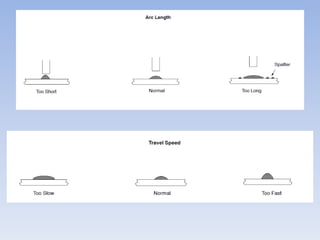
3-7. Conditions That Affect Weld Bead Shape
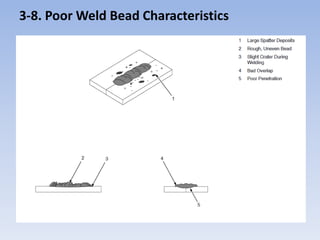
3-8. Poor Weld Bead Characteristics
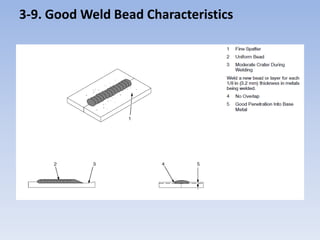
3-9. Good Weld Bead Characteristics
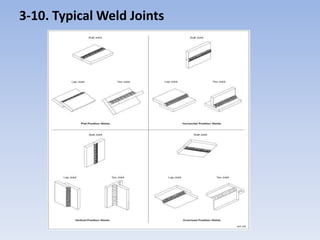
3-10. Typical Weld Joints
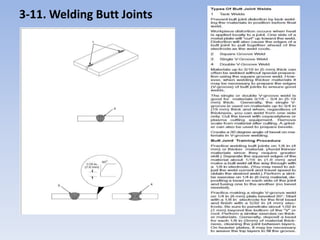
3-11. Welding Butt Joints
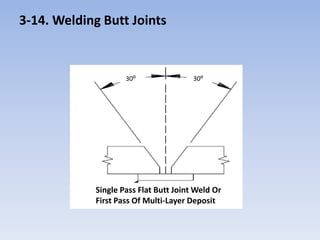
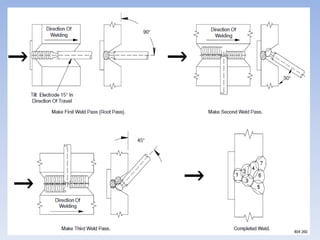
3-14. Welding Butt Joints


                    30⁰                30⁰


            Single Pass Flat Butt Joint Weld Or
            First Pass Of Multi-Layer Deposit
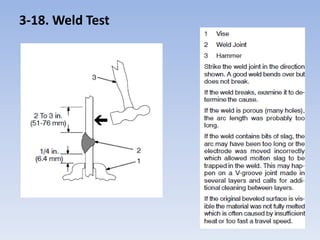
3-18. Weld Test
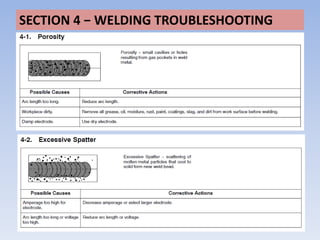
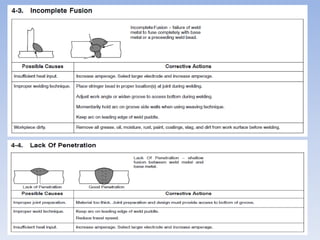
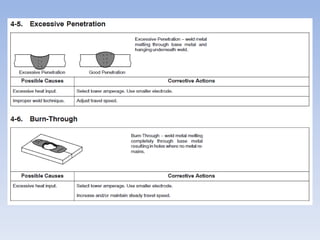
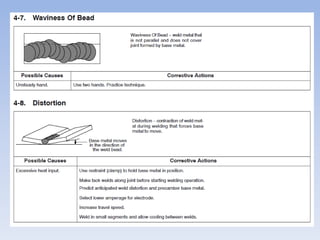
SECTION 4 − WELDING TROUBLESHOOTING
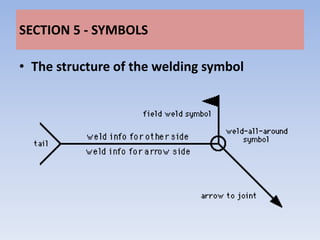
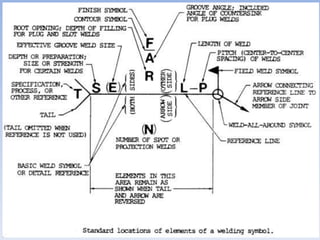
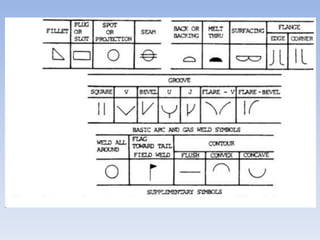
SECTION 5 - SYMBOLS

• The structure of the welding symbol
Manufacturing Practice 2

Manufacturing Practice 2

  • 1.
  • 2.
    SECTION 1 −SAFETY PRECAUTIONS 1-1. Symbol Usage
  • 3.
    1-2. Arc WeldingHazards ELECTRIC SHOCK can kill. FUMES AND GASES can be hazardous. ARC RAYS can burn eyes and skin.
  • 4.
    WELDING can causefire or explosion. FLYING METAL can injure eyes.
  • 5.
  • 6.
    1-3. Additional SymbolsFor Installation, Operation, And Maintenance
  • 9.
    SECTION 2 −PRINCIPLES OF SHIELDED METAL ARC WELDING (SMAW) • Shielded Metal Arc Welding (SMAW) or Stick welding is a process which melts and joins metals by heating them with an arc between a coated metal electrode and the workpiece. The electrode outer coating, called flux, assists in creating the arc and provides the shielding gas and slag covering to protect the weld from contamination. The electrode core provides most of the weld filler metal.
  • 11.
    SECTION 3 −SHIELDED METAL ARC WELDING (SMAW) PROCEDURE
  • 13.
    3-2. Electrode AndAmperage Selection Chart • Electrode E6010 E 60 1 "10" Electrode Tensile strength Position Type of Coating and Current Digit Type of Coating Welding Current 10 High cellulose sodium DC+ 11 High cellulose potassium AC or DC- or DC+ 12 High titania sodium AC or DC- 13 High titania potassium AC or DC+ 14 iron powder titania AC or DC- or DC+ 15 low hydrogen sodium DC+ 16 low hydrogen potassium AC or DC+ 27 iron powder iron oxide AC or DC- or DC+ 18 iron powder low hydrogen AC or DC+ 20 High iron oxide AC or DC- or DC+ 22 High iron oxide AC or DC- 24 iron powder titania AC or DC- or DC+ 28 Low hydrogen potassium iron powder AC or DC+
  • 16.
    3-3. Striking AnArc − Scratch Start Technique
  • 17.
    3-4. Striking AnArc − Tapping Technique
  • 18.
  • 20.
  • 21.
    3-7. Conditions ThatAffect Weld Bead Shape
  • 23.
    3-8. Poor WeldBead Characteristics
  • 24.
    3-9. Good WeldBead Characteristics
  • 25.
  • 26.
  • 27.
    3-14. Welding ButtJoints 30⁰ 30⁰ Single Pass Flat Butt Joint Weld Or First Pass Of Multi-Layer Deposit
  • 29.
  • 30.
    SECTION 4 −WELDING TROUBLESHOOTING
  • 34.
    SECTION 5 -SYMBOLS • The structure of the welding symbol