Concept of
Managing Change
What does “change” mean?
Change may be defined as a
variation in the established way of
life to which people are
accustommed to in the
organization.
People are normally resistant to
change as it affects structures
and procedures, job security and
terms and conditions and social
structures.
Organizations are open to external
and internal environment so it gets
affected and very prone to change.
Change can be natural or forced.
2
Change management concept!
According to Lisa Kudray and Brain Kleuiet, change
management can be defined as the continuous
process aligning an organization with its market place
…and doing it more responsively and effectively than
its competitors.
Change management could be organizational or
individual.
3
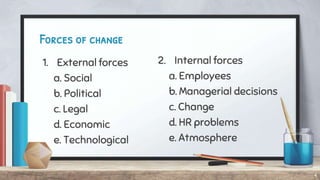
Forces of change
1. External forces
a. Social
b. Political
c. Legal
d. Economic
e. Technological
4
2. Internal forces
a. Employees
b. Managerial decisions
c. Change
d. HR problems
e. Atmosphere
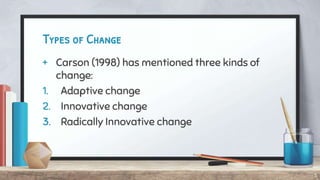
Types of Change
+ Carson (1998) has mentioned three kinds of
change:
1. Adaptive change
2. Innovative change
3. Radically Innovative change
5
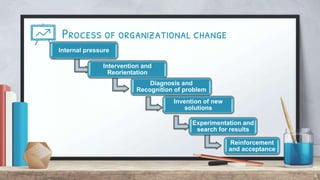
Process of organizational change
6
Internal pressure
Intervention and
Reorientation
Diagnosis and
Recognition of problem
Invention of new
solutions
Experimentation and
search for results
Reinforcement
and acceptance
“
7
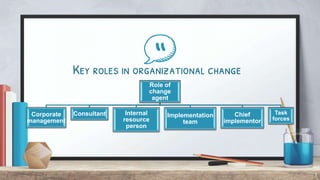
Key roles in organizational change
Role of
change
agent
Corporate
management
Consultant Internal
resource
person
Implementation
team
Chief
implementor
Task
forces
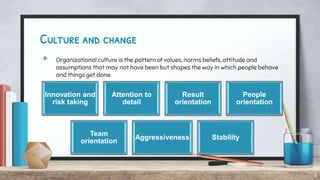
Culture and change
+ Organizational culture is the pattern of values, norms beliefs, attitude and
assumptions that may not have been but shapes the way in which people behave
and things get done.
8
Innovation and
risk taking
Attention to
detail
Result
orientation
People
orientation
Team
orientation
Aggressiveness Stability
BIG CONCEPT
Internal and External factors affecting management
practices
9
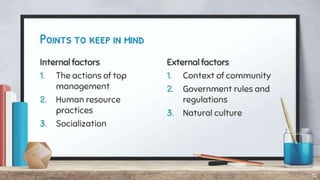
Internal factors
1. The actions of top
management
2. Human resource
practices
3. Socialization
Points to keep in mind
External factors
1. Context of community
2. Government rules and
regulations
3. Natural culture
10
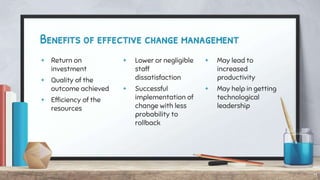
Benefits of effective change management
+ Return on
investment
+ Quality of the
outcome achieved
+ Efficiency of the
resources
+ Lower or negligible
staff
dissatisfaction
+ Successful
implementation of
change with less
probability to
rollback
+ May lead to
increased
productivity
+ May help in getting
technological
leadership
11
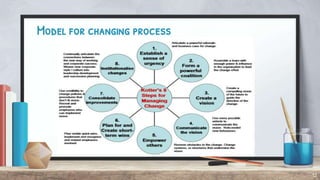
Model for changing process
12
Resistance to change
13
• The individual's
predisposition towards
change.
• Fear of the unknown
• Uncertainty
• Self-interest
• Satisfaction with the
status quo
• Peer-pressure
• Difficult timing of change
• Disruption of cultural
traditions or group
relations
• Lack of understanding
and trust
• Speed with which
change occurs
• Insensitive manner of
change introduction.
• Fear of failure
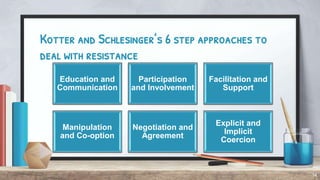
Kotter and Schlesinger’s 6 step approaches to
deal with resistance
14
Education and
Communication
Participation
and Involvement
Facilitation and
Support
Manipulation
and Co-option
Negotiation and
Agreement
Explicit and
Implicit
Coercion
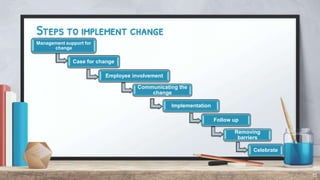
Steps to implement change
15
Management support for
change
Case for change
Employee involvement
Communicating the
change
Implementation
Follow up
Removing
barriers
Celebrate

Concept on managing change

  • 1.
  • 2.
    What does “change”mean? Change may be defined as a variation in the established way of life to which people are accustommed to in the organization. People are normally resistant to change as it affects structures and procedures, job security and terms and conditions and social structures. Organizations are open to external and internal environment so it gets affected and very prone to change. Change can be natural or forced. 2
  • 3.
    Change management concept! Accordingto Lisa Kudray and Brain Kleuiet, change management can be defined as the continuous process aligning an organization with its market place …and doing it more responsively and effectively than its competitors. Change management could be organizational or individual. 3
  • 4.
    Forces of change 1.External forces a. Social b. Political c. Legal d. Economic e. Technological 4 2. Internal forces a. Employees b. Managerial decisions c. Change d. HR problems e. Atmosphere
  • 5.
    Types of Change +Carson (1998) has mentioned three kinds of change: 1. Adaptive change 2. Innovative change 3. Radically Innovative change 5
  • 6.
    Process of organizationalchange 6 Internal pressure Intervention and Reorientation Diagnosis and Recognition of problem Invention of new solutions Experimentation and search for results Reinforcement and acceptance
  • 7.
    “ 7 Key roles inorganizational change Role of change agent Corporate management Consultant Internal resource person Implementation team Chief implementor Task forces
  • 8.
    Culture and change +Organizational culture is the pattern of values, norms beliefs, attitude and assumptions that may not have been but shapes the way in which people behave and things get done. 8 Innovation and risk taking Attention to detail Result orientation People orientation Team orientation Aggressiveness Stability
  • 9.
    BIG CONCEPT Internal andExternal factors affecting management practices 9
  • 10.
    Internal factors 1. Theactions of top management 2. Human resource practices 3. Socialization Points to keep in mind External factors 1. Context of community 2. Government rules and regulations 3. Natural culture 10
  • 11.
    Benefits of effectivechange management + Return on investment + Quality of the outcome achieved + Efficiency of the resources + Lower or negligible staff dissatisfaction + Successful implementation of change with less probability to rollback + May lead to increased productivity + May help in getting technological leadership 11
  • 12.
  • 13.
    Resistance to change 13 •The individual's predisposition towards change. • Fear of the unknown • Uncertainty • Self-interest • Satisfaction with the status quo • Peer-pressure • Difficult timing of change • Disruption of cultural traditions or group relations • Lack of understanding and trust • Speed with which change occurs • Insensitive manner of change introduction. • Fear of failure
  • 14.
    Kotter and Schlesinger’s6 step approaches to deal with resistance 14 Education and Communication Participation and Involvement Facilitation and Support Manipulation and Co-option Negotiation and Agreement Explicit and Implicit Coercion
  • 15.
    Steps to implementchange 15 Management support for change Case for change Employee involvement Communicating the change Implementation Follow up Removing barriers Celebrate