MANAGERIAL SKILLS
 
 
Why Learn Management Skills? Understanding concepts is not enough. Need to be able to act appropriately  Must be able to do what is required to get others to behave as required.
Managerial Skills Professional Attributes Setting goals (Prioritize & Posterioritize) Self assessment (Contribution, Productivity) Team building (Participation,Interpersonal) Managing time and stress Problem solving and decision-making Creativity Communication & listening (Multi culture) Emotional Intelligence
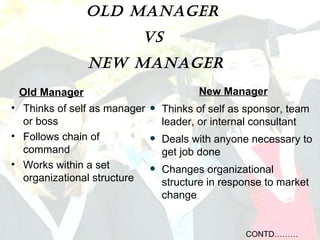
Old Manager Thinks of self as manager or boss Follows chain of command Works within a set organizational structure New Manager Thinks of self as sponsor, team leader, or internal consultant Deals with anyone necessary to get job done Changes organizational structure in response to market change OLD MANAGER  vs  NEW MANAGER CONTD………
Old Manager Makes most  decisions alone Hoards information Tries to master one major discipline Demands long hours New Manager Invites others to join in decision making Shares information Tries to master broad  array of disciplines Demands results
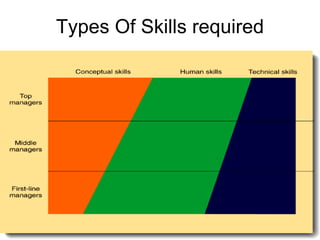
Types Of Skills required
SKILL LEARNING MODEL Self-assessment Learn Skill Concepts Check Concept Learning: Quiz Identify Skill Behaviors: Checklist Modeling Skill in a Demonstration Exercise Practice the Skill in Group Exercises Assess Skill Competency: Summary Checklist Questions to Assist Application of the Skill Exercises to Reinforce Skill Application Action Planning for Continued Skill Development
Challenges for Managers in a Global Environment Rise of Global Organizations. Building a Competitive Advantage Maintaining Ethical and Socially Responsible Standards Managing a Diverse Workforce Utilizing Information Technology and E-commerce
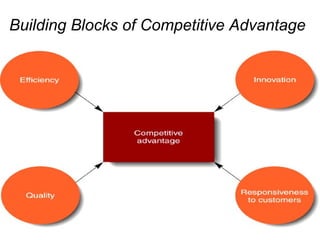
Building Blocks of Competitive Advantage
THANK YOU

Managerial Skills

  • 1.
  • 2.
  • 3.
  • 4.
    Why Learn ManagementSkills? Understanding concepts is not enough. Need to be able to act appropriately Must be able to do what is required to get others to behave as required.
  • 5.
    Managerial Skills ProfessionalAttributes Setting goals (Prioritize & Posterioritize) Self assessment (Contribution, Productivity) Team building (Participation,Interpersonal) Managing time and stress Problem solving and decision-making Creativity Communication & listening (Multi culture) Emotional Intelligence
  • 6.
    Old Manager Thinksof self as manager or boss Follows chain of command Works within a set organizational structure New Manager Thinks of self as sponsor, team leader, or internal consultant Deals with anyone necessary to get job done Changes organizational structure in response to market change OLD MANAGER vs NEW MANAGER CONTD………
  • 7.
    Old Manager Makesmost decisions alone Hoards information Tries to master one major discipline Demands long hours New Manager Invites others to join in decision making Shares information Tries to master broad array of disciplines Demands results
  • 8.
  • 9.
    SKILL LEARNING MODELSelf-assessment Learn Skill Concepts Check Concept Learning: Quiz Identify Skill Behaviors: Checklist Modeling Skill in a Demonstration Exercise Practice the Skill in Group Exercises Assess Skill Competency: Summary Checklist Questions to Assist Application of the Skill Exercises to Reinforce Skill Application Action Planning for Continued Skill Development
  • 10.
    Challenges for Managersin a Global Environment Rise of Global Organizations. Building a Competitive Advantage Maintaining Ethical and Socially Responsible Standards Managing a Diverse Workforce Utilizing Information Technology and E-commerce
  • 11.
    Building Blocks ofCompetitive Advantage
  • 12.