Management Information System
with Internet Technologies
Part 1 Organizations, Management
and the Networked Enterprise
Chapter 3 Information Systems,
Organizations, and Strategy
Chapter 3
Information Systems, Organizations
and Strategy
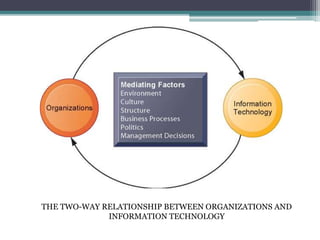
Organizations and Information Systems
• The interaction between information technology
and organizations is complex and is influenced
by many mediating factors, including the
organization’s structure, business processes,
politics, culture, surrounding environment, and
management decisions
THE TWO-WAY RELATIONSHIP BETWEEN ORGANIZATIONS AND
INFORMATION TECHNOLOGY
What is an Organization?
• An organization is a stable, formal social
structure that takes resources from the
environment and processes them to produce
outputs.
THE BEHAVIORAL VIEW OF
ORGANIZATIONS
Features of Organizations
• Standard Operating Procedures – are precise rules,
procedures, and practices that have been developed
to cope with virtually all expected situations.
• Organizational Politics – political struggle for
resources, competition and conflict within an
organization
• Organizational Cultures – encompasses set of
assumptions about what products should the
organization produce, how it should produce them,
where and for whom.
Organizational Environments
• Organizations reside in environments from
which they draw resources and to which they
supply goods and services.
• Information systems are key instruments for
environmental scanning, helping managers
identify external changes that might require an
organizational response.
How IT Impacts Business Firms
• Economic Impact
• Organizational and Behavorial Impact
▫ IT flattens organizations
▫ Post-industrial organizations
▫ Understanding Organizational Resistance to
change
See you next chapter

Management Information Systems - Chapter 3

  • 1.
    Management Information System withInternet Technologies Part 1 Organizations, Management and the Networked Enterprise Chapter 3 Information Systems, Organizations, and Strategy
  • 2.
    Chapter 3 Information Systems,Organizations and Strategy
  • 3.
    Organizations and InformationSystems • The interaction between information technology and organizations is complex and is influenced by many mediating factors, including the organization’s structure, business processes, politics, culture, surrounding environment, and management decisions
  • 4.
    THE TWO-WAY RELATIONSHIPBETWEEN ORGANIZATIONS AND INFORMATION TECHNOLOGY
  • 5.
    What is anOrganization? • An organization is a stable, formal social structure that takes resources from the environment and processes them to produce outputs.
  • 6.
    THE BEHAVIORAL VIEWOF ORGANIZATIONS
  • 7.
    Features of Organizations •Standard Operating Procedures – are precise rules, procedures, and practices that have been developed to cope with virtually all expected situations. • Organizational Politics – political struggle for resources, competition and conflict within an organization • Organizational Cultures – encompasses set of assumptions about what products should the organization produce, how it should produce them, where and for whom.
  • 9.
    Organizational Environments • Organizationsreside in environments from which they draw resources and to which they supply goods and services. • Information systems are key instruments for environmental scanning, helping managers identify external changes that might require an organizational response.
  • 13.
    How IT ImpactsBusiness Firms • Economic Impact • Organizational and Behavorial Impact ▫ IT flattens organizations ▫ Post-industrial organizations ▫ Understanding Organizational Resistance to change
  • 14.
    See you nextchapter