Cardiogenic shock and radial 
approach 
Dr Mamas Mamas 
Senior Lecturer, Honorary Consultant 
Cardiologist 
University of Manchester
Cardiogenic shock 
• Cardiogenic shock (CS) a leading cause of mortality in 
patients with AMI 
• Mortality rates significant. 30-day mortality between 30-60% 
• Major bleeding complications occur in upto 10% of patients 
with CS 
• Many studies of access site related outcomes have excluded 
CS (eg RIVAL, STEMI-Radial etc) 
• Even in experienced radial centers, patients presenting in CS 
are often treated via TFA 
• Commentators suggested that CS remains the final frontier 
giving experienced radial operators pause for thought
Cardiogenic shock 
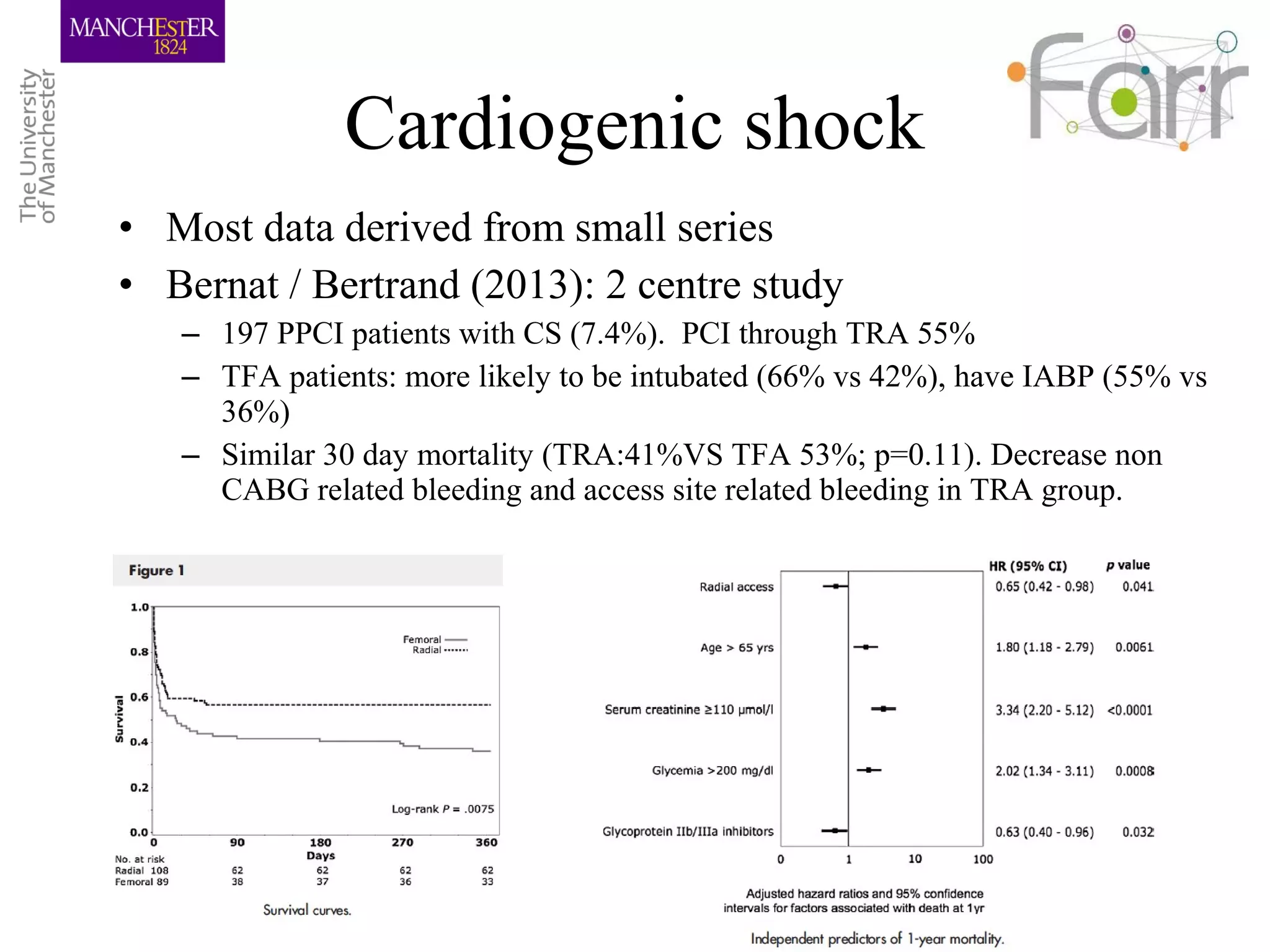
• Most data derived from small series 
• Bernat / Bertrand (2013): 2 centre study 
– 197 PPCI patients with CS (7.4%). PCI through TRA 55% 
– TFA patients: more likely to be intubated (66% vs 42%), have IABP (55% vs 
36%) 
– Similar 30 day mortality (TRA:41%VS TFA 53%; p=0.11). Decrease non 
CABG related bleeding and access site related bleeding in TRA group.
Cardiogenic shock 
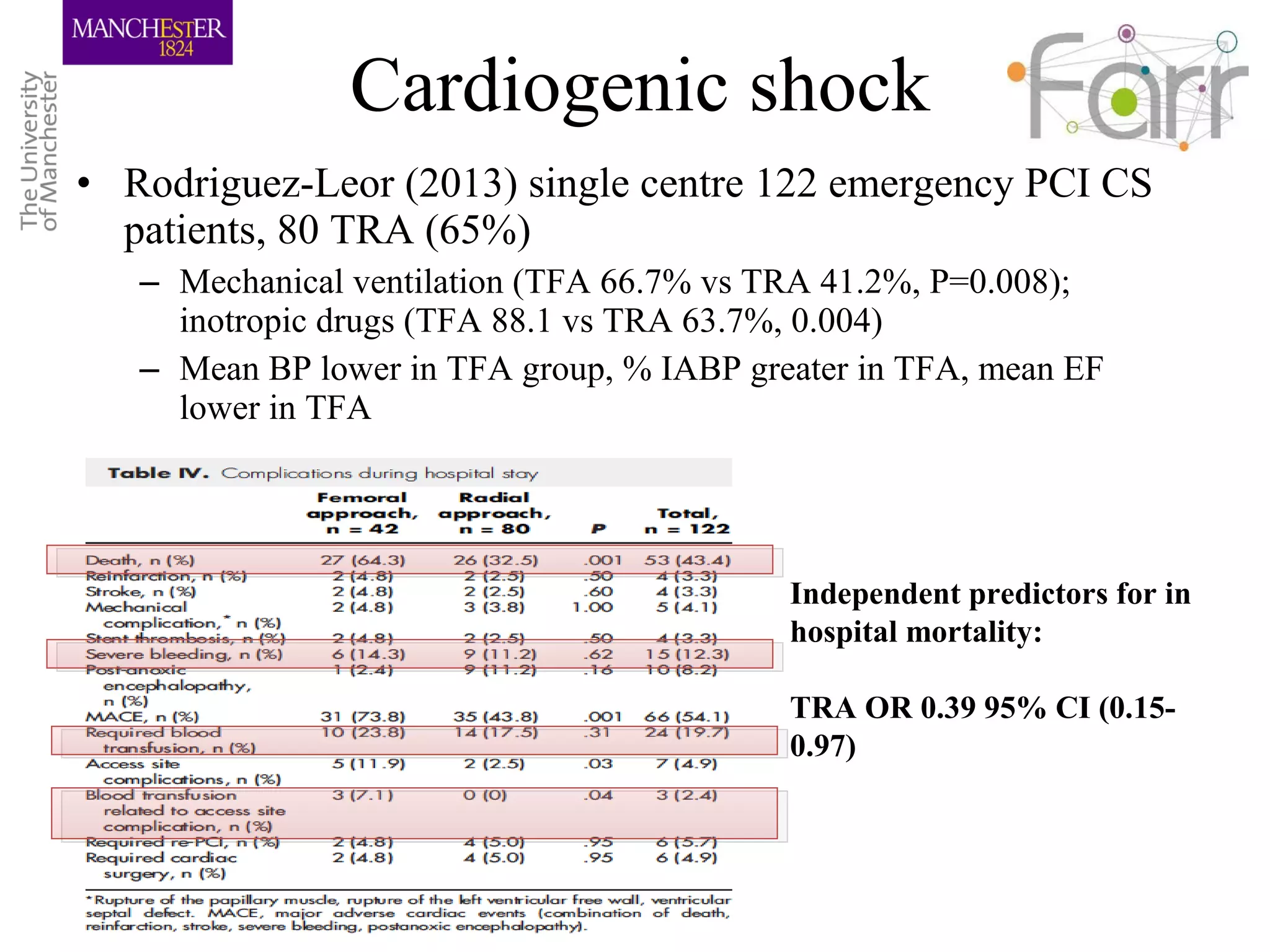
• Rodriguez-Leor (2013) single centre 122 emergency PCI CS 
patients, 80 TRA (65%) 
– Mechanical ventilation (TFA 66.7% vs TRA 41.2%, P=0.008); 
inotropic drugs (TFA 88.1 vs TRA 63.7%, 0.004) 
– Mean BP lower in TFA group, % IABP greater in TFA, mean EF 
lower in TFA 
Independent predictors for in 
hospital mortality: 
TRA OR 0.39 95% CI (0.15- 
0.97)
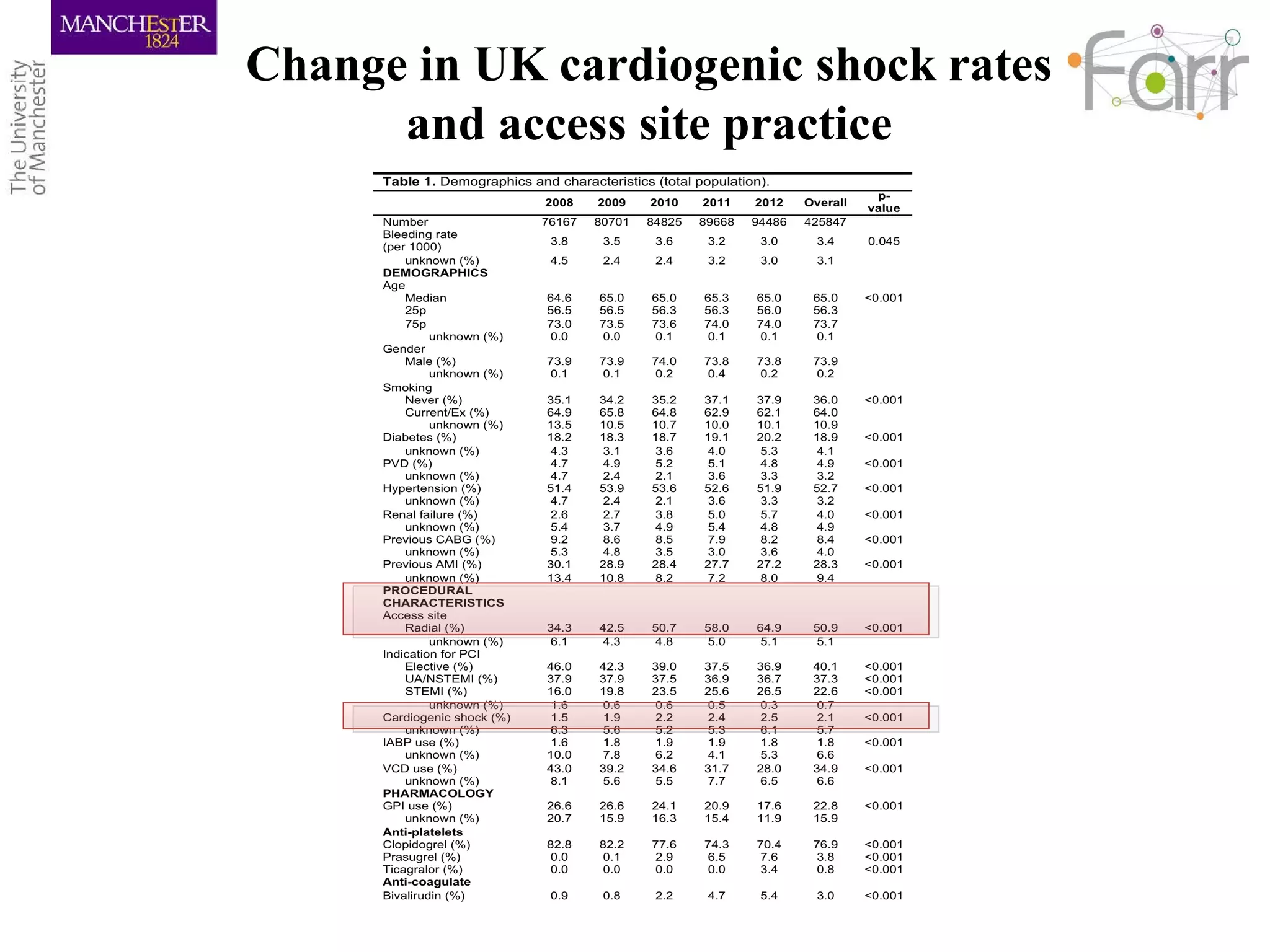
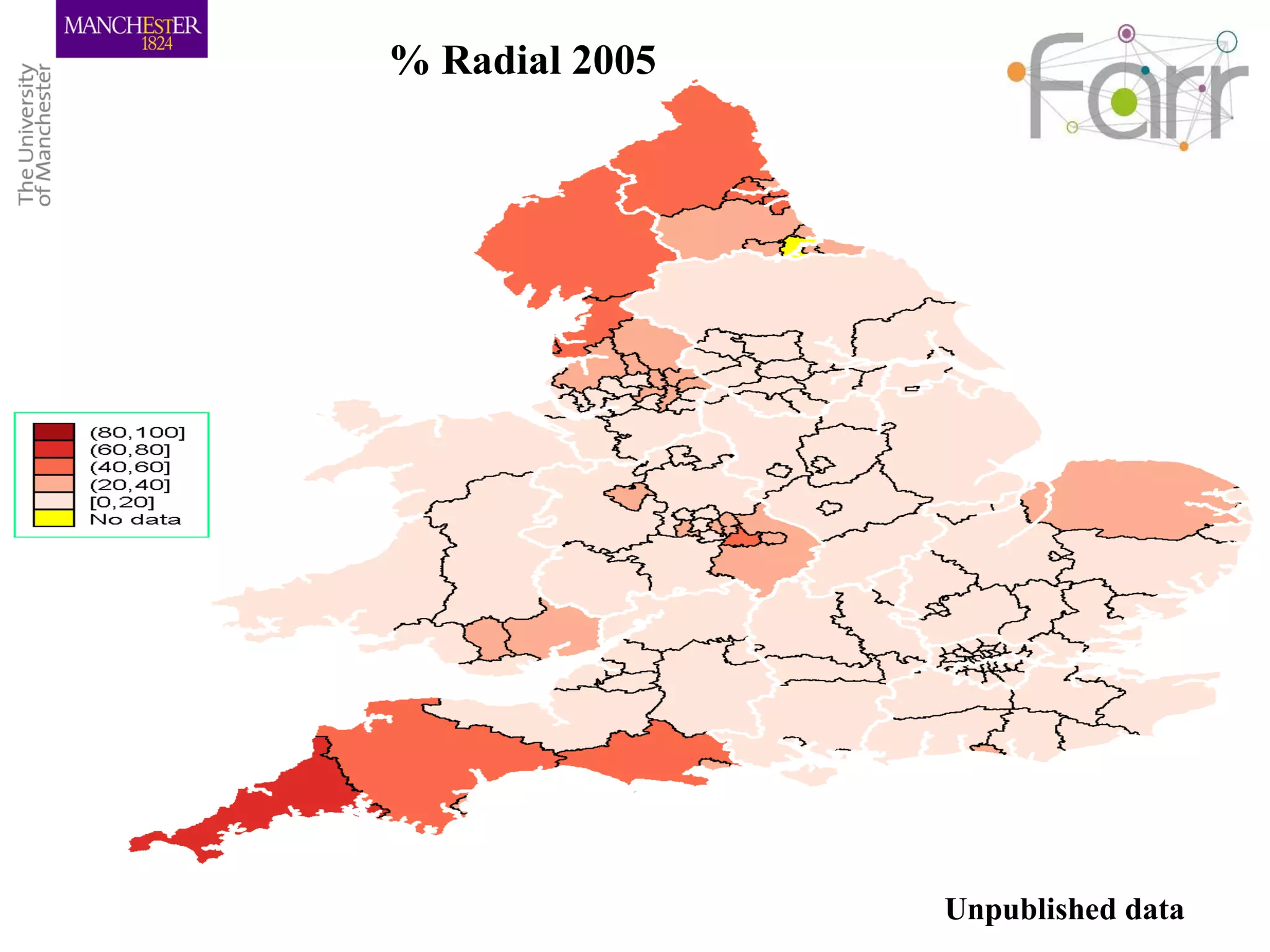
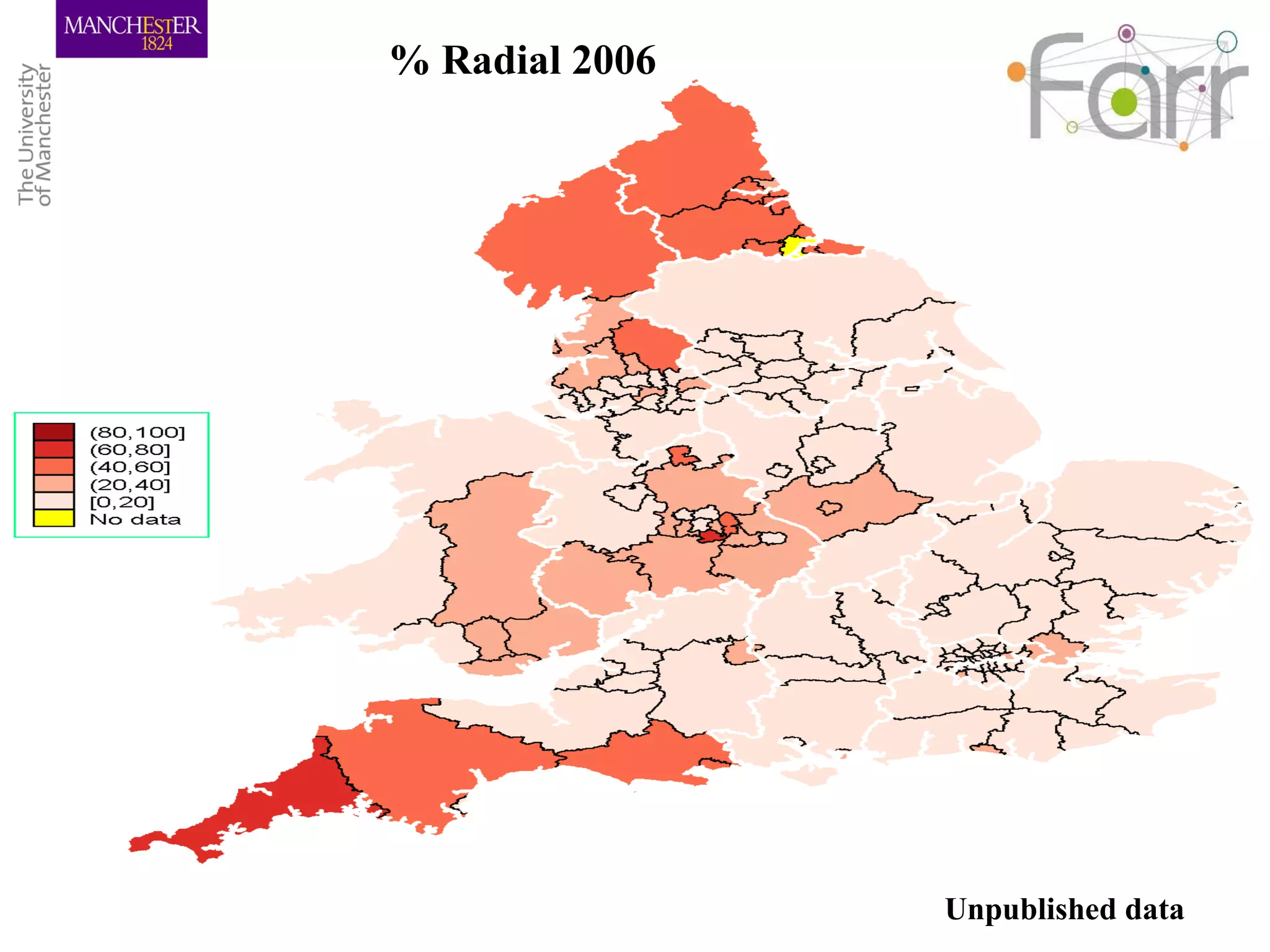
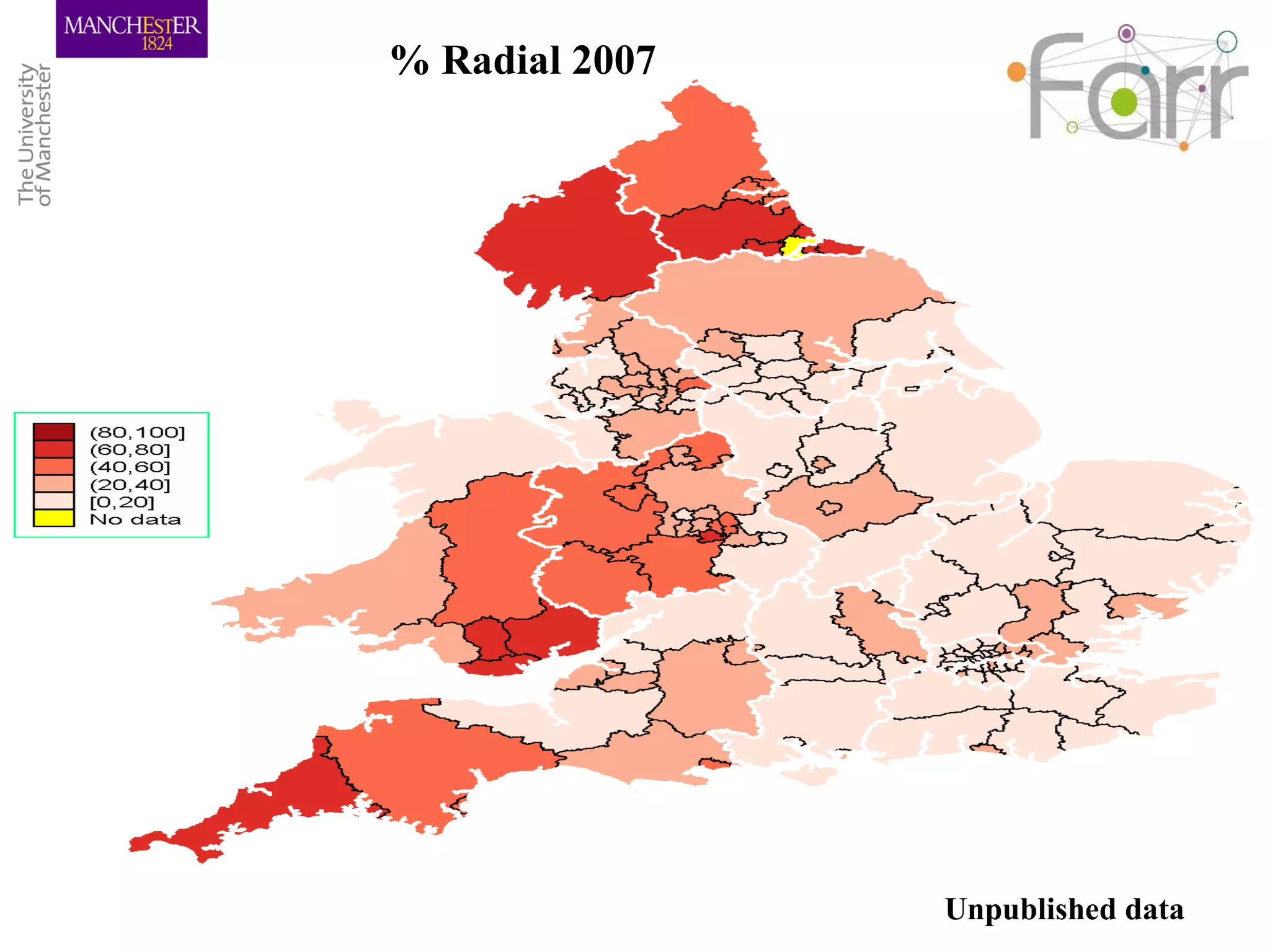
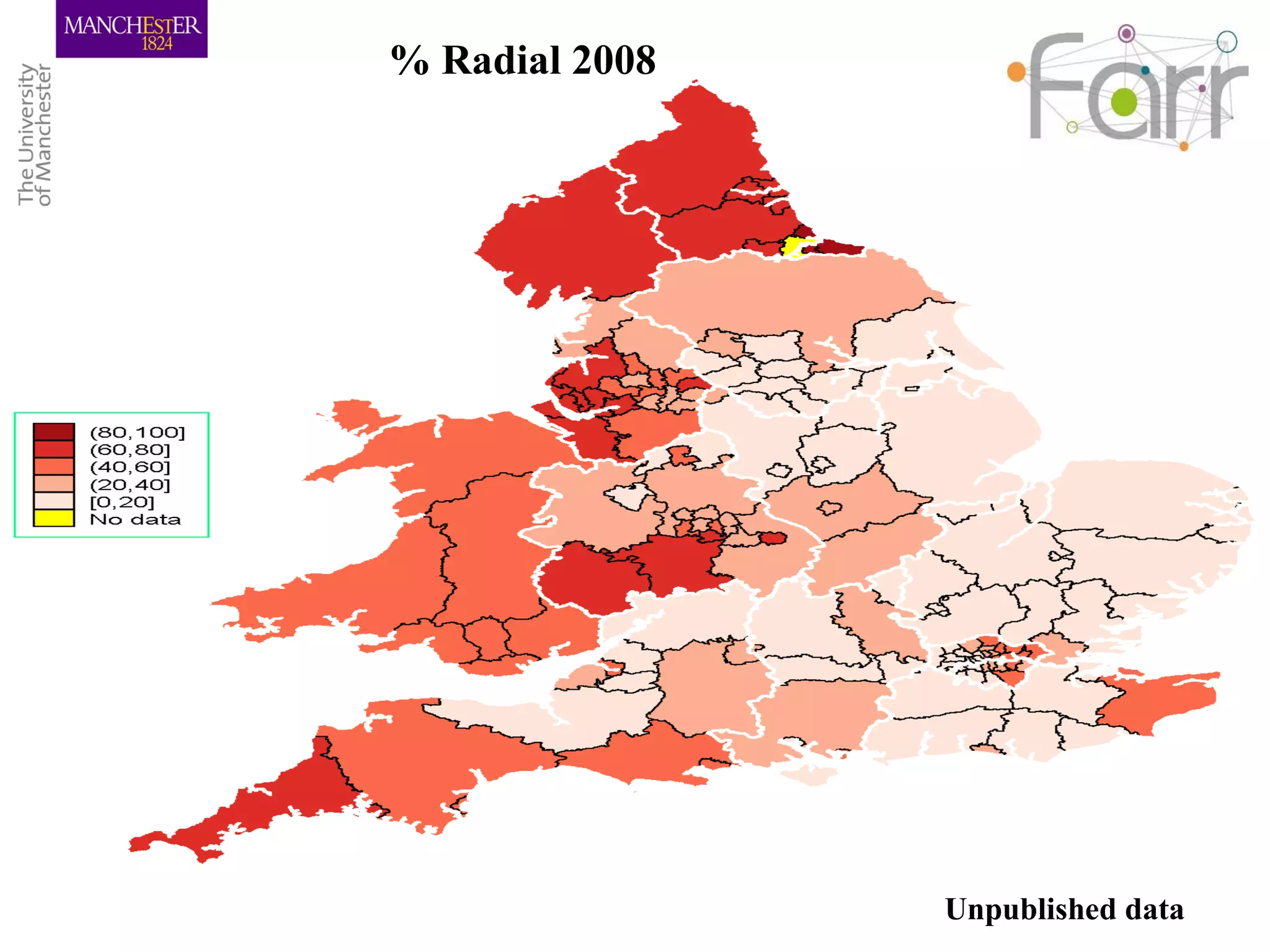
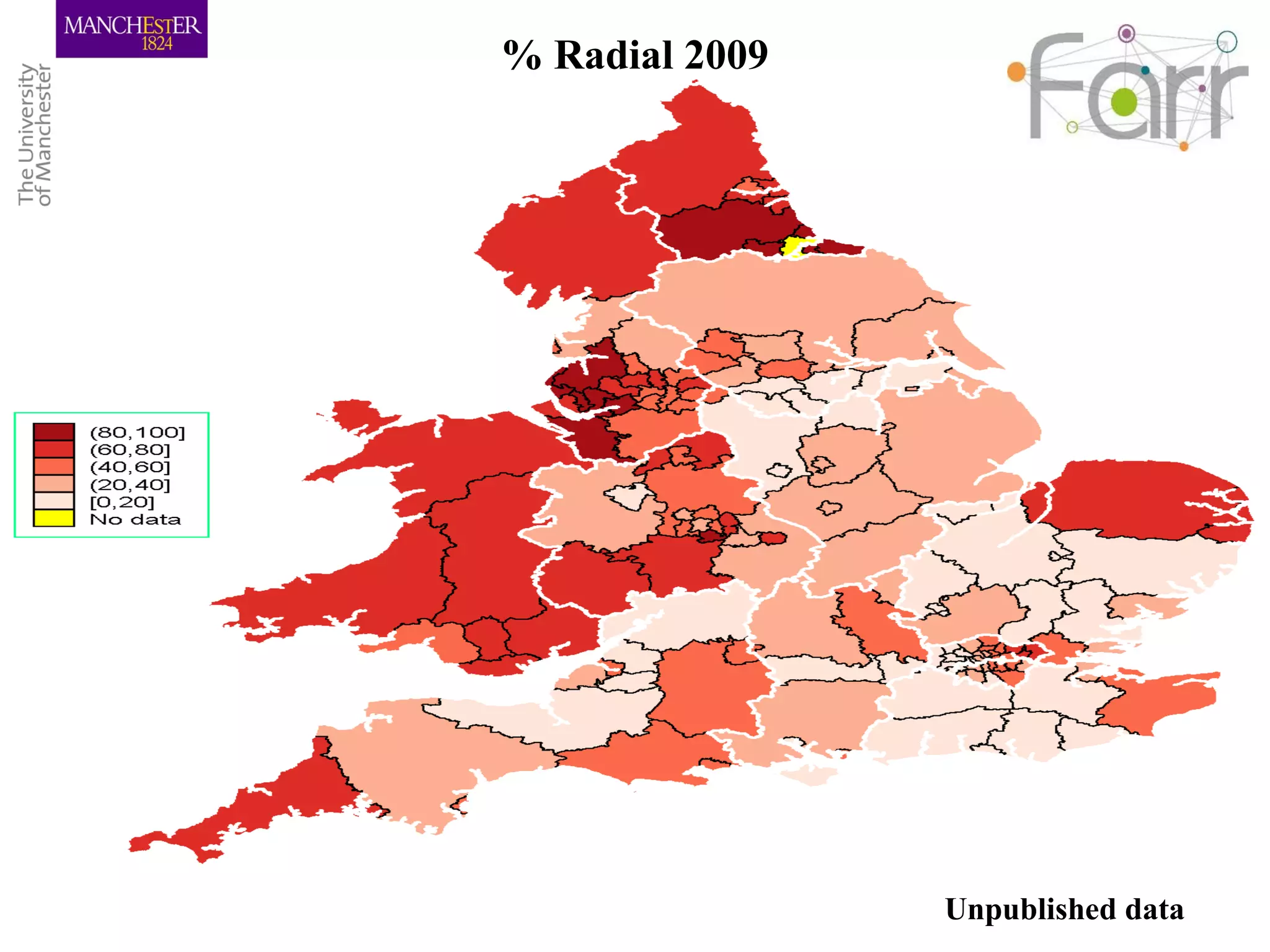
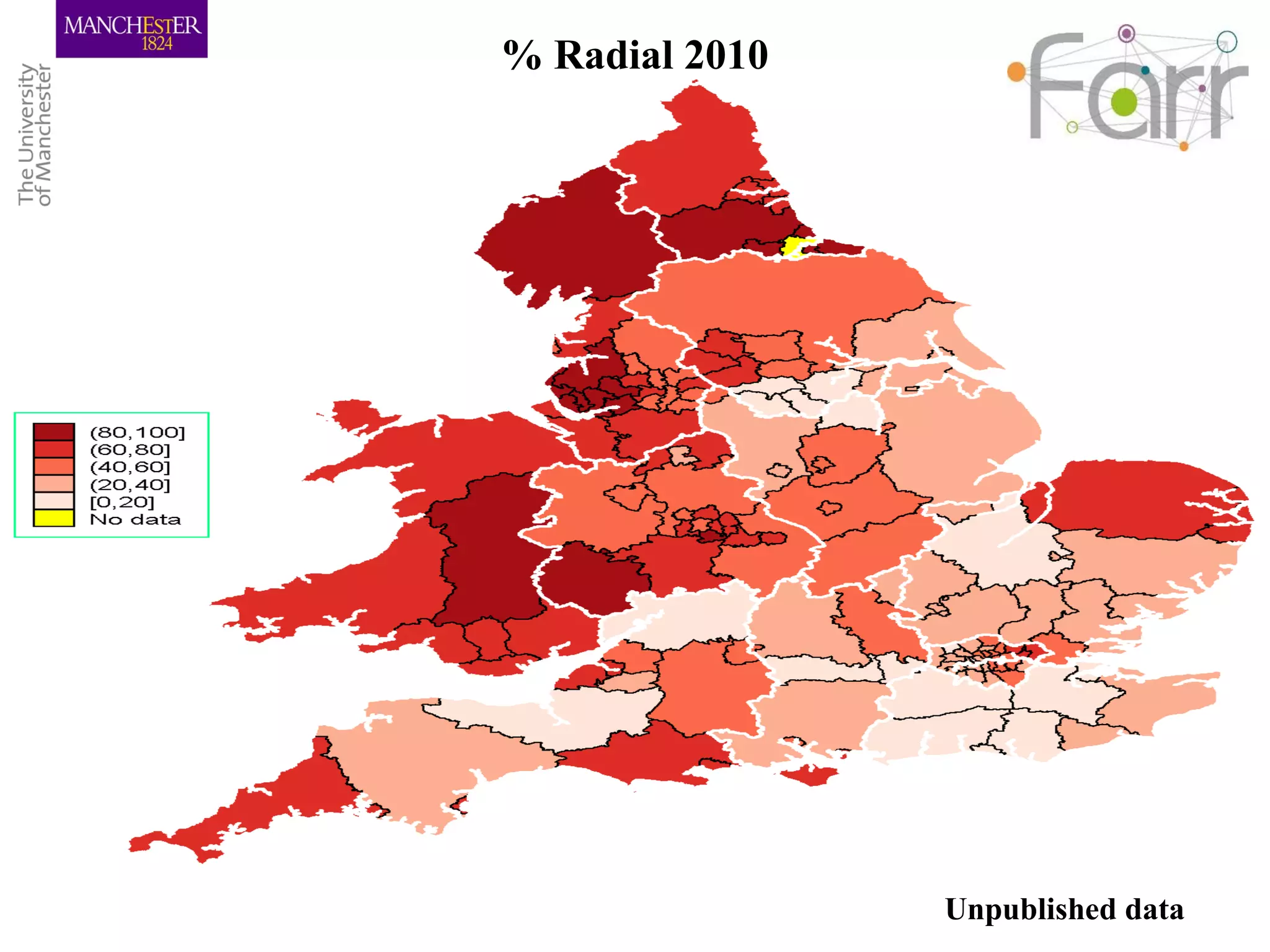
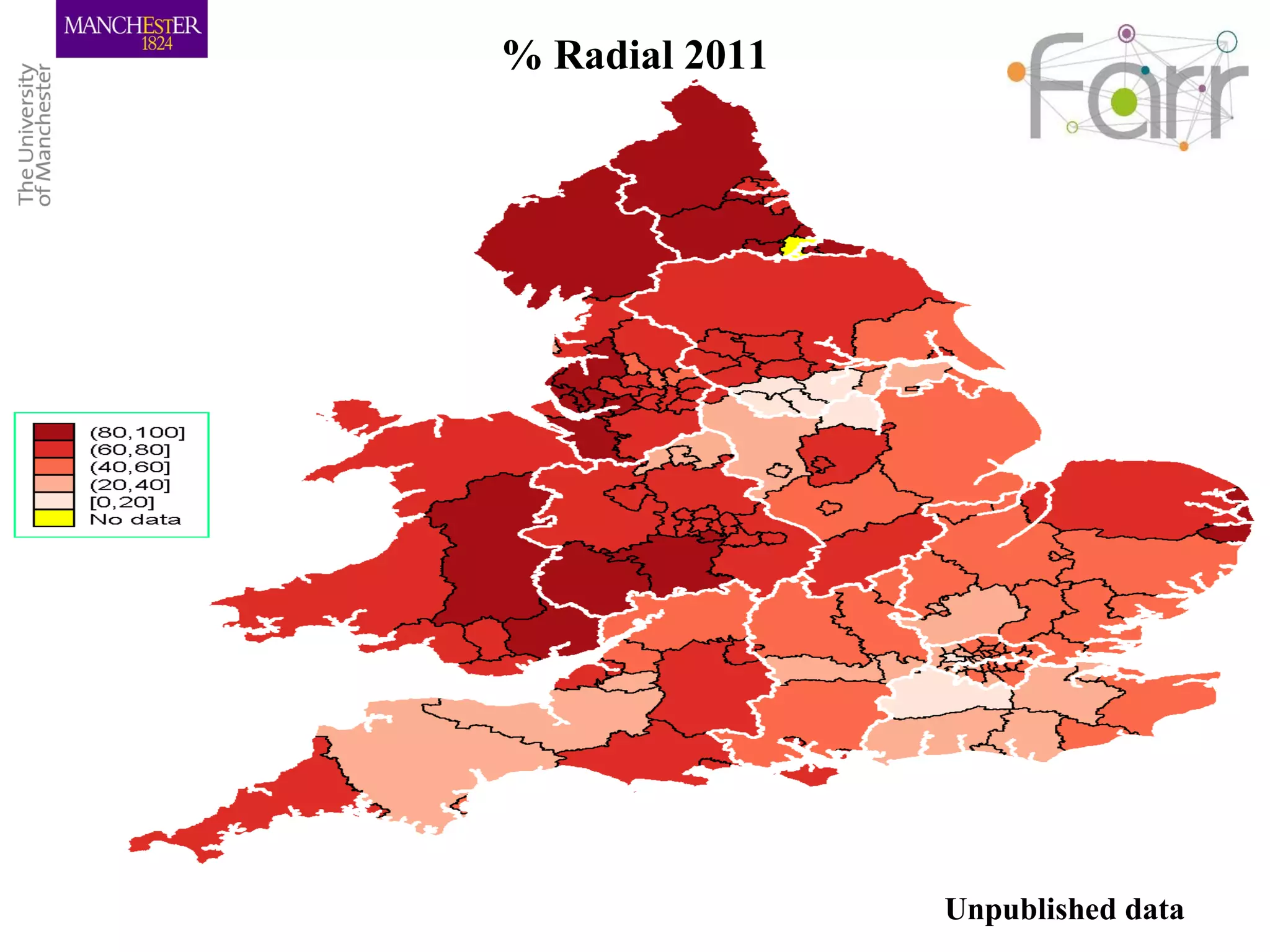
Change in UK cardiogenic shock rates 
and access site practice
% Radial 2005 
Unpublished data
% Radial 2006 
Unpublished data
% Radial 2007 
Unpublished data
% Radial 2008 
Unpublished data
% Radial 2009 
Unpublished data
% Radial 2010 
Unpublished data
% Radial 2011 
Unpublished data
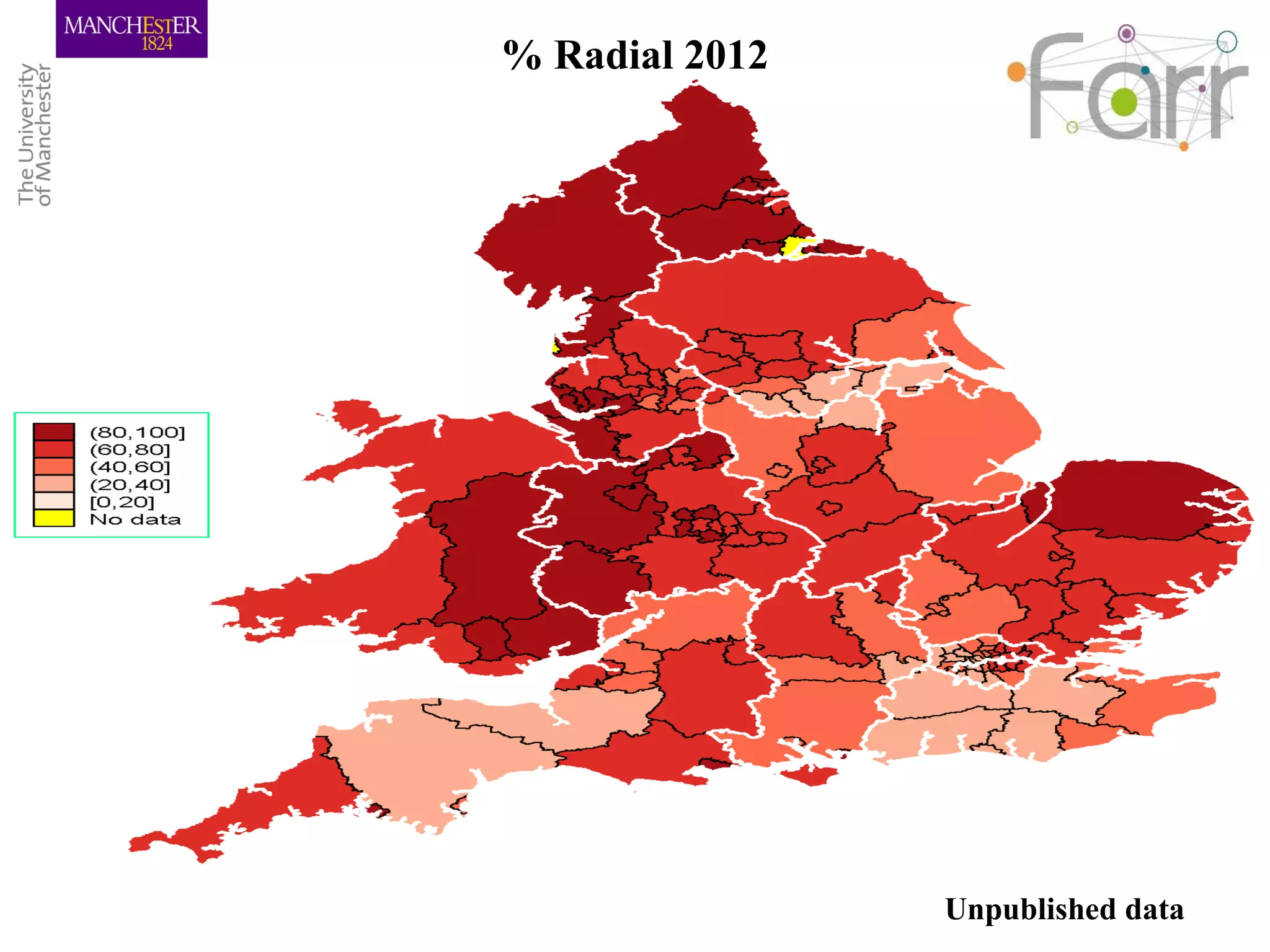
% Radial 2012 
Unpublished data
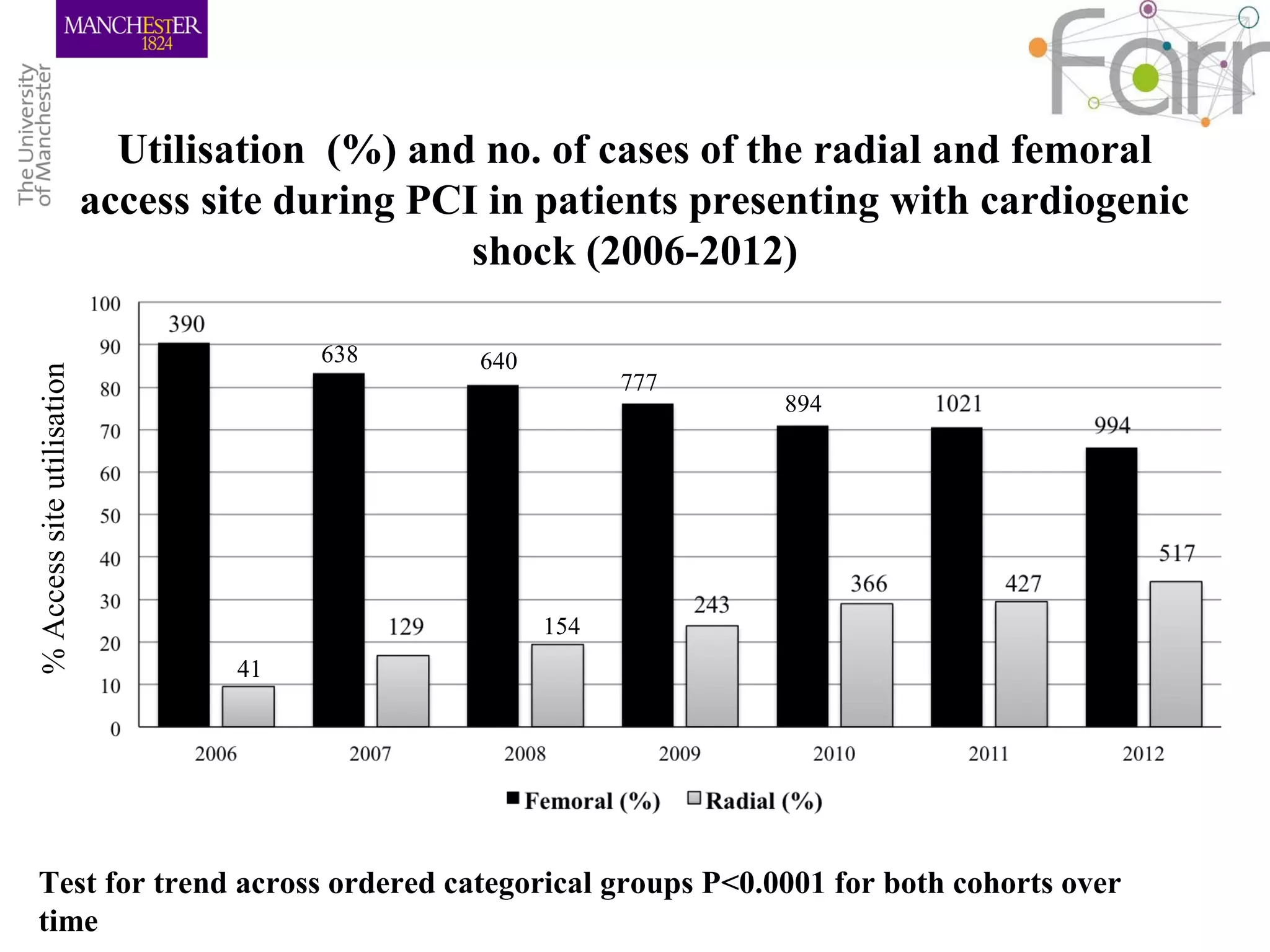
Utilisation (%) and no. of cases of the radial and femoral 
access site during PCI in patients presenting with cardiogenic 
shock (2006-2012) 
41 
638 
154 
640 
777 
% Access site utilisation 
894 
Test for trend across ordered categorical groups P<0.0001 for both cohorts over 
time
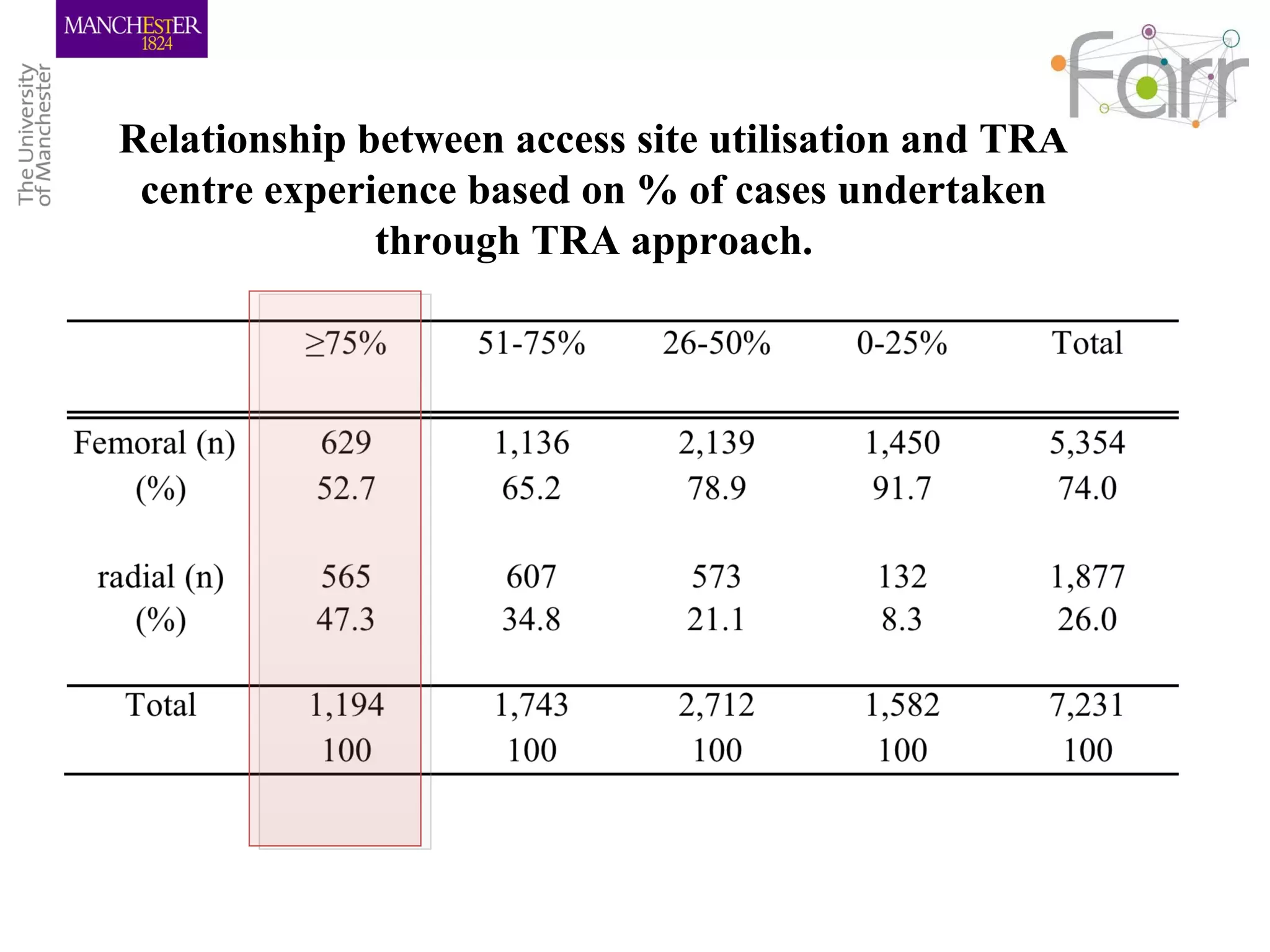
Relationship between access site utilisation and TRA 
centre experience based on % of cases undertaken 
through TRA approach.
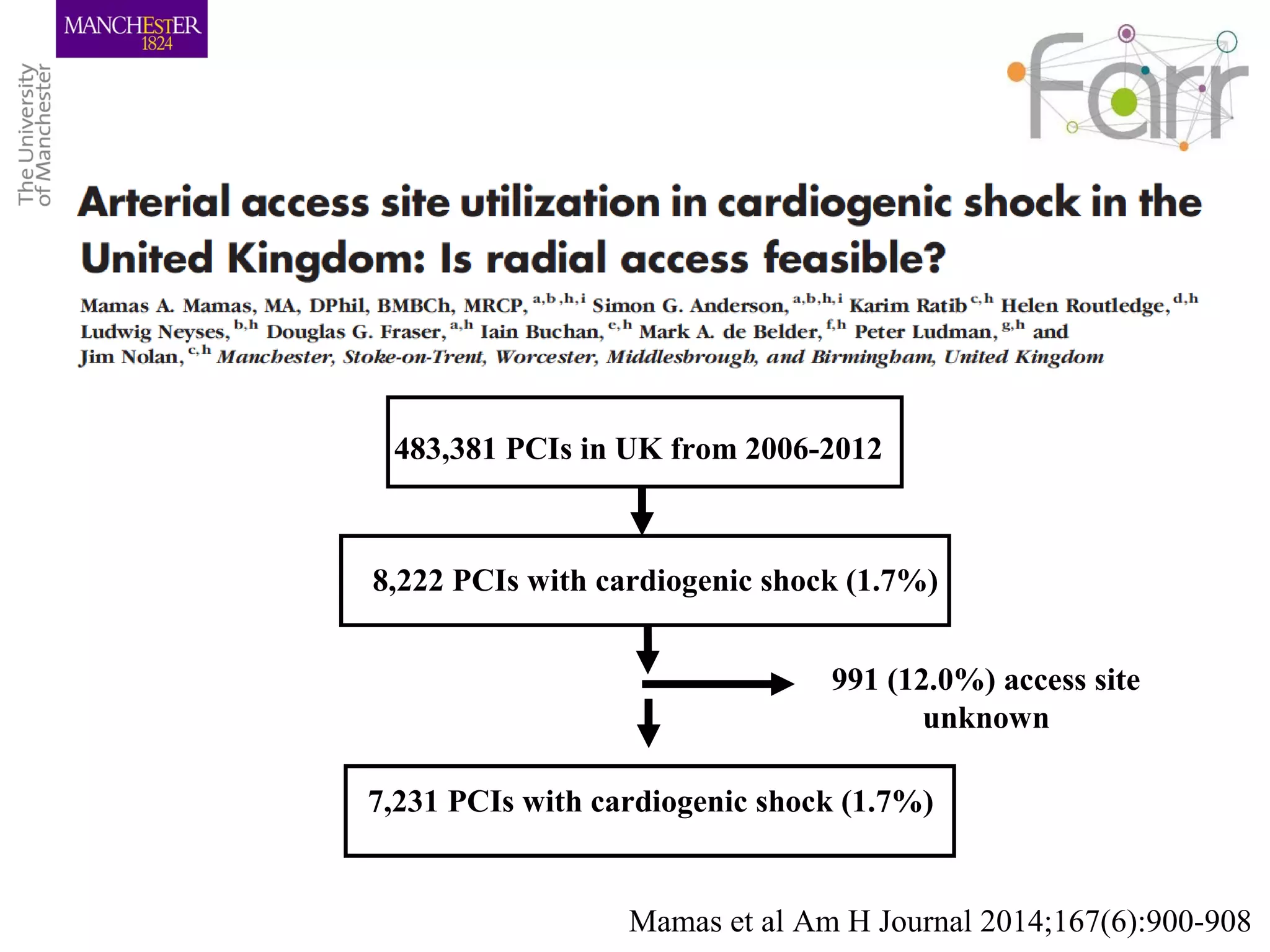
483,381 PCIs in UK from 2006-2012 
8,222 PCIs with cardiogenic shock (1.7%) 
991 (12.0%) access site 
unknown 
7,231 PCIs with cardiogenic shock (1.7%) 
Mamas et al Am H Journal 2014;167(6):900-908
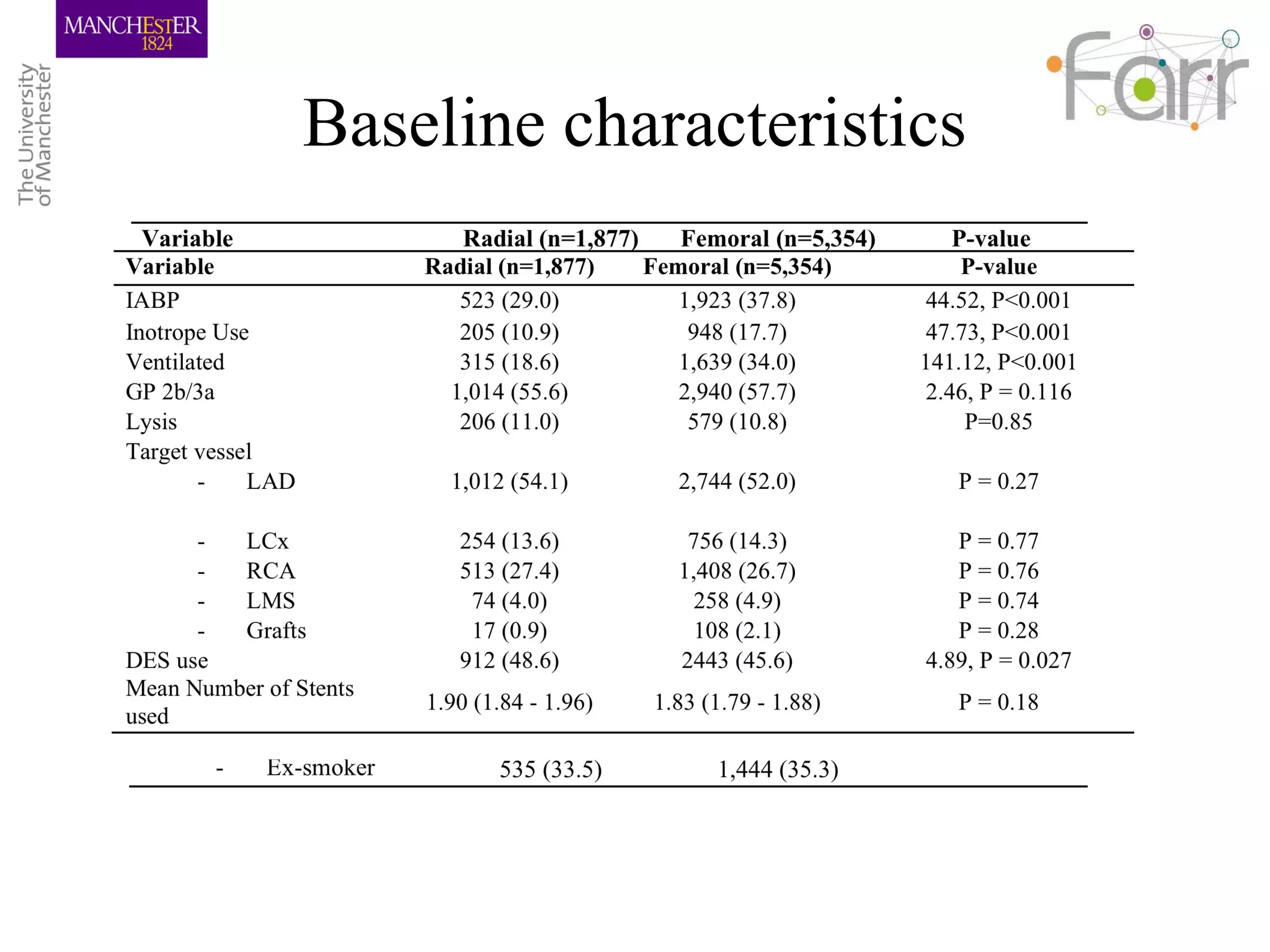
Baseline characteristics
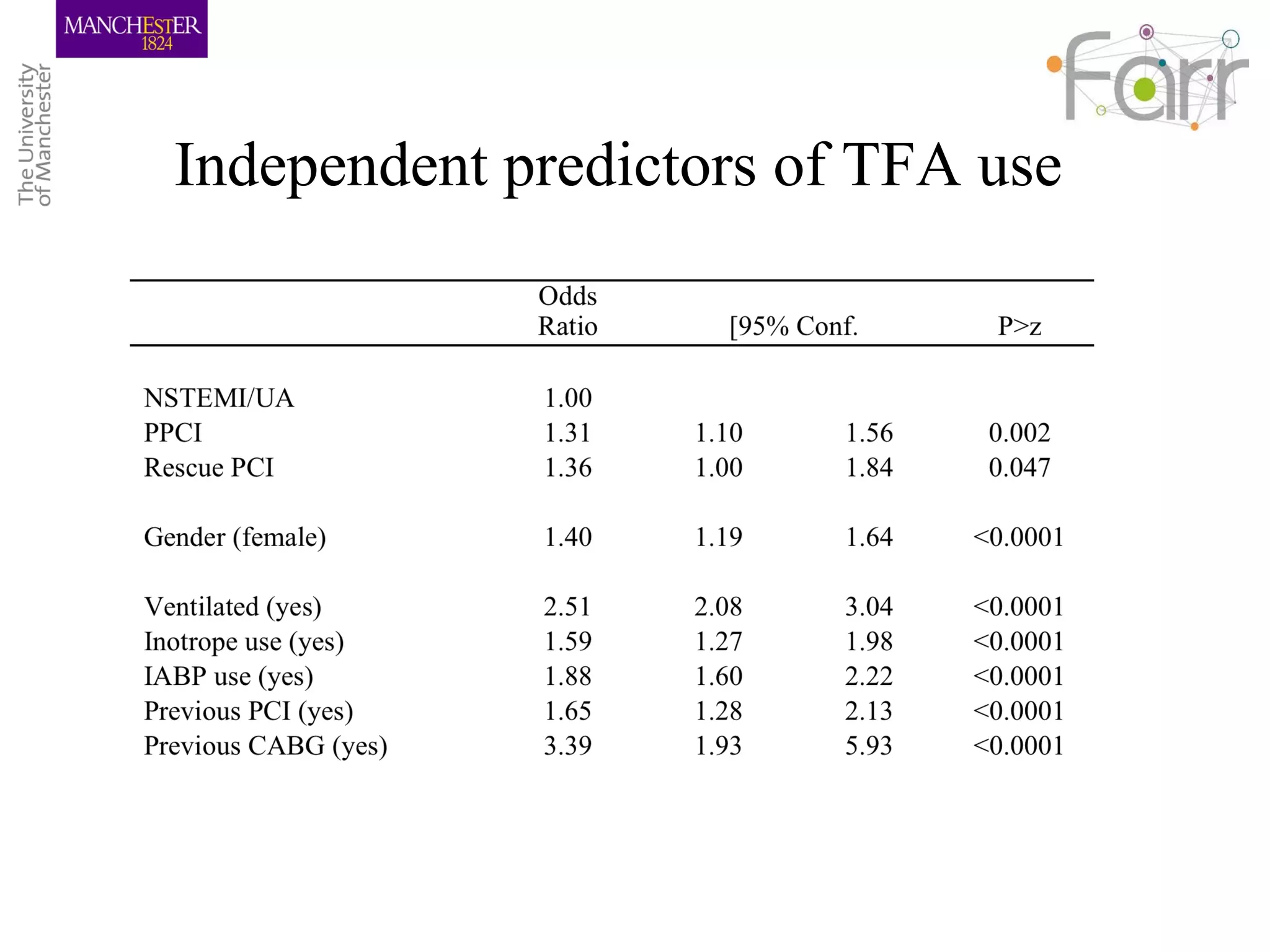
Independent predictors of TFA use
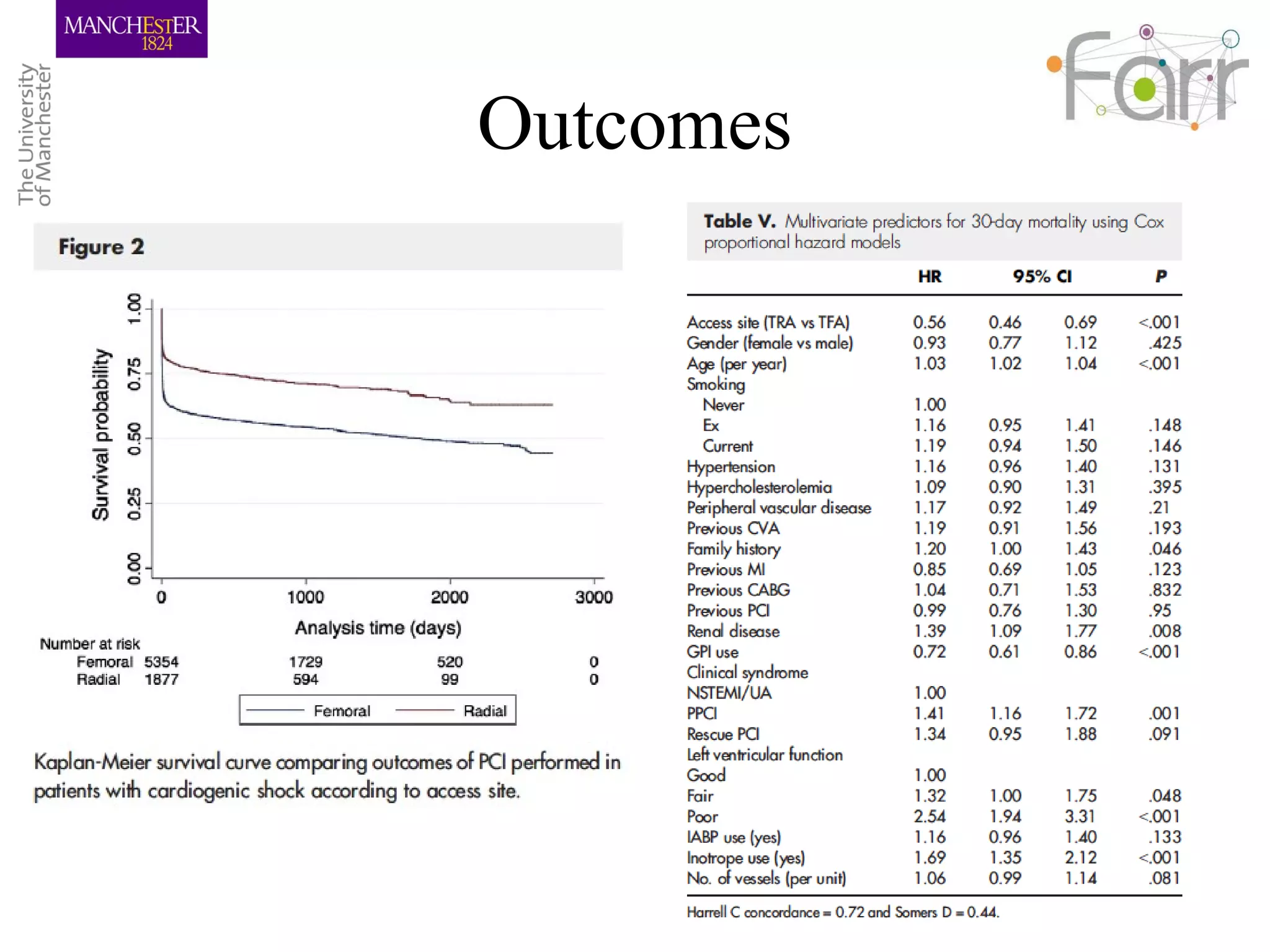
Outcomes
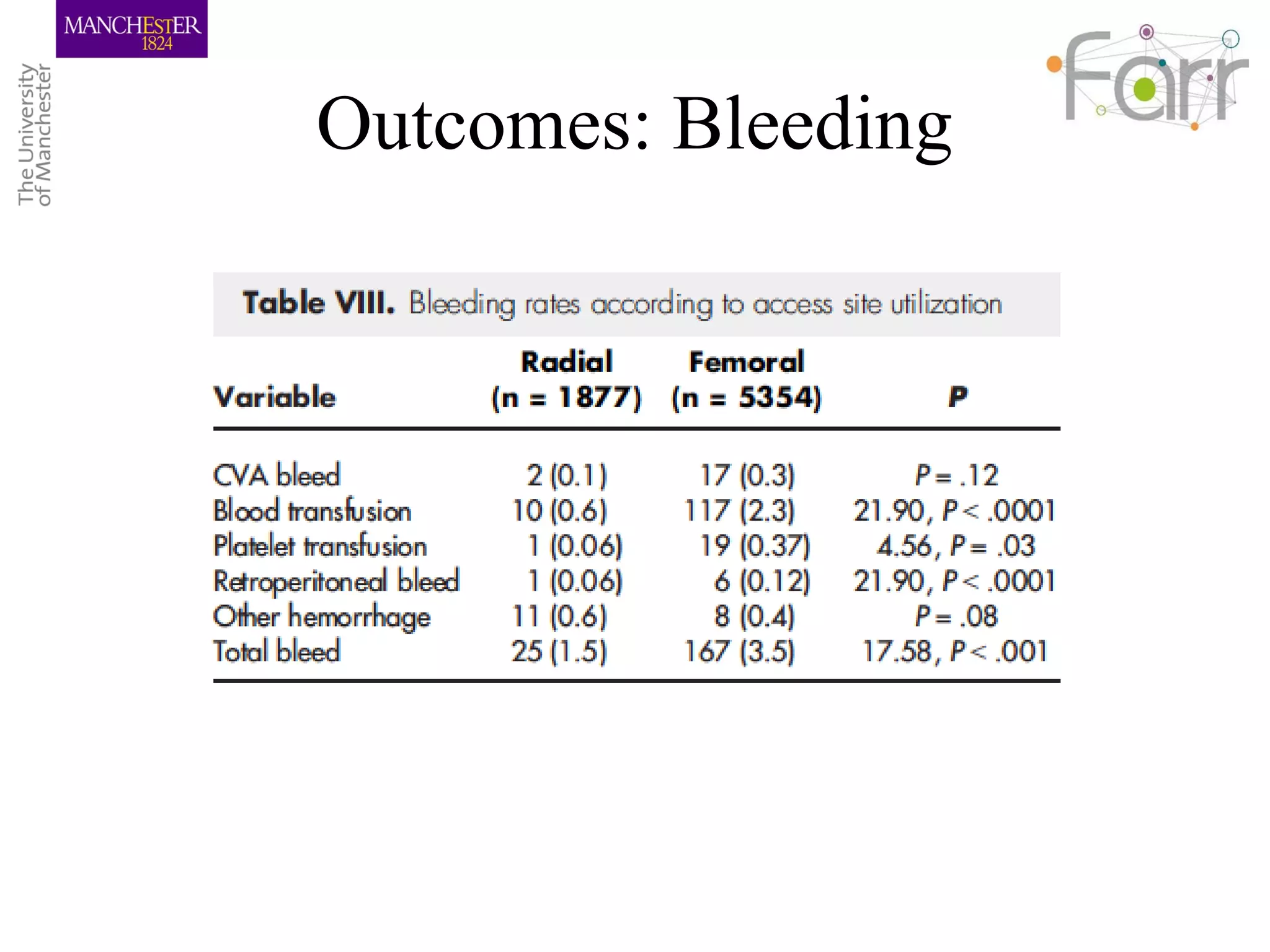
Outcomes: Bleeding
Outcomes 
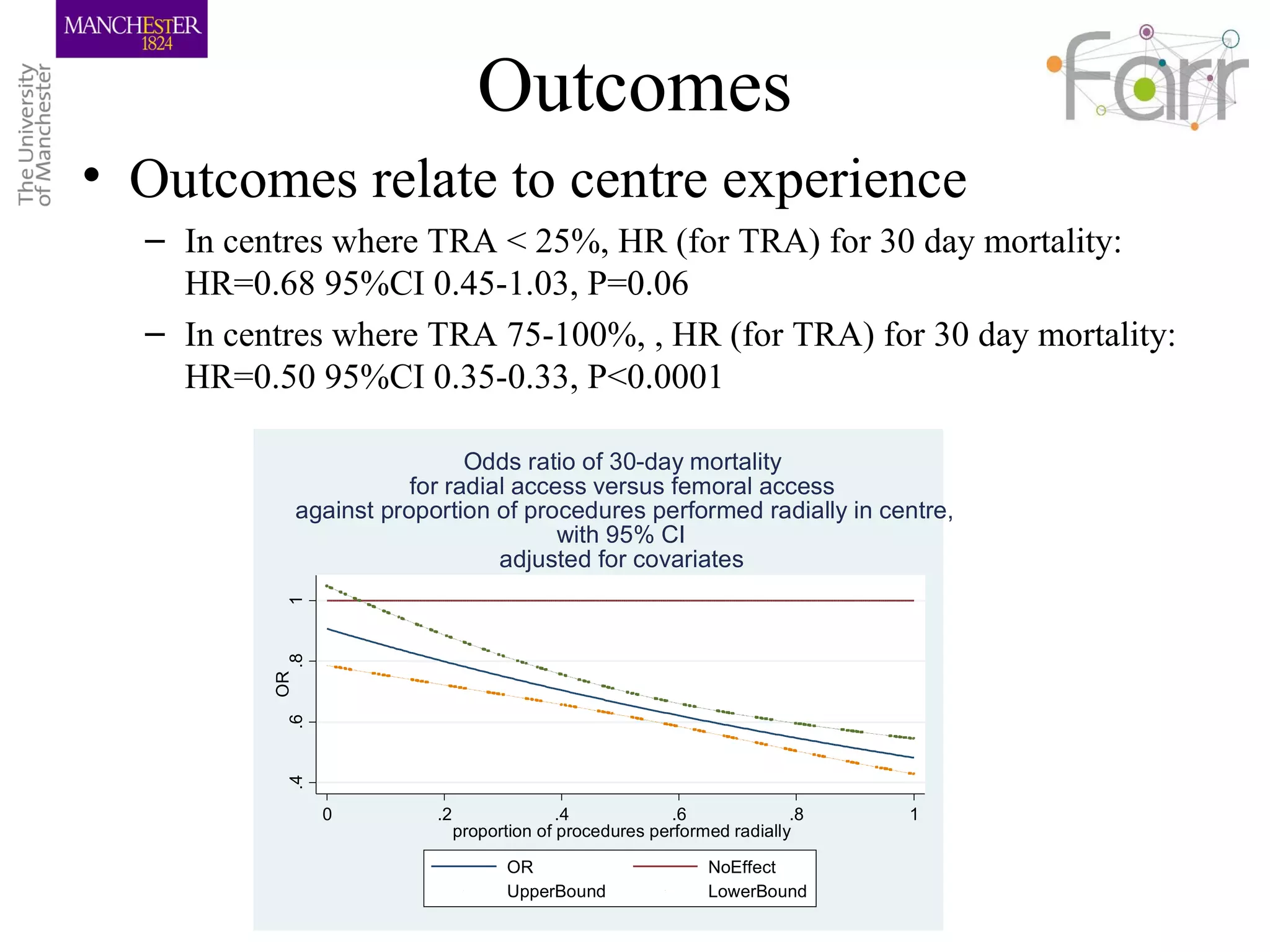
• Outcomes relate to centre experience 
– In centres where TRA < 25%, HR (for TRA) for 30 day mortality: 
HR=0.68 95%CI 0.45-1.03, P=0.06 
– In centres where TRA 75-100%, , HR (for TRA) for 30 day mortality: 
HR=0.50 95%CI 0.35-0.33, P<0.0001 
against proportion of procedures performed radially in centre, 
.4 .6 .8 1 
OR 
Odds ratio of 30-day mortality 
for radial access versus femoral access 
with 95% CI 
adjusted for covariates 
0 .2 .4 .6 .8 1 
proportion of procedures performed radially 
OR NoEffect 
UpperBound LowerBound
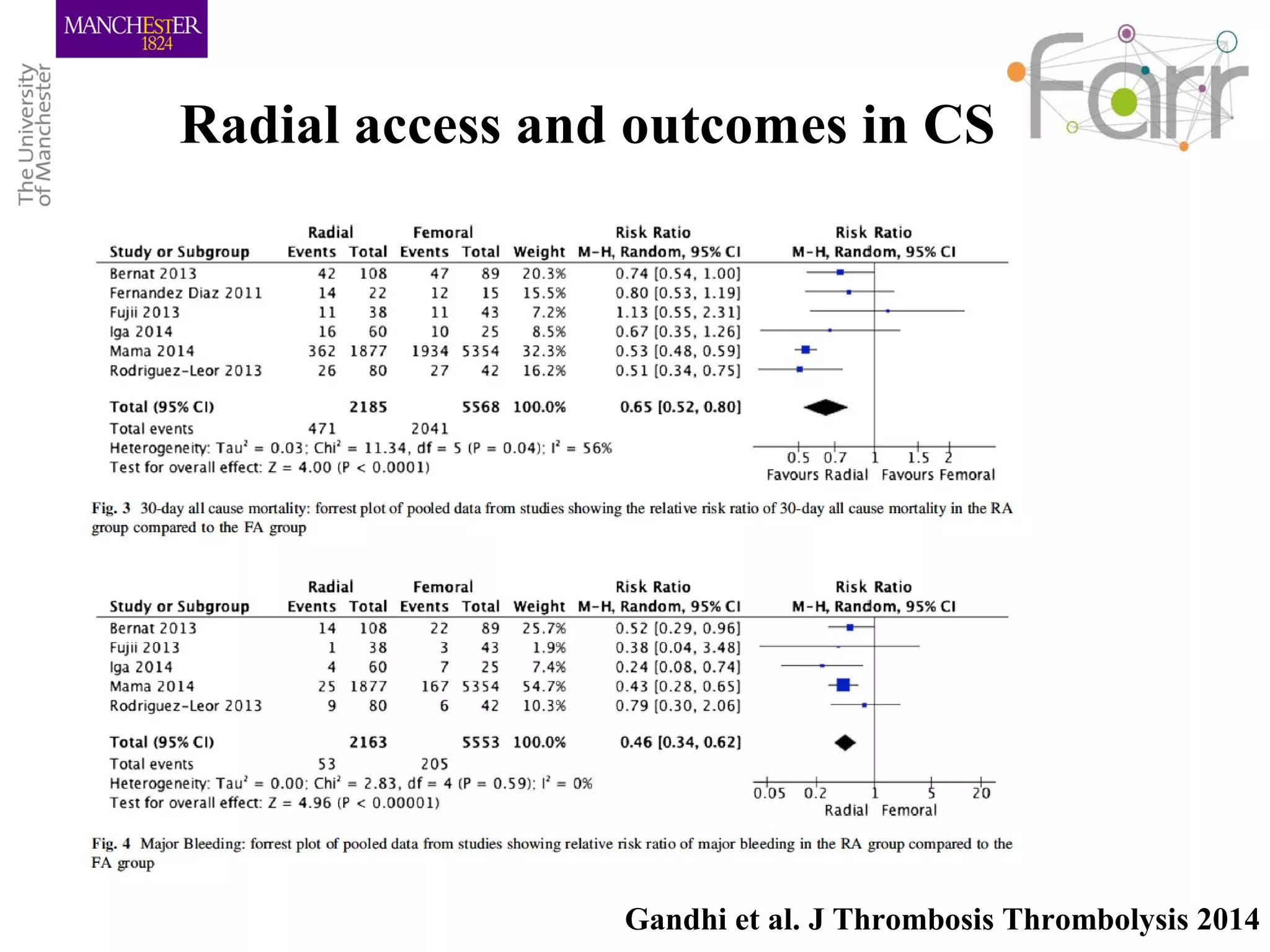
Radial access and outcomes in CS 
Gandhi et al. J Thrombosis Thrombolysis 2014
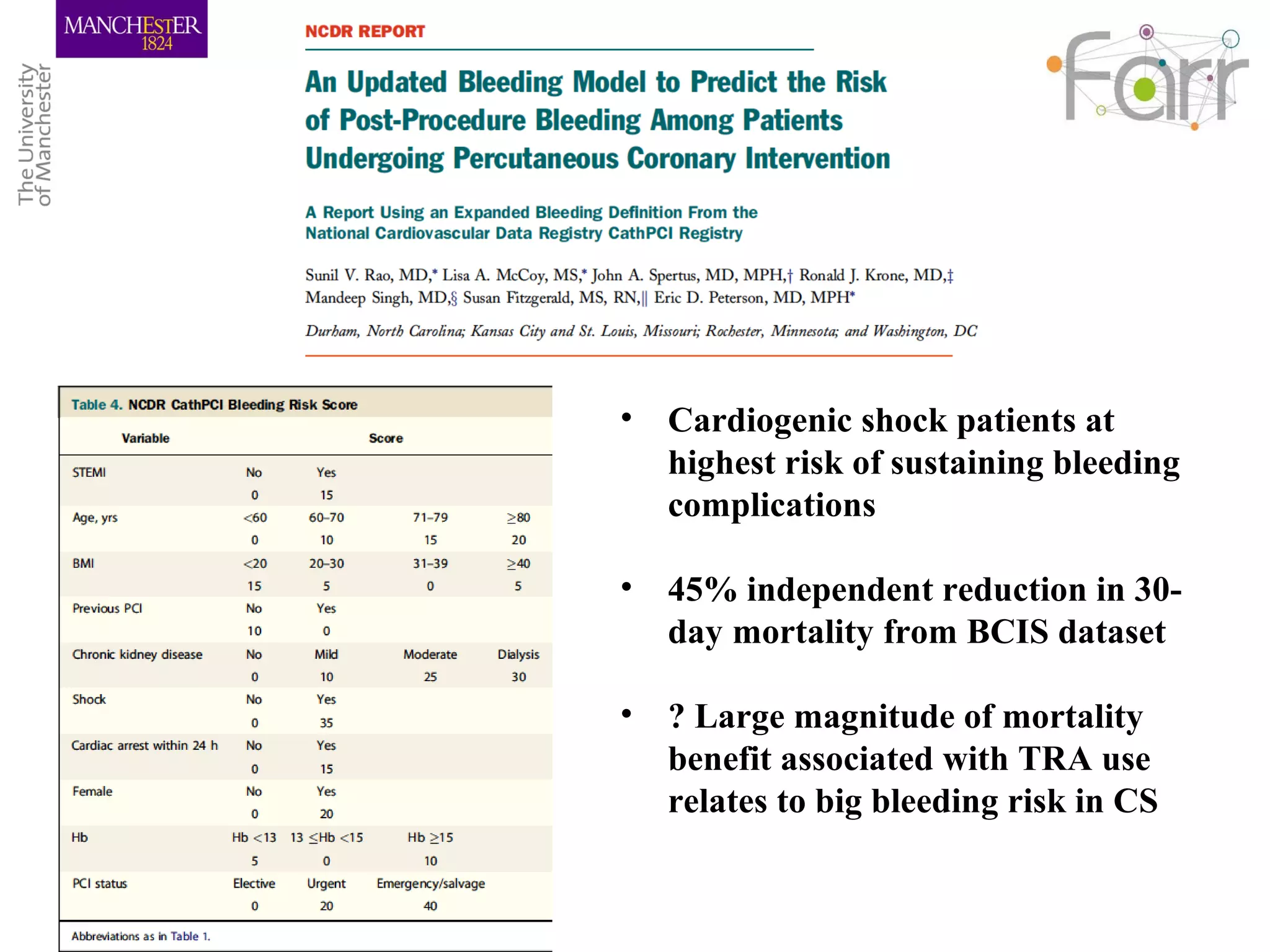
• Cardiogenic shock patients at 
highest risk of sustaining bleeding 
complications 
• 45% independent reduction in 30- 
day mortality from BCIS dataset 
• ? Large magnitude of mortality 
benefit associated with TRA use 
relates to big bleeding risk in CS
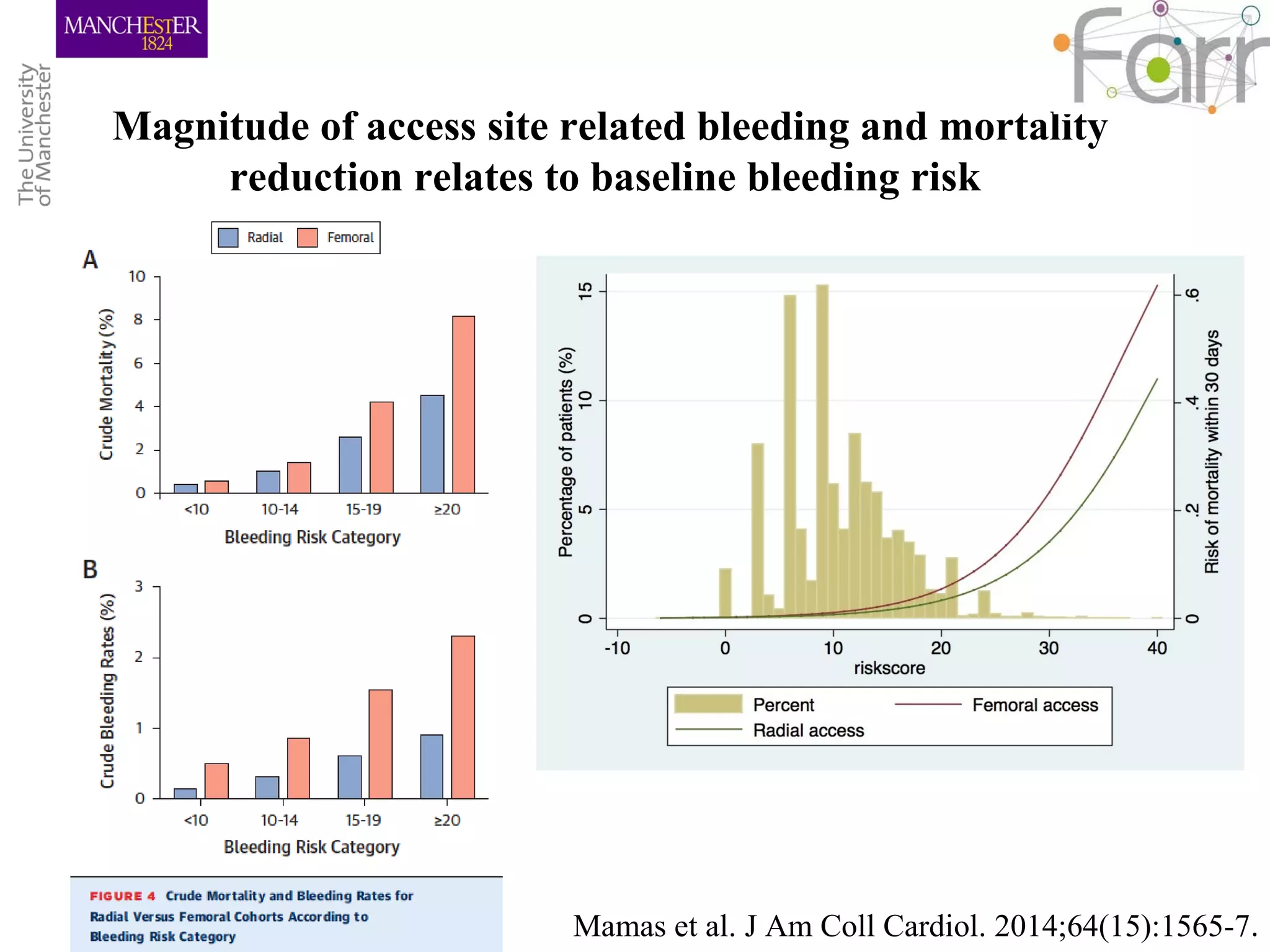
Magnitude of access site related bleeding and mortality 
reduction relates to baseline bleeding risk 
Mamas et al. J Am Coll Cardiol. 2014;64(15):1565-7.
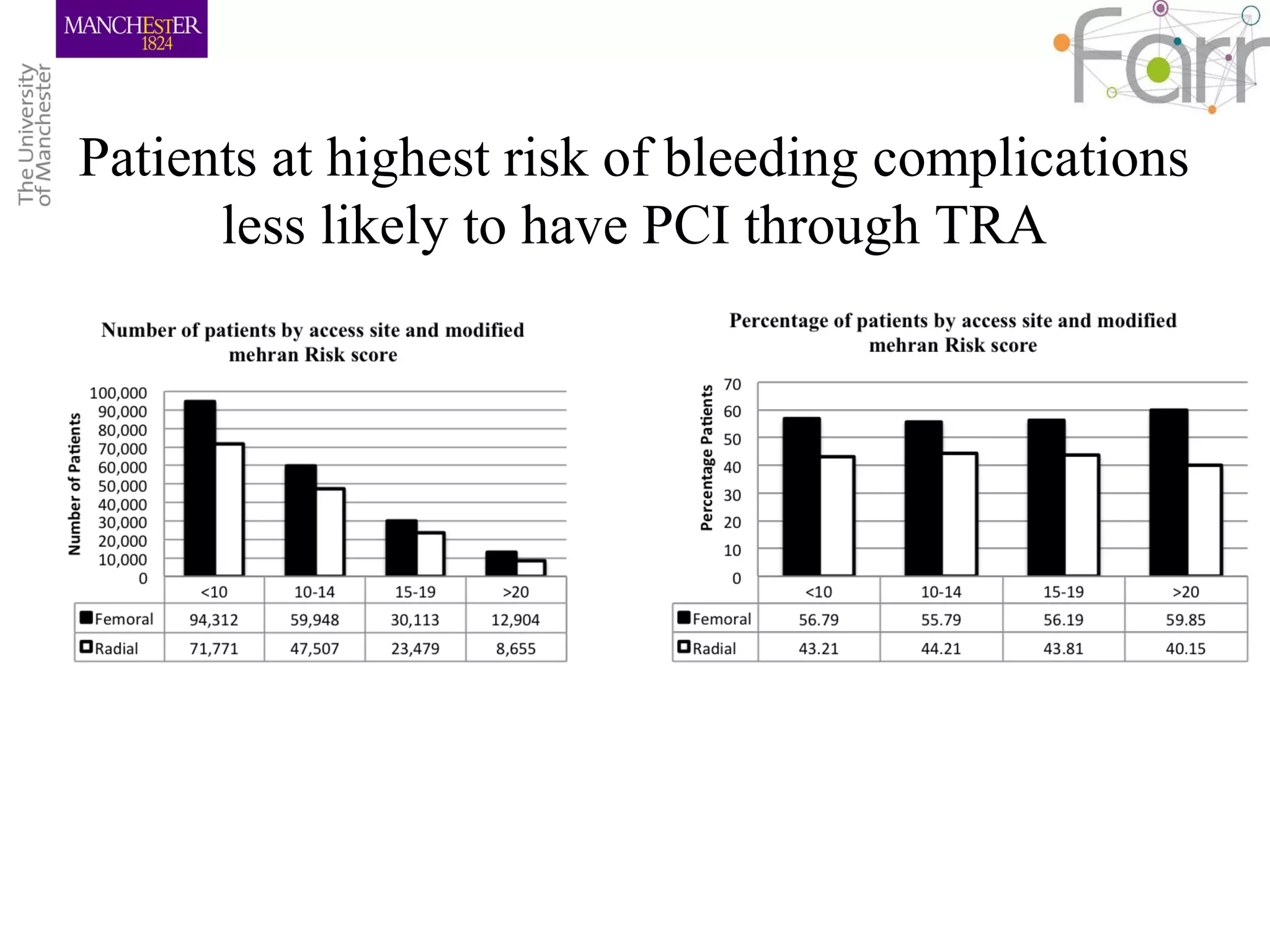
Patients at highest risk of bleeding complications 
less likely to have PCI through TRA
Conclusion 
• CS PCI feasible through TRA approach in a 
significant proportion of cases 
• Even in high volume TRA centres (>75%) only 50% 
of CS undertaken TR in UK 
• CS PCI represents amongst the highest bleeding risk 
PCI cases 
• TRA utilisation may be associated with decreased 
30d mortality outcomes (in experienced centres) 
• Magnitude of mortality benefit relates to baseline 
bleeding risk 
• Cases most likely to benefit from TRA undertaken 
femorally!

Mamas M - AIMRADIAL 2014 - Cardiogenic shock

  • 1.
    Cardiogenic shock andradial approach Dr Mamas Mamas Senior Lecturer, Honorary Consultant Cardiologist University of Manchester
  • 2.
    Cardiogenic shock •Cardiogenic shock (CS) a leading cause of mortality in patients with AMI • Mortality rates significant. 30-day mortality between 30-60% • Major bleeding complications occur in upto 10% of patients with CS • Many studies of access site related outcomes have excluded CS (eg RIVAL, STEMI-Radial etc) • Even in experienced radial centers, patients presenting in CS are often treated via TFA • Commentators suggested that CS remains the final frontier giving experienced radial operators pause for thought
  • 3.
    Cardiogenic shock •Most data derived from small series • Bernat / Bertrand (2013): 2 centre study – 197 PPCI patients with CS (7.4%). PCI through TRA 55% – TFA patients: more likely to be intubated (66% vs 42%), have IABP (55% vs 36%) – Similar 30 day mortality (TRA:41%VS TFA 53%; p=0.11). Decrease non CABG related bleeding and access site related bleeding in TRA group.
  • 4.
    Cardiogenic shock •Rodriguez-Leor (2013) single centre 122 emergency PCI CS patients, 80 TRA (65%) – Mechanical ventilation (TFA 66.7% vs TRA 41.2%, P=0.008); inotropic drugs (TFA 88.1 vs TRA 63.7%, 0.004) – Mean BP lower in TFA group, % IABP greater in TFA, mean EF lower in TFA Independent predictors for in hospital mortality: TRA OR 0.39 95% CI (0.15- 0.97)
  • 5.
    Change in UKcardiogenic shock rates and access site practice
  • 6.
    % Radial 2005 Unpublished data
  • 7.
    % Radial 2006 Unpublished data
  • 8.
    % Radial 2007 Unpublished data
  • 9.
    % Radial 2008 Unpublished data
  • 10.
    % Radial 2009 Unpublished data
  • 11.
    % Radial 2010 Unpublished data
  • 12.
    % Radial 2011 Unpublished data
  • 13.
    % Radial 2012 Unpublished data
  • 14.
    Utilisation (%) andno. of cases of the radial and femoral access site during PCI in patients presenting with cardiogenic shock (2006-2012) 41 638 154 640 777 % Access site utilisation 894 Test for trend across ordered categorical groups P<0.0001 for both cohorts over time
  • 15.
    Relationship between accesssite utilisation and TRA centre experience based on % of cases undertaken through TRA approach.
  • 16.
    483,381 PCIs inUK from 2006-2012 8,222 PCIs with cardiogenic shock (1.7%) 991 (12.0%) access site unknown 7,231 PCIs with cardiogenic shock (1.7%) Mamas et al Am H Journal 2014;167(6):900-908
  • 17.
  • 18.
  • 19.
  • 20.
  • 21.
    Outcomes • Outcomesrelate to centre experience – In centres where TRA < 25%, HR (for TRA) for 30 day mortality: HR=0.68 95%CI 0.45-1.03, P=0.06 – In centres where TRA 75-100%, , HR (for TRA) for 30 day mortality: HR=0.50 95%CI 0.35-0.33, P<0.0001 against proportion of procedures performed radially in centre, .4 .6 .8 1 OR Odds ratio of 30-day mortality for radial access versus femoral access with 95% CI adjusted for covariates 0 .2 .4 .6 .8 1 proportion of procedures performed radially OR NoEffect UpperBound LowerBound
  • 22.
    Radial access andoutcomes in CS Gandhi et al. J Thrombosis Thrombolysis 2014
  • 23.
    • Cardiogenic shockpatients at highest risk of sustaining bleeding complications • 45% independent reduction in 30- day mortality from BCIS dataset • ? Large magnitude of mortality benefit associated with TRA use relates to big bleeding risk in CS
  • 24.
    Magnitude of accesssite related bleeding and mortality reduction relates to baseline bleeding risk Mamas et al. J Am Coll Cardiol. 2014;64(15):1565-7.
  • 25.
    Patients at highestrisk of bleeding complications less likely to have PCI through TRA
  • 26.
    Conclusion • CSPCI feasible through TRA approach in a significant proportion of cases • Even in high volume TRA centres (>75%) only 50% of CS undertaken TR in UK • CS PCI represents amongst the highest bleeding risk PCI cases • TRA utilisation may be associated with decreased 30d mortality outcomes (in experienced centres) • Magnitude of mortality benefit relates to baseline bleeding risk • Cases most likely to benefit from TRA undertaken femorally!