
Radial PCI and door-to-balloon time in STEMI: 
Is there an acceptable delay to reperfusion? 
Neil J. Wimmer, MD, MSc 
AIM-RADIAL 2014 
October 24, 2014
Disclosure Statement of Financial Interest 
I, Neil Wimmer, DO NOT have a financial 
interest/arrangement or affiliation with one or more 
organizations that could be perceived as a real or 
apparent conflict of interest in the context of the subject 
of this presentation.
Weighing Benefits and Risks of 
Transradial Access in STEMI 
Benefits 
• Less access site bleeding 
• Ability to anticoagulate more 
aggressively? 
• Earlier ambulation 
• Patient comfort 
Risks 
• Longer door-to-balloon times 
• Longer procedures 
• More contrast 
• Longer fluoro times
Transradial use for STEMI in US 
Baklanov et al. JACC. 2013.
Concern about door-to-balloon time 
Nallamothu et al. Am Heart J. 2003. 
Rathore et al. BMJ. 2009.
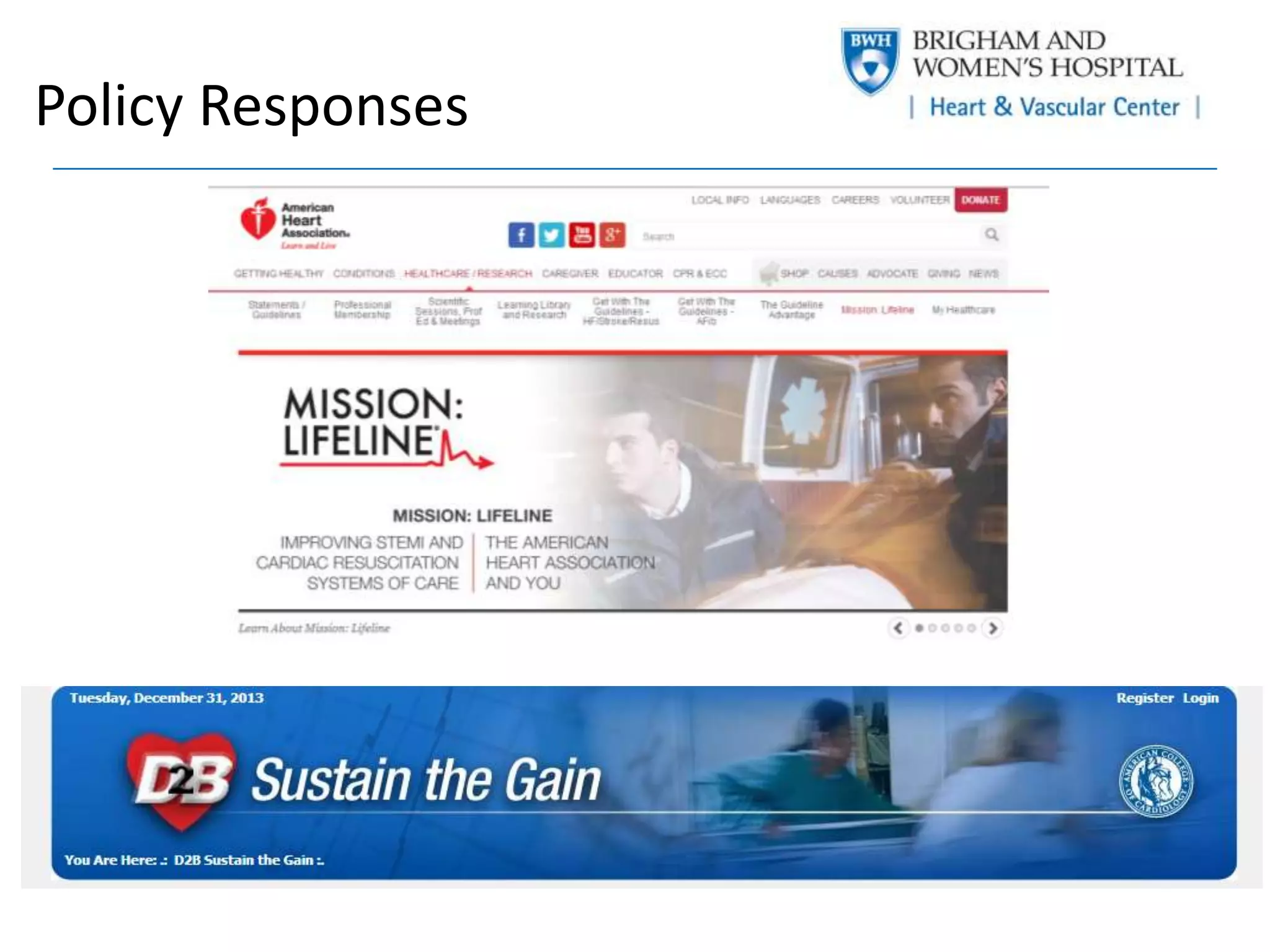
Policy Responses
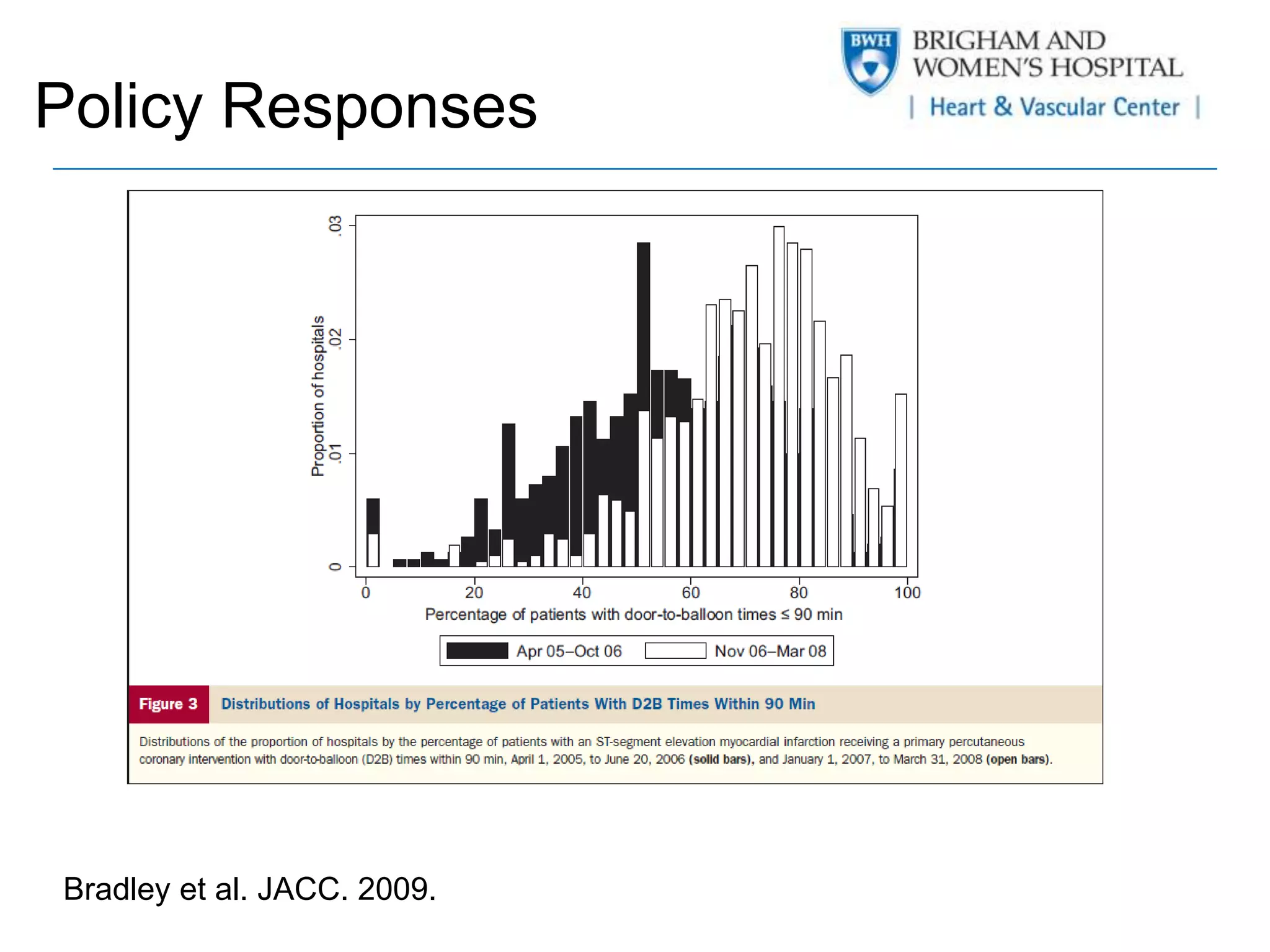
Policy Responses 
Bradley et al. JACC. 2009.
RCT data for Transradial in STEMI - 
Mortality 
Karrowni et al. JACC Cardiovascular Int. 2013.
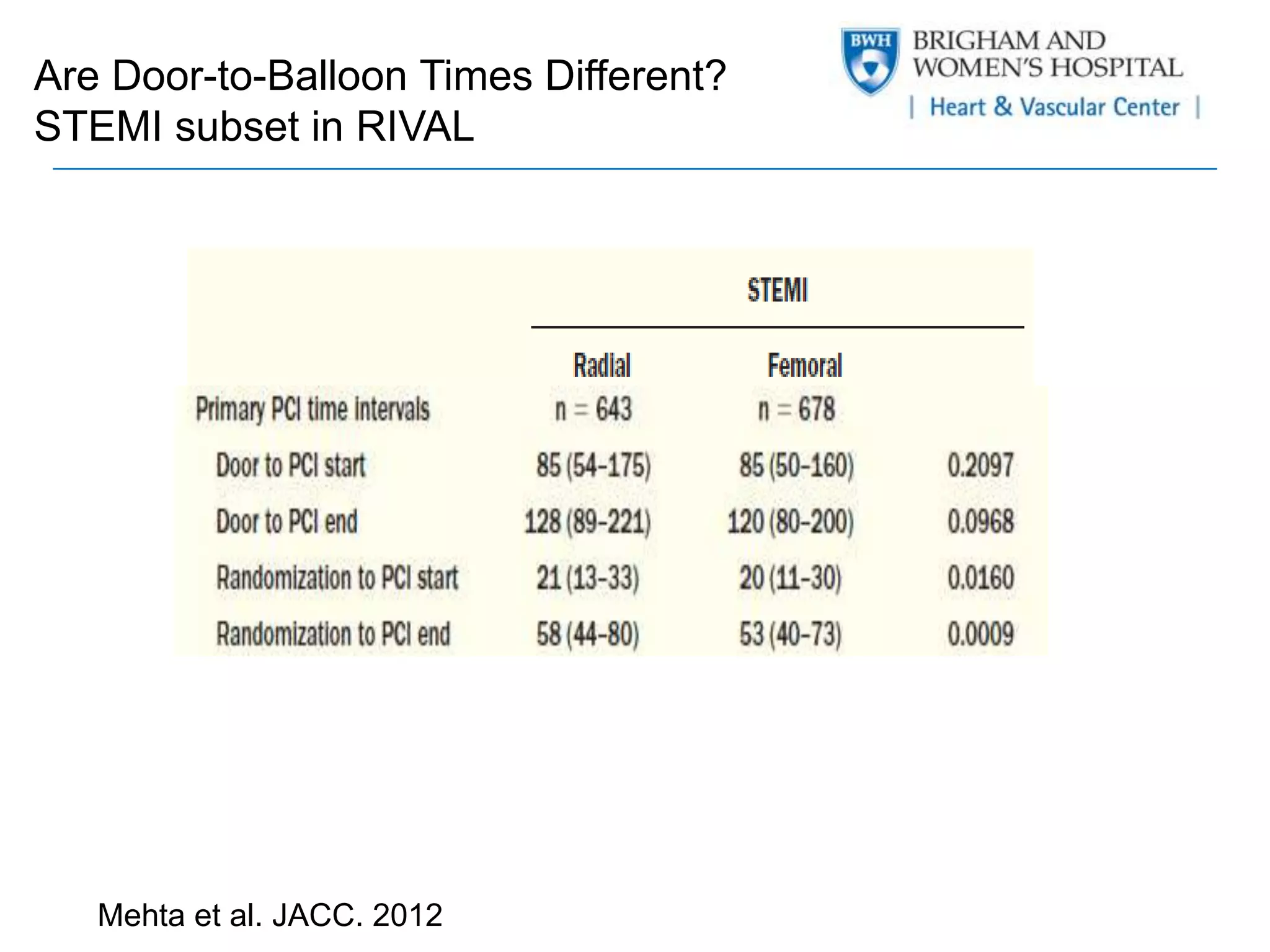
Are Door-to-Balloon Times Different? 
STEMI subset in RIVAL 
Mehta et al. JACC. 2012
Does reducing door-to-balloon time still 
improve outcomes? 
•No significant association between 
annual decreases in DTB time and 
in-hospital mortality (odds ratio for 
10 min reduction in DTB time: 1.04, 
95% CI: 0.99 – 1.14). 
Menees et al. N Engl J Med. 2013.
Thought Experiment 
If radial PCI is associated with a delay in door-to-balloon 
time in STEMI, how much of a delay would be acceptable for 
patients to still benefit from transradial PCI? 
Wimmer et al. Am Heart J. 2014.
How much delay in DTB time would 
offset the mortality benefit of transradial 
PCI in RCTs? 
Wimmer et al. Am Heart J. 2014.
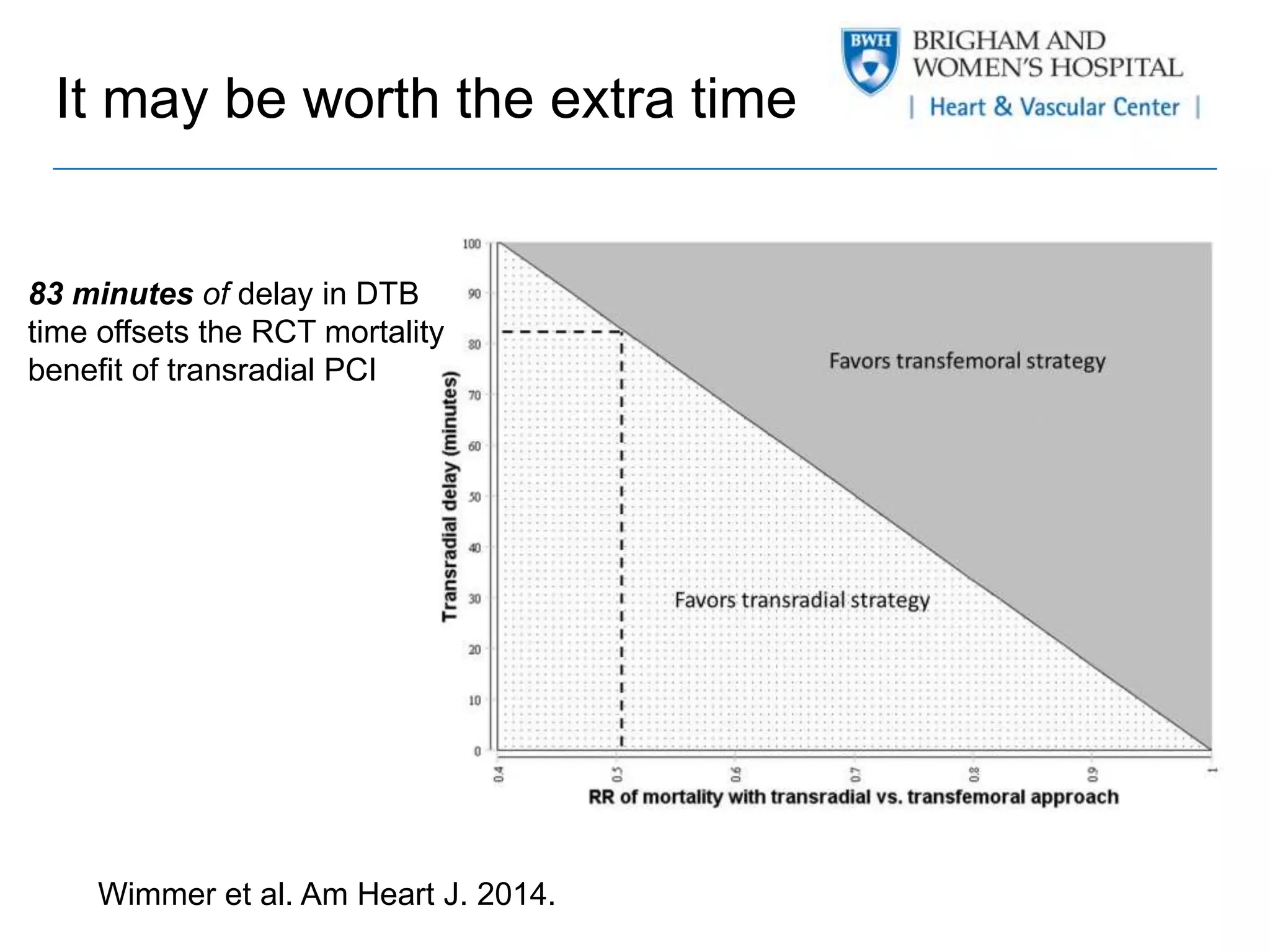
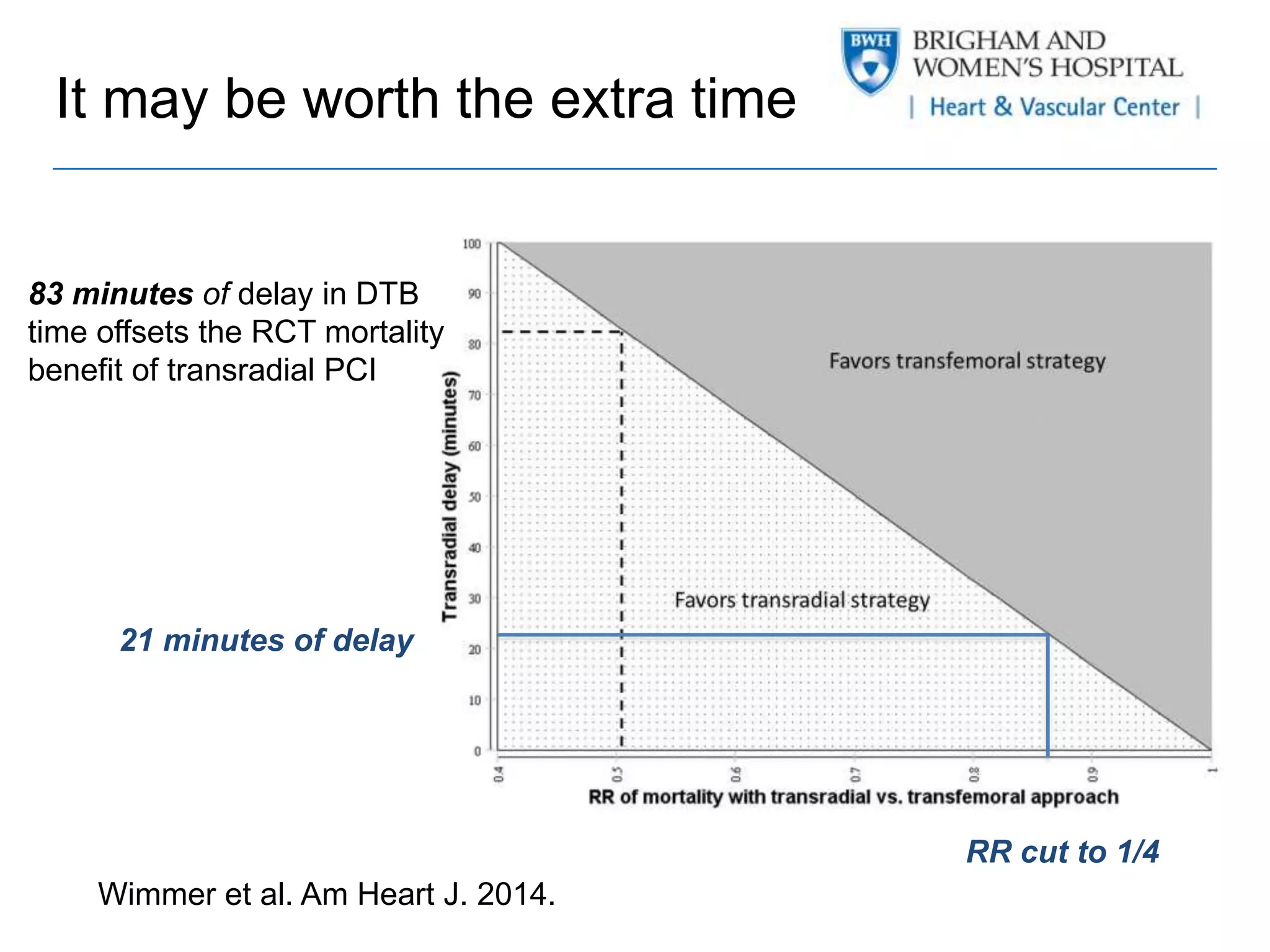
It may be worth the extra time 
83 minutes of delay in DTB 
time offsets the RCT mortality 
benefit of transradial PCI 
Wimmer et al. Am Heart J. 2014.
83 minutes of delay in DTB 
time offsets the RCT mortality 
benefit of transradial PCI 
21 minutes of delay 
Wimmer et al. Am Heart J. 2014. 
RR cut to 1/4 
It may be worth the extra time
Not strongly influenced by crossover 
Wimmer et al. Am Heart J. 2014.
Conclusions 
• A transradial delay of 83.0 minutes was needed to 
offset the mortality benefit of transradial PCI. 
• When the mortality benefit of transradial PCI was one-quarter 
that observed in RCTs, the delay associated 
with equivalent mortality was 20.9 minutes. 
• Results were robust to changing multiple assumptions 
and have implications for operators reluctant to 
transition to transradial PCI in STEMI
Proposed Algorithm 
Rao et al. CCI. 2013
Conclusions 
• If the mortality benefit (or even a fraction of this 
benefit) of transradial intervention observed in RCTs is 
true, it would be the preferred approach even if this led 
to delays in DTB time. 
• Integrating the ability to comfortably perform 
transradial PCI for STEMI should be a goal for all 
interventionalists, as this is the population that will 
derive the greatest benefit from the approach. 
• Our goal should be to integrate multiple effective 
interventions in the care of our patients at the same 
time.

Wimmer N - AIMRADIAL 2014 - Door-to-balloon

  • 1.
    Radial PCI anddoor-to-balloon time in STEMI: Is there an acceptable delay to reperfusion? Neil J. Wimmer, MD, MSc AIM-RADIAL 2014 October 24, 2014
  • 2.
    Disclosure Statement ofFinancial Interest I, Neil Wimmer, DO NOT have a financial interest/arrangement or affiliation with one or more organizations that could be perceived as a real or apparent conflict of interest in the context of the subject of this presentation.
  • 3.
    Weighing Benefits andRisks of Transradial Access in STEMI Benefits • Less access site bleeding • Ability to anticoagulate more aggressively? • Earlier ambulation • Patient comfort Risks • Longer door-to-balloon times • Longer procedures • More contrast • Longer fluoro times
  • 4.
    Transradial use forSTEMI in US Baklanov et al. JACC. 2013.
  • 5.
    Concern about door-to-balloontime Nallamothu et al. Am Heart J. 2003. Rathore et al. BMJ. 2009.
  • 6.
  • 7.
    Policy Responses Bradleyet al. JACC. 2009.
  • 8.
    RCT data forTransradial in STEMI - Mortality Karrowni et al. JACC Cardiovascular Int. 2013.
  • 9.
    Are Door-to-Balloon TimesDifferent? STEMI subset in RIVAL Mehta et al. JACC. 2012
  • 10.
    Does reducing door-to-balloontime still improve outcomes? •No significant association between annual decreases in DTB time and in-hospital mortality (odds ratio for 10 min reduction in DTB time: 1.04, 95% CI: 0.99 – 1.14). Menees et al. N Engl J Med. 2013.
  • 11.
    Thought Experiment Ifradial PCI is associated with a delay in door-to-balloon time in STEMI, how much of a delay would be acceptable for patients to still benefit from transradial PCI? Wimmer et al. Am Heart J. 2014.
  • 12.
    How much delayin DTB time would offset the mortality benefit of transradial PCI in RCTs? Wimmer et al. Am Heart J. 2014.
  • 13.
    It may beworth the extra time 83 minutes of delay in DTB time offsets the RCT mortality benefit of transradial PCI Wimmer et al. Am Heart J. 2014.
  • 14.
    83 minutes ofdelay in DTB time offsets the RCT mortality benefit of transradial PCI 21 minutes of delay Wimmer et al. Am Heart J. 2014. RR cut to 1/4 It may be worth the extra time
  • 15.
    Not strongly influencedby crossover Wimmer et al. Am Heart J. 2014.
  • 16.
    Conclusions • Atransradial delay of 83.0 minutes was needed to offset the mortality benefit of transradial PCI. • When the mortality benefit of transradial PCI was one-quarter that observed in RCTs, the delay associated with equivalent mortality was 20.9 minutes. • Results were robust to changing multiple assumptions and have implications for operators reluctant to transition to transradial PCI in STEMI
  • 17.
    Proposed Algorithm Raoet al. CCI. 2013
  • 18.
    Conclusions • Ifthe mortality benefit (or even a fraction of this benefit) of transradial intervention observed in RCTs is true, it would be the preferred approach even if this led to delays in DTB time. • Integrating the ability to comfortably perform transradial PCI for STEMI should be a goal for all interventionalists, as this is the population that will derive the greatest benefit from the approach. • Our goal should be to integrate multiple effective interventions in the care of our patients at the same time.