
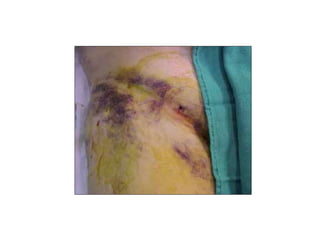
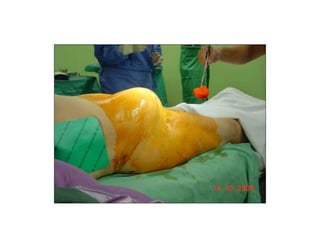
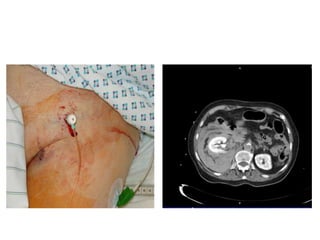
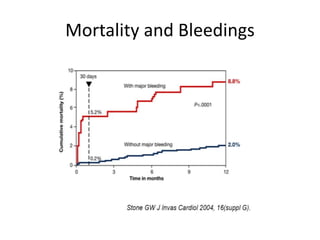
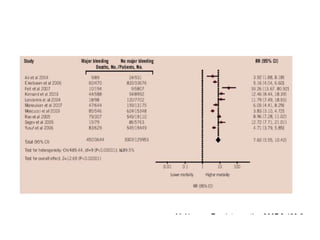
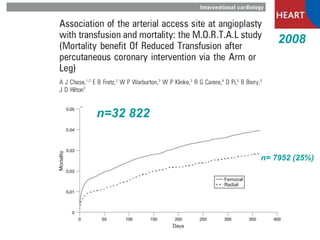
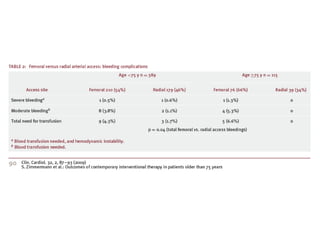
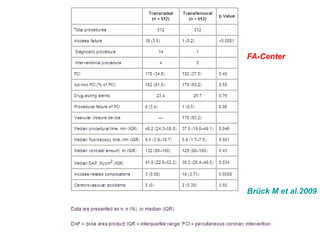
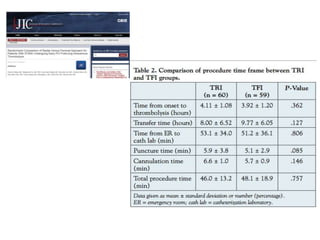
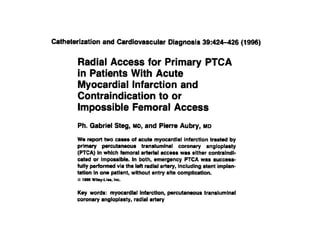
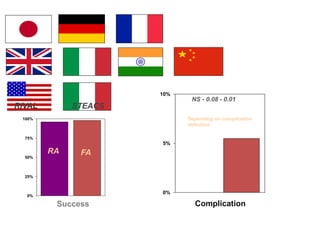
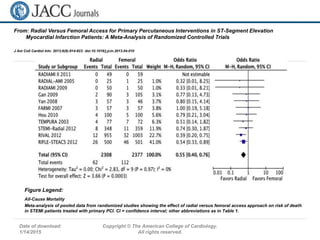
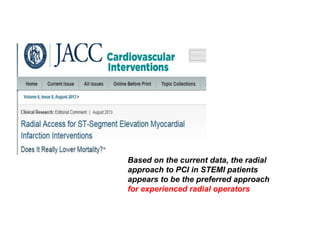
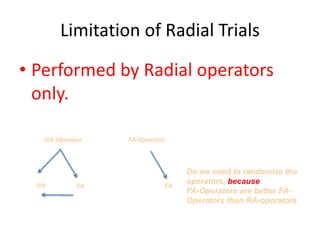
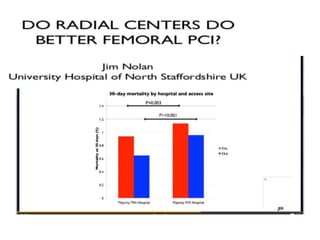
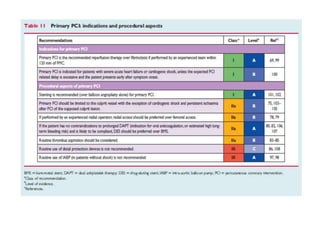
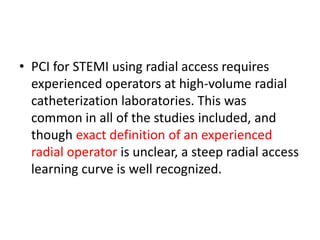
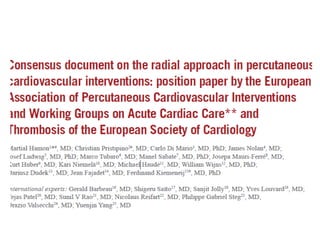
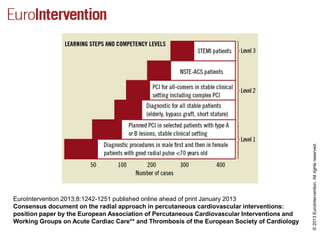
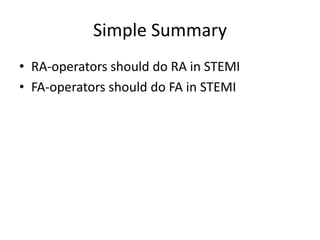
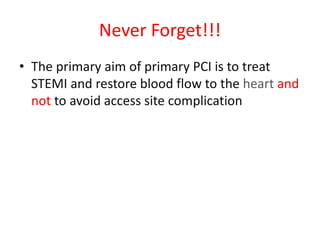
Radial access for primary percutaneous coronary intervention (PCI) in ST-elevation myocardial infarction (STEMI) patients reduces bleeding complications compared to femoral access. Several randomized controlled trials showed lower all-cause mortality with radial versus femoral access when performed by experienced radial operators. However, the studies only included radial operators, so it is unclear if the benefits seen with radial access would apply if femoral operators performed radial procedures or vice versa. Additionally, radial access requires experienced operators at high-volume centers, and the definition of an experienced radial operator remains uncertain due to the steep learning curve for radial procedures. The primary goal of primary PCI in STEMI is restoring blood flow to the heart, not avoiding access site complications.


![CTEV [ clubfoot] DR ARUN LAL ,DR MOHAMED ASHRAF travancore medical college k...](https://cdn.slidesharecdn.com/ss_thumbnails/ctevclubfootdrarunlaldrmohamedashraftravancoremedicalcollegekollamkeralaindia-260208063247-18fc466c-thumbnail.jpg?width=640&height=640&fit=bounds)


![PERI-PROSTHETIC FRACTURE NAIL-PLATE CONSTRUCT [NPC].pptx](https://cdn.slidesharecdn.com/ss_thumbnails/drarunkumardrmohamedashrafperiprostheticfrasturenail-plateconstructnpc-260209164459-7e9d15a1-thumbnail.jpg?width=640&height=640&fit=bounds)

