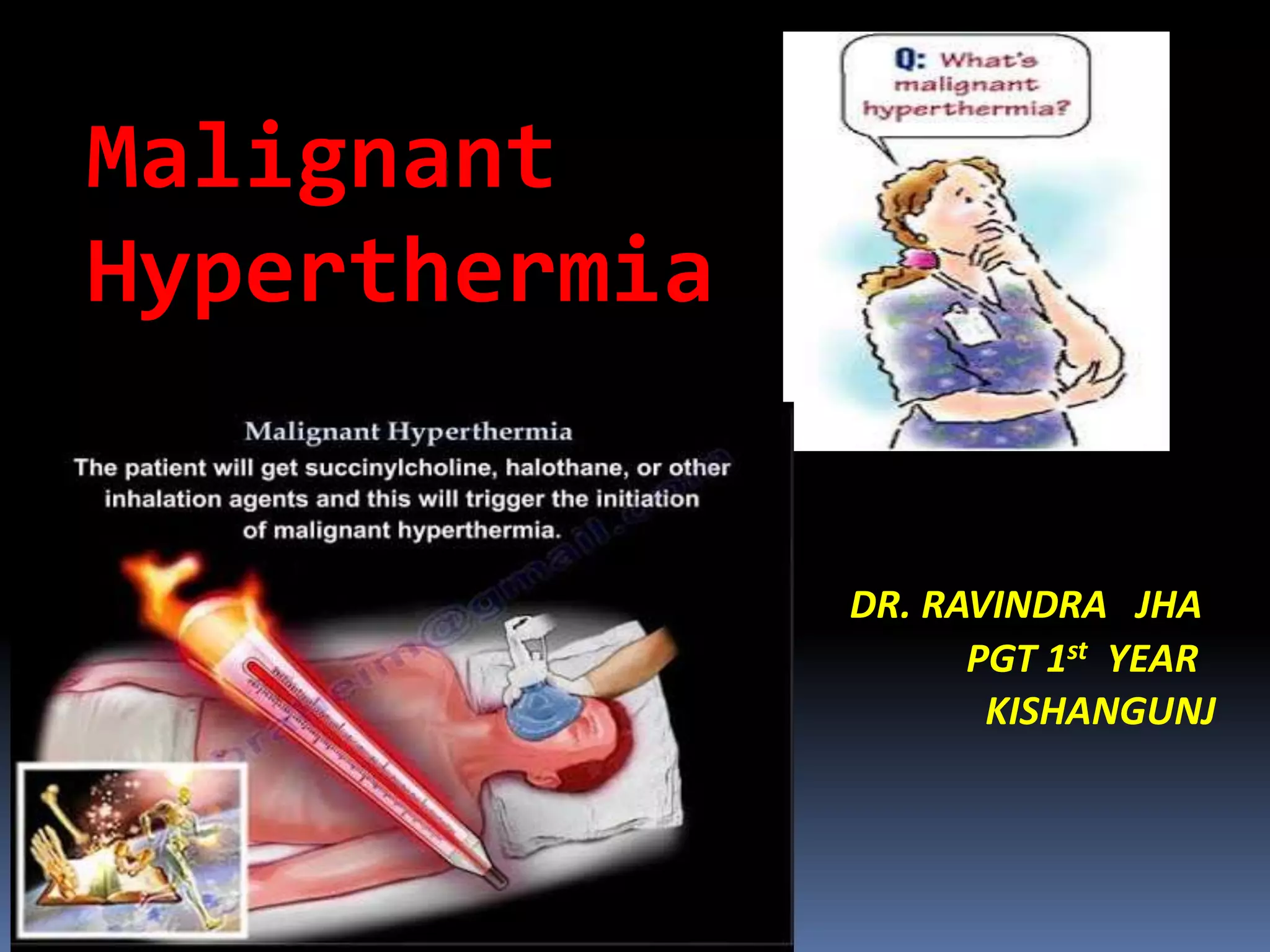
Malignant
Hyperthermia
DR. RAVINDRA JHA
PGT 1st YEAR
KISHANGUNJ
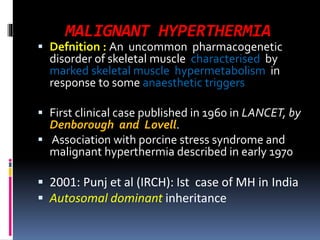
MALIGNANT HYPERTHERMIA
 Defnition : An uncommon pharmacogenetic
disorder of skeletal muscle characterised by
marked skeletal muscle hypermetabolism in
response to some anaesthetic triggers
 First clinical case published in 1960 in LANCET, by
Denborough and Lovell.
 Association with porcine stress syndrome and
malignant hyperthermia described in early 1970
 2001: Punj et al (IRCH): Ist case of MH in India
 Autosomal dominant inheritance
EPIDEMIOLOGY
 Incidence : 1:50,000 in adults , 1:15,000 in children . It varies with
triggering agent . More prevalent in certain areas of a North
America.
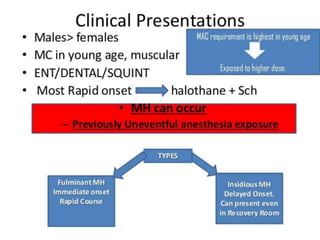
 Common in young children, but may occur in all age
groups from infants to 70 yrs of age.
 Male > female.
 More common in pts with large ms bulk and general
anaesthesia after recent exercise.
 More frequent after ENT squint or dental operation due
to related short anaesthetic procedures
 Susceptible persons may have history of previous
uneventful anaesthesia even with triggering agent
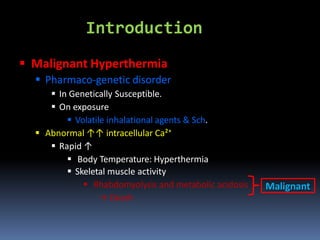
Introduction
 Malignant Hyperthermia
 Pharmaco-genetic disorder
 In Genetically Susceptible.
 On exposure
 Volatile inhalational agents & Sch.
 Abnormal ↑↑ intracellular Ca²⁺
 Rapid ↑
 Body Temperature: Hyperthermia
 Skeletal muscle activity
 Rhabdomyolysis and metabolic acidosis
→ Death
Malignant
Clinical picture
 Clinical presentation is highly variable and it depends
on species, breed, genetic make up, and triggering
agents
 Time of onset : unpredictable, varying from within
minutes to several hours of induction; it may even
occur in post operative period in the recovery room
 The most potent triggering agent appear to be
induction of anaesthesia with halothane followed by
administration of succnylcholine. The symptoms
appear almost immediately
 Presentation is gradual and delayed in onset after
the induction with new halogenated anaesthetic
agents
Signs and symptoms
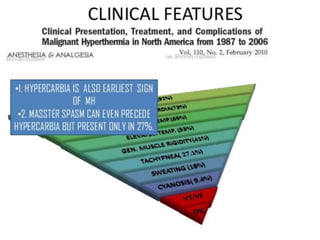
 Tachycardia : one of the earliest but a non specific
sign
 Tachypnea : in spontaneously ventilating patients.
 Increased sweating
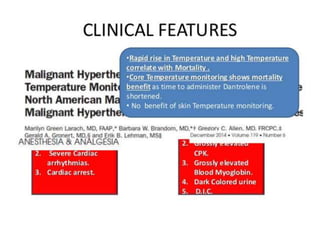
 Increased body temperature : late and serious
sign of MH and may not be present at the time of
the diagnosis..
 During fulminant acute MH, body temperature
may increase at a rate of 1.8–3.6°F (1–2°C)
every 5 minutes
 Cyanosis, flushing or blanching of skin. Cola
coloured urine
 masseter spasm or generalised muscle rigidity
or both
Signs and symptoms
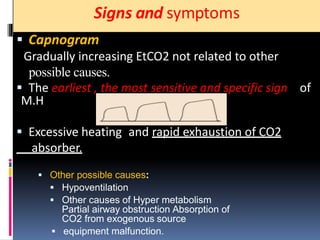
 Capnogram
Gradually increasing EtCO2 not related to other
possible causes.
 The earliest , the most sensitive and specific sign of
M.H
 Excessive heating and rapid exhaustion of CO2
absorber.
 Other possible causes:
 Hypoventilation
 Other causes of Hyper metabolism
Partial airway obstruction Absorption of
CO2 from exogenous source
 equipment malfunction.
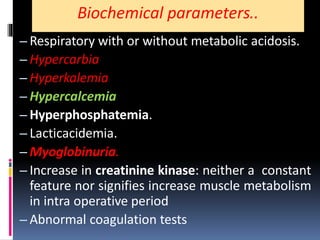
Biochemical parameters..
– Respiratory with or without metabolic acidosis.
– Hypercarbia
– Hyperkalemia
– Hypercalcemia
– Hyperphosphatemia.
– Lacticacidemia.
– Myoglobinuria.
– Increase in creatinine kinase: neither a constant
feature nor signifies increase muscle metabolism
in intra operative period
– Abnormal coagulation tests
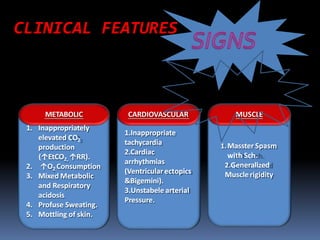
CLINICAL FEATURES
1.Inappropriate
tachycardia
2.Cardiac
arrhythmias
(Ventricularectopics
&Bigemini).
3.Unstabele arterial
Pressure.
1.Masster Spasm
with Sch.
2.Generalized
Musclerigidity
METABOLIC
1. Inappropriately
elevated CO2
production
(↑EtCO2, ↑RR).
2. ↑O2 Consumption
3. Mixed Metabolic
and Respiratory
acidosis
4. Profuse Sweating.
5. Mottling of skin.
CARDIOVASCULAR MUSCLE
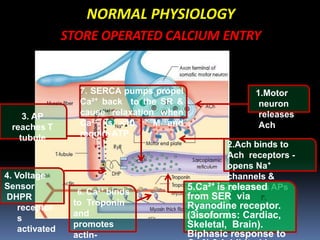
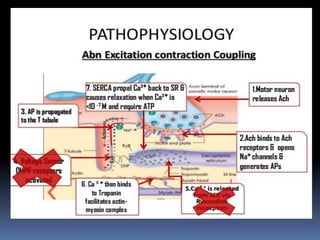
NORMAL PHYSIOLOGY
STORE OPERATED CALCIUM ENTRY
1.Motor
neuron
releases
Ach
2.Ach binds to
Ach receptors -
opens Na⁺
channels &
generates APs
3. AP
reaches T
tubule
4. Voltage
Sensor
DHPR
receptor
s
activated
5.Ca²⁺ is released
from SER via
Ryanodine receptor.
(3isoforms: Cardiac,
Skeletal, Brain).
Biphasic response to
6. Ca²⁺ binds
to Troponin
and
promotes
actin-
7. SERCA pumps propel
Ca²⁺ back to the SR &
cause relaxation when
Ca²⁺ is <10 -7 M and
require ATP
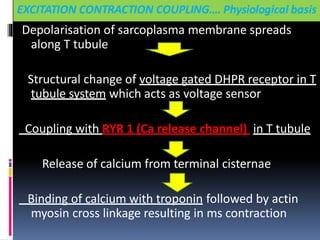
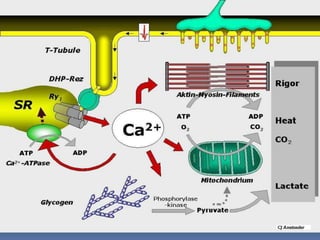
EXCITATION CONTRACTION COUPLING…. Physiological basis
Depolarisation of sarcoplasma membrane spreads
along T tubule
Structural change of voltage gated DHPR receptor in T
tubule system which acts as voltage sensor
Coupling with RYR 1 (Ca release channel) in T tubule
Release of calcium from terminal cisternae
Binding of calcium with troponin followed by actin
myosin cross linkage resulting in ms contraction
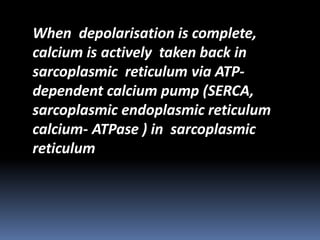
When depolarisation is complete,
calcium is actively taken back in
sarcoplasmic reticulum via ATP-
dependent calcium pump (SERCA,
sarcoplasmic endoplasmic reticulum
calcium- ATPase ) in sarcoplasmic
reticulum
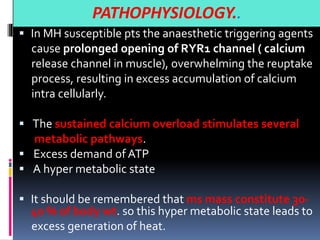
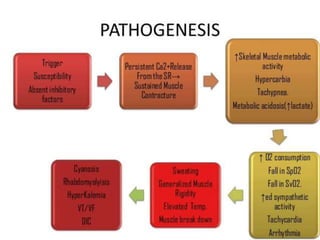
PATHOPHYSIOLOGY..
 In MH susceptible pts the anaesthetic triggering agents
cause prolonged opening of RYR1 channel ( calcium
release channel in muscle), overwhelming the reuptake
process, resulting in excess accumulation of calcium
intra cellularly.
 The sustained calcium overload stimulates several
metabolic pathways.
 Excess demand of ATP
 A hyper metabolic state
 It should be remembered that ms mass constitute 30-
40 % of body wt. so this hyper metabolic state leads to
excess generation of heat.
PATHOPHYSIOLOGY..
 The sustained increase in [Ca2+]i leads to muscle
contraction without relaxation, i.e. spasm, which, if
prolonged, develops into severe contracture.
 The muscle contracture greatly increases the extra
vascular resistance to muscle perfusion resulting in
ischemia initially locally and eventually systemically
 The excess oxygen need due to demand for
production of extra ATP relative to diminished
perfusion due to ischemia lead to metabolic
exhaustion, muscle oedema and ultimately result in
muscle breakdown.
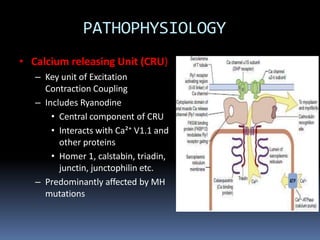
PATHOPHYSIOLOGY
• Calcium releasing Unit (CRU)
– Key unit of Excitation
Contraction Coupling
– Includes Ryanodine
• Central component of CRU
• Interacts with Ca²⁺ V1.1 and
other proteins
• Homer 1, calstabin, triadin,
junctin, junctophilin etc.
– Predominantly affected by MH
mutations
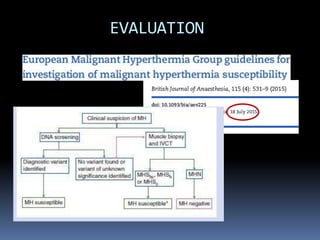
EVALUATION
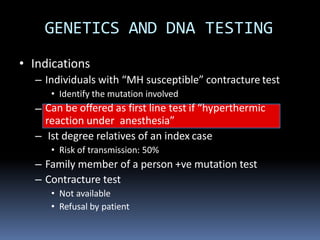
• Indications
– Individuals with “MH susceptible” contracture test
• Identify the mutation involved
– Can be offered as first line test if “hyperthermic
reaction under anesthesia”
– Ist degree relatives of an index case
• Risk of transmission: 50%
– Family member of a person +ve mutation test
– Contracture test
• Not available
• Refusal by patient
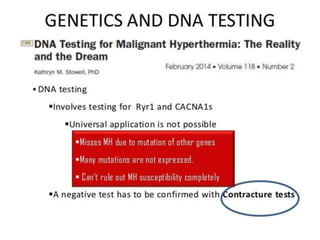
GENETICS AND DNA TESTING
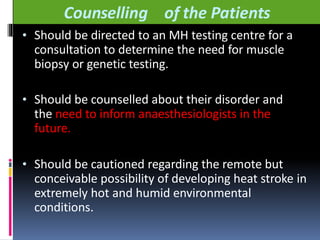
Counselling of the Patients
• Should be directed to an MH testing centre for a
consultation to determine the need for muscle
biopsy or genetic testing.
• Should be counselled about their disorder and
the need to inform anaesthesiologists in the
future.
• Should be cautioned regarding the remote but
conceivable possibility of developing heat stroke in
extremely hot and humid environmental
conditions.
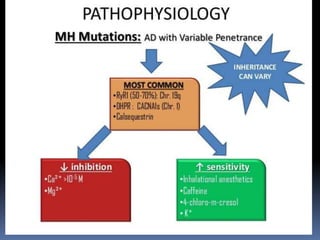
GENETIC BASIS
• Any mutation that results in altered regulation of
calcium in skeletal muscle can be associated with
the clinical syndrome of MH.
• Over 40 such distinct mutation sites have been
found, the most common being in genes that code
for the RYR1 (chromosome 19) and DHP
(chromosome 7) receptor.
• The pattern of inheritance is usually autosomal
dominant; however, de novo mutations have been
reported.
• A negative screen of the RyR1 gene does not rule
out MH susceptibility
Gene mutations associated with MHS have been
assigned a numbering sequence identifier
 MHS1 is associated with mutations in the gene
RYR1 encoding ryanodine receptor type 1
(chromosome 19q13.1).Mutations in RYR1 account
for about 50% to 70% of all cases of MHS. These
mutations are located in specific exons of the gene
and are termed MH "hot spots.“. More than 100
mutations have been reported in the RYR1gene.
 MHS2 has been linked to chromosomal locus
17q11.2-q24, which is associated with the voltage-
dependent sodium channel of the skeletal muscle
membrane.
Gene mutations associated with MHS have been
assigned a numbering sequence identifier
 MHS3 has been linked to chromosomal locus 7q21-
q22, the site of coding for DHP, the T-tubule bound
voltage sensor for RYR1.
 MHS4 has been linked to chromosomal locus 3q13.
 MHS5 is associated with mutations in the gene
encoding the α1 subunit of the dihydropyridine receptor
(CACNA1S) at chromosomal locus 1q32. Mutations in the
CACNA1S gene account for 1% of all cases of MHS.
 MHS6 has been linked to chromosomal locus 5p.
Indications for Muscle Biopsy Testing for
MH
 Definite Indications:
• Suspicious clinical history for MH
• First degree relative of a index case with a clinical
history of MH if the index case cannot be tested
(e.g, too young, too old, MH death, not willing to
undergo the muscle biopsy, no test centre
available)
• Family history of MH where genetic testing is
negative for mutation.
• Severe masseter muscle rigidity after
succinylcholine administration that is associated
with myoglobinuria and/or marked CK elevation
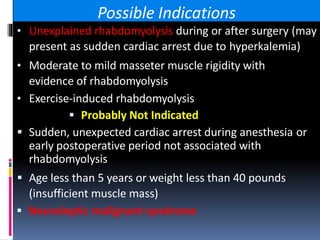
Possible Indications
• Unexplained rhabdomyolysis during or after surgery (may
present as sudden cardiac arrest due to hyperkalemia)
• Moderate to mild masseter muscle rigidity with
evidence of rhabdomyolysis
• Exercise-induced rhabdomyolysis
 Probably Not Indicated
 Sudden, unexpected cardiac arrest during anesthesia or
early postoperative period not associated with
rhabdomyolysis
 Age less than 5 years or weight less than 40 pounds
(insufficient muscle mass)
 Neuroleptic malignant syndrome
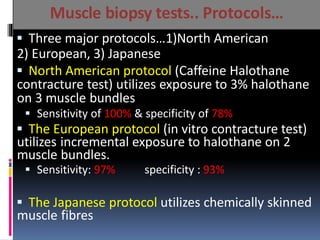
Muscle biopsy tests.. Protocols…
 Three major protocols…1)North American
2) European, 3) Japanese
 North American protocol (Caffeine Halothane
contracture test) utilizes exposure to 3% halothane
on 3 muscle bundles
 Sensitivity of 100% & specificity of 78%
 The European protocol (in vitro contracture test)
utilizes incremental exposure to halothane on 2
muscle bundles.
 Sensitivity: 97% specificity : 93%
 The Japanese protocol utilizes chemically skinned
muscle fibres
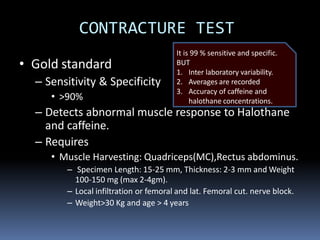
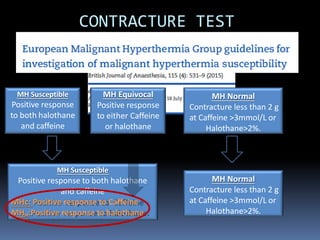
CONTRACTURE TEST
• Gold standard
– Sensitivity & Specificity
• >90%
– Detects abnormal muscle response to Halothane
and caffeine.
– Requires
• Muscle Harvesting: Quadriceps(MC),Rectus abdominus.
– Specimen Length: 15-25 mm, Thickness: 2-3 mm and Weight
100-150 mg (max 2-4gm).
– Local infiltration or femoral and lat. Femoral cut. nerve block.
– Weight>30 Kg and age > 4 years
It is 99 % sensitive and specific.
BUT
1. Inter laboratory variability.
2. Averages are recorded
3. Accuracy of caffeine and
halothane concentrations.
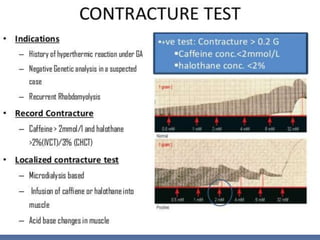
CONTRACTURE TEST
IVCT
• Used in Europe
• Both Incremental Halothane
(0.5-3%) and Incremental
caffeine 0.5 -32 m mol/l are
used (2X increments).
•
CHCT
• Used In USA
• Halothane is used at fixed 3
% and incremental caffeine
in 2X increments.
MH equivocal → MHs/MHc • MH susceptibleIF RESULT IS POSITIVE FOR EITHER CAFFEINE OR HALOTHANE
CONTRACTURE TEST
MH Susceptible
Positive response
to both halothane
and caffeine
MH Equivocal
Positive response
to either Caffeine
or halothane
MH Normal
Contracture less than 2 g
at Caffeine >3mmol/L or
Halothane>2%.
MH Susceptible
Positive response to both halothane
and caffeine
MHc: Positive response to Caffeine
MHH:Positive response to halothane.
MH Normal
Contracture less than 2 g
at Caffeine >3mmol/L or
Halothane>2%.
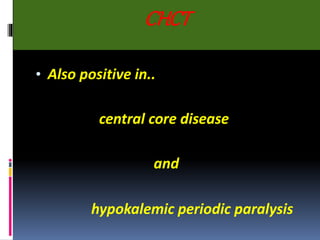
CHCT
• Also positive in..
central core disease
and
hypokalemic periodic paralysis
COMING BACK TO ELEPHANT IN THE
ROOM
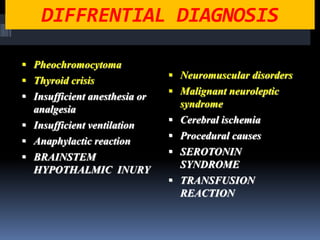
DIFFRENTIAL DIAGNOSIS
 Pheochromocytoma
 Thyroid crisis
 Insufficient anesthesia or
analgesia
 Insufficient ventilation
 Anaphylactic reaction
 BRAINSTEM
HYPOTHALMIC INURY
 Neuromuscular disorders
 Malignant neuroleptic
syndrome
 Cerebral ischemia
 Procedural causes
 SEROTONIN
SYNDROME
 TRANSFUSION
REACTION
A VERY MUCH RELATED CONDITION
Masseter Muscle Rigidity
• Defined as jaw ms rigidity along with limb ms
flaccidity after administration of sch impeding
intubation and persisting for > 2 mins.
• MMR may be the first sign of MH, or it can develop
during an MH episode. However, it may also occur as
an exaggerated response to succinylcholine in normal
individuals.
• Slow tonic fiber of masseter and lateral pterygoid
ms responds to depolarising ms relaxant with
contracture, the reason of development of MMS.
• May occur even after pre treatment of
defasciculating dose of NDMR
GRADING
 The most common response to succinylcholine is “jaw
stiffness” that is subclinical and can only be detected using
special measuring devices. This is a normal response to
succinylcholine and is considered to be of no prognostic
significance with respect to MH.
 A greater increase in masseter spasm is called “jaw
tightness that interferes with intubation.” This group may
be quite large (1–2%) in children who are administered
halothane and succinylcholine. A small but unknown
number of these patients are at risk for MH.
 The most severe form of masseter muscle spasm has been
characterized as “the mouth could not be opened” or “jaws
of steel.” This group is documented to have an increased
incidence of fulminant MH and increased mortality if the
triggering agents are continued
MMS may occur in normal persons..
• 30% of patients with MMS prove to be MH
susceptible.
• Additional signs increase likelihood of MH
 50 – 60% if metabolic signs present, 70 – 80% if
muscle signs present,
• May be the first indication of previously
unsuspected muscle ds. Particularly myotonic
conditions..
TREATMENT FOR MMS
• If possible abandon surgery…
• Otherwise choose to MH safe technique..
• Allow 15 min to get the pt stabilised..monitor
ETCO2, temperature, and consider arterial line.
• Inv: blood for CK within 24 hr period, and first
voided urine for myoglobin
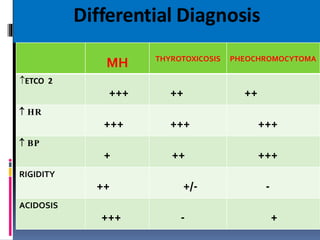
Differential Diagnosis
MH THYROTOXICOSIS PHEOCHROMOCYTOMA
ETCO 2
+++ ++ ++
 HR
+++ +++ +++
 BP
+ ++ +++
RIGIDITY
++ +/- -
ACIDOSIS
+++ - +
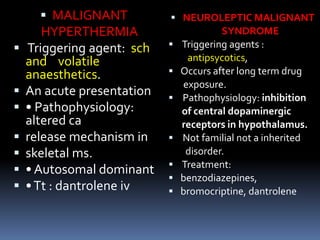
 MALIGNANT
HYPERTHERMIA
 Triggering agent: sch
and volatile
anaesthetics.
 An acute presentation
 • Pathophysiology:
altered ca
 release mechanism in
 skeletal ms.
 • Autosomal dominant
 •Tt : dantrolene iv
 NEUROLEPTIC MALIGNANT
SYNDROME
 Triggering agents :
antipsycotics,
 Occurs after long term drug
exposure.
 Pathophysiology: inhibition
of central dopaminergic
receptors in hypothalamus.
 Not familial not a inherited
disorder.
 Treatment:
 benzodiazepines,
 bromocriptine, dantrolene
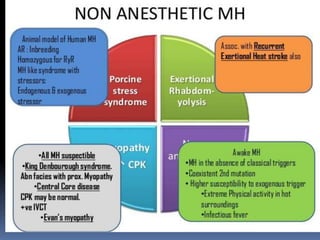
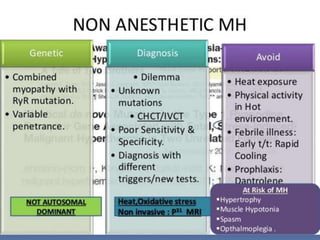
Awake triggering…..
• Few cases of exercise induced rhabdomyolysis
have found to have MHS mutation
• There are some anecdotal reports that relate
heat stroke to awake MH episodes.
• But this areas are still controversial and needs
further documentation and evidence.
Outcome..
 Mortality un acceptably high.
 Mostly due to failure to recognize the syndrome
in the early phase.
 Earlier death rates were 80%
 Now come down to < 5% after introduction of
dantolene sodium.
 There is 25% recrudescence rate in 1st 24- 36 hrs.
 Even after successful treatment there may be
prolonged muscle pain and weakness (chronic slowly
progressive myopathy) for which physical
rehabilitation may be necessary.
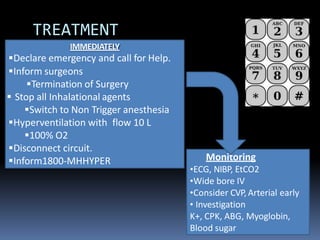
TREATMENT
IMMEDIATELY
Declare emergency and call for Help.
Inform surgeons
Termination of Surgery
 Stop all Inhalational agents
Switch to Non Trigger anesthesia
Hyperventilation with flow 10 L
100% O2
Disconnect circuit.
Inform1800-MHHYPER Monitoring
•ECG, NIBP, EtCO2
•Wide bore IV
•Consider CVP, Arterial early
• Investigation
K+, CPK, ABG, Myoglobin,
Blood sugar
Death results from….
➢ Dysarrythmia from marked sympathetic stimulation and
Hyperkalemia
➢ Severe spasm making intubation and ventilation
impossible
➢ Myoglobinuric renal failure (acute tubular necrosis).
➢ Disseminated intravascular coagulation.
➢ Neurological damage.
➢ Multi organ failure when core temperature is elevated
beyond critical temperature ( >43 deg c).
TREATMENT
• Dantrolene
• Hydantoin derivative
– 2.5 mg/kg – Max 10 mg/Kg
– 20 mg/ ampoule
• 16-20 ampoules
– Mixed with sterile water.
• Takes 1.5 minutes to dissolve
• Others solun. → precipitation.
– t1/2: 10 -15 hours
– S/E: Respiratory muscle weakness, Cholestasis
synergistic toxicity with DILTIAZEM
About Dantrolene..
 Dantrolene sodium was first introduced in 1979 as an
injectable antidote for acute MH. Prior to that time, the drug
was available in an oral formulation for use as an adjunct in
the treatment of muscle spasticity associated with spinal
cord injury or cerebral palsy
 Dantrolene sodium inhibits the release of calcium from the SR by
binding to RYR1 and reverses the effects of MH i.e uncouples
depolarisation with contraction
Fast contracting twitch ms are affected more than slow
contracting antigravity ms.
 To continue upto 24- 48 hrs to prevent recrudescence and
worsening of rhabdomyolysis.
About Dantrolene..
• Generally safe in clinically recommended dose
• Has no effect on cardiac or smooth muscle.
• Side effects include nausea, malaise, light
headedness, muscle weakness, and irritation and
phlebitis at the intravenous site due to the high
pH of the drug. Hepatotoxicity after long term oral
use of the drug.
 Respiratory muscle weakness may occur when
large doses are used or when administered to
patients with an neuromuscular disorder
Immediate management:
 Call for help. Start dissolving the dantrolene in sterile water(not
saline).
 Termination of use of volatile anaesthetics and
succinylcholine.
 Removal the vaporizer and use of new circuit.
 Flushing the anaesthesia machine with high-flow oxygen (at
least 10 L/minute) for 20 minutes,
 Hyperventilation with 100% oxygen.
 Administration of 2-3 mg/kg dantrolene intravenously. Repeat
every 5 - 10 min upto 10 mg/ kg , till metabolic symptoms are
controlled.
 Monitor core temperature, electrocardiogram, arterial
blood pressure, and urine output.
 Active surface cooling , naso gastric and rectal lavage with cold
saline but avoid overcooling to body temp < 38 deg. c
Immediate management contd…
 Adequate Hydration with saline preferably cold.
 Management of acidosis with i.v bicarbonate 1-2 meq/kg iv
if not rapidly improved with dantrolene.
 Maintenance of urine output with mannitol (0.25 gm/kg iv )
and loop diuretics ( frusemide 1 mg/kg iv).
 Forced alkaline diuresis..
 Correction of Hyperkalemia with glucose-insulin, and
calcium.
 Cardiac dysarrhythmia usually responds to correction of
Hyperkalemia and acidosis.
 Persistent arrhythmias may be treated with standard anti
Arrhythmic like procainamide or lidocaine.
 CCB s should not be preferably used.
After initial stabilization……..
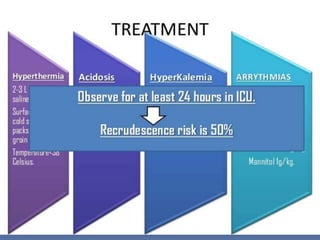
 Continue intravenous dantrolene for at least 24 h
after control of initial episode (approximately 1 mg/kg
q 6 h).
 Watch for recrudescence by monitoring in an
intensive care unit (ICU) for 36 h. Recrudescence
occurs in about 25% of MH cases.
 Avoid parenteral potassium.
 Ensure adequate urine output by alkaline diuresis
because myoglobinuria is common.
After initial stabilization……..
 Follow coagulation profile watching for the
occurrence of disseminated intravascular
coagulation (DIC).
 Measure creatine kinase (CK) every 6 h until
falling then at least daily until normal. CK may
remain elevated for 2weeks.To be kept in mind
that baseline CK may be elevated in some
patients post operatively.
 Counsel patients and families regarding
testing and future anaesthetics.
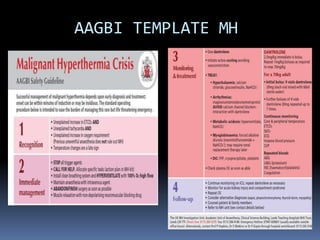
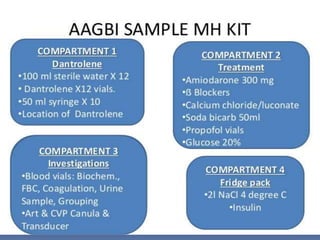
AAGBI TEMPLATE MH
The following are the supplies, equipment and drugs that
should be stocked in a MH cart
A.Supplies and equipment:
 IV solutions;
 Bucket for ice;
 Urine meter x 1;
 Foley catheter tray;
 60 mL syringes x 5;
 Urinalysis test strips;
 NG tubes, various sizes;
 CVP kits of various sizes;
 22G IV catheter, 1 inch x 4;
 24G IV catheter, ¾ inch x 4;
 Small and large plastic bags for ice;
 Blood administration sets and pumps;
 bladder, rectal temperature probes;
The following are the supplies, equipment and drugs that
should be stocked in a MH cart
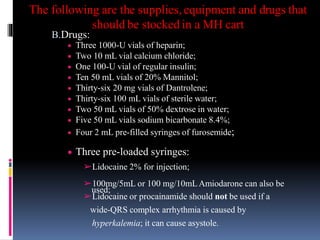
 Irrigation tray with 60 mL irrigation syringe;
 16G, 18G, 20G IV catheters, 2-inch x 4 each;
 Transducer kits for arterial and CVP cannulation;
 3 mL syringes or ABG kit x 6 for blood gas analysis;
 10-12 bags of saline kept in a refrigerator for IV
cooling;
 Urine collection container to determine myoglobin
level;
 60 mL Toomey syringes x 2 with adaptor (used with
NG irrigation);
 Gastric lavage set with three-way indwelling catheter
for insertion into the rectum;
 Pulmonary artery, esophageal, nasopharyngeal,
tympanic membrane,bladder & rectal temp. probe
The following are the supplies, equipment and drugs that
should be stocked in a MH cart
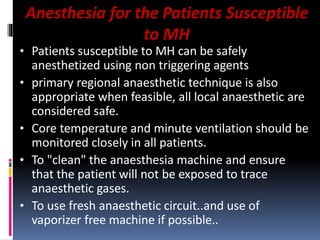
B.Drugs:
 Three 1000-U vials of heparin;
 Two 10 mL vial calcium chloride;
 One 100-U vial of regular insulin;
 Ten 50 mL vials of 20% Mannitol;
 Thirty-six 20 mg vials of Dantrolene;
 Thirty-six 100 mL vials of sterile water;
 Two 50 mL vials of 50% dextrose in water;
 Five 50 mL vials sodium bicarbonate 8.4%;
 Four 2 mL pre-filled syringes of furosemide;
 Three pre-loaded syringes:
➢Lidocaine 2% for injection;
➢100mg/5mL or 100 mg/10mLAmiodarone can also be
used;
➢Lidocaine or procainamide should not be used if a
wide-QRS complex arrhythmia is caused by
hyperkalemia; it can cause asystole.
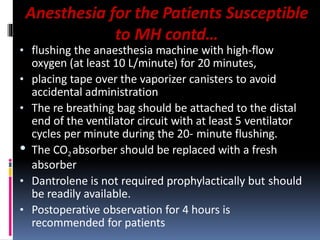
Anesthesia for the Patients Susceptible
to MH
• Patients susceptible to MH can be safely
anesthetized using non triggering agents
• primary regional anaesthetic technique is also
appropriate when feasible, all local anaesthetic are
considered safe.
• Core temperature and minute ventilation should be
monitored closely in all patients.
• To "clean" the anaesthesia machine and ensure
that the patient will not be exposed to trace
anaesthetic gases.
• To use fresh anaesthetic circuit..and use of
vaporizer free machine if possible..
Anesthesia for the Patients Susceptible
to MH contd…
• flushing the anaesthesia machine with high-flow
oxygen (at least 10 L/minute) for 20 minutes,
• placing tape over the vaporizer canisters to avoid
accidental administration
• The re breathing bag should be attached to the distal
end of the ventilator circuit with at least 5 ventilator
cycles per minute during the 20- minute flushing.
• The CO2absorber should be replaced with a fresh
absorber
• Dantrolene is not required prophylactically but should
be readily available.
• Postoperative observation for 4 hours is
recommended for patients
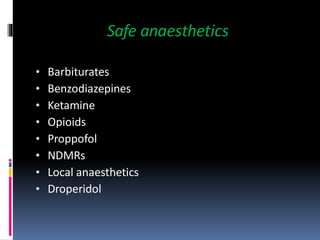
Safe anaesthetics
• Barbiturates
• Benzodiazepines
• Ketamine
• Opioids
• Proppofol
• NDMRs
• Local anaesthetics
• Droperidol
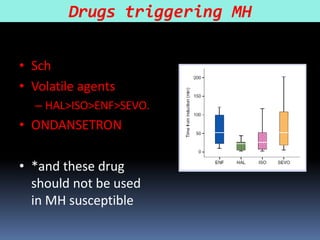
Drugs triggering MH
• Sch
• Volatile agents
– HAL>ISO>ENF>SEVO.
• ONDANSETRON
• *and these drug
should not be used
in MH susceptible
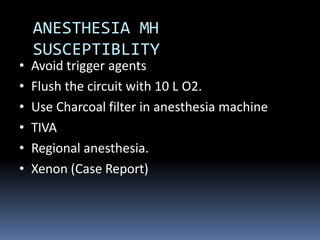
ANESTHESIA MH
SUSCEPTIBLITY
• Avoid trigger agents
• Flush the circuit with 10 L O2.
• Use Charcoal filter in anesthesia machine
• TIVA
• Regional anesthesia.
• Xenon (Case Report)
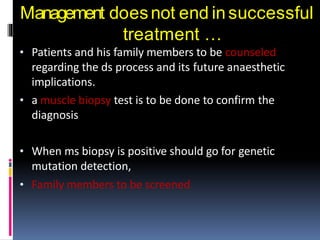
Management doesnot end insuccessful
treatment …
• Patients and his family members to be counseled
regarding the ds process and its future anaesthetic
implications.
• a muscle biopsy test is to be done to confirm the
diagnosis
• When ms biopsy is positive should go for genetic
mutation detection,
• Family members to be screened
Diseases associated with MHS
• Central core disease.
• Multicore myopathy or evan’s myopathy or MH
myopathy.
• King Denborough syndrome
Rhabdomyolysis, but NOT MH
 Brody’s disease
• Deficient calcium adenosine triphosphatase
 McArdle’s disease
• Myophosphorylase B deficiency
 Dystrophinopathies and other abnormalities of the
structural proteins in the muscle membrane
there is chronic elevation of CK indicating
chronic rhabdomyolysis
 Post operative myoglobinurea may be the only sign of M.H
without any other sign of increased muscle metabolism.
 But d/d of post operative myoglobinurea is large.
Lastly
• The anaesthetic protocol of different myopathy or
myotonic disorders and M.H are more or less
same
 But what
differs…. is that…
• The implications of a diagnosis of X-linked
myopathy, myotonia, or autosomal-dominant
ryanodine receptor mutation that are quite
different for the rest of their family.
THANKS FOR YOUR ATTENTION

Malignanthyperthermiafinal and anaesthetic consideration

  • 1.
  • 2.
    MALIGNANT HYPERTHERMIA  Defnition: An uncommon pharmacogenetic disorder of skeletal muscle characterised by marked skeletal muscle hypermetabolism in response to some anaesthetic triggers  First clinical case published in 1960 in LANCET, by Denborough and Lovell.  Association with porcine stress syndrome and malignant hyperthermia described in early 1970  2001: Punj et al (IRCH): Ist case of MH in India  Autosomal dominant inheritance
  • 3.
    EPIDEMIOLOGY  Incidence :1:50,000 in adults , 1:15,000 in children . It varies with triggering agent . More prevalent in certain areas of a North America.  Common in young children, but may occur in all age groups from infants to 70 yrs of age.  Male > female.  More common in pts with large ms bulk and general anaesthesia after recent exercise.  More frequent after ENT squint or dental operation due to related short anaesthetic procedures  Susceptible persons may have history of previous uneventful anaesthesia even with triggering agent
  • 4.
    Introduction  Malignant Hyperthermia Pharmaco-genetic disorder  In Genetically Susceptible.  On exposure  Volatile inhalational agents & Sch.  Abnormal ↑↑ intracellular Ca²⁺  Rapid ↑  Body Temperature: Hyperthermia  Skeletal muscle activity  Rhabdomyolysis and metabolic acidosis → Death Malignant
  • 5.
    Clinical picture  Clinicalpresentation is highly variable and it depends on species, breed, genetic make up, and triggering agents  Time of onset : unpredictable, varying from within minutes to several hours of induction; it may even occur in post operative period in the recovery room  The most potent triggering agent appear to be induction of anaesthesia with halothane followed by administration of succnylcholine. The symptoms appear almost immediately  Presentation is gradual and delayed in onset after the induction with new halogenated anaesthetic agents
  • 7.
    Signs and symptoms Tachycardia : one of the earliest but a non specific sign  Tachypnea : in spontaneously ventilating patients.  Increased sweating  Increased body temperature : late and serious sign of MH and may not be present at the time of the diagnosis..  During fulminant acute MH, body temperature may increase at a rate of 1.8–3.6°F (1–2°C) every 5 minutes  Cyanosis, flushing or blanching of skin. Cola coloured urine  masseter spasm or generalised muscle rigidity or both
  • 8.
    Signs and symptoms Capnogram Gradually increasing EtCO2 not related to other possible causes.  The earliest , the most sensitive and specific sign of M.H  Excessive heating and rapid exhaustion of CO2 absorber.  Other possible causes:  Hypoventilation  Other causes of Hyper metabolism Partial airway obstruction Absorption of CO2 from exogenous source  equipment malfunction.
  • 9.
    Biochemical parameters.. – Respiratorywith or without metabolic acidosis. – Hypercarbia – Hyperkalemia – Hypercalcemia – Hyperphosphatemia. – Lacticacidemia. – Myoglobinuria. – Increase in creatinine kinase: neither a constant feature nor signifies increase muscle metabolism in intra operative period – Abnormal coagulation tests
  • 10.
    CLINICAL FEATURES 1.Inappropriate tachycardia 2.Cardiac arrhythmias (Ventricularectopics &Bigemini). 3.Unstabele arterial Pressure. 1.MassterSpasm with Sch. 2.Generalized Musclerigidity METABOLIC 1. Inappropriately elevated CO2 production (↑EtCO2, ↑RR). 2. ↑O2 Consumption 3. Mixed Metabolic and Respiratory acidosis 4. Profuse Sweating. 5. Mottling of skin. CARDIOVASCULAR MUSCLE
  • 13.
    NORMAL PHYSIOLOGY STORE OPERATEDCALCIUM ENTRY 1.Motor neuron releases Ach 2.Ach binds to Ach receptors - opens Na⁺ channels & generates APs 3. AP reaches T tubule 4. Voltage Sensor DHPR receptor s activated 5.Ca²⁺ is released from SER via Ryanodine receptor. (3isoforms: Cardiac, Skeletal, Brain). Biphasic response to 6. Ca²⁺ binds to Troponin and promotes actin- 7. SERCA pumps propel Ca²⁺ back to the SR & cause relaxation when Ca²⁺ is <10 -7 M and require ATP
  • 14.
    EXCITATION CONTRACTION COUPLING….Physiological basis Depolarisation of sarcoplasma membrane spreads along T tubule Structural change of voltage gated DHPR receptor in T tubule system which acts as voltage sensor Coupling with RYR 1 (Ca release channel) in T tubule Release of calcium from terminal cisternae Binding of calcium with troponin followed by actin myosin cross linkage resulting in ms contraction
  • 15.
    When depolarisation iscomplete, calcium is actively taken back in sarcoplasmic reticulum via ATP- dependent calcium pump (SERCA, sarcoplasmic endoplasmic reticulum calcium- ATPase ) in sarcoplasmic reticulum
  • 18.
    PATHOPHYSIOLOGY..  In MHsusceptible pts the anaesthetic triggering agents cause prolonged opening of RYR1 channel ( calcium release channel in muscle), overwhelming the reuptake process, resulting in excess accumulation of calcium intra cellularly.  The sustained calcium overload stimulates several metabolic pathways.  Excess demand of ATP  A hyper metabolic state  It should be remembered that ms mass constitute 30- 40 % of body wt. so this hyper metabolic state leads to excess generation of heat.
  • 19.
    PATHOPHYSIOLOGY..  The sustainedincrease in [Ca2+]i leads to muscle contraction without relaxation, i.e. spasm, which, if prolonged, develops into severe contracture.  The muscle contracture greatly increases the extra vascular resistance to muscle perfusion resulting in ischemia initially locally and eventually systemically  The excess oxygen need due to demand for production of extra ATP relative to diminished perfusion due to ischemia lead to metabolic exhaustion, muscle oedema and ultimately result in muscle breakdown.
  • 21.
    PATHOPHYSIOLOGY • Calcium releasingUnit (CRU) – Key unit of Excitation Contraction Coupling – Includes Ryanodine • Central component of CRU • Interacts with Ca²⁺ V1.1 and other proteins • Homer 1, calstabin, triadin, junctin, junctophilin etc. – Predominantly affected by MH mutations
  • 22.
  • 23.
    • Indications – Individualswith “MH susceptible” contracture test • Identify the mutation involved – Can be offered as first line test if “hyperthermic reaction under anesthesia” – Ist degree relatives of an index case • Risk of transmission: 50% – Family member of a person +ve mutation test – Contracture test • Not available • Refusal by patient GENETICS AND DNA TESTING
  • 24.
    Counselling of thePatients • Should be directed to an MH testing centre for a consultation to determine the need for muscle biopsy or genetic testing. • Should be counselled about their disorder and the need to inform anaesthesiologists in the future. • Should be cautioned regarding the remote but conceivable possibility of developing heat stroke in extremely hot and humid environmental conditions.
  • 26.
    GENETIC BASIS • Anymutation that results in altered regulation of calcium in skeletal muscle can be associated with the clinical syndrome of MH. • Over 40 such distinct mutation sites have been found, the most common being in genes that code for the RYR1 (chromosome 19) and DHP (chromosome 7) receptor. • The pattern of inheritance is usually autosomal dominant; however, de novo mutations have been reported. • A negative screen of the RyR1 gene does not rule out MH susceptibility
  • 27.
    Gene mutations associatedwith MHS have been assigned a numbering sequence identifier  MHS1 is associated with mutations in the gene RYR1 encoding ryanodine receptor type 1 (chromosome 19q13.1).Mutations in RYR1 account for about 50% to 70% of all cases of MHS. These mutations are located in specific exons of the gene and are termed MH "hot spots.“. More than 100 mutations have been reported in the RYR1gene.  MHS2 has been linked to chromosomal locus 17q11.2-q24, which is associated with the voltage- dependent sodium channel of the skeletal muscle membrane.
  • 28.
    Gene mutations associatedwith MHS have been assigned a numbering sequence identifier  MHS3 has been linked to chromosomal locus 7q21- q22, the site of coding for DHP, the T-tubule bound voltage sensor for RYR1.  MHS4 has been linked to chromosomal locus 3q13.  MHS5 is associated with mutations in the gene encoding the α1 subunit of the dihydropyridine receptor (CACNA1S) at chromosomal locus 1q32. Mutations in the CACNA1S gene account for 1% of all cases of MHS.  MHS6 has been linked to chromosomal locus 5p.
  • 29.
    Indications for MuscleBiopsy Testing for MH  Definite Indications: • Suspicious clinical history for MH • First degree relative of a index case with a clinical history of MH if the index case cannot be tested (e.g, too young, too old, MH death, not willing to undergo the muscle biopsy, no test centre available) • Family history of MH where genetic testing is negative for mutation. • Severe masseter muscle rigidity after succinylcholine administration that is associated with myoglobinuria and/or marked CK elevation
  • 30.
    Possible Indications • Unexplainedrhabdomyolysis during or after surgery (may present as sudden cardiac arrest due to hyperkalemia) • Moderate to mild masseter muscle rigidity with evidence of rhabdomyolysis • Exercise-induced rhabdomyolysis  Probably Not Indicated  Sudden, unexpected cardiac arrest during anesthesia or early postoperative period not associated with rhabdomyolysis  Age less than 5 years or weight less than 40 pounds (insufficient muscle mass)  Neuroleptic malignant syndrome
  • 31.
    Muscle biopsy tests..Protocols…  Three major protocols…1)North American 2) European, 3) Japanese  North American protocol (Caffeine Halothane contracture test) utilizes exposure to 3% halothane on 3 muscle bundles  Sensitivity of 100% & specificity of 78%  The European protocol (in vitro contracture test) utilizes incremental exposure to halothane on 2 muscle bundles.  Sensitivity: 97% specificity : 93%  The Japanese protocol utilizes chemically skinned muscle fibres
  • 32.
    CONTRACTURE TEST • Goldstandard – Sensitivity & Specificity • >90% – Detects abnormal muscle response to Halothane and caffeine. – Requires • Muscle Harvesting: Quadriceps(MC),Rectus abdominus. – Specimen Length: 15-25 mm, Thickness: 2-3 mm and Weight 100-150 mg (max 2-4gm). – Local infiltration or femoral and lat. Femoral cut. nerve block. – Weight>30 Kg and age > 4 years It is 99 % sensitive and specific. BUT 1. Inter laboratory variability. 2. Averages are recorded 3. Accuracy of caffeine and halothane concentrations.
  • 34.
    CONTRACTURE TEST IVCT • Usedin Europe • Both Incremental Halothane (0.5-3%) and Incremental caffeine 0.5 -32 m mol/l are used (2X increments). • CHCT • Used In USA • Halothane is used at fixed 3 % and incremental caffeine in 2X increments. MH equivocal → MHs/MHc • MH susceptibleIF RESULT IS POSITIVE FOR EITHER CAFFEINE OR HALOTHANE
  • 35.
    CONTRACTURE TEST MH Susceptible Positiveresponse to both halothane and caffeine MH Equivocal Positive response to either Caffeine or halothane MH Normal Contracture less than 2 g at Caffeine >3mmol/L or Halothane>2%. MH Susceptible Positive response to both halothane and caffeine MHc: Positive response to Caffeine MHH:Positive response to halothane. MH Normal Contracture less than 2 g at Caffeine >3mmol/L or Halothane>2%.
  • 36.
    CHCT • Also positivein.. central core disease and hypokalemic periodic paralysis
  • 40.
    COMING BACK TOELEPHANT IN THE ROOM
  • 43.
    DIFFRENTIAL DIAGNOSIS  Pheochromocytoma Thyroid crisis  Insufficient anesthesia or analgesia  Insufficient ventilation  Anaphylactic reaction  BRAINSTEM HYPOTHALMIC INURY  Neuromuscular disorders  Malignant neuroleptic syndrome  Cerebral ischemia  Procedural causes  SEROTONIN SYNDROME  TRANSFUSION REACTION
  • 44.
    A VERY MUCHRELATED CONDITION Masseter Muscle Rigidity • Defined as jaw ms rigidity along with limb ms flaccidity after administration of sch impeding intubation and persisting for > 2 mins. • MMR may be the first sign of MH, or it can develop during an MH episode. However, it may also occur as an exaggerated response to succinylcholine in normal individuals. • Slow tonic fiber of masseter and lateral pterygoid ms responds to depolarising ms relaxant with contracture, the reason of development of MMS. • May occur even after pre treatment of defasciculating dose of NDMR
  • 45.
    GRADING  The mostcommon response to succinylcholine is “jaw stiffness” that is subclinical and can only be detected using special measuring devices. This is a normal response to succinylcholine and is considered to be of no prognostic significance with respect to MH.  A greater increase in masseter spasm is called “jaw tightness that interferes with intubation.” This group may be quite large (1–2%) in children who are administered halothane and succinylcholine. A small but unknown number of these patients are at risk for MH.  The most severe form of masseter muscle spasm has been characterized as “the mouth could not be opened” or “jaws of steel.” This group is documented to have an increased incidence of fulminant MH and increased mortality if the triggering agents are continued
  • 46.
    MMS may occurin normal persons.. • 30% of patients with MMS prove to be MH susceptible. • Additional signs increase likelihood of MH  50 – 60% if metabolic signs present, 70 – 80% if muscle signs present, • May be the first indication of previously unsuspected muscle ds. Particularly myotonic conditions..
  • 47.
    TREATMENT FOR MMS •If possible abandon surgery… • Otherwise choose to MH safe technique.. • Allow 15 min to get the pt stabilised..monitor ETCO2, temperature, and consider arterial line. • Inv: blood for CK within 24 hr period, and first voided urine for myoglobin
  • 48.
    Differential Diagnosis MH THYROTOXICOSISPHEOCHROMOCYTOMA ETCO 2 +++ ++ ++  HR +++ +++ +++  BP + ++ +++ RIGIDITY ++ +/- - ACIDOSIS +++ - +
  • 49.
     MALIGNANT HYPERTHERMIA  Triggeringagent: sch and volatile anaesthetics.  An acute presentation  • Pathophysiology: altered ca  release mechanism in  skeletal ms.  • Autosomal dominant  •Tt : dantrolene iv  NEUROLEPTIC MALIGNANT SYNDROME  Triggering agents : antipsycotics,  Occurs after long term drug exposure.  Pathophysiology: inhibition of central dopaminergic receptors in hypothalamus.  Not familial not a inherited disorder.  Treatment:  benzodiazepines,  bromocriptine, dantrolene
  • 50.
    Awake triggering….. • Fewcases of exercise induced rhabdomyolysis have found to have MHS mutation • There are some anecdotal reports that relate heat stroke to awake MH episodes. • But this areas are still controversial and needs further documentation and evidence.
  • 51.
    Outcome..  Mortality unacceptably high.  Mostly due to failure to recognize the syndrome in the early phase.  Earlier death rates were 80%  Now come down to < 5% after introduction of dantolene sodium.  There is 25% recrudescence rate in 1st 24- 36 hrs.  Even after successful treatment there may be prolonged muscle pain and weakness (chronic slowly progressive myopathy) for which physical rehabilitation may be necessary.
  • 52.
    TREATMENT IMMEDIATELY Declare emergency andcall for Help. Inform surgeons Termination of Surgery  Stop all Inhalational agents Switch to Non Trigger anesthesia Hyperventilation with flow 10 L 100% O2 Disconnect circuit. Inform1800-MHHYPER Monitoring •ECG, NIBP, EtCO2 •Wide bore IV •Consider CVP, Arterial early • Investigation K+, CPK, ABG, Myoglobin, Blood sugar
  • 53.
    Death results from…. ➢Dysarrythmia from marked sympathetic stimulation and Hyperkalemia ➢ Severe spasm making intubation and ventilation impossible ➢ Myoglobinuric renal failure (acute tubular necrosis). ➢ Disseminated intravascular coagulation. ➢ Neurological damage. ➢ Multi organ failure when core temperature is elevated beyond critical temperature ( >43 deg c).
  • 54.
    TREATMENT • Dantrolene • Hydantoinderivative – 2.5 mg/kg – Max 10 mg/Kg – 20 mg/ ampoule • 16-20 ampoules – Mixed with sterile water. • Takes 1.5 minutes to dissolve • Others solun. → precipitation. – t1/2: 10 -15 hours – S/E: Respiratory muscle weakness, Cholestasis synergistic toxicity with DILTIAZEM
  • 55.
    About Dantrolene..  Dantrolenesodium was first introduced in 1979 as an injectable antidote for acute MH. Prior to that time, the drug was available in an oral formulation for use as an adjunct in the treatment of muscle spasticity associated with spinal cord injury or cerebral palsy  Dantrolene sodium inhibits the release of calcium from the SR by binding to RYR1 and reverses the effects of MH i.e uncouples depolarisation with contraction Fast contracting twitch ms are affected more than slow contracting antigravity ms.  To continue upto 24- 48 hrs to prevent recrudescence and worsening of rhabdomyolysis.
  • 56.
    About Dantrolene.. • Generallysafe in clinically recommended dose • Has no effect on cardiac or smooth muscle. • Side effects include nausea, malaise, light headedness, muscle weakness, and irritation and phlebitis at the intravenous site due to the high pH of the drug. Hepatotoxicity after long term oral use of the drug.  Respiratory muscle weakness may occur when large doses are used or when administered to patients with an neuromuscular disorder
  • 58.
    Immediate management:  Callfor help. Start dissolving the dantrolene in sterile water(not saline).  Termination of use of volatile anaesthetics and succinylcholine.  Removal the vaporizer and use of new circuit.  Flushing the anaesthesia machine with high-flow oxygen (at least 10 L/minute) for 20 minutes,  Hyperventilation with 100% oxygen.  Administration of 2-3 mg/kg dantrolene intravenously. Repeat every 5 - 10 min upto 10 mg/ kg , till metabolic symptoms are controlled.  Monitor core temperature, electrocardiogram, arterial blood pressure, and urine output.  Active surface cooling , naso gastric and rectal lavage with cold saline but avoid overcooling to body temp < 38 deg. c
  • 59.
    Immediate management contd… Adequate Hydration with saline preferably cold.  Management of acidosis with i.v bicarbonate 1-2 meq/kg iv if not rapidly improved with dantrolene.  Maintenance of urine output with mannitol (0.25 gm/kg iv ) and loop diuretics ( frusemide 1 mg/kg iv).  Forced alkaline diuresis..  Correction of Hyperkalemia with glucose-insulin, and calcium.  Cardiac dysarrhythmia usually responds to correction of Hyperkalemia and acidosis.  Persistent arrhythmias may be treated with standard anti Arrhythmic like procainamide or lidocaine.  CCB s should not be preferably used.
  • 60.
    After initial stabilization…….. Continue intravenous dantrolene for at least 24 h after control of initial episode (approximately 1 mg/kg q 6 h).  Watch for recrudescence by monitoring in an intensive care unit (ICU) for 36 h. Recrudescence occurs in about 25% of MH cases.  Avoid parenteral potassium.  Ensure adequate urine output by alkaline diuresis because myoglobinuria is common.
  • 61.
    After initial stabilization…….. Follow coagulation profile watching for the occurrence of disseminated intravascular coagulation (DIC).  Measure creatine kinase (CK) every 6 h until falling then at least daily until normal. CK may remain elevated for 2weeks.To be kept in mind that baseline CK may be elevated in some patients post operatively.  Counsel patients and families regarding testing and future anaesthetics.
  • 62.
  • 64.
    The following arethe supplies, equipment and drugs that should be stocked in a MH cart A.Supplies and equipment:  IV solutions;  Bucket for ice;  Urine meter x 1;  Foley catheter tray;  60 mL syringes x 5;  Urinalysis test strips;  NG tubes, various sizes;  CVP kits of various sizes;  22G IV catheter, 1 inch x 4;  24G IV catheter, ¾ inch x 4;  Small and large plastic bags for ice;  Blood administration sets and pumps;  bladder, rectal temperature probes;
  • 65.
    The following arethe supplies, equipment and drugs that should be stocked in a MH cart  Irrigation tray with 60 mL irrigation syringe;  16G, 18G, 20G IV catheters, 2-inch x 4 each;  Transducer kits for arterial and CVP cannulation;  3 mL syringes or ABG kit x 6 for blood gas analysis;  10-12 bags of saline kept in a refrigerator for IV cooling;  Urine collection container to determine myoglobin level;  60 mL Toomey syringes x 2 with adaptor (used with NG irrigation);  Gastric lavage set with three-way indwelling catheter for insertion into the rectum;  Pulmonary artery, esophageal, nasopharyngeal, tympanic membrane,bladder & rectal temp. probe
  • 66.
    The following arethe supplies, equipment and drugs that should be stocked in a MH cart B.Drugs:  Three 1000-U vials of heparin;  Two 10 mL vial calcium chloride;  One 100-U vial of regular insulin;  Ten 50 mL vials of 20% Mannitol;  Thirty-six 20 mg vials of Dantrolene;  Thirty-six 100 mL vials of sterile water;  Two 50 mL vials of 50% dextrose in water;  Five 50 mL vials sodium bicarbonate 8.4%;  Four 2 mL pre-filled syringes of furosemide;  Three pre-loaded syringes: ➢Lidocaine 2% for injection; ➢100mg/5mL or 100 mg/10mLAmiodarone can also be used; ➢Lidocaine or procainamide should not be used if a wide-QRS complex arrhythmia is caused by hyperkalemia; it can cause asystole.
  • 67.
    Anesthesia for thePatients Susceptible to MH • Patients susceptible to MH can be safely anesthetized using non triggering agents • primary regional anaesthetic technique is also appropriate when feasible, all local anaesthetic are considered safe. • Core temperature and minute ventilation should be monitored closely in all patients. • To "clean" the anaesthesia machine and ensure that the patient will not be exposed to trace anaesthetic gases. • To use fresh anaesthetic circuit..and use of vaporizer free machine if possible..
  • 68.
    Anesthesia for thePatients Susceptible to MH contd… • flushing the anaesthesia machine with high-flow oxygen (at least 10 L/minute) for 20 minutes, • placing tape over the vaporizer canisters to avoid accidental administration • The re breathing bag should be attached to the distal end of the ventilator circuit with at least 5 ventilator cycles per minute during the 20- minute flushing. • The CO2absorber should be replaced with a fresh absorber • Dantrolene is not required prophylactically but should be readily available. • Postoperative observation for 4 hours is recommended for patients
  • 69.
    Safe anaesthetics • Barbiturates •Benzodiazepines • Ketamine • Opioids • Proppofol • NDMRs • Local anaesthetics • Droperidol
  • 70.
    Drugs triggering MH •Sch • Volatile agents – HAL>ISO>ENF>SEVO. • ONDANSETRON • *and these drug should not be used in MH susceptible
  • 71.
    ANESTHESIA MH SUSCEPTIBLITY • Avoidtrigger agents • Flush the circuit with 10 L O2. • Use Charcoal filter in anesthesia machine • TIVA • Regional anesthesia. • Xenon (Case Report)
  • 72.
    Management doesnot endinsuccessful treatment … • Patients and his family members to be counseled regarding the ds process and its future anaesthetic implications. • a muscle biopsy test is to be done to confirm the diagnosis • When ms biopsy is positive should go for genetic mutation detection, • Family members to be screened
  • 73.
    Diseases associated withMHS • Central core disease. • Multicore myopathy or evan’s myopathy or MH myopathy. • King Denborough syndrome
  • 74.
    Rhabdomyolysis, but NOTMH  Brody’s disease • Deficient calcium adenosine triphosphatase  McArdle’s disease • Myophosphorylase B deficiency  Dystrophinopathies and other abnormalities of the structural proteins in the muscle membrane there is chronic elevation of CK indicating chronic rhabdomyolysis  Post operative myoglobinurea may be the only sign of M.H without any other sign of increased muscle metabolism.  But d/d of post operative myoglobinurea is large.
  • 75.
    Lastly • The anaestheticprotocol of different myopathy or myotonic disorders and M.H are more or less same  But what differs…. is that… • The implications of a diagnosis of X-linked myopathy, myotonia, or autosomal-dominant ryanodine receptor mutation that are quite different for the rest of their family.
  • 76.
    THANKS FOR YOURATTENTION