PEDIATRIC ANESTHESIA
Moderator: Dr.Tasew (MD,Consultant
Anesthesiologist)
Presenter: Dr.Habtamu M. (R2, ACCPM )
Tuesday, January 24, 2023 Ped. anesthesia 1
outline
◦ Introduction
◦ Anatomic & physiological differences
◦ Pharmacological difference
◦ Preoperative consideration
◦ Iv fluid & transfusion therapy
◦ Pediatric anesthetic risks
◦ Pediatric Airway management
◦ Premedication
◦ Induction& maintenance of anesthesia
◦ Emergence & recovery
Tuesday, January 24, 2023 Ped. anesthesia 2
OBJECTIVES
◦At the end of this Seminar, you will be
able to;
Appreciate anatomic, physiologic and
pharmacologic differences of pediatric
population
Understand anesthetic concerns of
pediatric patients.
Familiarize with periop management of
pediatric pts
Provide safe pediatric anesthesia care.
Tuesday, January 24, 2023 Ped. anesthesia 3
Pediatric Anesthesia
Introduction:
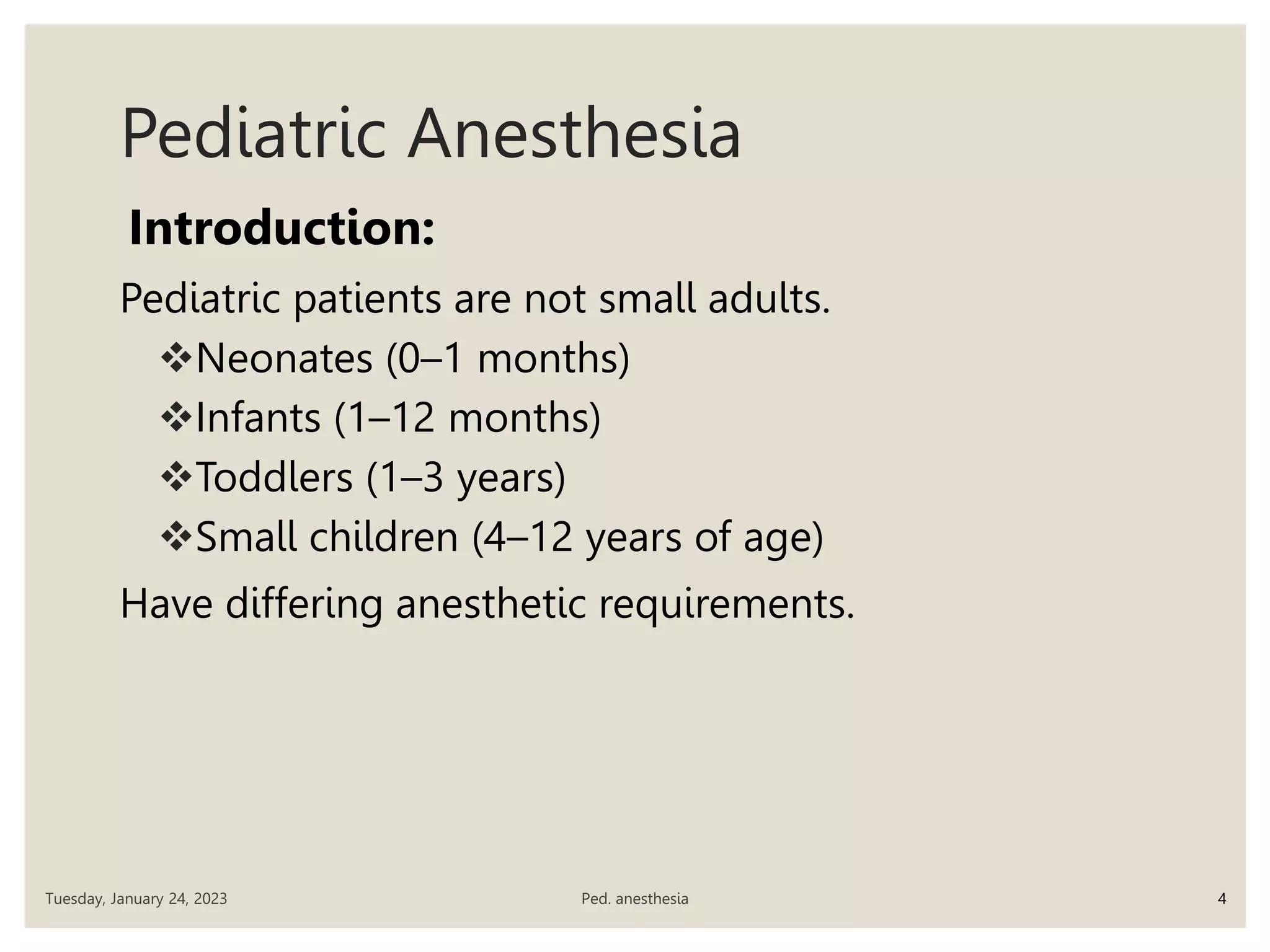
Pediatric patients are not small adults.
Neonates (0–1 months)
Infants (1–12 months)
Toddlers (1–3 years)
Small children (4–12 years of age)
Have differing anesthetic requirements.
4
Tuesday, January 24, 2023 Ped. anesthesia
ANATOMIC & PHYSIOLOGICAL
DEVELOPMENT
Respiratory System
Airway
Large head, prominent occiput
 ?Large tongue
Narrower nasal passages -50% of airway
resistance
Preferential nose breathers until 5 months.
Shorter neck.
Tuesday, January 24, 2023 Ped. anesthesia 5
Larynx
 Anterior,&Cephalad(@C 3-4 level)
 Epiglottis; short,stubby&Ʊ shaped, stiff(NB)
 long,floppy,& omega shaped-
infants/children
 Cricoid → Narrowest point until 10 years old
Trachea and Bronchi
 Trachea –short(4-5cm).
 In children the angle of both right and left bronchus is
same( i.e 55 degree up to the age of 3 yrs)
Tuesday, January 24, 2023 Ped. anesthesia 6
Respiratory System
• Weak intercostal and diaphragmatic musculature (do
not achieve type-1 muscle fibers until age 2)
• Highly compliant chest wall & ribs provide little
support to the lungs
negative intrathoracic pressure is poorly maintained.
• Alveolar maturation is not complete until late
childhood (about 8 years of age).
7
Tuesday, January 24, 2023 Ped. anesthesia
…Respiratory System
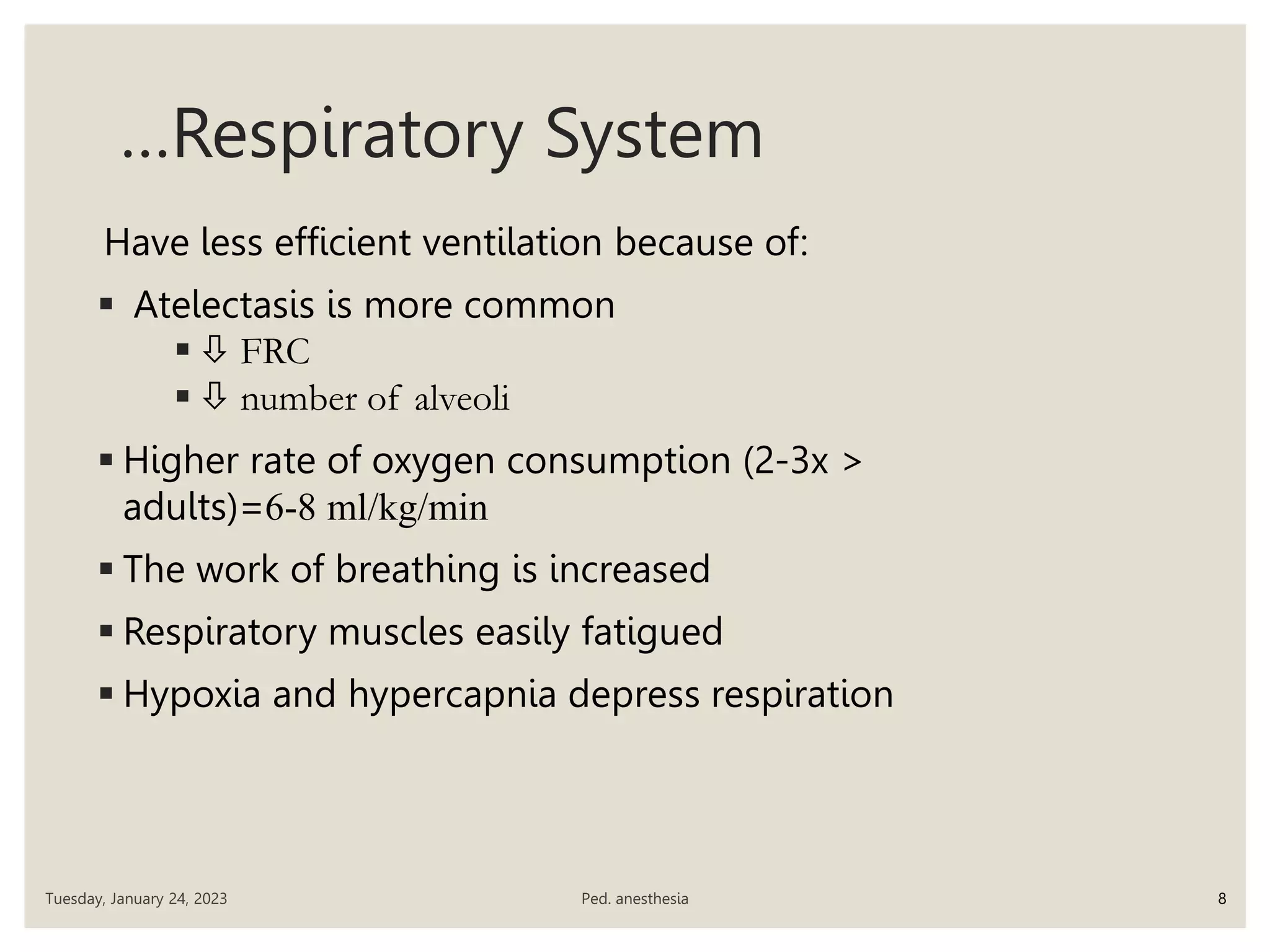
Have less efficient ventilation because of:
 Atelectasis is more common
  FRC
  number of alveoli
 Higher rate of oxygen consumption (2-3x >
adults)=6-8 ml/kg/min
 The work of breathing is increased
 Respiratory muscles easily fatigued
 Hypoxia and hypercapnia depress respiration
8
Tuesday, January 24, 2023 Ped. anesthesia
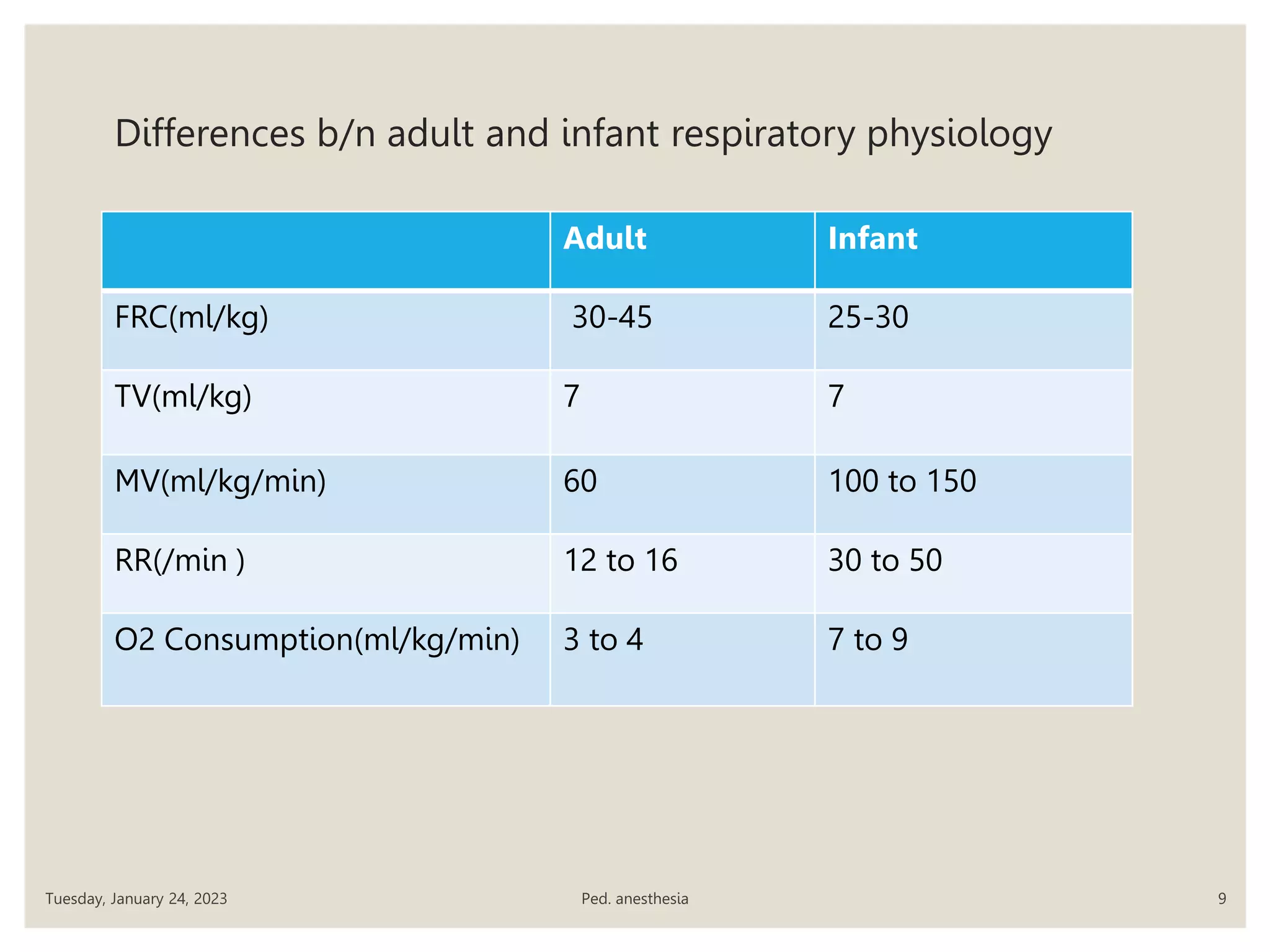
Differences b/n adult and infant respiratory physiology
Adult Infant
FRC(ml/kg) 30-45 25-30
TV(ml/kg) 7 7
MV(ml/kg/min) 60 100 to 150
RR(/min ) 12 to 16 30 to 50
O2 Consumption(ml/kg/min) 3 to 4 7 to 9
Tuesday, January 24, 2023 Ped. anesthesia 9
Cardiovascular System
 Increased basal heart rate
 Stroke volume is relatively fixed by a noncompliant and
immature left ventricle in neonates and infants.
 The CO is therefore very sensitive to changes in heart rate.
 The PNS stimulation, anesthetic overdose, or hypoxia can
quickly trigger bradycardia.
Hypotension, asystole, & intra-op death will ensue.
Tuesday, January 24, 2023 Ped. anesthesia 10
CVS..
 The SNS and baroreceptor reflexes are not fully
mature.
 Lower catecholamine stores, and a blunted
response to exogenous catecholamines.
 More sensitive to the calcium channel blocking
properties of volatile anesthetics and opioid-
induced bradycardia.
 The vascular tree is less able to respond to
hypovolemia with vasoconstriction.
 The hallmark of intravascular fluid depletion in
neonates and infants is therefore hypotension
without tachycardia.
Tuesday, January 24, 2023 Ped. anesthesia 11
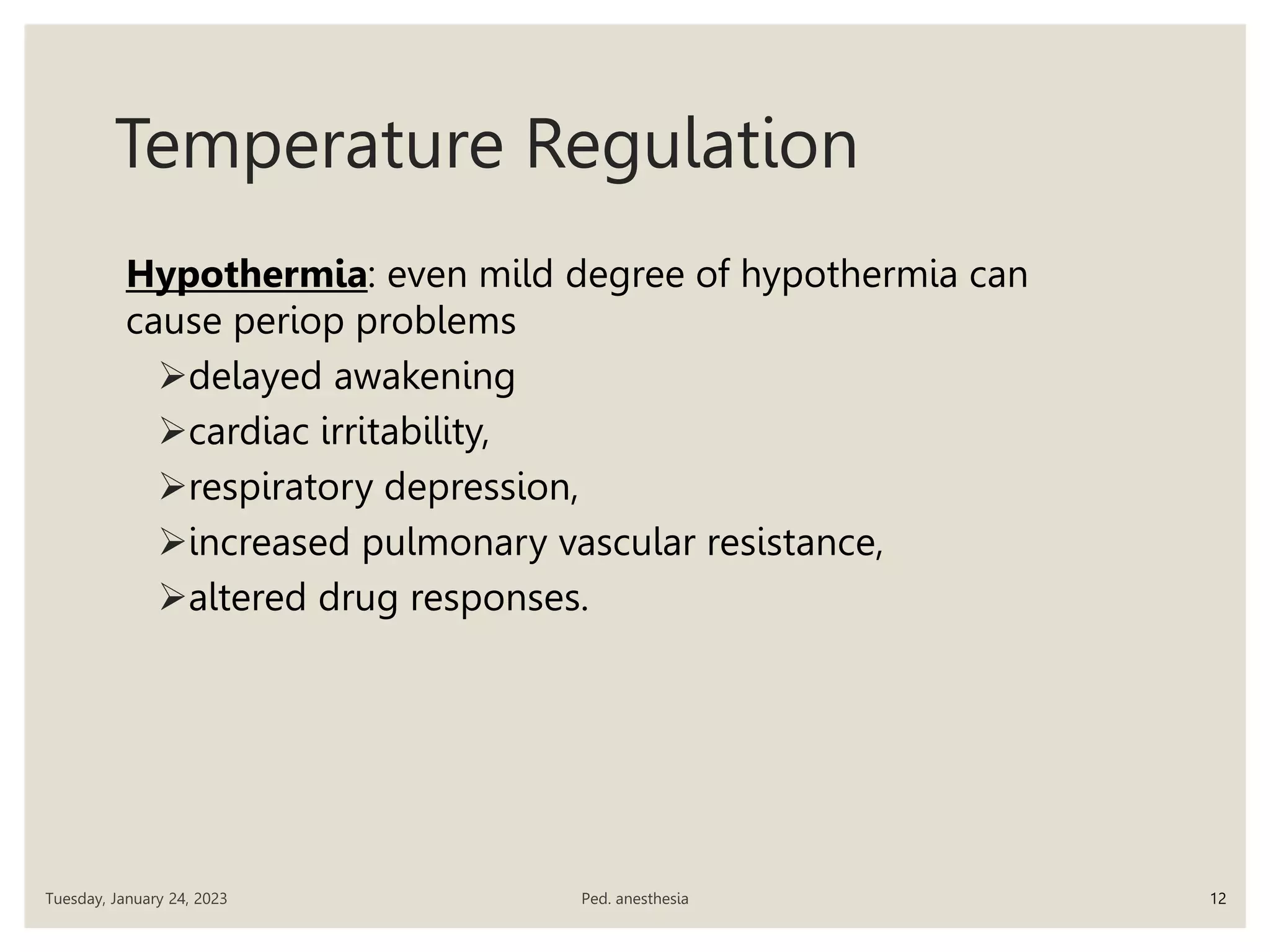
Temperature Regulation
Hypothermia: even mild degree of hypothermia can
cause periop problems
delayed awakening
cardiac irritability,
respiratory depression,
increased pulmonary vascular resistance,
altered drug responses.
12
Tuesday, January 24, 2023 Ped. anesthesia
Renal Function
 Normal kidney function is not present until 6 months of
age.
 Complete maturation @ 2 years of age
 Meticulous attention to fluid administration in the early
days of life.
 total body water and % extracellular fluid are increased in
the infant
 Prolonged duration of action for hydrophilic drugs,
particularly those that are renally excreted
13
Tuesday, January 24, 2023 Ped. anesthesia
Gastrointestinal function
 Full coordination of swallowing with respiration
~ 4-5 months ,increased risk for GE reflux
 Lower levels of albumen and proteins - prone to
neonatal coagulopathy, and less drug bound
,higher drug levels
 liver blood flow decreased in newborns
Prolonged excretion for drugs
14
Tuesday, January 24, 2023 Ped. anesthesia
Glucose Homeostasis
Neonates have relatively reduced glycogen stores,
predisposing them to hypoglycemia.
Impaired glucose excretion by the kidneys may partially
off set this tendency.
In general, neonates/children at greatest risk for
hypoglycemia are;
 premature or SGA,
 receiving hyper alimentation, and
 the offsprings of diabetic mothers.
 Endocrine/metabolic disorders
Tuesday, January 24, 2023 Ped. anesthesia 15
PHARMACOLOGICAL DIFFERENCES
 Pediatric drug dosing is typically adjusted on a per kilogram.
◦ Early childhood a patient’s weight can be approximated based on age:
50th percentile weight (kg) = (Age × 2) + 9
 Wt’ can also be estimated by;(age+4)x2,but less accurate over 10
yrs.
 Weight-adjustment of drug dosing is incompletely effective because
the disproportionately larger pediatric intravascular and ECF
compartments
The immaturity of hepatic biotransformation pathways
decreased protein for drug binding eg. thiopental, bupivacaine
 higher metabolic rate
Relatively lower GFR,
 Higher total water content (70–75%)
Tuesday, January 24, 2023 Ped. anesthesia 16
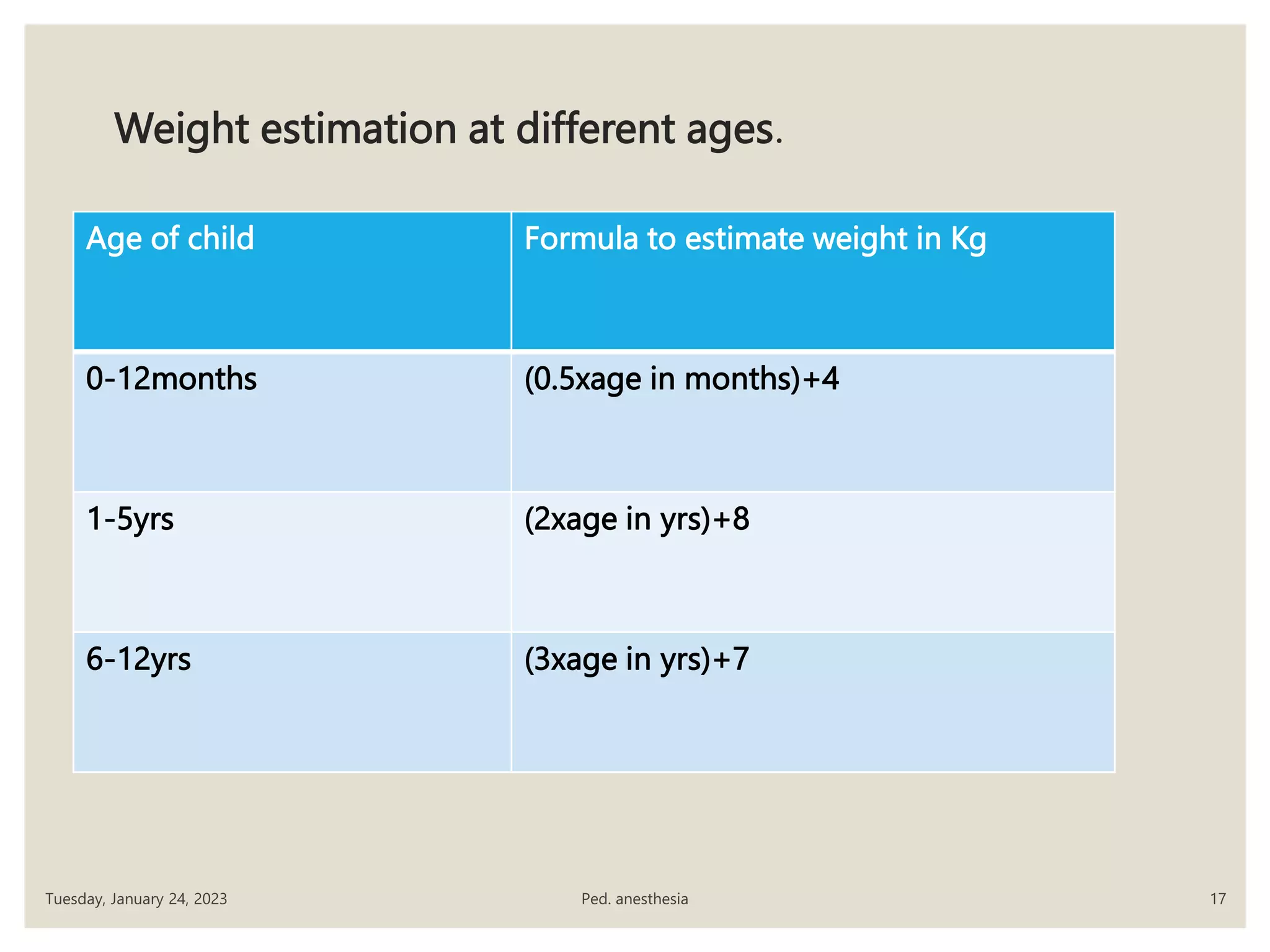
Weight estimation at different ages.
Age of child Formula to estimate weight in Kg
0-12months (0.5xage in months)+4
1-5yrs (2xage in yrs)+8
6-12yrs (3xage in yrs)+7
Tuesday, January 24, 2023 Ped. anesthesia 17
Preoperative Considerations
 Depending on age, past experiences, and maturity, children
present with varying degrees of fright (even terror) when
faced with the prospect of surgery.
 Adults are usually most concerned about the possibility of
death, but children are principally worried about pain and
separation from their parent.
Tuesday, January 24, 2023 Ped. anesthesia 18
Box 8-1 Risk Factors for Preoperative
Anxiety
Child Related
• Young age (1 to 5 years of age) ,
• Poor previous experience
• Shy and inhibited temperament ,
• Lack of developmental maturity and social adaptability
• High cognitive levels
• Not enrolled in daycare
Parent Related: High trait and state anxiety ,Divorced parents,
Multiple surgical procedures for parents
Environment Related: Sensory overload ,Conflicting messages.
Tuesday, January 24, 2023 Ped. anesthesia 19
The Preoperative Evaluation
• Pertinent maternal history, birth and neonatal
history
• Level of anxiety
• Review of systems, physical examination, height,
weight, and vital signs.
• Use of medications such as bronchodilators,
steroids, and chemotherapeutic agents
• Malformations in the child and family.
• Anesthetic risks, anesthetic plans, recovery
phenomena, postoperative analgesia, and
discharge criteria have to be discussed in detail.
20
Tuesday, January 24, 2023 Ped. anesthesia
Preoperative Fasting Period
 Smaller glycogen stores and are more likely to
develop hypoglycemia with prolonged
intervals of fasting.
 Increased risk for aspiration ?
 delayed gastric-emptying times
 abdominal masses-outlet obstruction
(pyloric stenosis)
 ileus, vomiting, or electrolyte disorders.
 Outcome of children who developed
aspiration pneumonia is excellent, unless
these children had some major underlying
problem such as abdominal or thoracic
trauma
◦ .
21
Tuesday, January 24, 2023 Ped. anesthesia
Laboratory evaluation
Current standard of care dictates that healthy children undergoing
elective minor surgery require no laboratory evaluation,
Group and screen / type and cross if blood loss expected
blood chemistry analyses, chest radiographs and urinary analysis are
performed only for specific indications
For surgeries in which significant blood loss may be expected, a
hemoglobin of 10 g/dL has been cited as acceptable for infants older
than 3 months of age.
Coagulation studies (INR/PTT) for operations where blood loss may
occur in sensitive areas (ENT, neuro.)
Ionized potassium in children on digoxin or diuretics
22
Tuesday, January 24, 2023 Ped. anesthesia
IV fluid & transfusion
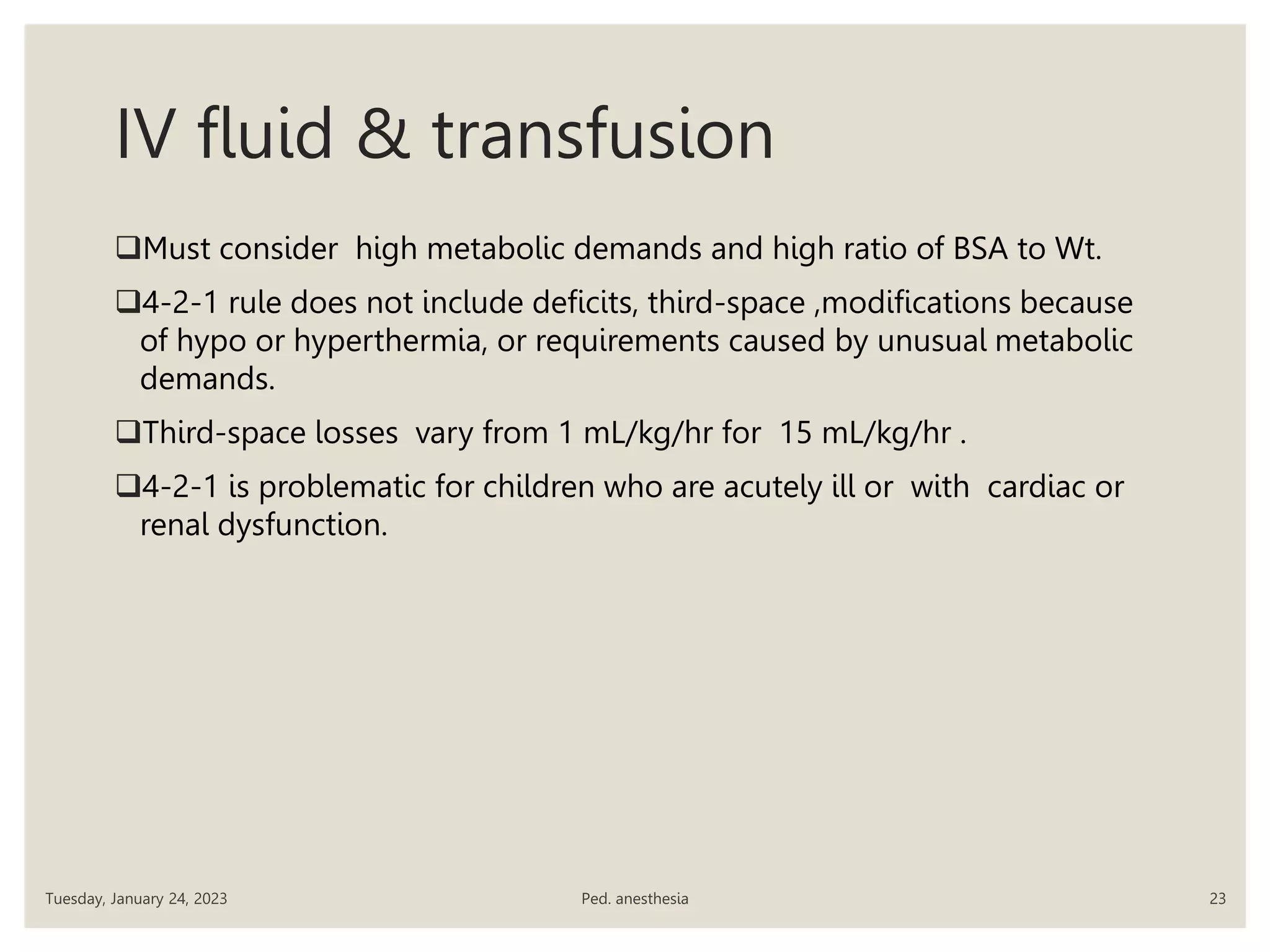
Must consider high metabolic demands and high ratio of BSA to Wt.
4-2-1 rule does not include deficits, third-space ,modifications because
of hypo or hyperthermia, or requirements caused by unusual metabolic
demands.
Third-space losses vary from 1 mL/kg/hr for 15 mL/kg/hr .
4-2-1 is problematic for children who are acutely ill or with cardiac or
renal dysfunction.
Tuesday, January 24, 2023 23
Ped. anesthesia
Fluid Management
Take into account:
fluid deficits
translocation of fluids
blood loss during surgery
maintenance fluid requirements
24
Tuesday, January 24, 2023 Ped. anesthesia
Fluid Management…
Little evidence of hypoglycemia related to fasting prior to
surgery.
 Hyperglycemia has been documented in children given 5%
dextrose solutions to replace deficits or fluid losses
problematic for patients with intracranial injury
significant hyperglycemia can cause hyperosmolar diuresis
To optimize fluid administration and glucose delivery, a
balanced salt solution containing 2.5% glucose may be
used
Intraoperative monitoring of blood glucose is appropriate
for newborns,
25
Tuesday, January 24, 2023 Ped. anesthesia
Perioperative Fluid Requirements
A. Maintenance Fluid Requirements
The choice of maintenance fluid remains
controversial.
A solution such as D 5 ½ NS with 20mEq/L of
KCL provides adequate dextrose and electrolytes
at these maintenance infusion rates.
 D 5 ¼ NS may be a better choice in neonates
because of their limited ability to handle sodium
loads.
Tuesday, January 24, 2023 Ped. anesthesia 26
MAINTAINANCE..
Tuesday, January 24, 2023 Ped. anesthesia 27
B.Deficit
 The balance of the calculated fluid deficit can be
provided over 1 or 2 hours and is often provided in the
form isotonic fluid or a 5% dextrose solution in 0.9%
normal saline.
 Immediate intravascular volume expansion ;10-15
mL/kg bolus of isotonic fluid
Tuesday, January 24, 2023 Ped. anesthesia 28
C.Replacement
 Blood loss has been typically replaced with non–glucose-
containing crystalloid (3:1) or colloid solutions (eg, 1 mL of
5% albumin for each milliliter of blood lost) until the
patient’s hematocrit reaches a predetermined lower limit.
 The target hematocrit (for transfusion) may be as great as
40%, whereas in healthy older children a hematocrit of 20–
26% is generally well tolerated.
Tuesday, January 24, 2023 Ped. anesthesia 29
D. Third-space loss
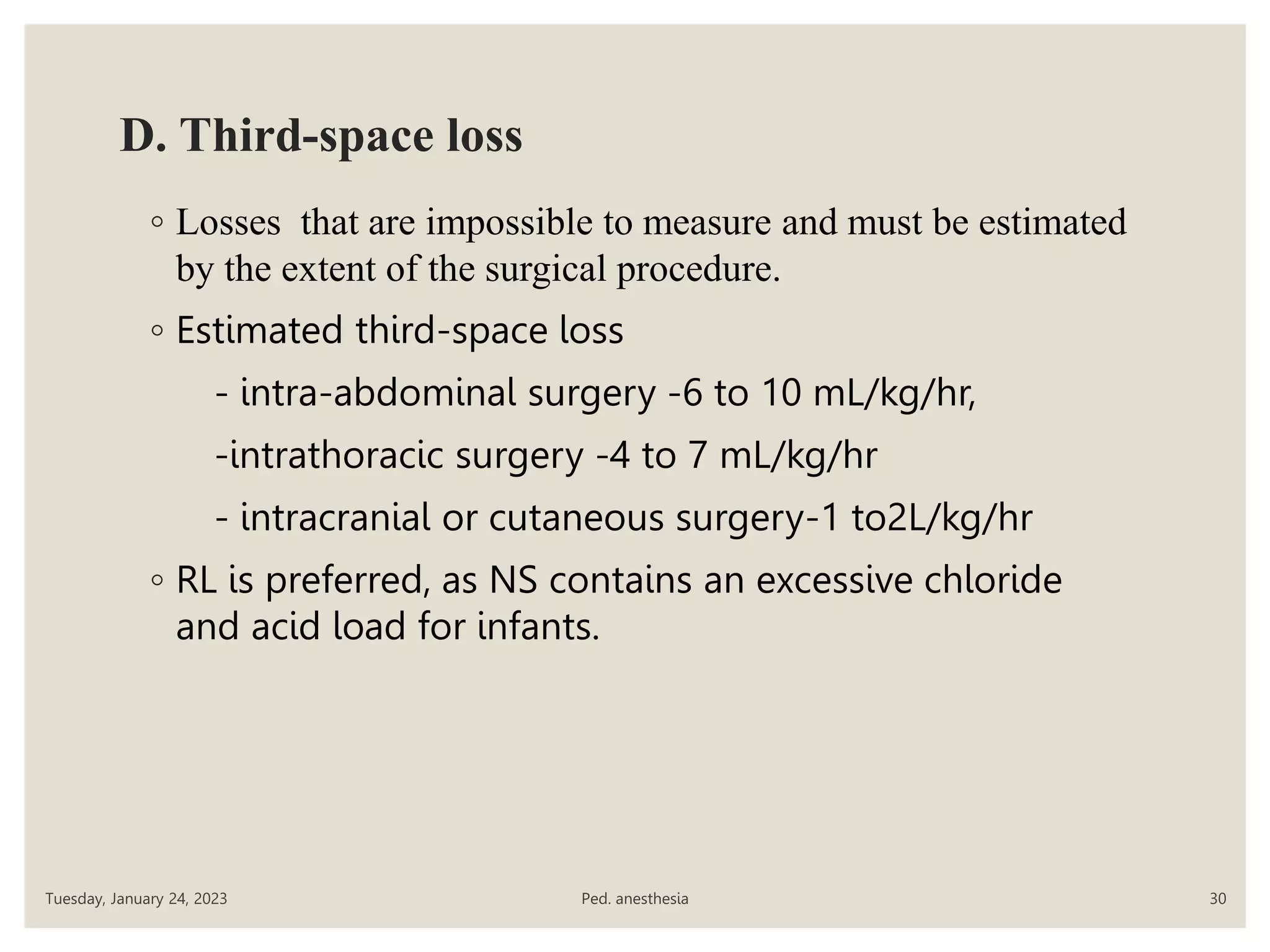
◦ Losses that are impossible to measure and must be estimated
by the extent of the surgical procedure.
◦ Estimated third-space loss
- intra-abdominal surgery -6 to 10 mL/kg/hr,
-intrathoracic surgery -4 to 7 mL/kg/hr
- intracranial or cutaneous surgery-1 to2L/kg/hr
◦ RL is preferred, as NS contains an excessive chloride
and acid load for infants.
Tuesday, January 24, 2023 Ped. anesthesia 30
Blood or blood component
therapy
31
 Indications not always clear-cut.
 Blood volume:
 Premature infant - 100 -120 ml/kg
Full-term infant - 90 ml/kg
3-12 month old child - 80 ml/kg
1 year and older child - 70 ml/kg
MABL = EBV (starting Hct - target Hct)
Starting Hct
Tuesday, January 24, 2023 Ped. anesthesia
Blood Component..
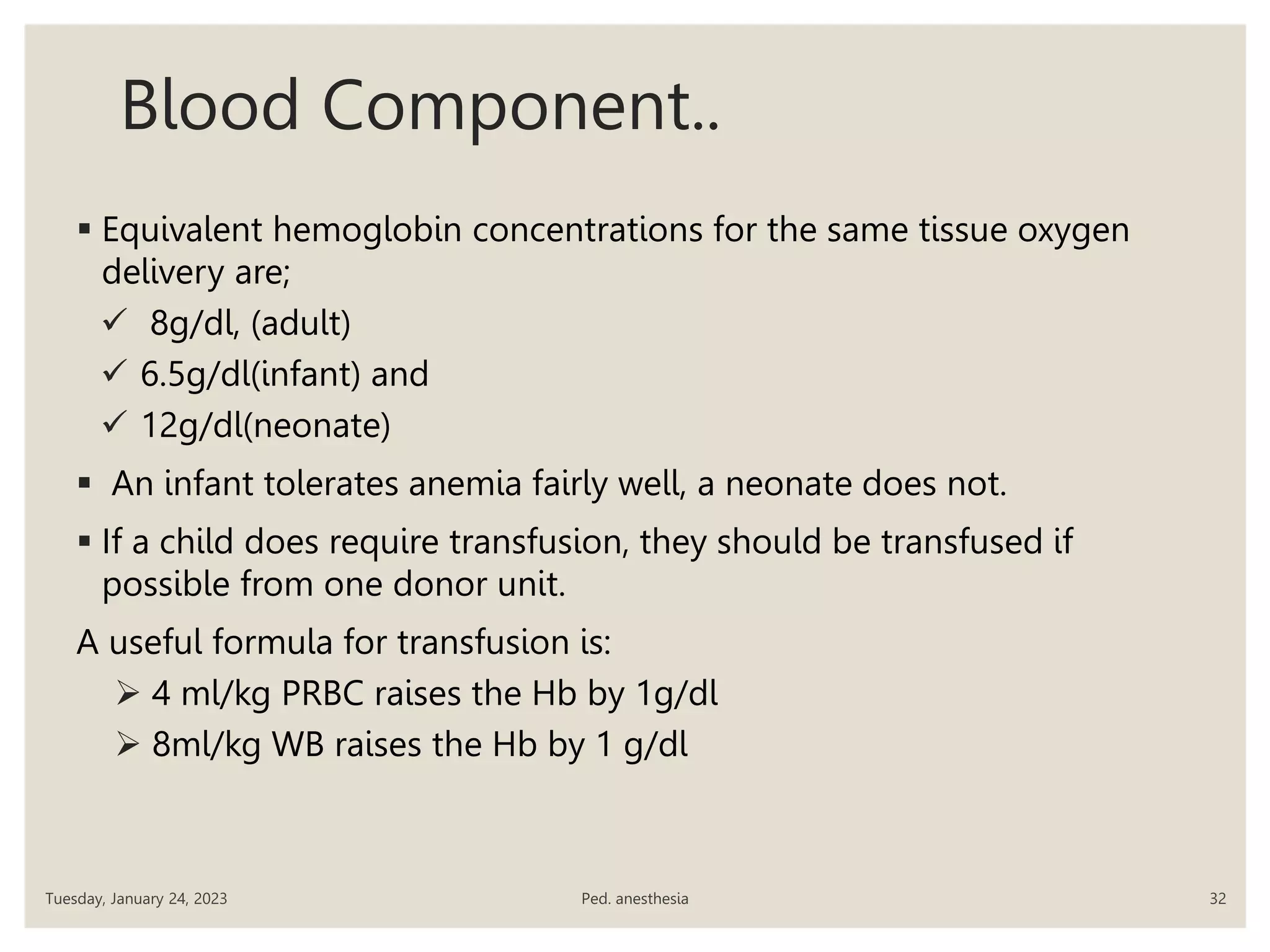
 Equivalent hemoglobin concentrations for the same tissue oxygen
delivery are;
 8g/dl, (adult)
 6.5g/dl(infant) and
 12g/dl(neonate)
 An infant tolerates anemia fairly well, a neonate does not.
 If a child does require transfusion, they should be transfused if
possible from one donor unit.
A useful formula for transfusion is:
 4 ml/kg PRBC raises the Hb by 1g/dl
 8ml/kg WB raises the Hb by 1 g/dl
Tuesday, January 24, 2023 Ped. anesthesia 32
Packed RBCs
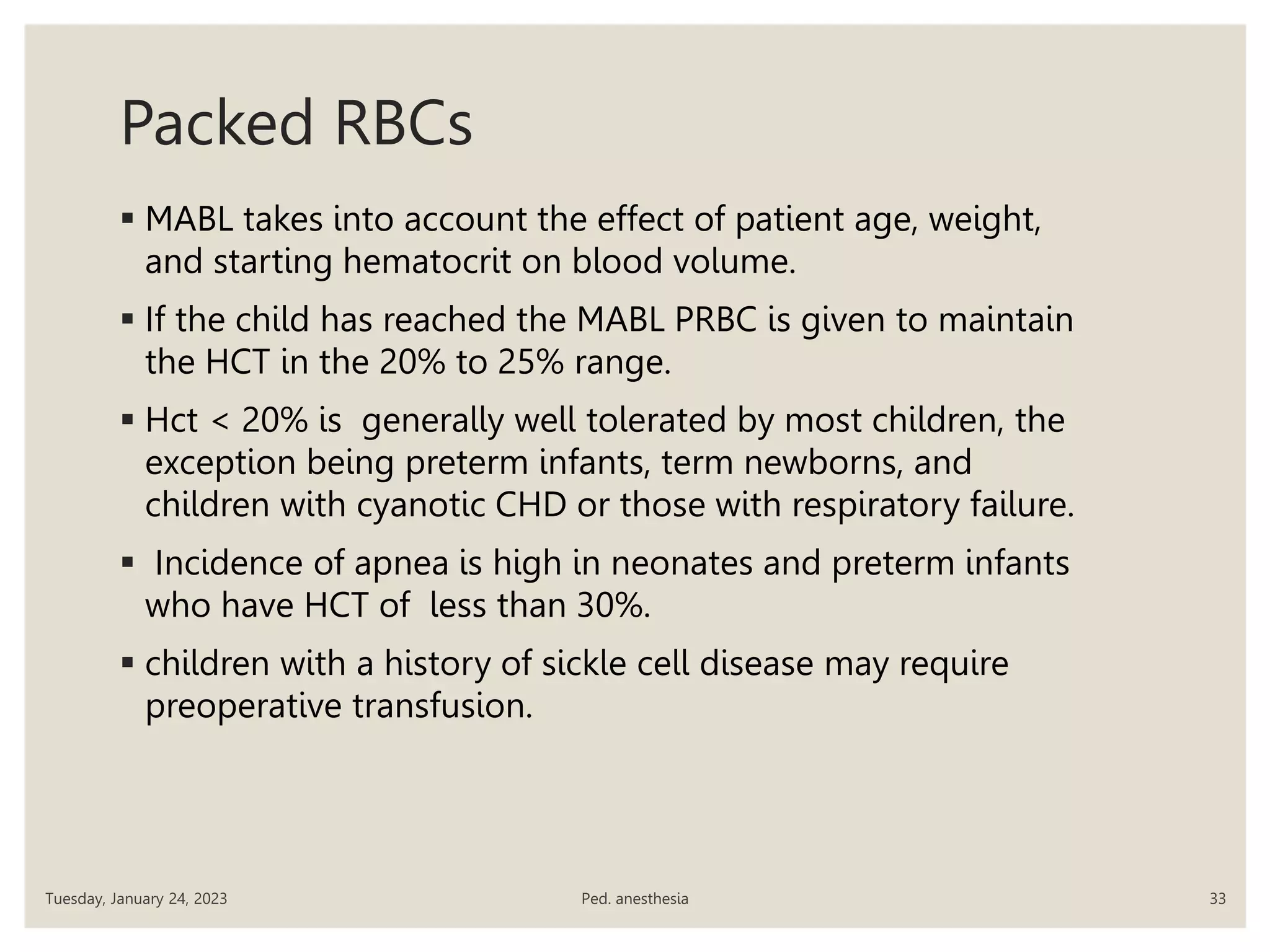
 MABL takes into account the effect of patient age, weight,
and starting hematocrit on blood volume.
 If the child has reached the MABL PRBC is given to maintain
the HCT in the 20% to 25% range.
 Hct < 20% is generally well tolerated by most children, the
exception being preterm infants, term newborns, and
children with cyanotic CHD or those with respiratory failure.
 Incidence of apnea is high in neonates and preterm infants
who have HCT of less than 30%.
 children with a history of sickle cell disease may require
preoperative transfusion.
Tuesday, January 24, 2023 33
Ped. anesthesia
Platelets
Thrombocytopenia may occur as a result of disease
processes or dilution during massive blood loss.
PLT count >50,000 will be probably sufficient for invasive
procedure if the rest of coagulation system is normal
 The preoperative platelet count is extremely valuable in
predicting intraoperative platelet requirements.
Clinical oozing is the typical indication for platelet
transfusion
 Neurosurgery, cardiac surgery, or major organ
transplantation.
Dosing ;one WBD unit/10kg, OR 5-10ml/kg (apheresis)
Tuesday, January 24, 2023 34
Ped. anesthesia
Fresh frozen plasma
 Is given to replenish clotting factors lost during
massive transfusion ,DIC, or for congenital clotting
factor deficit.
 children given whole blood will not need FFP.
 Usually replenished if EBL = 1-1.5 TBV
 A child should never be given FFP to correct bleeding
that is surgical in nature.
 FFP volume given is 30% or more of the child’s blood
volume.
 Transfusion of FFP at rates exceeding 1 mL/kg/min can
lead to severe ionized hypocalcemia and cardiac
depression.
Tuesday, January 24, 2023 35
Ped. anesthesia
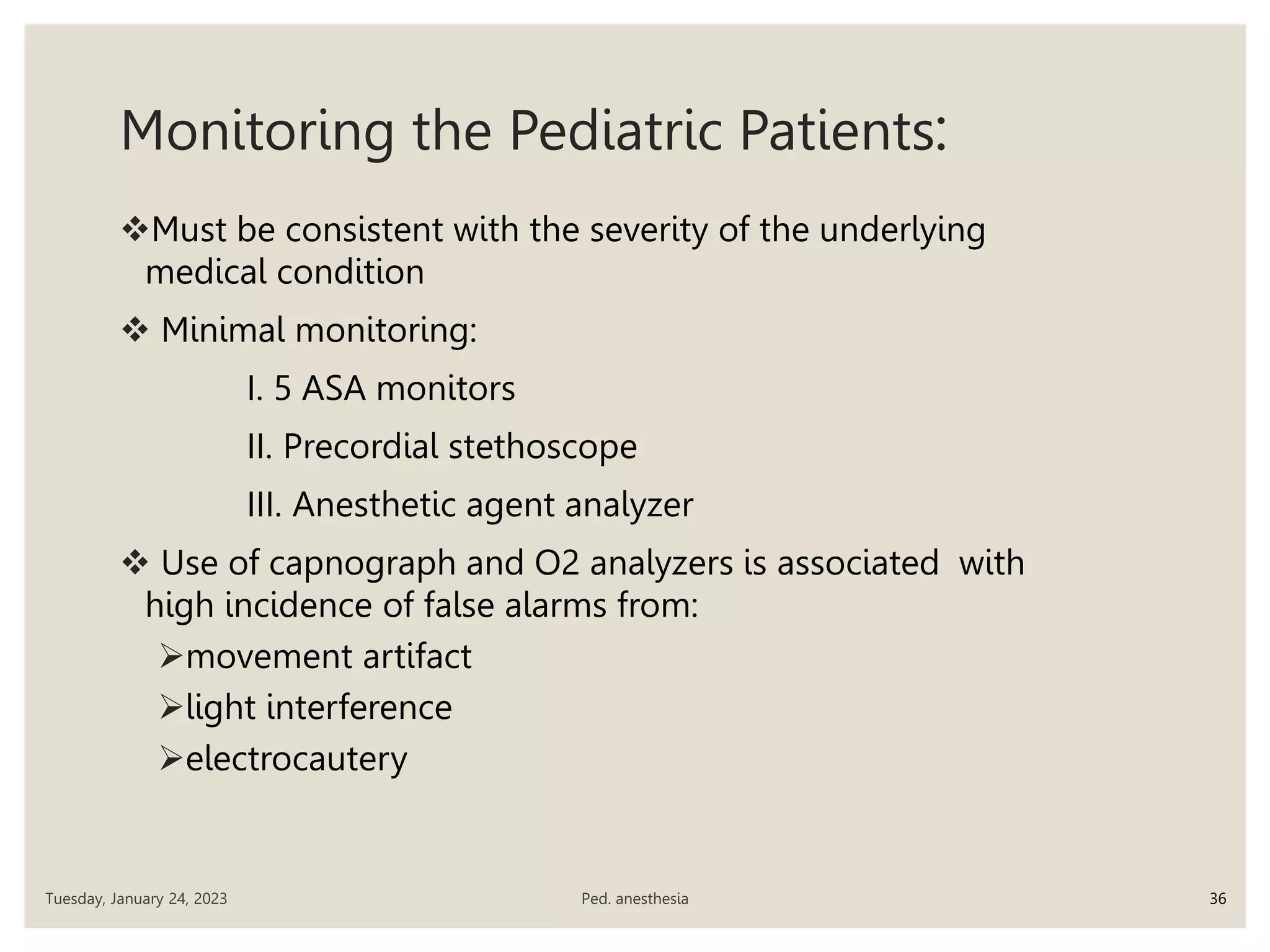
Monitoring the Pediatric Patients:
Must be consistent with the severity of the underlying
medical condition
 Minimal monitoring:
I. 5 ASA monitors
II. Precordial stethoscope
III. Anesthetic agent analyzer
 Use of capnograph and O2 analyzers is associated with
high incidence of false alarms from:
movement artifact
light interference
electrocautery
36
Tuesday, January 24, 2023 Ped. anesthesia
Special Monitoring the Pediatric
Patients:
 Intra-arterial catheter - most common radial
 Pulmonary artery catheters are rarely indicated
because equalization of the pressure right/left heart
 In a case of severe multisystem organ failure insertion
of PAC might be particularly useful
 Multi-lumen catheters are valuable in ICU patients
37
Tuesday, January 24, 2023 Ped. anesthesia
Anesthesia Circuits
 Nonrebreathing circuits:
1. Minimal work of breathing
2. Speeds-up rate of inhalational induction
3. Compression and compliance volumes are
less (small circuit volume)
 Use of Mapleson D system is recommended in children < 10 kg
More sensitive to changes in gas flow
More sensitive to humidification
Actual delivered volume is greater than
other systems
38
Tuesday, January 24, 2023 Ped. anesthesia
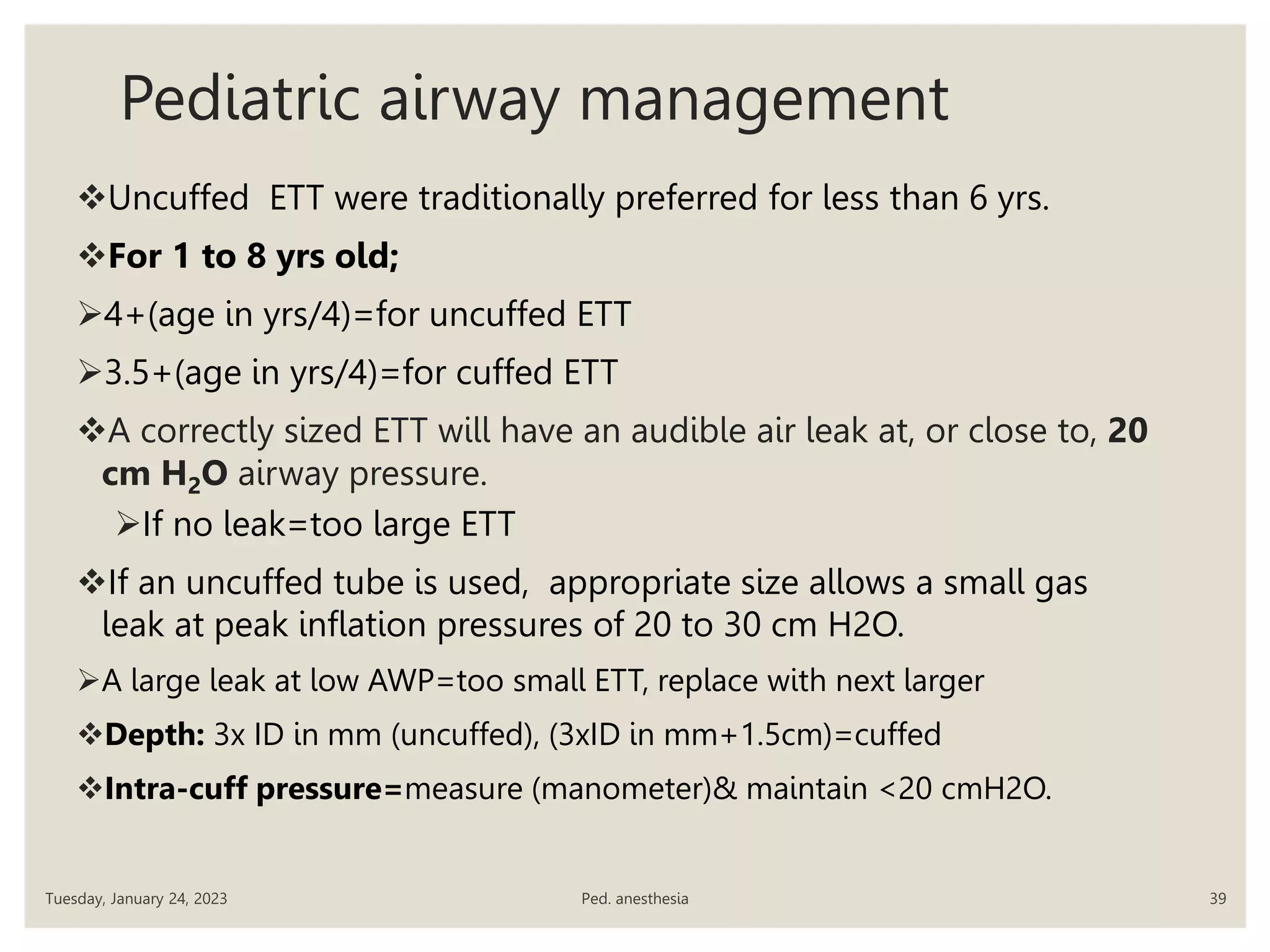
Pediatric airway management
Uncuffed ETT were traditionally preferred for less than 6 yrs.
For 1 to 8 yrs old;
4+(age in yrs/4)=for uncuffed ETT
3.5+(age in yrs/4)=for cuffed ETT
A correctly sized ETT will have an audible air leak at, or close to, 20
cm H2O airway pressure.
If no leak=too large ETT
If an uncuffed tube is used, appropriate size allows a small gas
leak at peak inflation pressures of 20 to 30 cm H2O.
A large leak at low AWP=too small ETT, replace with next larger
Depth: 3x ID in mm (uncuffed), (3xID in mm+1.5cm)=cuffed
Intra-cuff pressure=measure (manometer)& maintain <20 cmH2O.
Tuesday, January 24, 2023 39
Ped. anesthesia
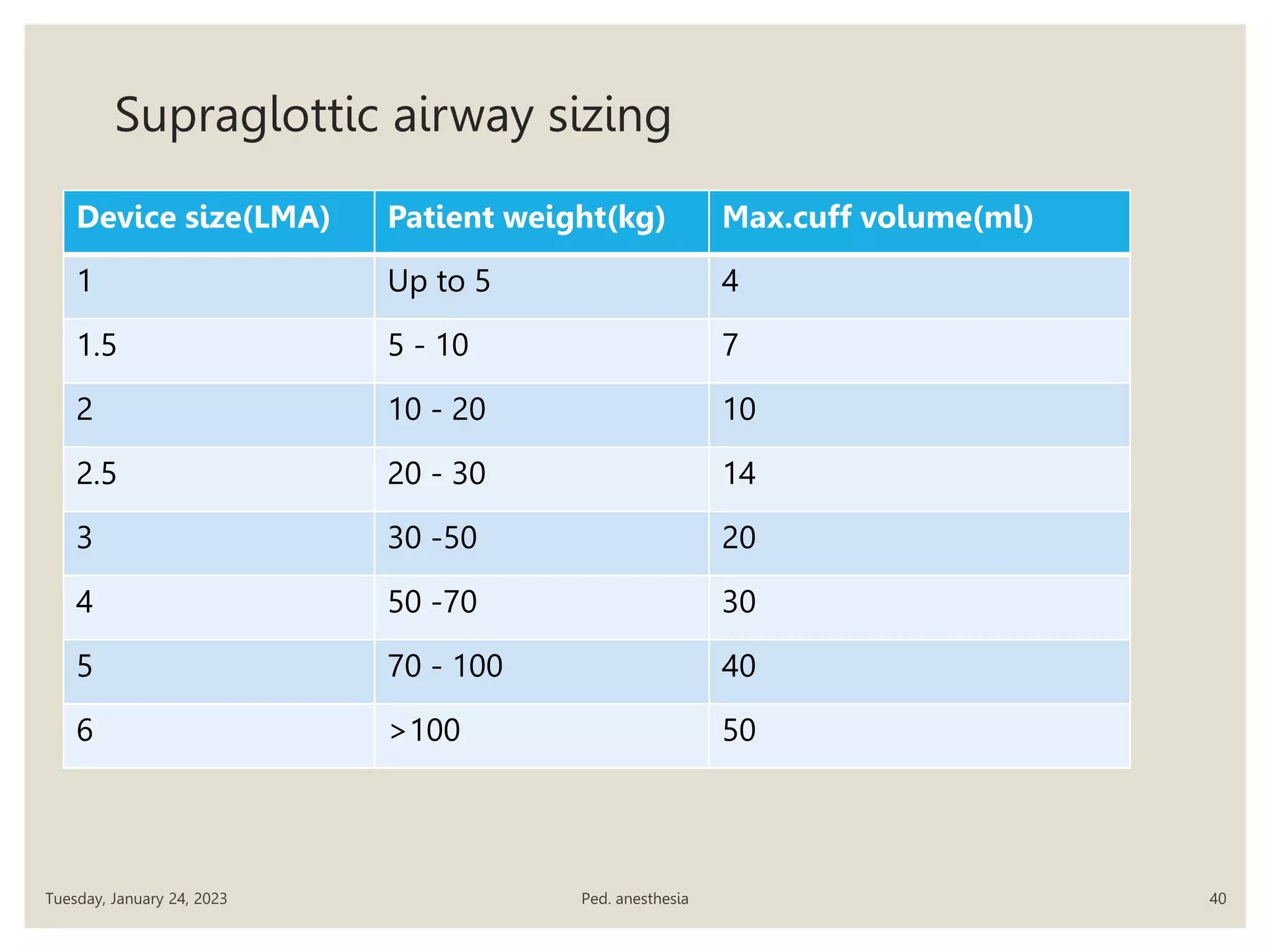
Supraglottic airway sizing
Device size(LMA) Patient weight(kg) Max.cuff volume(ml)
1 Up to 5 4
1.5 5 - 10 7
2 10 - 20 10
2.5 20 - 30 14
3 30 -50 20
4 50 -70 30
5 70 - 100 40
6 >100 50
Tuesday, January 24, 2023 Ped. anesthesia 40
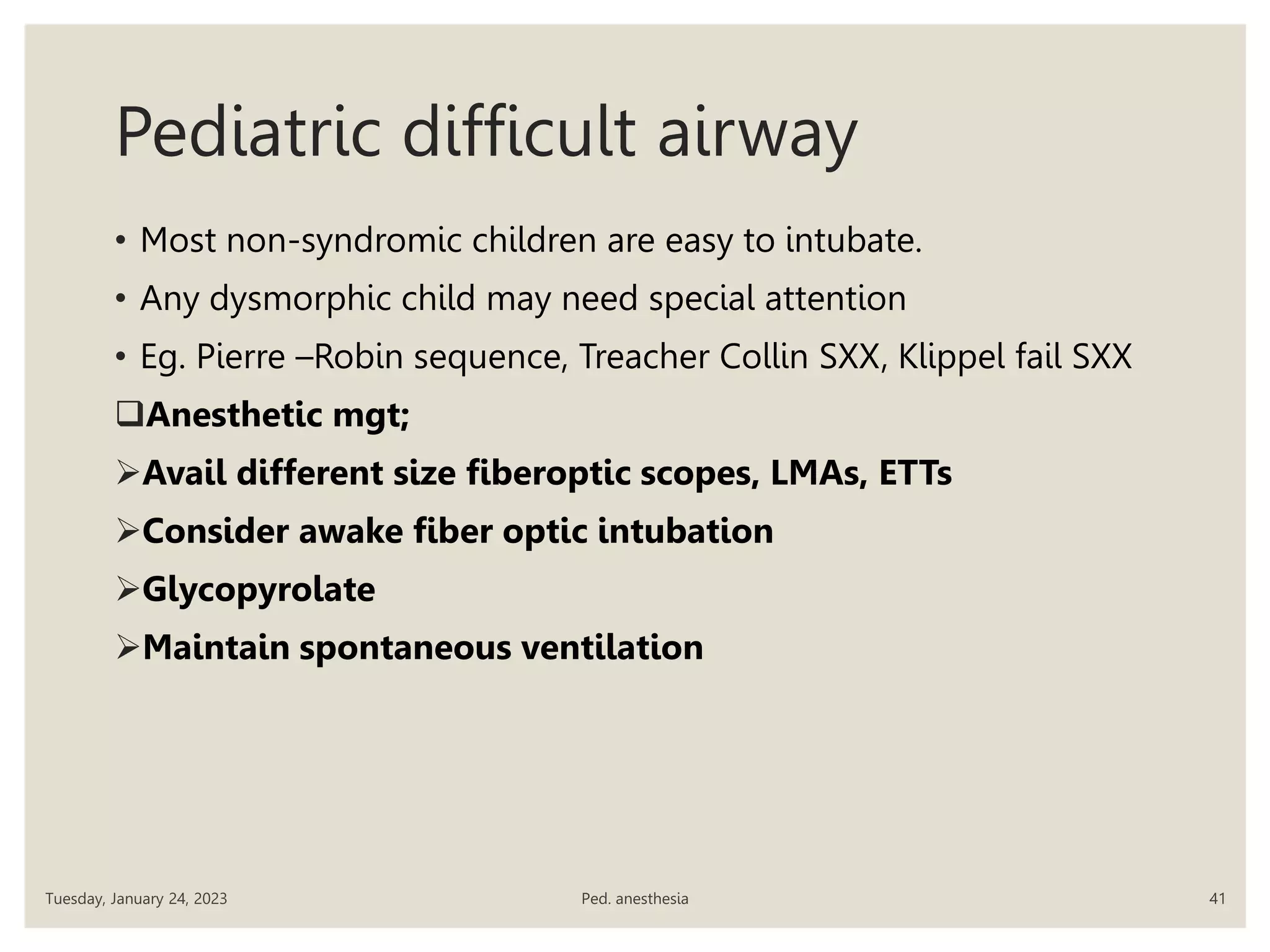
Pediatric difficult airway
• Most non-syndromic children are easy to intubate.
• Any dysmorphic child may need special attention
• Eg. Pierre –Robin sequence, Treacher Collin SXX, Klippel fail SXX
Anesthetic mgt;
Avail different size fiberoptic scopes, LMAs, ETTs
Consider awake fiber optic intubation
Glycopyrolate
Maintain spontaneous ventilation
Tuesday, January 24, 2023 Ped. anesthesia 41
Premedication
SEDATIVE AND ANXIOLYTICS
Anti emetics
antiacids
EMLA cream
Glycopyrrolate/atropine
42
Tuesday, January 24, 2023 Ped. anesthesia
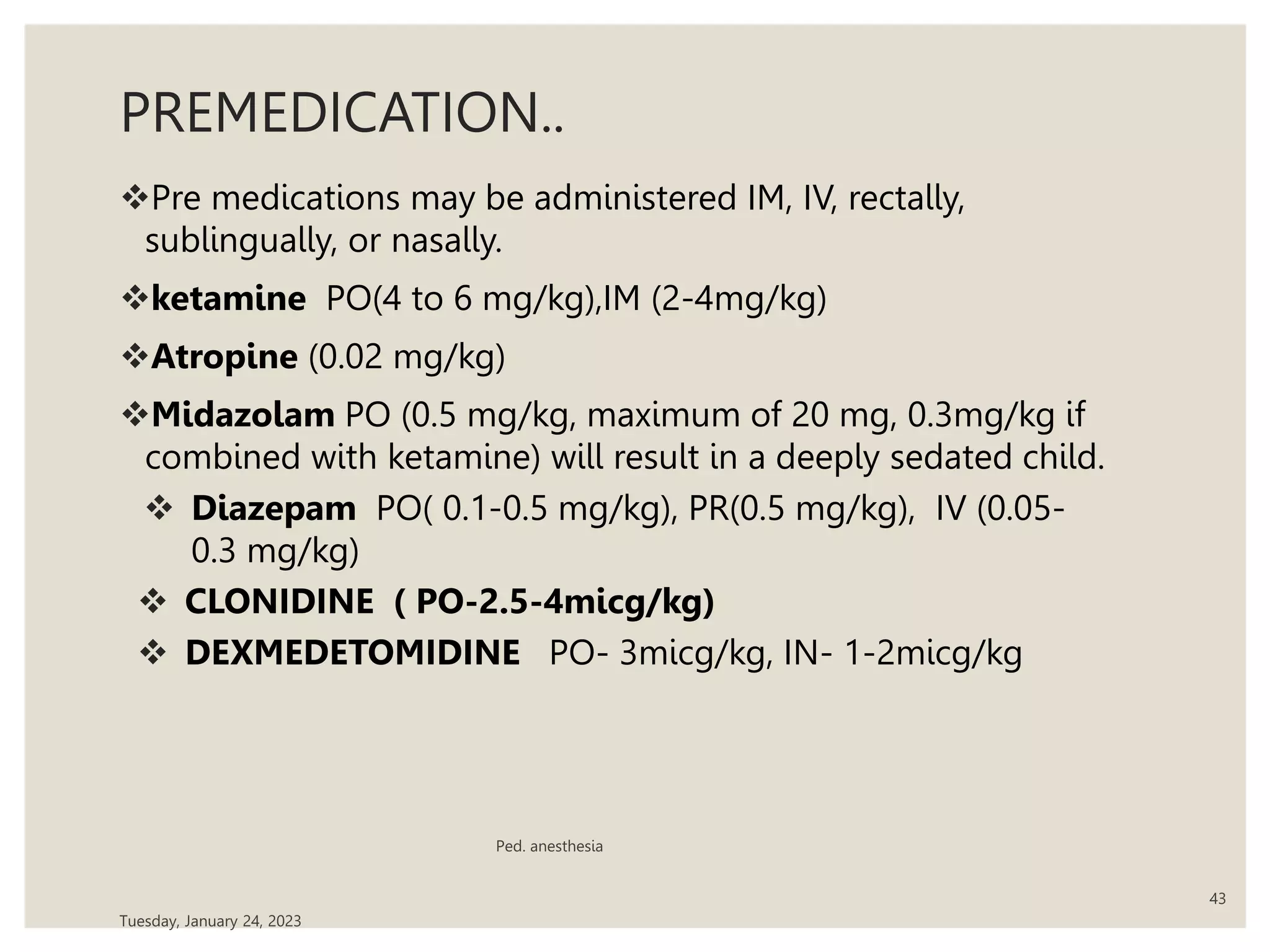
PREMEDICATION..
Pre medications may be administered IM, IV, rectally,
sublingually, or nasally.
ketamine PO(4 to 6 mg/kg),IM (2-4mg/kg)
Atropine (0.02 mg/kg)
Midazolam PO (0.5 mg/kg, maximum of 20 mg, 0.3mg/kg if
combined with ketamine) will result in a deeply sedated child.
 Diazepam PO( 0.1-0.5 mg/kg), PR(0.5 mg/kg), IV (0.05-
0.3 mg/kg)
 CLONIDINE ( PO-2.5-4micg/kg)
 DEXMEDETOMIDINE PO- 3micg/kg, IN- 1-2micg/kg
Tuesday, January 24, 2023
Ped. anesthesia
43
Premedication…
Sedative premedication is generally omitted for neonates and
sick infants.
Children who appear likely to exhibit uncontrollable
separation anxiety should be given sedative, such as
midazolam (0.3–0.5 mg/kg, 15 mg maximum).
The oral route is generally preferred, but it requires 20–45
min for effect.
Smaller doses of midazolam have been used in combination
with oral ketamine (4–6 mg/kg) for inpatients.
Tuesday, January 24, 2023 Ped. anesthesia 44
Midazolam
 Is the only benzodiazepine approved by the U.S. FDA for
use in neonates; the half-life is significantly longer (6 to 12
hours) in this population.
 Unlike diazepam Midazolam is water soluble and not
painful .
 Midazolam has the fastest clearance of all the
benzodiazepines
 The shorter elimination half-life (∼2 hours) of midazolam
than diazepam (∼18 hours) offers an advantage for use as a
premedication in children.
 Is given IM(0.1-0.15 mg/kg, max of 7.5 mg), oral (0.25 - 1.0
mg/kg, maximum of 20 mg), rectal (0.75 -1.0 mg/kg,
maximum of 20 mg), nasal (0.2 mg/kg), or sublingual (0.2
mg/kg) .
Tuesday, January 24, 2023 45
Ped. anesthesia
PREMEDICATION…
Atropine, 0.02 mg/kg IM
Infants <1 yr of age to prevent vagally induced bradycardia
Infants and children with septic or late stage hypovolemic shock
Childern </=5yrs of age receiving succinylcholine and children
>5 yrs of age receiving second dose of succinylcholine
accumulation of secretions that can block small airways and
endotracheal tubes.
particularly problematic for patients with URIs or those who have
been given ketamine.
NB; Will be ineffective for hypoxemia induced secondary bradycardia.
Tuesday, January 24, 2023 Ped. anesthesia 46
Premedication..
Diazepam
 Has an extremely long half-life in neonates (80 hours) and may not
be indicated until 6 months of age.
Should be given with caution to any child with hepatic disease.
Dexmedetomidine
Is a selective α2-agonist with anxiolytic, sedative, and
analgesic properties.
 Facilitates fiberoptic intubation, Sedation for a child
undergoing awake craniotomy, reduces the incidence of
emergence agitation.
Also used for cardiac catheterization & radiologic
procedures.
Tuesday, January 24, 2023 47
Ped. anesthesia
Narcotics
 More potent in neonates than in older children and adults.
 Unproven (but popular) explanations include “easier
entry” across the BBB, decreased metabolic capability, or
increased sensitivity of the respiratory centers.
 Important elements of balanced anesthesia and sedation in
children
decrease MAC of inhaled agents, smooth hemodynamics
and provides postoperative analgesia.
depress central respiratory effort(<6 months)
need to carefully monitor pediatric patients given opioids
rather than withholding pain medications.
Tuesday, January 24, 2023 Ped. anesthesia 48
Narcotic …
Usual recommended doses include fentanyl,1 to 2
µg/kg; morphine,0.05- 0.10 mg/kg; sufentanil, 1
µg/kg; and alfentanil, 50 to 100 µg/kg.
Morphine=with caution in neonates because hepatic
conjugation is reduced and renal clearance of it’s
metabolites is decreased.
Meperidine:
• Less respiratory depression than morphine
• Be cautious in long term administration
because of its metabolite normeperidine.
49
Tuesday, January 24, 2023 Ped. anesthesia
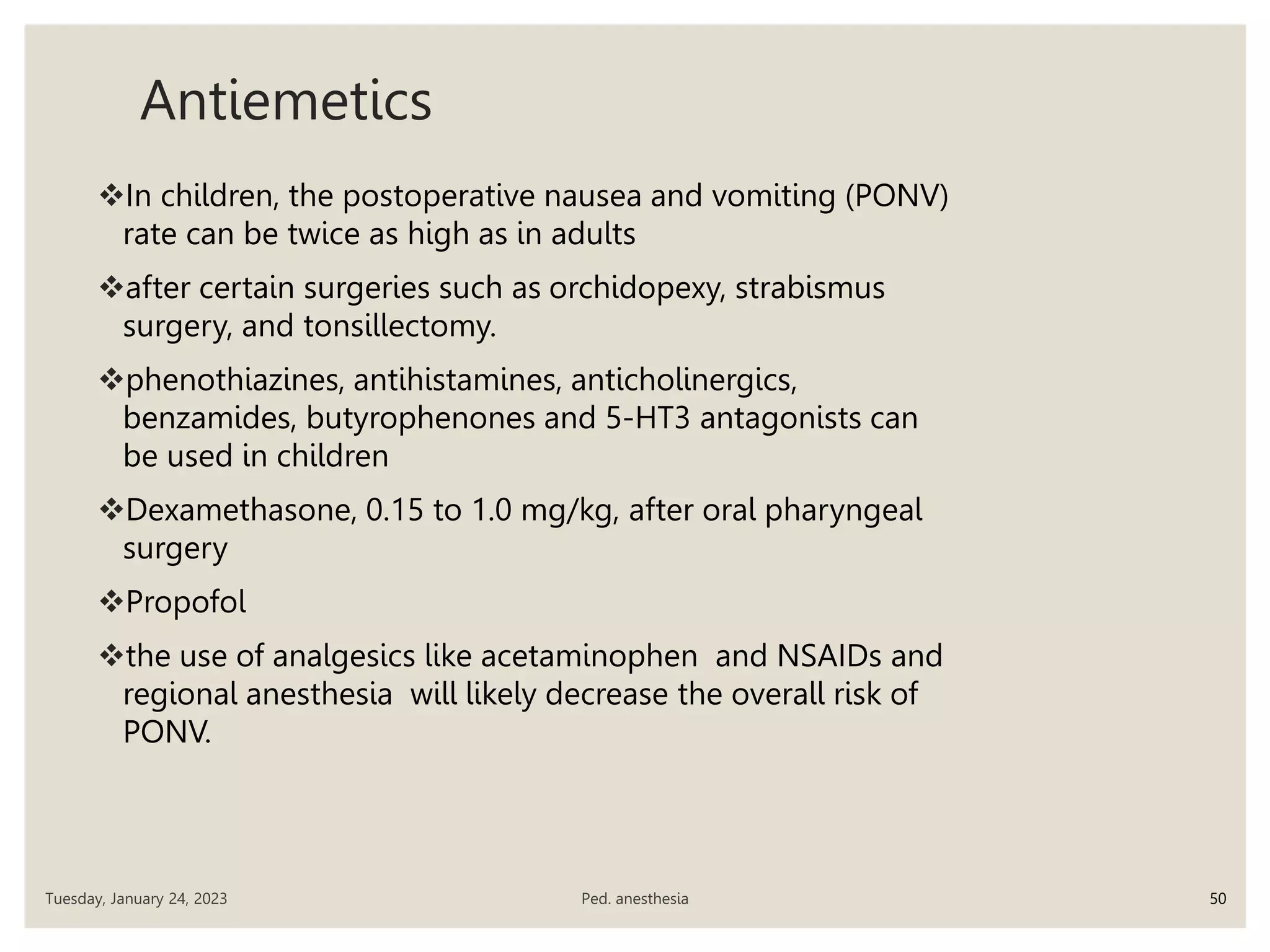
Antiemetics
In children, the postoperative nausea and vomiting (PONV)
rate can be twice as high as in adults
after certain surgeries such as orchidopexy, strabismus
surgery, and tonsillectomy.
phenothiazines, antihistamines, anticholinergics,
benzamides, butyrophenones and 5-HT3 antagonists can
be used in children
Dexamethasone, 0.15 to 1.0 mg/kg, after oral pharyngeal
surgery
Propofol
the use of analgesics like acetaminophen and NSAIDs and
regional anesthesia will likely decrease the overall risk of
PONV.
50
Tuesday, January 24, 2023 Ped. anesthesia
Induction
Inhalation
 Sevoflurane
Halothane
Intravenous
Propofol
Thiopental
Ketamine
Intramuscular
 Ketamine
Tuesday, January 24, 2023 Ped. anesthesia 51
• Intravenous access
Challenging
 Small veins
 Subcutaneous fat
 Multiple sticks
 Saphenous
 Intraosseoous
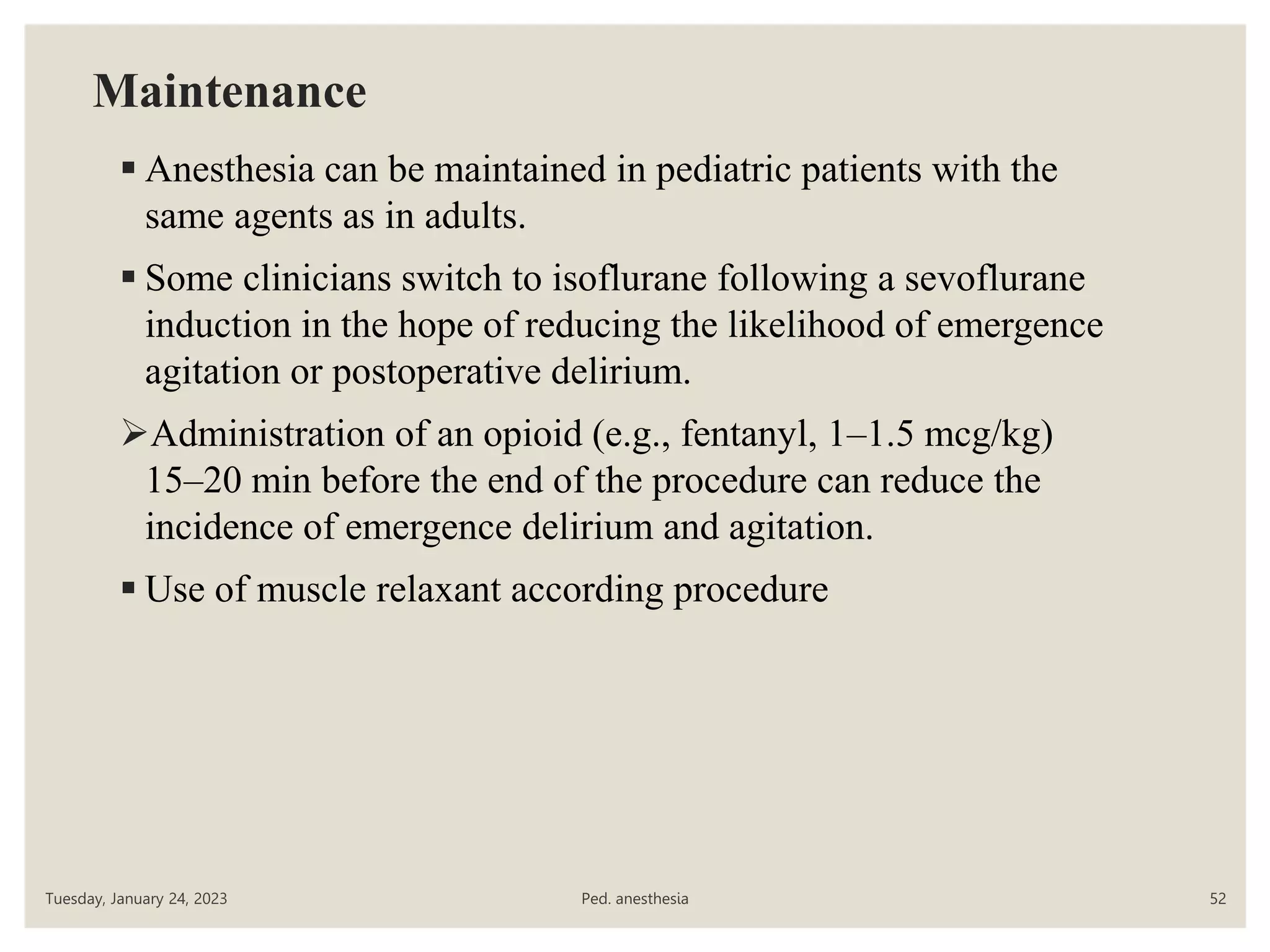
Maintenance
 Anesthesia can be maintained in pediatric patients with the
same agents as in adults.
 Some clinicians switch to isoflurane following a sevoflurane
induction in the hope of reducing the likelihood of emergence
agitation or postoperative delirium.
Administration of an opioid (e.g., fentanyl, 1–1.5 mcg/kg)
15–20 min before the end of the procedure can reduce the
incidence of emergence delirium and agitation.
 Use of muscle relaxant according procedure
Tuesday, January 24, 2023 Ped. anesthesia 52
IV/IM Anesthetics
Propofol
 Its rapid redistribution, hepatic glucuronidation,
and high renal clearance account for the short
duration of its effect.
 Induction dose is larger in younger children (2.9
mg/kg for infants younger than 2 years of age).
 Its major drawback is pain on intravenous
administration.
 Reduces the incidence of postoperative
vomiting
Tuesday, January 24, 2023 Ped. anesthesia 53
Propofol cont..
 It should be avoided in children with
anaphylactic reactions to eggs.
 The major concern with propofol is the potential
for propofol infusion syndrome, eg.
lactic acidosis,
rhabdomyolysis,
cardiac and renal failure
Long term propofol infusion (> 48 h) for
sedation in ICU at high doses (> 5 mg/kg/h).
Tuesday, January 24, 2023 Ped. anesthesia 54
Thiopental
 5 to 6 mg/kg (for infants&older children)
 Children require relatively larger doses of thiopental
compared with adults.
 In contrast, neonates, appear to be more sensitive to
barbiturates
 Termination is through redistribution into
muscle and fat.
 should be reduced to (3 to 4 mg/kg) in children
who have low fat stores, such as neonates or
malnourished infants.
Tuesday, January 24, 2023 55
Ped. anesthesia
Methohexital
Given as 1 - 2 mg/kg iv.
Problems associated with iv administration include burning,
hiccups, apnea, and extrapyramidal-like movements.
Contraindicated in children with temporal lobe epilepsy
Has shorter elimination half life than thiopental.
Can be used rectally for sedation in some procedures.
Obstructive or central apnea may occur occasionally.
Tuesday, January 24, 2023 56
Ped. anesthesia
Ketamine
• Many routs of administration..
• 0.25 to 0.5 mg/kg may be used to provide sedation and
analgesia for painful procedures.
• useful for the induction of anesthesia in hypovolemic
children.
• Unwanted effects include vomiting , secretions and
hallucinations.
• Concomitant administration of benzodiazepines decrease
risk of hallucination
• Not good to use in active URI, ICP, open-globe injury, and
a psychiatric or seizure disorder.
Tuesday, January 24, 2023 57
Ped. anesthesia
Ketamine cont..
• Apnea & laryngospasm may occur.
• Does not preserve gag reflex.
• Can be used as adjunct in epidural analgesia
(preservative free preparation)
• Neonates and infants may be more resistant to the
hypnotic effects of ketamine
• It may be the optimal premedication for children with
significant CVDs such as children with CHD.
Tuesday, January 24, 2023 58
Ped. anesthesia
Etomidate
Etomidate has not been studied adequately in pediatric
patients less than 10 years old.
 It’s profile in older children is similar to adults
• Minimal cardiovascular suppression
• Useful for critically ill and children with head injury.
• S/E; adrenal suppression, pain on injection, myoclonus
Tuesday, January 24, 2023 Ped. anesthesia 59
Inhalational Anesthetics
The MAC for halogenated agents is higher in
infants
Have faster induction times and potentially
increasing the risk of overdosing
• Minute ventilation to FRC ratio increased
• Blood flow to vessel rich groups increased.
• Rapid rise in alveolar anesthetic concentration
• Blood-gas coefficients lower in neonate
Tuesday, January 24, 2023 Ped. anesthesia 60
Approximate MAC 1 values
for pediatric patients reported in % of an
atmosphere.
Tuesday, January 24, 2023 Ped. anesthesia 61
Halothane
Does not have a noxious smell.
Sensitization of the myocardium to arrhythmias.
The dose of adrenaline should be limited to 1µg/kg/30min
with halothane and to 3µg/kg/30min in the presence of
enflurane or isoflurane.
The maximum recommended dose of epinephrine in local anesthetic
solutions during halothane anesthesia is 10mcg/kg.
Potent myocardial depressant (bradycardia & hypotension)
Atropine(IV/IM) premedication may be needed.
Tuesday, January 24, 2023 62
Ped. anesthesia
Isoflurane
Isoflurane may have some advantages over halothane:
 Less myocardial depression
 Preservation of heart rate
 Larger reduction in CMRO2
The major disadvantages of isoflurane are its noxious smell.
Occasional Hypertension=stimulation of pulmonary irritant
receptors, causing increased sympathetic activity and
stimulation of the RAAS.
Tuesday, January 24, 2023 63
Ped. anesthesia
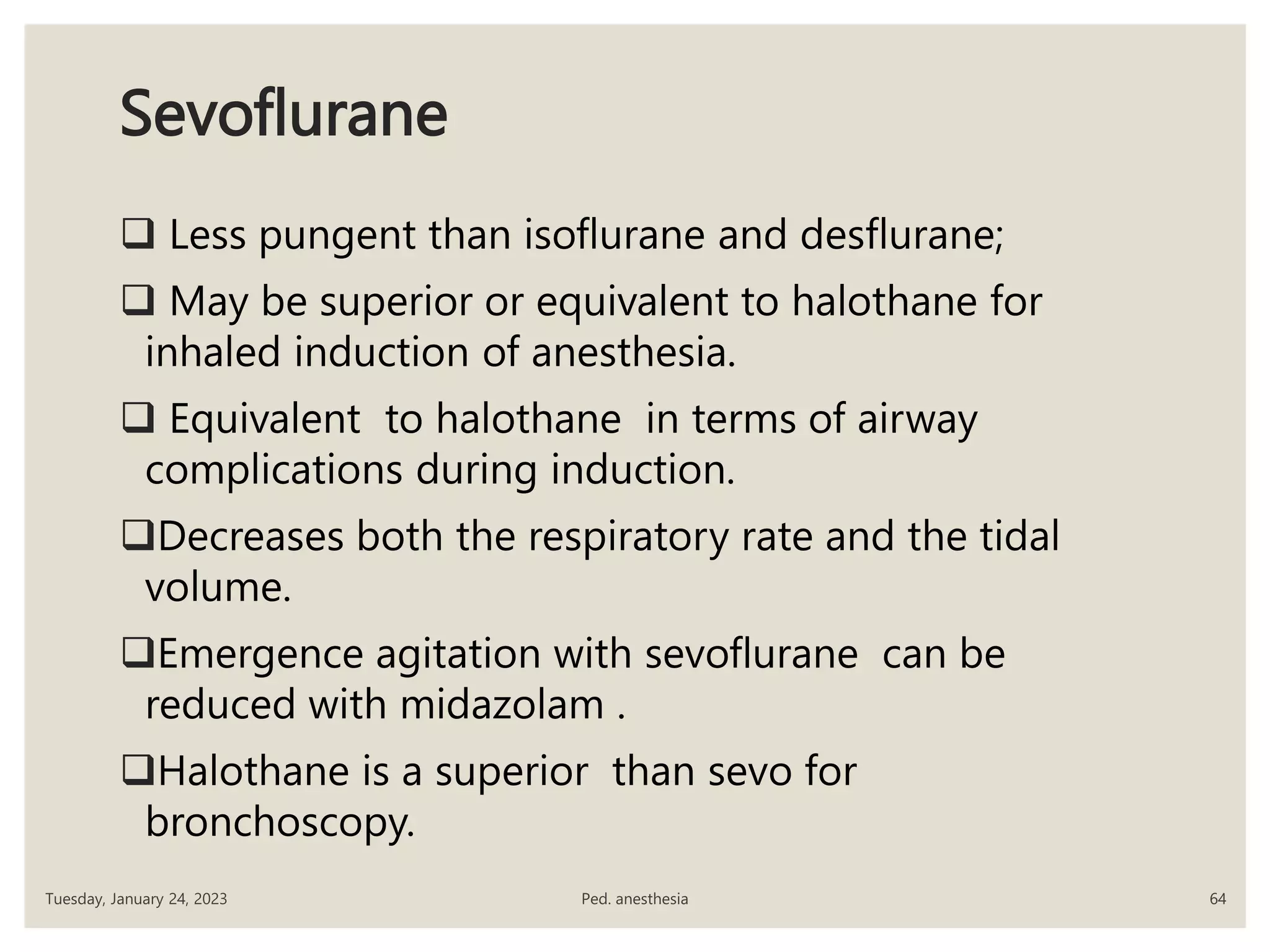
Sevoflurane
 Less pungent than isoflurane and desflurane;
 May be superior or equivalent to halothane for
inhaled induction of anesthesia.
 Equivalent to halothane in terms of airway
complications during induction.
Decreases both the respiratory rate and the tidal
volume.
Emergence agitation with sevoflurane can be
reduced with midazolam .
Halothane is a superior than sevo for
bronchoscopy.
Tuesday, January 24, 2023 64
Ped. anesthesia
Desflurane
 Has high incidence of laryngospasm during induction.
 The more rapid awakening is advantageous for
neurosurgical procedures.
 The MAC for desflurane is dependent on age: 9.2% for
neonates, 9.4% for 1 to 6 months , 9.9% for 6 to 12
months of age, 8.7% for 1 to 3 year olds, and 8% for 5
to 12 year olds.
 Desflurane, unlike other volatile anesthetics, has
virtually no hepatic metabolism.
 Also has high incidence of emergence agitation.
Tuesday, January 24, 2023 65
Ped. anesthesia
Muscle relaxants
Suxamethonium
Highly water soluble ,as a result higher dose is required.
1.5 to 2.0 mg/kg IV,4 mg/kg IM in emergencies
Infants require significantly larger doses of succinylcholine (2–3 mg/kg)
Submental (intralingual) administration is possible.
Cardiac arrhythmias frequently follow IV administration, especially
during halothane anesthesia.
All children, including teenagers need atropine before sux.(0.1 mg
minimum)
Should not be routinely used in children, due to risk of
rhabdomyolysis . hyperkalemia , masseter spasm and MH, & cardiac
arrythmia.
large-dose rocuronium, 1.2 mg/kg is under study to substitute sux.
Tuesday, January 24, 2023 66
Ped. anesthesia
Muscle relaxants ….
Suxamethonium….
If cardiac arrest happens following administration of sux.,
immediate treatment for hyperkalemia should be instituted
 Profound bradycardia and sinus node arrest can develop
following the first dose of succinylcholine without atropine
pretreatment.
Absolutely contraindicated -muscular dystrophy, recent
burn injury, spinal cord transaction, immobilization, as well
as any child with a family history of malignant
hyperthermia.
 Relatively contraindicated for use in all children by the
FDA.
Tuesday, January 24, 2023 Ped. anesthesia 67
Muscle Relaxants…
The duration of action of all nondepolarizing muscle relaxants tends
to be slightly longer.
Pancuronium has a vagolytic effect that may be desirable in many
neonates.
Atracurium and cisatracurium are useful in newborns and
children with immature or abnormal hepatic or renal function.
(Hofmann elimination and ester hydrolysis)
Vecuronium is valuable because no histamine is released; however,
its duration of action is prolonged in newborns.
Rocuronium can be administered intramuscularly.
Mivacurium - brief surgeries, beware of
histamine release, bronchospasm
68
Tuesday, January 24, 2023 Ped. anesthesia
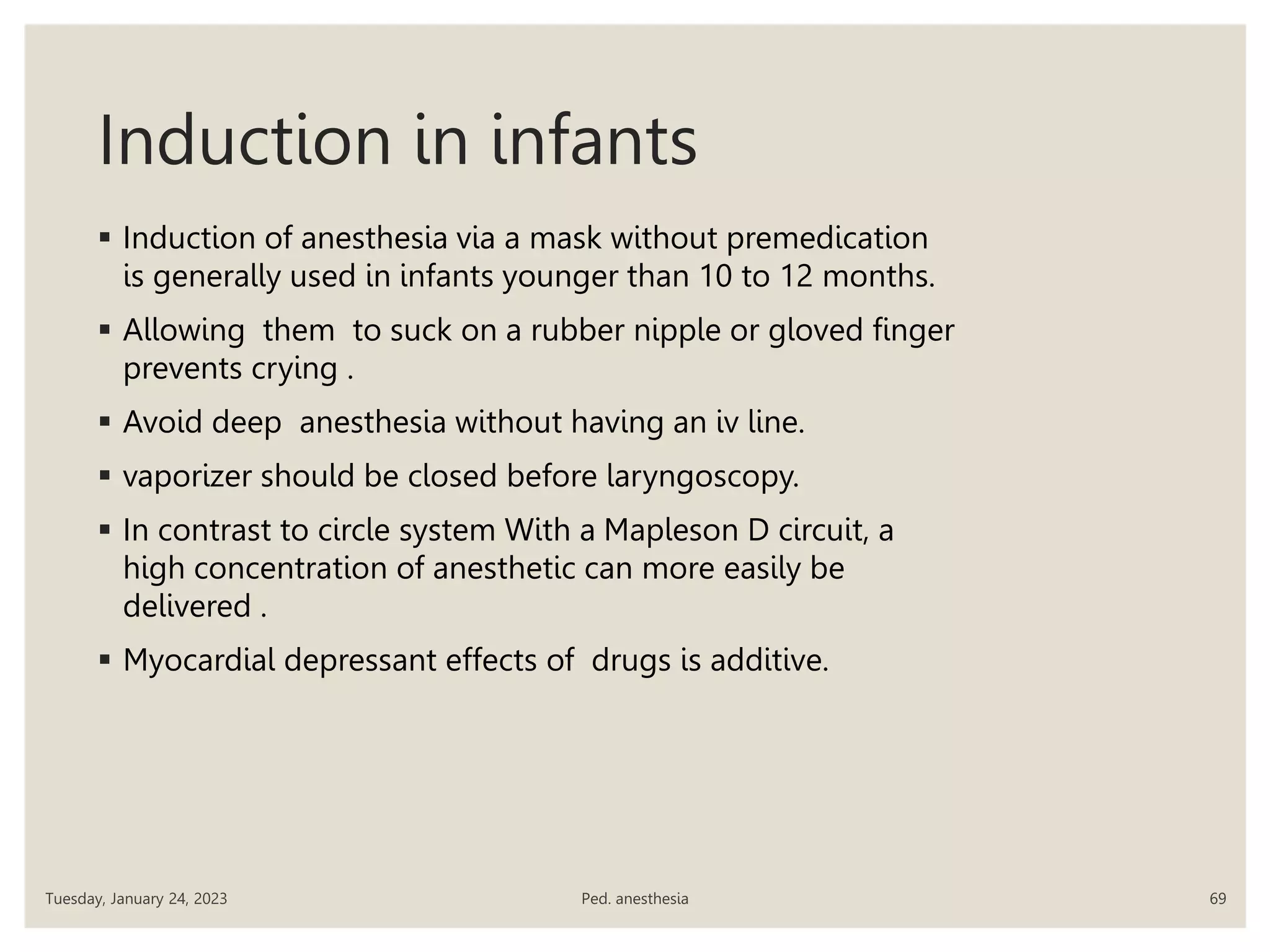
Induction in infants
 Induction of anesthesia via a mask without premedication
is generally used in infants younger than 10 to 12 months.
 Allowing them to suck on a rubber nipple or gloved finger
prevents crying .
 Avoid deep anesthesia without having an iv line.
 vaporizer should be closed before laryngoscopy.
 In contrast to circle system With a Mapleson D circuit, a
high concentration of anesthetic can more easily be
delivered .
 Myocardial depressant effects of drugs is additive.
Tuesday, January 24, 2023 69
Ped. anesthesia
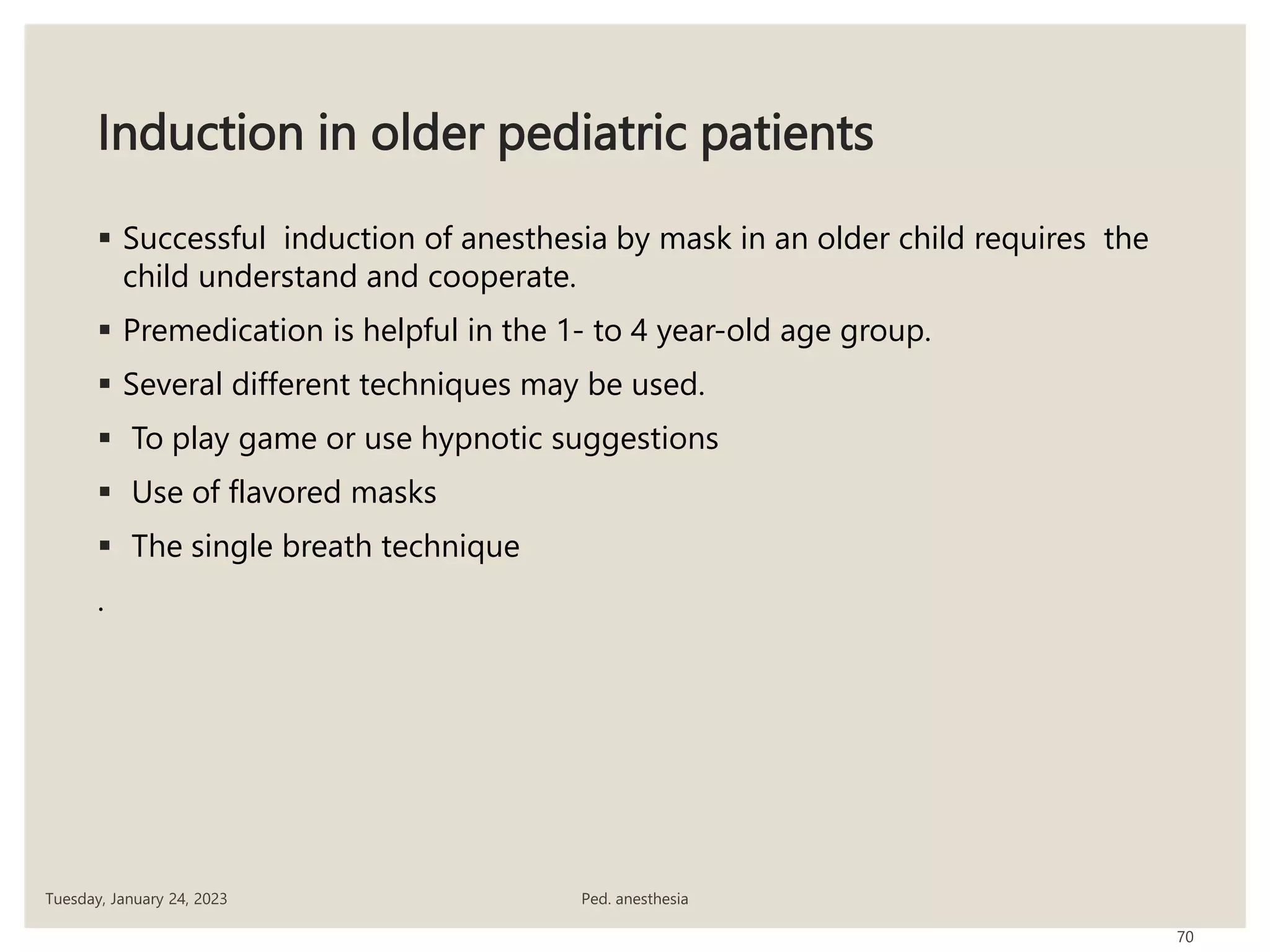
Induction in older pediatric patients
 Successful induction of anesthesia by mask in an older child requires the
child understand and cooperate.
 Premedication is helpful in the 1- to 4 year-old age group.
 Several different techniques may be used.
 To play game or use hypnotic suggestions
 Use of flavored masks
 The single breath technique
.
Tuesday, January 24, 2023
70
Ped. anesthesia
Inhalational induction
Younger than 12 months
The incidence of bradycardia, hypotension, and cardiac
arrest is higher in infants younger than age 1 year than in
older children and adults
 After the induction, place the intravenous catheter
 In a case of difficult airway - Fiberoptic intubation
It is contraindicated in the presence of full stomach.
71
Tuesday, January 24, 2023 Ped. anesthesia
IV induction
Iv induction of anesthesia is the most reliable and
rapid technique.
The main disadvantage is that securing an iv line can
be painful and threatening for the child.
Older children will often allow insertion of iv
catheter after administration of 50% nitrous oxide or
topical anesthetic creams.
Tuesday, January 24, 2023 72
Ped. anesthesia
Intramuscular induction
Many medications, such as methohexital , ketamine
combined with atropine and midazolam, or midazolam
alone are intramuscularly administered for premedication
or induction of anesthesia.
The main advantage of this route is its reliability.
Its main disadvantage is that it is painful.
Most common used Ketamine
Tuesday, January 24, 2023 73
Ped. anesthesia
Rectal induction
Is rarely used in current practice and is generally reserved for
children still in diapers.
child should not see the rectal catheter or syringe.
10% methohexital (20 - 30 mg/kg) reliably induces anesthesia
within 8 to 10 minutes in 85% of young children and toddlers.
The main disadvantage of this technique is that drug absorption
unpredictable.
Other drugs rectally administered include 10% thiopental (20 to
30 mg/kg), midazolam (1 mg/kg up to 20 mg), and ketamine (6
mg/kg).
Technique no more intimidating than rectal
temperature measurement
 Usual time of onset ~ 10-15 min
Tuesday, January 24, 2023 74
Ped. anesthesia
Patient with full stomach
Treat the same as adult with full stomach:
• RSI using cricoid pressure
• Tell the patient that will feel “touching on the neck”
• Be aware of risk of desaturation
• 0.02 mg/kg of Atropine administer before SUX to avoid
bradycardia (usually after 2nd dose)
• Use Rocuronium 1.2 mg/kg
• Use Succinylcholine 1-2 mg/kg if really need .
75
Tuesday, January 24, 2023 Ped. anesthesia
Upper respiratory infections
 It is unclear how long surgery should be delayed
following a URI, however, bronchial hyper reactivity
may exist for up to 8 weeks after such an infection.
 Mask anesthesia has been shown to be associated
with a significantly lower rate of perioperative
complications as compared with ETT.
 Conversely, the use of the laryngeal mask airway
(LMA) has been associated with the same number of
airway complications as the ETT
76
Tuesday, January 24, 2023 Ped. anesthesia
URTIs…
 Has major anesthetic implications.
 Patients with URTIs have irritable airways leading to;
Laryngospasm
Bronchospasm
Atelectasis
Pneumonia
Desaturation
Post intubation croup
 So it is better to avoid intubation & use supraglottic
airways.
Tuesday, January 24, 2023 77
Ped. anesthesia
Tuesday, January 24, 2023 Ped. anesthesia 78
Obstructive Sleep Apnea(AHI >=5 /HR)
 STOP tool for risk assessment.
 Severe adenotonsillar hypertrophy with OSA is a frequent
indication for tonsillectomy and adenoidectomy.
 OSA also often accompanies obesity, peak 2-6yrs of age.
 OSA patients are at risk for airway obstruction with the use of
preoperative sedative predication and during the induction
process.
 Postoperatively, patients with severe OSA may exhibit
worsening of their obstructive symptoms secondary to tissue
edema, altered response to carbon dioxide, and residual effects
of anesthetic agents.
79
Tuesday, January 24, 2023 Ped. anesthesia
Anesthetic mgt for OSA
Upright/lateral position
IV induction with short acting anesthetics.
Careful titration of short acting opids
Rectal acetaminophen (30-40mg/kg) as adjuvant analgesics.
Dexamethasone 0.5mg/kg( 0.0625-1mg/kg)
Anti-emetic
Extubation- awake
Post op=,follow 3hrs more than non-OSA counter parts before
discharge, avoid opoids ( but with monitoring),
Tuesday, January 24, 2023 Ped. anesthesia 80
Epiglottitis
Anesthetic mgt;
Make the child calm
Maintain in sitting position
Avoid airway manipulation (unless in the controlled setting)
Otolaryngologist/anesthesiologist
ETT/Bronchoscope/& Crico/Tracheostomy set
GA with 100%O2 and Sevoflurane/Halothane
Maintain spontaneous ventilation /avoid opoids
Post op=Abcs & corticosteroids, ICU mgt (24-72hrs)
Tuesday, January 24, 2023 Ped. anesthesia 81
Asthma
 children with asthma should be under optimal
medical care prior to undergoing general anesthesia
and surgery.
 All oral and inhaled medications, such
corticosteroids and β-agonists, should be continued
up to and including the day of surgery
 inhaled short-acting β-agonists prior to induction of
anesthesia eliminates the increase in airway
pressure that is associated with intubation in
asthmatic patients.
82
Tuesday, January 24, 2023 Ped. anesthesia
The Former Preterm Infant
 the impact that broncho pulmonary dysplasia might have on
the patient's perioperative course
 the presence of anemia
 the possibility of postoperative apnea.
 are more likely following general anesthesia-overnight
hospital monitoring following general anesthesia
83
Tuesday, January 24, 2023 Ped. anesthesia
Perioperative pain control
◦ Acetaminophen
PO 10-15 mg/kg, PR 40 mg/kg
◦ Ketorolac
0.5-0.75 mg/kg IM/IV
◦ Opioids
Morphine 0.025-0.1 mg/kg
 Hydro morphone 15-20 mcg/kg
 Fentanyl 0.5-0.75 mcg/kg
◦
Tuesday, January 24, 2023 Ped. anesthesia 84
Regional Analgesia
 Caudal blocks have proved useful following a variety of
surgeries, including circumcision, inguinal herniorrhaphy,
hypospadias repair, anal surgery, clubfoot repair, and other sub
umbilical procedures.
 Many anesthetic agents have been used for caudal anesthesia in
pediatric patients, with 0.125– 0.25% bupivacaine (up to 2.5
mg/kg) or 0.2% ropivacaine being most common.
 Ropivacaine, 0.2%,can provide analgesia similar to bupivacaine
but with less motor blockade.
Tuesday, January 24, 2023 Ped. anesthesia 85
Risks of anesthesia
 Postoperative nausea and vomiting
 Perioperative respiratory adverse events (PRAEs)
 Anesthetic neurotoxicity ?
 Mortality
 very rare in healthy children (<1/200,000),but true incidence is unclear.
POCA and mortality are more common during cardiac procedures, in
child with significant comorbidity, and in infants and neonates.
Central line is the most common cause of equipment related cardiac
arrest.
Tuesday, January 24, 2023 Ped. anesthesia 86
Emergence & Recovery
◦ The goal should be to achieve smooth, controlled
emergence without PRAEs.
◦ Pediatric anesthesia practice varies widely, particularly
in regard to extubation following a general anesthetic.
◦ In some pediatric hospitals, all children who will be
extubated after a general anesthetic
◦ arrive in the post anesthesia care unit (PACU) with the
tube still in place.
Tuesday, January 24, 2023 Ped. anesthesia 87
Management of extubation
Is always elective.
Extubation should be planned in advance (awake Vs
deep)and executed when conditions are optimal.
ETT/SGA should not be removed during stage II anesthesia.
Risk stratification (risks of tolerating extubation, predicted
difficulty with reintubation),&individualized plan
Minimize cxns & eliminate preventable re-intubations.
Severe cough, HTN, Tachycardia, breath holding, and
laryngospasm are some of the physiologic responses to
extubation.
Tuesday, January 24, 2023 Ped. anesthesia 88
Extubation…
• The strategies to minimize physiologic response of
extubation include;
Administration of lidocaine, opoids, Dexmedetomidine,
esmolol
Administration of antihypertensive/antiarrhythmic
No touch technique-no stimulation, quite environment
Deep extubation
Bailey maneuver
• Cuff leak test, EACs and elective surgical tracheostomy are
techniques used for Higher risk extubation .
Tuesday, January 24, 2023 Ped. anesthesia 89
Tuesday, January 24, 2023 Ped. anesthesia 90
Tuesday, January 24, 2023 Ped. anesthesia 91
Predictors of successful extubation in children
1.Eye opening
2.Facial Grimace
3.Conjugate gaze
4.TV >5ml/Kg (Spontaneous),regular respiration.
5.purposeful movement
6.Pt movement other than coughing
7.End tidal anesthetic conc.; <0.2%(sevo),
<0.15%(Iso),<1%(Des)
8.SPo2>97%
9.Positive laryngeal stimulation test
Presence of one=88.4%PPV, Presence of above 5=100%PPV
Tuesday, January 24, 2023 Ped. anesthesia 92
Peri operative complication
A. Laryngospasm
• Laryngospasm is a forceful, involuntary spasm of the
laryngeal musculature caused by stimulation of the superior
laryngeal nerve.
• It may occur at induction, emergence, or any time in between
without an endotracheal tube.
• Presumably it can also occur when a tube is in place.
• More common in young pediatric patients (almost 1 in
50 anesthetized) than in adults, and is most common in
infants 1–3 months old.
Tuesday, January 24, 2023 Ped. anesthesia 93
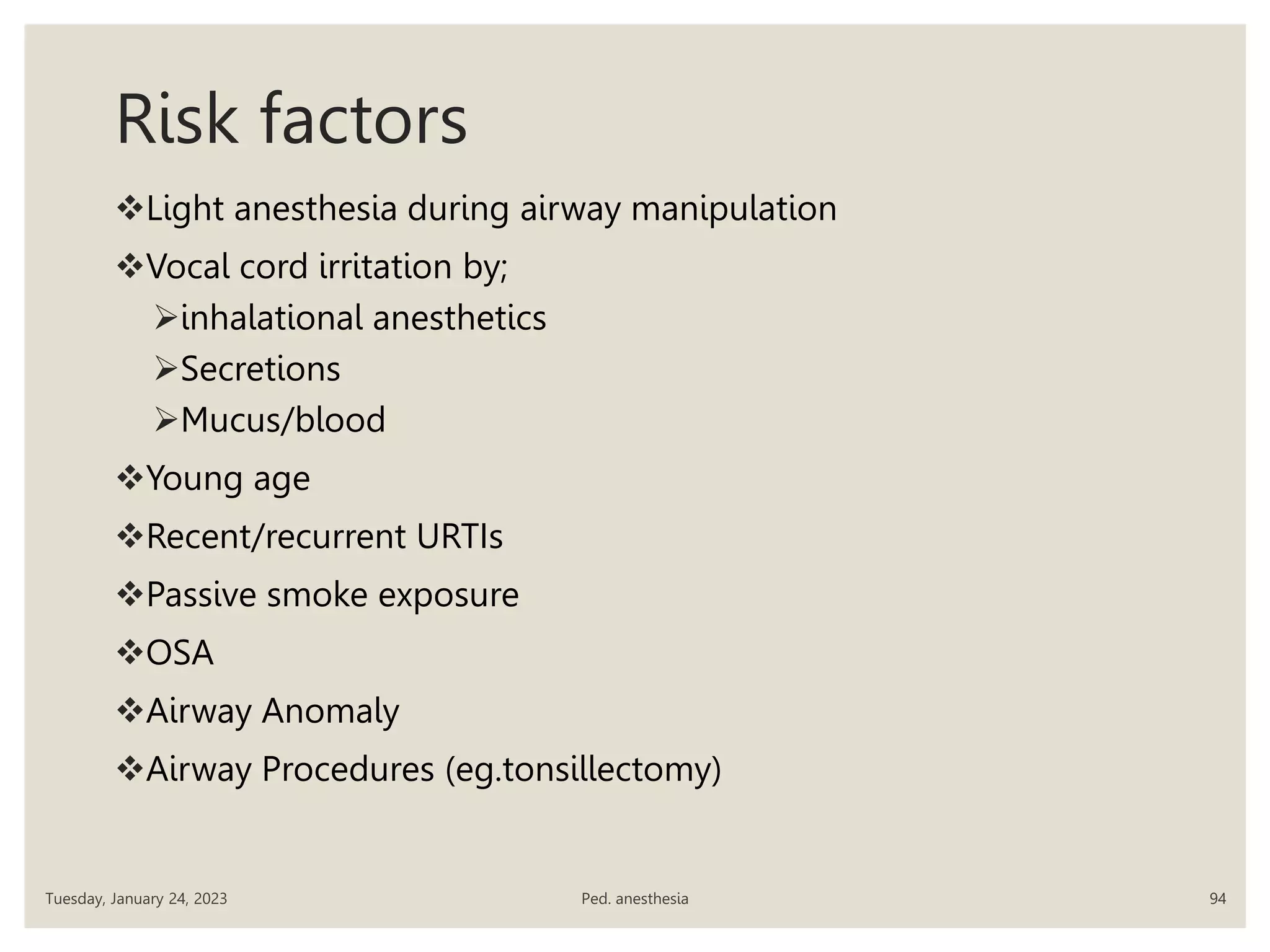
Risk factors
Light anesthesia during airway manipulation
Vocal cord irritation by;
inhalational anesthetics
Secretions
Mucus/blood
Young age
Recent/recurrent URTIs
Passive smoke exposure
OSA
Airway Anomaly
Airway Procedures (eg.tonsillectomy)
Tuesday, January 24, 2023 Ped. anesthesia 94
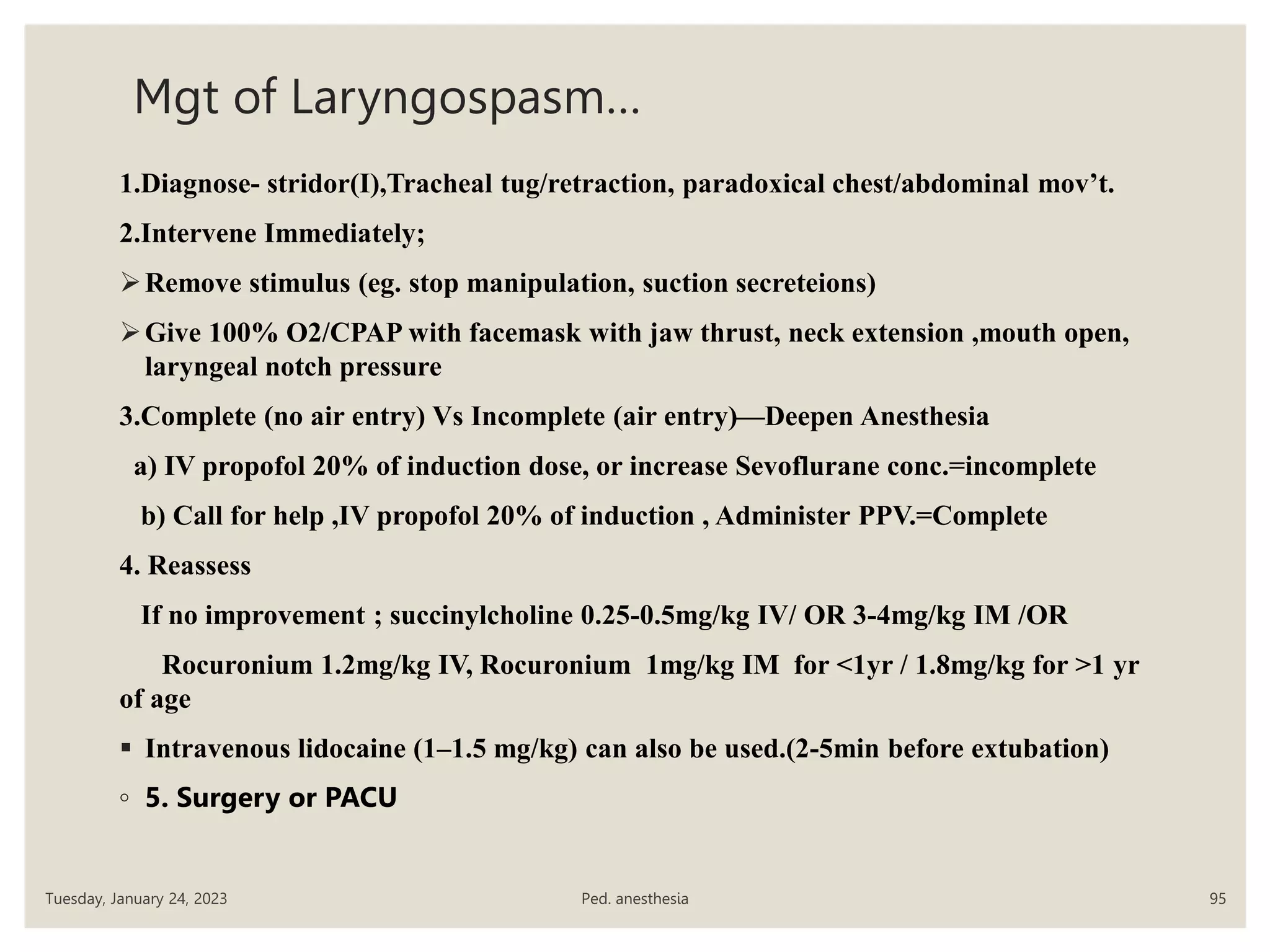
Mgt of Laryngospasm…
1.Diagnose- stridor(I),Tracheal tug/retraction, paradoxical chest/abdominal mov’t.
2.Intervene Immediately;
Remove stimulus (eg. stop manipulation, suction secreteions)
Give 100% O2/CPAP with facemask with jaw thrust, neck extension ,mouth open,
laryngeal notch pressure
3.Complete (no air entry) Vs Incomplete (air entry)—Deepen Anesthesia
a) IV propofol 20% of induction dose, or increase Sevoflurane conc.=incomplete
b) Call for help ,IV propofol 20% of induction , Administer PPV.=Complete
4. Reassess
If no improvement ; succinylcholine 0.25-0.5mg/kg IV/ OR 3-4mg/kg IM /OR
Rocuronium 1.2mg/kg IV, Rocuronium 1mg/kg IM for <1yr / 1.8mg/kg for >1 yr
of age
 Intravenous lidocaine (1–1.5 mg/kg) can also be used.(2-5min before extubation)
◦ 5. Surgery or PACU
Tuesday, January 24, 2023 Ped. anesthesia 95
B. Postintubation Croup
Croup is due to glottic or tracheal edema.
Because the narrowest part of the pediatric airway is the
cricoid cartilage, this is the most susceptible area.
Croup is less common with endotracheal tubes that are small
enough to allow a slight gas leak at 10–25 cm H2O.
Postintubation croup is associated with early childhood
 age 1–4 years
repeated intubation attempts
overly large endotracheal tubes
Lack of an airway leak with >25 cmH2O AWP.
Non-supine position/changes in pt position during surgery
Tuesday, January 24, 2023 Ped. anesthesia 96
Postintubation Croup…
Risk Factors ;
prolonged surgery (>1hr)
head and neck procedures
excessive movement of the tube (eg, coughing with
the tube in place, moving the patient’s head)
IV dexamethasone (0.25–0.5 mg/kg) may prevent
formation of edema. And also Heliox, Mist…
Rx- 0.6mg/kg IV to a max.10mg, if not given intra-
op.
Inhalation of nebulized racemic epinephrine (0.25–0.5
mL of a 2.25% solution in 2.5 mL normal saline) is an
often effective treatment.
Laryngospasm will almost always appear within 3hrs
after extubation.
Tuesday, January 24, 2023 Ped. anesthesia 97
Post anesthesia Care
Restore normothermia
Emergence agitation - fentanyl, dexmedetomidine,
midazolam, and propofol, parental presence.
Nausea and vomiting-central causes (opiates), GI
malfunction (ileus or gastric distention), the surgical
procedure itself (eye and ear, most commonly), and
postoperative pain.
Analgesic
Calm and comfort the child
98
Tuesday, January 24, 2023 Ped. anesthesia
References
◦ Miller’s Anesthesia (9th edition)
◦ Morgan Clinical Anesthesiology (6th edition )
◦ Barash clinical anesthesia fundamentals 8th edition.
◦ Uptodate 2022.
◦ Hand book of pediatrics anesthesia,2015
◦ Update in Anesthesia 2015
Tuesday, January 24, 2023 Ped. anesthesia 99
Tuesday, January 24, 2023 Ped. anesthesia 100

Pediatric Anesthesia.pptx

  • 1.
    PEDIATRIC ANESTHESIA Moderator: Dr.Tasew(MD,Consultant Anesthesiologist) Presenter: Dr.Habtamu M. (R2, ACCPM ) Tuesday, January 24, 2023 Ped. anesthesia 1
  • 2.
    outline ◦ Introduction ◦ Anatomic& physiological differences ◦ Pharmacological difference ◦ Preoperative consideration ◦ Iv fluid & transfusion therapy ◦ Pediatric anesthetic risks ◦ Pediatric Airway management ◦ Premedication ◦ Induction& maintenance of anesthesia ◦ Emergence & recovery Tuesday, January 24, 2023 Ped. anesthesia 2
  • 3.
    OBJECTIVES ◦At the endof this Seminar, you will be able to; Appreciate anatomic, physiologic and pharmacologic differences of pediatric population Understand anesthetic concerns of pediatric patients. Familiarize with periop management of pediatric pts Provide safe pediatric anesthesia care. Tuesday, January 24, 2023 Ped. anesthesia 3
  • 4.
    Pediatric Anesthesia Introduction: Pediatric patientsare not small adults. Neonates (0–1 months) Infants (1–12 months) Toddlers (1–3 years) Small children (4–12 years of age) Have differing anesthetic requirements. 4 Tuesday, January 24, 2023 Ped. anesthesia
  • 5.
    ANATOMIC & PHYSIOLOGICAL DEVELOPMENT RespiratorySystem Airway Large head, prominent occiput  ?Large tongue Narrower nasal passages -50% of airway resistance Preferential nose breathers until 5 months. Shorter neck. Tuesday, January 24, 2023 Ped. anesthesia 5
  • 6.
    Larynx  Anterior,&Cephalad(@C 3-4level)  Epiglottis; short,stubby&Ʊ shaped, stiff(NB)  long,floppy,& omega shaped- infants/children  Cricoid → Narrowest point until 10 years old Trachea and Bronchi  Trachea –short(4-5cm).  In children the angle of both right and left bronchus is same( i.e 55 degree up to the age of 3 yrs) Tuesday, January 24, 2023 Ped. anesthesia 6
  • 7.
    Respiratory System • Weakintercostal and diaphragmatic musculature (do not achieve type-1 muscle fibers until age 2) • Highly compliant chest wall & ribs provide little support to the lungs negative intrathoracic pressure is poorly maintained. • Alveolar maturation is not complete until late childhood (about 8 years of age). 7 Tuesday, January 24, 2023 Ped. anesthesia
  • 8.
    …Respiratory System Have lessefficient ventilation because of:  Atelectasis is more common   FRC   number of alveoli  Higher rate of oxygen consumption (2-3x > adults)=6-8 ml/kg/min  The work of breathing is increased  Respiratory muscles easily fatigued  Hypoxia and hypercapnia depress respiration 8 Tuesday, January 24, 2023 Ped. anesthesia
  • 9.
    Differences b/n adultand infant respiratory physiology Adult Infant FRC(ml/kg) 30-45 25-30 TV(ml/kg) 7 7 MV(ml/kg/min) 60 100 to 150 RR(/min ) 12 to 16 30 to 50 O2 Consumption(ml/kg/min) 3 to 4 7 to 9 Tuesday, January 24, 2023 Ped. anesthesia 9
  • 10.
    Cardiovascular System  Increasedbasal heart rate  Stroke volume is relatively fixed by a noncompliant and immature left ventricle in neonates and infants.  The CO is therefore very sensitive to changes in heart rate.  The PNS stimulation, anesthetic overdose, or hypoxia can quickly trigger bradycardia. Hypotension, asystole, & intra-op death will ensue. Tuesday, January 24, 2023 Ped. anesthesia 10
  • 11.
    CVS..  The SNSand baroreceptor reflexes are not fully mature.  Lower catecholamine stores, and a blunted response to exogenous catecholamines.  More sensitive to the calcium channel blocking properties of volatile anesthetics and opioid- induced bradycardia.  The vascular tree is less able to respond to hypovolemia with vasoconstriction.  The hallmark of intravascular fluid depletion in neonates and infants is therefore hypotension without tachycardia. Tuesday, January 24, 2023 Ped. anesthesia 11
  • 12.
    Temperature Regulation Hypothermia: evenmild degree of hypothermia can cause periop problems delayed awakening cardiac irritability, respiratory depression, increased pulmonary vascular resistance, altered drug responses. 12 Tuesday, January 24, 2023 Ped. anesthesia
  • 13.
    Renal Function  Normalkidney function is not present until 6 months of age.  Complete maturation @ 2 years of age  Meticulous attention to fluid administration in the early days of life.  total body water and % extracellular fluid are increased in the infant  Prolonged duration of action for hydrophilic drugs, particularly those that are renally excreted 13 Tuesday, January 24, 2023 Ped. anesthesia
  • 14.
    Gastrointestinal function  Fullcoordination of swallowing with respiration ~ 4-5 months ,increased risk for GE reflux  Lower levels of albumen and proteins - prone to neonatal coagulopathy, and less drug bound ,higher drug levels  liver blood flow decreased in newborns Prolonged excretion for drugs 14 Tuesday, January 24, 2023 Ped. anesthesia
  • 15.
    Glucose Homeostasis Neonates haverelatively reduced glycogen stores, predisposing them to hypoglycemia. Impaired glucose excretion by the kidneys may partially off set this tendency. In general, neonates/children at greatest risk for hypoglycemia are;  premature or SGA,  receiving hyper alimentation, and  the offsprings of diabetic mothers.  Endocrine/metabolic disorders Tuesday, January 24, 2023 Ped. anesthesia 15
  • 16.
    PHARMACOLOGICAL DIFFERENCES  Pediatricdrug dosing is typically adjusted on a per kilogram. ◦ Early childhood a patient’s weight can be approximated based on age: 50th percentile weight (kg) = (Age × 2) + 9  Wt’ can also be estimated by;(age+4)x2,but less accurate over 10 yrs.  Weight-adjustment of drug dosing is incompletely effective because the disproportionately larger pediatric intravascular and ECF compartments The immaturity of hepatic biotransformation pathways decreased protein for drug binding eg. thiopental, bupivacaine  higher metabolic rate Relatively lower GFR,  Higher total water content (70–75%) Tuesday, January 24, 2023 Ped. anesthesia 16
  • 17.
    Weight estimation atdifferent ages. Age of child Formula to estimate weight in Kg 0-12months (0.5xage in months)+4 1-5yrs (2xage in yrs)+8 6-12yrs (3xage in yrs)+7 Tuesday, January 24, 2023 Ped. anesthesia 17
  • 18.
    Preoperative Considerations  Dependingon age, past experiences, and maturity, children present with varying degrees of fright (even terror) when faced with the prospect of surgery.  Adults are usually most concerned about the possibility of death, but children are principally worried about pain and separation from their parent. Tuesday, January 24, 2023 Ped. anesthesia 18
  • 19.
    Box 8-1 RiskFactors for Preoperative Anxiety Child Related • Young age (1 to 5 years of age) , • Poor previous experience • Shy and inhibited temperament , • Lack of developmental maturity and social adaptability • High cognitive levels • Not enrolled in daycare Parent Related: High trait and state anxiety ,Divorced parents, Multiple surgical procedures for parents Environment Related: Sensory overload ,Conflicting messages. Tuesday, January 24, 2023 Ped. anesthesia 19
  • 20.
    The Preoperative Evaluation •Pertinent maternal history, birth and neonatal history • Level of anxiety • Review of systems, physical examination, height, weight, and vital signs. • Use of medications such as bronchodilators, steroids, and chemotherapeutic agents • Malformations in the child and family. • Anesthetic risks, anesthetic plans, recovery phenomena, postoperative analgesia, and discharge criteria have to be discussed in detail. 20 Tuesday, January 24, 2023 Ped. anesthesia
  • 21.
    Preoperative Fasting Period Smaller glycogen stores and are more likely to develop hypoglycemia with prolonged intervals of fasting.  Increased risk for aspiration ?  delayed gastric-emptying times  abdominal masses-outlet obstruction (pyloric stenosis)  ileus, vomiting, or electrolyte disorders.  Outcome of children who developed aspiration pneumonia is excellent, unless these children had some major underlying problem such as abdominal or thoracic trauma ◦ . 21 Tuesday, January 24, 2023 Ped. anesthesia
  • 22.
    Laboratory evaluation Current standardof care dictates that healthy children undergoing elective minor surgery require no laboratory evaluation, Group and screen / type and cross if blood loss expected blood chemistry analyses, chest radiographs and urinary analysis are performed only for specific indications For surgeries in which significant blood loss may be expected, a hemoglobin of 10 g/dL has been cited as acceptable for infants older than 3 months of age. Coagulation studies (INR/PTT) for operations where blood loss may occur in sensitive areas (ENT, neuro.) Ionized potassium in children on digoxin or diuretics 22 Tuesday, January 24, 2023 Ped. anesthesia
  • 23.
    IV fluid &transfusion Must consider high metabolic demands and high ratio of BSA to Wt. 4-2-1 rule does not include deficits, third-space ,modifications because of hypo or hyperthermia, or requirements caused by unusual metabolic demands. Third-space losses vary from 1 mL/kg/hr for 15 mL/kg/hr . 4-2-1 is problematic for children who are acutely ill or with cardiac or renal dysfunction. Tuesday, January 24, 2023 23 Ped. anesthesia
  • 24.
    Fluid Management Take intoaccount: fluid deficits translocation of fluids blood loss during surgery maintenance fluid requirements 24 Tuesday, January 24, 2023 Ped. anesthesia
  • 25.
    Fluid Management… Little evidenceof hypoglycemia related to fasting prior to surgery.  Hyperglycemia has been documented in children given 5% dextrose solutions to replace deficits or fluid losses problematic for patients with intracranial injury significant hyperglycemia can cause hyperosmolar diuresis To optimize fluid administration and glucose delivery, a balanced salt solution containing 2.5% glucose may be used Intraoperative monitoring of blood glucose is appropriate for newborns, 25 Tuesday, January 24, 2023 Ped. anesthesia
  • 26.
    Perioperative Fluid Requirements A.Maintenance Fluid Requirements The choice of maintenance fluid remains controversial. A solution such as D 5 ½ NS with 20mEq/L of KCL provides adequate dextrose and electrolytes at these maintenance infusion rates.  D 5 ¼ NS may be a better choice in neonates because of their limited ability to handle sodium loads. Tuesday, January 24, 2023 Ped. anesthesia 26
  • 27.
    MAINTAINANCE.. Tuesday, January 24,2023 Ped. anesthesia 27
  • 28.
    B.Deficit  The balanceof the calculated fluid deficit can be provided over 1 or 2 hours and is often provided in the form isotonic fluid or a 5% dextrose solution in 0.9% normal saline.  Immediate intravascular volume expansion ;10-15 mL/kg bolus of isotonic fluid Tuesday, January 24, 2023 Ped. anesthesia 28
  • 29.
    C.Replacement  Blood losshas been typically replaced with non–glucose- containing crystalloid (3:1) or colloid solutions (eg, 1 mL of 5% albumin for each milliliter of blood lost) until the patient’s hematocrit reaches a predetermined lower limit.  The target hematocrit (for transfusion) may be as great as 40%, whereas in healthy older children a hematocrit of 20– 26% is generally well tolerated. Tuesday, January 24, 2023 Ped. anesthesia 29
  • 30.
    D. Third-space loss ◦Losses that are impossible to measure and must be estimated by the extent of the surgical procedure. ◦ Estimated third-space loss - intra-abdominal surgery -6 to 10 mL/kg/hr, -intrathoracic surgery -4 to 7 mL/kg/hr - intracranial or cutaneous surgery-1 to2L/kg/hr ◦ RL is preferred, as NS contains an excessive chloride and acid load for infants. Tuesday, January 24, 2023 Ped. anesthesia 30
  • 31.
    Blood or bloodcomponent therapy 31  Indications not always clear-cut.  Blood volume:  Premature infant - 100 -120 ml/kg Full-term infant - 90 ml/kg 3-12 month old child - 80 ml/kg 1 year and older child - 70 ml/kg MABL = EBV (starting Hct - target Hct) Starting Hct Tuesday, January 24, 2023 Ped. anesthesia
  • 32.
    Blood Component..  Equivalenthemoglobin concentrations for the same tissue oxygen delivery are;  8g/dl, (adult)  6.5g/dl(infant) and  12g/dl(neonate)  An infant tolerates anemia fairly well, a neonate does not.  If a child does require transfusion, they should be transfused if possible from one donor unit. A useful formula for transfusion is:  4 ml/kg PRBC raises the Hb by 1g/dl  8ml/kg WB raises the Hb by 1 g/dl Tuesday, January 24, 2023 Ped. anesthesia 32
  • 33.
    Packed RBCs  MABLtakes into account the effect of patient age, weight, and starting hematocrit on blood volume.  If the child has reached the MABL PRBC is given to maintain the HCT in the 20% to 25% range.  Hct < 20% is generally well tolerated by most children, the exception being preterm infants, term newborns, and children with cyanotic CHD or those with respiratory failure.  Incidence of apnea is high in neonates and preterm infants who have HCT of less than 30%.  children with a history of sickle cell disease may require preoperative transfusion. Tuesday, January 24, 2023 33 Ped. anesthesia
  • 34.
    Platelets Thrombocytopenia may occuras a result of disease processes or dilution during massive blood loss. PLT count >50,000 will be probably sufficient for invasive procedure if the rest of coagulation system is normal  The preoperative platelet count is extremely valuable in predicting intraoperative platelet requirements. Clinical oozing is the typical indication for platelet transfusion  Neurosurgery, cardiac surgery, or major organ transplantation. Dosing ;one WBD unit/10kg, OR 5-10ml/kg (apheresis) Tuesday, January 24, 2023 34 Ped. anesthesia
  • 35.
    Fresh frozen plasma Is given to replenish clotting factors lost during massive transfusion ,DIC, or for congenital clotting factor deficit.  children given whole blood will not need FFP.  Usually replenished if EBL = 1-1.5 TBV  A child should never be given FFP to correct bleeding that is surgical in nature.  FFP volume given is 30% or more of the child’s blood volume.  Transfusion of FFP at rates exceeding 1 mL/kg/min can lead to severe ionized hypocalcemia and cardiac depression. Tuesday, January 24, 2023 35 Ped. anesthesia
  • 36.
    Monitoring the PediatricPatients: Must be consistent with the severity of the underlying medical condition  Minimal monitoring: I. 5 ASA monitors II. Precordial stethoscope III. Anesthetic agent analyzer  Use of capnograph and O2 analyzers is associated with high incidence of false alarms from: movement artifact light interference electrocautery 36 Tuesday, January 24, 2023 Ped. anesthesia
  • 37.
    Special Monitoring thePediatric Patients:  Intra-arterial catheter - most common radial  Pulmonary artery catheters are rarely indicated because equalization of the pressure right/left heart  In a case of severe multisystem organ failure insertion of PAC might be particularly useful  Multi-lumen catheters are valuable in ICU patients 37 Tuesday, January 24, 2023 Ped. anesthesia
  • 38.
    Anesthesia Circuits  Nonrebreathingcircuits: 1. Minimal work of breathing 2. Speeds-up rate of inhalational induction 3. Compression and compliance volumes are less (small circuit volume)  Use of Mapleson D system is recommended in children < 10 kg More sensitive to changes in gas flow More sensitive to humidification Actual delivered volume is greater than other systems 38 Tuesday, January 24, 2023 Ped. anesthesia
  • 39.
    Pediatric airway management UncuffedETT were traditionally preferred for less than 6 yrs. For 1 to 8 yrs old; 4+(age in yrs/4)=for uncuffed ETT 3.5+(age in yrs/4)=for cuffed ETT A correctly sized ETT will have an audible air leak at, or close to, 20 cm H2O airway pressure. If no leak=too large ETT If an uncuffed tube is used, appropriate size allows a small gas leak at peak inflation pressures of 20 to 30 cm H2O. A large leak at low AWP=too small ETT, replace with next larger Depth: 3x ID in mm (uncuffed), (3xID in mm+1.5cm)=cuffed Intra-cuff pressure=measure (manometer)& maintain <20 cmH2O. Tuesday, January 24, 2023 39 Ped. anesthesia
  • 40.
    Supraglottic airway sizing Devicesize(LMA) Patient weight(kg) Max.cuff volume(ml) 1 Up to 5 4 1.5 5 - 10 7 2 10 - 20 10 2.5 20 - 30 14 3 30 -50 20 4 50 -70 30 5 70 - 100 40 6 >100 50 Tuesday, January 24, 2023 Ped. anesthesia 40
  • 41.
    Pediatric difficult airway •Most non-syndromic children are easy to intubate. • Any dysmorphic child may need special attention • Eg. Pierre –Robin sequence, Treacher Collin SXX, Klippel fail SXX Anesthetic mgt; Avail different size fiberoptic scopes, LMAs, ETTs Consider awake fiber optic intubation Glycopyrolate Maintain spontaneous ventilation Tuesday, January 24, 2023 Ped. anesthesia 41
  • 42.
    Premedication SEDATIVE AND ANXIOLYTICS Antiemetics antiacids EMLA cream Glycopyrrolate/atropine 42 Tuesday, January 24, 2023 Ped. anesthesia
  • 43.
    PREMEDICATION.. Pre medications maybe administered IM, IV, rectally, sublingually, or nasally. ketamine PO(4 to 6 mg/kg),IM (2-4mg/kg) Atropine (0.02 mg/kg) Midazolam PO (0.5 mg/kg, maximum of 20 mg, 0.3mg/kg if combined with ketamine) will result in a deeply sedated child.  Diazepam PO( 0.1-0.5 mg/kg), PR(0.5 mg/kg), IV (0.05- 0.3 mg/kg)  CLONIDINE ( PO-2.5-4micg/kg)  DEXMEDETOMIDINE PO- 3micg/kg, IN- 1-2micg/kg Tuesday, January 24, 2023 Ped. anesthesia 43
  • 44.
    Premedication… Sedative premedication isgenerally omitted for neonates and sick infants. Children who appear likely to exhibit uncontrollable separation anxiety should be given sedative, such as midazolam (0.3–0.5 mg/kg, 15 mg maximum). The oral route is generally preferred, but it requires 20–45 min for effect. Smaller doses of midazolam have been used in combination with oral ketamine (4–6 mg/kg) for inpatients. Tuesday, January 24, 2023 Ped. anesthesia 44
  • 45.
    Midazolam  Is theonly benzodiazepine approved by the U.S. FDA for use in neonates; the half-life is significantly longer (6 to 12 hours) in this population.  Unlike diazepam Midazolam is water soluble and not painful .  Midazolam has the fastest clearance of all the benzodiazepines  The shorter elimination half-life (∼2 hours) of midazolam than diazepam (∼18 hours) offers an advantage for use as a premedication in children.  Is given IM(0.1-0.15 mg/kg, max of 7.5 mg), oral (0.25 - 1.0 mg/kg, maximum of 20 mg), rectal (0.75 -1.0 mg/kg, maximum of 20 mg), nasal (0.2 mg/kg), or sublingual (0.2 mg/kg) . Tuesday, January 24, 2023 45 Ped. anesthesia
  • 46.
    PREMEDICATION… Atropine, 0.02 mg/kgIM Infants <1 yr of age to prevent vagally induced bradycardia Infants and children with septic or late stage hypovolemic shock Childern </=5yrs of age receiving succinylcholine and children >5 yrs of age receiving second dose of succinylcholine accumulation of secretions that can block small airways and endotracheal tubes. particularly problematic for patients with URIs or those who have been given ketamine. NB; Will be ineffective for hypoxemia induced secondary bradycardia. Tuesday, January 24, 2023 Ped. anesthesia 46
  • 47.
    Premedication.. Diazepam  Has anextremely long half-life in neonates (80 hours) and may not be indicated until 6 months of age. Should be given with caution to any child with hepatic disease. Dexmedetomidine Is a selective α2-agonist with anxiolytic, sedative, and analgesic properties.  Facilitates fiberoptic intubation, Sedation for a child undergoing awake craniotomy, reduces the incidence of emergence agitation. Also used for cardiac catheterization & radiologic procedures. Tuesday, January 24, 2023 47 Ped. anesthesia
  • 48.
    Narcotics  More potentin neonates than in older children and adults.  Unproven (but popular) explanations include “easier entry” across the BBB, decreased metabolic capability, or increased sensitivity of the respiratory centers.  Important elements of balanced anesthesia and sedation in children decrease MAC of inhaled agents, smooth hemodynamics and provides postoperative analgesia. depress central respiratory effort(<6 months) need to carefully monitor pediatric patients given opioids rather than withholding pain medications. Tuesday, January 24, 2023 Ped. anesthesia 48
  • 49.
    Narcotic … Usual recommendeddoses include fentanyl,1 to 2 µg/kg; morphine,0.05- 0.10 mg/kg; sufentanil, 1 µg/kg; and alfentanil, 50 to 100 µg/kg. Morphine=with caution in neonates because hepatic conjugation is reduced and renal clearance of it’s metabolites is decreased. Meperidine: • Less respiratory depression than morphine • Be cautious in long term administration because of its metabolite normeperidine. 49 Tuesday, January 24, 2023 Ped. anesthesia
  • 50.
    Antiemetics In children, thepostoperative nausea and vomiting (PONV) rate can be twice as high as in adults after certain surgeries such as orchidopexy, strabismus surgery, and tonsillectomy. phenothiazines, antihistamines, anticholinergics, benzamides, butyrophenones and 5-HT3 antagonists can be used in children Dexamethasone, 0.15 to 1.0 mg/kg, after oral pharyngeal surgery Propofol the use of analgesics like acetaminophen and NSAIDs and regional anesthesia will likely decrease the overall risk of PONV. 50 Tuesday, January 24, 2023 Ped. anesthesia
  • 51.
    Induction Inhalation  Sevoflurane Halothane Intravenous Propofol Thiopental Ketamine Intramuscular  Ketamine Tuesday,January 24, 2023 Ped. anesthesia 51 • Intravenous access Challenging  Small veins  Subcutaneous fat  Multiple sticks  Saphenous  Intraosseoous
  • 52.
    Maintenance  Anesthesia canbe maintained in pediatric patients with the same agents as in adults.  Some clinicians switch to isoflurane following a sevoflurane induction in the hope of reducing the likelihood of emergence agitation or postoperative delirium. Administration of an opioid (e.g., fentanyl, 1–1.5 mcg/kg) 15–20 min before the end of the procedure can reduce the incidence of emergence delirium and agitation.  Use of muscle relaxant according procedure Tuesday, January 24, 2023 Ped. anesthesia 52
  • 53.
    IV/IM Anesthetics Propofol  Itsrapid redistribution, hepatic glucuronidation, and high renal clearance account for the short duration of its effect.  Induction dose is larger in younger children (2.9 mg/kg for infants younger than 2 years of age).  Its major drawback is pain on intravenous administration.  Reduces the incidence of postoperative vomiting Tuesday, January 24, 2023 Ped. anesthesia 53
  • 54.
    Propofol cont..  Itshould be avoided in children with anaphylactic reactions to eggs.  The major concern with propofol is the potential for propofol infusion syndrome, eg. lactic acidosis, rhabdomyolysis, cardiac and renal failure Long term propofol infusion (> 48 h) for sedation in ICU at high doses (> 5 mg/kg/h). Tuesday, January 24, 2023 Ped. anesthesia 54
  • 55.
    Thiopental  5 to6 mg/kg (for infants&older children)  Children require relatively larger doses of thiopental compared with adults.  In contrast, neonates, appear to be more sensitive to barbiturates  Termination is through redistribution into muscle and fat.  should be reduced to (3 to 4 mg/kg) in children who have low fat stores, such as neonates or malnourished infants. Tuesday, January 24, 2023 55 Ped. anesthesia
  • 56.
    Methohexital Given as 1- 2 mg/kg iv. Problems associated with iv administration include burning, hiccups, apnea, and extrapyramidal-like movements. Contraindicated in children with temporal lobe epilepsy Has shorter elimination half life than thiopental. Can be used rectally for sedation in some procedures. Obstructive or central apnea may occur occasionally. Tuesday, January 24, 2023 56 Ped. anesthesia
  • 57.
    Ketamine • Many routsof administration.. • 0.25 to 0.5 mg/kg may be used to provide sedation and analgesia for painful procedures. • useful for the induction of anesthesia in hypovolemic children. • Unwanted effects include vomiting , secretions and hallucinations. • Concomitant administration of benzodiazepines decrease risk of hallucination • Not good to use in active URI, ICP, open-globe injury, and a psychiatric or seizure disorder. Tuesday, January 24, 2023 57 Ped. anesthesia
  • 58.
    Ketamine cont.. • Apnea& laryngospasm may occur. • Does not preserve gag reflex. • Can be used as adjunct in epidural analgesia (preservative free preparation) • Neonates and infants may be more resistant to the hypnotic effects of ketamine • It may be the optimal premedication for children with significant CVDs such as children with CHD. Tuesday, January 24, 2023 58 Ped. anesthesia
  • 59.
    Etomidate Etomidate has notbeen studied adequately in pediatric patients less than 10 years old.  It’s profile in older children is similar to adults • Minimal cardiovascular suppression • Useful for critically ill and children with head injury. • S/E; adrenal suppression, pain on injection, myoclonus Tuesday, January 24, 2023 Ped. anesthesia 59
  • 60.
    Inhalational Anesthetics The MACfor halogenated agents is higher in infants Have faster induction times and potentially increasing the risk of overdosing • Minute ventilation to FRC ratio increased • Blood flow to vessel rich groups increased. • Rapid rise in alveolar anesthetic concentration • Blood-gas coefficients lower in neonate Tuesday, January 24, 2023 Ped. anesthesia 60
  • 61.
    Approximate MAC 1values for pediatric patients reported in % of an atmosphere. Tuesday, January 24, 2023 Ped. anesthesia 61
  • 62.
    Halothane Does not havea noxious smell. Sensitization of the myocardium to arrhythmias. The dose of adrenaline should be limited to 1µg/kg/30min with halothane and to 3µg/kg/30min in the presence of enflurane or isoflurane. The maximum recommended dose of epinephrine in local anesthetic solutions during halothane anesthesia is 10mcg/kg. Potent myocardial depressant (bradycardia & hypotension) Atropine(IV/IM) premedication may be needed. Tuesday, January 24, 2023 62 Ped. anesthesia
  • 63.
    Isoflurane Isoflurane may havesome advantages over halothane:  Less myocardial depression  Preservation of heart rate  Larger reduction in CMRO2 The major disadvantages of isoflurane are its noxious smell. Occasional Hypertension=stimulation of pulmonary irritant receptors, causing increased sympathetic activity and stimulation of the RAAS. Tuesday, January 24, 2023 63 Ped. anesthesia
  • 64.
    Sevoflurane  Less pungentthan isoflurane and desflurane;  May be superior or equivalent to halothane for inhaled induction of anesthesia.  Equivalent to halothane in terms of airway complications during induction. Decreases both the respiratory rate and the tidal volume. Emergence agitation with sevoflurane can be reduced with midazolam . Halothane is a superior than sevo for bronchoscopy. Tuesday, January 24, 2023 64 Ped. anesthesia
  • 65.
    Desflurane  Has highincidence of laryngospasm during induction.  The more rapid awakening is advantageous for neurosurgical procedures.  The MAC for desflurane is dependent on age: 9.2% for neonates, 9.4% for 1 to 6 months , 9.9% for 6 to 12 months of age, 8.7% for 1 to 3 year olds, and 8% for 5 to 12 year olds.  Desflurane, unlike other volatile anesthetics, has virtually no hepatic metabolism.  Also has high incidence of emergence agitation. Tuesday, January 24, 2023 65 Ped. anesthesia
  • 66.
    Muscle relaxants Suxamethonium Highly watersoluble ,as a result higher dose is required. 1.5 to 2.0 mg/kg IV,4 mg/kg IM in emergencies Infants require significantly larger doses of succinylcholine (2–3 mg/kg) Submental (intralingual) administration is possible. Cardiac arrhythmias frequently follow IV administration, especially during halothane anesthesia. All children, including teenagers need atropine before sux.(0.1 mg minimum) Should not be routinely used in children, due to risk of rhabdomyolysis . hyperkalemia , masseter spasm and MH, & cardiac arrythmia. large-dose rocuronium, 1.2 mg/kg is under study to substitute sux. Tuesday, January 24, 2023 66 Ped. anesthesia
  • 67.
    Muscle relaxants …. Suxamethonium…. Ifcardiac arrest happens following administration of sux., immediate treatment for hyperkalemia should be instituted  Profound bradycardia and sinus node arrest can develop following the first dose of succinylcholine without atropine pretreatment. Absolutely contraindicated -muscular dystrophy, recent burn injury, spinal cord transaction, immobilization, as well as any child with a family history of malignant hyperthermia.  Relatively contraindicated for use in all children by the FDA. Tuesday, January 24, 2023 Ped. anesthesia 67
  • 68.
    Muscle Relaxants… The durationof action of all nondepolarizing muscle relaxants tends to be slightly longer. Pancuronium has a vagolytic effect that may be desirable in many neonates. Atracurium and cisatracurium are useful in newborns and children with immature or abnormal hepatic or renal function. (Hofmann elimination and ester hydrolysis) Vecuronium is valuable because no histamine is released; however, its duration of action is prolonged in newborns. Rocuronium can be administered intramuscularly. Mivacurium - brief surgeries, beware of histamine release, bronchospasm 68 Tuesday, January 24, 2023 Ped. anesthesia
  • 69.
    Induction in infants Induction of anesthesia via a mask without premedication is generally used in infants younger than 10 to 12 months.  Allowing them to suck on a rubber nipple or gloved finger prevents crying .  Avoid deep anesthesia without having an iv line.  vaporizer should be closed before laryngoscopy.  In contrast to circle system With a Mapleson D circuit, a high concentration of anesthetic can more easily be delivered .  Myocardial depressant effects of drugs is additive. Tuesday, January 24, 2023 69 Ped. anesthesia
  • 70.
    Induction in olderpediatric patients  Successful induction of anesthesia by mask in an older child requires the child understand and cooperate.  Premedication is helpful in the 1- to 4 year-old age group.  Several different techniques may be used.  To play game or use hypnotic suggestions  Use of flavored masks  The single breath technique . Tuesday, January 24, 2023 70 Ped. anesthesia
  • 71.
    Inhalational induction Younger than12 months The incidence of bradycardia, hypotension, and cardiac arrest is higher in infants younger than age 1 year than in older children and adults  After the induction, place the intravenous catheter  In a case of difficult airway - Fiberoptic intubation It is contraindicated in the presence of full stomach. 71 Tuesday, January 24, 2023 Ped. anesthesia
  • 72.
    IV induction Iv inductionof anesthesia is the most reliable and rapid technique. The main disadvantage is that securing an iv line can be painful and threatening for the child. Older children will often allow insertion of iv catheter after administration of 50% nitrous oxide or topical anesthetic creams. Tuesday, January 24, 2023 72 Ped. anesthesia
  • 73.
    Intramuscular induction Many medications,such as methohexital , ketamine combined with atropine and midazolam, or midazolam alone are intramuscularly administered for premedication or induction of anesthesia. The main advantage of this route is its reliability. Its main disadvantage is that it is painful. Most common used Ketamine Tuesday, January 24, 2023 73 Ped. anesthesia
  • 74.
    Rectal induction Is rarelyused in current practice and is generally reserved for children still in diapers. child should not see the rectal catheter or syringe. 10% methohexital (20 - 30 mg/kg) reliably induces anesthesia within 8 to 10 minutes in 85% of young children and toddlers. The main disadvantage of this technique is that drug absorption unpredictable. Other drugs rectally administered include 10% thiopental (20 to 30 mg/kg), midazolam (1 mg/kg up to 20 mg), and ketamine (6 mg/kg). Technique no more intimidating than rectal temperature measurement  Usual time of onset ~ 10-15 min Tuesday, January 24, 2023 74 Ped. anesthesia
  • 75.
    Patient with fullstomach Treat the same as adult with full stomach: • RSI using cricoid pressure • Tell the patient that will feel “touching on the neck” • Be aware of risk of desaturation • 0.02 mg/kg of Atropine administer before SUX to avoid bradycardia (usually after 2nd dose) • Use Rocuronium 1.2 mg/kg • Use Succinylcholine 1-2 mg/kg if really need . 75 Tuesday, January 24, 2023 Ped. anesthesia
  • 76.
    Upper respiratory infections It is unclear how long surgery should be delayed following a URI, however, bronchial hyper reactivity may exist for up to 8 weeks after such an infection.  Mask anesthesia has been shown to be associated with a significantly lower rate of perioperative complications as compared with ETT.  Conversely, the use of the laryngeal mask airway (LMA) has been associated with the same number of airway complications as the ETT 76 Tuesday, January 24, 2023 Ped. anesthesia
  • 77.
    URTIs…  Has majoranesthetic implications.  Patients with URTIs have irritable airways leading to; Laryngospasm Bronchospasm Atelectasis Pneumonia Desaturation Post intubation croup  So it is better to avoid intubation & use supraglottic airways. Tuesday, January 24, 2023 77 Ped. anesthesia
  • 78.
    Tuesday, January 24,2023 Ped. anesthesia 78
  • 79.
    Obstructive Sleep Apnea(AHI>=5 /HR)  STOP tool for risk assessment.  Severe adenotonsillar hypertrophy with OSA is a frequent indication for tonsillectomy and adenoidectomy.  OSA also often accompanies obesity, peak 2-6yrs of age.  OSA patients are at risk for airway obstruction with the use of preoperative sedative predication and during the induction process.  Postoperatively, patients with severe OSA may exhibit worsening of their obstructive symptoms secondary to tissue edema, altered response to carbon dioxide, and residual effects of anesthetic agents. 79 Tuesday, January 24, 2023 Ped. anesthesia
  • 80.
    Anesthetic mgt forOSA Upright/lateral position IV induction with short acting anesthetics. Careful titration of short acting opids Rectal acetaminophen (30-40mg/kg) as adjuvant analgesics. Dexamethasone 0.5mg/kg( 0.0625-1mg/kg) Anti-emetic Extubation- awake Post op=,follow 3hrs more than non-OSA counter parts before discharge, avoid opoids ( but with monitoring), Tuesday, January 24, 2023 Ped. anesthesia 80
  • 81.
    Epiglottitis Anesthetic mgt; Make thechild calm Maintain in sitting position Avoid airway manipulation (unless in the controlled setting) Otolaryngologist/anesthesiologist ETT/Bronchoscope/& Crico/Tracheostomy set GA with 100%O2 and Sevoflurane/Halothane Maintain spontaneous ventilation /avoid opoids Post op=Abcs & corticosteroids, ICU mgt (24-72hrs) Tuesday, January 24, 2023 Ped. anesthesia 81
  • 82.
    Asthma  children withasthma should be under optimal medical care prior to undergoing general anesthesia and surgery.  All oral and inhaled medications, such corticosteroids and β-agonists, should be continued up to and including the day of surgery  inhaled short-acting β-agonists prior to induction of anesthesia eliminates the increase in airway pressure that is associated with intubation in asthmatic patients. 82 Tuesday, January 24, 2023 Ped. anesthesia
  • 83.
    The Former PretermInfant  the impact that broncho pulmonary dysplasia might have on the patient's perioperative course  the presence of anemia  the possibility of postoperative apnea.  are more likely following general anesthesia-overnight hospital monitoring following general anesthesia 83 Tuesday, January 24, 2023 Ped. anesthesia
  • 84.
    Perioperative pain control ◦Acetaminophen PO 10-15 mg/kg, PR 40 mg/kg ◦ Ketorolac 0.5-0.75 mg/kg IM/IV ◦ Opioids Morphine 0.025-0.1 mg/kg  Hydro morphone 15-20 mcg/kg  Fentanyl 0.5-0.75 mcg/kg ◦ Tuesday, January 24, 2023 Ped. anesthesia 84
  • 85.
    Regional Analgesia  Caudalblocks have proved useful following a variety of surgeries, including circumcision, inguinal herniorrhaphy, hypospadias repair, anal surgery, clubfoot repair, and other sub umbilical procedures.  Many anesthetic agents have been used for caudal anesthesia in pediatric patients, with 0.125– 0.25% bupivacaine (up to 2.5 mg/kg) or 0.2% ropivacaine being most common.  Ropivacaine, 0.2%,can provide analgesia similar to bupivacaine but with less motor blockade. Tuesday, January 24, 2023 Ped. anesthesia 85
  • 86.
    Risks of anesthesia Postoperative nausea and vomiting  Perioperative respiratory adverse events (PRAEs)  Anesthetic neurotoxicity ?  Mortality  very rare in healthy children (<1/200,000),but true incidence is unclear. POCA and mortality are more common during cardiac procedures, in child with significant comorbidity, and in infants and neonates. Central line is the most common cause of equipment related cardiac arrest. Tuesday, January 24, 2023 Ped. anesthesia 86
  • 87.
    Emergence & Recovery ◦The goal should be to achieve smooth, controlled emergence without PRAEs. ◦ Pediatric anesthesia practice varies widely, particularly in regard to extubation following a general anesthetic. ◦ In some pediatric hospitals, all children who will be extubated after a general anesthetic ◦ arrive in the post anesthesia care unit (PACU) with the tube still in place. Tuesday, January 24, 2023 Ped. anesthesia 87
  • 88.
    Management of extubation Isalways elective. Extubation should be planned in advance (awake Vs deep)and executed when conditions are optimal. ETT/SGA should not be removed during stage II anesthesia. Risk stratification (risks of tolerating extubation, predicted difficulty with reintubation),&individualized plan Minimize cxns & eliminate preventable re-intubations. Severe cough, HTN, Tachycardia, breath holding, and laryngospasm are some of the physiologic responses to extubation. Tuesday, January 24, 2023 Ped. anesthesia 88
  • 89.
    Extubation… • The strategiesto minimize physiologic response of extubation include; Administration of lidocaine, opoids, Dexmedetomidine, esmolol Administration of antihypertensive/antiarrhythmic No touch technique-no stimulation, quite environment Deep extubation Bailey maneuver • Cuff leak test, EACs and elective surgical tracheostomy are techniques used for Higher risk extubation . Tuesday, January 24, 2023 Ped. anesthesia 89
  • 90.
    Tuesday, January 24,2023 Ped. anesthesia 90
  • 91.
    Tuesday, January 24,2023 Ped. anesthesia 91
  • 92.
    Predictors of successfulextubation in children 1.Eye opening 2.Facial Grimace 3.Conjugate gaze 4.TV >5ml/Kg (Spontaneous),regular respiration. 5.purposeful movement 6.Pt movement other than coughing 7.End tidal anesthetic conc.; <0.2%(sevo), <0.15%(Iso),<1%(Des) 8.SPo2>97% 9.Positive laryngeal stimulation test Presence of one=88.4%PPV, Presence of above 5=100%PPV Tuesday, January 24, 2023 Ped. anesthesia 92
  • 93.
    Peri operative complication A.Laryngospasm • Laryngospasm is a forceful, involuntary spasm of the laryngeal musculature caused by stimulation of the superior laryngeal nerve. • It may occur at induction, emergence, or any time in between without an endotracheal tube. • Presumably it can also occur when a tube is in place. • More common in young pediatric patients (almost 1 in 50 anesthetized) than in adults, and is most common in infants 1–3 months old. Tuesday, January 24, 2023 Ped. anesthesia 93
  • 94.
    Risk factors Light anesthesiaduring airway manipulation Vocal cord irritation by; inhalational anesthetics Secretions Mucus/blood Young age Recent/recurrent URTIs Passive smoke exposure OSA Airway Anomaly Airway Procedures (eg.tonsillectomy) Tuesday, January 24, 2023 Ped. anesthesia 94
  • 95.
    Mgt of Laryngospasm… 1.Diagnose-stridor(I),Tracheal tug/retraction, paradoxical chest/abdominal mov’t. 2.Intervene Immediately; Remove stimulus (eg. stop manipulation, suction secreteions) Give 100% O2/CPAP with facemask with jaw thrust, neck extension ,mouth open, laryngeal notch pressure 3.Complete (no air entry) Vs Incomplete (air entry)—Deepen Anesthesia a) IV propofol 20% of induction dose, or increase Sevoflurane conc.=incomplete b) Call for help ,IV propofol 20% of induction , Administer PPV.=Complete 4. Reassess If no improvement ; succinylcholine 0.25-0.5mg/kg IV/ OR 3-4mg/kg IM /OR Rocuronium 1.2mg/kg IV, Rocuronium 1mg/kg IM for <1yr / 1.8mg/kg for >1 yr of age  Intravenous lidocaine (1–1.5 mg/kg) can also be used.(2-5min before extubation) ◦ 5. Surgery or PACU Tuesday, January 24, 2023 Ped. anesthesia 95
  • 96.
    B. Postintubation Croup Croupis due to glottic or tracheal edema. Because the narrowest part of the pediatric airway is the cricoid cartilage, this is the most susceptible area. Croup is less common with endotracheal tubes that are small enough to allow a slight gas leak at 10–25 cm H2O. Postintubation croup is associated with early childhood  age 1–4 years repeated intubation attempts overly large endotracheal tubes Lack of an airway leak with >25 cmH2O AWP. Non-supine position/changes in pt position during surgery Tuesday, January 24, 2023 Ped. anesthesia 96
  • 97.
    Postintubation Croup… Risk Factors; prolonged surgery (>1hr) head and neck procedures excessive movement of the tube (eg, coughing with the tube in place, moving the patient’s head) IV dexamethasone (0.25–0.5 mg/kg) may prevent formation of edema. And also Heliox, Mist… Rx- 0.6mg/kg IV to a max.10mg, if not given intra- op. Inhalation of nebulized racemic epinephrine (0.25–0.5 mL of a 2.25% solution in 2.5 mL normal saline) is an often effective treatment. Laryngospasm will almost always appear within 3hrs after extubation. Tuesday, January 24, 2023 Ped. anesthesia 97
  • 98.
    Post anesthesia Care Restorenormothermia Emergence agitation - fentanyl, dexmedetomidine, midazolam, and propofol, parental presence. Nausea and vomiting-central causes (opiates), GI malfunction (ileus or gastric distention), the surgical procedure itself (eye and ear, most commonly), and postoperative pain. Analgesic Calm and comfort the child 98 Tuesday, January 24, 2023 Ped. anesthesia
  • 99.
    References ◦ Miller’s Anesthesia(9th edition) ◦ Morgan Clinical Anesthesiology (6th edition ) ◦ Barash clinical anesthesia fundamentals 8th edition. ◦ Uptodate 2022. ◦ Hand book of pediatrics anesthesia,2015 ◦ Update in Anesthesia 2015 Tuesday, January 24, 2023 Ped. anesthesia 99
  • 100.
    Tuesday, January 24,2023 Ped. anesthesia 100

Editor's Notes

  • #8  have less efficient ventilation because of
  • #9 Oxygen desaturation is extremely rapid following apnea
  • #14 Premature neonates often possess multiple renal defects, including decreased creatinine clearance; impaired sodium retention, glucose excretion, and bicarbonate reabsorption; and poor diluting and concentrating ability. These abnormalities increase the importance of meticulous attention to fluid administration in the early days of life. Limited GFR at birth; does not reach adult levels until 2years; Hepatic function not fully developed in neonates and infants; , depending on hepatic metabolism
  • #21 -agents has significant implications for the anesthetic management. -The use of herbal medication and other alternative and complementary medicine modalities has to be assessed as well. -Anxiety in children undergoing surgery is characterized by subjective feelings of tension, apprehension, nervousness and worry
  • #22 The risk of aspiration pneumonia in children is well recognized, and recent reports found an incidence of about 1 in 10,000 for this clinical phenomenon.20 These reports also indicate that the 20 In an effort to minimize aspiration injury, the American Society of Anesthesiologists has issued practice guidelines regarding preoperative fasting. Solids are prohibited within 6 to 8 hours of surgery (generally after midnight), formula within 6 hours, breast milk within 4 hours of surgery, and clear liquids within 2 hours of surgery.21 Clear liquids such as apple or grape juice, flat cola, and sugar water may be encouraged up to 2 hours prior to the induction of anesthesia as their consumption has been shown to decrease the gastric residual volume. The issue of fasting time is of particular importance in pediatric anesthesiology Regardless of the length of fasting, there is a
  • #23 Laboratory Evaluation and thus can be spared the anxiety and pain of blood drawing.1 measurement of. Hemoglobin measurement is not required for minor elective cases. children whose hemoglobin values are less than this standard should have the cause of their anemia investigated and corrected. For younger infants and neonates, higher values may be desirable Patients with sickle cell anemia or other hemoglobinopathies require special preoperative preparation including goal-directed transfusion. Routine chest radiographs and urinary analysis are unnecessary unless indicated by a specific symptom or known coexisting illness. Coagulation screening has been among the most debated of all laboratory tests. Although an undiagnosed coagulopathy could result in serious surgical morbidity, commonly used screening tests, such as bleeding time and prothrombin time, do not reliably predict abnormal perioperative bleeding.19 Laboratory testing of coagulation should only be considered in selected situations including children in whom either the history or medical condition suggests a possible hemostatic defect, patients undergoing surgical procedures that might induce hemostatic disturbances (e.g., cardiopulmonary bypass), cases in which an intact coagulation system is critical for adequate hemostasis, and patients for whom even minimal postoperative bleeding could be life-threatening. Although teratogenicity of anesthetic agents has not been firmly established, it is important to determine whether a postmenarchal female patient is possibly pregnant before the administration of anesthesia. This may be a difficult task as a reliable menstrual and sexual history may be difficult to obtain from an adolescent when a relationship of confidentiality with medical personnel has not been previously established. In addition, parents (or patients) may decline a request for a pregnancy test. At this point there are no clear national guidelines on the issue of pregnancy test screening of all female patients of childbearing age before the administration of anesthesia. Routine versus selective testing is a matter of policy at individual facilities. At the very least, patients should be warned of the possible danger that anesthesia poses to a fetus, and pregnancy testing should be offered if not required.
  • #25 Perioperative fluid and blood product management for pediatric patients must . A patient's fluid deficit prior to starting a case can be simply calculated by multiplying his or her calculated maintenance requirement by the number of hours since the last fluid intake by mouth. The calculation for maintenance fluids depends directly on metabolic demand; each calorie of energy expended requires 1 mL of H2O for metabolism. Relating this energy requirement to patient weight results in an hourly fluid requirement that may be estimated as in Table 45-4. . There are conflicting data concerning the need for glucose-containing solutions in this setting. In our current era with liberalized recommendations for intake of clear fluids (generally up to 2 hours prior to surgery), . Indeed, most children who are given non–glucose-containing fluids during surgery actually experience a rise in blood glucose because of sympathetic activationP.1215intraoperatively. This is particularly in whom hyperglycemia may result in worsening outcomes. In addition, On the other hand, life-threatening hypoglycemia would be undetectable on clinical grounds under anesthesia. Table 45-4 Maintenance Fluid Requirements for Pediatric Patients WEIGHT (kg) HOURLY FLUID 24-hr FLUID <10 4 mL/kg 100 mL/kg 11–20 40 mL+2 mL/kg > 10 kg 1,000 mL+50 mL/kg > 10 kg >20 60 mL+1 mL/kg > 20 kg 1,500 mL+20 mL/kg > 20 kg
  • #32 In general, blood volume is estimated at 100 mL/kg for the preterm infant, 90 mL/kg for the term infant, 80 mg/kg for the child 3 to 12 months of age, and 70 mg/kg for the patient older than 1 year. As always, the end point of fluid and blood therapy is adequate blood pressure, tissue perfusion, and urine volume (0.5 to 1 mL/kg/hour)
  • #43 : Eutectic mixture of Lidocaine and Prilocaine. For cutaneous application by occlusive dressing one hour preoperative : consider for selected patients for planned airway instrumentation; e.g.: fiberoptic endoscopy, oral or upper airway surgery, cleft palate)5-10 mcg/kg IV or 10 mcg/kg IM
  • #51 , which suggests a greater need for PONV prophylaxis in this population.29 Unfortunately, this is a complex clinical problem to manage, with many factors influencing its frequency. There is no single therapy that is universally accepted as safe and effective. In fact, all antiemetic therapies for children are shown to have efficacy only in high-risk groups and surgeries; their use in lower risk situations is suspect. The type of anesthetic employed for a particular surgery will also influence the incidence of PONV. For instance, when propofol is used in place of inhaled agents as the primary anesthetic, there is evidence that PONV less common, particularly for high-risk surgeries such as tonsillectomy.62 All of the antiemetics used in adults including The 5-HT3 antagonists are general considered equivalent as a group; however, ondansetron has been most thoroughly studied in children and at 0.05 to 0.15 mg/kg has been found to be effective in tonsillectomy and strabismus models.63 Its effectiveness as a “rescue” medication is not proven. (tonsillectomy) but there are much less data on its use in other types of procedures.64 The most effective prophylaxis strategy in children at moderate or high risk for PONV is to use combination therapy that includes a 5-HT3 antagonist and a second drug such as low-dose dexamethasone. Antiemetic rescue therapy should be administered to children who vomit after surgery. The current Society for Ambulatory Anesthesia consensus statement on PONV recommends that if vomiting occurs within 6 hours postoperatively, patients should not receive a repeat dose of the same prophylactic antiemetic because of lack of evidence for effectiveness in this time frame.65 The guidelines recommend using a drug that is of a different class than those used for prophylaxis, such as promethazine.65 It should be noted, however, that much of this information is derived from studies of adult patients, and repeat dosing of 5-HT3 agents is likely not dangerous in this time frame. Complete reviews of antiemetic use in children are available65; however, droperidol deserves special mention. Its use and effectiveness in children as antiemetic is well documented.66 Its current use in children is limited because in 2003 the FDA issued a report warning of prolonged QT syndrome and possible torsades de pointes with its use, and suggesting prolonged monitoring (6 hours) for patients given this drug. A black box warning has been placed on this medication to this effect. The frequency of this problem in children is unknown but is thought to be extremely low; nevertheless, use of the drug has decreased significantly in light of this warning. Unfortunately, the issue of antiemetic efficacy and cost-effectiveness remains largely unanswered in spite of the hundreds of studies that exist concerning their use in children. The use at least one of the drugs mentioned here with known antiemetic action is indicated for surgeries associated with a high incidence of nausea and vomiting, especially in high-risk age groups. In addition, the practice of requiring patients to eat and/or drink prior to discharge will only increase PONV rates and does not appear to improve outcomes.
  • #77 =Although these complications usually do not cause significant morbidity in otherwise healthy children, they may be very significant in children with underlying conditions such as asthma and sickle cell disease. Children with asthma, infants/young children with bronchopulmonary dysphasia, children under 1 year of age, children with sickle cell disease, children who live in a household that includes smoking parents, and children who are to undergo bronchoscopy are at a higher risk of developing perioperative morbidity if suffering from a URI.4 Patients in these categories should be carefully assessed and strong consideration should be given to postponing elective surgery. 6 The final decision must take into account the risk-to-benefit ratio of undergoing a surgical procedure in the patient's current state of health and the likelihood of acquiring another URI prior to rescheduled surgery. The technique used for anesthesia may impact the number of airway issues encountered
  • #80 8 Children under 3 years of age are at particularly high risk for respiratory complications.9 Although most children who undergo tonsillectomy and adenoidectomy can be discharged home following 4 hours of postanesthesia care unit (PACU) observation, children with severe OSA require postoperative observation in the hospital. Such issues have to be discussed a priori with the family and the surgeon. . All patients with markedly elevated body mass index should be questioned about sleep apnea symptoms. Obese children also have an increased incidence of difficult airway, upper airway obstruction in the PACU, extended PACU stays, and postoperative nausea and vomiting.10,11
  • #83 It is well established that 12 In fact, the more active the disease (as indicated by recent asthma symptoms, asthma medication usage, and recent treatment in an emergency department), the greater probability of perioperative complications.13. Recent data indicate that
  • #84 The Former Preterm Infant There are specific issues related to the perioperative period of infants with a history of preterm delivery. These concerns include (Perioperative complications from bronchopulmonary dysplasia generally involve reactivity of airways and the risk of severe hypoxia that can accompany bronchospastic episodes. Bronchodilators and inhaled corticosteroids should be continued up to and including the day of surgery. Parents should be questioned about the need for oxygen therapy at home and recent hematocrit data should be available. Data also indicate that former preterm infants 5,16 These reports indicate that risk of postoperative apnea is inversely related to postconceptional age and that infants with a history of apnea/bradycardia, respiratory distress, or mechanical ventilation may be at increased risk.17 The question as to which of these infants needs to be admitted to the hospital (for observation) following general anesthesia is controversial. The age is generally agreed to be <52 to 60 weeks postconceptual age.17 Arrangements for should be made for any infant considered to be at significant risk for postoperative apnea, particularly those with a history of severe respiratory illness or previous problems with apnea and bradycardia (regardless of postconceptual age).
  • #99 Recovery of the young child in the PACU can be hindered by a variety of challenges. Hypothermia . Although minor hypothermia (34 to 36°C) has not been found to influence the recovery period, it is best to prior to discharge from the PACU. More significant hypothermia can result in increased oxygen consumption, cardiovascular manifestations of hypothermia,104,105 prolonged metabolism, and excretion of anesthetic drugs and delayed wound healing. refers to the presence of thrashing, crying, screaming, and disorientation that can accompany emergence from anesthesia in any age group, but is particularly common in children. The frequency of this problem varies with age, anesthetics used, and the surgery performed. In general, younger children are more at risk, as are children who have had strabismus surgery or tonsillectomy or adenoidectomy. As mentioned in the section on anesthetic agents, many reports have linked a higher incidence of agitation with the use of pure sevoflurane anesthesia.37 This phenomenon is not strictly related to pain. There are reports of effective treatment with a variety of medications including .106,107,108 The incidence is clearly lower after propofol-based anesthesia.109 With few exceptions, the behaviors stop within 30 to 45 minutes after surgery. occur frequently after eye or ear surgery but can occur after any surgical procedure or anesthetic. Some studies quote an overall incidence of 20 to 30%, while others have found that the problem is even more widespread (39 to 73%).65 The physiological mechanisms for postoperative nausea include Control of nausea and vomiting no longer remains purely within the domain of the PACU, but begins in the selection of agents/techniques used for anesthesia.111 For example, induction and maintenance of anesthesia with propofol-air-oxygen is associated with only a 23% incidence of nausea and vomiting, as compared with a 50% incidence using halothane-N2O-droperidol for strabismus surgery.65 Special attention should be paid to the treatment of pain in the PACU. Although pain self-report is considered the best assessment modality in older children, physiological responses such as tachycardia, hypertension, nausea, vomiting, and agitation may be important indicators of needs in the preverbal child. Intravenous opiates such as fentanyl or morphine are used most commonly to treat moderate to severe pain in the PACU. Carefully titrated intravenous narcotics present few untoward effects. Pretreatment with ondansetron, 0.15 mg/kg; droperidol, 0.075 mg/kg; or metoclopramide, 0.15 mg/kg, has been very successful in reducing nausea and vomiting for patients at higher risk, such as those undergoing tonsillectomy or strabismus repair. Ondansetron, a selective serotonin antagonist, is particularly effective in reducing postoperative nausea and vomiting when used prophylactically. Although more expensive than other antiemetics, its significant efficacy makes it cost-effective when used for procedures with a high incidence of nausea and vomiting. Finally, many children are terrified in the recovery room. They awaken in a strange place with unfamiliar people and may be disoriented from residual effects of the anesthesia. Some children may experience nightmares, develop enuresis, or have behavioral problems after a surgical procedure.2 P.1219Measures taken to may reduce the incidence of these sequelae and aid in the overall recovery. Many institutions have found that allowing parents to soothe the child during recovery is beneficial.