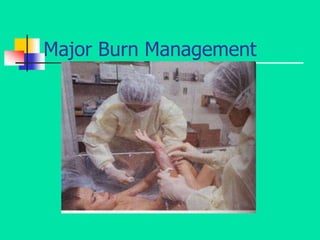
Major Burn Management
Burns in Children
 Young children who have been severely
burned have a higher mortality rate
than adults.
 Shorter exposure to chemicals or
temperature can injure child sooner.
 Increased risk for for fluid and heat loss
due to larger body surface area.
Burns in Children
 Burns involving more that 10% of TBSA
require fluid resuscitation.
 Infants and children are at increased
risk for protein and calorie deficiency
due to decreased muscle mass and poor
eating habits.
 Scarring is more severe.
Burns in Children
 Immature immune system can led to
increase risk of infection.
 Delay in growth may follow extensive
burns.
Bowden text Chart 15 –28
Management of Burns
 Ascertain adequacy of airway, oxygen,
intubation
 Large bore needle to deliver sufficient
fluids at a rapid rate.
 Remove clothing and jewelry and
examine.
Alert
 The most common cause of
unconsciousness in the flame burn
patient is hypoxia due to smoke
inhalation.
 Look for ash and soot around nares.
Management of Burns
 Admission weight.
 Nasogastric tube to maintain gastric
decompression.
 Foley catheter for urine specimen and
monitor output.
 Evaluate burn area and determine the
extent and depth of injury.
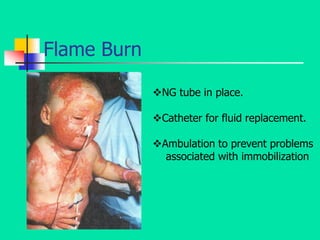
Flame Burn
NG tube in place.
Catheter for fluid replacement.
Ambulation to prevent problems
associated with immobilization
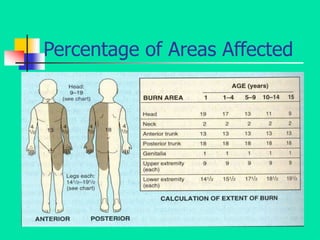
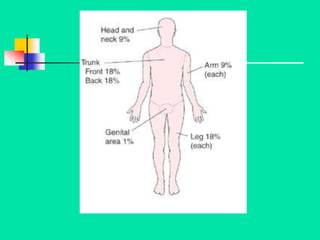
Percentage of Areas Affected
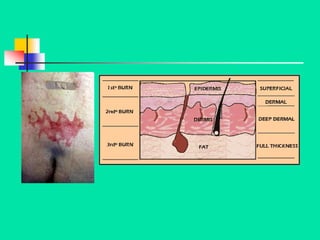
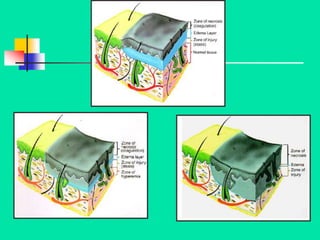
Depth of Burns
First Degree Burn
 Involved only the epidermis and part of
the underlying skin layers.
 Area is hot, red, and painful, but
without swelling or blistering.
 Sunburn is usually a first-degree burn.
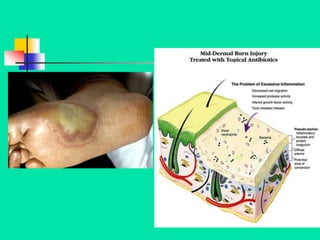
Second Degree Burn
 Involves the epidermis and part of the
underlying skin layers.
 Pain is severe.
 Area is pink or red and mottled.
 Area is moist and seeping, swollen, with
blisters.
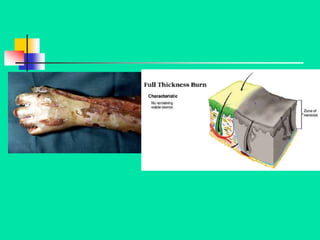
Third Degree or Full-thickness
 Involves injury to all layers of skin.
 Destroys the nerve and blood vessels
 No pain at first
 Area may be white, yellow, black or
cherry red.
 Skin may appear dry and leathery.
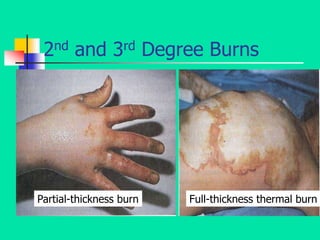
2nd and 3rd Degree Burns
Partial-thickness burn Full-thickness thermal burn
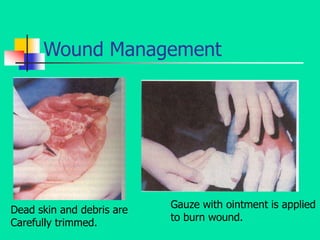
Wound Management
Dead skin and debris are
Carefully trimmed.
Gauze with ointment is applied
to burn wound.
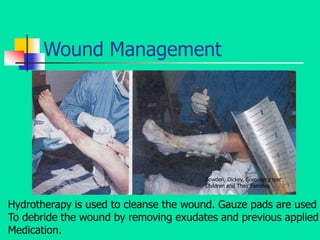
Wound Management
Bowden, Dickey, Greenberg text
Children and Their Families
Hydrotherapy is used to cleanse the wound. Gauze pads are used
To debride the wound by removing exudates and previous applied
Medication.
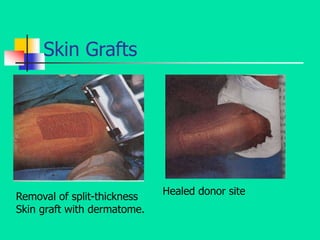
Skin Grafts
Removal of split-thickness
Skin graft with dermatome.
Healed donor site
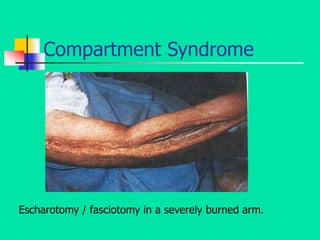
Compartment Syndrome
Escharotomy / fasciotomy in a severely burned arm.
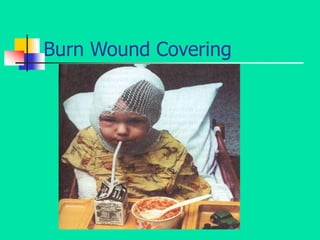
Burn Wound Covering
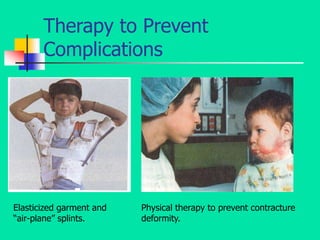
Therapy to Prevent
Complications
Elasticized garment and
“air-plane” splints.
Physical therapy to prevent contracture
deformity.
Burns
Flash burn from gasoline.
Electrical burn caused by biting
of electrical cord.
Ball & Bender
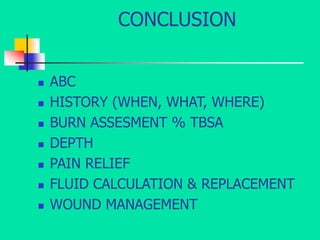
CONCLUSION
 ABC
 HISTORY (WHEN, WHAT, WHERE)
 BURN ASSESMENT % TBSA
 DEPTH
 PAIN RELIEF
 FLUID CALCULATION & REPLACEMENT
 WOUND MANAGEMENT
Keep Kids Safe

Major burn management

  • 1.
  • 2.
    Burns in Children Young children who have been severely burned have a higher mortality rate than adults.  Shorter exposure to chemicals or temperature can injure child sooner.  Increased risk for for fluid and heat loss due to larger body surface area.
  • 3.
    Burns in Children Burns involving more that 10% of TBSA require fluid resuscitation.  Infants and children are at increased risk for protein and calorie deficiency due to decreased muscle mass and poor eating habits.  Scarring is more severe.
  • 4.
    Burns in Children Immature immune system can led to increase risk of infection.  Delay in growth may follow extensive burns. Bowden text Chart 15 –28
  • 5.
    Management of Burns Ascertain adequacy of airway, oxygen, intubation  Large bore needle to deliver sufficient fluids at a rapid rate.  Remove clothing and jewelry and examine.
  • 6.
    Alert  The mostcommon cause of unconsciousness in the flame burn patient is hypoxia due to smoke inhalation.  Look for ash and soot around nares.
  • 7.
    Management of Burns Admission weight.  Nasogastric tube to maintain gastric decompression.  Foley catheter for urine specimen and monitor output.  Evaluate burn area and determine the extent and depth of injury.
  • 8.
    Flame Burn NG tubein place. Catheter for fluid replacement. Ambulation to prevent problems associated with immobilization
  • 9.
  • 11.
  • 12.
    First Degree Burn Involved only the epidermis and part of the underlying skin layers.  Area is hot, red, and painful, but without swelling or blistering.  Sunburn is usually a first-degree burn.
  • 15.
    Second Degree Burn Involves the epidermis and part of the underlying skin layers.  Pain is severe.  Area is pink or red and mottled.  Area is moist and seeping, swollen, with blisters.
  • 17.
    Third Degree orFull-thickness  Involves injury to all layers of skin.  Destroys the nerve and blood vessels  No pain at first  Area may be white, yellow, black or cherry red.  Skin may appear dry and leathery.
  • 19.
    2nd and 3rdDegree Burns Partial-thickness burn Full-thickness thermal burn
  • 20.
    Wound Management Dead skinand debris are Carefully trimmed. Gauze with ointment is applied to burn wound.
  • 21.
    Wound Management Bowden, Dickey,Greenberg text Children and Their Families Hydrotherapy is used to cleanse the wound. Gauze pads are used To debride the wound by removing exudates and previous applied Medication.
  • 22.
    Skin Grafts Removal ofsplit-thickness Skin graft with dermatome. Healed donor site
  • 23.
    Compartment Syndrome Escharotomy /fasciotomy in a severely burned arm.
  • 24.
  • 25.
    Therapy to Prevent Complications Elasticizedgarment and “air-plane” splints. Physical therapy to prevent contracture deformity.
  • 26.
    Burns Flash burn fromgasoline. Electrical burn caused by biting of electrical cord. Ball & Bender
  • 27.
    CONCLUSION  ABC  HISTORY(WHEN, WHAT, WHERE)  BURN ASSESMENT % TBSA  DEPTH  PAIN RELIEF  FLUID CALCULATION & REPLACEMENT  WOUND MANAGEMENT
  • 28.