 DEFINITION: It is a painful condition of the
elbow caused by overuse.
 Tennis elbow is an inflammation of the
tendons that join the forearm muscles on the
outside of the elbow.
 The forearm muscles and tendons become
damaged from overuse — repeating the same
motions again and again.This leads to pain
and tenderness on the outside of the elbow.
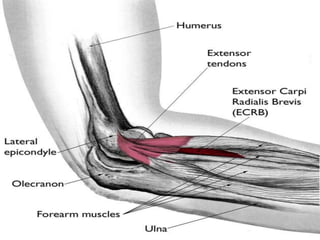
•Lateral epicondylitis, or tennis elbow,
involves the muscles and tendons of your
forearm.
•Your forearm muscles extend your wrist
and fingers.
•Your forearm tendons — often called
extensors — attach the muscles to bone.
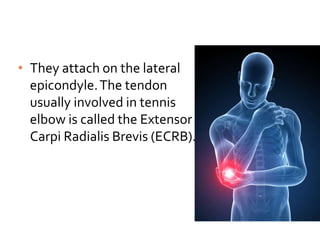
• They attach on the lateral
epicondyle.The tendon
usually involved in tennis
elbow is called the Extensor
Carpi Radialis Brevis (ECRB).
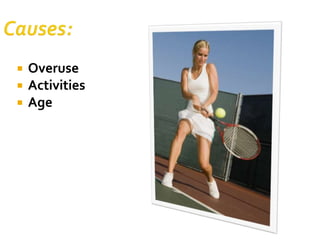
 Overuse
 Activities
 Age
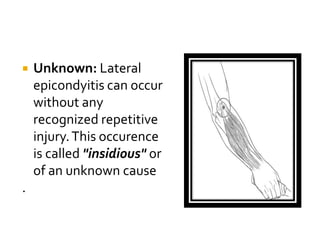
 Unknown: Lateral
epicondyitis can occur
without any
recognized repetitive
injury.This occurence
is called "insidious" or
of an unknown cause
.
 The symptoms of tennis elbow develop
gradually
 Common signs and symptoms of tennis
elbow include:
 Pain or burning on the outer part of your
elbow
 Weak grip strength
NonsurgicalTreatment
1. Rest
2. Non-steroidal anti-inflammatory
medicines
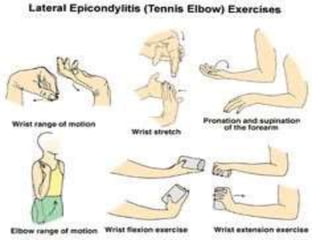
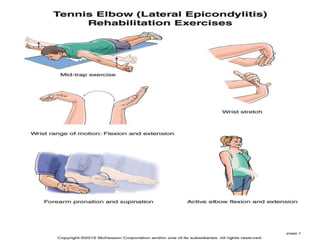
3. Physical therapy
4. Steroid injections
5. Extracorporeal shock wave therapy
1. Open surgery
2. Arthroscopic surgery
As with any surgery, there are risks with tennis
elbow surgery.The most common things to
consider include:
 Infection
 Nerve and blood vessel damage
 Possible prolonged rehabilitation
 Loss of strength
 Loss of flexibility
 The need for further surgery
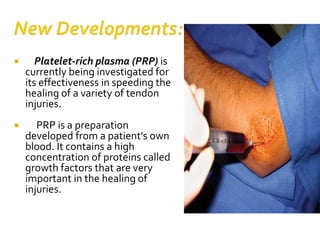
 Platelet-rich plasma (PRP) is
currently being investigated for
its effectiveness in speeding the
healing of a variety of tendon
injuries.
 PRP is a preparation
developed from a patient's own
blood. It contains a high
concentration of proteins called
growth factors that are very
important in the healing of
injuries.
Golfer’s elbow
(medial epicondilitis)
GOLFER’S ELBOW IS
COUSIN OF TENNIS ELBOW
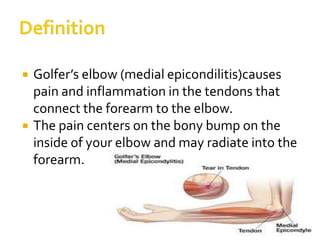
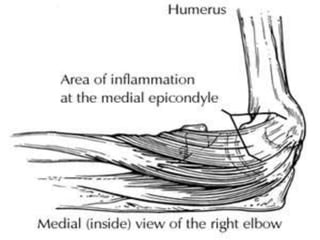
 Golfer’s elbow (medial epicondilitis)causes
pain and inflammation in the tendons that
connect the forearm to the elbow.
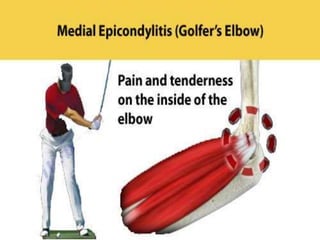
 The pain centers on the bony bump on the
inside of your elbow and may radiate into the
forearm.
Golfer’s elbow is not as well known as its
Cousin tennis elbow .
Both are forms of elbow tendinitis .
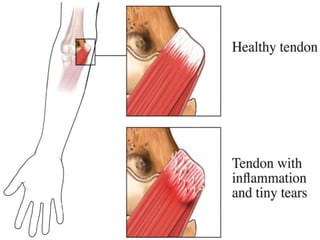
 Golfer’s elbow is usually caused by overusing the
muscles in the forearm that allow you to grip, rotate
your arm and flex your wrist.
 Repetitive flexing , gripping or swinging can cause
pulls or tiny tears in the tendons
 Despite the name this condition does not just
affect golfer’s.
 Any repetitive hand, wrist or forearm
motions can lead to golfers elbow.
 Infact its sometimes called pitcher’s
elbow.people may also get it by using tools
like screwdrivers and hammers ,raking or
painting.
 Pain when shaking hands .
 Weak grasping.
 Numbness and tingling from your elbow up
and into your pinky and ring fingers.
 Pain when flexing your wrist.
Non-specific palliative treatments include:
 Non-steroidal anti-inflammatory drugs
(NSAIDs)
 Heat or ice
 A counter-force brace or "elbow strap" to
reduce strain at the elbow epicondyle, to limit
pain provocation and to protect against
further damage.
 Both are forms of elbow tendinitis.
 The difference is that tennis elbow stems
from damage to tendons on the outside of
the elbow while golfer’s elbow is caused by
tendons on the inside.
 Golfer’s elbow is less common.

lateral & medial epicondylitis

  • 2.
     DEFINITION: Itis a painful condition of the elbow caused by overuse.  Tennis elbow is an inflammation of the tendons that join the forearm muscles on the outside of the elbow.
  • 3.
     The forearmmuscles and tendons become damaged from overuse — repeating the same motions again and again.This leads to pain and tenderness on the outside of the elbow.
  • 4.
    •Lateral epicondylitis, ortennis elbow, involves the muscles and tendons of your forearm. •Your forearm muscles extend your wrist and fingers. •Your forearm tendons — often called extensors — attach the muscles to bone.
  • 5.
    • They attachon the lateral epicondyle.The tendon usually involved in tennis elbow is called the Extensor Carpi Radialis Brevis (ECRB).
  • 7.
  • 8.
     Unknown: Lateral epicondyitiscan occur without any recognized repetitive injury.This occurence is called "insidious" or of an unknown cause .
  • 9.
     The symptomsof tennis elbow develop gradually  Common signs and symptoms of tennis elbow include:  Pain or burning on the outer part of your elbow  Weak grip strength
  • 10.
    NonsurgicalTreatment 1. Rest 2. Non-steroidalanti-inflammatory medicines 3. Physical therapy 4. Steroid injections 5. Extracorporeal shock wave therapy
  • 13.
    1. Open surgery 2.Arthroscopic surgery
  • 14.
    As with anysurgery, there are risks with tennis elbow surgery.The most common things to consider include:  Infection  Nerve and blood vessel damage  Possible prolonged rehabilitation  Loss of strength  Loss of flexibility  The need for further surgery
  • 15.
     Platelet-rich plasma(PRP) is currently being investigated for its effectiveness in speeding the healing of a variety of tendon injuries.  PRP is a preparation developed from a patient's own blood. It contains a high concentration of proteins called growth factors that are very important in the healing of injuries.
  • 16.
  • 17.
  • 18.
     Golfer’s elbow(medial epicondilitis)causes pain and inflammation in the tendons that connect the forearm to the elbow.  The pain centers on the bony bump on the inside of your elbow and may radiate into the forearm.
  • 19.
    Golfer’s elbow isnot as well known as its Cousin tennis elbow . Both are forms of elbow tendinitis .
  • 22.
     Golfer’s elbowis usually caused by overusing the muscles in the forearm that allow you to grip, rotate your arm and flex your wrist.  Repetitive flexing , gripping or swinging can cause pulls or tiny tears in the tendons
  • 23.
     Despite thename this condition does not just affect golfer’s.  Any repetitive hand, wrist or forearm motions can lead to golfers elbow.  Infact its sometimes called pitcher’s elbow.people may also get it by using tools like screwdrivers and hammers ,raking or painting.
  • 25.
     Pain whenshaking hands .  Weak grasping.  Numbness and tingling from your elbow up and into your pinky and ring fingers.  Pain when flexing your wrist.
  • 26.
    Non-specific palliative treatmentsinclude:  Non-steroidal anti-inflammatory drugs (NSAIDs)  Heat or ice  A counter-force brace or "elbow strap" to reduce strain at the elbow epicondyle, to limit pain provocation and to protect against further damage.
  • 29.
     Both areforms of elbow tendinitis.  The difference is that tennis elbow stems from damage to tendons on the outside of the elbow while golfer’s elbow is caused by tendons on the inside.  Golfer’s elbow is less common.