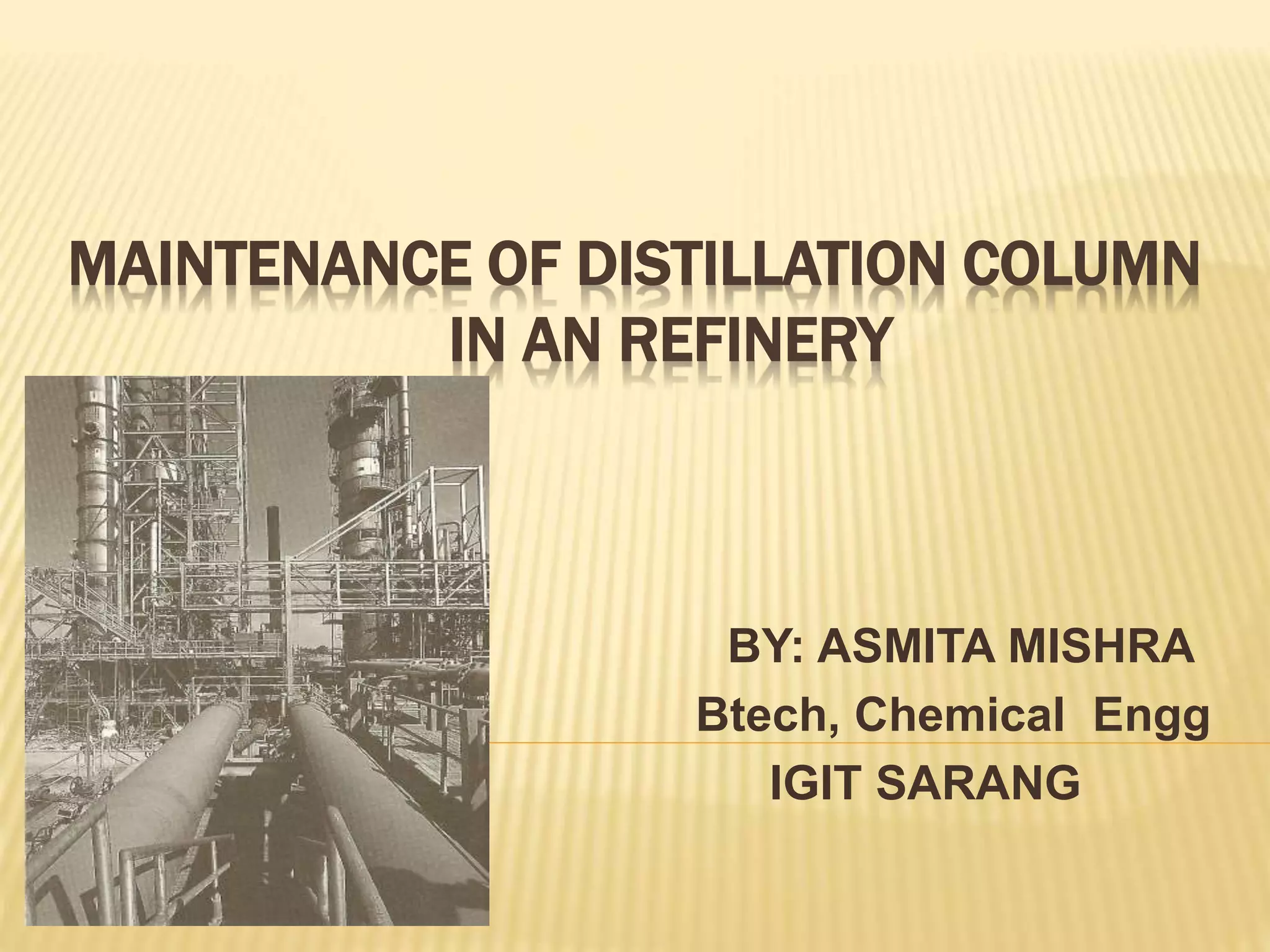
MAINTENANCE OF DISTILLATION COLUMN
IN AN REFINERY
BY: ASMITA MISHRA
Btech, Chemical Engg
IGIT SARANG
CONTENTS
 Introduction
 Main problems met on Distillation Column
 Failure modes associated with distillation
column
 Distillation column troubleshooting layout
 Some Helpful techniques for problem
identification
 Measures to deal with the problem
 Conclusion
 References
INTRODUCTION
Distillation is probably the most widely used separation process in
the chemical and allied industries; its applications ranging from
the rectification of alcohol, which has been practised since
antiquity, to the fractionation of crude oil.
Distillation columns are considered as one of the most critical
components in petroleum refineries, gas processing installations
and chemical plants. Plant performance depends to a large extent
on the ability of these columns to function as intended.
Defective columns may lead to serious consequences to the
plant operation and hence the quality of the product. Thus, when
a distillation column experiences irregularities, it is urgently
necessary to find out exactly what is happening inside the
column. Any kind of problem can result in a large financial
loss.The earlier the problem is identified and corrected, the lesser
will be the loss and the cost to rectify it.
MAIN PROBLEMS MET ON DISTILLATION COLUMNS
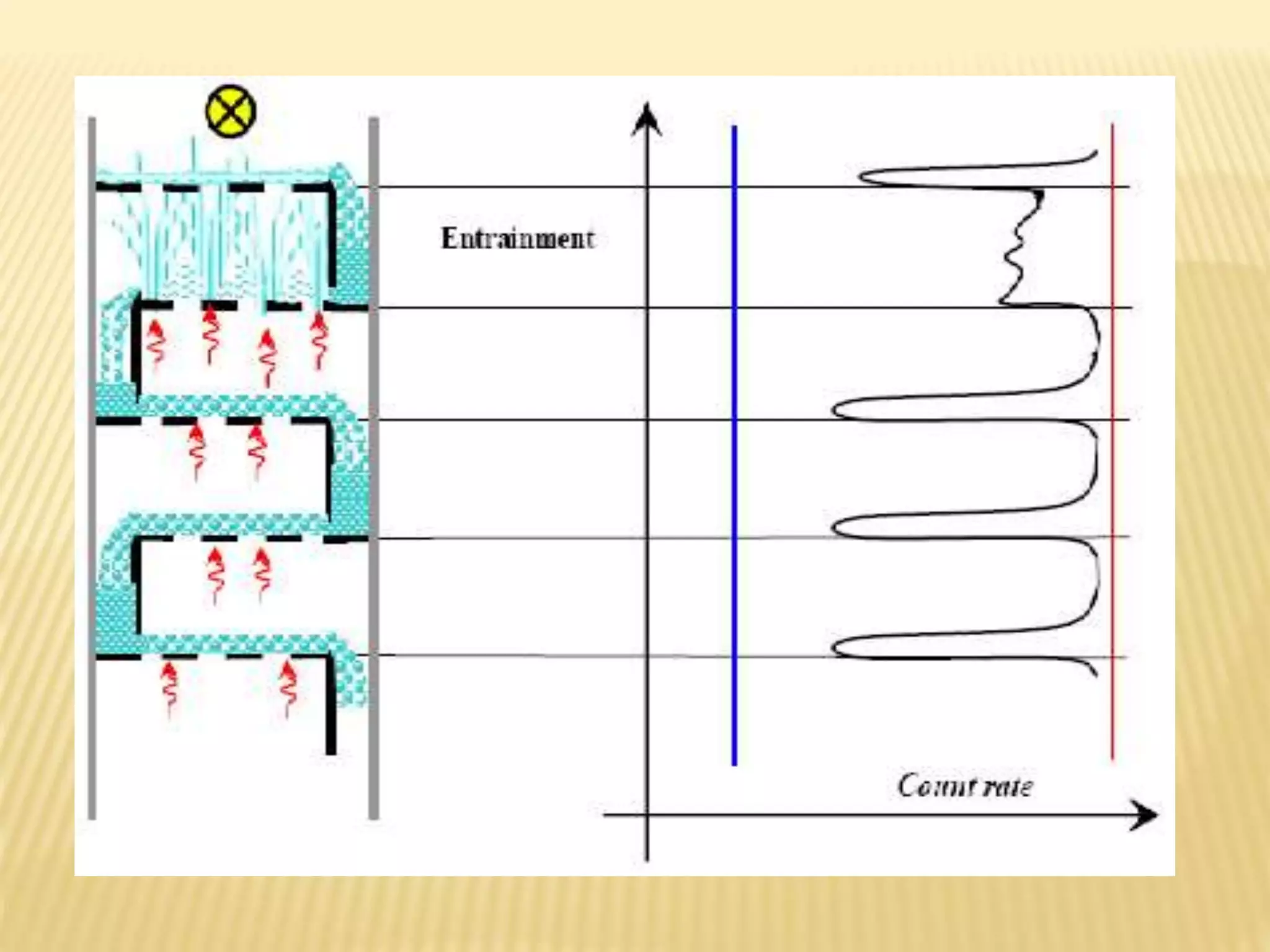
1. Liquid entrainment
 defined as the physical rise of droplets, provoked by the
ascending flow of vapour.
 The vapour tends to host droplets upward, while the gravity
tends to pull them downward.
 If the vapour speed is relatively high, then the entrainment
can surpass the gravity and some droplets can be
transported from a tray to the tray above.
 Also seen as the excessive accumulation of liquid on trays
 A high liquid entrainment can lead directly to a column
flooding called "flooding jet type
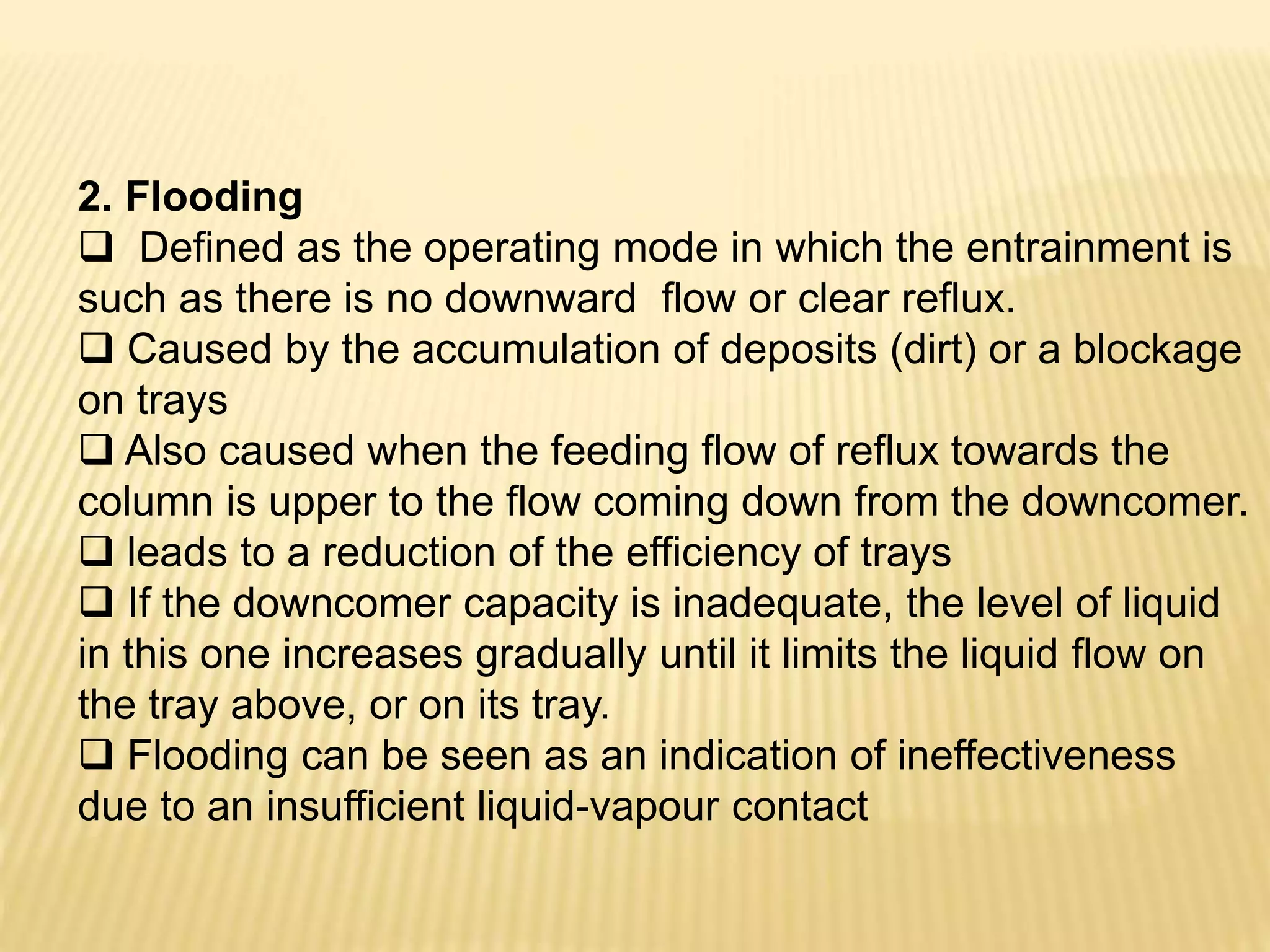
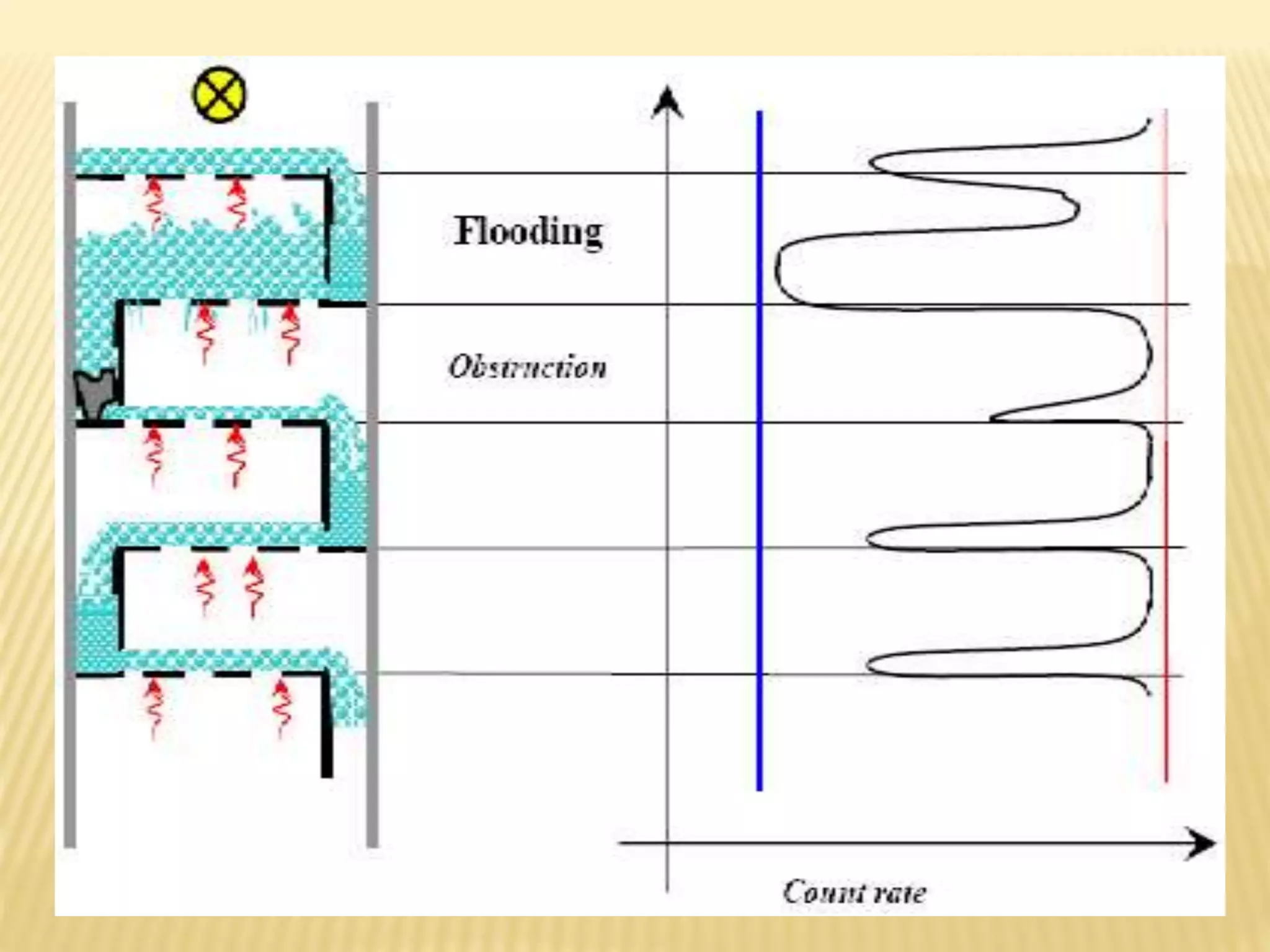
2. Flooding
 Defined as the operating mode in which the entrainment is
such as there is no downward flow or clear reflux.
 Caused by the accumulation of deposits (dirt) or a blockage
on trays
 Also caused when the feeding flow of reflux towards the
column is upper to the flow coming down from the downcomer.
 leads to a reduction of the efficiency of trays
 If the downcomer capacity is inadequate, the level of liquid
in this one increases gradually until it limits the liquid flow on
the tray above, or on its tray.
 Flooding can be seen as an indication of ineffectiveness
due to an insufficient liquid-vapour contact
3. Other encountered problems
Some other problems can be met. These are mainly:
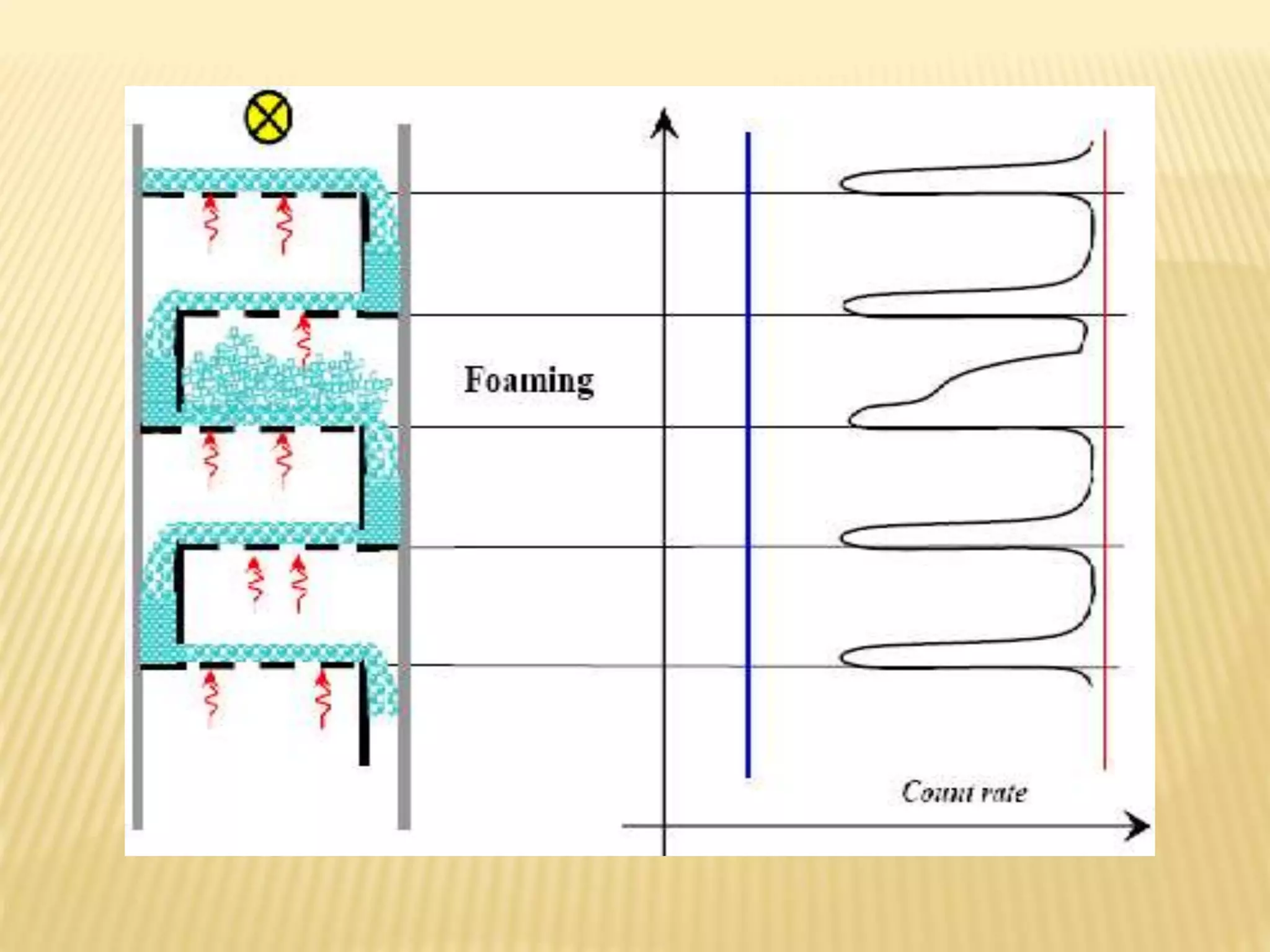
• ‘‘Foaming’’: foam formation
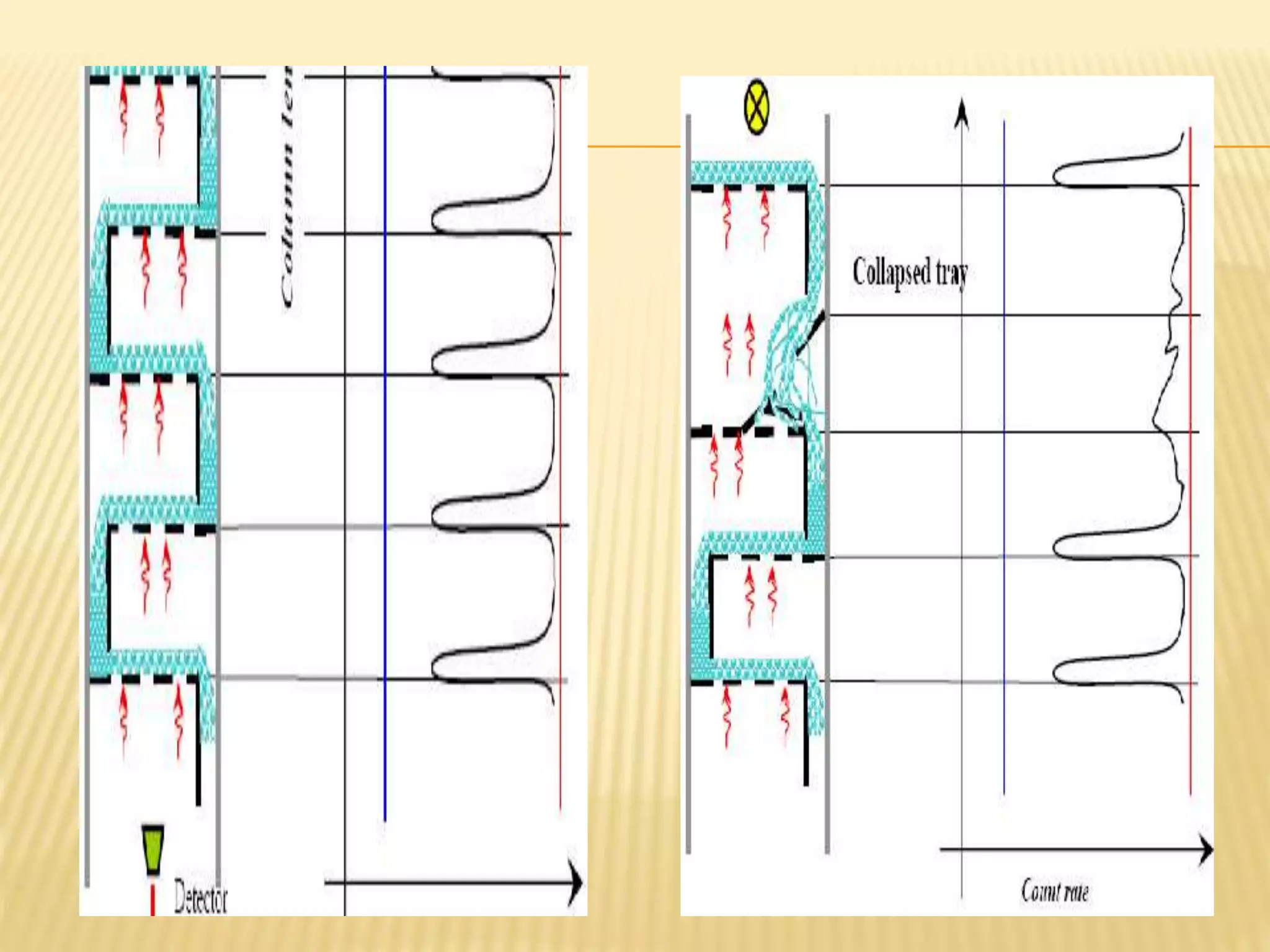
• Destruction and collapse of trays
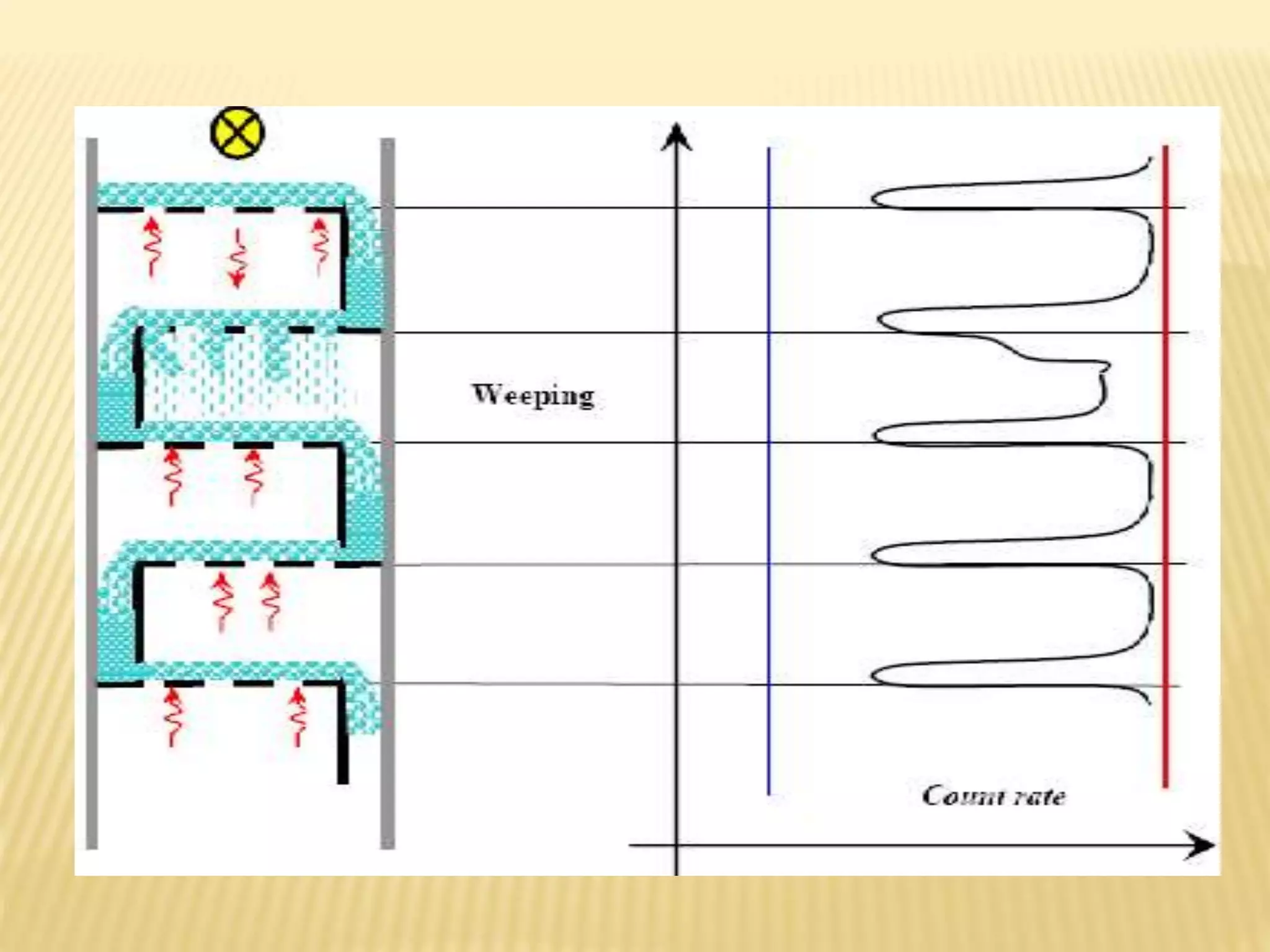
• ‘‘Weeping’’ or in other words presence of downward
droplets in the vapour space between trays
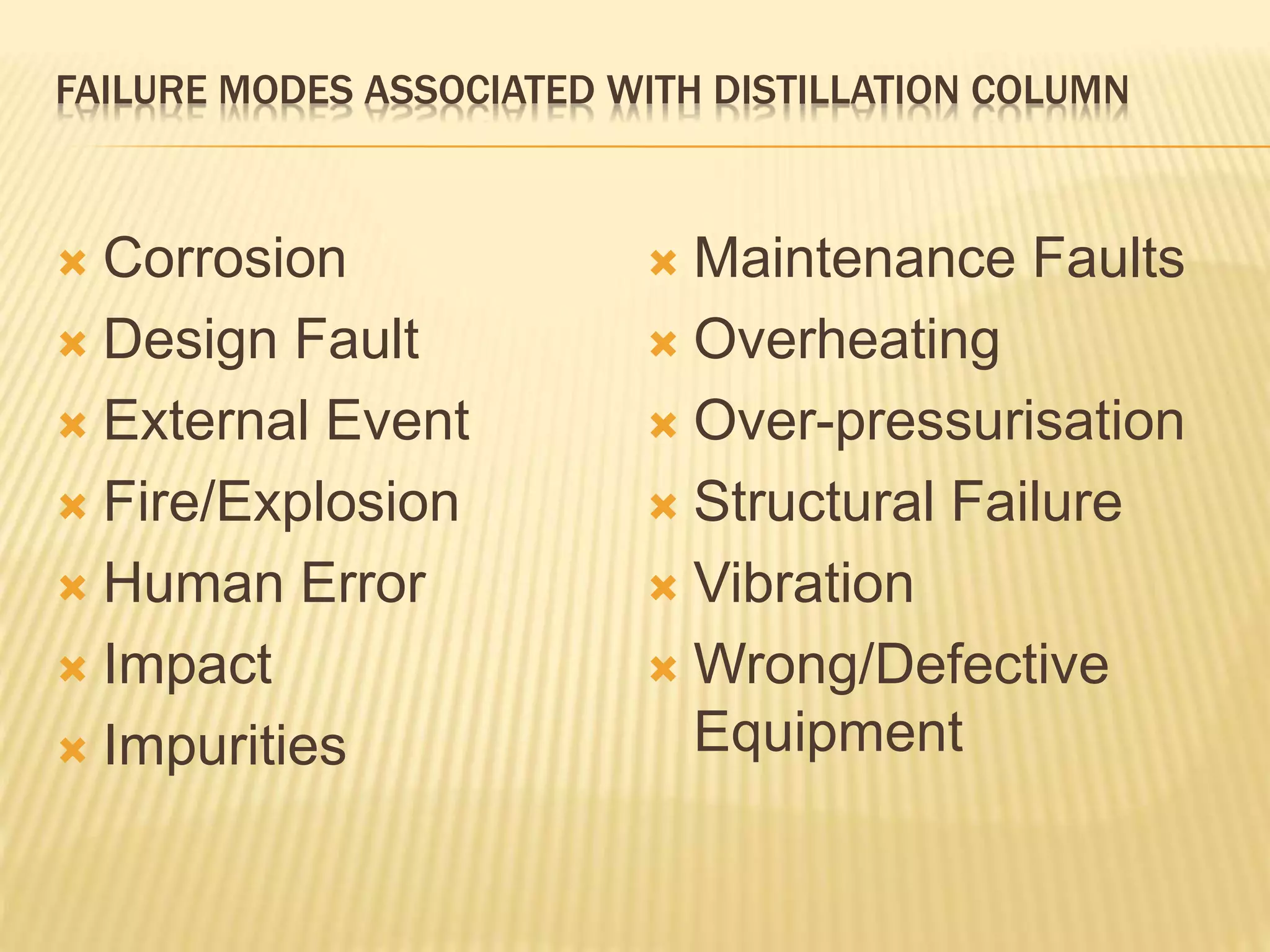
FAILURE MODES ASSOCIATED WITH DISTILLATION COLUMN
 Corrosion
 Design Fault
 External Event
 Fire/Explosion
 Human Error
 Impact
 Impurities
 Maintenance Faults
 Overheating
 Over-pressurisation
 Structural Failure
 Vibration
 Wrong/Defective
Equipment
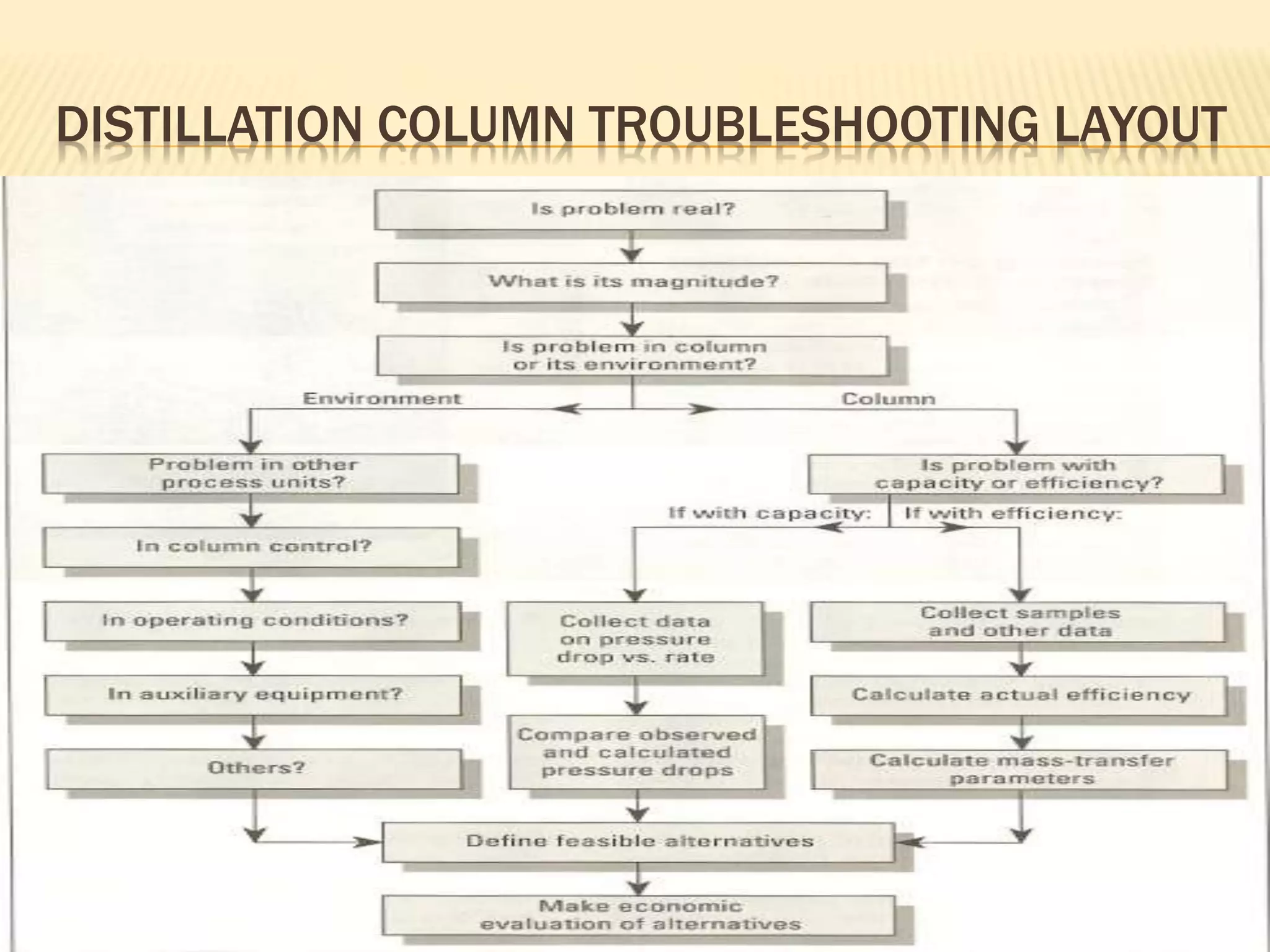
DISTILLATION COLUMN TROUBLESHOOTING LAYOUT
SOME HELPFUL TECHNIQUES FOR PROBLEM
IDENTIFICATION
1. Gamma scanning can identify a number of common
malfunctions in columns.
Mechanical
• Displaced or damaged trays and packing problems
• Corrosion resulting in partial tray damage
• Out-of-place liquid or vapour distributors
• Level control problems on chimney trays or base liquid level
Rate related
• Entrainment (slight, moderate, severe, jet flooding)
• Weeping or dumping trays
• Dry or flooded trays due to loading conditions
• Unequal liquid levels on trays
Process
• Foaming on trays or in reboilers, condensers and
accumulators
• Misdistributions of vapour and liquid in packing
• Liquid hold-up due to plugging and fouling
• Superheated or sub-cooled feed or reflux
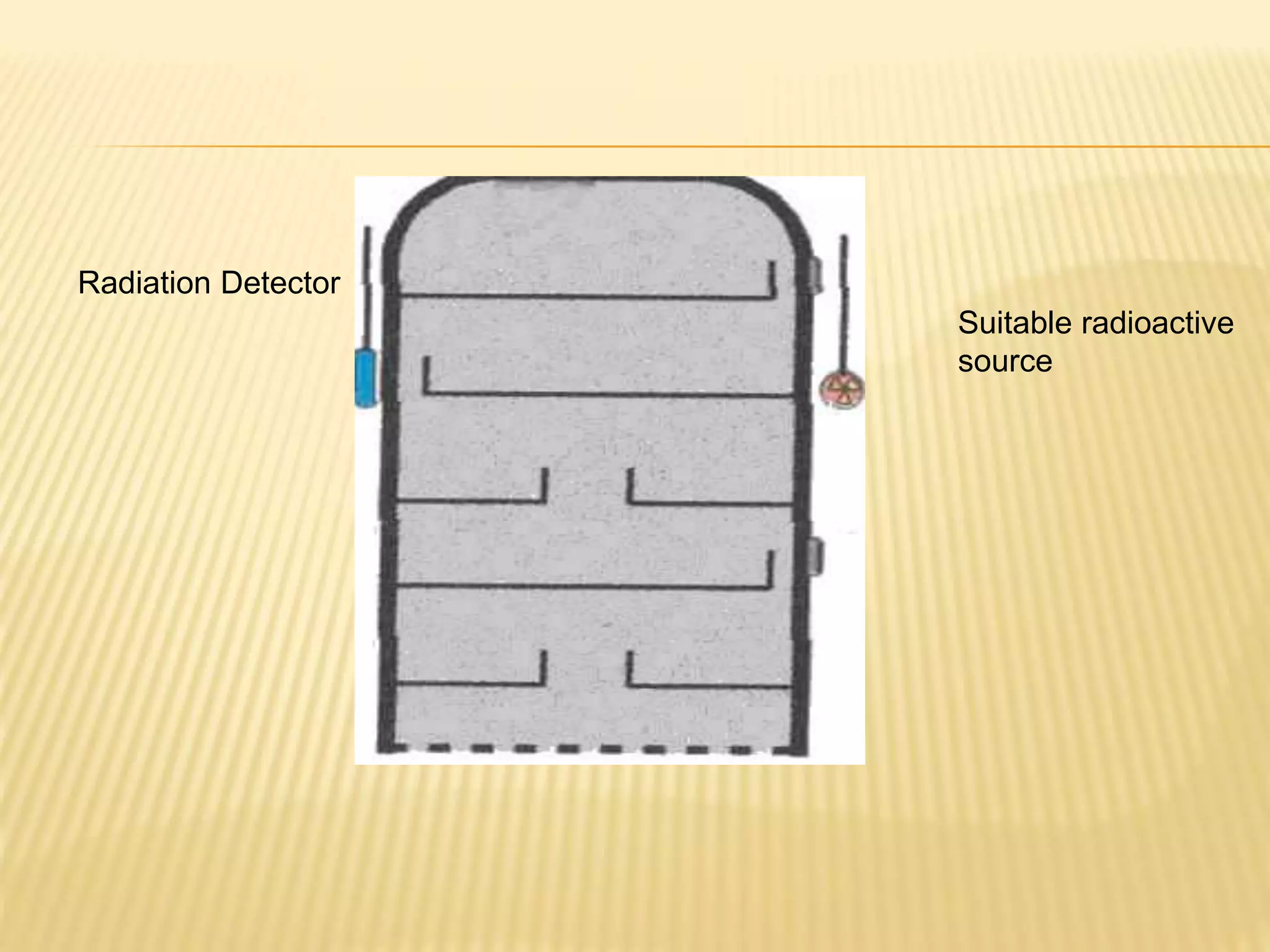
Radiation Detector
Suitable radioactive
source
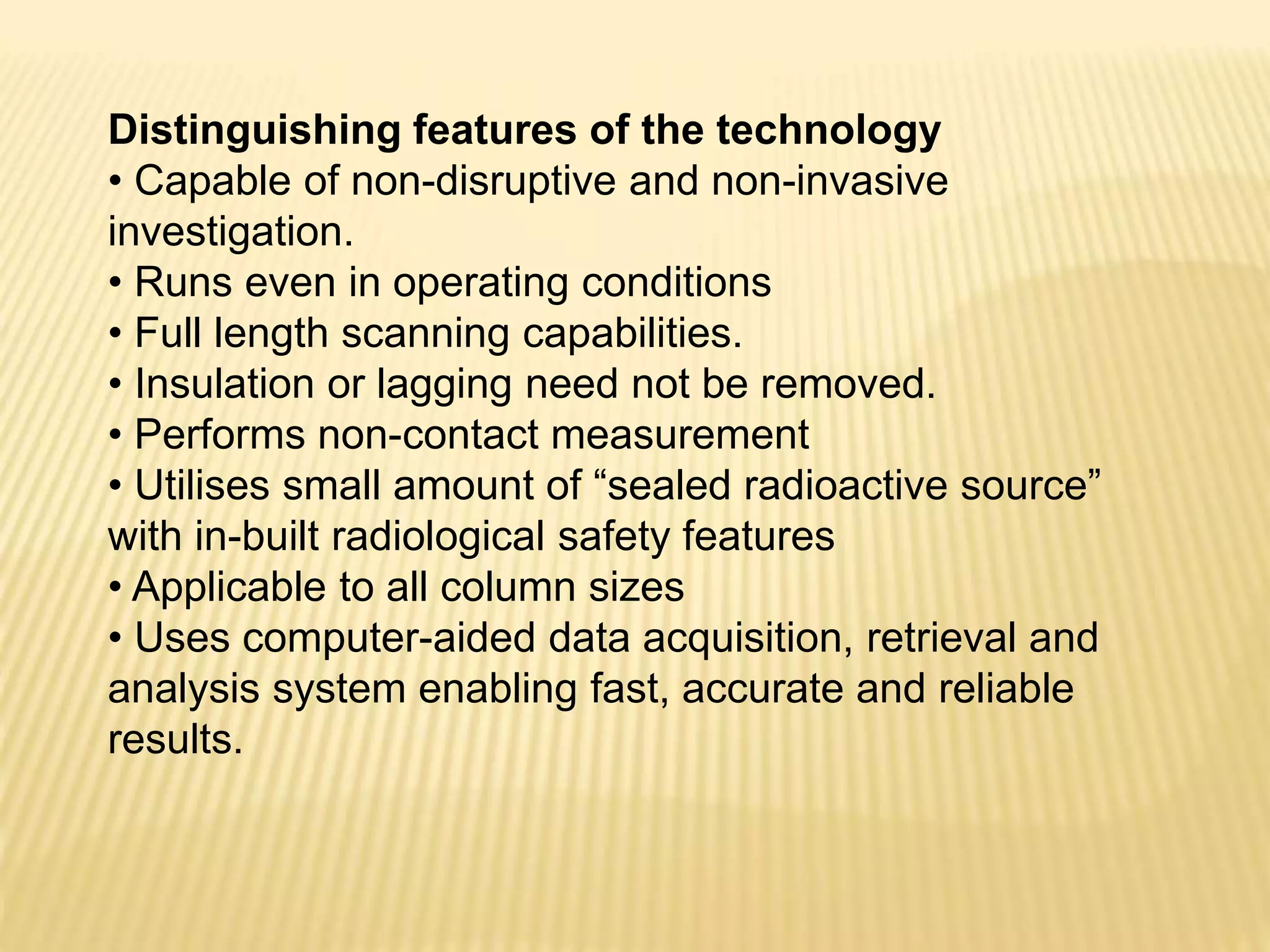
The quantity of gamma radiation absorbed or transmitted by the
material placed between the radioactive source and the detector
gives an indication of the nature and the real quantity of this
material.
•When radiation, issued from a radioactive source, pass through a
medium containing a tray with an aired liquid, a good part of this
radiation is absorbed and the radiation quantity reaching the
detector is relatively small.
• If a beam of radiation passes through a non aired liquid, the most
part of this radiation is absorbed by the medium and the intensity
is weak.
• When the radiation beam passes through steam, in this case a
small quantity of material is present to absorb the radiation. That
means high intensities of radiation are transmitted to the detector
To sum up, a scan using gamma radiation of a column can detect
and localize regions of liquid and steam within this one. It can
make the discrimination between the liquid aeration and can
detect the levels
Distinguishing features of the technology
• Capable of non-disruptive and non-invasive
investigation.
• Runs even in operating conditions
• Full length scanning capabilities.
• Insulation or lagging need not be removed.
• Performs non-contact measurement
• Utilises small amount of “sealed radioactive source”
with in-built radiological safety features
• Applicable to all column sizes
• Uses computer-aided data acquisition, retrieval and
analysis system enabling fast, accurate and reliable
results.
2. CSI Wireless Vibration Transmitter:
o Provides early warning of excessive vibration and
impending damage.
o Determines root causes and guides action.
o identifies premature bearing wear and failure.
3. Micro Motion Coriolis Flow Meter:
o Directly measures the mass flow of gas and liquid
streams and liquid density—including compressible or
supercritical fluids
o allows quick reactions to process changes
o improved product-quality control, and high turndown
capabilities
MEASURES TO DEAL WITH THE PROBLEM
1. Dry tray pressure drop should exceed 20% of the available
tray spacing to prevent enrichment
2. The interfacial surface between the phase must be made
large
3. Column should operate in between the optimum reflux ratio
and minimum reflux ratio conditions
4. minimize the height of column per theoretical stage
5. minimize pressure drop per theoretical stage and
6. maximize operational range
7. Proper packing should be selected in case of packed
distillation columns
8. Proper control of vapour velocity to prevent entrainment
etc.....
CONCLUSION
An operating problem is impossible to fix until
the specific cause is found. So technically we
the chemical engineers must develop new
and advanced techniques to deal with these
problems effectively, efficiently and
economically in a safer and quicker manner .
So lets join hands and put our innovations
and ideas to bring a better , brighter and
safer tomorrow.
REFERENCES
 http://www.hse.gov.uk/comah/sragtech/techmeasmaterial.
htm
 Hills A., “Practical Guidebook for Radioisotope based
Technology in Industry,” Technical
Report,IAEA/RCA/8/078, 2001.
 M. Sanches, M. Hanaguchi, F. Beckmann and W. Calvo,
 "Radiological safety in the gamma scan procedures", the
 International Nuclear Atlantic Conference., Santos,
 Brazil, 2007.
 Coulson and Richardson vol vi
 Mass Transfer Operations by R.E.Treybal
ANY QUERIES????

Maintenance of distillation column asmita

  • 1.
    MAINTENANCE OF DISTILLATIONCOLUMN IN AN REFINERY BY: ASMITA MISHRA Btech, Chemical Engg IGIT SARANG
  • 2.
    CONTENTS  Introduction  Mainproblems met on Distillation Column  Failure modes associated with distillation column  Distillation column troubleshooting layout  Some Helpful techniques for problem identification  Measures to deal with the problem  Conclusion  References
  • 3.
    INTRODUCTION Distillation is probablythe most widely used separation process in the chemical and allied industries; its applications ranging from the rectification of alcohol, which has been practised since antiquity, to the fractionation of crude oil. Distillation columns are considered as one of the most critical components in petroleum refineries, gas processing installations and chemical plants. Plant performance depends to a large extent on the ability of these columns to function as intended. Defective columns may lead to serious consequences to the plant operation and hence the quality of the product. Thus, when a distillation column experiences irregularities, it is urgently necessary to find out exactly what is happening inside the column. Any kind of problem can result in a large financial loss.The earlier the problem is identified and corrected, the lesser will be the loss and the cost to rectify it.
  • 4.
    MAIN PROBLEMS METON DISTILLATION COLUMNS 1. Liquid entrainment  defined as the physical rise of droplets, provoked by the ascending flow of vapour.  The vapour tends to host droplets upward, while the gravity tends to pull them downward.  If the vapour speed is relatively high, then the entrainment can surpass the gravity and some droplets can be transported from a tray to the tray above.  Also seen as the excessive accumulation of liquid on trays  A high liquid entrainment can lead directly to a column flooding called "flooding jet type
  • 5.
    2. Flooding  Definedas the operating mode in which the entrainment is such as there is no downward flow or clear reflux.  Caused by the accumulation of deposits (dirt) or a blockage on trays  Also caused when the feeding flow of reflux towards the column is upper to the flow coming down from the downcomer.  leads to a reduction of the efficiency of trays  If the downcomer capacity is inadequate, the level of liquid in this one increases gradually until it limits the liquid flow on the tray above, or on its tray.  Flooding can be seen as an indication of ineffectiveness due to an insufficient liquid-vapour contact
  • 6.
    3. Other encounteredproblems Some other problems can be met. These are mainly: • ‘‘Foaming’’: foam formation • Destruction and collapse of trays • ‘‘Weeping’’ or in other words presence of downward droplets in the vapour space between trays
  • 7.
    FAILURE MODES ASSOCIATEDWITH DISTILLATION COLUMN  Corrosion  Design Fault  External Event  Fire/Explosion  Human Error  Impact  Impurities  Maintenance Faults  Overheating  Over-pressurisation  Structural Failure  Vibration  Wrong/Defective Equipment
  • 8.
  • 9.
    SOME HELPFUL TECHNIQUESFOR PROBLEM IDENTIFICATION 1. Gamma scanning can identify a number of common malfunctions in columns. Mechanical • Displaced or damaged trays and packing problems • Corrosion resulting in partial tray damage • Out-of-place liquid or vapour distributors • Level control problems on chimney trays or base liquid level Rate related • Entrainment (slight, moderate, severe, jet flooding) • Weeping or dumping trays
  • 10.
    • Dry orflooded trays due to loading conditions • Unequal liquid levels on trays Process • Foaming on trays or in reboilers, condensers and accumulators • Misdistributions of vapour and liquid in packing • Liquid hold-up due to plugging and fouling • Superheated or sub-cooled feed or reflux
  • 11.
  • 12.
    The quantity ofgamma radiation absorbed or transmitted by the material placed between the radioactive source and the detector gives an indication of the nature and the real quantity of this material. •When radiation, issued from a radioactive source, pass through a medium containing a tray with an aired liquid, a good part of this radiation is absorbed and the radiation quantity reaching the detector is relatively small. • If a beam of radiation passes through a non aired liquid, the most part of this radiation is absorbed by the medium and the intensity is weak. • When the radiation beam passes through steam, in this case a small quantity of material is present to absorb the radiation. That means high intensities of radiation are transmitted to the detector To sum up, a scan using gamma radiation of a column can detect and localize regions of liquid and steam within this one. It can make the discrimination between the liquid aeration and can detect the levels
  • 13.
    Distinguishing features ofthe technology • Capable of non-disruptive and non-invasive investigation. • Runs even in operating conditions • Full length scanning capabilities. • Insulation or lagging need not be removed. • Performs non-contact measurement • Utilises small amount of “sealed radioactive source” with in-built radiological safety features • Applicable to all column sizes • Uses computer-aided data acquisition, retrieval and analysis system enabling fast, accurate and reliable results.
  • 19.
    2. CSI WirelessVibration Transmitter: o Provides early warning of excessive vibration and impending damage. o Determines root causes and guides action. o identifies premature bearing wear and failure. 3. Micro Motion Coriolis Flow Meter: o Directly measures the mass flow of gas and liquid streams and liquid density—including compressible or supercritical fluids o allows quick reactions to process changes o improved product-quality control, and high turndown capabilities
  • 20.
    MEASURES TO DEALWITH THE PROBLEM 1. Dry tray pressure drop should exceed 20% of the available tray spacing to prevent enrichment 2. The interfacial surface between the phase must be made large 3. Column should operate in between the optimum reflux ratio and minimum reflux ratio conditions 4. minimize the height of column per theoretical stage 5. minimize pressure drop per theoretical stage and 6. maximize operational range 7. Proper packing should be selected in case of packed distillation columns 8. Proper control of vapour velocity to prevent entrainment etc.....
  • 21.
    CONCLUSION An operating problemis impossible to fix until the specific cause is found. So technically we the chemical engineers must develop new and advanced techniques to deal with these problems effectively, efficiently and economically in a safer and quicker manner . So lets join hands and put our innovations and ideas to bring a better , brighter and safer tomorrow.
  • 22.
    REFERENCES  http://www.hse.gov.uk/comah/sragtech/techmeasmaterial. htm  HillsA., “Practical Guidebook for Radioisotope based Technology in Industry,” Technical Report,IAEA/RCA/8/078, 2001.  M. Sanches, M. Hanaguchi, F. Beckmann and W. Calvo,  "Radiological safety in the gamma scan procedures", the  International Nuclear Atlantic Conference., Santos,  Brazil, 2007.  Coulson and Richardson vol vi  Mass Transfer Operations by R.E.Treybal
  • 24.