Machine learning and optimization
techniques for electrical drives.
Machine learning techniques have been applied to power
electronics control and optimization to improve the
performance of power electronics systems .These techniques
can be used to reduce the computational expense associated
with characterizing DC-DC converters, which is necessary for
designing and optimizing power electronics systems.
Machine learning techniques such as support vector
regression and artificial neural networks have been utilized
to accurately predict DC-DC converters' performance .
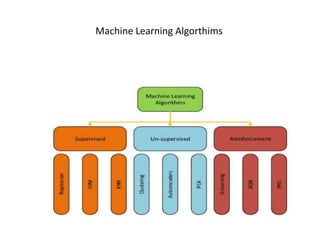
The machine learning techniques, such as Multiple Linear
Regression, Random Forest Regressor, Decision Tree
Regressor, Extreme Gradient Boost Regressor, Support Vector
Machines, K-Nearest Neighbor, and deep learning. It has
been shown that Random Forest Regressor and deep
learning have the best accuracy among the tested techniques
Machine Learning Algorthims
Traditionally, control and optimization in power electronics
relied on mathematical models and heuristic algorithms.
Machine learning, however, offers a data-driven approach
that can adapt to changing conditions and optimize
performance in real-time. Traditional approaches for power
electronics control and optimization involve using analog
control techniques and sensor-based methods for
temperature estimation [30]. These methods have been used
for a long time and have proven to be effective. However,
with the advent of machine learning (ML) and artificial
intelligence (AI), there has been a shift towards using data-
driven approaches for power electronics control and
optimization .
ML techniques such as fuzzy logic, feed-forward neural
networks, recurrent neural networks, and reinforcement
learning are being developed for power electronics control
and optimization [31]. These techniques allow for more
complex and dynamic non-linear control surfaces to enhance
efficiency, reliability predictions, and health monitoring in
power converters.
Supervised Learning for Control
Supervised learning is a category of machine learning
where an algorithm is trained using labeled data to
understand the relationship between input and output
variables .In the context of power electronics control
and optimization, supervised learning helps in
forecasting how a system will behave based on input
variables like voltage, current, and temperature Several
supervised learning techniques are applicable in power
electronics, including linear regression, support vector
machines (SVMs), and neural networks
Un-Supervised Learning for Control
Unsupervised learning is a machine learning paradigm
where the algorithm works without labeled data and
aims to discover inherent patterns or structures within
the data. In power electronics, unsupervised learning
techniques play a significant role in optimization
processes .Clustering and Principal Component
Analysis (PCA) discussed following are two key
techniques of unsupervised learning
Reinforcement Learning Application in Power Electronics
Reinforcement learning (RL) is a machine learning
paradigm where an agent learns by interacting with an
environment .It aims to maximize a cumulative reward
signal over time by making a sequence of decisions.
Challenges in Implementing Machine Learning
Data Collection and Preprocessing High-quality
data collection is the foundation of any successful
machine-learning application .In the context of power
electronics, this means gathering accurate and
comprehensive data related to voltage, current,
temperature, and other relevant parameters. Data may
come from various sources, such as sensors and
monitoring devices placed within the power system.
Ensuring the reliability and consistency of this data is
critical.
Challenges in Implementing Machine Learning
Model Interpretability In specific applications of
power electronics, particularly those with safety or
regulatory implications, it's essential to have
interpretable machine learning models. Interpretable
models are those whose decisions can be understood
and explained in a human-readable manner. This is
crucial for ensuring transparency and accountability.
For instance, if a machine learning model is used to
control voltage levels in a power grid, engineers and
regulators need to know why the model made a
particular decision in case of unexpected outcomes or
errors
Challenges in Implementing Machine Learning
Real-time Constraints Power electronics
systems often operate in real-time
environments, where decisions must be made
rapidly to maintain stability and safety. Many
machine learning algorithms are
computationally intensive and may not be
well-suited for real-time decision-making
The challenges with regard to Electrical machines and drive
systems are the detection of different types of faults it is
subjected to. These faults may be stator inter-turn faults,
short or open circuits, rotor circuit faults which may be open
or short circuit and cracked end ring faults or broken bar for
Squirrel cage machines, rotor mechanical faults including
bearing damage, bending of shaft, misalignment, and failure
of one or more power electronic components of the drive
control system, deteriorated magnetic material for
permanent magnet machines. These faults are reflected, and
hence, could affect the performance characteristics of the
machine and drive system. The characteristics may include
low voltages and high currents, torque dips and pulsations,
reduced average torque, excessive copper losses, and
lowered efficiency, acoustic noise, and excessive heating

Machine learning and optimization techniques for electrical drives.pptx

  • 1.
    Machine learning andoptimization techniques for electrical drives.
  • 2.
    Machine learning techniqueshave been applied to power electronics control and optimization to improve the performance of power electronics systems .These techniques can be used to reduce the computational expense associated with characterizing DC-DC converters, which is necessary for designing and optimizing power electronics systems. Machine learning techniques such as support vector regression and artificial neural networks have been utilized to accurately predict DC-DC converters' performance .
  • 3.
    The machine learningtechniques, such as Multiple Linear Regression, Random Forest Regressor, Decision Tree Regressor, Extreme Gradient Boost Regressor, Support Vector Machines, K-Nearest Neighbor, and deep learning. It has been shown that Random Forest Regressor and deep learning have the best accuracy among the tested techniques
  • 4.
  • 5.
    Traditionally, control andoptimization in power electronics relied on mathematical models and heuristic algorithms. Machine learning, however, offers a data-driven approach that can adapt to changing conditions and optimize performance in real-time. Traditional approaches for power electronics control and optimization involve using analog control techniques and sensor-based methods for temperature estimation [30]. These methods have been used for a long time and have proven to be effective. However, with the advent of machine learning (ML) and artificial intelligence (AI), there has been a shift towards using data- driven approaches for power electronics control and optimization .
  • 6.
    ML techniques suchas fuzzy logic, feed-forward neural networks, recurrent neural networks, and reinforcement learning are being developed for power electronics control and optimization [31]. These techniques allow for more complex and dynamic non-linear control surfaces to enhance efficiency, reliability predictions, and health monitoring in power converters.
  • 7.
    Supervised Learning forControl Supervised learning is a category of machine learning where an algorithm is trained using labeled data to understand the relationship between input and output variables .In the context of power electronics control and optimization, supervised learning helps in forecasting how a system will behave based on input variables like voltage, current, and temperature Several supervised learning techniques are applicable in power electronics, including linear regression, support vector machines (SVMs), and neural networks
  • 8.
    Un-Supervised Learning forControl Unsupervised learning is a machine learning paradigm where the algorithm works without labeled data and aims to discover inherent patterns or structures within the data. In power electronics, unsupervised learning techniques play a significant role in optimization processes .Clustering and Principal Component Analysis (PCA) discussed following are two key techniques of unsupervised learning
  • 9.
    Reinforcement Learning Applicationin Power Electronics Reinforcement learning (RL) is a machine learning paradigm where an agent learns by interacting with an environment .It aims to maximize a cumulative reward signal over time by making a sequence of decisions.
  • 10.
    Challenges in ImplementingMachine Learning Data Collection and Preprocessing High-quality data collection is the foundation of any successful machine-learning application .In the context of power electronics, this means gathering accurate and comprehensive data related to voltage, current, temperature, and other relevant parameters. Data may come from various sources, such as sensors and monitoring devices placed within the power system. Ensuring the reliability and consistency of this data is critical.
  • 11.
    Challenges in ImplementingMachine Learning Model Interpretability In specific applications of power electronics, particularly those with safety or regulatory implications, it's essential to have interpretable machine learning models. Interpretable models are those whose decisions can be understood and explained in a human-readable manner. This is crucial for ensuring transparency and accountability. For instance, if a machine learning model is used to control voltage levels in a power grid, engineers and regulators need to know why the model made a particular decision in case of unexpected outcomes or errors
  • 12.
    Challenges in ImplementingMachine Learning Real-time Constraints Power electronics systems often operate in real-time environments, where decisions must be made rapidly to maintain stability and safety. Many machine learning algorithms are computationally intensive and may not be well-suited for real-time decision-making
  • 13.
    The challenges withregard to Electrical machines and drive systems are the detection of different types of faults it is subjected to. These faults may be stator inter-turn faults, short or open circuits, rotor circuit faults which may be open or short circuit and cracked end ring faults or broken bar for Squirrel cage machines, rotor mechanical faults including bearing damage, bending of shaft, misalignment, and failure of one or more power electronic components of the drive control system, deteriorated magnetic material for permanent magnet machines. These faults are reflected, and hence, could affect the performance characteristics of the machine and drive system. The characteristics may include low voltages and high currents, torque dips and pulsations, reduced average torque, excessive copper losses, and lowered efficiency, acoustic noise, and excessive heating