Introduction
Master Class 2
Network types & Internet
Josep Bardallo - 2012
29 / 10 / 2012Josep Bardallo
Network
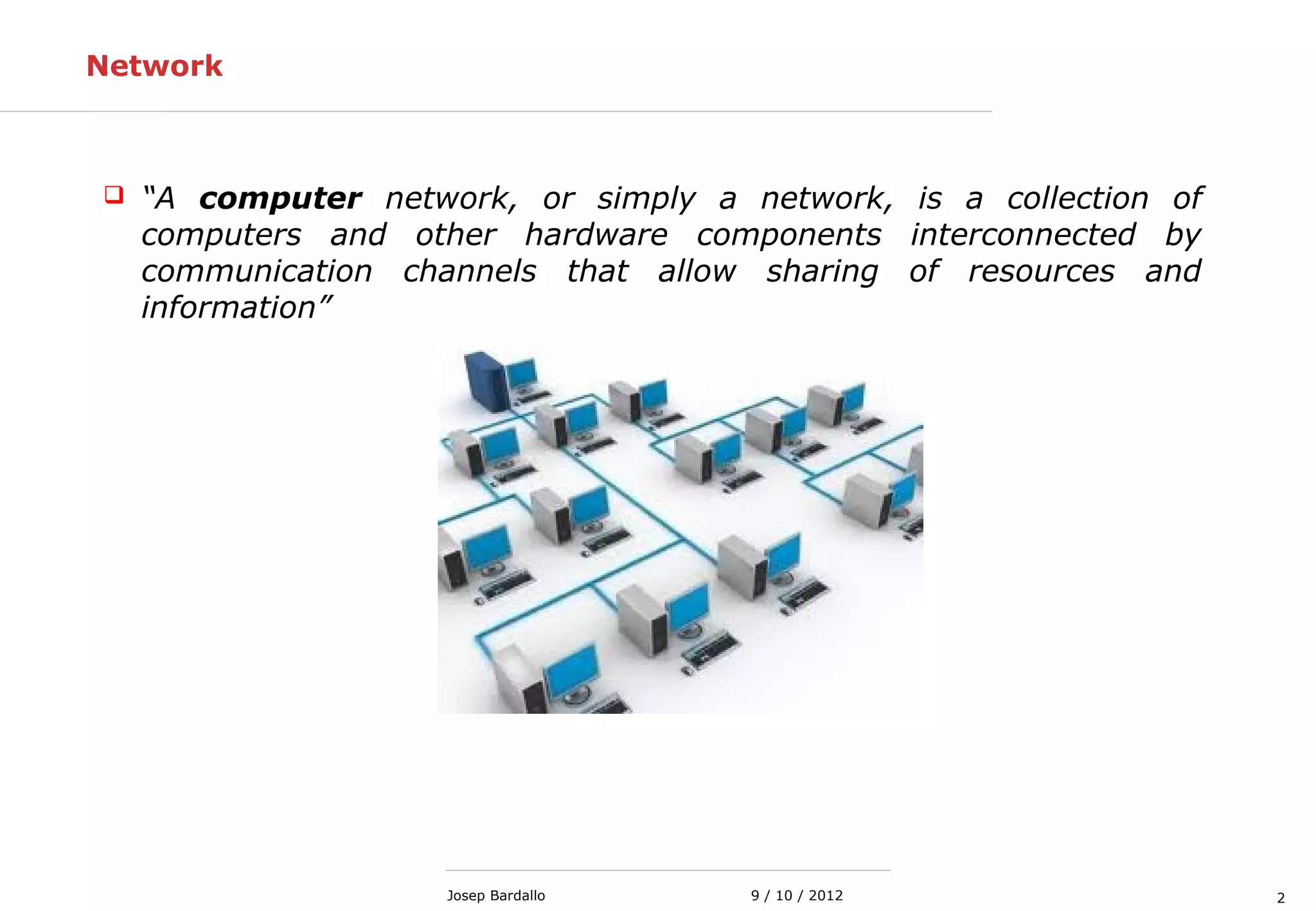
 “A computer network, or simply a network, is a collection of
computers and other hardware components interconnected by
communication channels that allow sharing of resources and
information”
39 / 10 / 2012Josep Bardallo
Network Types. By geographical scope.
 Local Area Networks (LAN)
 Personal Area Networks (PAN)
 Home Area Networks (HAN)
 Wide Area Networks (WAN)
 Campus Networks
 Metropolitan Area Networks (MAN)
 Enterprise Private Networks
 Backbone Networks (BBN)
 Global Area Networks (GAN)
 NFC
 Internet
 ……………
49 / 10 / 2012Josep Bardallo
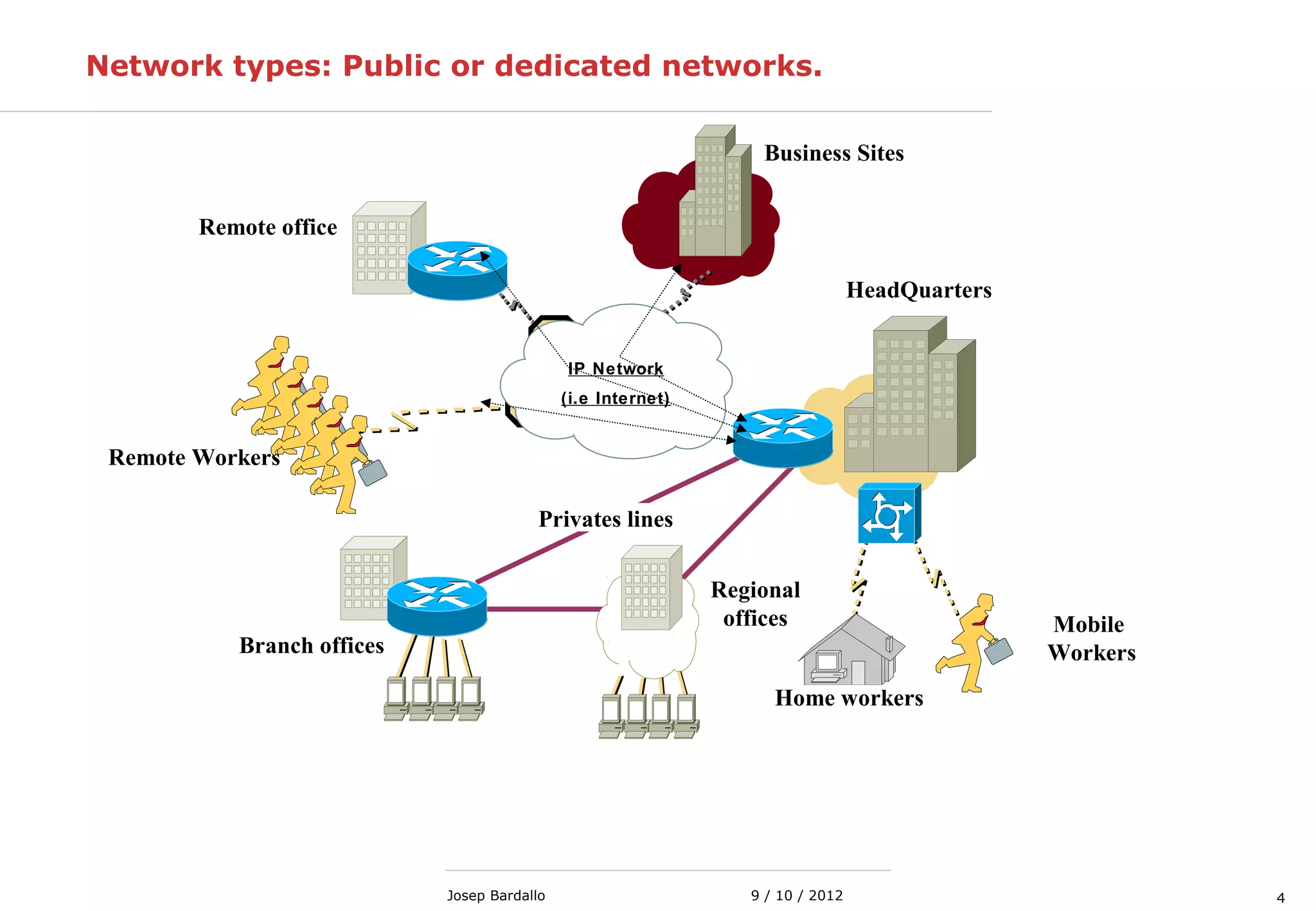
Network types: Public or dedicated networks.
Remote Workers
HeadQuarters
Mobile
Workers
Business Sites
?
Home workers
Regional
offices
Branch offices
Remote office
?
Privates lines
?
IP Network
(i.e Internet)
5
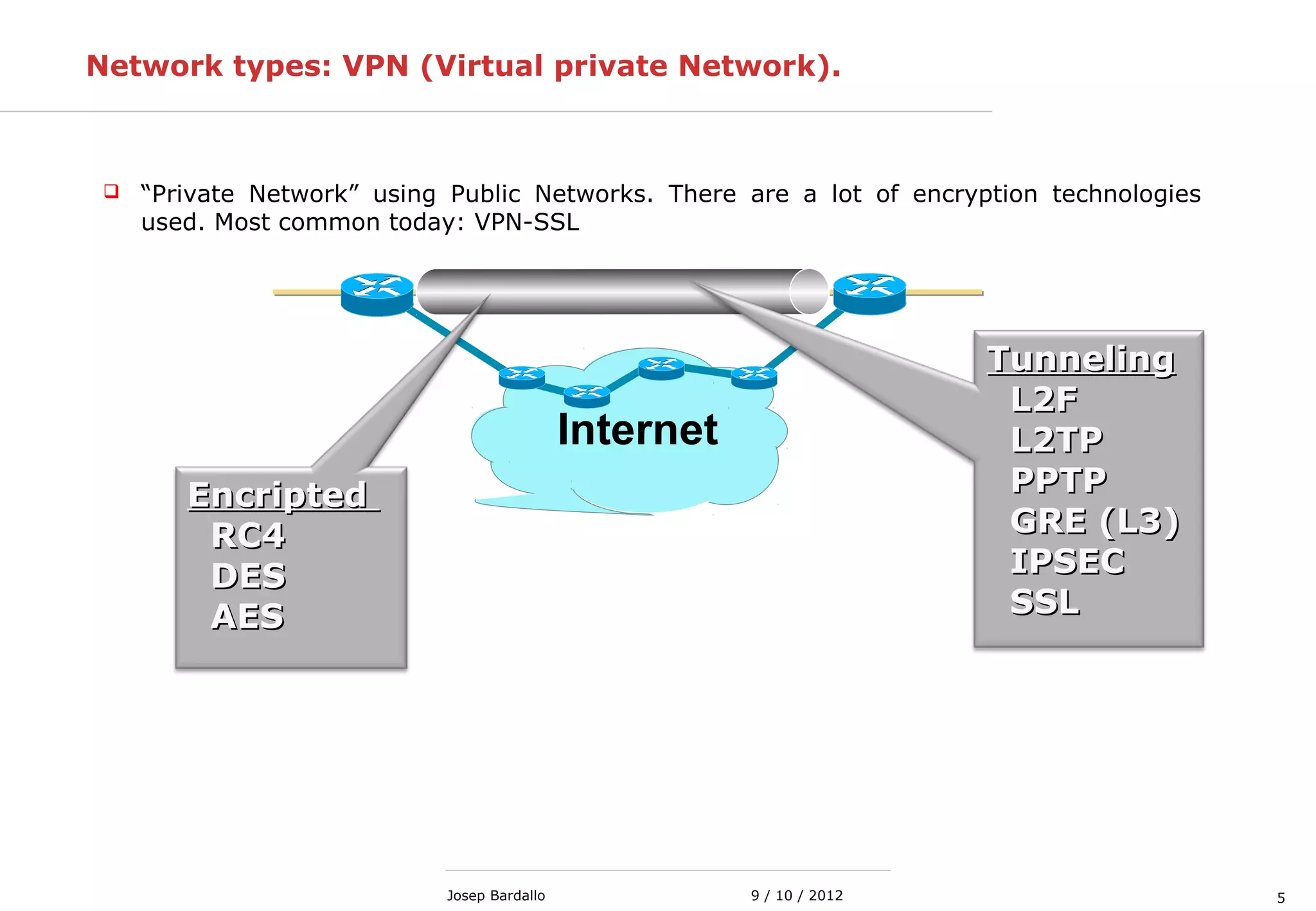
 “Private Network” using Public Networks. There are a lot of encryption technologies
used. Most common today: VPN-SSL
9 / 10 / 2012Josep Bardallo
Network types: VPN (Virtual private Network).
Internet
TunnelingTunneling
L2FL2F
L2TPL2TP
PPTPPPTP
GRE (L3)GRE (L3)
IPSECIPSEC
SSLSSL
EncriptedEncripted
RC4RC4
DESDES
AESAES
69 / 10 / 2012Josep Bardallo
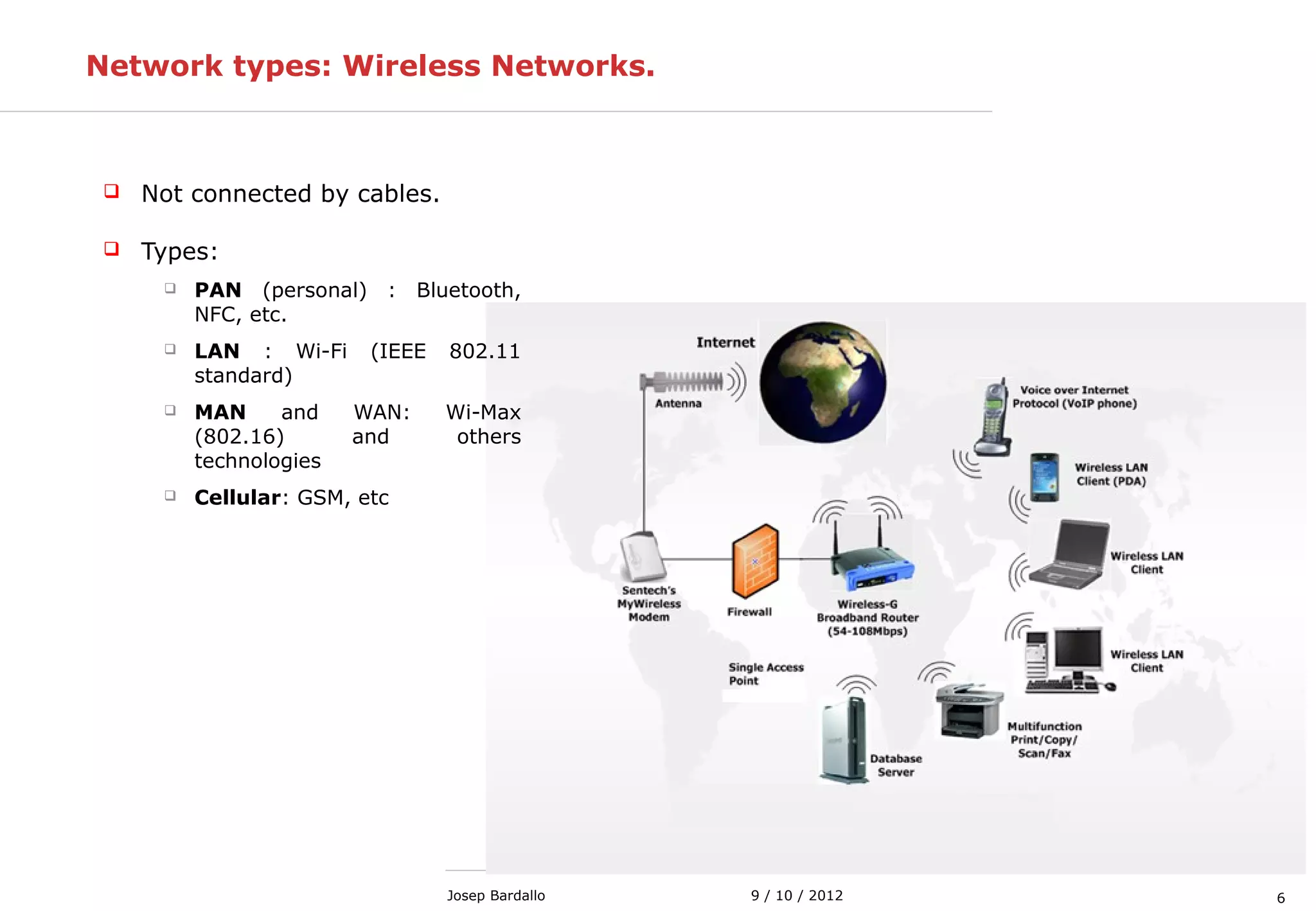
Network types: Wireless Networks.
 Not connected by cables.
 Types:
 PAN (personal) : Bluetooth,
NFC, etc.
 LAN : Wi-Fi (IEEE 802.11
standard)
 MAN and WAN: Wi-Max
(802.16) and others
technologies
 Cellular: GSM, etc
79 / 10 / 2012Josep Bardallo
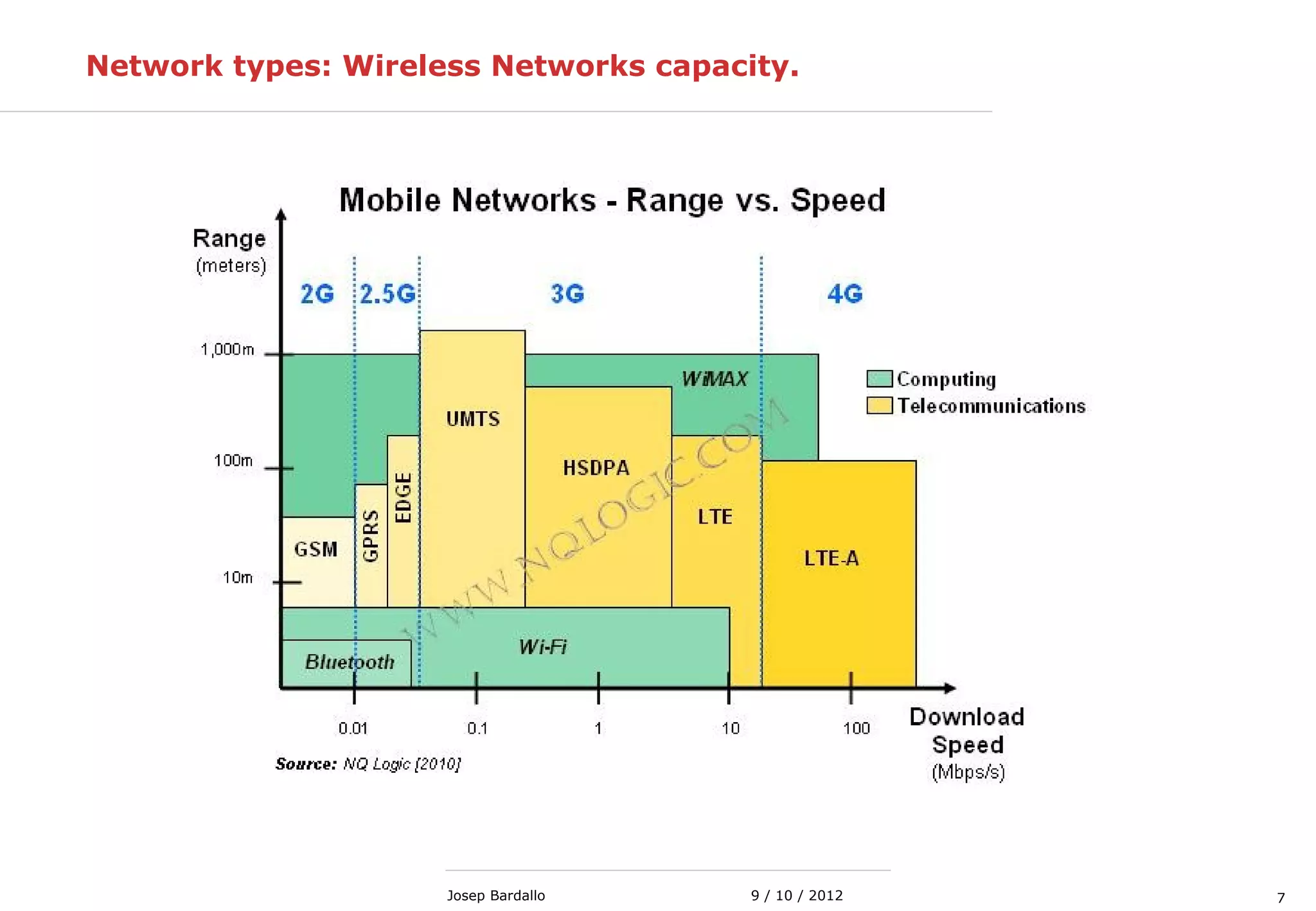
Network types: Wireless Networks capacity.
89 / 10 / 2012Josep Bardallo
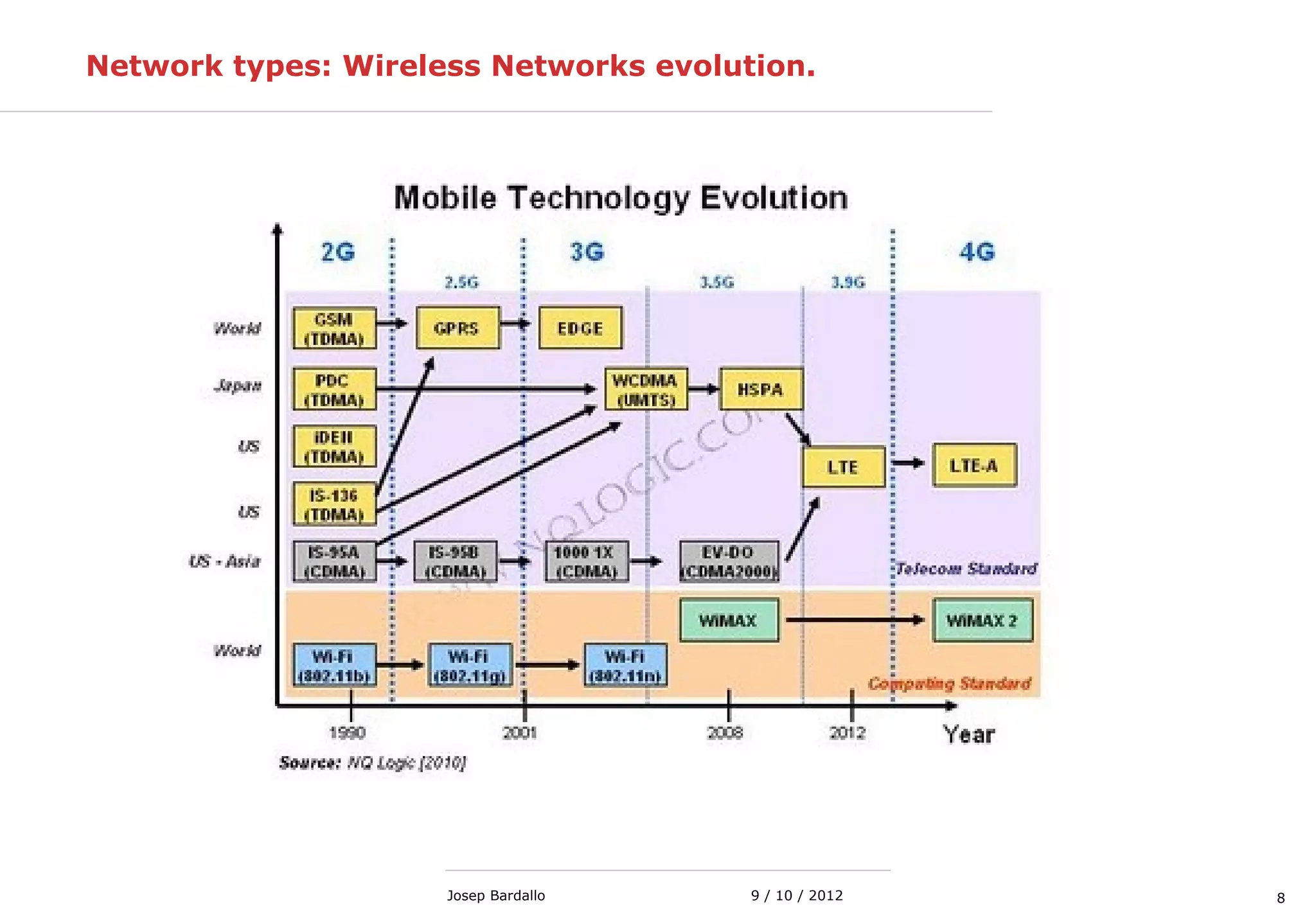
Network types: Wireless Networks evolution.
99 / 10 / 2012Josep Bardallo
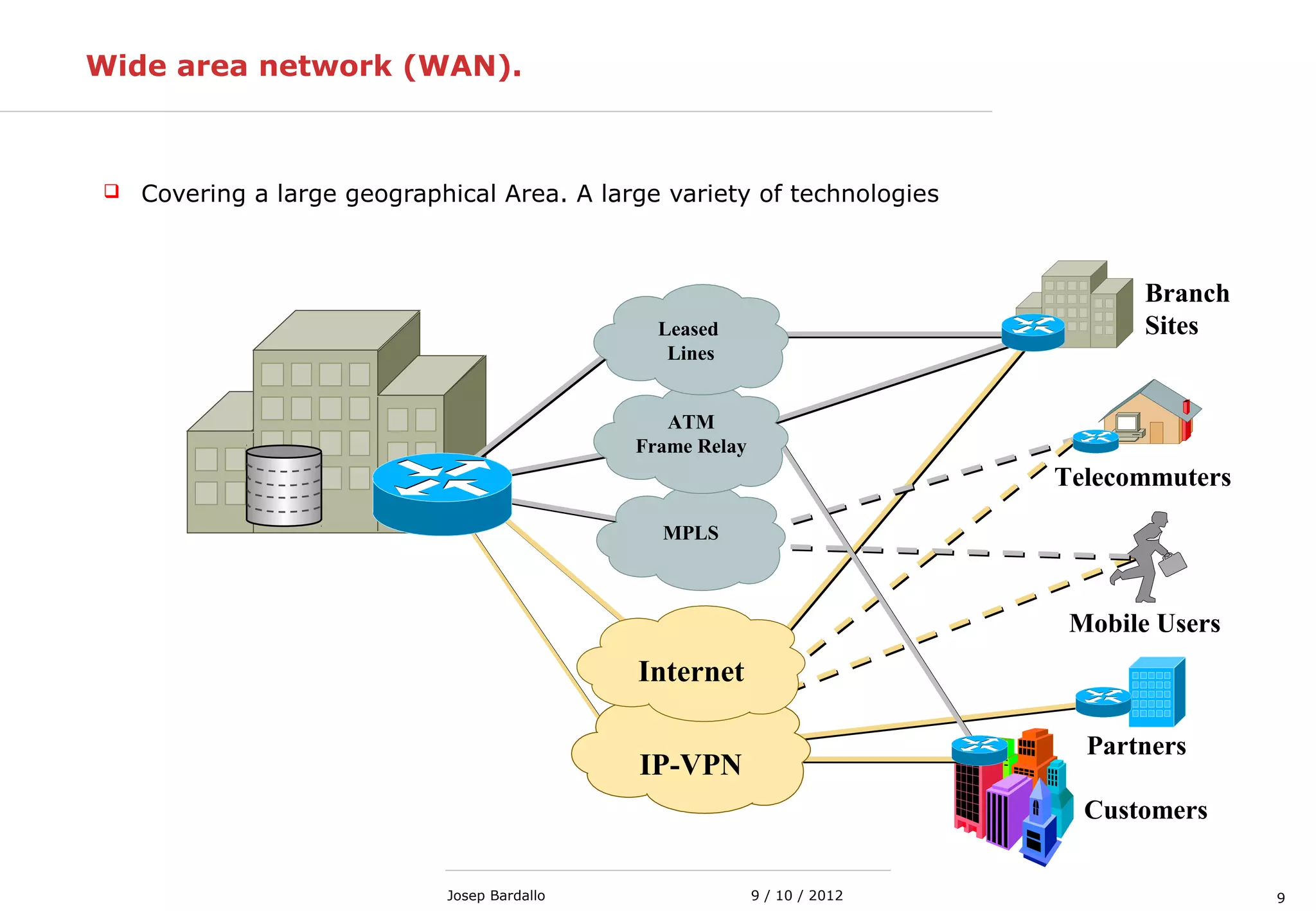
Wide area network (WAN).
 Covering a large geographical Area. A large variety of technologies
Mobile Users
Telecommuters
Branch
Sites
Partners
Customers
MPLS
ATM
Frame Relay
Leased
Lines
IP-VPN
Internet
109 / 10 / 2012Josep Bardallo
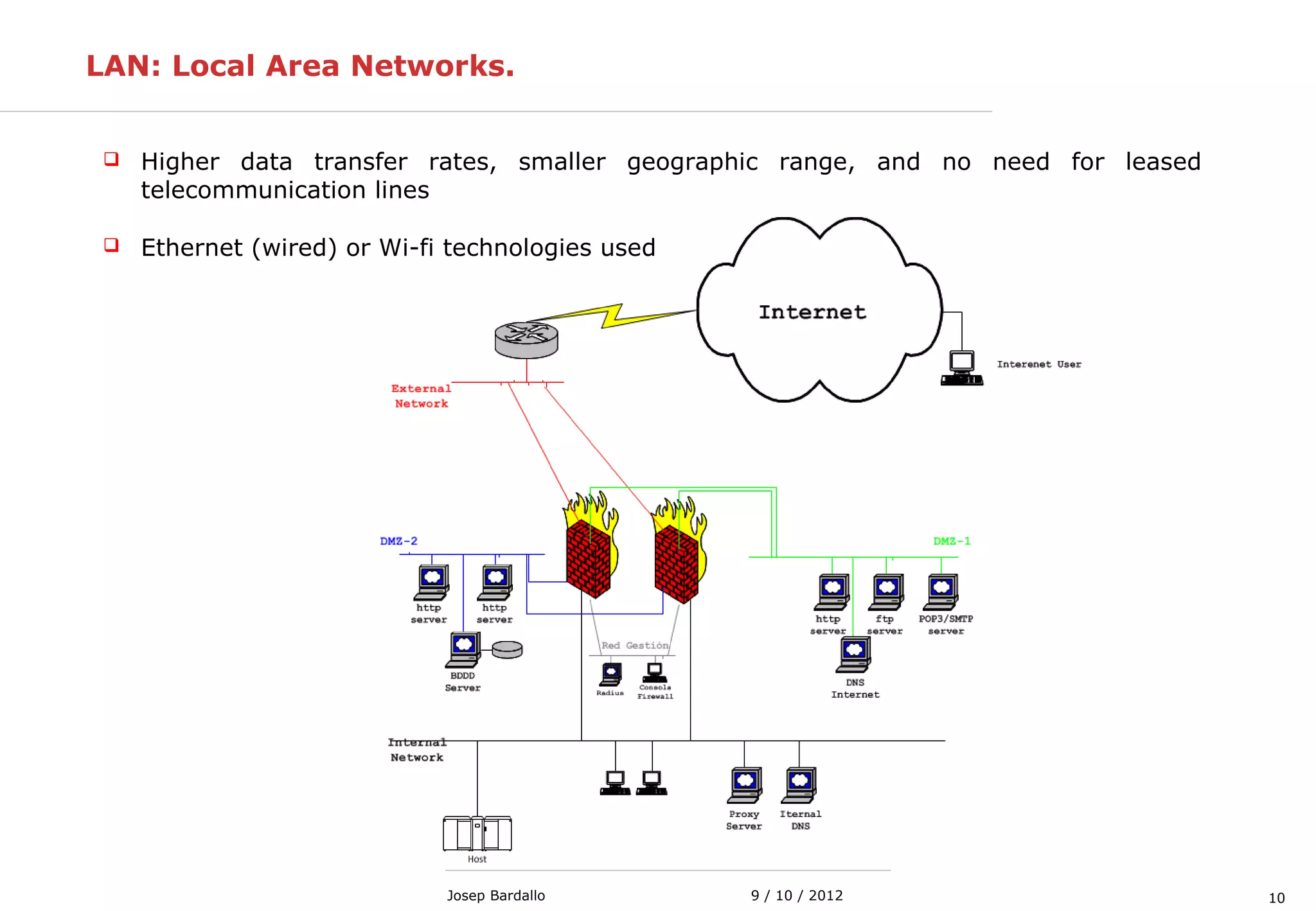
LAN: Local Area Networks.
 Higher data transfer rates, smaller geographic range, and no need for leased
telecommunication lines
 Ethernet (wired) or Wi-fi technologies used
119 / 10 / 2012Josep Bardallo
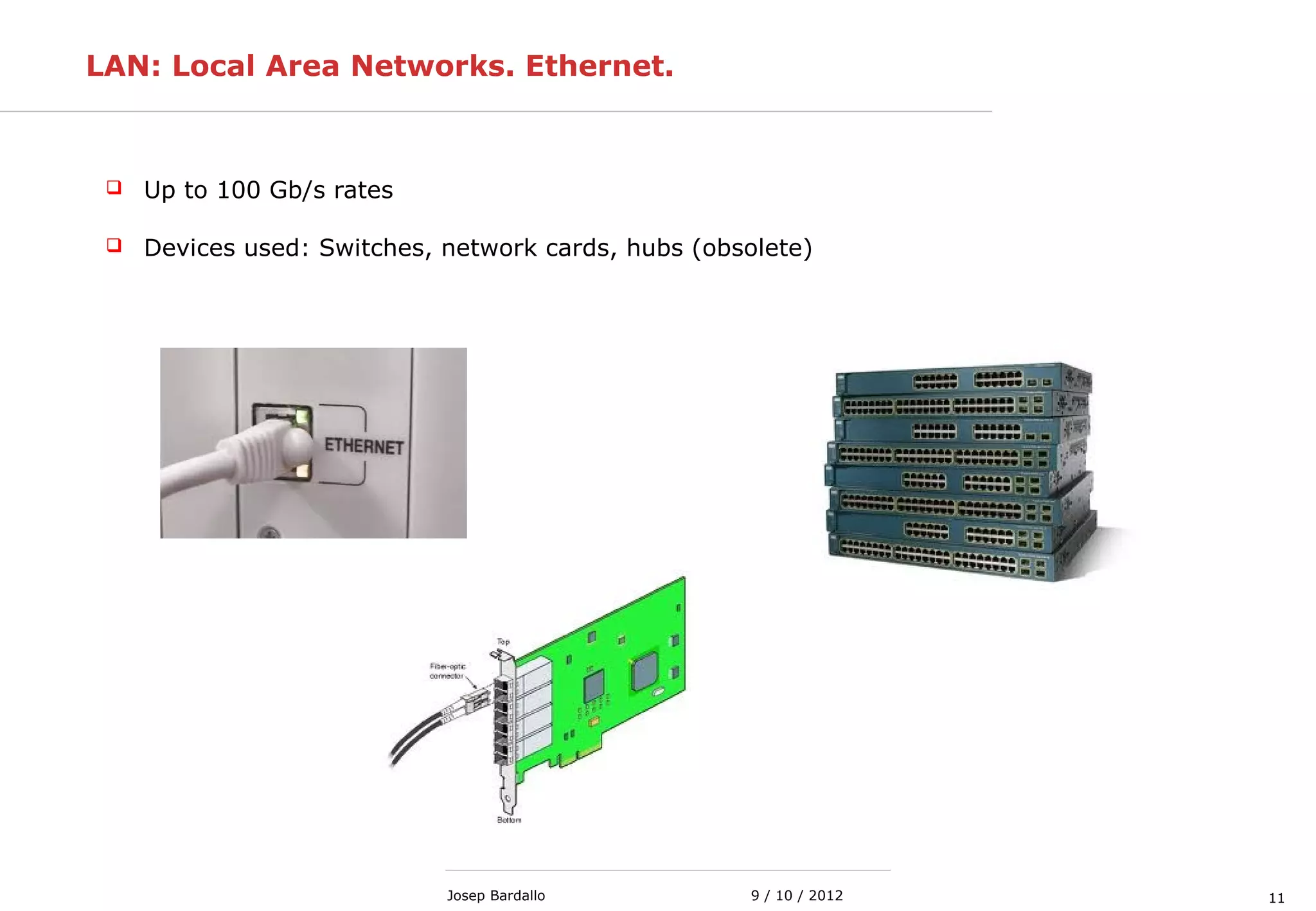
LAN: Local Area Networks. Ethernet.
 Up to 100 Gb/s rates
 Devices used: Switches, network cards, hubs (obsolete)
129 / 10 / 2012Josep Bardallo
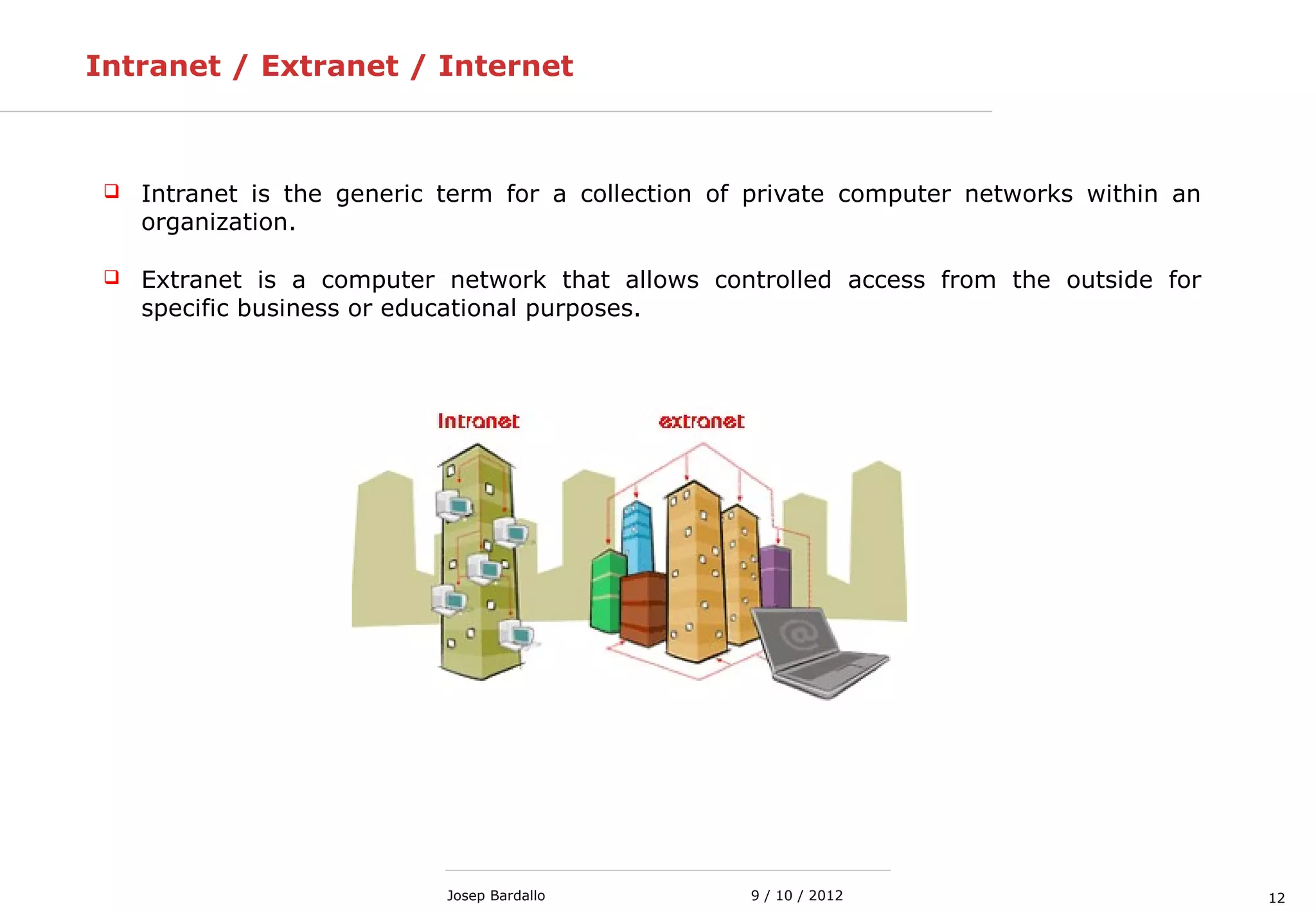
Intranet / Extranet / Internet
 Intranet is the generic term for a collection of private computer networks within an
organization.
 Extranet is a computer network that allows controlled access from the outside for
specific business or educational purposes.
139 / 10 / 2012Josep Bardallo
Internet
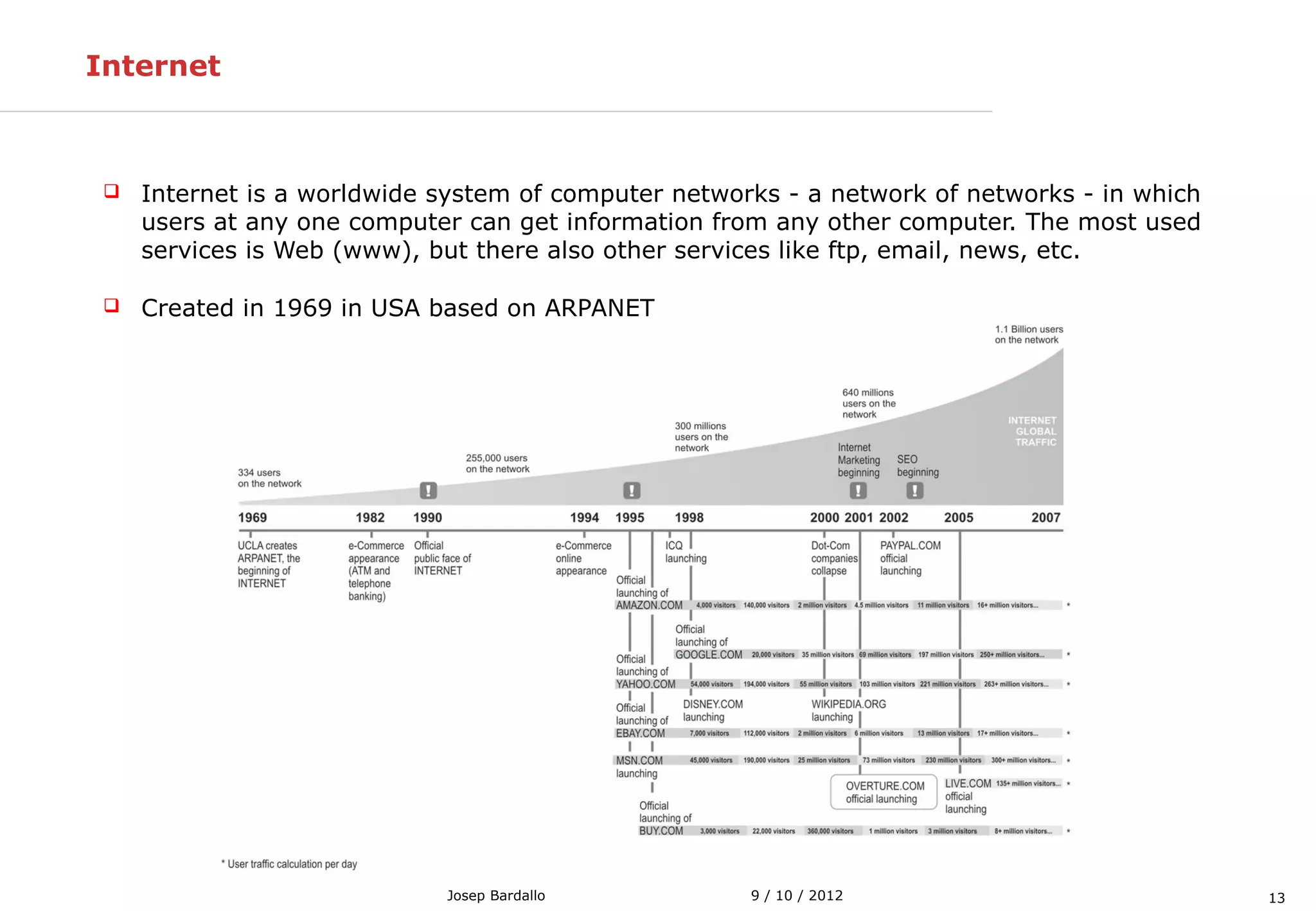
 Internet is a worldwide system of computer networks - a network of networks - in which
users at any one computer can get information from any other computer. The most used
services is Web (www), but there also other services like ftp, email, news, etc.
 Created in 1969 in USA based on ARPANET
149 / 10 / 2012Josep Bardallo
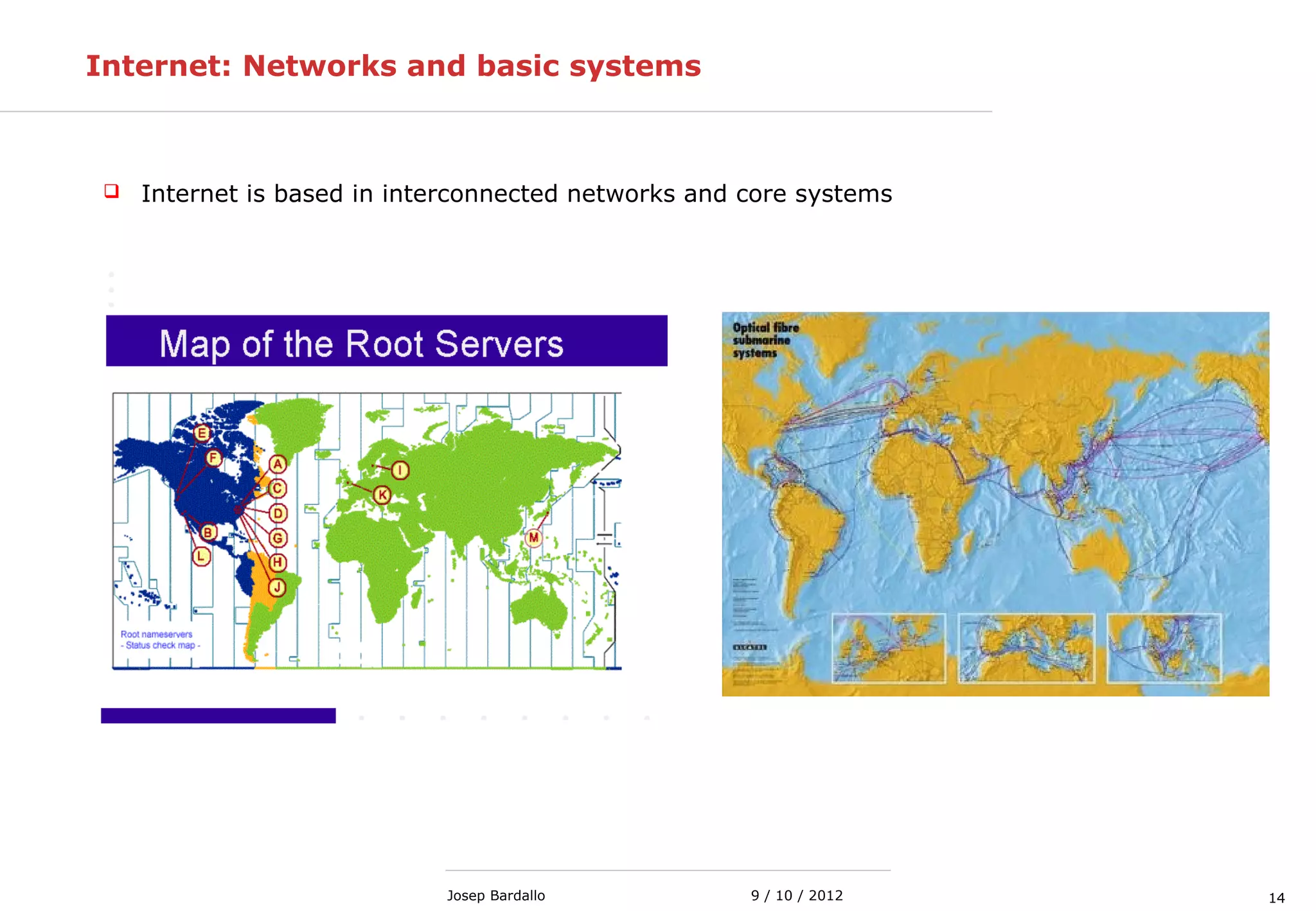
Internet: Networks and basic systems
 Internet is based in interconnected networks and core systems
159 / 10 / 2012Josep Bardallo
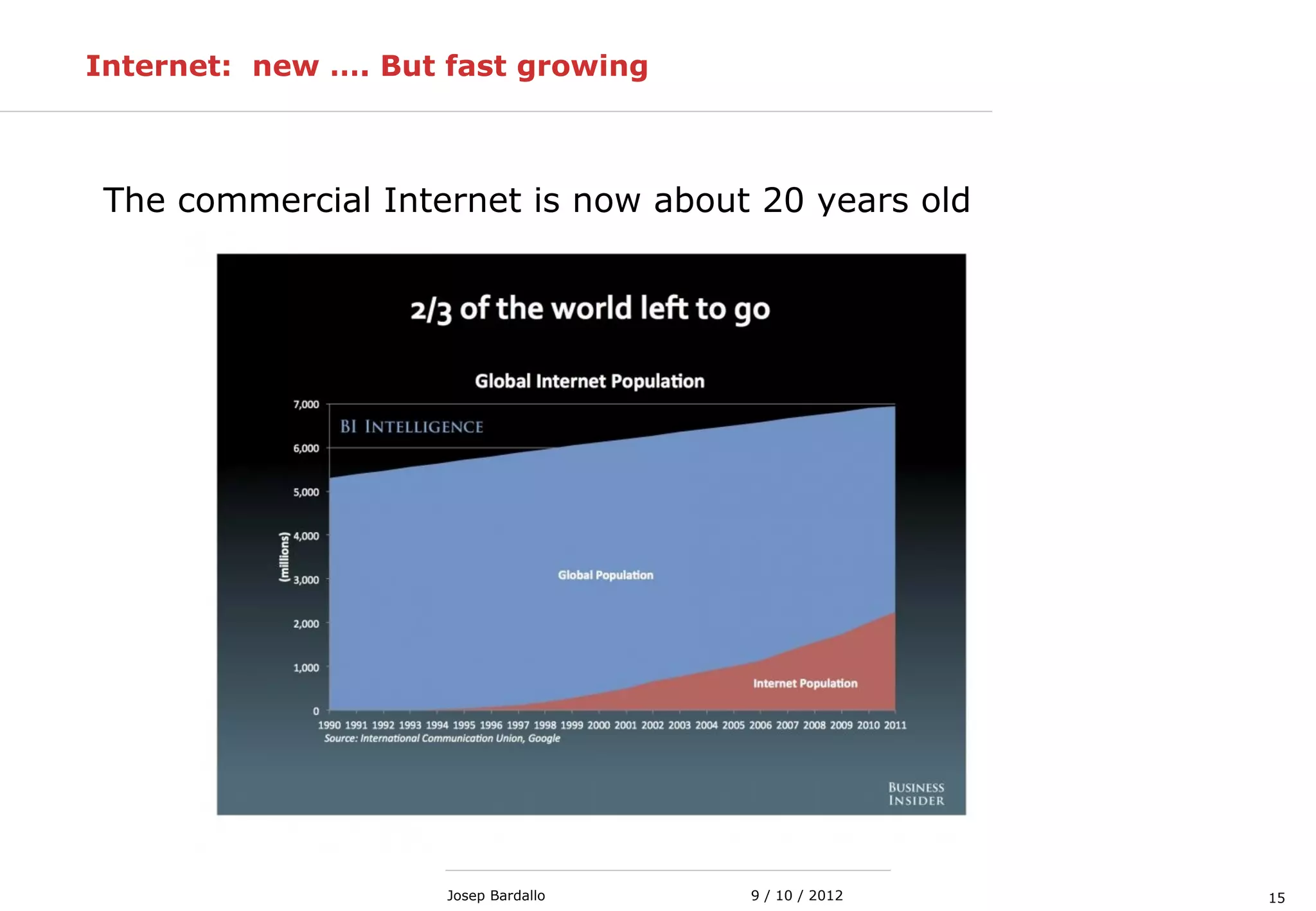
Internet: new …. But fast growing
The commercial Internet is now about 20 years old
169 / 10 / 2012Josep Bardallo
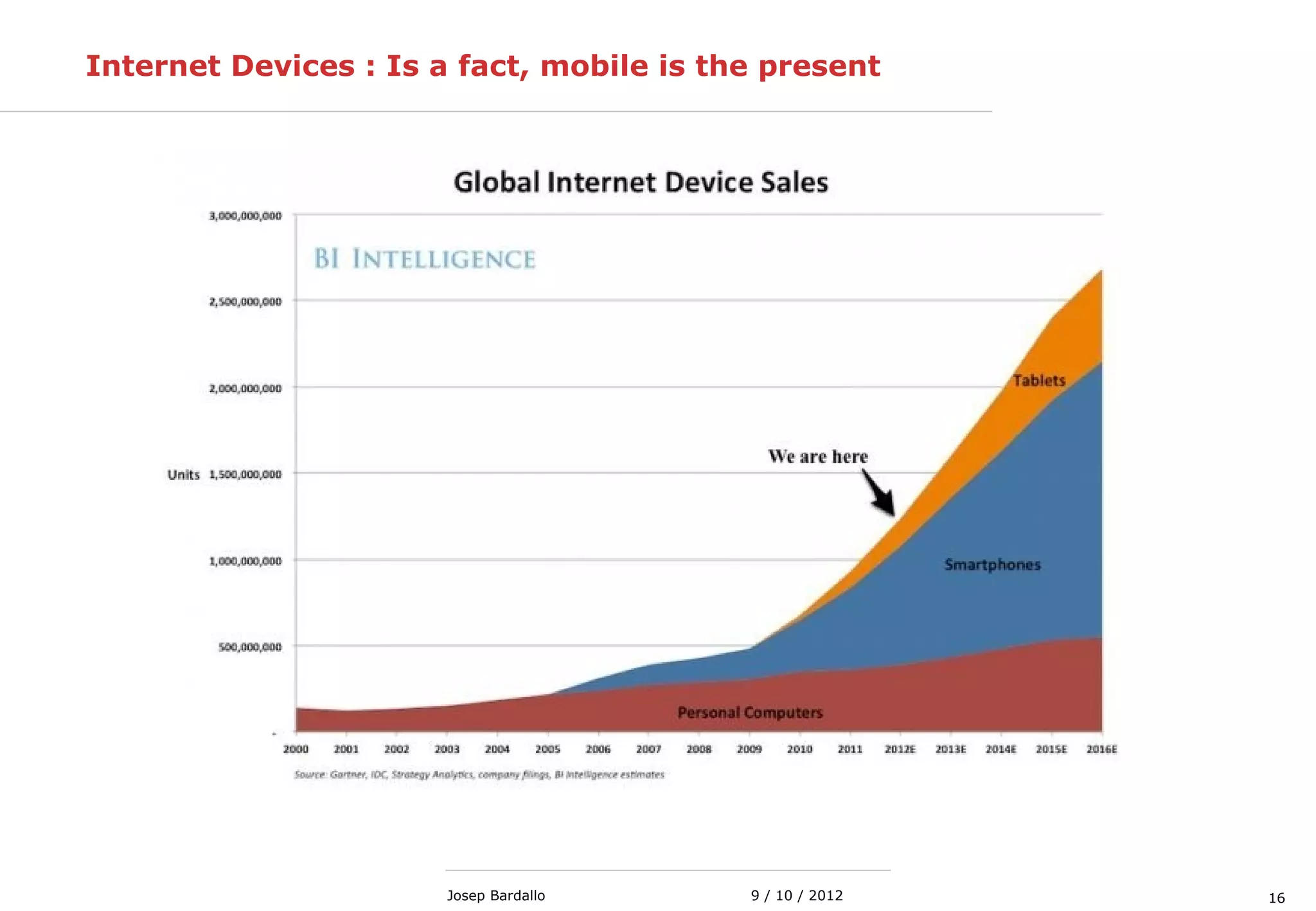
Internet Devices : Is a fact, mobile is the present
179 / 10 / 2012Josep Bardallo
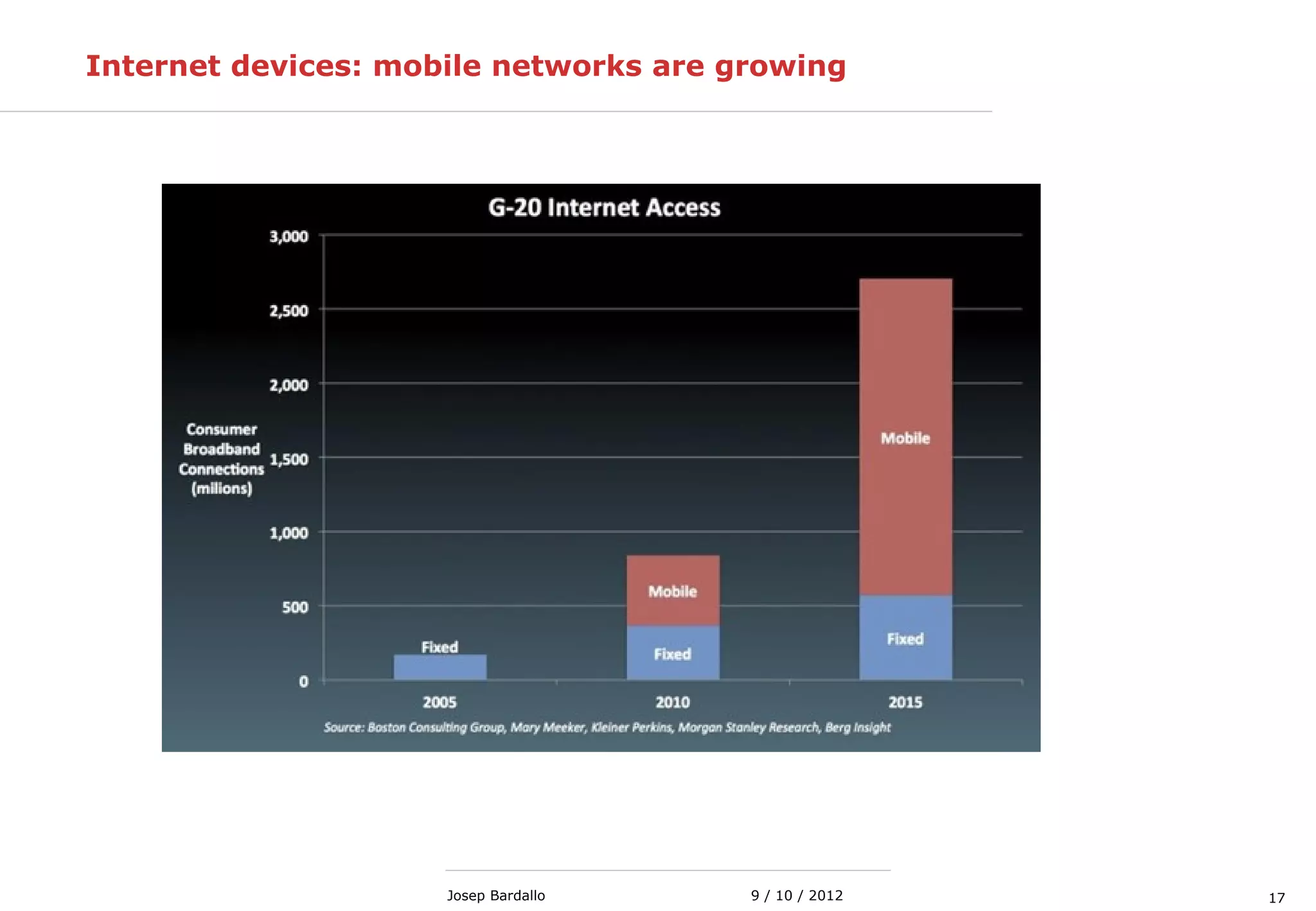
Internet devices: mobile networks are growing
189 / 10 / 2012Josep Bardallo
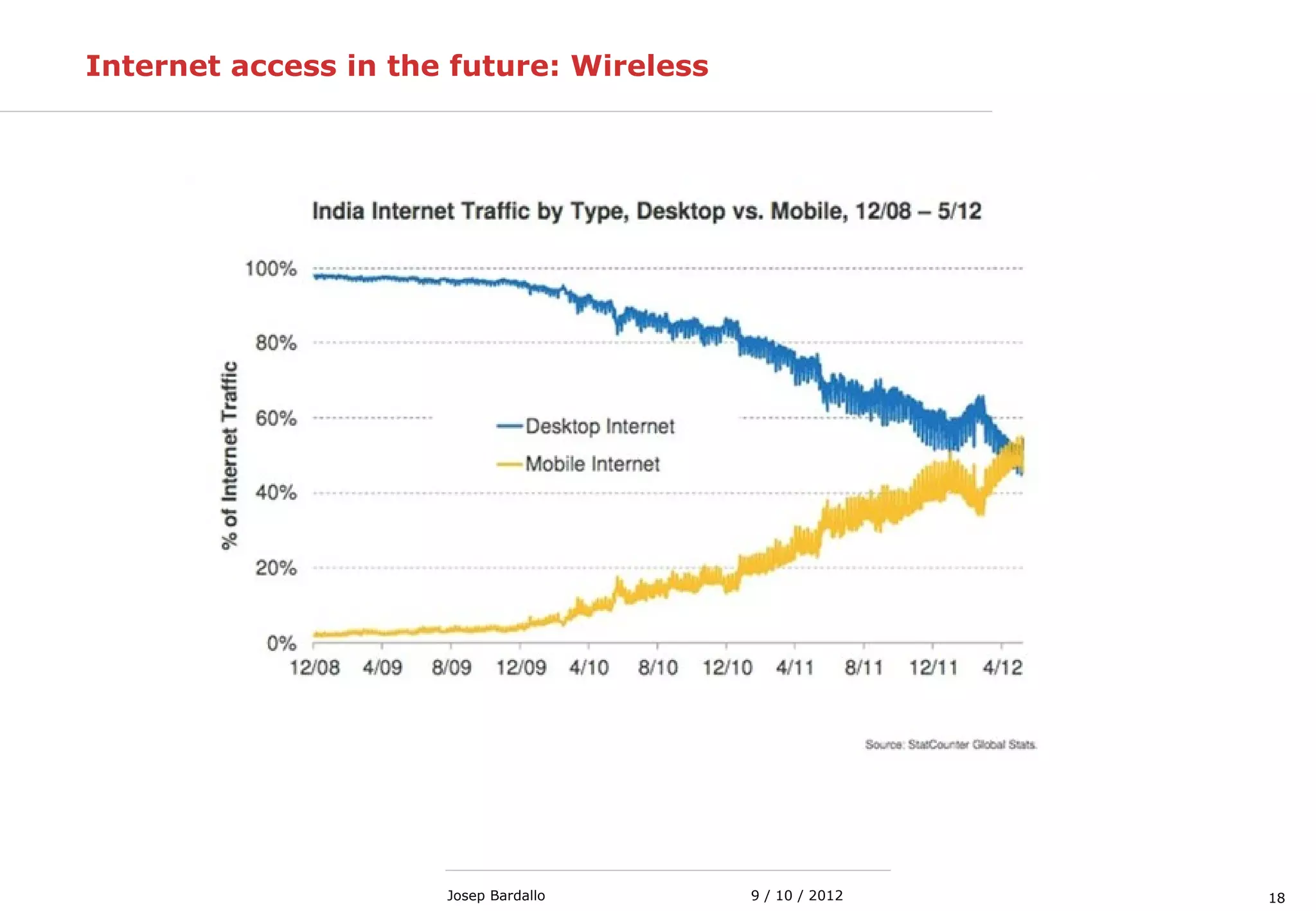
Internet access in the future: Wireless
199 / 10 / 2012Josep Bardallo
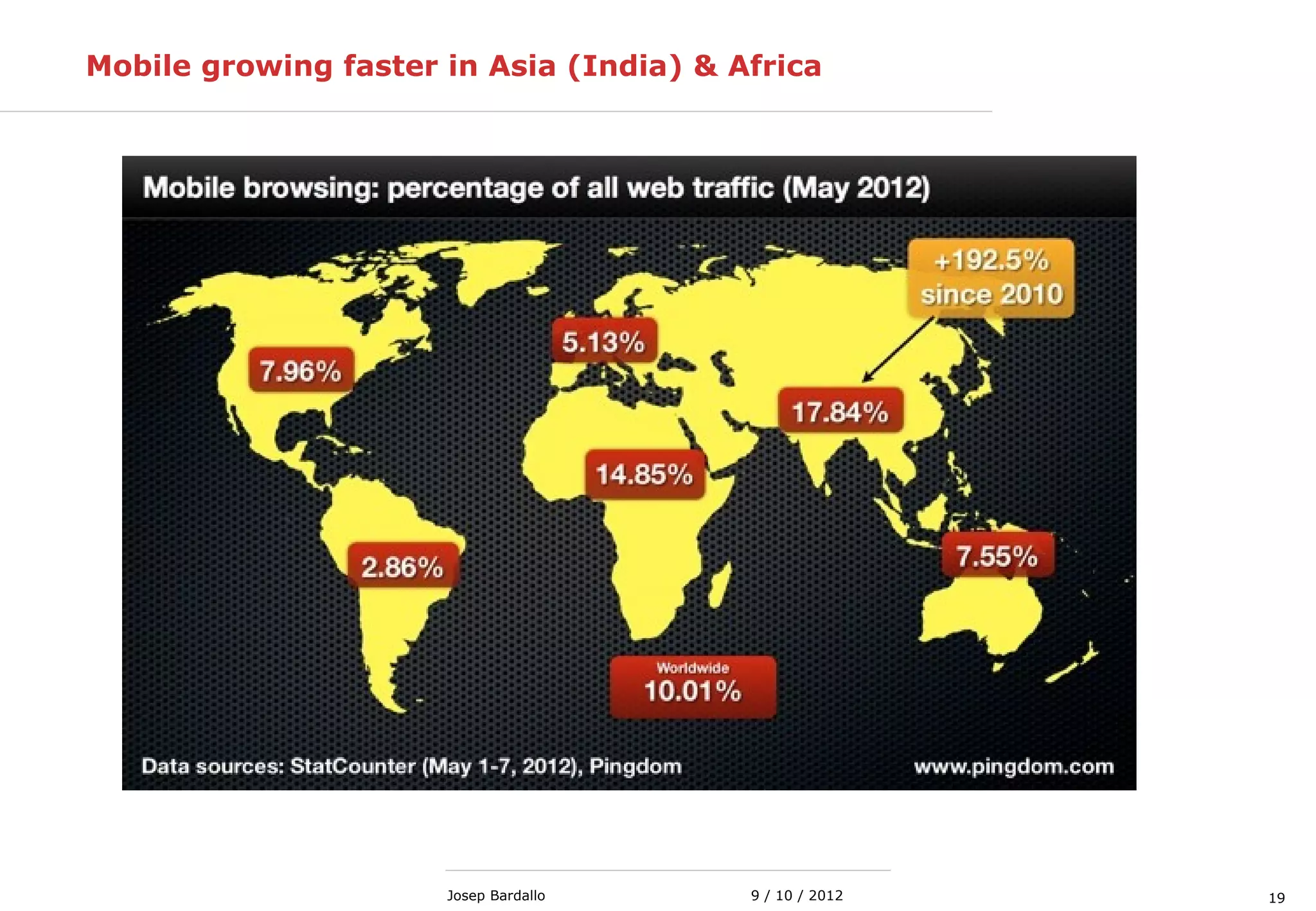
Mobile growing faster in Asia (India) & Africa
209 / 10 / 2012Josep Bardallo
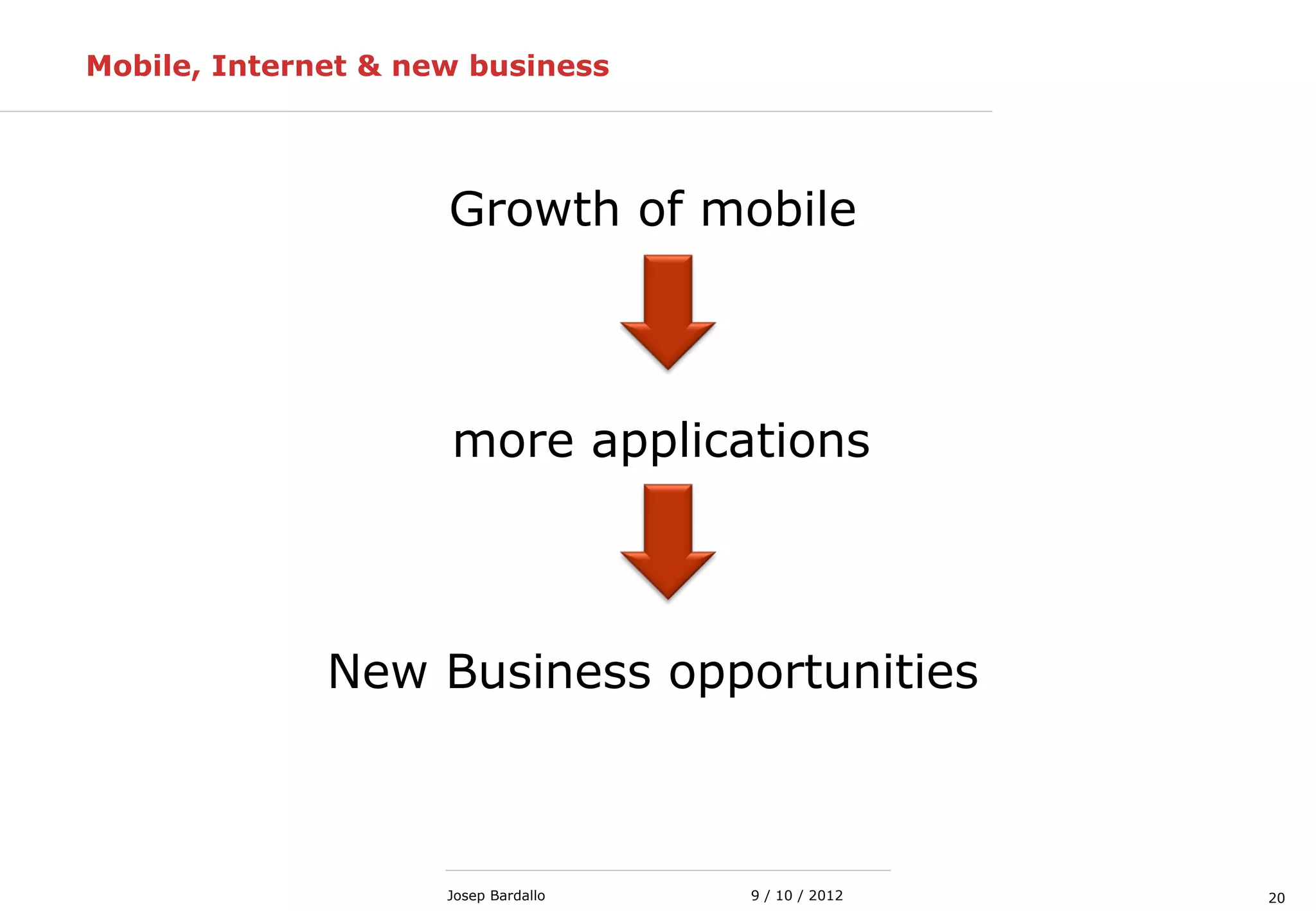
Mobile, Internet & new business
Growth of mobile
more applications
New Business opportunities
219 / 10 / 2012Josep Bardallo
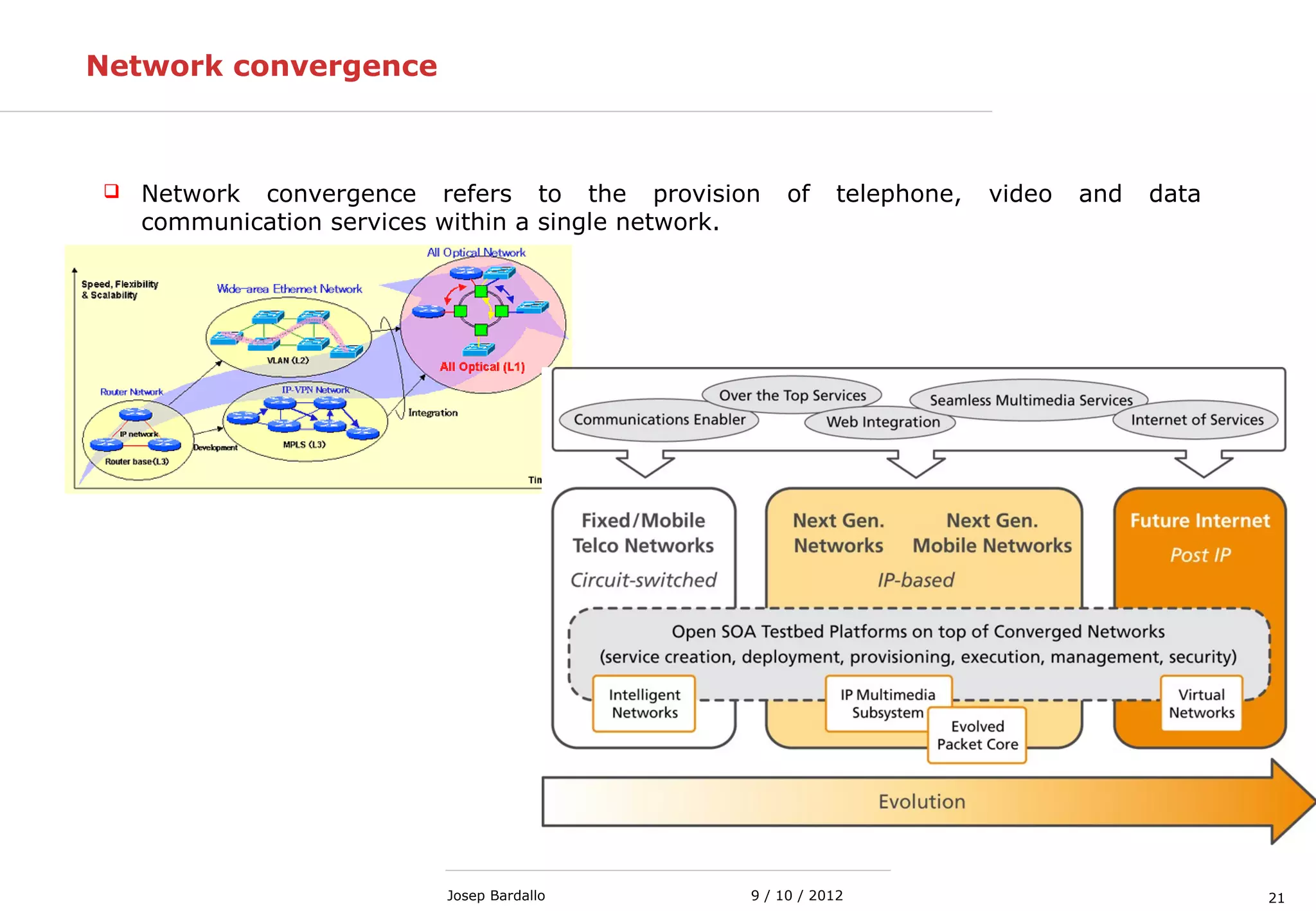
Network convergence
 Network convergence refers to the provision of telephone, video and data
communication services within a single network.

M1 network types & internet

  • 1.
    Introduction Master Class 2 Networktypes & Internet Josep Bardallo - 2012
  • 2.
    29 / 10/ 2012Josep Bardallo Network  “A computer network, or simply a network, is a collection of computers and other hardware components interconnected by communication channels that allow sharing of resources and information”
  • 3.
    39 / 10/ 2012Josep Bardallo Network Types. By geographical scope.  Local Area Networks (LAN)  Personal Area Networks (PAN)  Home Area Networks (HAN)  Wide Area Networks (WAN)  Campus Networks  Metropolitan Area Networks (MAN)  Enterprise Private Networks  Backbone Networks (BBN)  Global Area Networks (GAN)  NFC  Internet  ……………
  • 4.
    49 / 10/ 2012Josep Bardallo Network types: Public or dedicated networks. Remote Workers HeadQuarters Mobile Workers Business Sites ? Home workers Regional offices Branch offices Remote office ? Privates lines ? IP Network (i.e Internet)
  • 5.
    5  “Private Network”using Public Networks. There are a lot of encryption technologies used. Most common today: VPN-SSL 9 / 10 / 2012Josep Bardallo Network types: VPN (Virtual private Network). Internet TunnelingTunneling L2FL2F L2TPL2TP PPTPPPTP GRE (L3)GRE (L3) IPSECIPSEC SSLSSL EncriptedEncripted RC4RC4 DESDES AESAES
  • 6.
    69 / 10/ 2012Josep Bardallo Network types: Wireless Networks.  Not connected by cables.  Types:  PAN (personal) : Bluetooth, NFC, etc.  LAN : Wi-Fi (IEEE 802.11 standard)  MAN and WAN: Wi-Max (802.16) and others technologies  Cellular: GSM, etc
  • 7.
    79 / 10/ 2012Josep Bardallo Network types: Wireless Networks capacity.
  • 8.
    89 / 10/ 2012Josep Bardallo Network types: Wireless Networks evolution.
  • 9.
    99 / 10/ 2012Josep Bardallo Wide area network (WAN).  Covering a large geographical Area. A large variety of technologies Mobile Users Telecommuters Branch Sites Partners Customers MPLS ATM Frame Relay Leased Lines IP-VPN Internet
  • 10.
    109 / 10/ 2012Josep Bardallo LAN: Local Area Networks.  Higher data transfer rates, smaller geographic range, and no need for leased telecommunication lines  Ethernet (wired) or Wi-fi technologies used
  • 11.
    119 / 10/ 2012Josep Bardallo LAN: Local Area Networks. Ethernet.  Up to 100 Gb/s rates  Devices used: Switches, network cards, hubs (obsolete)
  • 12.
    129 / 10/ 2012Josep Bardallo Intranet / Extranet / Internet  Intranet is the generic term for a collection of private computer networks within an organization.  Extranet is a computer network that allows controlled access from the outside for specific business or educational purposes.
  • 13.
    139 / 10/ 2012Josep Bardallo Internet  Internet is a worldwide system of computer networks - a network of networks - in which users at any one computer can get information from any other computer. The most used services is Web (www), but there also other services like ftp, email, news, etc.  Created in 1969 in USA based on ARPANET
  • 14.
    149 / 10/ 2012Josep Bardallo Internet: Networks and basic systems  Internet is based in interconnected networks and core systems
  • 15.
    159 / 10/ 2012Josep Bardallo Internet: new …. But fast growing The commercial Internet is now about 20 years old
  • 16.
    169 / 10/ 2012Josep Bardallo Internet Devices : Is a fact, mobile is the present
  • 17.
    179 / 10/ 2012Josep Bardallo Internet devices: mobile networks are growing
  • 18.
    189 / 10/ 2012Josep Bardallo Internet access in the future: Wireless
  • 19.
    199 / 10/ 2012Josep Bardallo Mobile growing faster in Asia (India) & Africa
  • 20.
    209 / 10/ 2012Josep Bardallo Mobile, Internet & new business Growth of mobile more applications New Business opportunities
  • 21.
    219 / 10/ 2012Josep Bardallo Network convergence  Network convergence refers to the provision of telephone, video and data communication services within a single network.