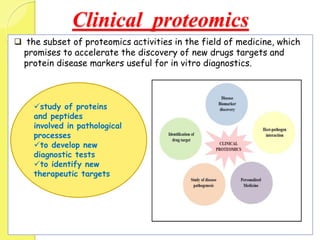
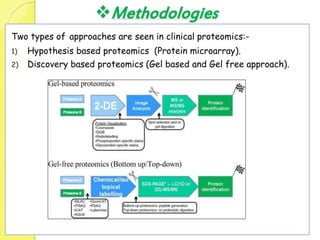
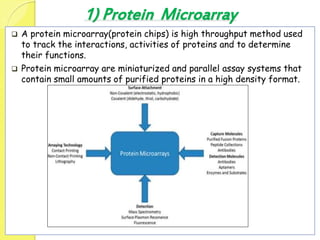
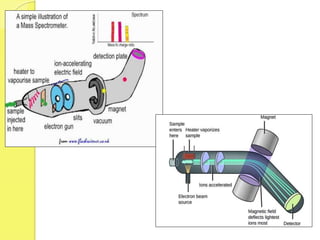
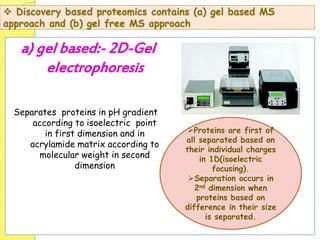
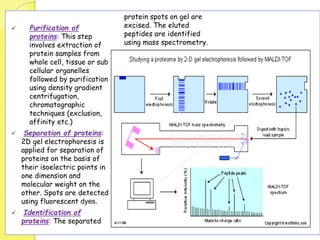
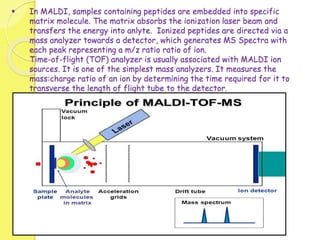
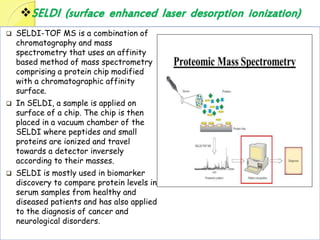
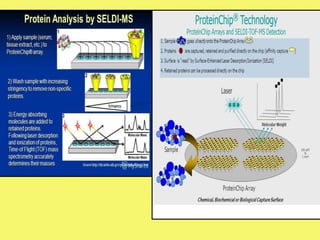
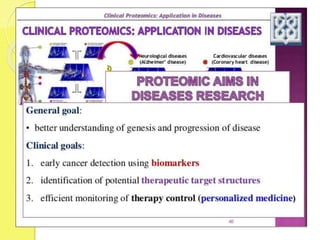
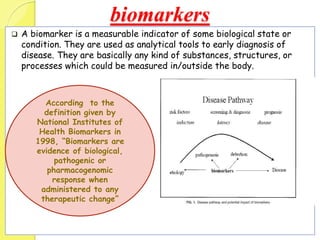
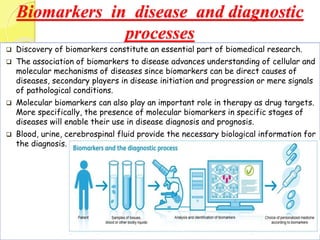
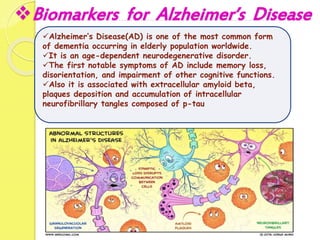
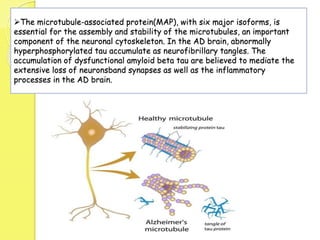
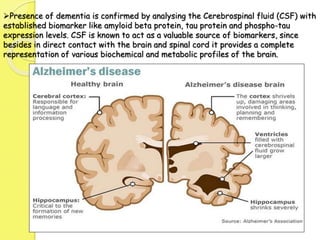
Clinical proteomics involves the large-scale study of proteins to better understand disease variability and identify new disease biomarkers and drug targets. There are two main approaches - hypothesis-based proteomics using protein microarrays, and discovery-based proteomics using gel-based or gel-free mass spectrometry techniques. Mass spectrometry allows identification of disease-associated changes in protein expression which can serve as biomarkers. Ideal biomarkers are sensitive, specific, accurate and cost-effective for diagnosing or monitoring diseases like Alzheimer's, cancer, and predicting disease progression or treatment response.









![Polymer [ बहुलक ] Chemistry Notes PDF - Irfanullah Mehar - JJ Sir Chemistry.pdf](https://cdn.slidesharecdn.com/ss_thumbnails/polymerchemistrynotespdf-irfanullahmehar-jjsirchemistry-260210172118-3f9b37f7-thumbnail.jpg?width=640&height=640&fit=bounds)


