A R N Rao et al Int. Journal of Engineering Research and Applications
ISSN : 2248-9622, Vol. 3, Issue 6, Nov-Dec 2013, pp.2053-2059

RESEARCH ARTICLE

www.ijera.com

OPEN ACCESS

Three-Phase Nine-Level Inverter for Photovoltaic System with
Induction Motor
A R Neelakanteswara Rao1, T Nagadurga2
1
2

M.TECH Scholar, Dept of EEE, GEC Gudlavalleru, AP, India
Assistant Professor, Dept. of EEE, GEC Gudlavalleru, AP, India

Abstract
Electrical power play a vital rule in 21th century, but non-conventional sources scale down day by day. Not only
that concern for the environmental pollution around the world, so now a day’s photovoltaic (PV) power systems
are getting more and more widespread with the increase in the energy demand. This paper proposed a three
phase nine level inverter with voltage control method using semiconductor power devices for three phase
induction motor in order to achieve a smooth, continuous and low total harmonics distortion (THD) waveforms.
The proposed inverter system gives better voltage regulation, smooth results and efficiency compared to multilevel inverters. The inverter is capable of producing nine levels of output voltage levels (Vdc, 3Vdc/4,Vdc/2,
Vdc/4, 0, -Vdc/4, -Vdc/2, -3Vdc/4, -Vdc) The proposed inverter was verified by using simulation of
MATLAB/SIMULINK software.
Index terms: Photovoltaic (PV) system, multi-level inverter, semiconductor power devices, THD, induction
motor.

I.

Introduction

As the world is concerned with the fossil fuel
exhaustion and environmental problem caused by
conventional power generation, particularly solar have
become very popular and demanding. PV sources are
used in many applications because they have
advantage of being maintenance and pollution free. It
is used to convert the dc power from solar module to
ac power to feed into load.
The proposed three phase nine level inverter
is very suitable to PV module with induction motor
load, because of compare to common three phase
multi-level inverter have high switching, but it could
also unfortunately increase switching losses, acoustic
noise, and level of interference to other equipment.
Improving its output waveform reduces its harmonic
content and, hence, also the size of the filter used and
the level of electromagnetic interference (EMI)
generated by the inverter’s switching operation.
This paper developed a modified H-bridge
single-phase multilevel inverter that has two diode
embedded bidirectional switches. Coming to three
phase proposed inverter required 21 switches
(IGBT’s) and six diode embedded bidirectional
switches, but in common three phase multi-level
inverter required 48 switches (IGBT’s). So this
topology have reduces a switching loss and high
efficiency. A boost converter (step-up DC-DC) used
in paper for high voltage before proposed inverter; this
topology was applied to three phase asynchronous
machine photovoltaic system with considerations for
voltage control pulse generator.

www.ijera.com

II.

Photovoltaic System (PV)

A solar cell basically is a p-n semiconductor
junction. When exposed to light, a current
proportional to solar irradiance is generated. Standard
simulation tools utilize the approximate diode
equivalent circuit shown in Fig. 1 in order to simulate
all electric circuits that contain diode. The circuit
consists of Ron in series with voltage source Von. PVs
generate electric power when illuminated by sunlight
or artificial light, the absorption of photons of energy
greater than the band-gap energy of the semiconductor
promotes electrons from the valence band to the
conduction band, creating hole-electron pairs
throughout the illuminated part of the semiconductor.
These electrons and holes pairs will flow in opposite
directions across the junction thereby creating DC
power.

Figure 1: circuit model of PV cell.
2.1 Mathematical Model:
The equation [1] & [2] that are used to solve
the mathematical model of the solar cell based on
simple equivalent circuit shown in Fig. 1, are given
below;

2053 | P a g e
A R N Rao et al Int. Journal of Engineering Research and Applications
ISSN : 2248-9622, Vol. 3, Issue 6, Nov-Dec 2013, pp.2053-2059
𝐼𝐷 = 𝐼𝑂 𝑒

𝑞 (𝑉+𝐼𝑅 𝑠 )
𝐾𝑇

𝐼 = 𝐼𝐿 − 𝐼 𝑂 𝑒

−1

𝑞 (𝑉 +𝐼𝑅 𝑠 )
𝐾𝑇

−1 −

-(1)
(𝑉+𝐼𝑅 𝑠 )
𝑅 𝑠ℎ

-(2)

www.ijera.com

by 6n+1 and voltage step of each level is given by
Vdc/4n. Where n is number of H-bridges connected in
cascaded, the switching table of Hybrid H-Bridge is
given in Table 3.

Where:
I is the cell current in (A).
q is the charge of electron = 1.6x10⁻¹⁹ (coul).
K is the Boltzmann constant (j/K).
T is the cell temperature (K).
𝐼 𝐿 is the light generated current (A).
𝐼 𝑂 is the diode saturation current.
𝑅 𝑠 , 𝑅 𝑠ℎ are cell series and shunt resistance (ohms).
V is the cell output voltage (V).
Figure 3: Single-phase proposed seven- level inverter
with open loop.

Table 1: pv module characterstics.

Table 3: Output Voltages according to switches on-off
conditions.

2.2 Comparison of Full H-Bridge and Hybrid
Bridge inverter

H-

2.2.1 Full H-Bridge
Fig.2 shows the Full H-Bridge Configuration.
By using single H-Bridge we can get three voltage
levels. The number output voltage levels of cascaded
Full H-Bridge are given by 2n+1 and voltage step of
each level is given by Vdc/n. Where n is number of Hbridges connected in cascaded, the switching table is
given in Table 2.
In full H-bridge inverter used four switches
for three levels and hybrid H-bridge inverter used six
switches for seven levels, so in hybrid inverter number
of switches reduces in order to reduces switching loss.

Figure 2: Full H-Bridge.
Table 2: Switching table for Full H-Bridge.

2.2.2 Hybrid H-Bridge
Figure 3, shows the Hybrid H-Bridge
configuration. By using single Hybrid H-Bridge we
can get seven voltage levels. The number output
voltage levels of cascaded Hybrid H-Bridge are given
www.ijera.com

2.3 PWM modulation
A novel PWM modulation technique was
introduced to Generate the PWM switching signals.
Three reference signals (Vref1, Vref2, and Vref3) were
compared with a carrier signal (Vcarrier). The
reference signals had the same frequency and
amplitude and were in phase with an offset value that
was equivalent to the amplitude of the carrier signal.
The reference signals were each compared with the
carrier signal. If Vref1 had exceeded the peak
amplitude of Vcarrier, Vref2 was compared with
Vcarrier until it had exceeded the peak amplitude of
Vcarrier. Then, onward, Vref3 would take charge and
would be compared with Vcarrier until it reached zero.
Once Vref3 had reached zero, Vref2 would be
compared until it reached zero. Then, onward, Vref1
would be compared with Vcarrier. The resulting
switching pattern. Switches S1, S3, S5, and S6 would
be switching at the rate of the carrier signal frequency,
whereas S2 and S4 would operate at a frequency that
2054 | P a g e
A R N Rao et al Int. Journal of Engineering Research and Applications
ISSN : 2248-9622, Vol. 3, Issue 6, Nov-Dec 2013, pp.2053-2059
was equivalent to the fundamental frequency. For one
cycle of the fundamental frequency, the proposed
inverter operated through six modes. The per unit
output-voltage signal for one cycle.

www.ijera.com

change of the duty cycle changes the voltage at the
output of the PV panels. A PID controller was
implemented to keep the output voltage of the dc–dc
boost converter (Vdc) constant by comparing Vdc and
Vdc ref and feeding the error into the PID controller,
which subsequently tries to reduce the error. In this
way, the Vdc can be maintained.

Figure 4: Seven-level output voltage (Vab) and
switching angles.

Figure 6: Simulation of pwm switching sequence.

Figure 5: Seven-level inverter with closed-loop
control algorithm
2.4 control system
The control system comprises a MPPT
algorithm, a dc-bus voltage controller, referencecurrent generation, and a current controller. The two
main tasks of the control system are maximization of
the energy transferred from the PV arrays to the grid,
and generation of a sinusoidal current with minimum
harmonic distortion, also under the presence of grid
voltage harmonics. The proposed inverter utilizes the
perturb-and-observe (P&O) algorithm for its wide
usage in MPPT owing to its simple structure and
requirement of only a few measured parameters. It
periodically perturbs (i.e., increment or decrement) the
array terminal voltage and compares the PV output
power with that of the previous perturbation cycle. If
the power was increasing, the perturbation would
continue in the same direction in the next cycle;
otherwise, the direction would be reversed. This
means that the array terminal voltage is perturbed
every MPPT cycle; therefore, when the MPP is
reached, the P&O algorithm will oscillate around it.
The P&O algorithm was implemented in the dc–dc
boost converter. The output of the MPPT is the dutycycle function. As the dc-link voltage Vdc was
controlled in the dc–ac seven level PWM inverter; the
www.ijera.com

For Ma that is equal to, or less than, 0.33,
only the lower reference wave (Vref3) is compared
with the triangular carrier signal. The inverter’s
behaviour is similar to that of a conventional fullbridge three-level PWM inverter. However, if Ma is
more than 0.33 and less than 0.66, only Vref2 and
Vref3 reference signals are compared with the
triangular carrier wave. The output voltage consists of
five dc-voltage levels. The modulation index is set to
be more than 0.66 for seven levels of output voltage to
be produced. Three reference signals have to be
compared with the triangular carrier signal to produce
switching signals for the switches.

Figure 7: Simulation circuit of Seven-level inverter
with closed-loop control algorithm

III.

Single-Phase Proposed Inverter

The proposed single-phase nine-level inverter
was developed from the five-level inverter in [12]. It
comprises a single-phase conventional H-bridge
2055 | P a g e
A R N Rao et al Int. Journal of Engineering Research and Applications
ISSN : 2248-9622, Vol. 3, Issue 6, Nov-Dec 2013, pp.2053-2059

www.ijera.com

inverter, three bidirectional switches, and a capacitor
voltage divider formed by C, as shown in Figure. 8.
The modified H-bridge topology is significantly
advantageous over other topologies, i.e., less power
switch, power diodes, and less capacitor for inverters
of the same number of levels. Photovoltaic (PV)
arrays were connected to the inverter via a dc–dc
boost converter. The power generated by the inverter
is to be delivered to the power network, so the utility
grid, rather than a load, was used. The dc–dc boost
converter was required because the PV arrays had a
voltage that was lower than the three phase induction
motor rating.

Figure 9: simulation circuit of Single-phase proposed
Nine- level inverter with open loop.
3.1 Proposed Three-Phase Nine-level Inverter with
Induction Motor
Figure 8: Single-phase proposed Nine- level inverter
with open loop.
High dc bus voltages are necessary to ensure
that power flows from the PV arrays to electrical
machine. Proper switching of the inverter can produce
seven output-voltage levels (Vdc, 3Vdc/4, Vdc/2, Vdc/4,
0, -Vdc/4, -Vdc/2, -3Vdc/4, -Vdc) from the dc supply
voltage.
Table 4: Output Voltages according to switches on-off
conditions.
𝑉𝑂
𝑉 𝑑𝑐

𝑆1
on

𝑆2
off

𝑆3
off

𝑆4
on

𝑆5
off

𝑆6
off

𝑆7
off

3𝑉 𝑑𝑐
4
𝑉 𝑑𝑐
2
𝑉 𝑑𝑐
4
0

off

off

off

on

on

off

off

off

off

off

on

off

on

off

off

off

off

on

off

off

on

off

off

on

on

off

off

off

0∗

on

on

off

off

off

off

off

−𝑉 𝑑𝑐
4
−𝑉 𝑑𝑐
2
−3𝑉 𝑑𝑐
4
−𝑉 𝑑𝑐

off

on

off

off

on

off

off

off

on

off

off

off

on

off

off

on

off

off

off

off

on

off

on

on

off

off

off

off

Zero output can be produced by two
switching combinations; switches S3 and S4 are ON,
or S1 andS2 are ON, and all other controlled switches
are OFF; terminal ab is a short circuit, and the voltage
applied to the load terminals is zero.

www.ijera.com

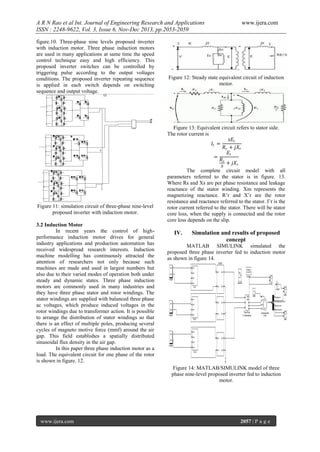
Figure 10: Three-phase nine level proposed inverter
with induction motor.
Three-phase proposed nine level inverter
connected in single phase of nine level inverters
electrically placed and operated by1200 . As shown in
2056 | P a g e
A R N Rao et al Int. Journal of Engineering Research and Applications
ISSN : 2248-9622, Vol. 3, Issue 6, Nov-Dec 2013, pp.2053-2059
figure.10. Three-phase nine levels proposed inverter
with induction motor. Three phase induction motors
are used in many applications at same time the speed
control technique easy and high efficiency. This
proposed inverter switches can be controlled by
triggering pulse according to the output voltages
conditions. The proposed inverter repeating sequence
is applied in each switch depends on switching
sequence and output voltage.

Figure 11: simulation circuit of three-phase nine-level
proposed inverter with induction motor.
3.2 Induction Motor
In recent years the control of highperformance induction motor drives for general
industry applications and production automation has
received widespread research interests. Induction
machine modelling has continuously attracted the
attention of researchers not only because such
machines are made and used in largest numbers but
also due to their varied modes of operation both under
steady and dynamic states. Three phase induction
motors are commonly used in many industries and
they have three phase stator and rotor windings. The
stator windings are supplied with balanced three phase
ac voltages, which produce induced voltages in the
rotor windings due to transformer action. It is possible
to arrange the distribution of stator windings so that
there is an effect of multiple poles, producing several
cycles of magneto motive force (mmf) around the air
gap. This field establishes a spatially distributed
sinusoidal flux density in the air gap.
In this paper three phase induction motor as a
load. The equivalent circuit for one phase of the rotor
is shown in figure. 12.

www.ijera.com

Figure 12: Steady state equivalent circuit of induction
motor.

Figure 13: Equivalent circuit refers to stator side.
The rotor current is
𝑠𝐸 𝑟
𝐼𝑟 =
𝑅 𝑟 + 𝑗𝑋 𝑟
𝐸𝑟
=
𝑅𝑟
+ 𝑗𝑋 𝑟
𝑠
The complete circuit model with all
parameters referred to the stator is in figure. 13.
Where Rs and Xs are per phase resistance and leakage
reactance of the stator winding. Xm represents the
magnetizing reactance. R’r and X’r are the rotor
resistance and reactance referred to the stator. I’r is the
rotor current referred to the stator. There will be stator
core loss, when the supply is connected and the rotor
core loss depends on the slip.

IV.

Simulation and results of proposed
concept

MATLAB SIMULINK simulated the
proposed three phase inverter fed to induction motor
as shown in figure 14.

Figure 14: MATLAB/SIMULINK model of three
phase nine-level proposed inverter fed to induction
motor.

www.ijera.com

2057 | P a g e
A R N Rao et al Int. Journal of Engineering Research and Applications
ISSN : 2248-9622, Vol. 3, Issue 6, Nov-Dec 2013, pp.2053-2059

www.ijera.com

Figure 15: Switching pulses for nine-level inverter.
In proposed inverter before placed a boost
dc-dc converter operated with frequency 𝑓 𝑏 =
10KHz.which is step up the output voltage of PV
panel up to 400V and PV output voltage is 50V. This
PV voltage depended on solar radiation which is
simulated as figure.1 each phase have separate PV
panel and boost dc-dc converter. Three phase
proposed nine inverter switching pulse per phase
shown in figure 17. Remaining two phase switching
control pulse operated with displacement of1200 .

Figure 16: single-phase seven-level inverter output
voltage

Figure 18: Induction Motor (a) Rotor speed, (b)
Electromagnetic Torque.

Figure 19: Induction motor (a) Rotor current, (b) stator
current.

Figure 17: Three-phase nine-level inverter (a) Output
Voltage, (b) Output Current.

Figure 20: THD result for seven-levels of output
voltage

www.ijera.com

2058 | P a g e
A R N Rao et al Int. Journal of Engineering Research and Applications
ISSN : 2248-9622, Vol. 3, Issue 6, Nov-Dec 2013, pp.2053-2059

[2]

[3]

[4]

[5]

Figure 21: THD result for nine-levels of output
voltage.
The
THD
measurement
of
Fig.19
corresponds to the waveform of Fig. 20, while the
THD measurements correspond to the waveforms of
respectively. Comparing all two THD measurements,
the nine-level inverter produced the lowest THD
compared with the seven-level inverter. This proves
that, as the level increases, the THD reduces.
Table5: total harmonic distortion different levels
Inverter level
THD
Seven level
22.13%
Nine level
18.63%

[6]

[7]

[8]

Three phase nine-level inverter output voltage and
current as shown in figure 17. This proposed inverter
output applied to induction motor of rating is 400V,
50Hz, below 1500RPM, and load torque 10. Induction
motor results shown in figure 18 and 19, in figure 18
shown rotor speed 1460RPM and Electromagnetic
torque; in figure 19 shown rotor current and stator
current. Finally THD in circuit 18%, this proposed
topology is very high efficiency and economic.

[9]

[10]

V.

Conclusion

This paper presents a new three phase ninelevel inverter with reduced switches compare to
common multi level inverter. Multilevel inverters
offer improved output waveforms and lower THD. In
this topology less THD in the nine-level inverter
compared with that in the seven-level inverters is
connected PV inverters. This inverter provided to
induction motor with smooth output and better
voltage. Switching loss reduce in this topology than
the common three phase multi-level-inverter.

References
[1]

M. Calais and V. G. Agelidis, ―Multilevel
converters for single-phase grid connected
photovoltaic systems—An overview,‖ in Proc.

www.ijera.com

[11]

[12]

www.ijera.com

IEEE Int. Symp. Ind. Electron., 1998, vol. 1, pp.
224–229.
S. B. Kjaer, J. K. Pedersen, and F. Blaabjerg,
―A review of single-phase grid connected
inverters for photovoltaic modules,‖ IEEE
Trans. Ind. Appl., vol. 41, no. 5, pp. 1292–1306,
Sep./Oct. 2005.
P. K. Hinga, T. Ohnishi, and T. Suzuki, ―A new
PWM inverter for photovoltaic power
generation system,‖ in Conf. Rec. IEEE Power
Electron. Spec. Conf., 1994, pp. 391–395.
Y. Cheng, C. Qian, M. L. Crow, S. Pekarek,
and S. Atcitty, ―A comparison of diodeclamped and cascaded multilevel converters for
a STATCOM with energy storage,‖ IEEE
Trans. Ind. Electron., vol. 53, no. 5, pp. 1512–
1521, Oct. 2006.
M. Saeedifard, R. Iravani, and J. Pou, ―A space
vector modulation strategy for a back-to-back
five-level HVDC converter system,‖ IEEE
Trans. Ind. Electron., vol. 56, no. 2, pp. 452–
466, Feb. 2009.
S. Alepuz, S. Busquets-Monge, J. Bordonau, J.
A. M. Velasco, C. A. Silva, J. Pontt, and J.
Rodríguez, ―Control strategies based on
symmetrical components for grid-connected
converters under voltage dips,‖ IEEE Trans.
Ind. Electron., vol. 56, no. 6, pp. 2162–2173,
Jun. 2009.
J. Rodríguez, J. S. Lai, and F. Z. Peng,
―Multilevel inverters: A survey of topologies,
controls, and applications,‖ IEEE Trans. Ind.
Electron., vol. 49, no. 4, pp. 724–738, Aug.
2002.
J. Rodriguez, S. Bernet, B. Wu, J. O. Pontt, and
S. Kouro, ―Multilevel voltage-source-converter
topologies for industrial medium-voltage
drives,‖ IEEE Trans. Ind. Electron., vol. 54, no.
6, pp. 2930–2945, Dec. 2007.
M. M. Renge and H. M. Suryawanshi, ―Fivelevel diode clamped inverterto eliminate
common mode voltage and reduce dv/dt in
medium voltagerating induction motor drives,‖
IEEE Trans. Power Electron., vol. 23, no. 4, pp.
1598–1160, Jul. 2008.
E. Ozdemir, S. Ozdemir, and L. M. Tolbert,
―Fundamental-frequencymodulatedsix-level
diode-clamped multilevel inverter for threephasestand-alone photovoltaic system,‖ IEEE
Trans. Ind. Electron., vol. 56, no. 11, pp. 4407–
4415, Nov. 2009.
P. Lezana, R. Aguilera, and D. E. Quevedo,
―Model predictive controlof an asymmetric
flying capacitor converter,‖ IEEE Trans. Ind.
Electron., vol. 56, no. 6, pp. 1839–1846, Jun.
2009.
G. Ceglia, V. Guzman, C. Sanchez, F. Ibanez, J.
Walter, and M. I. Gimanez, ―A new simplified
multilevel inverter topology for DC–AC
conversion,‖ IEEE Trans. Power Electron., vol.
21, no. 5, pp. 1311–1319, Sep. 2006.

2059 | P a g e

Lz3620532059

  • 1.
    A R NRao et al Int. Journal of Engineering Research and Applications ISSN : 2248-9622, Vol. 3, Issue 6, Nov-Dec 2013, pp.2053-2059 RESEARCH ARTICLE www.ijera.com OPEN ACCESS Three-Phase Nine-Level Inverter for Photovoltaic System with Induction Motor A R Neelakanteswara Rao1, T Nagadurga2 1 2 M.TECH Scholar, Dept of EEE, GEC Gudlavalleru, AP, India Assistant Professor, Dept. of EEE, GEC Gudlavalleru, AP, India Abstract Electrical power play a vital rule in 21th century, but non-conventional sources scale down day by day. Not only that concern for the environmental pollution around the world, so now a day’s photovoltaic (PV) power systems are getting more and more widespread with the increase in the energy demand. This paper proposed a three phase nine level inverter with voltage control method using semiconductor power devices for three phase induction motor in order to achieve a smooth, continuous and low total harmonics distortion (THD) waveforms. The proposed inverter system gives better voltage regulation, smooth results and efficiency compared to multilevel inverters. The inverter is capable of producing nine levels of output voltage levels (Vdc, 3Vdc/4,Vdc/2, Vdc/4, 0, -Vdc/4, -Vdc/2, -3Vdc/4, -Vdc) The proposed inverter was verified by using simulation of MATLAB/SIMULINK software. Index terms: Photovoltaic (PV) system, multi-level inverter, semiconductor power devices, THD, induction motor. I. Introduction As the world is concerned with the fossil fuel exhaustion and environmental problem caused by conventional power generation, particularly solar have become very popular and demanding. PV sources are used in many applications because they have advantage of being maintenance and pollution free. It is used to convert the dc power from solar module to ac power to feed into load. The proposed three phase nine level inverter is very suitable to PV module with induction motor load, because of compare to common three phase multi-level inverter have high switching, but it could also unfortunately increase switching losses, acoustic noise, and level of interference to other equipment. Improving its output waveform reduces its harmonic content and, hence, also the size of the filter used and the level of electromagnetic interference (EMI) generated by the inverter’s switching operation. This paper developed a modified H-bridge single-phase multilevel inverter that has two diode embedded bidirectional switches. Coming to three phase proposed inverter required 21 switches (IGBT’s) and six diode embedded bidirectional switches, but in common three phase multi-level inverter required 48 switches (IGBT’s). So this topology have reduces a switching loss and high efficiency. A boost converter (step-up DC-DC) used in paper for high voltage before proposed inverter; this topology was applied to three phase asynchronous machine photovoltaic system with considerations for voltage control pulse generator. www.ijera.com II. Photovoltaic System (PV) A solar cell basically is a p-n semiconductor junction. When exposed to light, a current proportional to solar irradiance is generated. Standard simulation tools utilize the approximate diode equivalent circuit shown in Fig. 1 in order to simulate all electric circuits that contain diode. The circuit consists of Ron in series with voltage source Von. PVs generate electric power when illuminated by sunlight or artificial light, the absorption of photons of energy greater than the band-gap energy of the semiconductor promotes electrons from the valence band to the conduction band, creating hole-electron pairs throughout the illuminated part of the semiconductor. These electrons and holes pairs will flow in opposite directions across the junction thereby creating DC power. Figure 1: circuit model of PV cell. 2.1 Mathematical Model: The equation [1] & [2] that are used to solve the mathematical model of the solar cell based on simple equivalent circuit shown in Fig. 1, are given below; 2053 | P a g e
  • 2.
    A R NRao et al Int. Journal of Engineering Research and Applications ISSN : 2248-9622, Vol. 3, Issue 6, Nov-Dec 2013, pp.2053-2059 𝐼𝐷 = 𝐼𝑂 𝑒 𝑞 (𝑉+𝐼𝑅 𝑠 ) 𝐾𝑇 𝐼 = 𝐼𝐿 − 𝐼 𝑂 𝑒 −1 𝑞 (𝑉 +𝐼𝑅 𝑠 ) 𝐾𝑇 −1 − -(1) (𝑉+𝐼𝑅 𝑠 ) 𝑅 𝑠ℎ -(2) www.ijera.com by 6n+1 and voltage step of each level is given by Vdc/4n. Where n is number of H-bridges connected in cascaded, the switching table of Hybrid H-Bridge is given in Table 3. Where: I is the cell current in (A). q is the charge of electron = 1.6x10⁻¹⁹ (coul). K is the Boltzmann constant (j/K). T is the cell temperature (K). 𝐼 𝐿 is the light generated current (A). 𝐼 𝑂 is the diode saturation current. 𝑅 𝑠 , 𝑅 𝑠ℎ are cell series and shunt resistance (ohms). V is the cell output voltage (V). Figure 3: Single-phase proposed seven- level inverter with open loop. Table 1: pv module characterstics. Table 3: Output Voltages according to switches on-off conditions. 2.2 Comparison of Full H-Bridge and Hybrid Bridge inverter H- 2.2.1 Full H-Bridge Fig.2 shows the Full H-Bridge Configuration. By using single H-Bridge we can get three voltage levels. The number output voltage levels of cascaded Full H-Bridge are given by 2n+1 and voltage step of each level is given by Vdc/n. Where n is number of Hbridges connected in cascaded, the switching table is given in Table 2. In full H-bridge inverter used four switches for three levels and hybrid H-bridge inverter used six switches for seven levels, so in hybrid inverter number of switches reduces in order to reduces switching loss. Figure 2: Full H-Bridge. Table 2: Switching table for Full H-Bridge. 2.2.2 Hybrid H-Bridge Figure 3, shows the Hybrid H-Bridge configuration. By using single Hybrid H-Bridge we can get seven voltage levels. The number output voltage levels of cascaded Hybrid H-Bridge are given www.ijera.com 2.3 PWM modulation A novel PWM modulation technique was introduced to Generate the PWM switching signals. Three reference signals (Vref1, Vref2, and Vref3) were compared with a carrier signal (Vcarrier). The reference signals had the same frequency and amplitude and were in phase with an offset value that was equivalent to the amplitude of the carrier signal. The reference signals were each compared with the carrier signal. If Vref1 had exceeded the peak amplitude of Vcarrier, Vref2 was compared with Vcarrier until it had exceeded the peak amplitude of Vcarrier. Then, onward, Vref3 would take charge and would be compared with Vcarrier until it reached zero. Once Vref3 had reached zero, Vref2 would be compared until it reached zero. Then, onward, Vref1 would be compared with Vcarrier. The resulting switching pattern. Switches S1, S3, S5, and S6 would be switching at the rate of the carrier signal frequency, whereas S2 and S4 would operate at a frequency that 2054 | P a g e
  • 3.
    A R NRao et al Int. Journal of Engineering Research and Applications ISSN : 2248-9622, Vol. 3, Issue 6, Nov-Dec 2013, pp.2053-2059 was equivalent to the fundamental frequency. For one cycle of the fundamental frequency, the proposed inverter operated through six modes. The per unit output-voltage signal for one cycle. www.ijera.com change of the duty cycle changes the voltage at the output of the PV panels. A PID controller was implemented to keep the output voltage of the dc–dc boost converter (Vdc) constant by comparing Vdc and Vdc ref and feeding the error into the PID controller, which subsequently tries to reduce the error. In this way, the Vdc can be maintained. Figure 4: Seven-level output voltage (Vab) and switching angles. Figure 6: Simulation of pwm switching sequence. Figure 5: Seven-level inverter with closed-loop control algorithm 2.4 control system The control system comprises a MPPT algorithm, a dc-bus voltage controller, referencecurrent generation, and a current controller. The two main tasks of the control system are maximization of the energy transferred from the PV arrays to the grid, and generation of a sinusoidal current with minimum harmonic distortion, also under the presence of grid voltage harmonics. The proposed inverter utilizes the perturb-and-observe (P&O) algorithm for its wide usage in MPPT owing to its simple structure and requirement of only a few measured parameters. It periodically perturbs (i.e., increment or decrement) the array terminal voltage and compares the PV output power with that of the previous perturbation cycle. If the power was increasing, the perturbation would continue in the same direction in the next cycle; otherwise, the direction would be reversed. This means that the array terminal voltage is perturbed every MPPT cycle; therefore, when the MPP is reached, the P&O algorithm will oscillate around it. The P&O algorithm was implemented in the dc–dc boost converter. The output of the MPPT is the dutycycle function. As the dc-link voltage Vdc was controlled in the dc–ac seven level PWM inverter; the www.ijera.com For Ma that is equal to, or less than, 0.33, only the lower reference wave (Vref3) is compared with the triangular carrier signal. The inverter’s behaviour is similar to that of a conventional fullbridge three-level PWM inverter. However, if Ma is more than 0.33 and less than 0.66, only Vref2 and Vref3 reference signals are compared with the triangular carrier wave. The output voltage consists of five dc-voltage levels. The modulation index is set to be more than 0.66 for seven levels of output voltage to be produced. Three reference signals have to be compared with the triangular carrier signal to produce switching signals for the switches. Figure 7: Simulation circuit of Seven-level inverter with closed-loop control algorithm III. Single-Phase Proposed Inverter The proposed single-phase nine-level inverter was developed from the five-level inverter in [12]. It comprises a single-phase conventional H-bridge 2055 | P a g e
  • 4.
    A R NRao et al Int. Journal of Engineering Research and Applications ISSN : 2248-9622, Vol. 3, Issue 6, Nov-Dec 2013, pp.2053-2059 www.ijera.com inverter, three bidirectional switches, and a capacitor voltage divider formed by C, as shown in Figure. 8. The modified H-bridge topology is significantly advantageous over other topologies, i.e., less power switch, power diodes, and less capacitor for inverters of the same number of levels. Photovoltaic (PV) arrays were connected to the inverter via a dc–dc boost converter. The power generated by the inverter is to be delivered to the power network, so the utility grid, rather than a load, was used. The dc–dc boost converter was required because the PV arrays had a voltage that was lower than the three phase induction motor rating. Figure 9: simulation circuit of Single-phase proposed Nine- level inverter with open loop. 3.1 Proposed Three-Phase Nine-level Inverter with Induction Motor Figure 8: Single-phase proposed Nine- level inverter with open loop. High dc bus voltages are necessary to ensure that power flows from the PV arrays to electrical machine. Proper switching of the inverter can produce seven output-voltage levels (Vdc, 3Vdc/4, Vdc/2, Vdc/4, 0, -Vdc/4, -Vdc/2, -3Vdc/4, -Vdc) from the dc supply voltage. Table 4: Output Voltages according to switches on-off conditions. 𝑉𝑂 𝑉 𝑑𝑐 𝑆1 on 𝑆2 off 𝑆3 off 𝑆4 on 𝑆5 off 𝑆6 off 𝑆7 off 3𝑉 𝑑𝑐 4 𝑉 𝑑𝑐 2 𝑉 𝑑𝑐 4 0 off off off on on off off off off off on off on off off off off on off off on off off on on off off off 0∗ on on off off off off off −𝑉 𝑑𝑐 4 −𝑉 𝑑𝑐 2 −3𝑉 𝑑𝑐 4 −𝑉 𝑑𝑐 off on off off on off off off on off off off on off off on off off off off on off on on off off off off Zero output can be produced by two switching combinations; switches S3 and S4 are ON, or S1 andS2 are ON, and all other controlled switches are OFF; terminal ab is a short circuit, and the voltage applied to the load terminals is zero. www.ijera.com Figure 10: Three-phase nine level proposed inverter with induction motor. Three-phase proposed nine level inverter connected in single phase of nine level inverters electrically placed and operated by1200 . As shown in 2056 | P a g e
  • 5.
    A R NRao et al Int. Journal of Engineering Research and Applications ISSN : 2248-9622, Vol. 3, Issue 6, Nov-Dec 2013, pp.2053-2059 figure.10. Three-phase nine levels proposed inverter with induction motor. Three phase induction motors are used in many applications at same time the speed control technique easy and high efficiency. This proposed inverter switches can be controlled by triggering pulse according to the output voltages conditions. The proposed inverter repeating sequence is applied in each switch depends on switching sequence and output voltage. Figure 11: simulation circuit of three-phase nine-level proposed inverter with induction motor. 3.2 Induction Motor In recent years the control of highperformance induction motor drives for general industry applications and production automation has received widespread research interests. Induction machine modelling has continuously attracted the attention of researchers not only because such machines are made and used in largest numbers but also due to their varied modes of operation both under steady and dynamic states. Three phase induction motors are commonly used in many industries and they have three phase stator and rotor windings. The stator windings are supplied with balanced three phase ac voltages, which produce induced voltages in the rotor windings due to transformer action. It is possible to arrange the distribution of stator windings so that there is an effect of multiple poles, producing several cycles of magneto motive force (mmf) around the air gap. This field establishes a spatially distributed sinusoidal flux density in the air gap. In this paper three phase induction motor as a load. The equivalent circuit for one phase of the rotor is shown in figure. 12. www.ijera.com Figure 12: Steady state equivalent circuit of induction motor. Figure 13: Equivalent circuit refers to stator side. The rotor current is 𝑠𝐸 𝑟 𝐼𝑟 = 𝑅 𝑟 + 𝑗𝑋 𝑟 𝐸𝑟 = 𝑅𝑟 + 𝑗𝑋 𝑟 𝑠 The complete circuit model with all parameters referred to the stator is in figure. 13. Where Rs and Xs are per phase resistance and leakage reactance of the stator winding. Xm represents the magnetizing reactance. R’r and X’r are the rotor resistance and reactance referred to the stator. I’r is the rotor current referred to the stator. There will be stator core loss, when the supply is connected and the rotor core loss depends on the slip. IV. Simulation and results of proposed concept MATLAB SIMULINK simulated the proposed three phase inverter fed to induction motor as shown in figure 14. Figure 14: MATLAB/SIMULINK model of three phase nine-level proposed inverter fed to induction motor. www.ijera.com 2057 | P a g e
  • 6.
    A R NRao et al Int. Journal of Engineering Research and Applications ISSN : 2248-9622, Vol. 3, Issue 6, Nov-Dec 2013, pp.2053-2059 www.ijera.com Figure 15: Switching pulses for nine-level inverter. In proposed inverter before placed a boost dc-dc converter operated with frequency 𝑓 𝑏 = 10KHz.which is step up the output voltage of PV panel up to 400V and PV output voltage is 50V. This PV voltage depended on solar radiation which is simulated as figure.1 each phase have separate PV panel and boost dc-dc converter. Three phase proposed nine inverter switching pulse per phase shown in figure 17. Remaining two phase switching control pulse operated with displacement of1200 . Figure 16: single-phase seven-level inverter output voltage Figure 18: Induction Motor (a) Rotor speed, (b) Electromagnetic Torque. Figure 19: Induction motor (a) Rotor current, (b) stator current. Figure 17: Three-phase nine-level inverter (a) Output Voltage, (b) Output Current. Figure 20: THD result for seven-levels of output voltage www.ijera.com 2058 | P a g e
  • 7.
    A R NRao et al Int. Journal of Engineering Research and Applications ISSN : 2248-9622, Vol. 3, Issue 6, Nov-Dec 2013, pp.2053-2059 [2] [3] [4] [5] Figure 21: THD result for nine-levels of output voltage. The THD measurement of Fig.19 corresponds to the waveform of Fig. 20, while the THD measurements correspond to the waveforms of respectively. Comparing all two THD measurements, the nine-level inverter produced the lowest THD compared with the seven-level inverter. This proves that, as the level increases, the THD reduces. Table5: total harmonic distortion different levels Inverter level THD Seven level 22.13% Nine level 18.63% [6] [7] [8] Three phase nine-level inverter output voltage and current as shown in figure 17. This proposed inverter output applied to induction motor of rating is 400V, 50Hz, below 1500RPM, and load torque 10. Induction motor results shown in figure 18 and 19, in figure 18 shown rotor speed 1460RPM and Electromagnetic torque; in figure 19 shown rotor current and stator current. Finally THD in circuit 18%, this proposed topology is very high efficiency and economic. [9] [10] V. Conclusion This paper presents a new three phase ninelevel inverter with reduced switches compare to common multi level inverter. Multilevel inverters offer improved output waveforms and lower THD. In this topology less THD in the nine-level inverter compared with that in the seven-level inverters is connected PV inverters. This inverter provided to induction motor with smooth output and better voltage. Switching loss reduce in this topology than the common three phase multi-level-inverter. References [1] M. Calais and V. G. Agelidis, ―Multilevel converters for single-phase grid connected photovoltaic systems—An overview,‖ in Proc. www.ijera.com [11] [12] www.ijera.com IEEE Int. Symp. Ind. Electron., 1998, vol. 1, pp. 224–229. S. B. Kjaer, J. K. Pedersen, and F. Blaabjerg, ―A review of single-phase grid connected inverters for photovoltaic modules,‖ IEEE Trans. Ind. Appl., vol. 41, no. 5, pp. 1292–1306, Sep./Oct. 2005. P. K. Hinga, T. Ohnishi, and T. Suzuki, ―A new PWM inverter for photovoltaic power generation system,‖ in Conf. Rec. IEEE Power Electron. Spec. Conf., 1994, pp. 391–395. Y. Cheng, C. Qian, M. L. Crow, S. Pekarek, and S. Atcitty, ―A comparison of diodeclamped and cascaded multilevel converters for a STATCOM with energy storage,‖ IEEE Trans. Ind. Electron., vol. 53, no. 5, pp. 1512– 1521, Oct. 2006. M. Saeedifard, R. Iravani, and J. Pou, ―A space vector modulation strategy for a back-to-back five-level HVDC converter system,‖ IEEE Trans. Ind. Electron., vol. 56, no. 2, pp. 452– 466, Feb. 2009. S. Alepuz, S. Busquets-Monge, J. Bordonau, J. A. M. Velasco, C. A. Silva, J. Pontt, and J. Rodríguez, ―Control strategies based on symmetrical components for grid-connected converters under voltage dips,‖ IEEE Trans. Ind. Electron., vol. 56, no. 6, pp. 2162–2173, Jun. 2009. J. Rodríguez, J. S. Lai, and F. Z. Peng, ―Multilevel inverters: A survey of topologies, controls, and applications,‖ IEEE Trans. Ind. Electron., vol. 49, no. 4, pp. 724–738, Aug. 2002. J. Rodriguez, S. Bernet, B. Wu, J. O. Pontt, and S. Kouro, ―Multilevel voltage-source-converter topologies for industrial medium-voltage drives,‖ IEEE Trans. Ind. Electron., vol. 54, no. 6, pp. 2930–2945, Dec. 2007. M. M. Renge and H. M. Suryawanshi, ―Fivelevel diode clamped inverterto eliminate common mode voltage and reduce dv/dt in medium voltagerating induction motor drives,‖ IEEE Trans. Power Electron., vol. 23, no. 4, pp. 1598–1160, Jul. 2008. E. Ozdemir, S. Ozdemir, and L. M. Tolbert, ―Fundamental-frequencymodulatedsix-level diode-clamped multilevel inverter for threephasestand-alone photovoltaic system,‖ IEEE Trans. Ind. Electron., vol. 56, no. 11, pp. 4407– 4415, Nov. 2009. P. Lezana, R. Aguilera, and D. E. Quevedo, ―Model predictive controlof an asymmetric flying capacitor converter,‖ IEEE Trans. Ind. Electron., vol. 56, no. 6, pp. 1839–1846, Jun. 2009. G. Ceglia, V. Guzman, C. Sanchez, F. Ibanez, J. Walter, and M. I. Gimanez, ―A new simplified multilevel inverter topology for DC–AC conversion,‖ IEEE Trans. Power Electron., vol. 21, no. 5, pp. 1311–1319, Sep. 2006. 2059 | P a g e