Some Initial Thoughts A living agenda Spiraling Wide vs. Deep New ways of thinking Questions Use the resources
Image from http://www.networkweaving.com/blog/
Network Theory What is a network How they emerge The Spectrum Community and Network Values Culture And so on….
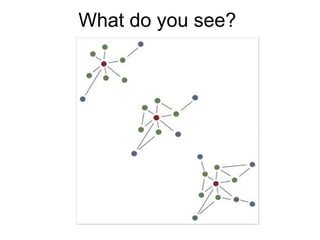
What do you see?
Network Weaving Requires Mapping Mapping the existing networks in your organization/community/region. �   What are our strengths? �   What are our weaknesses? �   Where are the disconnects? �   Who are the Connectors? �   Who are the Mavens? �   Who is in the clusters? �   How open/closed is our network? �   How have we progressed since last year?
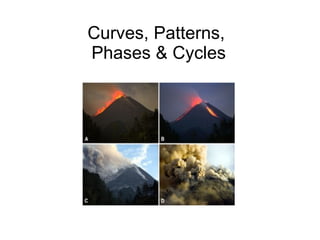
Curves, Patterns,  Phases & Cycles
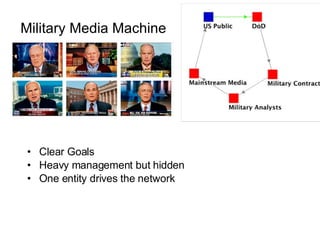
Military Media Machine Clear Goals Heavy management but hidden One entity drives the network
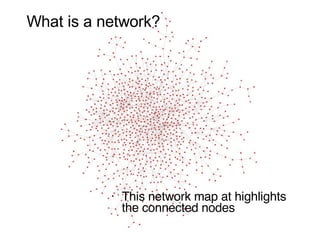
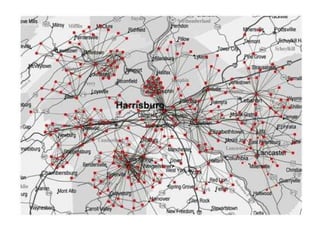
What is a network? This network map at highlights the connected nodes
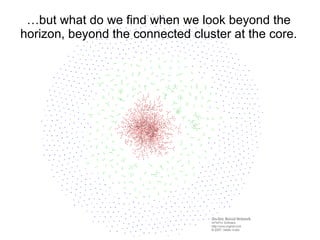
… but what do we find when we look beyond the horizon, beyond the connected cluster at the core.
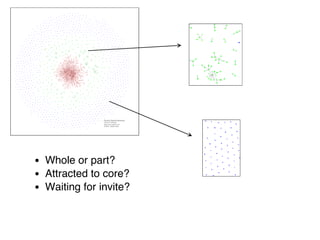
Whole or part? Attracted to core? Waiting for invite?
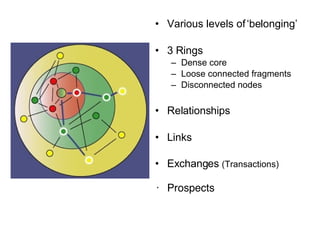
Various levels of ‘belonging’ 3 Rings Dense core Loose connected fragments Disconnected nodes Relationships Links Exchanges  (Transactions) Prospects
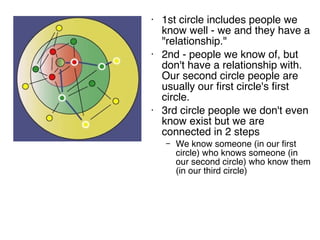
1st circle includes people we know well - we and they have a "relationship."  2nd - people we know of, but don't have a relationship with. Our second circle people are usually our first circle's first circle.  3rd circle people we don't even know exist but we are connected in 2 steps We know someone (in our first circle) who knows someone (in our second circle) who know them (in our third circle)
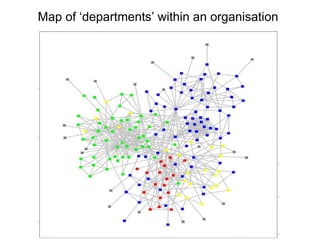
Map of ‘departments’ within an organisation
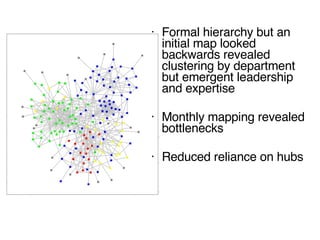
Formal hierarchy but an initial map looked backwards revealed clustering by department but emergent leadership and expertise Monthly mapping revealed bottlenecks Reduced reliance on hubs
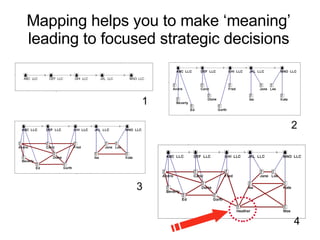
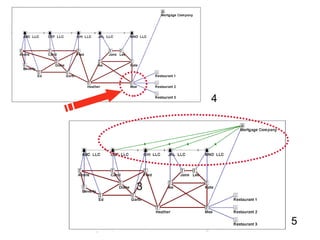
Mapping helps you to make ‘meaning’ leading to focused strategic decisions 1 2 3 4
3 4 5
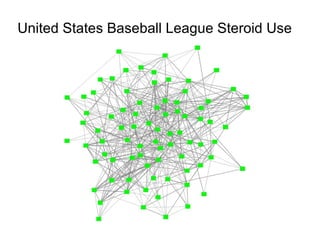
United States Baseball League Steroid Use
 
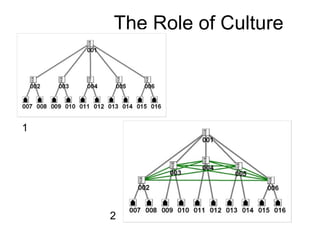
The Role of Culture 1 2
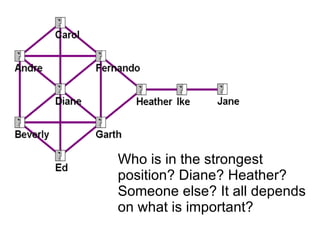
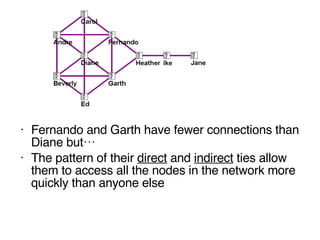
Who is in the strongest position? Diane? Heather? Someone else? It all depends on what is important?
Fernando and Garth have fewer connections than Diane but… The pattern of their  direct  and  indirect  ties allow them to access all the nodes in the network more quickly than anyone else
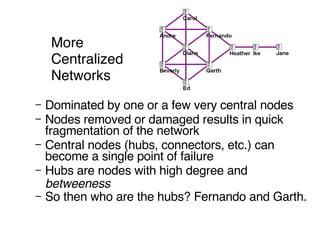
More  Centralized  Networks Dominated by one or a few very central nodes Nodes removed or damaged results in quick fragmentation of the network Central nodes (hubs, connectors, etc.) can become a single point of failure Hubs are nodes with high degree and  betweeness So then who are the hubs? Fernando and Garth.
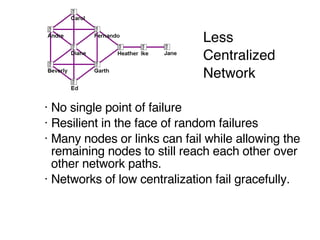
Less  Centralized  Network No single point of failure Resilient in the face of random failures Many nodes or links can fail while allowing the remaining nodes to still reach each other over other network paths.  Networks of low centralization fail gracefully.
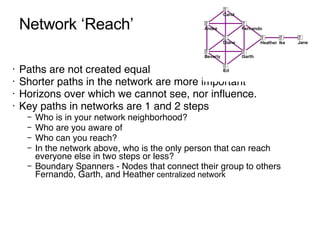
Paths are not created equal Shorter paths in the network are more important Horizons over which we cannot see, nor influence.  Key paths in networks are 1 and 2 steps Who is in your network neighborhood?  Who are you aware of Who can you reach? In the network above, who is the only person that can reach everyone else in two steps or less? Boundary Spanners - Nodes that connect their group to others Fernando, Garth, and Heather  centralized network Network ‘Reach’
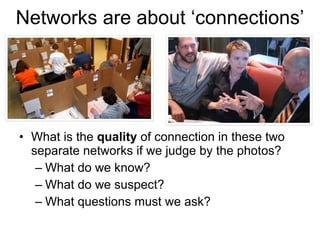
Networks are about ‘connections’ What is the  quality  of connection in these two separate networks if we judge by the photos? What do we know?  What do we suspect?  What questions must we ask?
Quality of Connections Alignment - how much do people have in common? Productivity - how much new value does the relationship create? Introductions - how many valuable introductions does the relationship produce? Learning - how much new learning do people gain from each other and collaboratively
Strength Based - Key Roles in the Creation of Change Innovators, visionaries, and entrepreneurs - power of dreams Formal leaders - power to develop people's capacity for change Informal leaders - develop capacity for change - invitation and facilitation Managers - responsibility and resources to engage people - power of assignment Network weavers - power of connecting
Network Weaver Skills 1. Opportunity seeking: sees opportunities everywhere 2. Loves to connect people to each other 3. Able to unearth resources of all types and kinds 4. Able to remember many names and resources 5. Able to dialogue easily with people and get them to disclose information 6. Comfortable with uncertainty but persistent in making things happen
7. Able to learn from experience; decides next step after reflecting on previous step 8. Optimistic 9. Able to see when something doesn’t   work and moves on 10. Has a big vision but sees the importance of taking small steps 11. Likes to get to know people with different perspectives and from different backgrounds 12. Listens well 13. Asks a lot of questions 14. Sees patterns , no tices patterns in the network: where there is energy, where there is isolation, who interacts with whom, etc
Some Metrics Network Centrality / Centralization Prestige / Influence External / Internal Ratio Shortest Paths & Path Distribution Frequency
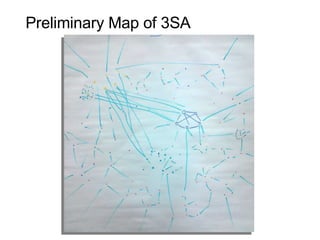
Preliminary Map of 3SA
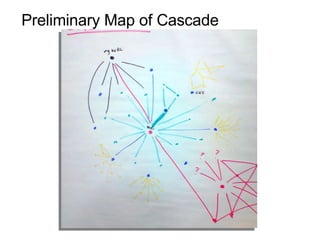
Preliminary Map of Cascade
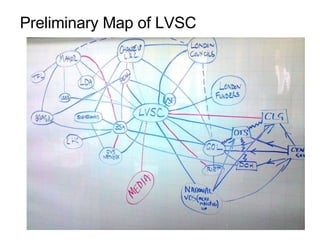
Preliminary Map of LVSC
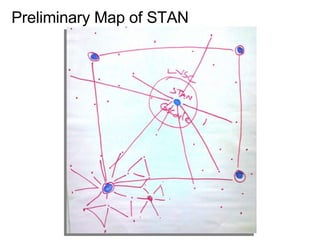
Preliminary Map of STAN
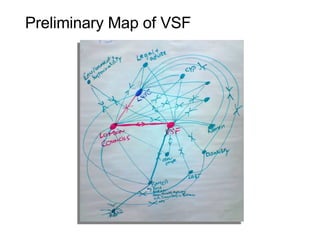
Preliminary Map of VSF

LVSC Network Strategy

  • 1.
    Some Initial ThoughtsA living agenda Spiraling Wide vs. Deep New ways of thinking Questions Use the resources
  • 2.
  • 3.
    Network Theory Whatis a network How they emerge The Spectrum Community and Network Values Culture And so on….
  • 4.
  • 5.
    Network Weaving RequiresMapping Mapping the existing networks in your organization/community/region. � What are our strengths? � What are our weaknesses? � Where are the disconnects? � Who are the Connectors? � Who are the Mavens? � Who is in the clusters? � How open/closed is our network? � How have we progressed since last year?
  • 6.
    Curves, Patterns, Phases & Cycles
  • 7.
    Military Media MachineClear Goals Heavy management but hidden One entity drives the network
  • 8.
    What is anetwork? This network map at highlights the connected nodes
  • 9.
    … but whatdo we find when we look beyond the horizon, beyond the connected cluster at the core.
  • 10.
    Whole or part?Attracted to core? Waiting for invite?
  • 11.
    Various levels of‘belonging’ 3 Rings Dense core Loose connected fragments Disconnected nodes Relationships Links Exchanges (Transactions) Prospects
  • 12.
    1st circle includespeople we know well - we and they have a "relationship." 2nd - people we know of, but don't have a relationship with. Our second circle people are usually our first circle's first circle. 3rd circle people we don't even know exist but we are connected in 2 steps We know someone (in our first circle) who knows someone (in our second circle) who know them (in our third circle)
  • 13.
    Map of ‘departments’within an organisation
  • 14.
    Formal hierarchy butan initial map looked backwards revealed clustering by department but emergent leadership and expertise Monthly mapping revealed bottlenecks Reduced reliance on hubs
  • 15.
    Mapping helps youto make ‘meaning’ leading to focused strategic decisions 1 2 3 4
  • 16.
  • 17.
    United States BaseballLeague Steroid Use
  • 18.
  • 19.
    The Role ofCulture 1 2
  • 20.
    Who is inthe strongest position? Diane? Heather? Someone else? It all depends on what is important?
  • 21.
    Fernando and Garthhave fewer connections than Diane but… The pattern of their direct and indirect ties allow them to access all the nodes in the network more quickly than anyone else
  • 22.
    More Centralized Networks Dominated by one or a few very central nodes Nodes removed or damaged results in quick fragmentation of the network Central nodes (hubs, connectors, etc.) can become a single point of failure Hubs are nodes with high degree and betweeness So then who are the hubs? Fernando and Garth.
  • 23.
    Less Centralized Network No single point of failure Resilient in the face of random failures Many nodes or links can fail while allowing the remaining nodes to still reach each other over other network paths. Networks of low centralization fail gracefully.
  • 24.
    Paths are notcreated equal Shorter paths in the network are more important Horizons over which we cannot see, nor influence. Key paths in networks are 1 and 2 steps Who is in your network neighborhood? Who are you aware of Who can you reach? In the network above, who is the only person that can reach everyone else in two steps or less? Boundary Spanners - Nodes that connect their group to others Fernando, Garth, and Heather centralized network Network ‘Reach’
  • 25.
    Networks are about‘connections’ What is the quality of connection in these two separate networks if we judge by the photos? What do we know? What do we suspect? What questions must we ask?
  • 26.
    Quality of ConnectionsAlignment - how much do people have in common? Productivity - how much new value does the relationship create? Introductions - how many valuable introductions does the relationship produce? Learning - how much new learning do people gain from each other and collaboratively
  • 27.
    Strength Based -Key Roles in the Creation of Change Innovators, visionaries, and entrepreneurs - power of dreams Formal leaders - power to develop people's capacity for change Informal leaders - develop capacity for change - invitation and facilitation Managers - responsibility and resources to engage people - power of assignment Network weavers - power of connecting
  • 28.
    Network Weaver Skills1. Opportunity seeking: sees opportunities everywhere 2. Loves to connect people to each other 3. Able to unearth resources of all types and kinds 4. Able to remember many names and resources 5. Able to dialogue easily with people and get them to disclose information 6. Comfortable with uncertainty but persistent in making things happen
  • 29.
    7. Able tolearn from experience; decides next step after reflecting on previous step 8. Optimistic 9. Able to see when something doesn’t work and moves on 10. Has a big vision but sees the importance of taking small steps 11. Likes to get to know people with different perspectives and from different backgrounds 12. Listens well 13. Asks a lot of questions 14. Sees patterns , no tices patterns in the network: where there is energy, where there is isolation, who interacts with whom, etc
  • 30.
    Some Metrics NetworkCentrality / Centralization Prestige / Influence External / Internal Ratio Shortest Paths & Path Distribution Frequency
  • 31.
  • 32.
  • 33.
  • 34.
  • 35.