
Net Work:Building and Sustaining a NetworkPatti AnklamJune 24, 2009A NetWorkShop
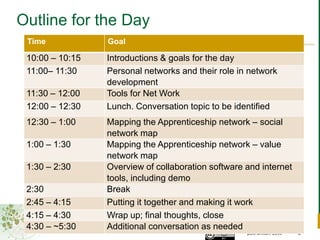
Outline for the Day
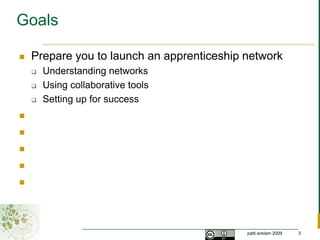
GoalsPrepare you to launch an apprenticeship networkUnderstanding networksUsing collaborative tools Setting up for success
About Networks
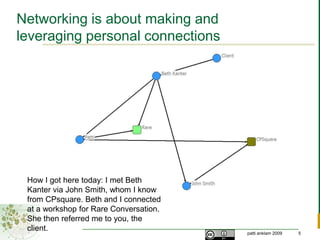
Networking is about making and leveraging personal connectionsHow I got here today: I met Beth Kanter via John Smith, whom I know from CPsquare. Beth and I connected at a workshop for Rare Conversation. She then referred me to you, the client.
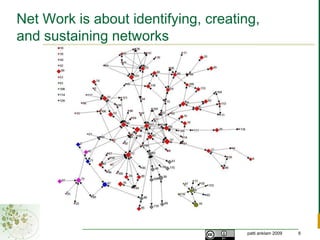
Net Work is about identifying, creating, and sustaining networks
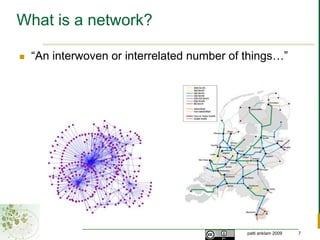
What is a network?“An interwoven or interrelated number of things…”
Your networksGroups and organizations that you belong toFormal networksInformal networksThe individuals you interact with, have relationships with, and to whom you can reach out8
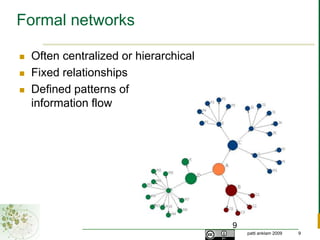
Formal networksOften centralized or hierarchicalFixed relationshipsDefined patterns of information flow9
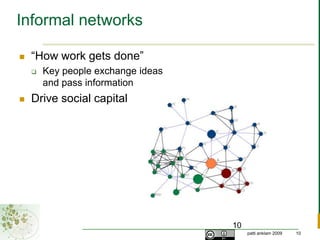
Informal networks“How work gets done”Key people exchange ideasand pass informationDrive social capital10
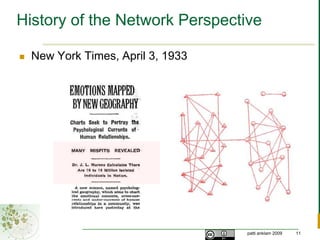
History of the Network PerspectiveNew York Times, April 3, 1933
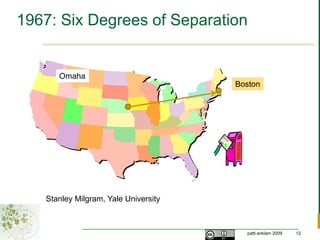
1967: Six Degrees of SeparationOmahaBostonStanley Milgram, Yale University
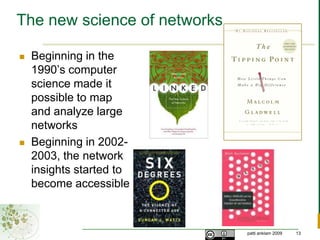
The new science of networksBeginning in the 1990’s computer science made it possible to map and analyze large networksBeginning in 2002-2003, the network insights started to become accessible
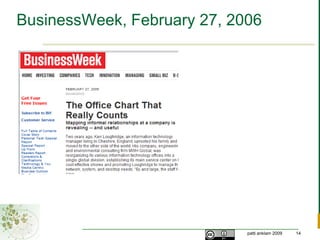
BusinessWeek, February 27, 2006
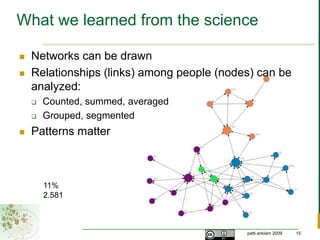
What we learned from the scienceNetworks can be drawnRelationships (links) among people (nodes) can be analyzed:Counted, summed, averagedGrouped, segmentedPatterns matter11%2.581
Purpose
Structure
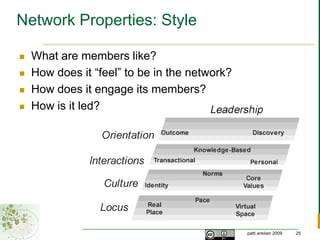
Style
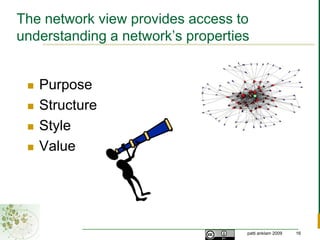
ValueThe network view provides access to understanding a network’s properties
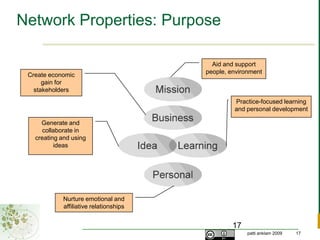
Network Properties: PurposeAid and support people, environmentCreate economic gain for stakeholdersPractice-focused learning and personal developmentGenerate and collaborate in creating and using ideasNurture emotional and affiliative relationships17
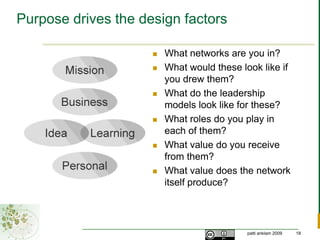
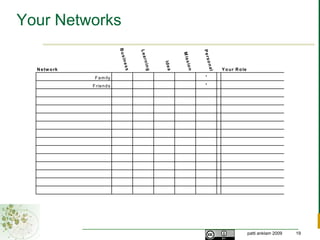
Purpose drives the design factorsWhat networks are you in?What would these look like if you drew them?What do the leadership models look like for these?What roles do you play in each of them?What value do you receive from them?What value does the network itself produce?
Your Networks
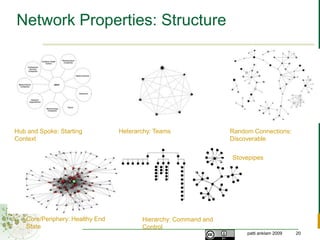
Network Properties: StructureHub and Spoke: Starting ContextRandom Connections: DiscoverableHierarchy: Command and ControlStovepipesCore/Periphery: Healthy End StateHeterarchy: Teams
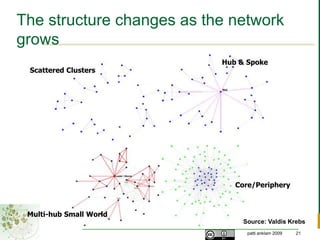
The structure changes as the network growsHub & SpokeScattered ClustersCore/PeripheryMulti-hub Small WorldSource: Valdis Krebs
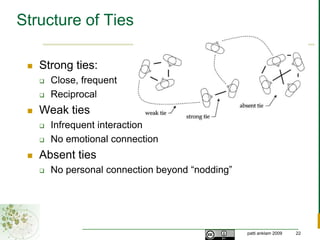
Structure of TiesStrong ties: Close, frequentReciprocalWeak tiesInfrequent interactionNo emotional connectionAbsent tiesNo personal connection beyond “nodding”
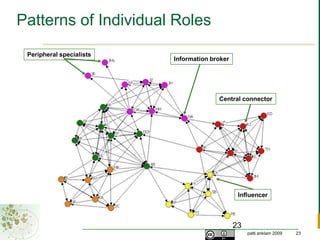
Patterns of Individual RolesPeripheral specialistsInformation brokerCentral connectorInfluencer23
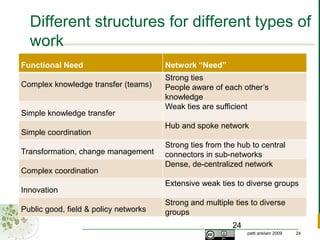
Different structures for different types of work24
Network Properties: Style What are members like?
How does it “feel” to be in the network?
How does it engage its members?
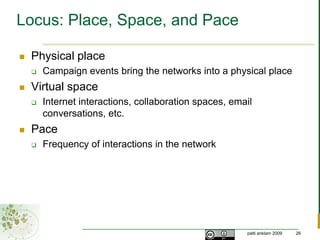
How is it led?Locus: Place, Space, and PacePhysical placeCampaign events bring the networks into a physical placeVirtual spaceInternet interactions, collaboration spaces, email conversations, etc. PaceFrequency of interactions in the network
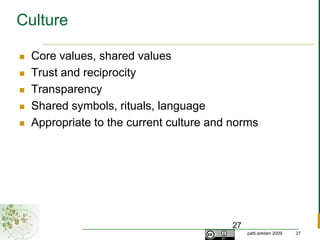
CultureCore values, shared valuesTrust and reciprocityTransparencyShared symbols, rituals, languageAppropriate to the current culture and norms27
Types of interactionTransactionalExchange of explicit informationDriven by action, tasks, commitmentsKnowledge-basedStructured in a learning networkImplicit sharingPersonalDeveloping stronger ties by sharing information about yourself
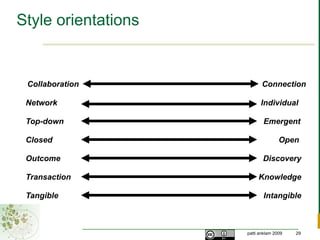
Style orientationsNetworkIndividualTop-downEmergentCollaborationConnectionClosedOpenOutcomeDiscoveryTransactionKnowledgeTangibleIntangible
Network Properties: ValueWhat value is associated with the network’s purpose?
WII-FM (“What’s in it for me?”)
Connections?
Knowledge?
Competencies?
Resources?
Something else?
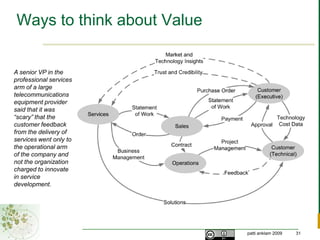
How does value flow within the network?Ways to think about ValueA senior VP in the professional services arm of a large telecommunications equipment provider said that it was “scary” that the customer feedback from the delivery of services went only to the operational arm of the company and not the organization charged to innovate in service development.
SummaryYou can characterize networks by looking at purpose, structure, style, and value propertiesCreating and sustaining successful networks means paying attention to all of these attributes
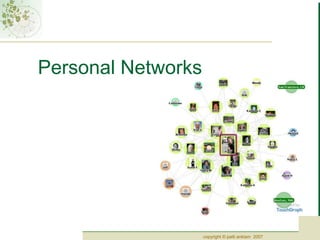
Personal Networks
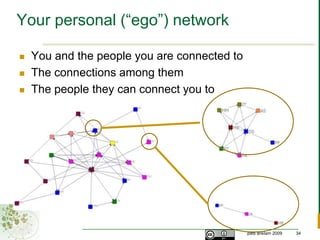
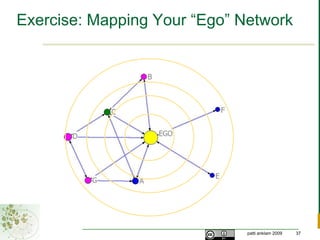
Your personal (“ego”) network You and the people you are connected toThe connections among themThe people they can connect you to
Personal network activitiesCreate and sustaining relationshipsAsking for helpHelping when asked Creating ties and links – making introductions What are the ways that you sustain your relationships?Purposeful maintenance Looking for effective structure Watching for diversity
Effective personal networksDunbar’s number: 150Your networkFamily & close friendsWork colleaguesActivity friendsYou can map your personal network36
Exercise: Mapping Your “Ego” Network
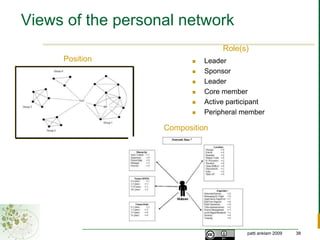
 Views of the personal networkCompositionRole(s)PositionLeaderSponsorLeaderCore memberActive participantPeripheral member
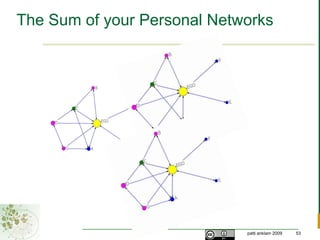
The sum of your personal networks…Contributes to the overall success of the Apprenticeship networkHow can you leverage your existing relationships and bring them into the network?Are you a broker? Able to make connections?Are you good at keeping a group “on the same page”?Do you contribute expertise when called on?Do you pass information across group boundaries?
Tools for Net Work
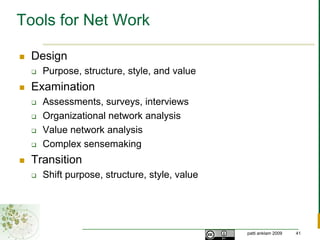
Tools for Net WorkDesignPurpose, structure, style, and valueExaminationAssessments, surveys, interviewsOrganizational network analysisValue network analysisComplex sensemakingTransitionShift purpose, structure, style, value
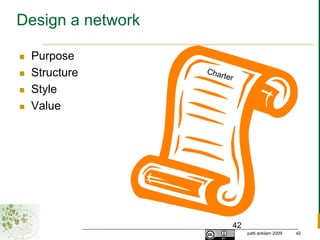
Design a networkPurposeStructureStyleValueCharter42
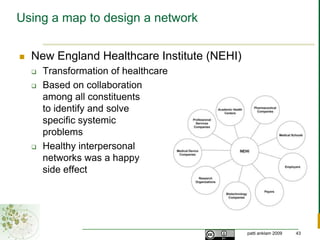
Using a map to design a networkNew England Healthcare Institute (NEHI)Transformation of healthcareBased on collaborationamong all constituentsto identify and solvespecific systemicproblemsHealthy interpersonalnetworks was a happyside effect
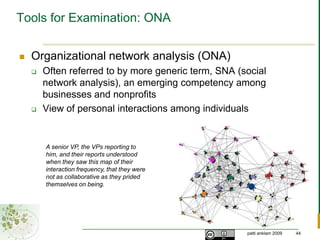
Tools for Examination: ONAOrganizational network analysis (ONA)Often referred to by more generic term, SNA (social network analysis), an emerging competency among businesses and nonprofitsView of personal interactions among individualsA senior VP, the VPs reporting to him, and their reports understood when they saw this map of their interaction frequency, that they were not as collaborative as they prided themselves on being.
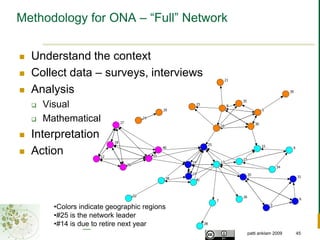
Methodology for ONA – “Full” NetworkUnderstand the contextCollect data – surveys, interviewsAnalysisVisualMathematicalInterpretationActionColors indicate geographic regions
#25 is the network leader
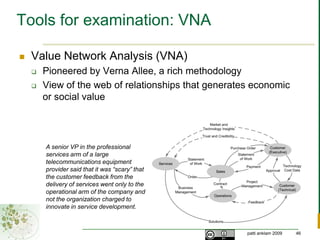
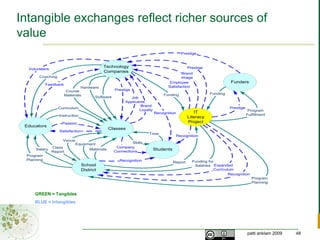
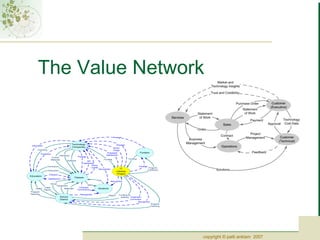
#14 is due to retire next yearTools for examination: VNAValue Network Analysis (VNA)Pioneered by Verna Allee, a rich methodologyView of the web of relationships that generates economic or social value A senior VP in the professional services arm of a large telecommunications equipment provider said that it was “scary” that the customer feedback from the delivery of services went only to the operational arm of the company and not the organization charged to innovate in service development.
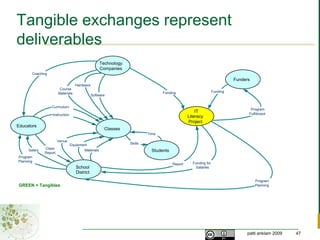
Tangible exchanges represent deliverablesTechnologyCompaniesCoachingFundersHardwareCourseFundingFundingMaterialsSoftwareCurriculumProgramITFulfillmentInstructionLiteracyProjectEducatorsClassesTimeVenueSkillsEquipmentClassStudentsSalaryMaterialsReportProgramPlanningFunding forReportSchoolSalariesDistrictProgramGREEN = TangiblesPlanning
Intangible exchanges reflect richer sources of valueGREEN = TangiblesBLUE = Intangibles
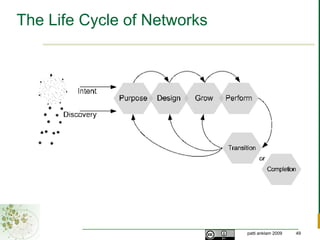
The Life Cycle of Networks
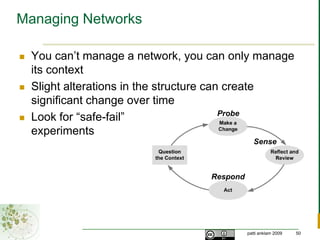
Managing NetworksYou can’t manage a network, you can only manage its contextSlight alterations in the structure can create significant change over timeLook for “safe-fail”experiments
Lunch Topic:Talk about a successful network that you are part of.Why do you think it’s successful?What lessons would you take from it?
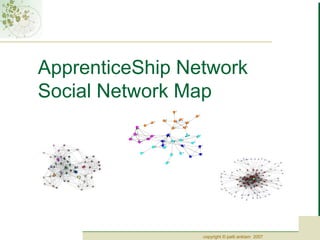
ApprenticeShip NetworkSocial Network Map
The Sum of your Personal Networks
The Value Network
Value Network Analysis ProcessIdentify the networkIdentify the participantsUnderstand the rolesDistinguish tangible and intangible
Technologies for Net Work
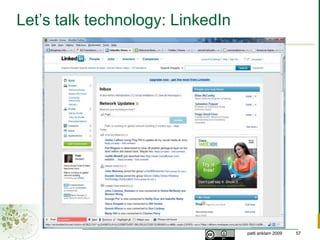
Let’s talk technology: LinkedIn
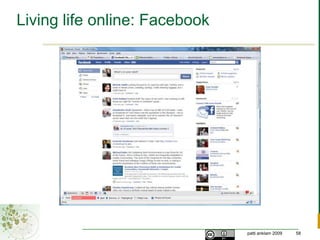
Living life online: Facebook
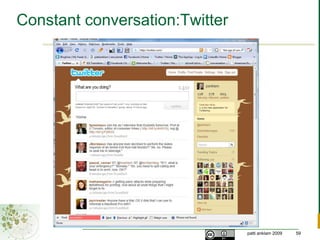
Constant conversation:Twitter
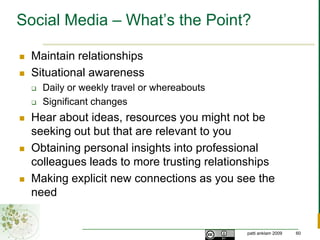
Social Media – What’s the Point?Maintain relationshipsSituational awarenessDaily or weekly travel or whereaboutsSignificant changesHear about ideas, resources you might not be seeking out but that are relevant to youObtaining personal insights into professional colleagues leads to more trusting relationshipsMaking explicit new connections as you see the need
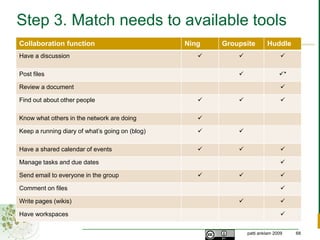
Collaboration Spaces“Corporate” heavyweights:Microsoft SharePointLotus SamePlaceSoftware “in the cloud”NingGroupsiteHuddle
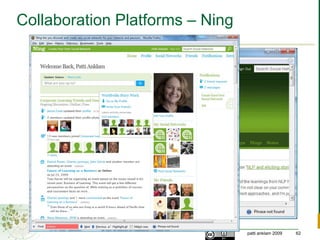
Collaboration Platforms – Ning
Making it Work

Net Work Shop For Network Creation

  • 1.
    Net Work:Building andSustaining a NetworkPatti AnklamJune 24, 2009A NetWorkShop
  • 2.
  • 3.
    GoalsPrepare you tolaunch an apprenticeship networkUnderstanding networksUsing collaborative tools Setting up for success
  • 4.
  • 5.
    Networking is aboutmaking and leveraging personal connectionsHow I got here today: I met Beth Kanter via John Smith, whom I know from CPsquare. Beth and I connected at a workshop for Rare Conversation. She then referred me to you, the client.
  • 6.
    Net Work isabout identifying, creating, and sustaining networks
  • 7.
    What is anetwork?“An interwoven or interrelated number of things…”
  • 8.
    Your networksGroups andorganizations that you belong toFormal networksInformal networksThe individuals you interact with, have relationships with, and to whom you can reach out8
  • 9.
    Formal networksOften centralizedor hierarchicalFixed relationshipsDefined patterns of information flow9
  • 10.
    Informal networks“How workgets done”Key people exchange ideasand pass informationDrive social capital10
  • 11.
    History of theNetwork PerspectiveNew York Times, April 3, 1933
  • 12.
    1967: Six Degreesof SeparationOmahaBostonStanley Milgram, Yale University
  • 13.
    The new scienceof networksBeginning in the 1990’s computer science made it possible to map and analyze large networksBeginning in 2002-2003, the network insights started to become accessible
  • 14.
  • 15.
    What we learnedfrom the scienceNetworks can be drawnRelationships (links) among people (nodes) can be analyzed:Counted, summed, averagedGrouped, segmentedPatterns matter11%2.581
  • 16.
  • 17.
  • 18.
  • 19.
    ValueThe network viewprovides access to understanding a network’s properties
  • 20.
    Network Properties: PurposeAidand support people, environmentCreate economic gain for stakeholdersPractice-focused learning and personal developmentGenerate and collaborate in creating and using ideasNurture emotional and affiliative relationships17
  • 21.
    Purpose drives thedesign factorsWhat networks are you in?What would these look like if you drew them?What do the leadership models look like for these?What roles do you play in each of them?What value do you receive from them?What value does the network itself produce?
  • 22.
  • 23.
    Network Properties: StructureHuband Spoke: Starting ContextRandom Connections: DiscoverableHierarchy: Command and ControlStovepipesCore/Periphery: Healthy End StateHeterarchy: Teams
  • 24.
    The structure changesas the network growsHub & SpokeScattered ClustersCore/PeripheryMulti-hub Small WorldSource: Valdis Krebs
  • 25.
    Structure of TiesStrongties: Close, frequentReciprocalWeak tiesInfrequent interactionNo emotional connectionAbsent tiesNo personal connection beyond “nodding”
  • 26.
    Patterns of IndividualRolesPeripheral specialistsInformation brokerCentral connectorInfluencer23
  • 27.
    Different structures fordifferent types of work24
  • 28.
    Network Properties: StyleWhat are members like?
  • 29.
    How does it“feel” to be in the network?
  • 30.
    How does itengage its members?
  • 31.
    How is itled?Locus: Place, Space, and PacePhysical placeCampaign events bring the networks into a physical placeVirtual spaceInternet interactions, collaboration spaces, email conversations, etc. PaceFrequency of interactions in the network
  • 32.
    CultureCore values, sharedvaluesTrust and reciprocityTransparencyShared symbols, rituals, languageAppropriate to the current culture and norms27
  • 33.
    Types of interactionTransactionalExchangeof explicit informationDriven by action, tasks, commitmentsKnowledge-basedStructured in a learning networkImplicit sharingPersonalDeveloping stronger ties by sharing information about yourself
  • 34.
  • 35.
    Network Properties: ValueWhatvalue is associated with the network’s purpose?
  • 36.
  • 37.
  • 38.
  • 39.
  • 40.
  • 41.
  • 42.
    How does valueflow within the network?Ways to think about ValueA senior VP in the professional services arm of a large telecommunications equipment provider said that it was “scary” that the customer feedback from the delivery of services went only to the operational arm of the company and not the organization charged to innovate in service development.
  • 43.
    SummaryYou can characterizenetworks by looking at purpose, structure, style, and value propertiesCreating and sustaining successful networks means paying attention to all of these attributes
  • 44.
  • 45.
    Your personal (“ego”)network You and the people you are connected toThe connections among themThe people they can connect you to
  • 46.
    Personal network activitiesCreateand sustaining relationshipsAsking for helpHelping when asked Creating ties and links – making introductions What are the ways that you sustain your relationships?Purposeful maintenance Looking for effective structure Watching for diversity
  • 47.
    Effective personal networksDunbar’snumber: 150Your networkFamily & close friendsWork colleaguesActivity friendsYou can map your personal network36
  • 48.
    Exercise: Mapping Your“Ego” Network
  • 49.
    Views ofthe personal networkCompositionRole(s)PositionLeaderSponsorLeaderCore memberActive participantPeripheral member
  • 50.
    The sum ofyour personal networks…Contributes to the overall success of the Apprenticeship networkHow can you leverage your existing relationships and bring them into the network?Are you a broker? Able to make connections?Are you good at keeping a group “on the same page”?Do you contribute expertise when called on?Do you pass information across group boundaries?
  • 51.
  • 52.
    Tools for NetWorkDesignPurpose, structure, style, and valueExaminationAssessments, surveys, interviewsOrganizational network analysisValue network analysisComplex sensemakingTransitionShift purpose, structure, style, value
  • 53.
  • 54.
    Using a mapto design a networkNew England Healthcare Institute (NEHI)Transformation of healthcareBased on collaborationamong all constituentsto identify and solvespecific systemicproblemsHealthy interpersonalnetworks was a happyside effect
  • 55.
    Tools for Examination:ONAOrganizational network analysis (ONA)Often referred to by more generic term, SNA (social network analysis), an emerging competency among businesses and nonprofitsView of personal interactions among individualsA senior VP, the VPs reporting to him, and their reports understood when they saw this map of their interaction frequency, that they were not as collaborative as they prided themselves on being.
  • 56.
    Methodology for ONA– “Full” NetworkUnderstand the contextCollect data – surveys, interviewsAnalysisVisualMathematicalInterpretationActionColors indicate geographic regions
  • 57.
    #25 is thenetwork leader
  • 58.
    #14 is dueto retire next yearTools for examination: VNAValue Network Analysis (VNA)Pioneered by Verna Allee, a rich methodologyView of the web of relationships that generates economic or social value A senior VP in the professional services arm of a large telecommunications equipment provider said that it was “scary” that the customer feedback from the delivery of services went only to the operational arm of the company and not the organization charged to innovate in service development.
  • 59.
    Tangible exchanges representdeliverablesTechnologyCompaniesCoachingFundersHardwareCourseFundingFundingMaterialsSoftwareCurriculumProgramITFulfillmentInstructionLiteracyProjectEducatorsClassesTimeVenueSkillsEquipmentClassStudentsSalaryMaterialsReportProgramPlanningFunding forReportSchoolSalariesDistrictProgramGREEN = TangiblesPlanning
  • 60.
    Intangible exchanges reflectricher sources of valueGREEN = TangiblesBLUE = Intangibles
  • 61.
    The Life Cycleof Networks
  • 62.
    Managing NetworksYou can’tmanage a network, you can only manage its contextSlight alterations in the structure can create significant change over timeLook for “safe-fail”experiments
  • 63.
    Lunch Topic:Talk abouta successful network that you are part of.Why do you think it’s successful?What lessons would you take from it?
  • 64.
  • 65.
    The Sum ofyour Personal Networks
  • 66.
  • 67.
    Value Network AnalysisProcessIdentify the networkIdentify the participantsUnderstand the rolesDistinguish tangible and intangible
  • 68.
  • 69.
  • 70.
  • 71.
  • 72.
    Social Media –What’s the Point?Maintain relationshipsSituational awarenessDaily or weekly travel or whereaboutsSignificant changesHear about ideas, resources you might not be seeking out but that are relevant to youObtaining personal insights into professional colleagues leads to more trusting relationshipsMaking explicit new connections as you see the need
  • 73.
    Collaboration Spaces“Corporate” heavyweights:MicrosoftSharePointLotus SamePlaceSoftware “in the cloud”NingGroupsiteHuddle
  • 74.
  • 75.

Editor's Notes

  • #23 The Strength of Weak Ties, Mark Granovetter’s research published in 1972, shows that weak ties may be more important than strong ties in certain circumstances, for instance, when you are looking for a job.
  • #71 From: Net Gains