ACCELERATED PARTIAL BREAST
IRRADIATION
BHARTI DEVNANI
MODERATOR:- DR PUNITA LAL
OUTLINE
1. Rationale
2. Selection criteria
3.Techniques
 Brachytherapy
 EXRT
 IORT
 Novel methods
4. Technological aspects
5.Review of literature
 Outcomes and patterns of failure
 Toxicities and challenges
 Comparison of different techniques
6. Ongoing trials
7. Pre-op APBI !!!!
Based on 6 RCT & meta-analyses it was shown
that RT is an integral component of breast
conservation therapy and is the std. of care in
early breast cancer
BUT
15% to 30% of patients who undergo
lumpectomy do not receive radiation therapy
Hershman Dlet al. J Natl Cancer Inst 2008;100:199–206.
Pawlik Tmet al. J Am Coll Surg 2004;199:479–92.
WHY…
 Commitment to the 6- 7 week course of
adjuvant conventional RT
 Cost
 Distance from the radiation therapy facility
 Lack of transportation
 Lack of social support structure
 Poor ambulatory status of the patient
 Physician bias
 Patient age
 Fear of radiation treatment
SO THE QUESTION ARISES THAT
‘ can similar rates of local control be achieved with
radiation therapy delivered only to the area at highest
risk for recurrence?’If so, radiation could be delivered
in a significantly shortened period
RATIONALE
8
Veronesi U, et al. NEJM 2002;347:1227–32
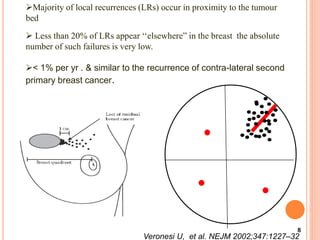
Majority of local recurrences (LRs) occur in proximity to the tumour
bed
 Less than 20% of LRs appear ‘‘elsewhere” in the breast the absolute
number of such failures is very low.
< 1% per yr . & similar to the recurrence of contra-lateral second
primary breast cancer.
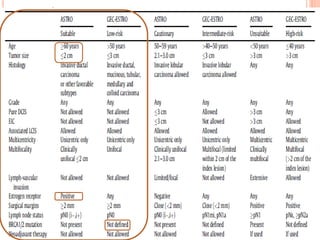
PATIENT SELECTION……GUIDELINES
WHY GUIDELINES
 30,000 pts have been treated outside the clinical
trial in past few years despite encouraged use of
APBI in clinical trial only.
 Ongoing RCT will be published in next 3-5 yrs.
 Give recommendations on patient selection criteria
for the use of APBI outside the context of
prospective clinical trials
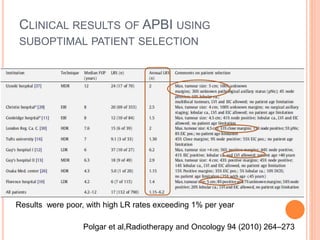
CLINICAL RESULTS OF APBI USING
SUBOPTIMAL PATIENT SELECTION
Results were poor, with high LR rates exceeding 1% per year
Polgar et al,Radiotherapy and Oncology 94 (2010) 264–273
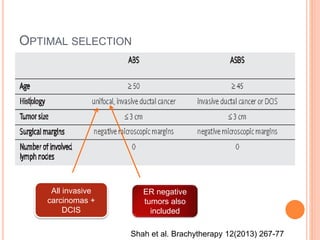
OPTIMAL SELECTION
All invasive
carcinomas +
DCIS
ER negative
tumors also
included
Shah et al. Brachytherapy 12(2013) 267-77
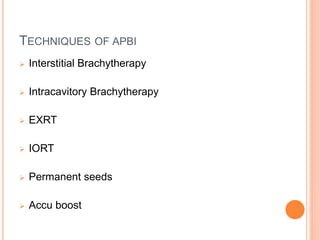
TECHNIQUES OF APBI
 Interstitial Brachytherapy
 Intracavitory Brachytherapy
 EXRT
 IORT
 Permanent seeds
 Accu boost
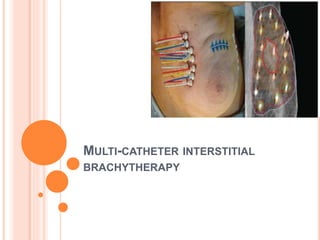
MULTI-CATHETER INTERSTITIAL
BRACHYTHERAPY
METHOD
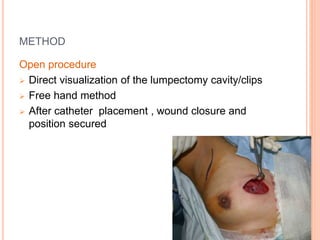
Open procedure
 Direct visualization of the lumpectomy cavity/clips
 Free hand method
 After catheter placement , wound closure and
position secured
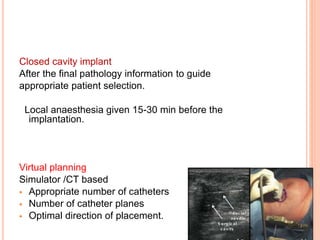
Closed cavity implant
After the final pathology information to guide
appropriate patient selection.
Local anaesthesia given 15-30 min before the
implantation.
Virtual planning
Simulator /CT based
 Appropriate number of catheters
 Number of catheter planes
 Optimal direction of placement.
Target volume
 Lumpectomy cavity plus a 2-cm margin
 Near chest wall and skin -1 to 1.5 cm
Dose
 HDR-34 Gy/10# bid in 5 days
 LDR- 45 Gy @ 50 cGy/hr over 4.5 days
Arthur et al. IJROBP 2003 vol 56, 681-9
Catheters implantation
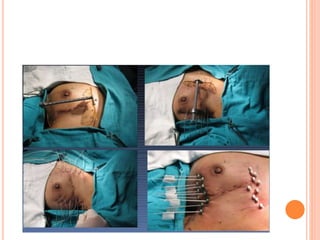
 Free hand technique
 Template to ensure even needle spacing
Under image guidance using
 Ultrasound
 Fluoroscopy
 CT
 Combination of modalities
DESIGN OF THE IMPLANT GEOMETRY
 Needles are implanted parallel and equidistance from
each other (Paris system).
 In most cases inserted in a mediolateral direction.
 In very medially or laterally located tumor sites, needles
should be implanted in a craniocaudal direction to
enable separate target area from skin points.
 In some rare cases, the upper outer quadrant has to be
implanted with needles orientated in a 45° angle to
avoid overlap of source positions and skin
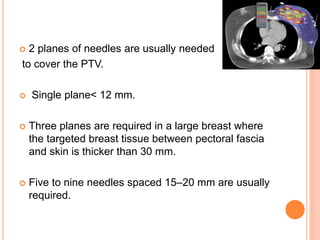
 2 planes of needles are usually needed
to cover the PTV.
 Single plane< 12 mm.
 Three planes are required in a large breast where
the targeted breast tissue between pectoral fascia
and skin is thicker than 30 mm.
 Five to nine needles spaced 15–20 mm are usually
required.
REDUCTION IN SKIN DOSE
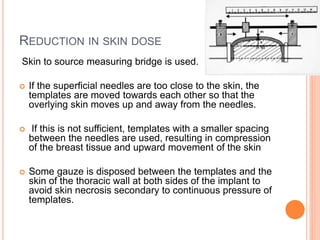
Skin to source measuring bridge is used.
 If the superficial needles are too close to the skin, the
templates are moved towards each other so that the
overlying skin moves up and away from the needles.
 If this is not sufficient, templates with a smaller spacing
between the needles are used, resulting in compression
of the breast tissue and upward movement of the skin
 Some gauze is disposed between the templates and the
skin of the thoracic wall at both sides of the implant to
avoid skin necrosis secondary to continuous pressure of
templates.
ADVANTAGES
 Longest follow-up.
 Better control and tailoring of radiation-dose
delivery to variations in lumpectomy cavity, shape,
or location within the breast.
 Limits toxicity to healthy tissue while delivering the
maximum dose to at-risk tissue.
 Critical structures can be avoided by differential
loading of the catheters
LIMITATIONS
 Considerable training and experience
 Appearance and patient acceptance of multiple
catheter implants in the breast
 high skin dose: great care is required to ensure
adequate source-to-skin distance in patients
treated with brachytherapy
Therefore, may not be a viable treatment option for
patients with superficial tumors or small breasts
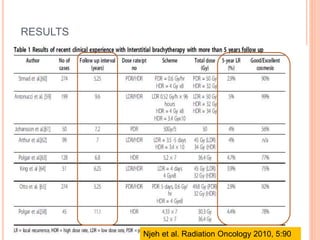
RESULTS
Njeh et al. Radiation Oncology 2010, 5:90
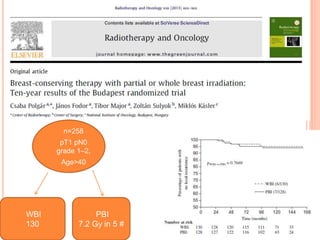
 n=258
 pT1 pN0
grade 1–2,
 Age>40
WBI
130
PBI
7.2 Gy in 5 #
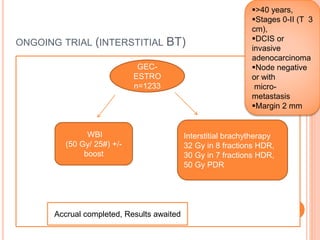
ONGOING TRIAL (INTERSTITIAL BT)
GEC-
ESTRO
n=1233
WBI
(50 Gy/ 25#) +/-
boost
Interstitial brachytherapy
32 Gy in 8 fractions HDR,
30 Gy in 7 fractions HDR,
50 Gy PDR
>40 years,
Stages 0-II (T 3
cm),
DCIS or
invasive
adenocarcinoma
Node negative
or with
micro-
metastasis
Margin 2 mm
Accrual completed, Results awaited
INTRACAVITORY BRACHYTHERAPY
Balloon based brachytherapy include:
 Mammosite
 Axxent electronic brachytherapy
 Contura
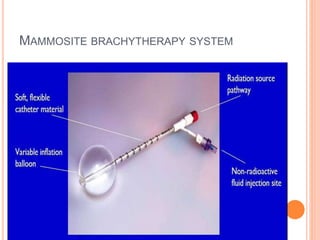
MAMMOSITE BRACHYTHERAPY SYSTEM
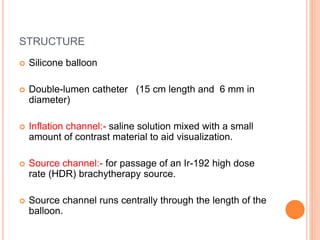
STRUCTURE
 Silicone balloon
 Double-lumen catheter (15 cm length and 6 mm in
diameter)
 Inflation channel:- saline solution mixed with a small
amount of contrast material to aid visualization.
 Source channel:- for passage of an Ir-192 high dose
rate (HDR) brachytherapy source.
 Source channel runs centrally through the length of the
balloon.
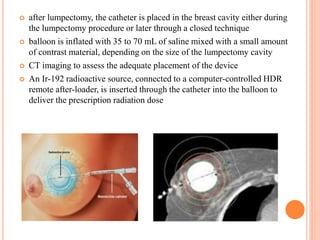
 after lumpectomy, the catheter is placed in the breast cavity either during
the lumpectomy procedure or later through a closed technique
 balloon is inflated with 35 to 70 mL of saline mixed with a small amount
of contrast material, depending on the size of the lumpectomy cavity
 CT imaging to assess the adequate placement of the device
 An Ir-192 radioactive source, connected to a computer-controlled HDR
remote after-loader, is inserted through the catheter into the balloon to
deliver the prescription radiation dose
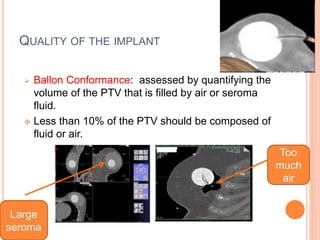
QUALITY OF THE IMPLANT
 Ballon Conformance: assessed by quantifying the
volume of the PTV that is filled by air or seroma
fluid.
 Less than 10% of the PTV should be composed of
fluid or air.
Too
much
air
Large
seroma
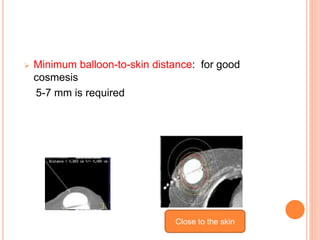
 Minimum balloon-to-skin distance: for good
cosmesis
5-7 mm is required
Close to the skin
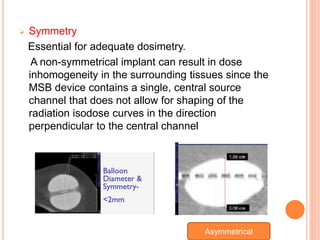
 Symmetry
Essential for adequate dosimetry.
A non-symmetrical implant can result in dose
inhomogeneity in the surrounding tissues since the
MSB device contains a single, central source
channel that does not allow for shaping of the
radiation isodose curves in the direction
perpendicular to the central channel
Asymmetrical
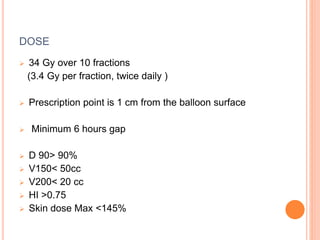
DOSE
 34 Gy over 10 fractions
(3.4 Gy per fraction, twice daily )
 Prescription point is 1 cm from the balloon surface
 Minimum 6 hours gap
 D 90> 90%
 V150< 50cc
 V200< 20 cc
 HI >0.75
 Skin dose Max <145%
Limitations
 Not suitable in patients with small breast .
 Tumors located in the upper-inner quadrant.
 Irregular cavity .
(Requirement for skin-to-cavity distances:- not met)
Advantages
 More user-friendly technique for brachytherapy
 Easily reproducible
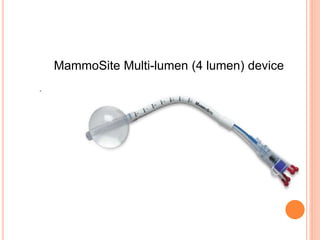
MammoSite Multi-lumen (4 lumen) device
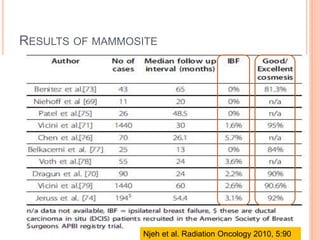
RESULTS OF MAMMOSITE
Njeh et al. Radiation Oncology 2010, 5:90
Balloon based brachytherapy include:
 Mammosite
 Axxent electronic brachytherapy
 Contura
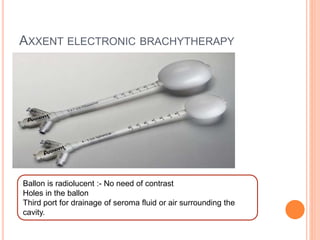
AXXENT ELECTRONIC BRACHYTHERAPY
Ballon is radiolucent :- No need of contrast
Holes in the ballon
Third port for drainage of seroma fluid or air surrounding the
cavity.
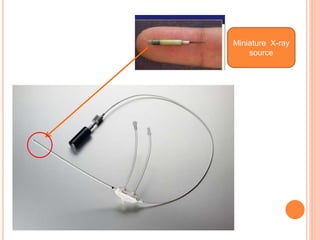
Miniature X-ray
source
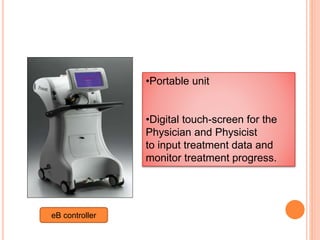
eB controller
•Portable unit
•Digital touch-screen for the
Physician and Physicist
to input treatment data and
monitor treatment progress.
ADVANTAGES
 Specifically shielded radiation room or an HDR
afterloader unit are not required.
 This reduces costs and allows for portability of the
system, which can lead to greater access for
patients particularly in more remote or rural
locations.
 Can be used intraoperatively
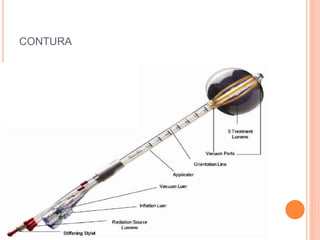
CONTURA
 In addition to a central lumen, the Contura balloon
has four surrounding channels to accommodate the
HDR source.
 Additional source positions allows increased dose
flexibility compared with a single-catheter approach.
 Vacuum port to remove fluid or air around the
lumpectomy cavity.
 Reduce the dose to normal tissues (chest wall and
skin) better protection of organs at risk such as the
heart and lungs.
 Possible to account for asymmetric balloon implant
with respect to the central channel.
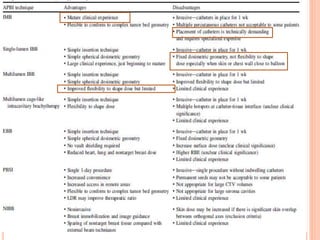
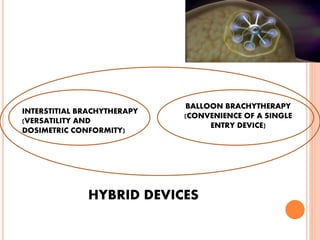
HYBRID BRACHYTHERAPY DEVICES
Struts Adjusted Volume Implant (SAVI)
 ClearPath
INTERSTITIAL BRACHYTHERAPY
(VERSATILITY AND
DOSIMETRIC CONFORMITY)
BALLOON BRACHYTHERAPY
(CONVENIENCE OF A SINGLE
ENTRY DEVICE)
HYBRID DEVICES
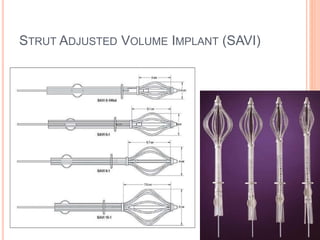
STRUT ADJUSTED VOLUME IMPLANT (SAVI)
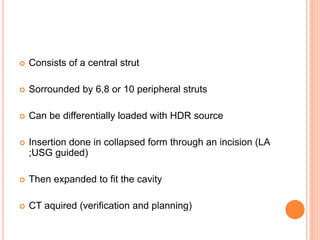
 Consists of a central strut
 Sorrounded by 6,8 or 10 peripheral struts
 Can be differentially loaded with HDR source
 Insertion done in collapsed form through an incision (LA
;USG guided)
 Then expanded to fit the cavity
 CT aquired (verification and planning)
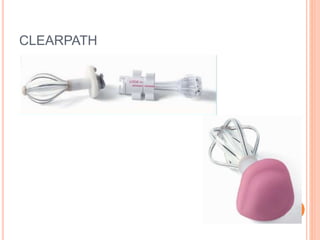
CLEARPATH
 Contains six outer expandable plastic tubes to
displace the tissue
 Central catheter surrounded by six additional
catheters that allow the passage of an HDR
iridium-192 source
 The radiation source is not in direct contact with
the breast tissue
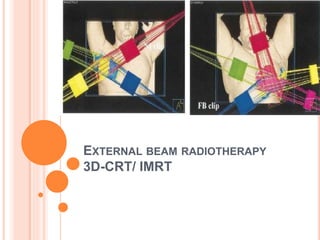
EXTERNAL BEAM RADIOTHERAPY
3D-CRT/ IMRT
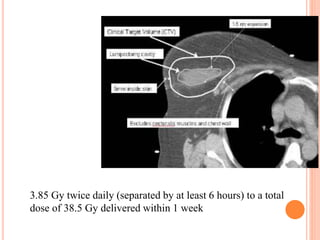
ADVANTAGES
 Non-invasive (complications of surgery like seroma
and infection can be avoided)
 Widespread availability
 Technically less demanding
 Treatment results with external beam may be more
uniform between radiation oncologists
 Greater dose homogeneity
3.85 Gy twice daily (separated by at least 6 hours) to a total
dose of 38.5 Gy delivered within 1 week
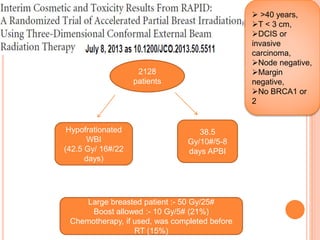
RAPID TRIAL-RANDOMIZED TRIAL OF
ACCELERATED PARTIAL BREAST IRRADIATION
(2006)
2128
patients
Hypofrationated
WBI
(42.5 Gy/ 16#/22
days)
38.5
Gy/10#/5-8
days APBI
Large breasted patient :- 50 Gy/25#
Boost allowed :- 10 Gy/5# (21%)
Chemotherapy, if used, was completed before
RT (15%)
 >40 years,
T < 3 cm,
DCIS or
invasive
carcinoma,
Node negative,
Margin
negative,
No BRCA1 or
2
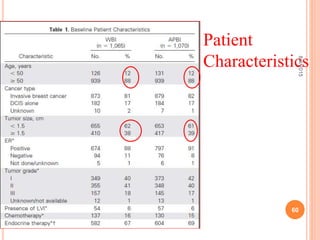
Patient
Characteristics
8/4/2015
60
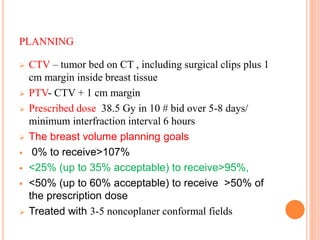
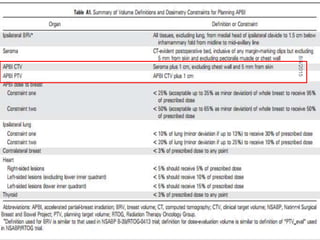
PLANNING
 CTV – tumor bed on CT , including surgical clips plus 1
cm margin inside breast tissue
 PTV- CTV + 1 cm margin
 Prescribed dose 38.5 Gy in 10 # bid over 5-8 days/
minimum interfraction interval 6 hours
 The breast volume planning goals
 0% to receive>107%
 <25% (up to 35% acceptable) to receive>95%,
 <50% (up to 60% acceptable) to receive >50% of
the prescription dose
 Treated with 3-5 noncoplaner conformal fields
61
8/4/2015
62
COSMETIC ANALYSIS
By EORTC Cosmetic Rating System.
At baseline, assessed by a trained nurse.
Patient questionnaire
Assessed by two panels of three radiation oncologists
using the digital photographs on follow-up.
The treated breast was compared with size and shape,
location of the areola and nipple, appearance of the surgical
scar, presence of telangiectasia, and global cosmetic score
63
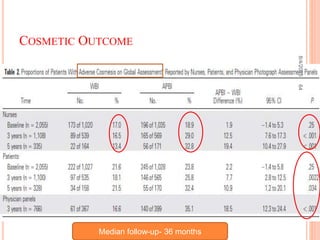
COSMETIC OUTCOME
8/4/201564
Median follow-up- 36 months
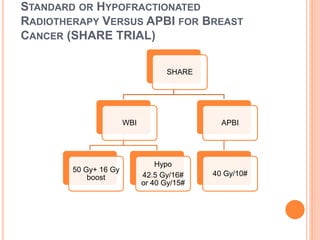
STANDARD OR HYPOFRACTIONATED
RADIOTHERAPY VERSUS APBI FOR BREAST
CANCER (SHARE TRIAL)
SHARE
WBI
50 Gy+ 16 Gy
boost
Hypo
42.5 Gy/16#
or 40 Gy/15#
APBI
40 Gy/10#
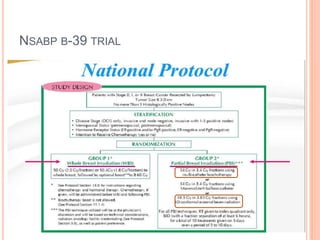
NSABP B-39 TRIAL
EXRT (IMRT)
5Y
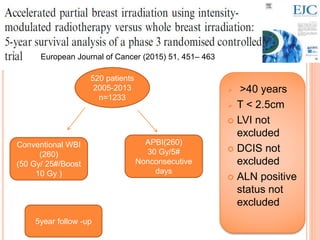
European Journal of Cancer (2015) 51, 451– 463
 >40 years
 T < 2.5cm
 LVI not
excluded
 DCIS not
excluded
 ALN positive
status not
excluded
520 patients
2005-2013
n=1233
Conventional WBI
(260)
(50 Gy/ 25#/Boost
10 Gy )
APBI(260)
30 Gy/5#
Nonconsecutive
days
5year follow -up
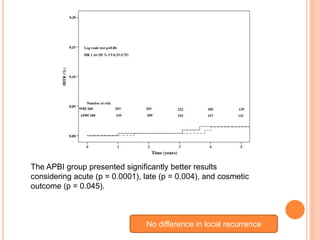
No difference in local recurrence
The APBI group presented significantly better results
considering acute (p = 0.0001), late (p = 0.004), and cosmetic
outcome (p = 0.045).
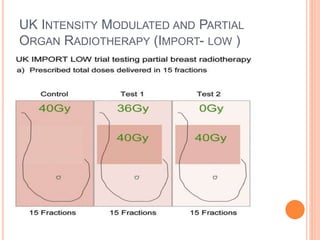
UK INTENSITY MODULATED AND PARTIAL
ORGAN RADIOTHERAPY (IMPORT- LOW )
IORT
ADVANTAGES
 Accurate dose delivery
Direct visualization of the tumor bed
 Better protection of healthy tissues by moving them away from
the path of the radiation beam.
 Eliminates the risk of geographical miss
 Oxygen effect :-Rich vascularization in tissues with aerobic
metabolism, which makes them more sensitive to the action of
the radiation .
 Single intraoperative application eliminates the risk of patients
not completing the prescribed course of breast radiotherapy.
 Does not require a specially designed operating room
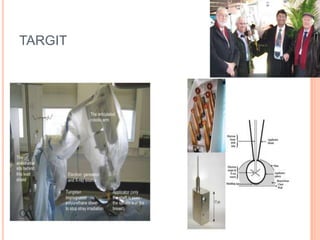
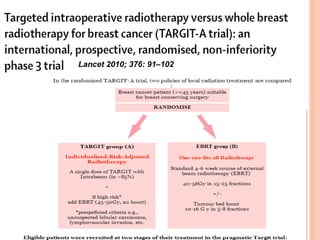
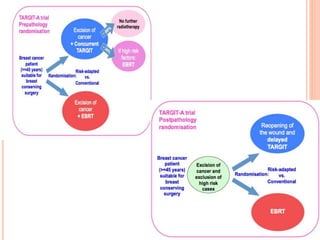
TARGIT
Lancet 2010; 376: 91–102
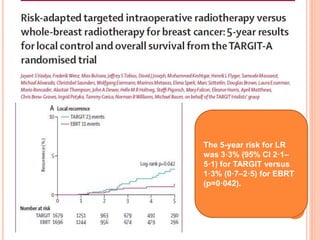
P= 0.41(NS)
N0 difference in local recurrence
Radiotherapy toxicity was lower in the targeted intraoperative
radiotherapy group (six patients [0·5%]) than in the external beam
radiotherapy group (23 patients [2·1%]; p=0·002).
The 5-year risk for LR
was 3·3% (95% CI 2·1–
5·1) for TARGIT versus
1·3% (0·7–2·5) for EBRT
(p=0·042).
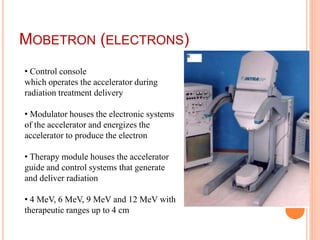
MOBETRON (ELECTRONS)
• Control console
which operates the accelerator during
radiation treatment delivery
• Modulator houses the electronic systems
of the accelerator and energizes the
accelerator to produce the electron
• Therapy module houses the accelerator
guide and control systems that generate
and deliver radiation
• 4 MeV, 6 MeV, 9 MeV and 12 MeV with
therapeutic ranges up to 4 cm
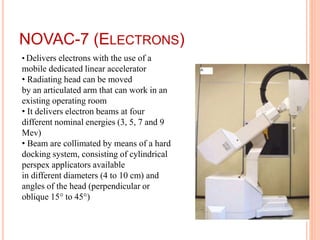
NOVAC-7 (ELECTRONS)
• Delivers electrons with the use of a
mobile dedicated linear accelerator
• Radiating head can be moved
by an articulated arm that can work in an
existing operating room
• It delivers electron beams at four
different nominal energies (3, 5, 7 and 9
Mev)
• Beam are collimated by means of a hard
docking system, consisting of cylindrical
perspex applicators available
in different diameters (4 to 10 cm) and
angles of the head (perpendicular or
oblique 15° to 45°)
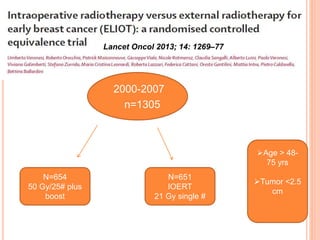
Lancet Oncol 2013; 14: 1269–77
Age > 48-
75 yrs
Tumor <2.5
cm
2000-2007
 n=1305
N=654
50 Gy/25# plus
boost
N=651
IOERT
21 Gy single #
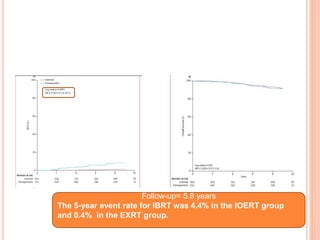
Follow-up= 5.8 years
The 5-year event rate for IBRT was 4.4% in the IOERT group
and 0.4% in the EXRT group.
 Significant difference in favor of WBI for different
follow-up
 times was also found. No differences in nodal
recurrence, systemic recurrence, overall survival
and
 mortality rates were observed. Conclusions: APBI is
associated with higher local recurrence compared
 to WBI without compromising other clinical
outcomes.
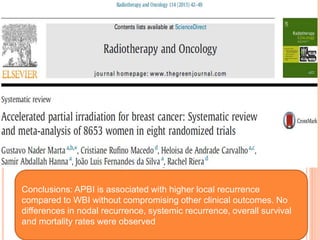
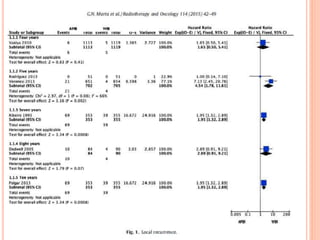
Conclusions: APBI is associated with higher local recurrence
compared to WBI without compromising other clinical outcomes. No
differences in nodal recurrence, systemic recurrence, overall survival
and mortality rates were observed
CURRENT STATUS
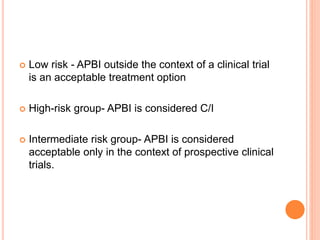
 Low risk - APBI outside the context of a clinical trial
is an acceptable treatment option
 High-risk group- APBI is considered C/I
 Intermediate risk group- APBI is considered
acceptable only in the context of prospective clinical
trials.
THANK YOU
NOVEL METHODS
PERMANENT BREAST SEED IMPLANT
 Percutaneous insertion of radioactive seeds
(palladium-103 ) under US guidance
 Use of LDR sources has the potential for improving
the therapeutic ratio
 A preplan is generated with optimal seed position
and spacing to deliver the prescribed dose of 90 Gy
to cover the lumpectomy cavity with a 1.5-cm
margin.
 Using a grid template 103Pd seeds are placed
according to the preplan needle and seed
distribution.
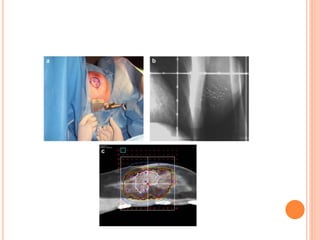
NONINVASIVE IMAGE-GUIDED BREAST
BRACHYTHERAPY
(ACCUBOOST)
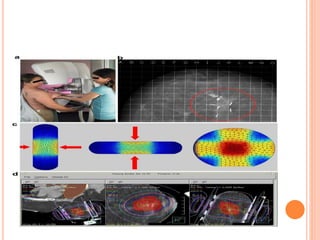
Breast immobilization
Moderate compression between two mammography paddles. This
technique achieved stable position of the breast and lumpectomy
cavity for imaging and treatment.
 Imaging is then performed using 30-kVp X-rays, similar to
mammography, in the immobilized position and in the treatment
plane.
Imaged-guided target delineation
 The lumpectomy cavity is delineated, usually with the assistance
of radiopaque clips placed at the time of lumpectomy.
 Using a target localization grid, the appropriate applicator size
and position are selected to cover the lumpectomy cavity with an
appropriately margin.
 The selected tungsten alloy applicators are mounted on the
mammography paddles centered on the target.
Treatment with collimated photon emission using 192
Ir HDR brachytherapy
 Treatment is then delivered using directed photons
in a parallel-opposed fashion from an 192Ir HDR
source.
 The process is then repeated along a second
intersecting orthogonal axis in a sequential manner.
 The orthogonal axes are usually oriented in
craniocaudal and mediolateral directions so that
presurgical mammography can be used to further
assist and ensure appropriate target coverage
 In about 5-8 years, the ongoing studies will
hopefully answer the questions related to patient
selection, long-term outcome, and toxicity of the
different techniques.
 A modest reduction in initial treatment efficacy
cannot be justified in patients with early breast
cancer, who have an excellent prognosis with
standard BCT including WBI.
 For the coming years, patients should be carefully
selected for APBI and closely followed with
accurate documentation of any occurring events.
THANK YOU

Accelerated partial breast irradiation

  • 1.
    ACCELERATED PARTIAL BREAST IRRADIATION BHARTIDEVNANI MODERATOR:- DR PUNITA LAL
  • 2.
    OUTLINE 1. Rationale 2. Selectioncriteria 3.Techniques  Brachytherapy  EXRT  IORT  Novel methods 4. Technological aspects
  • 3.
    5.Review of literature Outcomes and patterns of failure  Toxicities and challenges  Comparison of different techniques 6. Ongoing trials 7. Pre-op APBI !!!!
  • 4.
    Based on 6RCT & meta-analyses it was shown that RT is an integral component of breast conservation therapy and is the std. of care in early breast cancer BUT 15% to 30% of patients who undergo lumpectomy do not receive radiation therapy Hershman Dlet al. J Natl Cancer Inst 2008;100:199–206. Pawlik Tmet al. J Am Coll Surg 2004;199:479–92.
  • 5.
    WHY…  Commitment tothe 6- 7 week course of adjuvant conventional RT  Cost  Distance from the radiation therapy facility  Lack of transportation  Lack of social support structure  Poor ambulatory status of the patient  Physician bias  Patient age  Fear of radiation treatment
  • 6.
    SO THE QUESTIONARISES THAT ‘ can similar rates of local control be achieved with radiation therapy delivered only to the area at highest risk for recurrence?’If so, radiation could be delivered in a significantly shortened period
  • 7.
  • 8.
    8 Veronesi U, etal. NEJM 2002;347:1227–32 Majority of local recurrences (LRs) occur in proximity to the tumour bed  Less than 20% of LRs appear ‘‘elsewhere” in the breast the absolute number of such failures is very low. < 1% per yr . & similar to the recurrence of contra-lateral second primary breast cancer.
  • 9.
  • 10.
    WHY GUIDELINES  30,000pts have been treated outside the clinical trial in past few years despite encouraged use of APBI in clinical trial only.  Ongoing RCT will be published in next 3-5 yrs.  Give recommendations on patient selection criteria for the use of APBI outside the context of prospective clinical trials
  • 11.
    CLINICAL RESULTS OFAPBI USING SUBOPTIMAL PATIENT SELECTION Results were poor, with high LR rates exceeding 1% per year Polgar et al,Radiotherapy and Oncology 94 (2010) 264–273
  • 12.
    OPTIMAL SELECTION All invasive carcinomas+ DCIS ER negative tumors also included Shah et al. Brachytherapy 12(2013) 267-77
  • 13.
    TECHNIQUES OF APBI Interstitial Brachytherapy  Intracavitory Brachytherapy  EXRT  IORT  Permanent seeds  Accu boost
  • 14.
  • 15.
    METHOD Open procedure  Directvisualization of the lumpectomy cavity/clips  Free hand method  After catheter placement , wound closure and position secured
  • 16.
    Closed cavity implant Afterthe final pathology information to guide appropriate patient selection. Local anaesthesia given 15-30 min before the implantation. Virtual planning Simulator /CT based  Appropriate number of catheters  Number of catheter planes  Optimal direction of placement.
  • 17.
    Target volume  Lumpectomycavity plus a 2-cm margin  Near chest wall and skin -1 to 1.5 cm Dose  HDR-34 Gy/10# bid in 5 days  LDR- 45 Gy @ 50 cGy/hr over 4.5 days Arthur et al. IJROBP 2003 vol 56, 681-9
  • 18.
    Catheters implantation  Freehand technique  Template to ensure even needle spacing Under image guidance using  Ultrasound  Fluoroscopy  CT  Combination of modalities
  • 20.
    DESIGN OF THEIMPLANT GEOMETRY  Needles are implanted parallel and equidistance from each other (Paris system).  In most cases inserted in a mediolateral direction.  In very medially or laterally located tumor sites, needles should be implanted in a craniocaudal direction to enable separate target area from skin points.  In some rare cases, the upper outer quadrant has to be implanted with needles orientated in a 45° angle to avoid overlap of source positions and skin
  • 21.
     2 planesof needles are usually needed to cover the PTV.  Single plane< 12 mm.  Three planes are required in a large breast where the targeted breast tissue between pectoral fascia and skin is thicker than 30 mm.  Five to nine needles spaced 15–20 mm are usually required.
  • 22.
    REDUCTION IN SKINDOSE Skin to source measuring bridge is used.  If the superficial needles are too close to the skin, the templates are moved towards each other so that the overlying skin moves up and away from the needles.  If this is not sufficient, templates with a smaller spacing between the needles are used, resulting in compression of the breast tissue and upward movement of the skin  Some gauze is disposed between the templates and the skin of the thoracic wall at both sides of the implant to avoid skin necrosis secondary to continuous pressure of templates.
  • 23.
    ADVANTAGES  Longest follow-up. Better control and tailoring of radiation-dose delivery to variations in lumpectomy cavity, shape, or location within the breast.  Limits toxicity to healthy tissue while delivering the maximum dose to at-risk tissue.  Critical structures can be avoided by differential loading of the catheters
  • 24.
    LIMITATIONS  Considerable trainingand experience  Appearance and patient acceptance of multiple catheter implants in the breast  high skin dose: great care is required to ensure adequate source-to-skin distance in patients treated with brachytherapy Therefore, may not be a viable treatment option for patients with superficial tumors or small breasts
  • 25.
    RESULTS Njeh et al.Radiation Oncology 2010, 5:90
  • 26.
     n=258  pT1pN0 grade 1–2,  Age>40 WBI 130 PBI 7.2 Gy in 5 #
  • 27.
    ONGOING TRIAL (INTERSTITIALBT) GEC- ESTRO n=1233 WBI (50 Gy/ 25#) +/- boost Interstitial brachytherapy 32 Gy in 8 fractions HDR, 30 Gy in 7 fractions HDR, 50 Gy PDR >40 years, Stages 0-II (T 3 cm), DCIS or invasive adenocarcinoma Node negative or with micro- metastasis Margin 2 mm Accrual completed, Results awaited
  • 28.
  • 29.
    Balloon based brachytherapyinclude:  Mammosite  Axxent electronic brachytherapy  Contura
  • 30.
  • 31.
    STRUCTURE  Silicone balloon Double-lumen catheter (15 cm length and 6 mm in diameter)  Inflation channel:- saline solution mixed with a small amount of contrast material to aid visualization.  Source channel:- for passage of an Ir-192 high dose rate (HDR) brachytherapy source.  Source channel runs centrally through the length of the balloon.
  • 32.
     after lumpectomy,the catheter is placed in the breast cavity either during the lumpectomy procedure or later through a closed technique  balloon is inflated with 35 to 70 mL of saline mixed with a small amount of contrast material, depending on the size of the lumpectomy cavity  CT imaging to assess the adequate placement of the device  An Ir-192 radioactive source, connected to a computer-controlled HDR remote after-loader, is inserted through the catheter into the balloon to deliver the prescription radiation dose
  • 33.
    QUALITY OF THEIMPLANT  Ballon Conformance: assessed by quantifying the volume of the PTV that is filled by air or seroma fluid.  Less than 10% of the PTV should be composed of fluid or air. Too much air Large seroma
  • 34.
     Minimum balloon-to-skindistance: for good cosmesis 5-7 mm is required Close to the skin
  • 35.
     Symmetry Essential foradequate dosimetry. A non-symmetrical implant can result in dose inhomogeneity in the surrounding tissues since the MSB device contains a single, central source channel that does not allow for shaping of the radiation isodose curves in the direction perpendicular to the central channel Asymmetrical
  • 36.
    DOSE  34 Gyover 10 fractions (3.4 Gy per fraction, twice daily )  Prescription point is 1 cm from the balloon surface  Minimum 6 hours gap  D 90> 90%  V150< 50cc  V200< 20 cc  HI >0.75  Skin dose Max <145%
  • 37.
    Limitations  Not suitablein patients with small breast .  Tumors located in the upper-inner quadrant.  Irregular cavity . (Requirement for skin-to-cavity distances:- not met) Advantages  More user-friendly technique for brachytherapy  Easily reproducible
  • 38.
  • 39.
    RESULTS OF MAMMOSITE Njehet al. Radiation Oncology 2010, 5:90
  • 40.
    Balloon based brachytherapyinclude:  Mammosite  Axxent electronic brachytherapy  Contura
  • 41.
    AXXENT ELECTRONIC BRACHYTHERAPY Ballonis radiolucent :- No need of contrast Holes in the ballon Third port for drainage of seroma fluid or air surrounding the cavity.
  • 42.
  • 43.
    eB controller •Portable unit •Digitaltouch-screen for the Physician and Physicist to input treatment data and monitor treatment progress.
  • 44.
    ADVANTAGES  Specifically shieldedradiation room or an HDR afterloader unit are not required.  This reduces costs and allows for portability of the system, which can lead to greater access for patients particularly in more remote or rural locations.  Can be used intraoperatively
  • 45.
  • 46.
     In additionto a central lumen, the Contura balloon has four surrounding channels to accommodate the HDR source.  Additional source positions allows increased dose flexibility compared with a single-catheter approach.  Vacuum port to remove fluid or air around the lumpectomy cavity.  Reduce the dose to normal tissues (chest wall and skin) better protection of organs at risk such as the heart and lungs.  Possible to account for asymmetric balloon implant with respect to the central channel.
  • 47.
    HYBRID BRACHYTHERAPY DEVICES StrutsAdjusted Volume Implant (SAVI)  ClearPath
  • 48.
    INTERSTITIAL BRACHYTHERAPY (VERSATILITY AND DOSIMETRICCONFORMITY) BALLOON BRACHYTHERAPY (CONVENIENCE OF A SINGLE ENTRY DEVICE) HYBRID DEVICES
  • 49.
    STRUT ADJUSTED VOLUMEIMPLANT (SAVI)
  • 50.
     Consists ofa central strut  Sorrounded by 6,8 or 10 peripheral struts  Can be differentially loaded with HDR source  Insertion done in collapsed form through an incision (LA ;USG guided)  Then expanded to fit the cavity  CT aquired (verification and planning)
  • 51.
  • 52.
     Contains sixouter expandable plastic tubes to displace the tissue  Central catheter surrounded by six additional catheters that allow the passage of an HDR iridium-192 source  The radiation source is not in direct contact with the breast tissue
  • 53.
  • 54.
    ADVANTAGES  Non-invasive (complicationsof surgery like seroma and infection can be avoided)  Widespread availability  Technically less demanding  Treatment results with external beam may be more uniform between radiation oncologists  Greater dose homogeneity
  • 55.
    3.85 Gy twicedaily (separated by at least 6 hours) to a total dose of 38.5 Gy delivered within 1 week
  • 56.
    RAPID TRIAL-RANDOMIZED TRIALOF ACCELERATED PARTIAL BREAST IRRADIATION (2006) 2128 patients Hypofrationated WBI (42.5 Gy/ 16#/22 days) 38.5 Gy/10#/5-8 days APBI Large breasted patient :- 50 Gy/25# Boost allowed :- 10 Gy/5# (21%) Chemotherapy, if used, was completed before RT (15%)  >40 years, T < 3 cm, DCIS or invasive carcinoma, Node negative, Margin negative, No BRCA1 or 2
  • 57.
  • 58.
    PLANNING  CTV –tumor bed on CT , including surgical clips plus 1 cm margin inside breast tissue  PTV- CTV + 1 cm margin  Prescribed dose 38.5 Gy in 10 # bid over 5-8 days/ minimum interfraction interval 6 hours  The breast volume planning goals  0% to receive>107%  <25% (up to 35% acceptable) to receive>95%,  <50% (up to 60% acceptable) to receive >50% of the prescription dose  Treated with 3-5 noncoplaner conformal fields 61
  • 59.
  • 60.
    COSMETIC ANALYSIS By EORTCCosmetic Rating System. At baseline, assessed by a trained nurse. Patient questionnaire Assessed by two panels of three radiation oncologists using the digital photographs on follow-up. The treated breast was compared with size and shape, location of the areola and nipple, appearance of the surgical scar, presence of telangiectasia, and global cosmetic score 63
  • 61.
  • 62.
    STANDARD OR HYPOFRACTIONATED RADIOTHERAPYVERSUS APBI FOR BREAST CANCER (SHARE TRIAL) SHARE WBI 50 Gy+ 16 Gy boost Hypo 42.5 Gy/16# or 40 Gy/15# APBI 40 Gy/10#
  • 63.
  • 64.
  • 65.
    5Y European Journal ofCancer (2015) 51, 451– 463  >40 years  T < 2.5cm  LVI not excluded  DCIS not excluded  ALN positive status not excluded 520 patients 2005-2013 n=1233 Conventional WBI (260) (50 Gy/ 25#/Boost 10 Gy ) APBI(260) 30 Gy/5# Nonconsecutive days 5year follow -up
  • 66.
    No difference inlocal recurrence The APBI group presented significantly better results considering acute (p = 0.0001), late (p = 0.004), and cosmetic outcome (p = 0.045).
  • 67.
    UK INTENSITY MODULATEDAND PARTIAL ORGAN RADIOTHERAPY (IMPORT- LOW )
  • 68.
  • 69.
    ADVANTAGES  Accurate dosedelivery Direct visualization of the tumor bed  Better protection of healthy tissues by moving them away from the path of the radiation beam.  Eliminates the risk of geographical miss  Oxygen effect :-Rich vascularization in tissues with aerobic metabolism, which makes them more sensitive to the action of the radiation .  Single intraoperative application eliminates the risk of patients not completing the prescribed course of breast radiotherapy.  Does not require a specially designed operating room
  • 70.
  • 71.
  • 73.
    P= 0.41(NS) N0 differencein local recurrence Radiotherapy toxicity was lower in the targeted intraoperative radiotherapy group (six patients [0·5%]) than in the external beam radiotherapy group (23 patients [2·1%]; p=0·002).
  • 74.
    The 5-year riskfor LR was 3·3% (95% CI 2·1– 5·1) for TARGIT versus 1·3% (0·7–2·5) for EBRT (p=0·042).
  • 75.
    MOBETRON (ELECTRONS) • Controlconsole which operates the accelerator during radiation treatment delivery • Modulator houses the electronic systems of the accelerator and energizes the accelerator to produce the electron • Therapy module houses the accelerator guide and control systems that generate and deliver radiation • 4 MeV, 6 MeV, 9 MeV and 12 MeV with therapeutic ranges up to 4 cm
  • 76.
    NOVAC-7 (ELECTRONS) • Deliverselectrons with the use of a mobile dedicated linear accelerator • Radiating head can be moved by an articulated arm that can work in an existing operating room • It delivers electron beams at four different nominal energies (3, 5, 7 and 9 Mev) • Beam are collimated by means of a hard docking system, consisting of cylindrical perspex applicators available in different diameters (4 to 10 cm) and angles of the head (perpendicular or oblique 15° to 45°)
  • 77.
    Lancet Oncol 2013;14: 1269–77 Age > 48- 75 yrs Tumor <2.5 cm 2000-2007  n=1305 N=654 50 Gy/25# plus boost N=651 IOERT 21 Gy single #
  • 78.
    Follow-up= 5.8 years The5-year event rate for IBRT was 4.4% in the IOERT group and 0.4% in the EXRT group.
  • 79.
     Significant differencein favor of WBI for different follow-up  times was also found. No differences in nodal recurrence, systemic recurrence, overall survival and  mortality rates were observed. Conclusions: APBI is associated with higher local recurrence compared  to WBI without compromising other clinical outcomes. Conclusions: APBI is associated with higher local recurrence compared to WBI without compromising other clinical outcomes. No differences in nodal recurrence, systemic recurrence, overall survival and mortality rates were observed
  • 81.
  • 83.
     Low risk- APBI outside the context of a clinical trial is an acceptable treatment option  High-risk group- APBI is considered C/I  Intermediate risk group- APBI is considered acceptable only in the context of prospective clinical trials.
  • 84.
  • 85.
  • 86.
    PERMANENT BREAST SEEDIMPLANT  Percutaneous insertion of radioactive seeds (palladium-103 ) under US guidance  Use of LDR sources has the potential for improving the therapeutic ratio  A preplan is generated with optimal seed position and spacing to deliver the prescribed dose of 90 Gy to cover the lumpectomy cavity with a 1.5-cm margin.  Using a grid template 103Pd seeds are placed according to the preplan needle and seed distribution.
  • 88.
    NONINVASIVE IMAGE-GUIDED BREAST BRACHYTHERAPY (ACCUBOOST) Breastimmobilization Moderate compression between two mammography paddles. This technique achieved stable position of the breast and lumpectomy cavity for imaging and treatment.  Imaging is then performed using 30-kVp X-rays, similar to mammography, in the immobilized position and in the treatment plane. Imaged-guided target delineation  The lumpectomy cavity is delineated, usually with the assistance of radiopaque clips placed at the time of lumpectomy.  Using a target localization grid, the appropriate applicator size and position are selected to cover the lumpectomy cavity with an appropriately margin.  The selected tungsten alloy applicators are mounted on the mammography paddles centered on the target.
  • 89.
    Treatment with collimatedphoton emission using 192 Ir HDR brachytherapy  Treatment is then delivered using directed photons in a parallel-opposed fashion from an 192Ir HDR source.  The process is then repeated along a second intersecting orthogonal axis in a sequential manner.  The orthogonal axes are usually oriented in craniocaudal and mediolateral directions so that presurgical mammography can be used to further assist and ensure appropriate target coverage
  • 92.
     In about5-8 years, the ongoing studies will hopefully answer the questions related to patient selection, long-term outcome, and toxicity of the different techniques.  A modest reduction in initial treatment efficacy cannot be justified in patients with early breast cancer, who have an excellent prognosis with standard BCT including WBI.  For the coming years, patients should be carefully selected for APBI and closely followed with accurate documentation of any occurring events.
  • 93.

Editor's Notes

  • #9 There is no data available that demonstrate that radiation therapy needs to be delivered to the whole breast. The only contemporary studies available applied extensive microscopic evaluation of both mastectomy and quadrantectomy specimens and all three of these studies focused on the distance of DCIS beyond the primary lesion. One looked at DCIS extension beyond the primary IDC and one study from primary DCIS lesions. All presented evidence suggesting that the extension of malignant cells is limited to less than 1cm from the primary lesions, except for younger patients. For correct delivery of a boost, precise demarcation of the excision cavity is mandatory; it has been estimated that the externally delivered boost misses the target volume in 24-88% of cases.
  • #65 At 5 years, APBI patients continued to experience a higher proportion of adverse cosmesis (32.8% v 13.4%; absolute difference, 19.4%; 95% CI, 10.4 to 27.9; P.001).