Lubricants
A lubricantis a substance, reduce friction
between surfaces in mutual contact
The property of reducing friction is known
as lubricity.
Lubrication is the process or technique of using
a lubricant to reduce friction between two
surfaces.
Lubricants can be solids, solid-liquid
dispersions, liquids, liquid-liquid dispersions or
gases.
2.
EXAMPLES
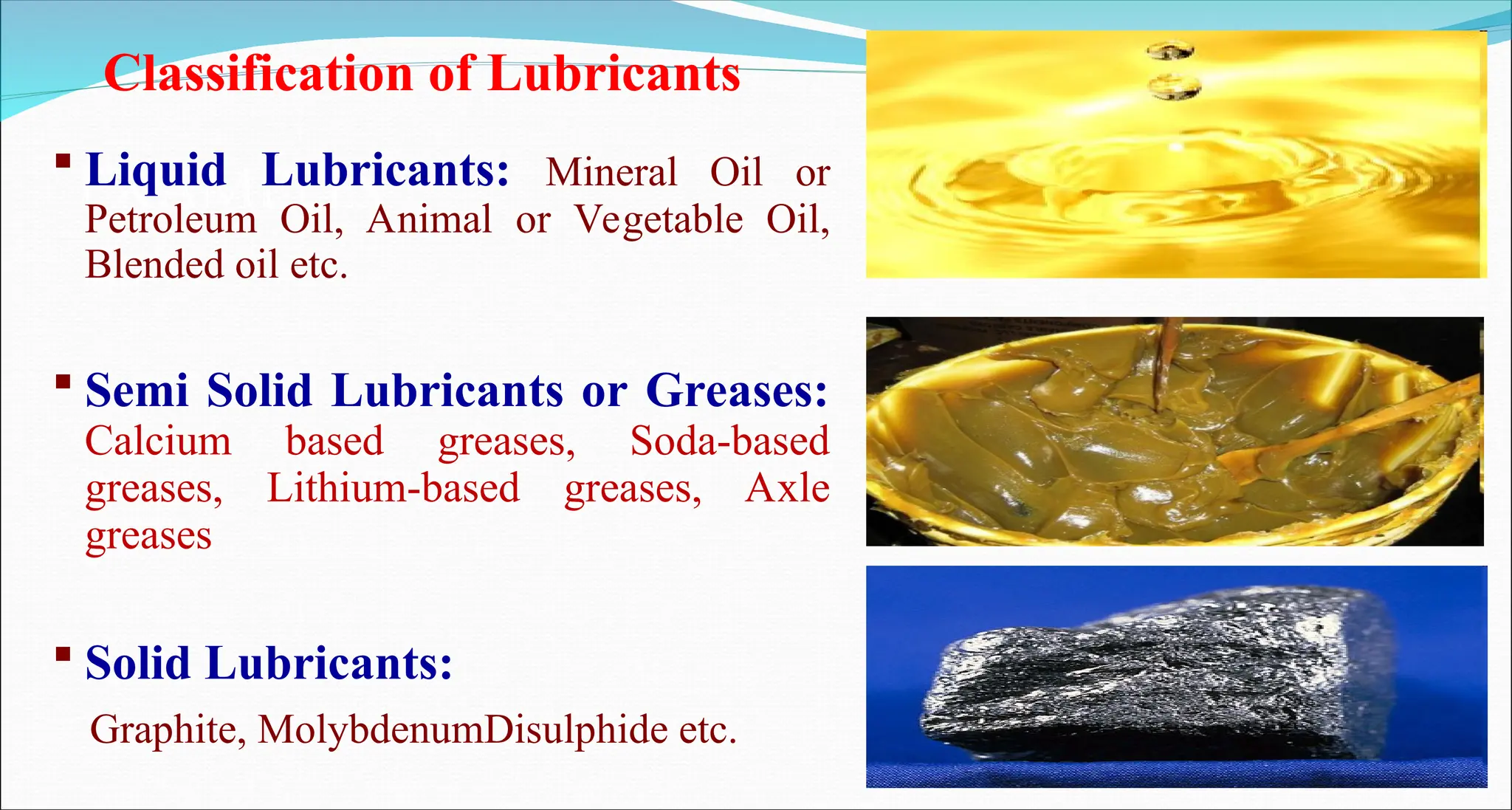
Liquid Lubricants:Mineral Oil or
Petroleum Oil, Animal or Vegetable Oil,
Blended oil etc.
Semi Solid Lubricants or Greases:
Calcium based greases, Soda-based
greases, Lithium-based greases, Axle
greases
Solid Lubricants:
Graphite, MolybdenumDisulphide etc.
Classification of Lubricants
3.
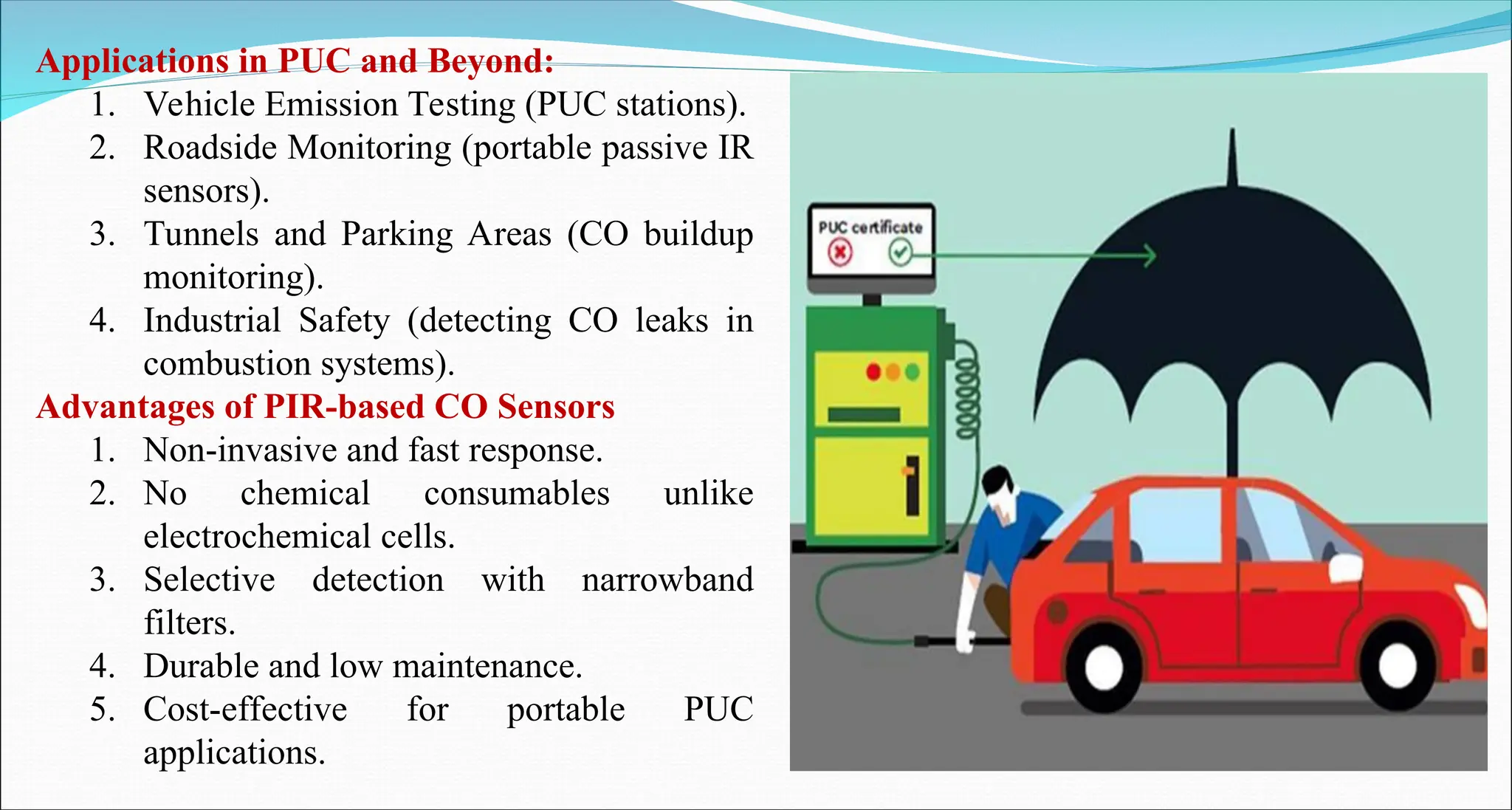
This is basedon the extent to which the contacting surfaces are
separated in a shaft bearing combination.
4.
This mechanismis a regime of lubrication where
the lubricant film thickness is much greater than
the surface roughness of the materials in contact.
This ensures full separation of the surfaces,
minimizing wear and reducing friction.
I. Thick Film or Fluid Film or Hydrodynamic Lubrication
When two surfaces move relative to each other (bearing), a wedge-shaped lubricant film is
formed due to their relative motion, this film is maintained by the viscous flow of the lubricant.
The motion of the surfaces causes a pressure buildup in the lubricant film. This pressure is
sufficient to support the applied load without allowing surface contact.
There is no solid-to-solid contact, leading to low wear.
High relative speeds, Moderate to high loads, Low to moderate viscosity lubricants are
conditions favoring this mechanism.
Very low friction, minimal wear and long component life, effective heat dissipation are
advantages with this method.
Applications: Bearings, Gear systems, Automotive engines, Turbines and compressors.
5.
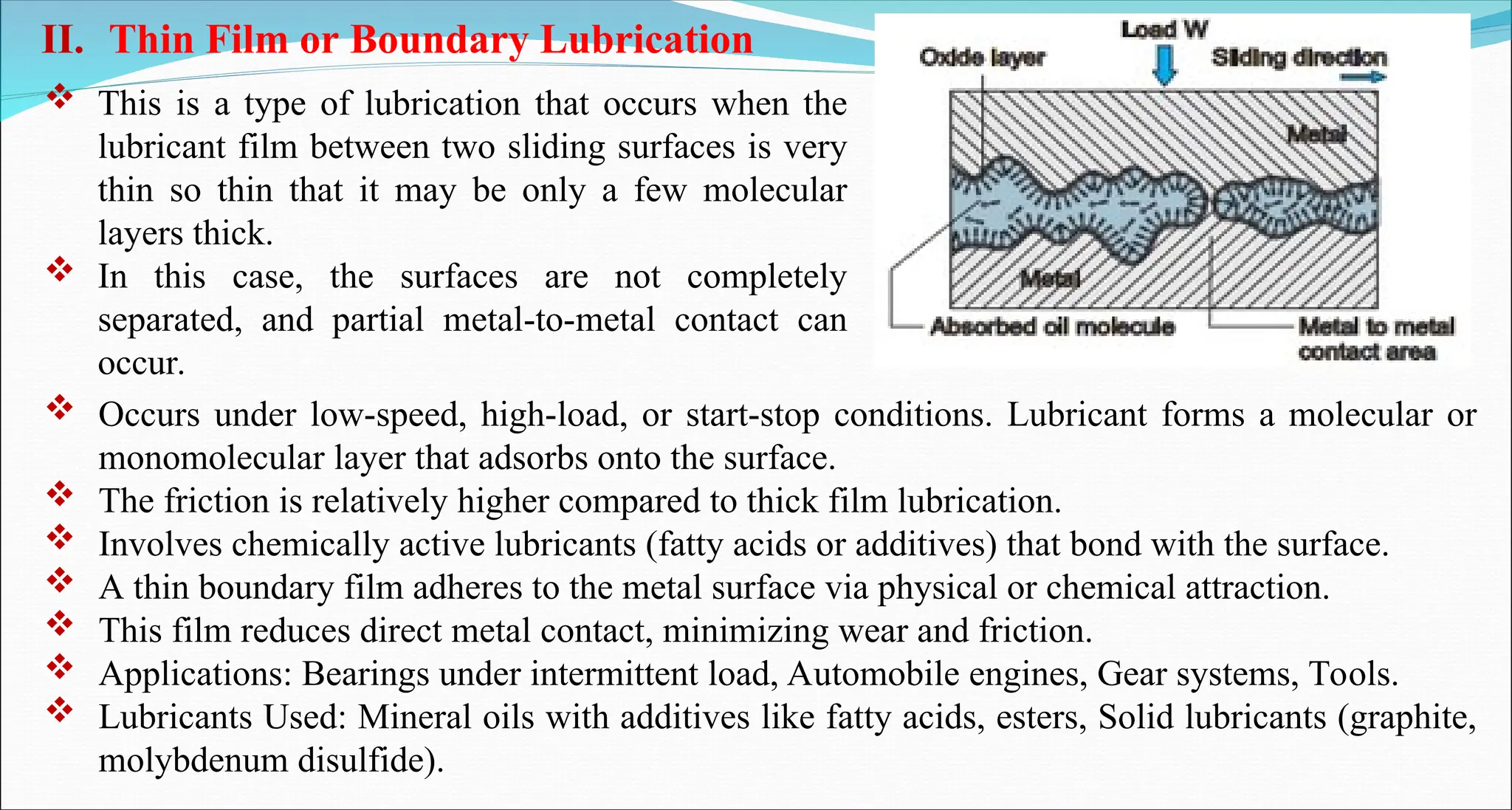
This isa type of lubrication that occurs when the
lubricant film between two sliding surfaces is very
thin so thin that it may be only a few molecular
layers thick.
In this case, the surfaces are not completely
separated, and partial metal-to-metal contact can
occur.
II. Thin Film or Boundary Lubrication
Occurs under low-speed, high-load, or start-stop conditions. Lubricant forms a molecular or
monomolecular layer that adsorbs onto the surface.
The friction is relatively higher compared to thick film lubrication.
Involves chemically active lubricants (fatty acids or additives) that bond with the surface.
A thin boundary film adheres to the metal surface via physical or chemical attraction.
This film reduces direct metal contact, minimizing wear and friction.
Applications: Bearings under intermittent load, Automobile engines, Gear systems, Tools.
Lubricants Used: Mineral oils with additives like fatty acids, esters, Solid lubricants (graphite,
molybdenum disulfide).
6.
This isa type of lubrication used in conditions
involving very high pressures and/or temperatures,
where normal lubricants fail to perform adequately.
EP lubricants are used in machinery operating under
heavy loads, where there is a risk of metal-to-metal
contact.
III. Extreme Pressure (or Temperature) Lubrication
They contain special additives (sulfur, phosphorus, or chlorine compounds) that chemically react
with metal surfaces under high pressure or temperature. This reaction forms a protective film that
prevents direct metal contact, reducing wear.
EP lubricants can withstand high temperatures without breaking down.
When the pressure or temperature becomes excessive, the additives in the lubricant decompose
and form compounds (like metal sulfides or phosphides) that create a solid boundary layer
between moving parts.
This Lubrication is crucial for protecting equipment in harsh working environments.
Applications: Gearboxes, Cutting tools, Heavy-duty bearings, Hydraulic systems exposed to
extreme loads or heat
7.
Properties of Lubricants
I.Viscosity and Viscosity index
Viscosity is the property of a fluid that determines its resistance to flow.
It is an indicator of flow ability of lubricating oil. The lower viscosity greater
will be the flow ability.
If temperature increases viscosity of the lubricating oil decreases and pressure
increases viscosity of lubricating oil increases.
In short we can say that good lubricating oil is that whose viscosity does not
change with temperature.
Viscosity index of a lubricating oil is defined as measure of change in viscosity
with temperature.
High viscosity index means low change in viscosity with temperature.
Therefore, a good lubricating oil must possess as high viscosity index as
possible.
8.
II. Flash andFire point
The flash point of an oil is the lowest temperature at which it gives off
vapours that will ignite for a moment when a small flame is brought
near it.
The fire point of an oil is the lowest temperature at which the vapours
of the oil burn continuously even after the source of ignition is
removed.
These measurements are to assess the safety hazard of a lubricants with
regard to its flammability.
This is then used to warn of a risk and to enable the correct precautions
to be taken when using, storing or transporting the liquid.
9.
III. Cloud andPour Point
Cloud point of an oil is the temperature at which the lubricant
becomes cloudy or hazy when cooled.
Pour point of an oil is the temperature at which the lubricant
just cease to flow when cooled.
Cloud point and pour points indicate the suitability of lubricants
in cold conditions.
Lubricants used in a machine working at low temperature should
possess low cloud and pour points.
10.
Aniline pointof a lubricating oil is defined as the temperature at which equal
volumes of aniline and lubricating oil are completely miscible.
Low aniline point means high percentage of aromatic hydrocarbons in the oil. It
should be as high as possible, because aromatic hydrocarbons dissolve and
deteriorate the rubber seals.
The acid value of an oil is a measure of the amount of free fatty acids (FFAs) in
the oil, and is expressed as the number of milligrams of potassium hydroxide
(KOH) needed to neutralize the free fatty acids in one gram of oil.
The acid value is a relative measure of rancidity because free fatty acids are
formed when triglycerides decompose.
An increase in acid value indicates that the oil is oxidizing, which can lead to
gum and sludge formation, as well as corrosion
IV. Aniline point and Acid value
11.
The lubricant performsthe following functions:
1. Reducing friction: Lubricants reduce friction between moving surfaces.
2. Preventing corrosion: Lubricants can protect against corrosion by forming a
barrier that keeps water away from metal surfaces.
3. Improving performance: Lubricants can improve the reliability and
performance of equipment.
4. Removing contaminants: Lubricants can remove contaminants from mechanical
systems.
5. Acting as electrical insulators: Lubricants with high dielectric constants can act
as electrical insulators in transformers and switchgear.
6. Freeing seized bolts and nuts: Penetrating lubricants can free rusted or seized
bolts and nuts.
7. Breaking down adhesives and corrosion: Penetrating lubricants can break down
adhesives and buildup or corrosion.
12.
A good lubricanthas many characteristics, including:
1.Viscosity: A lubricant with a higher viscosity index is more desirable because it
provides a more stable lubricating film over a wider temperature range.
2.Thermal stability: A good lubricant can maintain its integrity and viscosity even at
high temperatures.
3.Pour point: The lowest temperature at which the oil can still flow like a liquid. Its
pour point should be low.
4.Flash point: The lowest temperature at which a lubricant will ignite when
heated. The flashpoint should be higher than the highest operating temperature.
5.Resistance to oxidation: Good lubricant has high resistance to oxidation and heat.
6.Non-corrosive properties: A good lubricant has non-corrosive properties.
7.Stability to decomposition: A good lubricant is stable to decomposition at the
operating temperatures
13.
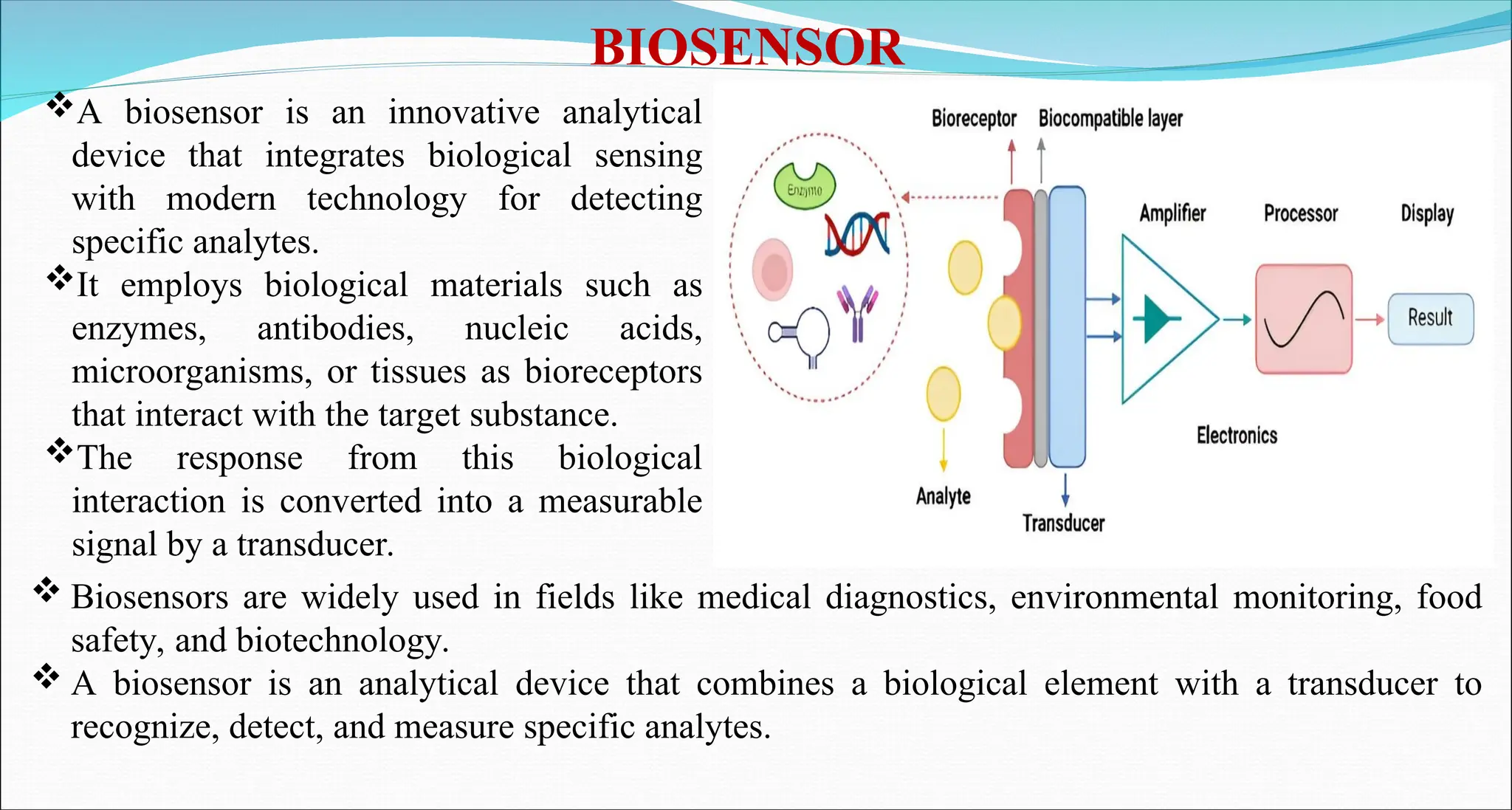
A biosensor isan innovative analytical
device that integrates biological sensing
with modern technology for detecting
specific analytes.
It employs biological materials such as
enzymes, antibodies, nucleic acids,
microorganisms, or tissues as bioreceptors
that interact with the target substance.
The response from this biological
interaction is converted into a measurable
signal by a transducer.
BIOSENSOR
Biosensors are widely used in fields like medical diagnostics, environmental monitoring, food
safety, and biotechnology.
A biosensor is an analytical device that combines a biological element with a transducer to
recognize, detect, and measure specific analytes.
14.
Introduction
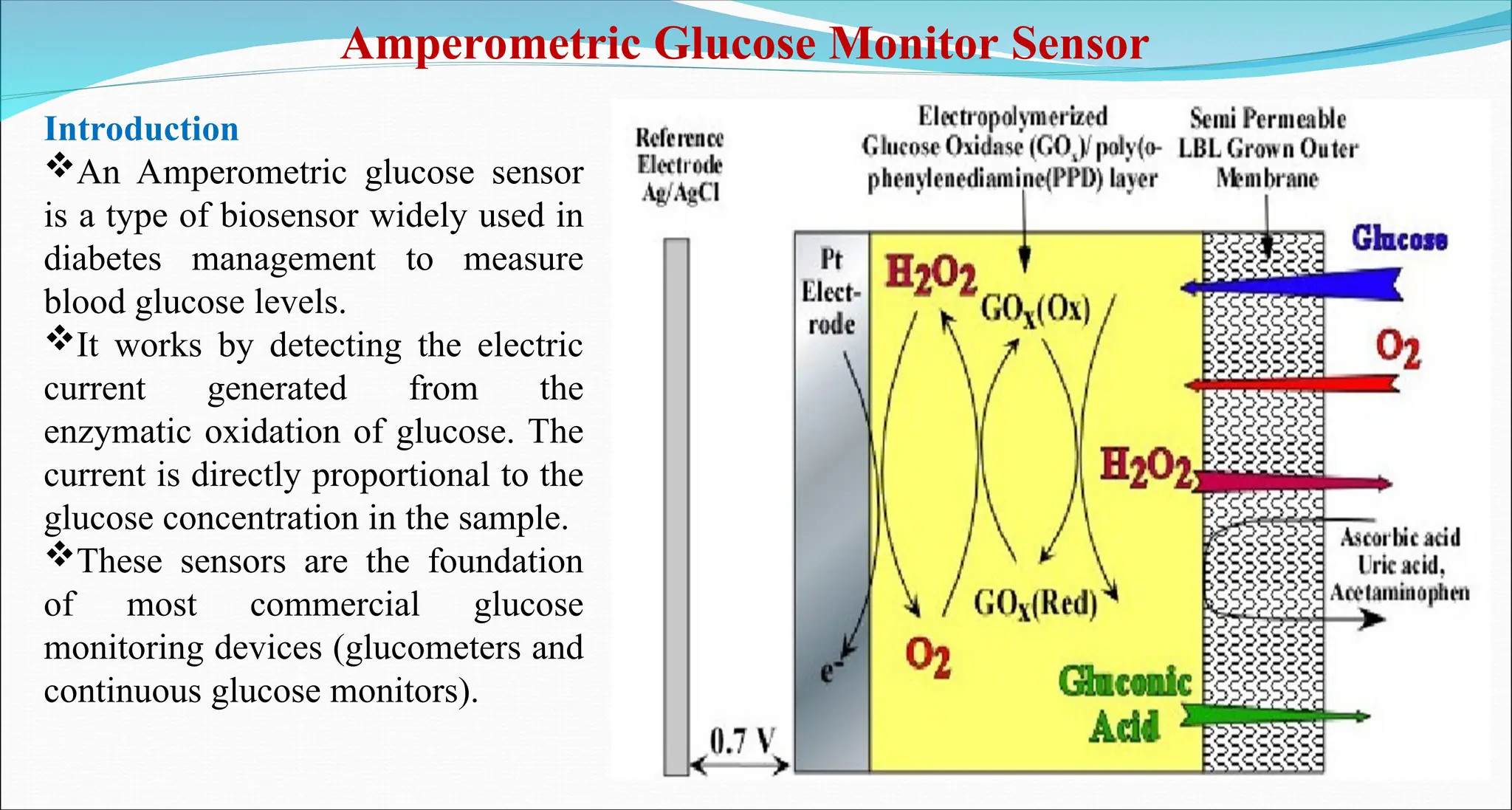
An Amperometric glucosesensor
is a type of biosensor widely used in
diabetes management to measure
blood glucose levels.
It works by detecting the electric
current generated from the
enzymatic oxidation of glucose. The
current is directly proportional to the
glucose concentration in the sample.
These sensors are the foundation
of most commercial glucose
monitoring devices (glucometers and
continuous glucose monitors).
Amperometric Glucose Monitor Sensor
15.
Principle
The sensor isbased on amperometry, i.e., measuring the current produced by the
redox reaction of glucose.
Enzyme used are Glucose oxidase (GOx) or Glucose dehydrogenase (GDH).
In the presence of oxygen, glucose is oxidized by GOx to produce gluconic acid
and hydrogen peroxide (H O ).
₂ ₂
The electrode detects either the consumption of oxygen or the oxidation of
hydrogen peroxide. The resulting current is proportional to glucose concentration.
Reaction steps
Glucose + O →(GOx)→ Gluconic acid + H O
₂ ₂ ₂
H O → 2H + O + 2e (electrode reaction → measurable current)
₂ ₂ ₂
⁺ ⁻
16.
Construction
A typical AmperometricGlucose Sensor consists:
Working Electrode: Made of materials like carbon or noble metals, this electrode is where
the electrochemical reaction occurs, generating the signal.
Reference Electrode: Provides a stable and constant potential, ensuring the reliability of the
measurement.
Bioreceptors Layer: Immobilized on the working electrode, this layer contains the enzyme
(e.g., GOx) or other bio recognition elements that specifically interact with glucose.
Membrane: A semi-permeable membrane often covers the sensor, controlling the access of
glucose and preventing interference from other substances in the sample.
Working Mechanism
•Glucose diffuses to the working electrode.
•Glucose oxidase (GOx) oxidizes glucose, using oxygen and producing hydrogen peroxide
(H2O2) and gluconolactone.
•The electrons generated by this reaction are measured by the working electrode.
•Alternatively, the H2O2 produced can be electrochemically oxidized at the working electrode
to generate a current.
17.
Applications
• Continuous GlucoseMonitoring (CGM): Implantable or wearable sensors that provide
real-time glucose data for diabetes management.
• Clinical Diagnostics: Used to monitor glucose levels for diagnosis and treatment of
various conditions.
• Food Industry: Used for quality control and analysis of glucose in food products.
• Environmental Monitoring: For detecting glucose in environmental samples.
Advantages
• Continuous Monitoring: Allows for real-time tracking of glucose trends, leading to
better diabetes management.
• Reduced Inconvenience: Eliminates the need for frequent fingerstick blood tests,
improving patient comfort and compliance.
• Improved Accuracy (CGM): Modern CGM systems offer accuracy comparable to
traditional methods.
18.
This involvesusing techniques like Nuclear Magnetic Resonance (NMR) Spectroscopy, UV-
Visible (UV-Vis) Spectroscopy, Infrared (IR) Spectroscopy, and mass spectrometry to analyze
and interpret data from the interaction of matter with electromagnetic radiation, revealing
insights into molecular structure, composition, and function.
This allows scientists to identify substances, determine concentrations, assess purity, and
understand complex chemical and biological processes.
Industries and Fields that Use Interpretative Spectroscopy
• Chemical and Pharmaceutical Industries: For quality assurance, drug development, and
monitoring production.
• Environmental Science: To monitor water quality, detect pollutants, and analyze
environmental samples.
• Forensic Science: To identify substances and analyze evidence.
• Medical Diagnostics: For detecting diseases and understanding biochemical processes.
• Food Industry: To ensure quality, detect adulteration, and analyze composition.
Interpretative Spectroscopic Applications
19.
Region Wavelength Applications
RadioWaves > 1 m Radio communication, TV
broadcasting, radar, MRI, satellites.
Microwaves 1 mm – 1 m Ovens, radar, wireless
communication (Wi-Fi, Bluetooth),
remote sensing.
Infrared (IR) 700 nm – 1
mm
Night vision, remote controls,
spectroscopy, thermal imaging.
Visible Light 380 – 700 nm Human vision, photography,
illumination, lasers.
Ultraviolet 10 – 380 nm Sterilization, forensic analysis,
photolithography, medical
treatments.
X-Rays 0.01 – 10 nm Medical imaging, airport security,
crystallography, cancer therapy.
Gamma Rays < 0.01 nm Cancer treatment (radiotherapy),
nuclear medicine, sterilization,
astrophysics.
Electromagnetic Spectrum
20.
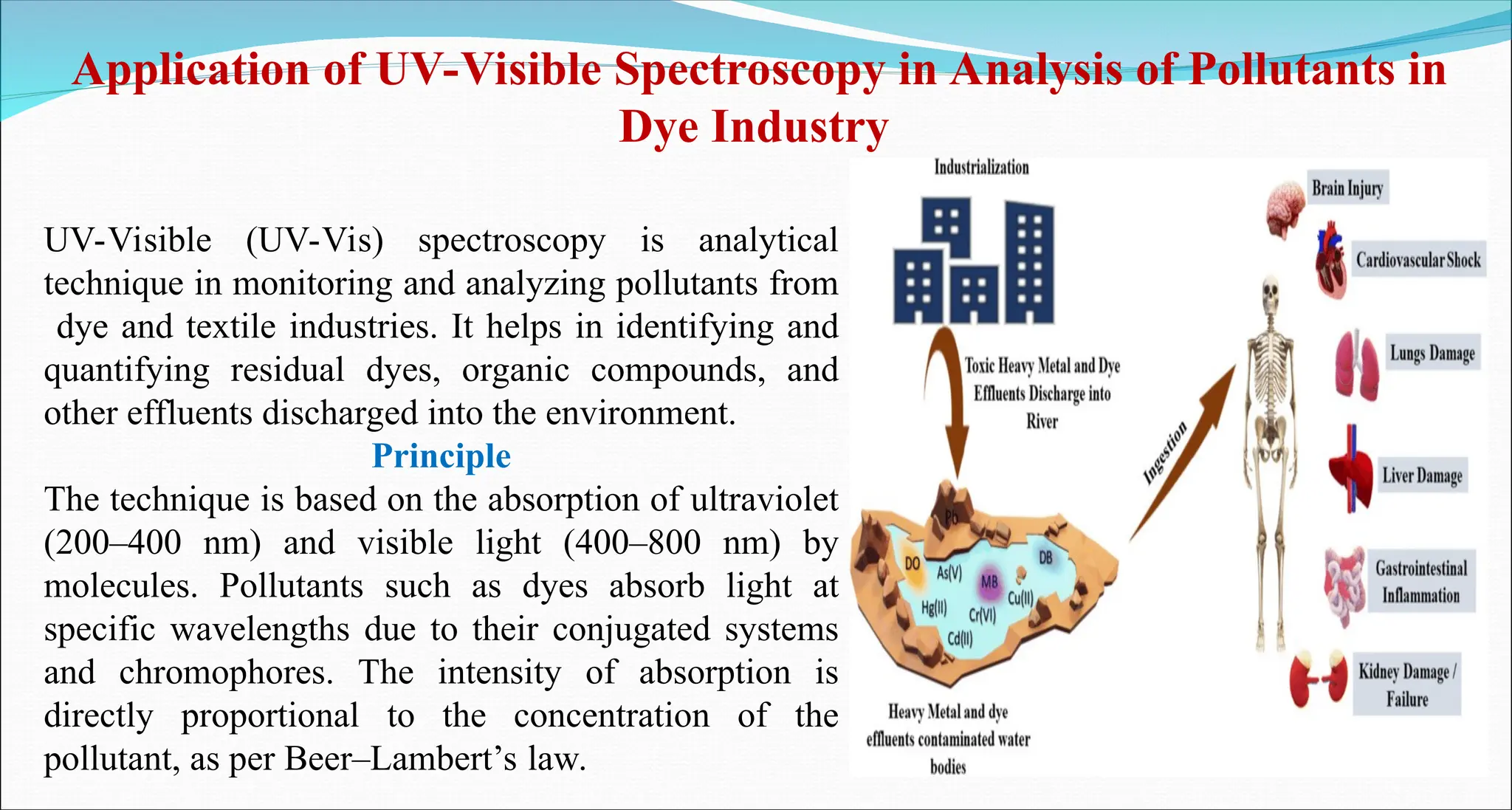
UV-Visible (UV-Vis) spectroscopyis analytical
technique in monitoring and analyzing pollutants from
dye and textile industries. It helps in identifying and
quantifying residual dyes, organic compounds, and
other effluents discharged into the environment.
Principle
The technique is based on the absorption of ultraviolet
(200–400 nm) and visible light (400–800 nm) by
molecules. Pollutants such as dyes absorb light at
specific wavelengths due to their conjugated systems
and chromophores. The intensity of absorption is
directly proportional to the concentration of the
pollutant, as per Beer–Lambert’s law.
Application of UV-Visible Spectroscopy in Analysis of Pollutants in
Dye Industry
21.
I. Detection ofResidual Dyes: UV-Vis spectroscopy helps in identifying the presence of
unreacted or excess dye molecules in industrial effluents by analyzing their characteristic
absorption spectra.
II. Quantification of Pollutants: By measuring the absorbance at specific wavelengths, the
concentration of dye pollutants in wastewater can be quantified accurately.
III. Monitoring Biodegradation and Treatment Efficiency: UV-Vis spectroscopy is
employed to evaluate the efficiency of wastewater treatment processes such as adsorption,
photocatalysis, and biodegradation by monitoring the decrease in absorbance intensity of
pollutants.
IV. Identification of Specific Pollutants: Different classes of dyes (azo dyes, anthraquinone
dyes, etc.) have distinct absorption maxima, enabling their identification in industrial
effluents.
V. Real-Time Monitoring: UV-Vis spectroscopic methods allow continuous monitoring of
pollutant levels, supporting sustainable industrial practices and environmental safety.
Applications of UV-Visible Spectroscopy in Dye Industry
22.
Infrared radiationis a form of electromagnetic radiation, categorized into near-
infrared, mid-infrared, and far-infrared.
Humans cannot see infrared radiation, but they can feel it as heat. IR radiation can
able to induce heat, traveling at the speed of light, and exhibiting, absorption, and
reflection.
IR radiation is emitted by all objects and warmer objects emitting more, and is
detected by specialized sensors.
IR spectroscopy is used to identify molecules by their interaction with infrared
light, is not the same technology as night vision, which captures thermal infrared
radiation to create visible images.
Night vision devices (NVDs) use the heat signature emitted by warm objects to detect,
enabling visibility in low-light conditions.
A special lens focuses this emitted infrared light onto a detector array, which
translates the signals into an electric impulse.
This thermal imaging helps detect targets not visible in normal light, providing a
significant advantage for surveillance and target identification.
IR Spectroscopy in Night Vision & Security
23.
1. Night VisionCameras: Security cameras with IR
capability record in darkness using NIR LEDs.
2. Thermal Imaging for Intruder Detection:
Detects body heat of intruders in darkness, smoke,
or fog.
3. Border and Military Security: Tracks movement
in restricted areas and across borders.
4. Explosives and Hazard Detection: Identifies
chemical signatures using IR absorption spectra.
5. Biometric Security: Used in iris and facial
recognition for authentication.
6. Authentication & Anti-counterfeiting: Reveals
hidden inks, coatings, or embedded codes.
Applications of IR Spectroscopy in Night Vision & Security
24.
The PollutionUnder Control (PUC) certificate is a mandatory emission check for
vehicles, ensuring that exhaust pollutants remain below prescribed limits.
Carbon Monoxide (CO) is one of the most important pollutants to monitor because it
is colorless, odorless, and highly toxic. It is formed due to incomplete combustion of
hydrocarbons in the engine.
Passive Infrared (PIR) Detection, does not use an external IR source but depends on
natural IR absorption/emission by CO molecules.
Carbon Monoxide has a strong absorption band in the mid-IR region (≈ 4.6–4.7 µm).
In this detector senses the natural thermal IR radiation from the environment or
exhaust plume.
When CO is present, it absorbs IR radiation in its characteristic band, creating a 'dip' in
the IR spectrum.
The sensor, with optical filters tuned to 4.6 µm, measures the intensity drop and
converts it into CO concentration.
Pollution Under Control and CO-Sensor
(Passive Infrared Detection)
25.
Construction of PIRCO Sensor
A PIR-based CO detection system typically consists of:
1. Gas Sampling Unit: Collects exhaust gases either through a sampling PUC stations.
2. Optical System: Infrared filter selects only the wavelength corresponding to CO
absorption.
3. Infrared Detector: Thermopile sensor, which generates a voltage proportional to
absorbed IR radiation.
4. Signal Processing Unit: Amplifies, converts, and processes the signal to compute CO
concentration.
Working Mechanism:
1. Exhaust sampling: Exhaust gas is directed into the chamber (or open-path
monitoring).
2. Natural IR absorption: CO in exhaust absorbs IR radiation at 4.6 µm.
3. Signal detection: Detector measures IR intensity drop with reference compensation.
4. Data processing: The absorption intensity is proportional to CO concentration (via
Beer–Lambert Law).
26.
Applications in PUCand Beyond:
1. Vehicle Emission Testing (PUC stations).
2. Roadside Monitoring (portable passive IR
sensors).
3. Tunnels and Parking Areas (CO buildup
monitoring).
4. Industrial Safety (detecting CO leaks in
combustion systems).
Advantages of PIR-based CO Sensors
1. Non-invasive and fast response.
2. No chemical consumables unlike
electrochemical cells.
3. Selective detection with narrowband
filters.
4. Durable and low maintenance.
5. Cost-effective for portable PUC
applications.
27.
Raman spectroscopyis a non-destructive optical technique based on inelastic scattering of light
(Raman effect).
When monochromatic light (laser) interacts with biological tissues, most photons are elastically
scattered (Rayleigh scattering), but a small fraction undergo inelastic scattering.
These inelastic shifts in frequency correspond to the molecular vibrations of the tissue,
providing a unique biochemical 'fingerprint'.
This property makes Raman spectroscopy a powerful tool in biomedical applications,
particularly in cancer and tumor detection.
Application in Tumor Detection
I. Biochemical Fingerprinting of Tissues: Healthy and cancerous tissues differ in their
biochemical composition (proteins, lipids, nucleic acids). Raman spectroscopy can detect
these differences at the molecular level without the need for staining or labeling.
II. Early Detection of Tumors: Subtle changes in tissue biochemistry occur even in the early
stages of cancer development. Raman spectroscopy can identify these changes, enabling
early diagnosis of tumors before they become clinically visible.
Raman Spectroscopy – Application in Tumor Detection
28.
III. Intraoperative TumorMargin Detection: During surgery, it is critical to remove all
cancerous tissue while sparing healthy tissue. Raman spectroscopy can be used in real-
time scanning of surgical margins, ensuring precise tumor removal.
IV. Non-invasive and In-vivo Diagnosis: Optical fibre-based Raman probes can be
integrated into endoscopes or handheld devices, allowing non-invasive or minimally
invasive diagnosis of tumors in organs like the brain, breast, cervix, and skin.
V. Differentiation of Tumor Grades: Raman spectra can differentiate benign from
malignant tumors, and even distinguish between different tumor grades, aiding in
prognosis and treatment planning.
VI. Complement to Histopathology: While histopathology is the gold standard, it requires
invasive biopsy and time-consuming staining. Raman spectroscopy offers a rapid, label-
free, and real-time diagnostic approach to complement traditional pathology.
29.
Short Answer Questions
1.Definea lubricant.
2.List any three characteristics of a good lubricant.
3.What is the thin film mechanism of lubrication?
4.Define viscosity.
5.What is the difference between cloud point and pour point?
6.Define flash point and fire point of lubricants.
7.What is a biosensor?
8.Name the enzyme used in amperometric glucose sensors.
9.Write the principle of amperometric glucose monitor.
10.State one application of biosensors in medical field.
11.What principle is UV-Visible spectroscopy based on?
12.Mention one application of UV-Vis spectroscopy in dye industry.
13.What is the role of IR spectroscopy in night vision?
14.What does a Passive Infrared (PIR) sensor detect in vehicle exhaust?
15.State one medical application of Raman spectroscopy.
30.
Essay / LongAnswer Questions
1.Explain the characteristics of a good lubricant with examples.
2.Describe the thin, thick film and extreme pressure mechanism of lubrication.
3.Discuss the important properties of lubricants: viscosity, cloud and pour point, flash and fire
point.
4.Define a biosensor. Explain the construction, working principle, and applications of an
amperometric glucose monitor sensor.
5.Explain the applications of UV-Visible spectroscopy in the analysis of pollutants in the dye
industry.
6.Describe the role of IR spectroscopy in night vision and security systems.
7.Explain the working of a CO sensor using Passive Infrared (PIR) detection in vehicle emission
control.
8.Discuss the application of Raman spectroscopy in tumor detection and medical diagnostics.
9.Write short notes on: (a) Cloud and Pour point of lubricants (b) Applications of biosensors (c)
Night vision using IR spectroscopy
10.Explain how spectroscopic methods (UV-Vis, IR, Raman) are applied in environmental and
medical fields.















![Reading Techniques [Autosaved].pptxReading Techniques [Autosaved].pptx](https://cdn.slidesharecdn.com/ss_thumbnails/readingtechniquesautosaved-251211193055-b8821f9d-thumbnail.jpg?width=640&height=640&fit=bounds)


