WELCOME……
Bacterial and viral diseases of
Wheat
Nagendra,S.R.
ALB2100
Contents
Bacterial Diseases
 Yellow Ear Rot
 Black
chaff/Bacterial
streak
 Bacterial leaf
blight
Viral DiseaseS
Wheat Soil borne
Mosaic virus
 Wheat streak
Mosaic Virus
1)Yellow Ear Rot /
Tundu Disease
Pathogen: Clavibacter tritici (the disease is
known to occur only in association with
nematode ( Anguina tritici )
 The bacterium is spherical , gram positive and
capsulated.
 SPREAD: Seeds contaminated with nematode
galls are responsible for the spread of the
disease.
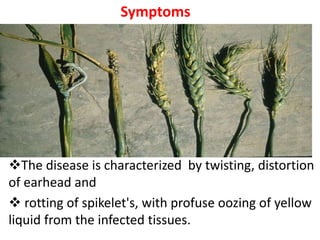
The disease is characterized by twisting, distortion
of earhead and
 rotting of spikelet's, with profuse oozing of yellow
liquid from the infected tissues.
Symptoms
2)Black chaff = bacterial streak
• Pathogen: Xanthomonas translucence pv.
undulosum
•Favorable Environmental
Conditions:
Black chaff is favored by wet and humid
weather.
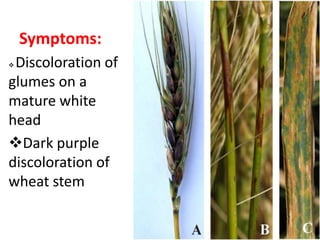
Symptoms:
 Discoloration of
glumes on a
mature white
head
Dark purple
discoloration of
wheat stem
BACTERIAL LEAF BLIGHT
• Pathogen: Pseudomonas syringae pv. syringae
• Favourable conditions : Moist and mild
weather during flag leaf emergence.
• It can tolerate warm or freezing
temperature.
• Free moisture is required for disease
development.
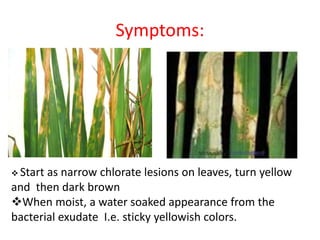
Symptoms:
 Start as narrow chlorate lesions on leaves, turn yellow
and then dark brown
When moist, a water soaked appearance from the
bacterial exudate I.e. sticky yellowish colors.
VIRAL DISEASES:
Wheat Soil borne Mosaic Virus
Wheat Streak Mosaic Virus
1)Wheat soil borne mosaic virus
• Pathogen: Wheat yellow mosaic virus
(WYMV)
• Conditions: Long periods of fluctuating
temperatures in early spring.
• Transmission: Soilborne fungal vector
(Polymyxa graminis) and sap
transmission
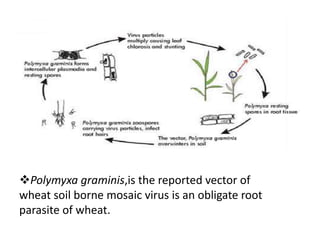
Polymyxa graminis,is the reported vector of
wheat soil borne mosaic virus is an obligate root
parasite of wheat.
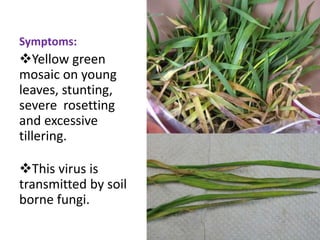
Symptoms:
Yellow green
mosaic on young
leaves, stunting,
severe rosetting
and excessive
tillering.
This virus is
transmitted by soil
borne fungi.
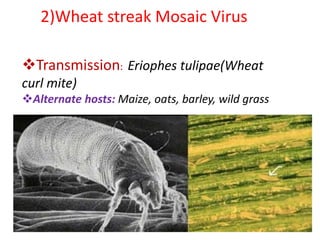
2)Wheat streak Mosaic Virus
Transmission: Eriophes tulipae(Wheat
curl mite)
Alternate hosts: Maize, oats, barley, wild grass
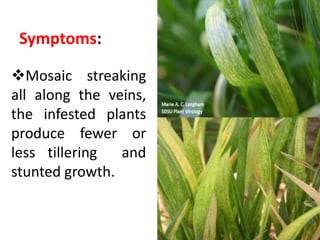
Mosaic streaking
all along the veins,
the infested plants
produce fewer or
less tillering and
stunted growth.
Symptoms:
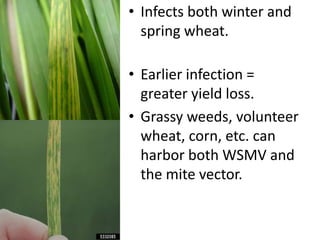
• Infects both winter and
spring wheat.
• Earlier infection =
greater yield loss.
• Grassy weeds, volunteer
wheat, corn, etc. can
harbor both WSMV and
the mite vector.
diseases of wheat

diseases of wheat

  • 1.
  • 2.
    Bacterial and viraldiseases of Wheat Nagendra,S.R. ALB2100
  • 3.
    Contents Bacterial Diseases  YellowEar Rot  Black chaff/Bacterial streak  Bacterial leaf blight Viral DiseaseS Wheat Soil borne Mosaic virus  Wheat streak Mosaic Virus
  • 4.
    1)Yellow Ear Rot/ Tundu Disease Pathogen: Clavibacter tritici (the disease is known to occur only in association with nematode ( Anguina tritici )  The bacterium is spherical , gram positive and capsulated.  SPREAD: Seeds contaminated with nematode galls are responsible for the spread of the disease.
  • 5.
    The disease ischaracterized by twisting, distortion of earhead and  rotting of spikelet's, with profuse oozing of yellow liquid from the infected tissues. Symptoms
  • 6.
    2)Black chaff =bacterial streak • Pathogen: Xanthomonas translucence pv. undulosum •Favorable Environmental Conditions: Black chaff is favored by wet and humid weather.
  • 7.
    Symptoms:  Discoloration of glumeson a mature white head Dark purple discoloration of wheat stem
  • 8.
    BACTERIAL LEAF BLIGHT •Pathogen: Pseudomonas syringae pv. syringae • Favourable conditions : Moist and mild weather during flag leaf emergence. • It can tolerate warm or freezing temperature. • Free moisture is required for disease development.
  • 9.
    Symptoms:  Start asnarrow chlorate lesions on leaves, turn yellow and then dark brown When moist, a water soaked appearance from the bacterial exudate I.e. sticky yellowish colors.
  • 10.
    VIRAL DISEASES: Wheat Soilborne Mosaic Virus Wheat Streak Mosaic Virus
  • 11.
    1)Wheat soil bornemosaic virus • Pathogen: Wheat yellow mosaic virus (WYMV) • Conditions: Long periods of fluctuating temperatures in early spring. • Transmission: Soilborne fungal vector (Polymyxa graminis) and sap transmission
  • 12.
    Polymyxa graminis,is thereported vector of wheat soil borne mosaic virus is an obligate root parasite of wheat.
  • 13.
    Symptoms: Yellow green mosaic onyoung leaves, stunting, severe rosetting and excessive tillering. This virus is transmitted by soil borne fungi.
  • 14.
    2)Wheat streak MosaicVirus Transmission: Eriophes tulipae(Wheat curl mite) Alternate hosts: Maize, oats, barley, wild grass
  • 15.
    Mosaic streaking all alongthe veins, the infested plants produce fewer or less tillering and stunted growth. Symptoms:
  • 16.
    • Infects bothwinter and spring wheat. • Earlier infection = greater yield loss. • Grassy weeds, volunteer wheat, corn, etc. can harbor both WSMV and the mite vector.