Status in India and
its application for deep seated
       deposits in international
                        scenario
 Longwall  : Introduction
 LW mining equipments
 LW mining : Importance
 Status in India
 Analysis of the problem
 Present and Future
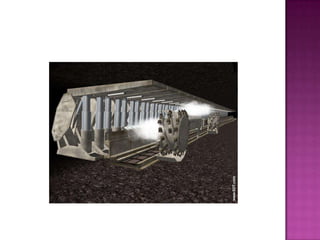
 This is a form of underground coal mining where
  a long wall of coal is mined in a single slice
  (typically 0.6–1.0 m thick).
 The Longwall panel (the block of coal that is
  being mined) is typically 3–4 km long and 250–
  400 m wide.
 As a cut or slice is taken along the length of the
  wall, the supports are collapsed, advanced
  closer to the face, and re-engaged, allowing roof
  to cave behind.
 Powered   Face Supports
 Shearer
 Armored   Face Conveyor
 Present ratio of production:
  UG : OC = 20 : 80
 The reserves suitable for OC mining are
  gradually depleting.
 To meet the future coal demand we need
  bulk production underground technologies.
 The present UG mines are operating at
  depths of 350m and the future extraction is
  from deeper horizons(300-600m).
Higher extraction


Increased safety
                                          Higher Quality of coal


                       LW Mining


Suitable for thick seams              Better for deep seated
                                               mines
First mechanized powered support Longwall
caving face:
• August 1978 at Moonidih, CIL.


First Longwall face

• GDK 7 Incline in September 1983 in SCCL
 Indian
       coal industry’s experience with LW has
 been somewhat mixed .

 Between  1978 and 1987, nine LW packages
 were deployed to extract some 5.4 million
 tons of coal in Jharia, Raniganj, Satpura and
 Godavari Valley coalfields.
 Theexperience from the first generation
 Longwall faces was not encouraging.
    Average production at Moonidih was around 750 tpd
     while Dhemo Main and Pathakhera gave around 550 tpd
    However, SCCL achieved around 1500 tpd .
    The production from about twelve operating mechanised
     Longwall faces in India was just 1.15 million tons in
     1993-1994
    utilisation factor of man and machine was within just
     26%-35%.
Geo-mining Conditions

      Improper Selection
                                               Management of Face

   Faulty Planning
                                 ANALYSIS
                                  OF THE
                                 PROBLEM
  Longwall Support
Selection Deficiencies                             Research needs


                         Large expansion in
                          opencast mining
Standardisation
                 Planning           of Equipment

                                                  Monitoring of
  Spare Parts                 PRESENT             Performance
  Management
                            ACTIONS AND
                              FUTURE
                               NEEDS

Workshops and                                  Indigenisation
Overhauling Facilities

                             Manpower
                            Development
Thank You!

Longwall mining

  • 1.
    Status in Indiaand its application for deep seated deposits in international scenario
  • 2.
     Longwall : Introduction  LW mining equipments  LW mining : Importance  Status in India  Analysis of the problem  Present and Future
  • 3.
     This isa form of underground coal mining where a long wall of coal is mined in a single slice (typically 0.6–1.0 m thick).  The Longwall panel (the block of coal that is being mined) is typically 3–4 km long and 250– 400 m wide.  As a cut or slice is taken along the length of the wall, the supports are collapsed, advanced closer to the face, and re-engaged, allowing roof to cave behind.
  • 6.
     Powered Face Supports
  • 7.
  • 8.
     Armored Face Conveyor
  • 11.
     Present ratioof production: UG : OC = 20 : 80  The reserves suitable for OC mining are gradually depleting.  To meet the future coal demand we need bulk production underground technologies.  The present UG mines are operating at depths of 350m and the future extraction is from deeper horizons(300-600m).
  • 12.
    Higher extraction Increased safety Higher Quality of coal LW Mining Suitable for thick seams Better for deep seated mines
  • 13.
    First mechanized poweredsupport Longwall caving face: • August 1978 at Moonidih, CIL. First Longwall face • GDK 7 Incline in September 1983 in SCCL
  • 14.
     Indian coal industry’s experience with LW has been somewhat mixed .  Between 1978 and 1987, nine LW packages were deployed to extract some 5.4 million tons of coal in Jharia, Raniganj, Satpura and Godavari Valley coalfields.
  • 15.
     Theexperience fromthe first generation Longwall faces was not encouraging.  Average production at Moonidih was around 750 tpd while Dhemo Main and Pathakhera gave around 550 tpd  However, SCCL achieved around 1500 tpd .  The production from about twelve operating mechanised Longwall faces in India was just 1.15 million tons in 1993-1994  utilisation factor of man and machine was within just 26%-35%.
  • 16.
    Geo-mining Conditions Improper Selection Management of Face Faulty Planning ANALYSIS OF THE PROBLEM Longwall Support Selection Deficiencies Research needs Large expansion in opencast mining
  • 17.
    Standardisation Planning of Equipment Monitoring of Spare Parts PRESENT Performance Management ACTIONS AND FUTURE NEEDS Workshops and Indigenisation Overhauling Facilities Manpower Development
  • 18.