 A Logo is a Symbol , Name or Trademark of a Company.
 Logo Serves to represent a given organization or company or
company through a visual image that can be easily understood
and recognized.
 Logo design must certainly be one of the most challenging areas
of graphic design and often one that is sorely undervalued.
 Logos are intended to be the face of a company.
 They're meant to visually communicate the unique
identity of the brand and what it represents.
 Depending on your design philosophy, simple logos
comprised of only essential elements are often the most
difficult and also successful.
 The term “logo” is often used as a catchall to define any
emblem a company has designed to visually
represent their brand.
 there are two main categories when it comes
to logo design: logos that only consist of type —
denoting the name or initials of a company — and those
containing both text and a symbol.
 Simple. Simple logos are the ones people can recognize
as soon as they see them.
 Scalable. A great logo should be simple enough to be
able to be scaled down or up and still look good.
 Memorable / Impactful. A great logo should be
impactful.
 Versatile.
 Relevant.
 Monogram logos (or lettermarks)
 Wordmarks (or logotypes) Similar to a lettermark, a
wordmark or logotype is a font-based logo that focuses on
a business' name alone.
 Pictorial marks (or logo symbols)
 Abstract logo marks.
 Mascots.
 The combination mark.
 The emblem.
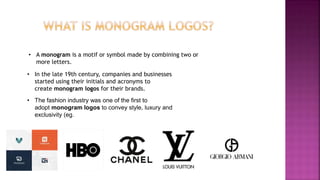
• A monogram is a motif or symbol made by combining two or
more letters.
• In the late 19th century, companies and businesses
started using their initials and acronyms to
create monogram logos for their brands.
• The fashion industry was one of the first to
adopt monogram logos to convey style, luxury and
exclusivity (eg.
 Similar to a lettermark, a wordmark or logotype is a
font-based logo that focuses on a business' name alone.
 Google's logo is a great example of this.
 The name itself is catchy and memorable so, when
combined with strong typography, the logo helps create
strong brand recognition.
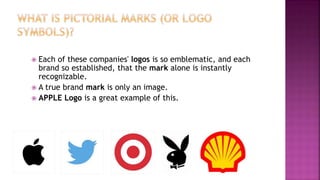
 Each of these companies' logos is so emblematic, and each
brand so established, that the mark alone is instantly
recognizable.
 A true brand mark is only an image.
 APPLE Logo is a great example of this.
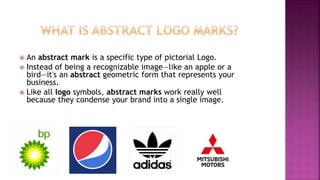
 An abstract mark is a specific type of pictorial Logo.
 Instead of being a recognizable image—like an apple or a
bird—it's an abstract geometric form that represents your
business.
 Like all logo symbols, abstract marks work really well
because they condense your brand into a single image.
 Mascot logos are logos that involve an illustrated character.
 Often colorful, sometimes cartoonish, and most always fun,
the mascot logo is a great way to create your very own brand
spokesperson— er, spokes-character(?).
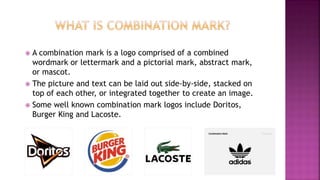
 A combination mark is a logo comprised of a combined
wordmark or lettermark and a pictorial mark, abstract mark,
or mascot.
 The picture and text can be laid out side-by-side, stacked on
top of each other, or integrated together to create an image.
 Some well known combination mark logos include Doritos,
Burger King and Lacoste.
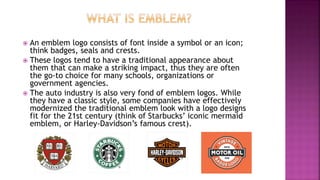
 An emblem logo consists of font inside a symbol or an icon;
think badges, seals and crests.
 These logos tend to have a traditional appearance about
them that can make a striking impact, thus they are often
the go-to choice for many schools, organizations or
government agencies.
 The auto industry is also very fond of emblem logos. While
they have a classic style, some companies have effectively
modernized the traditional emblem look with a logo designs
fit for the 21st century (think of Starbucks’ iconic mermaid
emblem, or Harley-Davidson’s famous crest).
 A “logo” is often made of a logotype and a Logomark.
 But not every business needs both.
 A logotype stands for words or the name of a business
that is designed in a customized way.
 A Logomark is an identifying mark or symbol that doesn't
contain the business name, like a drawing or image that
represents the business.
 A logo is an important part of your company's brand, and
makes a significant impact on a company's public
perception.
 In fact, a logo is one of the most important branding
investments a business can make.
 A logo can be described as the face of a company.
 A good logo is distinctive, appropriate, practical,
graphic and simple in form, and it conveys the owner's
intended message.
 A logo should be able to be printed at any size and, in
most cases, be effective without color.
 A great logo essentially boils down to two
things: great concept and great execution.
 A design that conveys the essence of your brand. A logo
should deliver an immediate and honest impression of
your business philosophy, conveying why your brand is
special.
 An appropriate style choice.
 Your business name.
 A relevant colour scheme.
 Best logos: London Underground.
 Best logos: The Red Cross.
 Best logos: Target.
 Best logos: Apple.
 Best logos: Woolmark.
 Best logos: Nike.
 Best logos: Shell.
 Best logos: FedEx.
Logo and Its Types

Logo and Its Types

  • 2.
     A Logois a Symbol , Name or Trademark of a Company.  Logo Serves to represent a given organization or company or company through a visual image that can be easily understood and recognized.  Logo design must certainly be one of the most challenging areas of graphic design and often one that is sorely undervalued.
  • 3.
     Logos areintended to be the face of a company.  They're meant to visually communicate the unique identity of the brand and what it represents.  Depending on your design philosophy, simple logos comprised of only essential elements are often the most difficult and also successful.
  • 4.
     The term“logo” is often used as a catchall to define any emblem a company has designed to visually represent their brand.  there are two main categories when it comes to logo design: logos that only consist of type — denoting the name or initials of a company — and those containing both text and a symbol.
  • 5.
     Simple. Simplelogos are the ones people can recognize as soon as they see them.  Scalable. A great logo should be simple enough to be able to be scaled down or up and still look good.  Memorable / Impactful. A great logo should be impactful.  Versatile.  Relevant.
  • 6.
     Monogram logos(or lettermarks)  Wordmarks (or logotypes) Similar to a lettermark, a wordmark or logotype is a font-based logo that focuses on a business' name alone.  Pictorial marks (or logo symbols)  Abstract logo marks.  Mascots.  The combination mark.  The emblem.
  • 7.
    • A monogramis a motif or symbol made by combining two or more letters. • In the late 19th century, companies and businesses started using their initials and acronyms to create monogram logos for their brands. • The fashion industry was one of the first to adopt monogram logos to convey style, luxury and exclusivity (eg.
  • 8.
     Similar toa lettermark, a wordmark or logotype is a font-based logo that focuses on a business' name alone.  Google's logo is a great example of this.  The name itself is catchy and memorable so, when combined with strong typography, the logo helps create strong brand recognition.
  • 9.
     Each ofthese companies' logos is so emblematic, and each brand so established, that the mark alone is instantly recognizable.  A true brand mark is only an image.  APPLE Logo is a great example of this.
  • 10.
     An abstractmark is a specific type of pictorial Logo.  Instead of being a recognizable image—like an apple or a bird—it's an abstract geometric form that represents your business.  Like all logo symbols, abstract marks work really well because they condense your brand into a single image.
  • 11.
     Mascot logosare logos that involve an illustrated character.  Often colorful, sometimes cartoonish, and most always fun, the mascot logo is a great way to create your very own brand spokesperson— er, spokes-character(?).
  • 12.
     A combinationmark is a logo comprised of a combined wordmark or lettermark and a pictorial mark, abstract mark, or mascot.  The picture and text can be laid out side-by-side, stacked on top of each other, or integrated together to create an image.  Some well known combination mark logos include Doritos, Burger King and Lacoste.
  • 13.
     An emblemlogo consists of font inside a symbol or an icon; think badges, seals and crests.  These logos tend to have a traditional appearance about them that can make a striking impact, thus they are often the go-to choice for many schools, organizations or government agencies.  The auto industry is also very fond of emblem logos. While they have a classic style, some companies have effectively modernized the traditional emblem look with a logo designs fit for the 21st century (think of Starbucks’ iconic mermaid emblem, or Harley-Davidson’s famous crest).
  • 14.
     A “logo”is often made of a logotype and a Logomark.  But not every business needs both.  A logotype stands for words or the name of a business that is designed in a customized way.  A Logomark is an identifying mark or symbol that doesn't contain the business name, like a drawing or image that represents the business.
  • 15.
     A logois an important part of your company's brand, and makes a significant impact on a company's public perception.  In fact, a logo is one of the most important branding investments a business can make.  A logo can be described as the face of a company.
  • 16.
     A goodlogo is distinctive, appropriate, practical, graphic and simple in form, and it conveys the owner's intended message.  A logo should be able to be printed at any size and, in most cases, be effective without color.  A great logo essentially boils down to two things: great concept and great execution.
  • 17.
     A designthat conveys the essence of your brand. A logo should deliver an immediate and honest impression of your business philosophy, conveying why your brand is special.  An appropriate style choice.  Your business name.  A relevant colour scheme.
  • 18.
     Best logos:London Underground.  Best logos: The Red Cross.  Best logos: Target.  Best logos: Apple.  Best logos: Woolmark.  Best logos: Nike.  Best logos: Shell.  Best logos: FedEx.