ResearchHow do I locate good resources?
Identify the Most Relevant ResourcesEncyclopedia ArticlesProvide an overview of your topicSpecialized Reference WorksEncyclopedias with information on a specific subject matter (i.e. poetry)DocumentariesInclude interviews, speeches, and footageMagazines and NewspapersGives insight into a topic’s perceived importanceInterviews and Oral HistoriesFirst hand testimony about history and cultureOriginal ResearchInformation you discover yourself
Which sources make the most sense for your research?List, in order, the sources you believe will be most helpful in researching your debate topic.
Choose the Right Research ToolsPrimary Sources materials written or created by people who took part in events or observed them.Secondary Sources records created after events occurred by people who were not directly involved.
Primary SourceExamplesLetters, diaries, speeches, photographs, autobiographies, e-mails, weblogs, first-person newspaper and magazine articles, public documents (birth certificates)AdvantagesFirsthand informationCan give insight into attitudes and beliefs of the timesMay contain specific detailsDisadvantagesLimited perspectiveMay need interpretationMay be biased
Secondary SourceExamplesBiographies, textbooks, encyclopedias, third-person newspaper and magazine articles, most documentariesAdvantagesSometimes include excerpts from primary sourcesOften have a broad perspective and consider many viewpointsUseful for getting an overview of a topicDisadvantagesOnly as reliable as the sources on which they are basedMay be biased
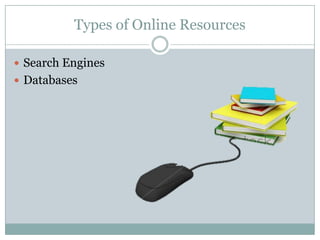
Types of Online ResourcesSearch EnginesDatabases
Search EnginesFor the best results, click on the search engine’s “advanced search” or “search tips” link.Follow these rules for effective internet searches:Be specificUse search limitersChoose the most relevant pages
DatabasesA database is any organized collection of data.Types of databases:Internet Search Engines (google.com)Library Catalogues Newspaper Databases (New York Time index)Article Databases (InfoTrac)Genealogy Databases (ancestry.com)
Advantages of Specialized DatabasesSpecificityTargetedNo AdvertisementsAccess to the “Invisible Web”Many web pages are available through subscription onlyAbstractsA short summary of an article’s content

Locating resources

  • 1.
    ResearchHow do Ilocate good resources?
  • 2.
    Identify the MostRelevant ResourcesEncyclopedia ArticlesProvide an overview of your topicSpecialized Reference WorksEncyclopedias with information on a specific subject matter (i.e. poetry)DocumentariesInclude interviews, speeches, and footageMagazines and NewspapersGives insight into a topic’s perceived importanceInterviews and Oral HistoriesFirst hand testimony about history and cultureOriginal ResearchInformation you discover yourself
  • 3.
    Which sources makethe most sense for your research?List, in order, the sources you believe will be most helpful in researching your debate topic.
  • 4.
    Choose the RightResearch ToolsPrimary Sources materials written or created by people who took part in events or observed them.Secondary Sources records created after events occurred by people who were not directly involved.
  • 5.
    Primary SourceExamplesLetters, diaries,speeches, photographs, autobiographies, e-mails, weblogs, first-person newspaper and magazine articles, public documents (birth certificates)AdvantagesFirsthand informationCan give insight into attitudes and beliefs of the timesMay contain specific detailsDisadvantagesLimited perspectiveMay need interpretationMay be biased
  • 6.
    Secondary SourceExamplesBiographies, textbooks,encyclopedias, third-person newspaper and magazine articles, most documentariesAdvantagesSometimes include excerpts from primary sourcesOften have a broad perspective and consider many viewpointsUseful for getting an overview of a topicDisadvantagesOnly as reliable as the sources on which they are basedMay be biased
  • 7.
    Types of OnlineResourcesSearch EnginesDatabases
  • 8.
    Search EnginesFor thebest results, click on the search engine’s “advanced search” or “search tips” link.Follow these rules for effective internet searches:Be specificUse search limitersChoose the most relevant pages
  • 9.
    DatabasesA database isany organized collection of data.Types of databases:Internet Search Engines (google.com)Library Catalogues Newspaper Databases (New York Time index)Article Databases (InfoTrac)Genealogy Databases (ancestry.com)
  • 10.
    Advantages of SpecializedDatabasesSpecificityTargetedNo AdvertisementsAccess to the “Invisible Web”Many web pages are available through subscription onlyAbstractsA short summary of an article’s content