Inspire.Educate.Lead
with Technology
A Vision for Excellence in Education
21ST Century Learning is
Student-Centered
Students are actively engaged in learning
opportunities and inquiry based tasks
independent of the teacher.
http://edtechreview.in/trends-insights/insights/277-role-of-technology-in-21st-century
The 2014 Gates Foundation report, Teachers Know Best: What Educators
Want from Digital Instructional Tools, indicates that teachers want tools
“supporting student collaboration and providing interactive experiences”.
These types of tools are fun and engaging, and they support 21st century
skills like collaboration, communication, and creativity indicates that
teachers want tools “supporting student collaboration and providing
interactive experiences”. These types of tools are fun and engaging, and they
support 21st century skills like collaboration, communication, and creativity.
• Teachers Know Best: What Educators Want from Digital Instructional Tools
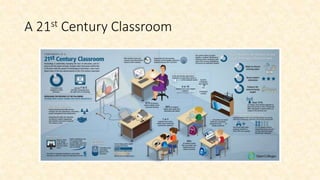
A 21st Century Classroom
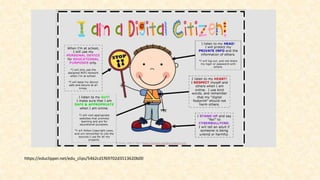
https://educlipper.net/edu_clips/5462cd1f69702d3513620b00
Flipped Classrooms:
Flipping the classroom is the concept of inverting the amount of time
spent on lecture and homework.
The flipped classroom is a pedagogical model in which the typical
lecture and homework elements of a course are reversed. Short video
lectures are viewed by students at home before the class session, while
in-class time is devoted to exercises, projects, or discussions.
http://www.emergingedtech.com/2014/09/most-engaging-uses-of-instructional-technology/
Reasons for FLIPPING
Maximizes Class Time
By moving instructional time out of the shared learning space of the
classroom, teachers are afforded much more time to help students
hone their new skills.
Caveat: Learning what works best with each group of students takes
time and reflection.
http://www.edtechmagazine.com/k12/article/2015/03/cosn-2015-10-reasons-flipped-classrooms-could-change-education
Individualizes Instruction
Asynchronous learning allows students to learn at
their own pace.
Caveat: Not all schools are supportive of such a learning structure.
http://www.edtechmagazine.com/k12/article/2015/03/cosn-2015-10-reasons-flipped-classrooms-
could-change-education
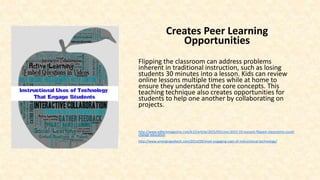
Creates Peer Learning
Opportunities
Flipping the classroom can address problems
inherent in traditional instruction, such as losing
students 30 minutes into a lesson. Kids can review
online lessons multiple times while at home to
ensure they understand the core concepts. This
teaching technique also creates opportunities for
students to help one another by collaborating on
projects.
http://www.edtechmagazine.com/k12/article/2015/03/cosn-2015-10-reasons-flipped-classrooms-could-
change-education
http://www.emergingedtech.com/2014/09/most-engaging-uses-of-instructional-technology/
Improves Effectiveness
While there is not a treasure trove of data on the flipped classroom, the existing
data show that teachers are reaching skill proficiency more quickly and in larger
numbers. Researchers have also noted improvements in student behavior,
fewer disciplinary actions and higher graduation rates, Fulton noted.
Caveat: There are as yet no large-scale studies on the teaching method.
http://www.edtechmagazine.com/k12/article/2015/03/cosn-2015-10-reasons-flipped-classrooms-could-change-education
Excites Teachers
The flipped classroom breaks the traditional
isolation associated with teaching. By sharing
their flipped-classroom materials, teachers
are learning more about their own
instructional methods and trying new
techniques used by their colleagues.
http://www.edtechmagazine.com/k12/article/2015/03/cosn-2015-10-reasons-flipped-classrooms-could-change-education
Interests Students
For students, using technology in and out of the classroom isn't just fun, it's
expected, says Fulton. Flipped learning allows students to review online lessons
as much as they need to at home, at their own pace, and engage in more one-on-
one time with teachers to ensure they have nailed core concepts before moving
on to the next lesson.
Caveat: Students must be prepared for what's involved in a flipped classroom,
meaning having the discipline to watch lectures and videos at home. And
teachers must establish a system of accountability to make sure that students
watch their video lessons outside of class.
http://www.edtechmagazine.com/k12/article/2015/03/cosn-2015-10-reasons-flipped-classrooms-could-change-education
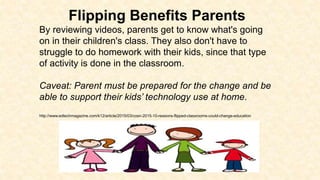
Flipping Benefits Parents
By reviewing videos, parents get to know what's going
on in their children's class. They also don't have to
struggle to do homework with their kids, since that type
of activity is done in the classroom.
Caveat: Parent must be prepared for the change and be
able to support their kids’ technology use at home.
http://www.edtechmagazine.com/k12/article/2015/03/cosn-2015-10-reasons-flipped-classrooms-could-change-education
It Uses Resources Effectively
Budgets are tight, but having a bring-your-own-device policy
and turning to digital content can stretch school resources.
Caveat: Schools must invest in the IT infrastructure to make
flipped classrooms possible.
http://www.edtechmagazine.com/k12/article/2015/03/cosn-2015-10-reasons-flipped-classrooms-could-change-education
Builds 21st-Century Skills
Flipped-classroom instruction embeds
concepts such as independent learning,
collaboration and critical thinking.
http://www.edtechmagazine.com/k12/article/2015/03/cosn-2015-10-reasons-flipped-classrooms-could-
change-education
Flipped Classrooms Could Be the Future of
Education
This teaching method is still in its infancy.
Whether it takes hold will be up to educators.
http://www.edtechmagazine.com/k12/article/2015/03/cosn-2015-10-reasons-flipped-classrooms-could-change-education
http://www.emergingedtech.com/2014/09/most-engaging-uses-of-instructional-technology/
Shelly Terrell projected 2014 trends in technology to be:
• Web tools and platforms will integrate apps to allow users to do more.
• Individuals will document their online learning.
• Teaching trends will focus on student creation and critical thinking.
• Online professional development will offer participants versatile,
community-driven experiences.
https://www.edsurge.com/n/2014-01-06-shelly-terrell-it-s-not-about-the-technology-it-s-about-the-experiences
Essential Conditions for Effective Technology
• Shared Vision
• Empowered Leaders
• Implementation Planning
• Consistent and Adequate
Funding
• Equitable Access
• Skilled Personnel
• Ongoing Professional Learning
• Technical Support
• Curriculum Framework
• Student Centered Learning
• Assessment and Evaluation
• Engaged Communities
• Support Policies
• Supportive External Context
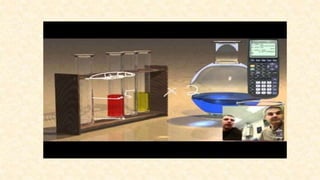
https://youtu.be/2H4RkudFzlc
Citations
Essential Conditions. (n.d.). Retrieved March 29, 2015, from http://www.iste.org/
Lokesh, U. (n.d.). Latest. Retrieved March 29, 2015, from http://edtechreview.in/
O'Dea, C. (n.d.). Education. Retrieved March 29, 2015, from
http://www.njspotlight.com/education/
Saxena, S. (n.d.). EdTech. Retrieved March 29, 2015, from
http://www.edtechmagazine.com/
Smith, F. (n.d.). EdTech. Retrieved March 29, 2015, from http://www.edtechmagazine.com/
Walsh, K. (n.d.). Emerging Education Technologies. Retrieved March 29, 2015, from
http://www.emergingedtech.com/

MODULE 3 Assignment Lisa Mangione

  • 1.
  • 2.
    21ST Century Learningis Student-Centered Students are actively engaged in learning opportunities and inquiry based tasks independent of the teacher. http://edtechreview.in/trends-insights/insights/277-role-of-technology-in-21st-century
  • 3.
    The 2014 GatesFoundation report, Teachers Know Best: What Educators Want from Digital Instructional Tools, indicates that teachers want tools “supporting student collaboration and providing interactive experiences”. These types of tools are fun and engaging, and they support 21st century skills like collaboration, communication, and creativity indicates that teachers want tools “supporting student collaboration and providing interactive experiences”. These types of tools are fun and engaging, and they support 21st century skills like collaboration, communication, and creativity. • Teachers Know Best: What Educators Want from Digital Instructional Tools
  • 4.
    A 21st CenturyClassroom
  • 5.
  • 6.
    Flipped Classrooms: Flipping theclassroom is the concept of inverting the amount of time spent on lecture and homework. The flipped classroom is a pedagogical model in which the typical lecture and homework elements of a course are reversed. Short video lectures are viewed by students at home before the class session, while in-class time is devoted to exercises, projects, or discussions. http://www.emergingedtech.com/2014/09/most-engaging-uses-of-instructional-technology/
  • 7.
    Reasons for FLIPPING MaximizesClass Time By moving instructional time out of the shared learning space of the classroom, teachers are afforded much more time to help students hone their new skills. Caveat: Learning what works best with each group of students takes time and reflection. http://www.edtechmagazine.com/k12/article/2015/03/cosn-2015-10-reasons-flipped-classrooms-could-change-education
  • 8.
    Individualizes Instruction Asynchronous learningallows students to learn at their own pace. Caveat: Not all schools are supportive of such a learning structure. http://www.edtechmagazine.com/k12/article/2015/03/cosn-2015-10-reasons-flipped-classrooms- could-change-education
  • 9.
    Creates Peer Learning Opportunities Flippingthe classroom can address problems inherent in traditional instruction, such as losing students 30 minutes into a lesson. Kids can review online lessons multiple times while at home to ensure they understand the core concepts. This teaching technique also creates opportunities for students to help one another by collaborating on projects. http://www.edtechmagazine.com/k12/article/2015/03/cosn-2015-10-reasons-flipped-classrooms-could- change-education http://www.emergingedtech.com/2014/09/most-engaging-uses-of-instructional-technology/
  • 10.
    Improves Effectiveness While thereis not a treasure trove of data on the flipped classroom, the existing data show that teachers are reaching skill proficiency more quickly and in larger numbers. Researchers have also noted improvements in student behavior, fewer disciplinary actions and higher graduation rates, Fulton noted. Caveat: There are as yet no large-scale studies on the teaching method. http://www.edtechmagazine.com/k12/article/2015/03/cosn-2015-10-reasons-flipped-classrooms-could-change-education
  • 11.
    Excites Teachers The flippedclassroom breaks the traditional isolation associated with teaching. By sharing their flipped-classroom materials, teachers are learning more about their own instructional methods and trying new techniques used by their colleagues. http://www.edtechmagazine.com/k12/article/2015/03/cosn-2015-10-reasons-flipped-classrooms-could-change-education
  • 12.
    Interests Students For students,using technology in and out of the classroom isn't just fun, it's expected, says Fulton. Flipped learning allows students to review online lessons as much as they need to at home, at their own pace, and engage in more one-on- one time with teachers to ensure they have nailed core concepts before moving on to the next lesson. Caveat: Students must be prepared for what's involved in a flipped classroom, meaning having the discipline to watch lectures and videos at home. And teachers must establish a system of accountability to make sure that students watch their video lessons outside of class. http://www.edtechmagazine.com/k12/article/2015/03/cosn-2015-10-reasons-flipped-classrooms-could-change-education
  • 13.
    Flipping Benefits Parents Byreviewing videos, parents get to know what's going on in their children's class. They also don't have to struggle to do homework with their kids, since that type of activity is done in the classroom. Caveat: Parent must be prepared for the change and be able to support their kids’ technology use at home. http://www.edtechmagazine.com/k12/article/2015/03/cosn-2015-10-reasons-flipped-classrooms-could-change-education
  • 14.
    It Uses ResourcesEffectively Budgets are tight, but having a bring-your-own-device policy and turning to digital content can stretch school resources. Caveat: Schools must invest in the IT infrastructure to make flipped classrooms possible. http://www.edtechmagazine.com/k12/article/2015/03/cosn-2015-10-reasons-flipped-classrooms-could-change-education
  • 15.
    Builds 21st-Century Skills Flipped-classroominstruction embeds concepts such as independent learning, collaboration and critical thinking. http://www.edtechmagazine.com/k12/article/2015/03/cosn-2015-10-reasons-flipped-classrooms-could- change-education
  • 16.
    Flipped Classrooms CouldBe the Future of Education This teaching method is still in its infancy. Whether it takes hold will be up to educators. http://www.edtechmagazine.com/k12/article/2015/03/cosn-2015-10-reasons-flipped-classrooms-could-change-education http://www.emergingedtech.com/2014/09/most-engaging-uses-of-instructional-technology/
  • 17.
    Shelly Terrell projected2014 trends in technology to be: • Web tools and platforms will integrate apps to allow users to do more. • Individuals will document their online learning. • Teaching trends will focus on student creation and critical thinking. • Online professional development will offer participants versatile, community-driven experiences. https://www.edsurge.com/n/2014-01-06-shelly-terrell-it-s-not-about-the-technology-it-s-about-the-experiences
  • 18.
    Essential Conditions forEffective Technology • Shared Vision • Empowered Leaders • Implementation Planning • Consistent and Adequate Funding • Equitable Access • Skilled Personnel • Ongoing Professional Learning • Technical Support • Curriculum Framework • Student Centered Learning • Assessment and Evaluation • Engaged Communities • Support Policies • Supportive External Context
  • 19.
  • 20.
    Citations Essential Conditions. (n.d.).Retrieved March 29, 2015, from http://www.iste.org/ Lokesh, U. (n.d.). Latest. Retrieved March 29, 2015, from http://edtechreview.in/ O'Dea, C. (n.d.). Education. Retrieved March 29, 2015, from http://www.njspotlight.com/education/ Saxena, S. (n.d.). EdTech. Retrieved March 29, 2015, from http://www.edtechmagazine.com/ Smith, F. (n.d.). EdTech. Retrieved March 29, 2015, from http://www.edtechmagazine.com/ Walsh, K. (n.d.). Emerging Education Technologies. Retrieved March 29, 2015, from http://www.emergingedtech.com/