LITERARY CRITICISM
          AND
   ANALYSIS OF POEM


Richard's Principles of literary Criticism
Literary criticism
      Criticism, as its etymology indicates, is
the act of judging. Literary criticism endeavors to
                      form a correct
estimate of literary productions. Its endeavor is to
                      see a piece of
 writing as it is. It brings literary productions into
                    comparison with
  recognized principles and ideal standards; it
              investigates them in their
  matter, form, and spirit; and, as a result of this
                        process, it
    determines their merits and their defects.
Literary Criticism
Carroll a critic said that serious critics see the task
       of criticism as primarily interpretive, not
evaluative. The literary critic gives a work context,
illustrates its main themes and motifs, comments
on its use of language, and perhaps situates it in
a tradition. But a literary critic should be reluctant
   to praise or condemn, or otherwise judge the
 worth, of the literary works she discusses. Much
   of the , is not focused on the question of what
makes particular works good or bad, but on what
  such works can show us about the societies in
       which they are created and consumed.
Poetry

  We may approximately define poetry as the metrical
expression of lofty or beautiful thought, feeling, or action,
      in maginative and artistic form.It is the metrical
              expression of an exaltation of
soul, which sometimes suffuses the objects of nature and
                       the scenes of
      human life with a beauty and glory of its own,--

        "The light that never was on sea or land,
        The consecration and the poet's dream."
Analysis Of Poem

Poem can be analyzed generally by the terms Of:
              Content / Context
                 ●Form / style

              ●Imagery / Voice

                ●Tone / Mood

                   ●Structure

             ●Figures of speech

            ●Rhythm and rhyme

   ●And other stylistics features (Deviation,

                  parallelism)
Literary analysis of poem

   What is the genre, or form, of the poem?
        Who is speaking in the poem?
      What is the structure of the poem?
       ow does the poem use imagery?
How does the sound of the poetry contribute to its
                  meaning?
        Examine the use of language.
  What qualities does the poem evoke in the
                   reader?
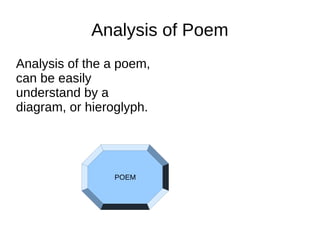
Analysis of Poem
Analysis of the a poem,
can be easily
understand by a
diagram, or hieroglyph.


                POEM
Rhythm
 Rhythm is the ordered application of stress from one
syllable to the next. Rhythm can help to convey specific
 meanings. For example, the speed of the rhythm can
 help the reader understand the poem. If the rhythm is
  fast, the poem indicates action or excitement. If the
  rhythm is slow, the poem indicates peacefulness, or
                        harmony.

               A NIGHT or TWO aGO,
        And NOW she TURNS her PERfect FACE
             UPON the WORLD beLOW.
Rhyme


Many poems have a repeated sound. This sound
 helps to connect the poem together and gives
 pleasure to the listener. The first sound pattern
  that is most common is rhyme. It is the use of
                repetition of sound

          Not a single sound is stirring,
              All is silent, all is still
Form /visual sensations
  These are individual shapes of the letters, their
                         size
    and spacing and the form in which poetry is
written one line, couplet or triplet. All graphological
features are included in it. Form can be lyrical, or
                     free verse.

             "Those Evening Bells,"
        And so 'twill be when I am gone;
        That tuneful peal will still ring on,
    While other bards shall walk these dells,
    And sing your praise, sweet evening bells
           (quatrian four lines, lyrical)
Imagery
Imagery is very closely related with sensations. It
may be auditory, visual olfactory (anything which
 appeals to our five senses) for example William
             Wordsworth's poem

        They flash upon that inward eye
          Which is the bliss of solitude;
       And then my heart with pleasure fills,
         And dances with the daffodils.
Imagery
   Tied Images:visual sensations of words do not
     commonly occur by themselves. They have
    certain regular companions so closely tied to
  them as to be only with difficulty disconnected.
    The chief of these are the auditory image the
    sound of the words in the mind’s ear and the
             image of articulation the feel
  in the lips, mouth, and throat, of what the words
would be like to speak. Auditory images of words
       are among the most obvious of mental
    happenings. Any line of verse or prose slowly
   read, will, for most people, sound mutely in the
 imagination somewhat as it would if read aloud.
Imagery
 "Imagery" refers to any sort of image, and there
   are two basic kinds. One is the images of the
physical setting, described above. The other kind
      is images as figures of speech, such as
 metaphors. These figures of speech extend the
       imaginative range, the complexity and
comprehensibility of the subject. They can be very
   brief, a word or two, a glistening fragment of
insight, a chance connection sparked into a blaze
(warming or destroying) of understanding; or they
   can be extended analogies, such as Donne's
          'conceits'or Milton's epic similes.
Reflective (Mood, Tone)
                    ’
                                               There glowing ghosts of flowers
    ’. Who’s in the next room?―who?

              I seemed to see
                                                   Draw down, draw nigh;
Somebody in the dawning passing through
                                               And wings of swift spent hours
             Unknown to me.’                         Take flight and fly;
‘Nay: you saw nought. He passed invisibly’.     She sees by formless gleams
                                               She hears across cold streams
                                              Dead mouths of many dreams that
                                                      sing and sigh.
Structure of Poem
   There are two basic kinds of structure, formal and
                         thematic.
 Formal structure is the way the poem goes together in
 terms of its component parts:stanza's, paragraphs or
               relation between the parts.

Thematic structure, known in respect to fiction as 'plot', is
 the way the argument or presentation of the material of
the poem is developed. For instance a poem might state
a problem in eight lines, an answer to the problem in the
next six; of the eight lines stating the problem, four might
provide a concrete example, four a reflection on what the
                     example implies.
Emotions and Attitudes
It refers to anything in the way things described in
 the poem. Emotions are the signs of attitudes. It
   deals with the poets feelings, experience with
                things and behaviour.

      A Question - a poem by Robert Frost
       A voice said, Look me in the stars
         And tell me truly, men of earth,
          If all the soul-and-body scars
       Were not too much to pay for birth.
Conclusion


  Literary criticism is the study, evaluation and
 interpretation of data. Poetry is also a genre of
Literature. So L.C opens a new way to interpret
poetry which we seen through analysis of poem.


             …........THANKS.........

Literary criticism

  • 1.
    LITERARY CRITICISM AND ANALYSIS OF POEM Richard's Principles of literary Criticism
  • 2.
    Literary criticism Criticism, as its etymology indicates, is the act of judging. Literary criticism endeavors to form a correct estimate of literary productions. Its endeavor is to see a piece of writing as it is. It brings literary productions into comparison with recognized principles and ideal standards; it investigates them in their matter, form, and spirit; and, as a result of this process, it determines their merits and their defects.
  • 3.
    Literary Criticism Carroll acritic said that serious critics see the task of criticism as primarily interpretive, not evaluative. The literary critic gives a work context, illustrates its main themes and motifs, comments on its use of language, and perhaps situates it in a tradition. But a literary critic should be reluctant to praise or condemn, or otherwise judge the worth, of the literary works she discusses. Much of the , is not focused on the question of what makes particular works good or bad, but on what such works can show us about the societies in which they are created and consumed.
  • 4.
    Poetry Wemay approximately define poetry as the metrical expression of lofty or beautiful thought, feeling, or action, in maginative and artistic form.It is the metrical expression of an exaltation of soul, which sometimes suffuses the objects of nature and the scenes of human life with a beauty and glory of its own,-- "The light that never was on sea or land, The consecration and the poet's dream."
  • 5.
    Analysis Of Poem Poemcan be analyzed generally by the terms Of: Content / Context ●Form / style ●Imagery / Voice ●Tone / Mood ●Structure ●Figures of speech ●Rhythm and rhyme ●And other stylistics features (Deviation, parallelism)
  • 6.
    Literary analysis ofpoem What is the genre, or form, of the poem? Who is speaking in the poem? What is the structure of the poem? ow does the poem use imagery? How does the sound of the poetry contribute to its meaning? Examine the use of language. What qualities does the poem evoke in the reader?
  • 7.
    Analysis of Poem Analysisof the a poem, can be easily understand by a diagram, or hieroglyph. POEM
  • 8.
    Rhythm Rhythm isthe ordered application of stress from one syllable to the next. Rhythm can help to convey specific meanings. For example, the speed of the rhythm can help the reader understand the poem. If the rhythm is fast, the poem indicates action or excitement. If the rhythm is slow, the poem indicates peacefulness, or harmony. A NIGHT or TWO aGO, And NOW she TURNS her PERfect FACE UPON the WORLD beLOW.
  • 9.
    Rhyme Many poems havea repeated sound. This sound helps to connect the poem together and gives pleasure to the listener. The first sound pattern that is most common is rhyme. It is the use of repetition of sound Not a single sound is stirring, All is silent, all is still
  • 10.
    Form /visual sensations These are individual shapes of the letters, their size and spacing and the form in which poetry is written one line, couplet or triplet. All graphological features are included in it. Form can be lyrical, or free verse. "Those Evening Bells," And so 'twill be when I am gone; That tuneful peal will still ring on, While other bards shall walk these dells, And sing your praise, sweet evening bells (quatrian four lines, lyrical)
  • 11.
    Imagery Imagery is veryclosely related with sensations. It may be auditory, visual olfactory (anything which appeals to our five senses) for example William Wordsworth's poem They flash upon that inward eye Which is the bliss of solitude; And then my heart with pleasure fills, And dances with the daffodils.
  • 12.
    Imagery Tied Images:visual sensations of words do not commonly occur by themselves. They have certain regular companions so closely tied to them as to be only with difficulty disconnected. The chief of these are the auditory image the sound of the words in the mind’s ear and the image of articulation the feel in the lips, mouth, and throat, of what the words would be like to speak. Auditory images of words are among the most obvious of mental happenings. Any line of verse or prose slowly read, will, for most people, sound mutely in the imagination somewhat as it would if read aloud.
  • 13.
    Imagery "Imagery" refersto any sort of image, and there are two basic kinds. One is the images of the physical setting, described above. The other kind is images as figures of speech, such as metaphors. These figures of speech extend the imaginative range, the complexity and comprehensibility of the subject. They can be very brief, a word or two, a glistening fragment of insight, a chance connection sparked into a blaze (warming or destroying) of understanding; or they can be extended analogies, such as Donne's 'conceits'or Milton's epic similes.
  • 14.
    Reflective (Mood, Tone) ’ There glowing ghosts of flowers ’. Who’s in the next room?―who? I seemed to see Draw down, draw nigh; Somebody in the dawning passing through And wings of swift spent hours Unknown to me.’ Take flight and fly; ‘Nay: you saw nought. He passed invisibly’. She sees by formless gleams She hears across cold streams Dead mouths of many dreams that sing and sigh.
  • 15.
    Structure of Poem There are two basic kinds of structure, formal and thematic. Formal structure is the way the poem goes together in terms of its component parts:stanza's, paragraphs or relation between the parts. Thematic structure, known in respect to fiction as 'plot', is the way the argument or presentation of the material of the poem is developed. For instance a poem might state a problem in eight lines, an answer to the problem in the next six; of the eight lines stating the problem, four might provide a concrete example, four a reflection on what the example implies.
  • 16.
    Emotions and Attitudes Itrefers to anything in the way things described in the poem. Emotions are the signs of attitudes. It deals with the poets feelings, experience with things and behaviour. A Question - a poem by Robert Frost A voice said, Look me in the stars And tell me truly, men of earth, If all the soul-and-body scars Were not too much to pay for birth.
  • 17.
    Conclusion Literarycriticism is the study, evaluation and interpretation of data. Poetry is also a genre of Literature. So L.C opens a new way to interpret poetry which we seen through analysis of poem. …........THANKS.........