Dr. SOHIL TAKODARA
 50-150gms of fat per day
 90% Tri Acyl Glycerol(TAG)/Triglycerides(TG),
 10% ( Cholesterol. Phospholipids, Fatty
Acids(FA))
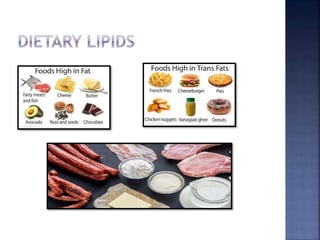
 Common dietary sources: Milk, Curd, paneer,
sweets, ghee, butter, oils, eggs
 Energy – 1 gm fat ( 9 Kcal)
 TAG- Emergency source of energy
(Starvation)
 Phospholipids-Insulation, surfactant etc
 Biological membrane formation
 Cholesterol- Steroid hormones, Bile Acids
 Lipoproteins- Lipid transporters of the body
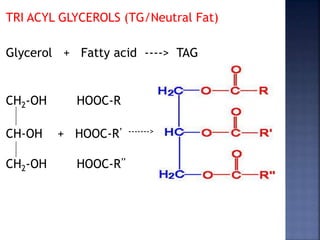
TRI ACYL GLYCEROLS (TG/Neutral Fat)
Glycerol + Fatty acid ----> TAG
CH2-OH HOOC-R
CH-OH + HOOC-R’ ------->
CH2-OH HOOC-R’’
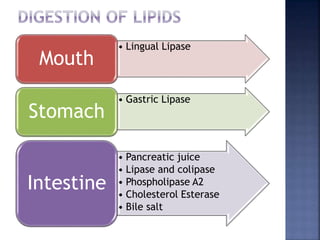
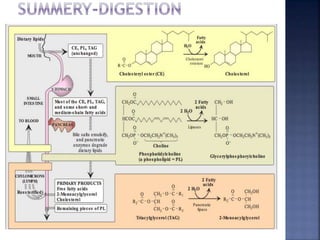
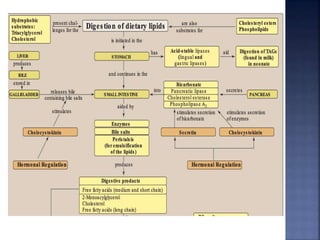
• Lingual Lipase
Mouth
• Gastric Lipase
Stomach
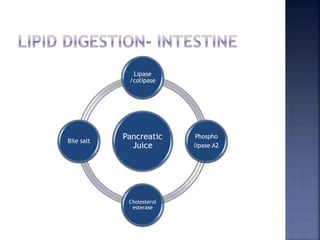
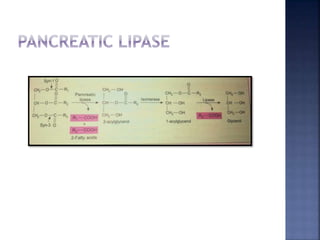
• Pancreatic juice
• Lipase and colipase
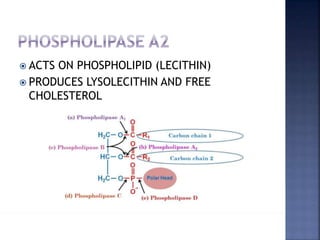
• Phospholipase A2
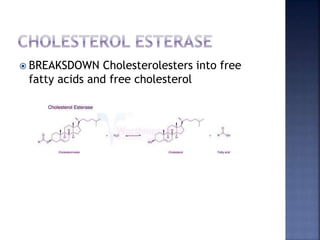
• Cholesterol Esterase
• Bile salt
Intestine
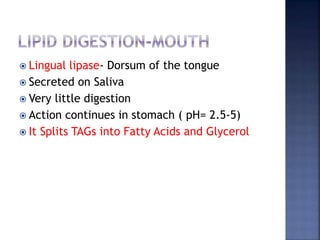
 Lingual lipase- Dorsum of the tongue
 Secreted on Saliva
 Very little digestion
 Action continues in stomach ( pH= 2.5-5)
 It Splits TAGs into Fatty Acids and Glycerol
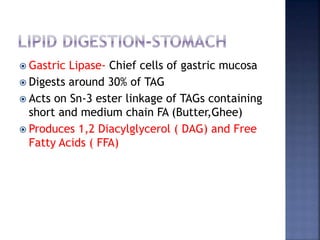
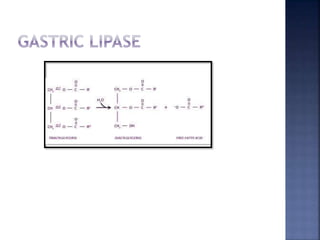
 Gastric Lipase- Chief cells of gastric mucosa
 Digests around 30% of TAG
 Acts on Sn-3 ester linkage of TAGs containing
short and medium chain FA (Butter,Ghee)
 Produces 1,2 Diacylglycerol ( DAG) and Free
Fatty Acids ( FFA)
Pancreatic
Juice
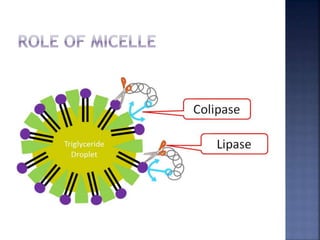
Lipase
/colipase
Phospho
lipase A2
Cholesterol
esterase
Bile salt
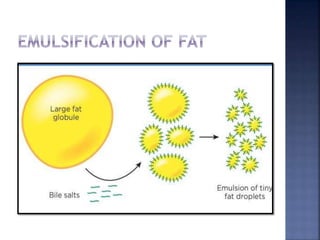
 Its essential for efficient lipid digestion
 Bile salts- Synthesized in Liver, Secreted in
Bile
 Sodium and potassium salt of Bile acids
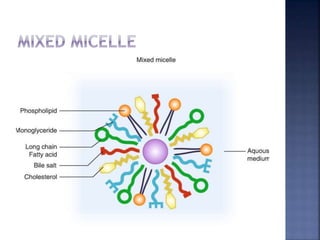
 Mixed micelle formation of Bile salt, PL,
cholesterolesters
 BREAKSDOWN Cholesterolesters into free
fatty acids and free cholesterol
 ACTS ON PHOSPHOLIPID (LECITHIN)
 PRODUCES LYSOLECITHIN AND FREE
CHOLESTEROL
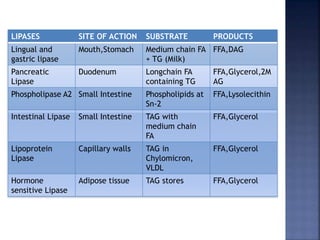
LIPASES SITE OF ACTION SUBSTRATE PRODUCTS
Lingual and
gastric lipase
Mouth,Stomach Medium chain FA
+ TG (Milk)
FFA,DAG
Pancreatic
Lipase
Duodenum Longchain FA
containing TG
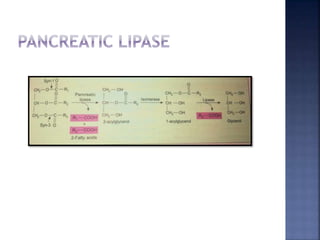
FFA,Glycerol,2M
AG
Phospholipase A2 Small Intestine Phospholipids at
Sn-2
FFA,Lysolecithin
Intestinal Lipase Small Intestine TAG with
medium chain
FA
FFA,Glycerol
Lipoprotein
Lipase
Capillary walls TAG in
Chylomicron,
VLDL
FFA,Glycerol
Hormone
sensitive Lipase
Adipose tissue TAG stores FFA,Glycerol
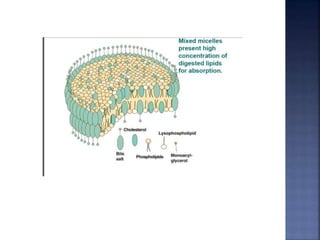
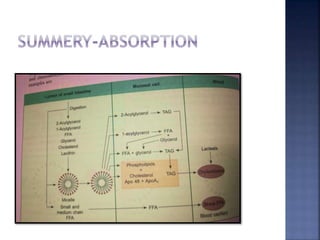
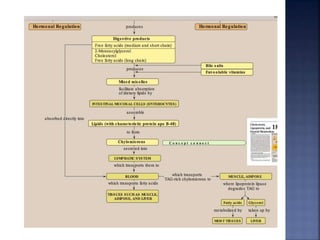
 Digested lipid products are packed into
micelle and move towards intestinal mucosa
 Bile salts undergo enterohepatic circulation
for reutilization (1 % excreted)
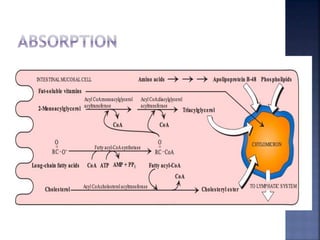
 2-acyl glycerol gets reconverted to TAG
 1-acyl glycerol is broken into FFA and
glycerol
 Long chain utilizes this glycerol to form TAG
 TAGs, PL, CE are incorporated with Apo A and
Apo B48 forms a and circulated
DISORDERS
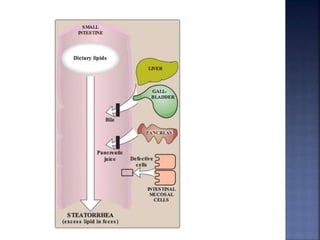
Steatorrhea- excretion of fatty foul smelling stools.
Defective digestion - chronic disease of pancreas
surgical removal of pancreas
defective bile synthesis(
OBSTRUCTIVE JAUNDICE)
gall stones
Defective absorption- intestinal diseases-
Enteritis
Tropical sprue
Crohn’s disease
Chyluria- milky urine
due to abnormal connection between lymphatic drainage of
intestine and urinary tract - chylous fistula
Chylothorax- milky pleural fluid
Chyle may leak into the pleural cavity from the thoracic duct
or its tributaries as a result of trauma (stabwounds, crush
injuries, surgical injury) or obstruction by tumour. It is
commonly mistaken for pus. Chyle contains fat globules.
Colipase defeciency- steatorrhoea
Cholelithiasis – failure to keep cholesterol in solution by bile
salts.
FSV def manifestations are common.
Lipids Digestion and absorption

Lipids Digestion and absorption

  • 1.
  • 3.
     50-150gms offat per day  90% Tri Acyl Glycerol(TAG)/Triglycerides(TG),  10% ( Cholesterol. Phospholipids, Fatty Acids(FA))  Common dietary sources: Milk, Curd, paneer, sweets, ghee, butter, oils, eggs
  • 4.
     Energy –1 gm fat ( 9 Kcal)  TAG- Emergency source of energy (Starvation)  Phospholipids-Insulation, surfactant etc  Biological membrane formation  Cholesterol- Steroid hormones, Bile Acids  Lipoproteins- Lipid transporters of the body
  • 5.
    TRI ACYL GLYCEROLS(TG/Neutral Fat) Glycerol + Fatty acid ----> TAG CH2-OH HOOC-R CH-OH + HOOC-R’ -------> CH2-OH HOOC-R’’
  • 6.
    • Lingual Lipase Mouth •Gastric Lipase Stomach • Pancreatic juice • Lipase and colipase • Phospholipase A2 • Cholesterol Esterase • Bile salt Intestine
  • 7.
     Lingual lipase-Dorsum of the tongue  Secreted on Saliva  Very little digestion  Action continues in stomach ( pH= 2.5-5)  It Splits TAGs into Fatty Acids and Glycerol
  • 8.
     Gastric Lipase-Chief cells of gastric mucosa  Digests around 30% of TAG  Acts on Sn-3 ester linkage of TAGs containing short and medium chain FA (Butter,Ghee)  Produces 1,2 Diacylglycerol ( DAG) and Free Fatty Acids ( FFA)
  • 10.
  • 12.
     Its essentialfor efficient lipid digestion  Bile salts- Synthesized in Liver, Secreted in Bile  Sodium and potassium salt of Bile acids  Mixed micelle formation of Bile salt, PL, cholesterolesters
  • 18.
     BREAKSDOWN Cholesterolestersinto free fatty acids and free cholesterol
  • 19.
     ACTS ONPHOSPHOLIPID (LECITHIN)  PRODUCES LYSOLECITHIN AND FREE CHOLESTEROL
  • 20.
    LIPASES SITE OFACTION SUBSTRATE PRODUCTS Lingual and gastric lipase Mouth,Stomach Medium chain FA + TG (Milk) FFA,DAG Pancreatic Lipase Duodenum Longchain FA containing TG FFA,Glycerol,2M AG Phospholipase A2 Small Intestine Phospholipids at Sn-2 FFA,Lysolecithin Intestinal Lipase Small Intestine TAG with medium chain FA FFA,Glycerol Lipoprotein Lipase Capillary walls TAG in Chylomicron, VLDL FFA,Glycerol Hormone sensitive Lipase Adipose tissue TAG stores FFA,Glycerol
  • 22.
     Digested lipidproducts are packed into micelle and move towards intestinal mucosa  Bile salts undergo enterohepatic circulation for reutilization (1 % excreted)
  • 23.
     2-acyl glycerolgets reconverted to TAG  1-acyl glycerol is broken into FFA and glycerol  Long chain utilizes this glycerol to form TAG  TAGs, PL, CE are incorporated with Apo A and Apo B48 forms a and circulated
  • 26.
    DISORDERS Steatorrhea- excretion offatty foul smelling stools. Defective digestion - chronic disease of pancreas surgical removal of pancreas defective bile synthesis( OBSTRUCTIVE JAUNDICE) gall stones Defective absorption- intestinal diseases- Enteritis Tropical sprue Crohn’s disease
  • 28.
    Chyluria- milky urine dueto abnormal connection between lymphatic drainage of intestine and urinary tract - chylous fistula Chylothorax- milky pleural fluid Chyle may leak into the pleural cavity from the thoracic duct or its tributaries as a result of trauma (stabwounds, crush injuries, surgical injury) or obstruction by tumour. It is commonly mistaken for pus. Chyle contains fat globules. Colipase defeciency- steatorrhoea Cholelithiasis – failure to keep cholesterol in solution by bile salts. FSV def manifestations are common.