Peer-reviewed Library Teaching
Reflections, Background & Practicalities
Katherine Turner & Laurence Morris
Leeds Beckett University
How haveyou
developedyour
Teaching?
Ben Tubby [CC BY 2.0 (https://creativecommons.org/licenses/by/2.0)]
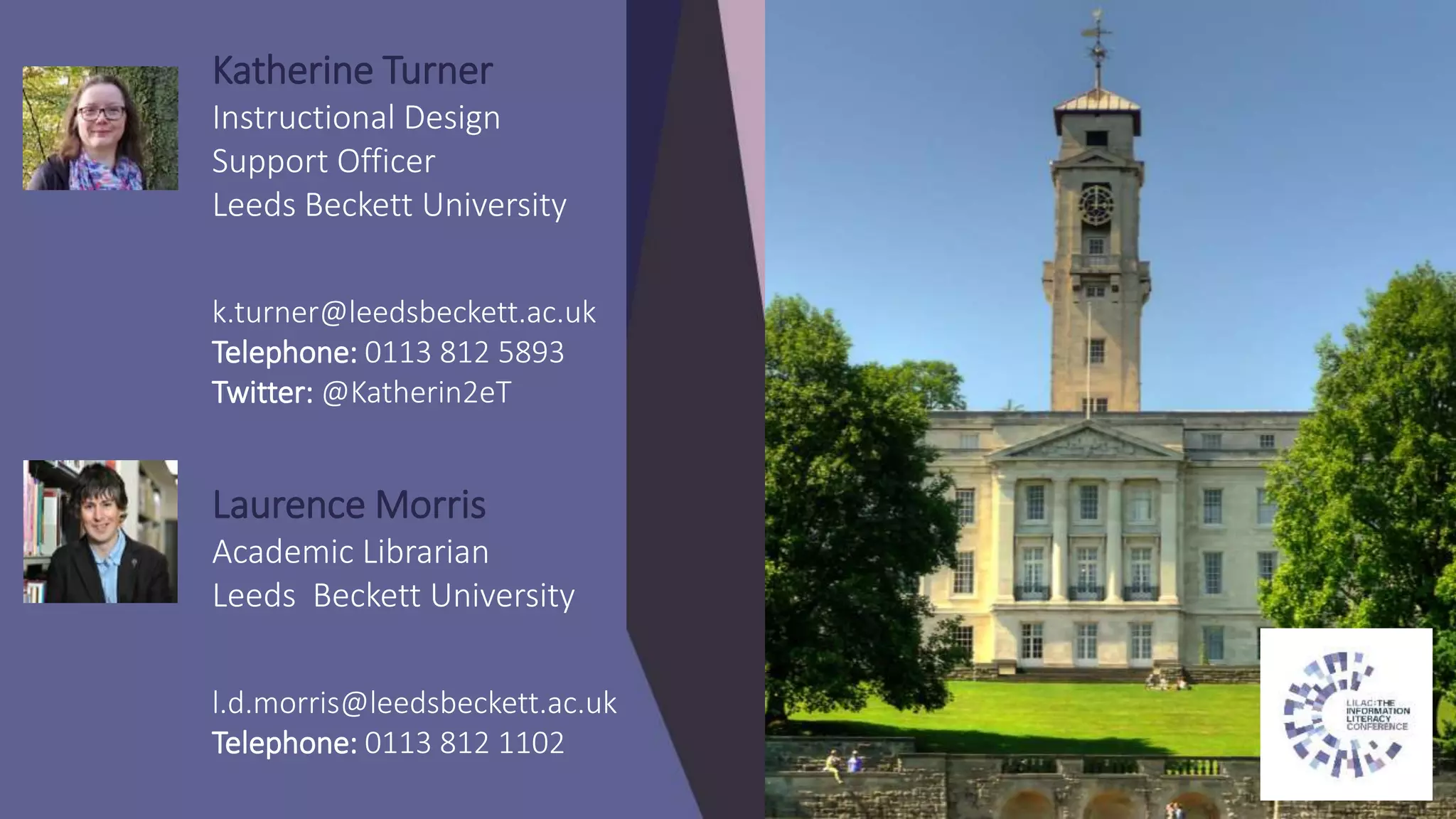
Outcomes
 Understand the benefits of Peer Observation as a
useful professional development tool for you to
practice in your own institution
 Gain practical tips and identify strategies for
approaching the observation and dealing with
surrounding issues
 Engage with basic Peer Observation and start to
gain insight into your own practice
WhyPeerReview
Teaching?
 Changing library roles
 To develop teaching skills
 Student and colleague feedback
 Peer Observation for knowledge sharing &
gaining insightful understanding
Alabi, J. & Weare, W., 2014. Peer review of teaching. Communications in Information Literacy, 8(2), pp. 180-191.
Bell, A. & Mladenovic, R., 2008. The benefits of peer observation of teaching for tutor development. Higher Education, Volume 55, pp. 735-752.
Levene, L. & Frank, P., 1993. Peer coaching; Professional growth and development for instruction librarians. Reference Services Review, 21(3), pp. 35-43.
Vassilakaki, E & Moniarou-Papaconstantinou, V., 2015. A systematic literature review informing library and information professionals’ emerging roles. New Library World, 116
(1/2), pp. 37-66.
This Photo by Unknown Author is licensed under CC BY-NC-ND
PeerObservation
inAcademic
Libraries
 Peer Observation more widespread in traditional
HE teaching
 More recent use by colleagues in support roles
 Difficult to know how much it is used
 Cases in UK, Europe & US
 Variety of Peer Observation arrangements
Alabi, J. & Weare, W., 2014. Peer review of teaching. Communications in Information Literacy, 8(2), pp. 180-191.
Alabi, J; Huisman, R; Lacy, M; Miller, W; Snadjr, E; Trinosky, J; Weare, W Jr., 2012. By and for us: The development of a program for peer review of teaching by and for pre-
tenure librarians. Collaborative Librarianship, 4(4), pp. 165-174.
This Photo by Unknown Author is licensed under CC BY-SA
Effectsof Peer
Observationon
Librarians
 Enables focussed feedback and sharing of
knowledge
 Improves teaching confidence
 Enhances collegiality
 Provides valuable opportunities for self-reflection
 Exposure to alternative techniques
Alabi, J. & Weare, W., 2014. Peer review of teaching. Communications in Information Literacy, 8(2), pp. 180-191.
This Photo by Unknown Author is licensed under CC BY-NC-ND
Discussion:
Potential
Issues/Barriers
This Photo by Unknown Author is licensed under CC BY-SA-NC
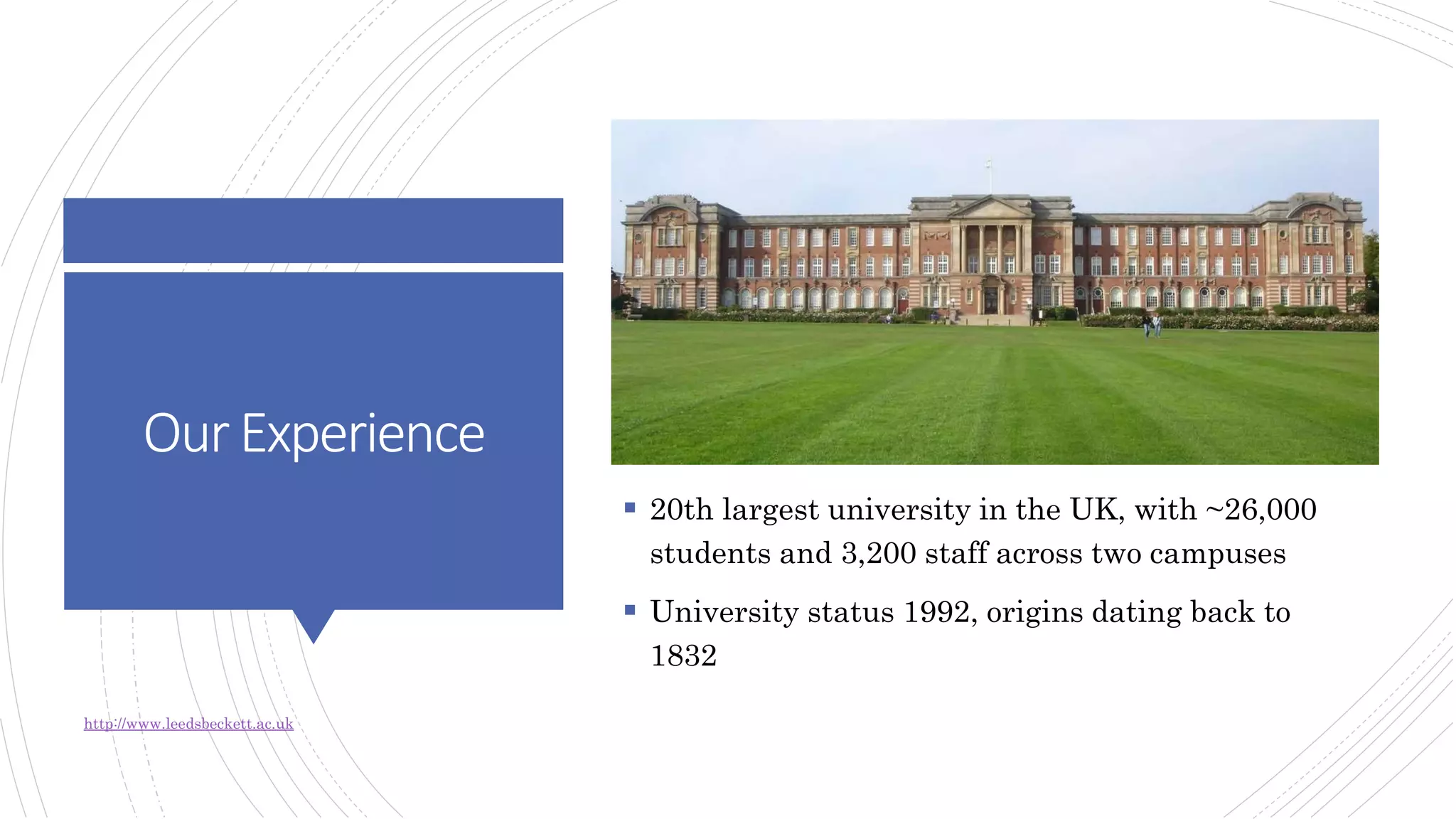
OurExperience
 20th largest university in the UK, with ~26,000
students and 3,200 staff across two campuses
 University status 1992, origins dating back to
1832
http://www.leedsbeckett.ac.uk
Participatingin
PeerObservation
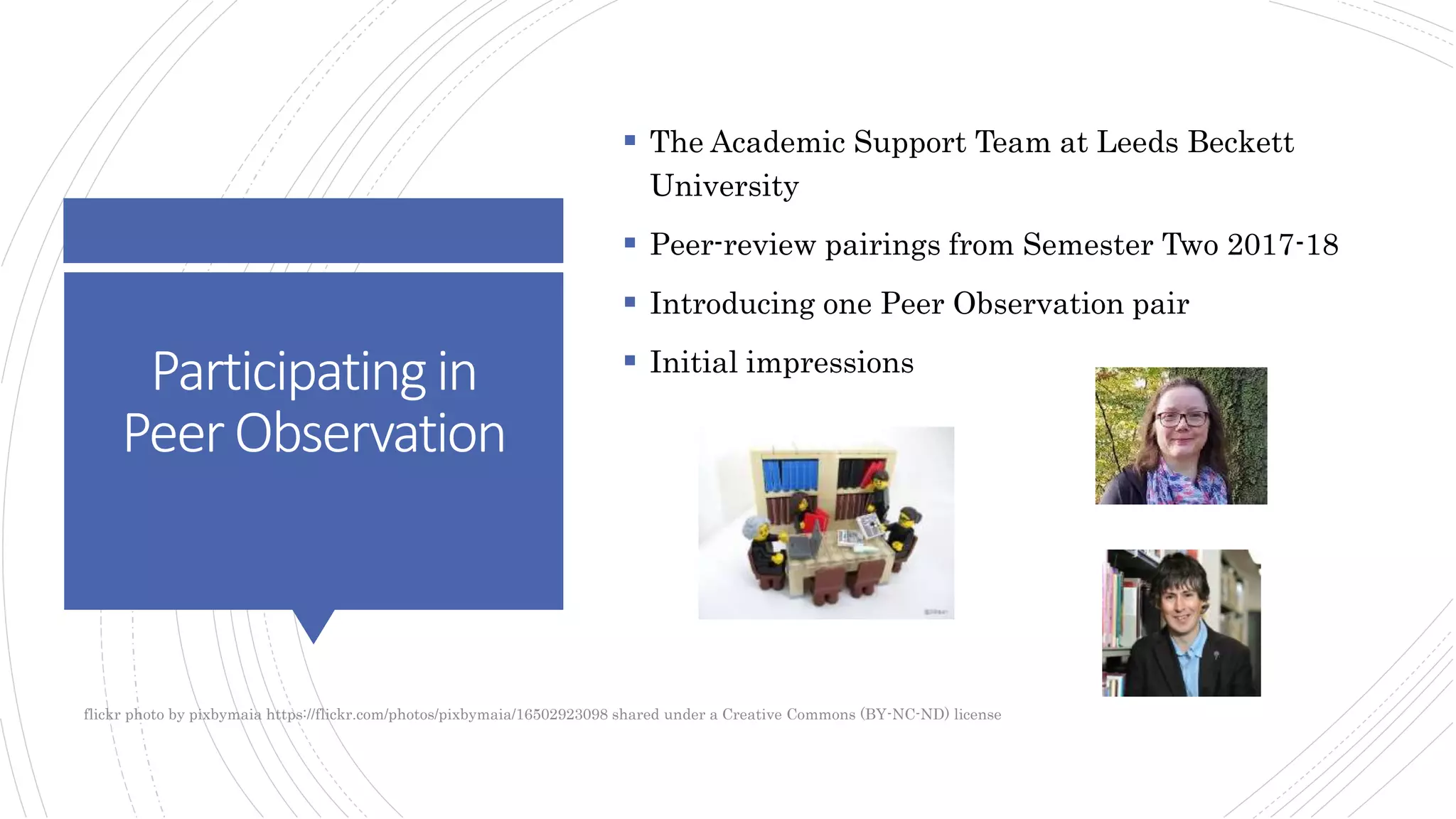
 The Academic Support Team at Leeds Beckett
University
 Peer-review pairings from Semester Two 2017-18
 Introducing one Peer Observation pair
 Initial impressions
flickr photo by pixbymaia https://flickr.com/photos/pixbymaia/16502923098 shared under a Creative Commons (BY-NC-ND) license
Practicalities
 Making arrangements
 Dealing with barriers
 Pre-sessional discussion
 During the session
 Feedback
This Photo by Unknown Author is licensed under CC BY-SA-NC
Reflections
 Opportunities for reflection
 On being observed
 Observer role
 Critical feedback
 Different styles
This Photo by Unknown Author is licensed under CC BY-SA
Results
 Increased confidence in our practice
 Improved collegiality
 Understand benefits of Peer Observation
 What’s next?
 New techniques
This Photo by Unknown Author is licensed under CC BY-SA-NC
TrialRun
This Photo by Unknown Author is licensed under CC BY-SA
Commentsand
Questions
This Photo by Unknown Author is licensed under CC BY-SA
References
 Alabi, J; Huisman, R; Lacy, M; Miller, W; Snadjr, E; Trinosky,
J; Weare, W Jr., 2012. By and for us: The development of a
program for peer review of teaching by and for pre-tenure
librarians. Collaborative Librarianship, 4(4), pp. 165-174.
 Alabi, J. & Weare, W., 2014. Peer review of teaching.
Communications in Information Literacy, 8(2), pp. 180-191.
 Bell, A. & Mladenovic, R., 2008. The benefits of peer
observation of teaching for tutor development. Higher
Education, Volume 55, pp. 735-752.
 Levene, L. & Frank, P., 1993. Peer coaching; Professional
growth and development for instruction librarians. Reference
Services Review, 21(3), pp. 35-43.
 Vassilakaki, E. & Moniarou-Papaconstantinou, V., 2015. A
systematic literature review informing library and information
professionals’ emerging roles. New Library World, 116 (1/2),
pp. 37-66.
Thank you!
k.turner@leedsbeckett.ac.uk
l.d.morris@leedsbeckett.ac.uk
Image https://pixabay.com/
Katherine Turner
Instructional Design
Support Officer
Leeds Beckett University
k.turner@leedsbeckett.ac.uk
Telephone: 0113 812 5893
Twitter: @Katherin2eT
Laurence Morris
Academic Librarian
Leeds Beckett University
l.d.morris@leedsbeckett.ac.uk
Telephone: 0113 812 1102

Peer reviewed library teaching - Turner & Morris

  • 1.
    Peer-reviewed Library Teaching Reflections,Background & Practicalities Katherine Turner & Laurence Morris Leeds Beckett University
  • 2.
    How haveyou developedyour Teaching? Ben Tubby[CC BY 2.0 (https://creativecommons.org/licenses/by/2.0)]
  • 3.
    Outcomes  Understand thebenefits of Peer Observation as a useful professional development tool for you to practice in your own institution  Gain practical tips and identify strategies for approaching the observation and dealing with surrounding issues  Engage with basic Peer Observation and start to gain insight into your own practice
  • 4.
    WhyPeerReview Teaching?  Changing libraryroles  To develop teaching skills  Student and colleague feedback  Peer Observation for knowledge sharing & gaining insightful understanding Alabi, J. & Weare, W., 2014. Peer review of teaching. Communications in Information Literacy, 8(2), pp. 180-191. Bell, A. & Mladenovic, R., 2008. The benefits of peer observation of teaching for tutor development. Higher Education, Volume 55, pp. 735-752. Levene, L. & Frank, P., 1993. Peer coaching; Professional growth and development for instruction librarians. Reference Services Review, 21(3), pp. 35-43. Vassilakaki, E & Moniarou-Papaconstantinou, V., 2015. A systematic literature review informing library and information professionals’ emerging roles. New Library World, 116 (1/2), pp. 37-66. This Photo by Unknown Author is licensed under CC BY-NC-ND
  • 5.
    PeerObservation inAcademic Libraries  Peer Observationmore widespread in traditional HE teaching  More recent use by colleagues in support roles  Difficult to know how much it is used  Cases in UK, Europe & US  Variety of Peer Observation arrangements Alabi, J. & Weare, W., 2014. Peer review of teaching. Communications in Information Literacy, 8(2), pp. 180-191. Alabi, J; Huisman, R; Lacy, M; Miller, W; Snadjr, E; Trinosky, J; Weare, W Jr., 2012. By and for us: The development of a program for peer review of teaching by and for pre- tenure librarians. Collaborative Librarianship, 4(4), pp. 165-174. This Photo by Unknown Author is licensed under CC BY-SA
  • 6.
    Effectsof Peer Observationon Librarians  Enablesfocussed feedback and sharing of knowledge  Improves teaching confidence  Enhances collegiality  Provides valuable opportunities for self-reflection  Exposure to alternative techniques Alabi, J. & Weare, W., 2014. Peer review of teaching. Communications in Information Literacy, 8(2), pp. 180-191. This Photo by Unknown Author is licensed under CC BY-NC-ND
  • 7.
    Discussion: Potential Issues/Barriers This Photo byUnknown Author is licensed under CC BY-SA-NC
  • 8.
    OurExperience  20th largestuniversity in the UK, with ~26,000 students and 3,200 staff across two campuses  University status 1992, origins dating back to 1832 http://www.leedsbeckett.ac.uk
  • 9.
    Participatingin PeerObservation  The AcademicSupport Team at Leeds Beckett University  Peer-review pairings from Semester Two 2017-18  Introducing one Peer Observation pair  Initial impressions flickr photo by pixbymaia https://flickr.com/photos/pixbymaia/16502923098 shared under a Creative Commons (BY-NC-ND) license
  • 10.
    Practicalities  Making arrangements Dealing with barriers  Pre-sessional discussion  During the session  Feedback This Photo by Unknown Author is licensed under CC BY-SA-NC
  • 11.
    Reflections  Opportunities forreflection  On being observed  Observer role  Critical feedback  Different styles This Photo by Unknown Author is licensed under CC BY-SA
  • 12.
    Results  Increased confidencein our practice  Improved collegiality  Understand benefits of Peer Observation  What’s next?  New techniques This Photo by Unknown Author is licensed under CC BY-SA-NC
  • 13.
    TrialRun This Photo byUnknown Author is licensed under CC BY-SA
  • 14.
    Commentsand Questions This Photo byUnknown Author is licensed under CC BY-SA
  • 15.
    References  Alabi, J;Huisman, R; Lacy, M; Miller, W; Snadjr, E; Trinosky, J; Weare, W Jr., 2012. By and for us: The development of a program for peer review of teaching by and for pre-tenure librarians. Collaborative Librarianship, 4(4), pp. 165-174.  Alabi, J. & Weare, W., 2014. Peer review of teaching. Communications in Information Literacy, 8(2), pp. 180-191.  Bell, A. & Mladenovic, R., 2008. The benefits of peer observation of teaching for tutor development. Higher Education, Volume 55, pp. 735-752.  Levene, L. & Frank, P., 1993. Peer coaching; Professional growth and development for instruction librarians. Reference Services Review, 21(3), pp. 35-43.  Vassilakaki, E. & Moniarou-Papaconstantinou, V., 2015. A systematic literature review informing library and information professionals’ emerging roles. New Library World, 116 (1/2), pp. 37-66.
  • 16.
  • 17.
    Katherine Turner Instructional Design SupportOfficer Leeds Beckett University k.turner@leedsbeckett.ac.uk Telephone: 0113 812 5893 Twitter: @Katherin2eT Laurence Morris Academic Librarian Leeds Beckett University l.d.morris@leedsbeckett.ac.uk Telephone: 0113 812 1102

Editor's Notes

  • #18 By Barry Mangham [CC BY-SA 3.0 (https://creativecommons.org/licenses/by-sa/3.0) or GFDL (http://www.gnu.org/copyleft/fdl.html)], from Wikimedia Commons