Chapter 17

Death, Dying, and Grieving
PowerPoints developed by Jenni Fauchier,
Professor Carney
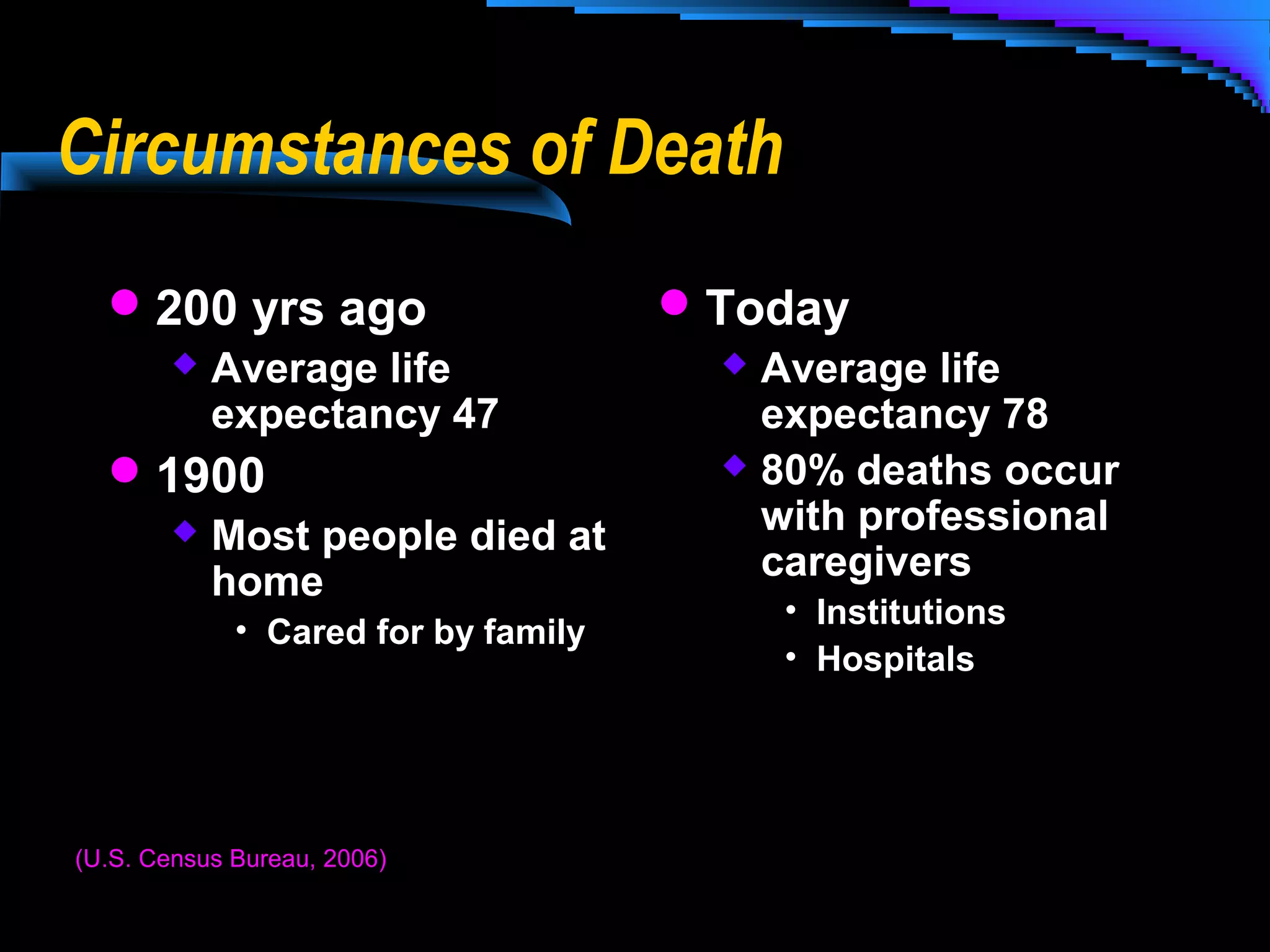
Circumstances of Death
 200 yrs ago
 Average life
expectancy 47
 1900
 Most people died at
home
• Cared for by family

(U.S. Census Bureau, 2006)

 Today
 Average life
expectancy 78
 80% deaths occur
with professional
caregivers
• Institutions
• Hospitals
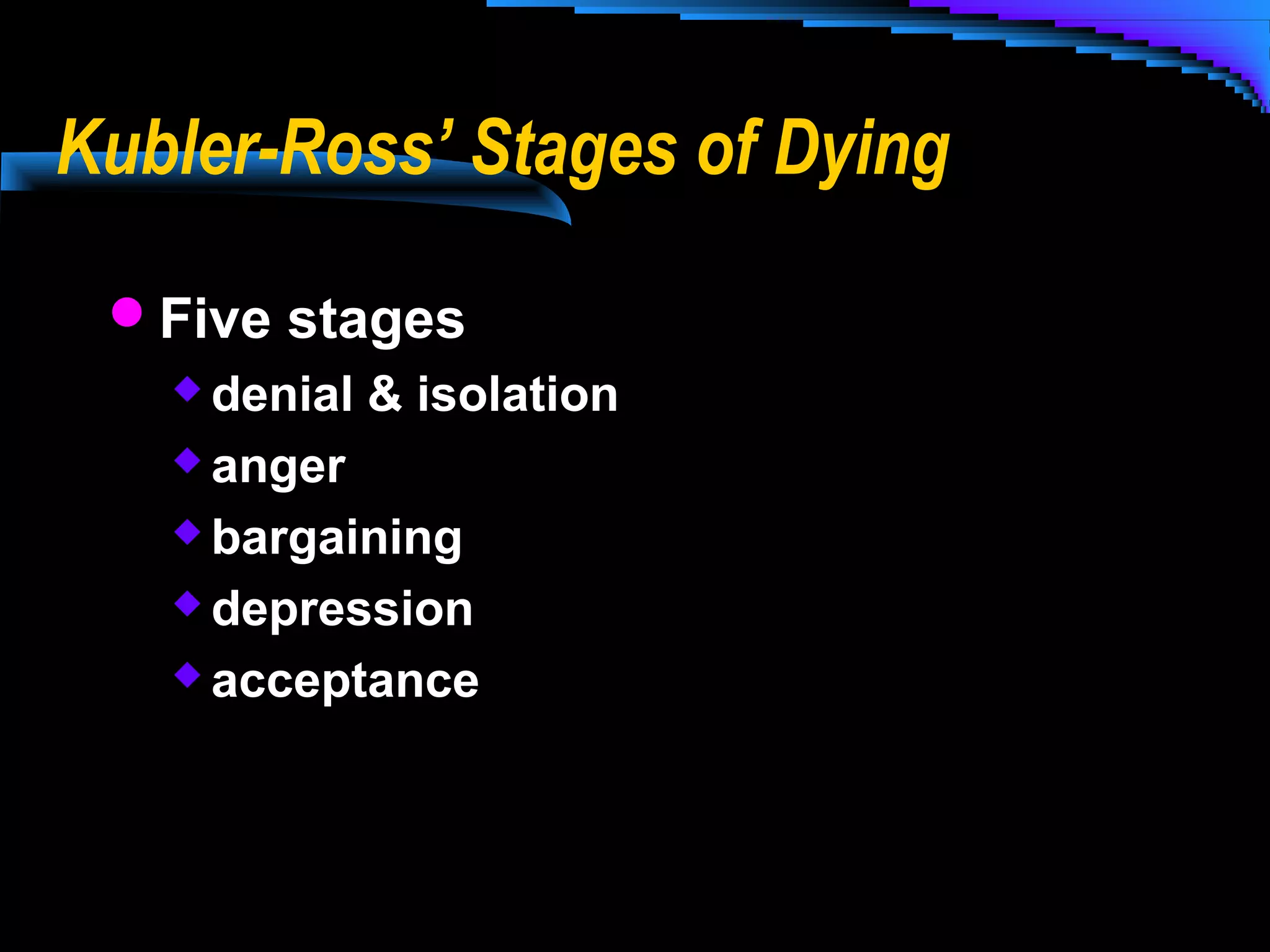
Kubler-Ross’ Stages of Dying
Five stages
 denial & isolation
 anger
 bargaining
 depression
 acceptance
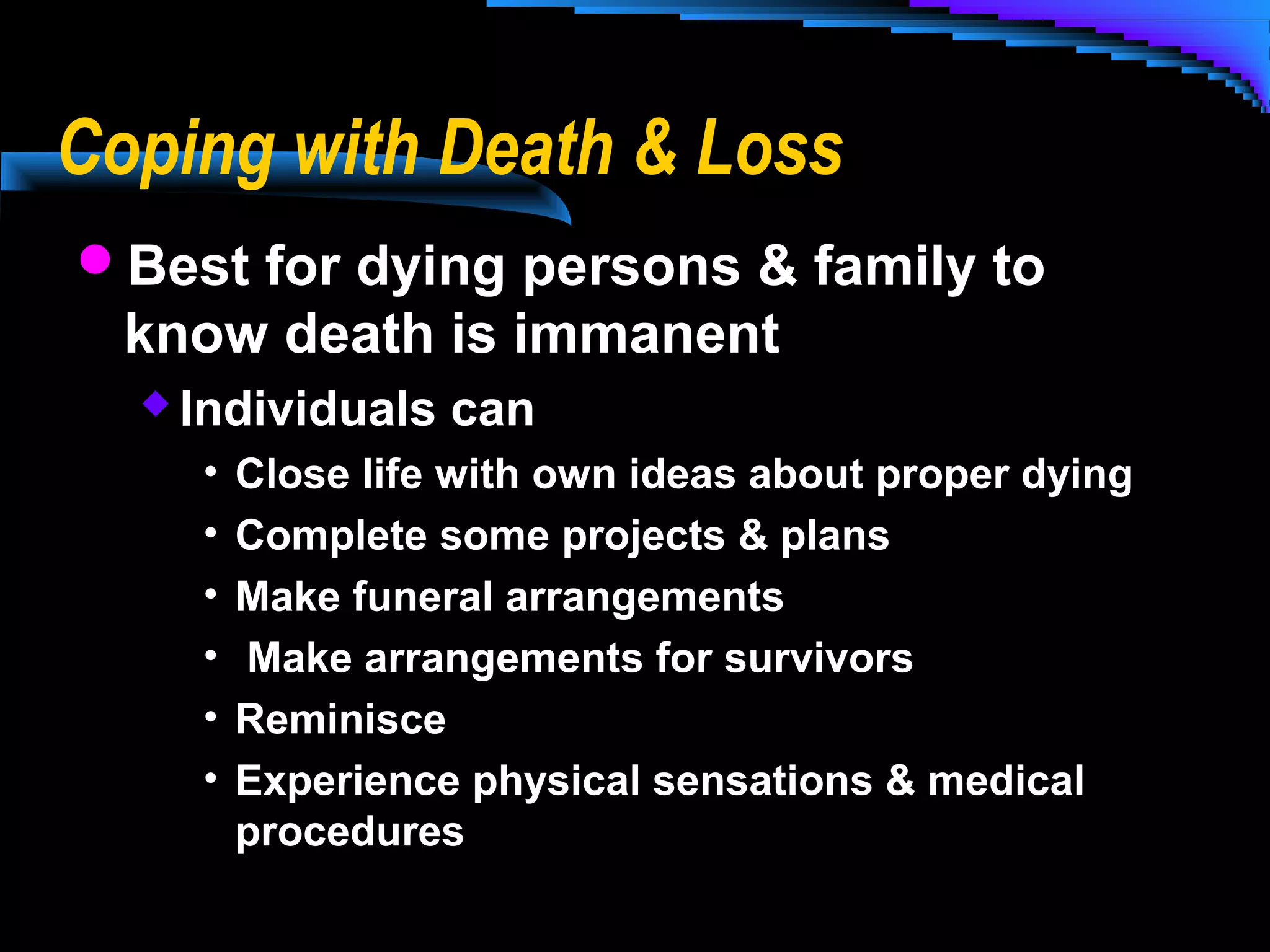
Coping with Death & Loss
Best for dying persons & family to

know death is immanent
 Individuals

•
•
•
•
•
•

can

Close life with own ideas about proper dying
Complete some projects & plans
Make funeral arrangements
Make arrangements for survivors
Reminisce
Experience physical sensations & medical
procedures
Adjustment to Death of a Spouse
Optimal adjustment depends on

several factors
 Women

do better

• Better networks of friends
• Care for selves psychologically
 Older

widows do better

• Death may be more expected
 Widowers

more likely

• Better financial resources
• Remarry
Effective Strategies for Communicating
with a Dying Person
 Establish presence at same eye level
 Don’t be afraid to touch
 Eliminate distraction, including excessive

small talk
 Keep visits short with frail individuals
 Don’t prescribe or deny feelings of
acceptance
 Allow & encourage expressions of feeling
Effective Strategies for Communicating
with a Dying Person
 Ask:
expected outcome of illness
 someone like to see or contacted


 Discuss alternatives & unfinished business
 Encourage reminiscences
 Talk to individual when he/she wishes to talk
 Express your caring, & love
Coping & Type of Death
Sudden, untimely, violent, or

traumatic deaths
 More

intense & prolonged effects

Diverse grieving patterns
 culturally embedded practices
Making Sense of the World
Beneficial aspect of grieving
 Make sense of world
Death caused by accident or disaster
 Effort to make sense of it is pursued
vigorously
Bereaved want to put death in a

perspective they can understand
Losing a Life Partner
Suffer profound grief
Financial loss
Loneliness
Increased physical illness
Psychological disorders
 Major

depression

Widows outnumber 5 - 1

Life span chapter 17

  • 1.
    Chapter 17 Death, Dying,and Grieving PowerPoints developed by Jenni Fauchier, Professor Carney
  • 2.
    Circumstances of Death 200 yrs ago  Average life expectancy 47  1900  Most people died at home • Cared for by family (U.S. Census Bureau, 2006)  Today  Average life expectancy 78  80% deaths occur with professional caregivers • Institutions • Hospitals
  • 3.
    Kubler-Ross’ Stages ofDying Five stages  denial & isolation  anger  bargaining  depression  acceptance
  • 4.
    Coping with Death& Loss Best for dying persons & family to know death is immanent  Individuals • • • • • • can Close life with own ideas about proper dying Complete some projects & plans Make funeral arrangements Make arrangements for survivors Reminisce Experience physical sensations & medical procedures
  • 5.
    Adjustment to Deathof a Spouse Optimal adjustment depends on several factors  Women do better • Better networks of friends • Care for selves psychologically  Older widows do better • Death may be more expected  Widowers more likely • Better financial resources • Remarry
  • 6.
    Effective Strategies forCommunicating with a Dying Person  Establish presence at same eye level  Don’t be afraid to touch  Eliminate distraction, including excessive small talk  Keep visits short with frail individuals  Don’t prescribe or deny feelings of acceptance  Allow & encourage expressions of feeling
  • 7.
    Effective Strategies forCommunicating with a Dying Person  Ask: expected outcome of illness  someone like to see or contacted   Discuss alternatives & unfinished business  Encourage reminiscences  Talk to individual when he/she wishes to talk  Express your caring, & love
  • 8.
    Coping & Typeof Death Sudden, untimely, violent, or traumatic deaths  More intense & prolonged effects Diverse grieving patterns  culturally embedded practices
  • 9.
    Making Sense ofthe World Beneficial aspect of grieving  Make sense of world Death caused by accident or disaster  Effort to make sense of it is pursued vigorously Bereaved want to put death in a perspective they can understand
  • 10.
    Losing a LifePartner Suffer profound grief Financial loss Loneliness Increased physical illness Psychological disorders  Major depression Widows outnumber 5 - 1