Mental disorders seen in the elderly include:
   Depressive disorders
   Suicide
   Anxiety
   Dementia and other cognitive disorders

One of the major problems in the care of elderly persons with
mental disorders is diagnosis. Distinguishing between an
actual mental disorder and a side effect of a physical problem
or polypharmacy is often difficult. Elderly often believe mental
or emotional problems are a sign of weakness and do not seek
appropriate care.
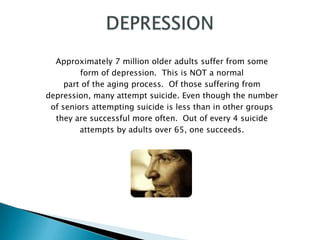
Approximately 7 million older adults suffer from some
         form of depression. This is NOT a normal
     part of the aging process. Of those suffering from
depression, many attempt suicide. Even though the number
 of seniors attempting suicide is less than in other groups
  they are successful more often. Out of every 4 suicide
         attempts by adults over 65, one succeeds.
Many factors contribute to depression in the elderly. Physiological
contributors are:

   Altered sleeping patterns
   Poor nutrition
   Pain, acute or chronic
   Serious illness such as stroke, cancer, Parkinson’s

Situational factors include:

   Death of a spouse
   Isolation
   Divorce or separation
   Life altering injury such a hip fracture
   Substance abuse
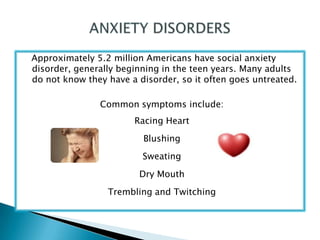
Approximately 5.2 million Americans have social anxiety
disorder, generally beginning in the teen years. Many adults
do not know they have a disorder, so it often goes untreated.

               Common symptoms include:
                       Racing Heart
                         Blushing
                         Sweating

                        Dry Mouth
                 Trembling and Twitching
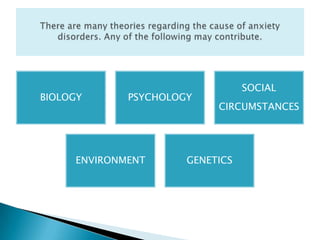
SOCIAL
BIOLOGY      PSYCHOLOGY
                           CIRCUMSTANCES


     ENVIRONMENT      GENETICS
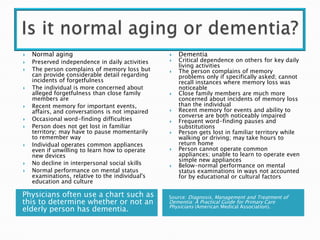
   Normal aging                                    Dementia
   Preserved independence in daily activities      Critical dependence on others for key daily
                                                     living activities
   The person complains of memory loss but         The person complains of memory
    can provide considerable detail regarding        problems only if specifically asked; cannot
    incidents of forgetfulness                       recall instances where memory loss was
   The individual is more concerned about           noticeable
    alleged forgetfulness than close family         Close family members are much more
    members are                                      concerned about incidents of memory loss
   Recent memory for important events,              than the individual
    affairs, and conversations is not impaired      Recent memory for events and ability to
                                                     converse are both noticeably impaired
   Occasional word-finding difficulties            Frequent word-finding pauses and
   Person does not get lost in familiar             substitutions
    territory; may have to pause momentarily        Person gets lost in familiar territory while
    to remember way                                  walking or driving; may take hours to
   Individual operates common appliances            return home
    even if unwilling to learn how to operate       Person cannot operate common
    new devices                                      appliances; unable to learn to operate even
                                                     simple new appliances
   No decline in interpersonal social skills       Below-normal performance on mental
   Normal performance on mental status              status examinations in ways not accounted
    examinations, relative to the individual's       for by educational or cultural factors
    education and culture

Physicians often use a chart such as             Source: Diagnosis, Management and Treatment of
this to determine whether or not an              Dementia: A Practical Guide for Primary Care
                                                 Physicians (American Medical Association).
elderly person has dementia.
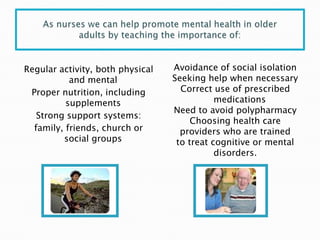
Regular activity, both physical   Avoidance of social isolation
           and mental             Seeking help when necessary
 Proper nutrition, including        Correct use of prescribed
          supplements                        medications
                                  Need to avoid polypharmacy
   Strong support systems:
                                       Choosing health care
  family, friends, church or        providers who are trained
         social groups             to treat cognitive or mental
                                             disorders.
References

Meiner, S. E., & Leuckenotte, A. G., (2006).
    Mental Health. (3rd ed.), Gerontologic Nursing
    (pp. 281-303). Missouri: Mosby.

AARP Health. Anxiety Disorders. Retrieved March 11, 2009,
 from, http://www.aarp.org/health/staying_healthy/preven
 tion/a2003-03-13-pin.html?print=yes

AARP Health. Suicide and Seniors. Retrieved March 12, 2009,
 from,http://healthed.aarphealthcare.com/ArticlePage.aspx
 ?CategName=Depression&TopicName=Prevention_Risk%20
 Factors&ArticleTitle=suceld

Mental health in

  • 2.
    Mental disorders seenin the elderly include:  Depressive disorders  Suicide  Anxiety  Dementia and other cognitive disorders One of the major problems in the care of elderly persons with mental disorders is diagnosis. Distinguishing between an actual mental disorder and a side effect of a physical problem or polypharmacy is often difficult. Elderly often believe mental or emotional problems are a sign of weakness and do not seek appropriate care.
  • 3.
    Approximately 7 millionolder adults suffer from some form of depression. This is NOT a normal part of the aging process. Of those suffering from depression, many attempt suicide. Even though the number of seniors attempting suicide is less than in other groups they are successful more often. Out of every 4 suicide attempts by adults over 65, one succeeds.
  • 4.
    Many factors contributeto depression in the elderly. Physiological contributors are:  Altered sleeping patterns  Poor nutrition  Pain, acute or chronic  Serious illness such as stroke, cancer, Parkinson’s Situational factors include:  Death of a spouse  Isolation  Divorce or separation  Life altering injury such a hip fracture  Substance abuse
  • 5.
    Approximately 5.2 millionAmericans have social anxiety disorder, generally beginning in the teen years. Many adults do not know they have a disorder, so it often goes untreated. Common symptoms include: Racing Heart Blushing Sweating Dry Mouth Trembling and Twitching
  • 6.
    SOCIAL BIOLOGY PSYCHOLOGY CIRCUMSTANCES ENVIRONMENT GENETICS
  • 7.
    Normal aging  Dementia  Preserved independence in daily activities  Critical dependence on others for key daily living activities  The person complains of memory loss but  The person complains of memory can provide considerable detail regarding problems only if specifically asked; cannot incidents of forgetfulness recall instances where memory loss was  The individual is more concerned about noticeable alleged forgetfulness than close family  Close family members are much more members are concerned about incidents of memory loss  Recent memory for important events, than the individual affairs, and conversations is not impaired  Recent memory for events and ability to converse are both noticeably impaired  Occasional word-finding difficulties  Frequent word-finding pauses and  Person does not get lost in familiar substitutions territory; may have to pause momentarily  Person gets lost in familiar territory while to remember way walking or driving; may take hours to  Individual operates common appliances return home even if unwilling to learn how to operate  Person cannot operate common new devices appliances; unable to learn to operate even simple new appliances  No decline in interpersonal social skills  Below-normal performance on mental  Normal performance on mental status status examinations in ways not accounted examinations, relative to the individual's for by educational or cultural factors education and culture Physicians often use a chart such as Source: Diagnosis, Management and Treatment of this to determine whether or not an Dementia: A Practical Guide for Primary Care Physicians (American Medical Association). elderly person has dementia.
  • 8.
    Regular activity, bothphysical Avoidance of social isolation and mental Seeking help when necessary Proper nutrition, including Correct use of prescribed supplements medications Need to avoid polypharmacy Strong support systems: Choosing health care family, friends, church or providers who are trained social groups to treat cognitive or mental disorders.
  • 9.
    References Meiner, S. E.,& Leuckenotte, A. G., (2006). Mental Health. (3rd ed.), Gerontologic Nursing (pp. 281-303). Missouri: Mosby. AARP Health. Anxiety Disorders. Retrieved March 11, 2009, from, http://www.aarp.org/health/staying_healthy/preven tion/a2003-03-13-pin.html?print=yes AARP Health. Suicide and Seniors. Retrieved March 12, 2009, from,http://healthed.aarphealthcare.com/ArticlePage.aspx ?CategName=Depression&TopicName=Prevention_Risk%20 Factors&ArticleTitle=suceld