Lisa WhittenArgosy UniversityPSY 492 Advanced General PsychologyDr. Guykesha SmithMental Illness and the Aging
Hypothesis: Mental illness is not properly diagnosed in the aging population due to the misconception that mental illness is a normal sign of the aging process.Abstract
Patients fear being institutionalized – do not seek treatmentDoctors believe mental illness is part of agingLack of services availableMisdiagnosis and Misconceptions
SuicideBoth Beneck-Higgins and Crumpacker refer to the high suicide rate in the elderlyLack of hope in these patients due to bereavement, medical issues, lack of self-esteem and lack of social interactionIf left untreated, could cause more social issues
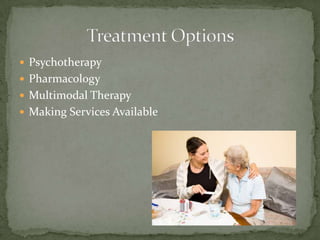
PsychotherapyPharmacologyMultimodal TherapyMaking Services AvailableTreatment Options
Depp believed successful aging achieved through:Cognitive well-beingEmotional well-beingCognitive ability can improve through  intense thinking ie: crossword puzzlesEmotional ability improved through increased social networksSuccessful Aging
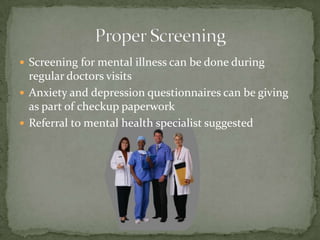
Screening for mental illness can be done during regular doctors visitsAnxiety and depression questionnaires can be giving as part of checkup paperworkReferral to mental health specialist suggestedProper Screening
Increased longer lifespan1/5 of mental illnesses left untreatedThrow out idea that mental illness is normal process of agingBoth patients and practitioners need education in mental illness and treatment Conclusion
Barg, F., Huss-Ashmore, R., Wittink, M., Murray, G., Bogner, H., & Gallo, J. (2006). A Mixed-Methods Approach to Understanding Loneliness and Depression in Older Adults. The Journals of Gerontology: Series B: Psychological Sciences and Social Sciences, 61B(6), S329-S339. Benek-Higgins, M., McReynolds, C., Hogan, E., & Savickas, S. (2008). Depression and the elder person: The enigma of misconceptions, stigma, and treatment. Journal of Mental Health Counseling, 30(4), 283-296. References
Crumpacker, D W (Oct 2008). Suicidality and antidepressants in the elderly.  Baylor University Medical Center Proceedings, 21, 4. p.373(5).Cyr, N.  (2007). Depression and older adults. Association of Operating Room Nurses. AORN Journal, 85(2), 397-401. Davies, R., Sieber, K., & Hunt, S. (1994). Age-cohort differences in treating symptoms of mental illness: A process approach. Psychology and Aging, 9(3), 446-453. doi:10.1037/0882-7974.9.3.446.References
Depp, C. A. (November 1, 2007). The Intersection of Mental Health and Successful Aging. Psychiatric Times, 24, 13. p.20.George, L.K. (2001). Aging and the life course. In Edgar F. Borgatta & Rhonda J.V. Montgomery (Eds.), Encyclopedia of Sociology, 1(2nd ed.), pp. 78-86. New York, NY: MacmillanRait, G., & Burns, A. (1998). Screening for depression and cognitive impairment in older people from ethnic minorities. Age & Ageing, 27(3), 271. References
Sorocco, K. H. & McCallum, T.J. (2006). Mental health promotion in older adults: addressing treatment approaches and available screening tools. Geriatric,61 (1), 19.Van Etten, D. (2006). Psychotherapy with older adults benefits and barriers. Journal of Psychosocial Nursing & Mental Health Services, 44(11), 28-33.References

Mental Illness And The Aging Presentation

  • 1.
    Lisa WhittenArgosy UniversityPSY492 Advanced General PsychologyDr. Guykesha SmithMental Illness and the Aging
  • 2.
    Hypothesis: Mental illnessis not properly diagnosed in the aging population due to the misconception that mental illness is a normal sign of the aging process.Abstract
  • 3.
    Patients fear beinginstitutionalized – do not seek treatmentDoctors believe mental illness is part of agingLack of services availableMisdiagnosis and Misconceptions
  • 4.
    SuicideBoth Beneck-Higgins andCrumpacker refer to the high suicide rate in the elderlyLack of hope in these patients due to bereavement, medical issues, lack of self-esteem and lack of social interactionIf left untreated, could cause more social issues
  • 5.
  • 6.
    Depp believed successfulaging achieved through:Cognitive well-beingEmotional well-beingCognitive ability can improve through intense thinking ie: crossword puzzlesEmotional ability improved through increased social networksSuccessful Aging
  • 7.
    Screening for mentalillness can be done during regular doctors visitsAnxiety and depression questionnaires can be giving as part of checkup paperworkReferral to mental health specialist suggestedProper Screening
  • 8.
    Increased longer lifespan1/5of mental illnesses left untreatedThrow out idea that mental illness is normal process of agingBoth patients and practitioners need education in mental illness and treatment Conclusion
  • 9.
    Barg, F., Huss-Ashmore,R., Wittink, M., Murray, G., Bogner, H., & Gallo, J. (2006). A Mixed-Methods Approach to Understanding Loneliness and Depression in Older Adults. The Journals of Gerontology: Series B: Psychological Sciences and Social Sciences, 61B(6), S329-S339. Benek-Higgins, M., McReynolds, C., Hogan, E., & Savickas, S. (2008). Depression and the elder person: The enigma of misconceptions, stigma, and treatment. Journal of Mental Health Counseling, 30(4), 283-296. References
  • 10.
    Crumpacker, D W (Oct2008). Suicidality and antidepressants in the elderly.  Baylor University Medical Center Proceedings, 21, 4. p.373(5).Cyr, N.  (2007). Depression and older adults. Association of Operating Room Nurses. AORN Journal, 85(2), 397-401. Davies, R., Sieber, K., & Hunt, S. (1994). Age-cohort differences in treating symptoms of mental illness: A process approach. Psychology and Aging, 9(3), 446-453. doi:10.1037/0882-7974.9.3.446.References
  • 11.
    Depp, C. A. (November1, 2007). The Intersection of Mental Health and Successful Aging. Psychiatric Times, 24, 13. p.20.George, L.K. (2001). Aging and the life course. In Edgar F. Borgatta & Rhonda J.V. Montgomery (Eds.), Encyclopedia of Sociology, 1(2nd ed.), pp. 78-86. New York, NY: MacmillanRait, G., & Burns, A. (1998). Screening for depression and cognitive impairment in older people from ethnic minorities. Age & Ageing, 27(3), 271. References
  • 12.
    Sorocco, K. H.& McCallum, T.J. (2006). Mental health promotion in older adults: addressing treatment approaches and available screening tools. Geriatric,61 (1), 19.Van Etten, D. (2006). Psychotherapy with older adults benefits and barriers. Journal of Psychosocial Nursing & Mental Health Services, 44(11), 28-33.References

Editor's Notes

  • #3 A growing problem in our society is what to do with aging adults? There is a misconception that these adults no longer contribute to society due to the fact that their mind and body are failing. This presentation is expected to raise the awareness of the issues involved with older adults and the reality of what is happening to them.
  • #4 Many patients over the age of 60 have grown up learning that mental illness, “problems” mean that you have lost complete function in society and that there is no cure once “your mind is gone” and “they will put them away”. Beneck-Higgins found that these patients fear losing their independence and keep their problems to themselves. Over the years more and more research has developed and found that mental illness like depression and anxiety can be helped in many situations and that people do not have to view this illnesses any differently than a heart condition or high blood pressure. Doctors have even fall prey to this concept where they believed once you hit a certain age you are just eating and breathing and there is not much to life.One of the main problems found is that with the stigmas on mental illness and obviously the misconceptions doctors have, that services for these problems are not available. By putting more effort to education physicians as well as the population, more of these false concepts can be eliminated.
  • #5 Surprisinglyto me, research has found that the elderly population has the highest suicide rate. It made sense that many of the elderly suffer more with the loss of a loved one, medical problems, and lack of self-esteem and social interaction causing depression. After one retires, many of them lose contact with co-workers and friends they would socialize with and then generally causes the lack of self-esteem and feeling unwanted. In some ways, I get the feeling that ordinarily and older person is seen this way…unwanted because they cannot do the things they used to do. If this problem continues to grow, what will that say about the medical and mental health professions?
  • #6 Beneck-Higgins suggested some treatment options that have seemed unavailable to elderly patients such as psychotherapy. Many professional counselors specialize in geriatric issues. Pharmacology is another option that may be looked at negatively but with the right diagnosis, antidepressants and other medications can create a better way of life for many elderly patients. Most often, a combination of these therapies is used as multimodal therapy. It is important that general practitioners and mental health practitioners work together in assessing their patients and therefore making these services known and available on a regular basis.
  • #7 Depp termed successful aging I believe because so many felt that the aging process was a miserable one. His view is that with proper training and tools an elderly adult can keep their cognitive and emotional well-being and possibly even improve it with the right encouragement and avenues such as simple crossword puzzles to keep the mind active and alert and increasing social activities through things senior centers and church activities.
  • #8 Sorrocco and McCallum suggested to utilize the primary care physician as initial assessment of mental illness. This can be done by adding a few questions to the regular doctor’s visit and if a mental illness is thought to be present the doctor can then refer the patient to a mental health specialist. It is also important to follow up in this situation with the specialist working together to promote overall health to the patient.
  • #9 Adults are living longer these days, and with the increasing problems in misdiagnosing or not diagnosing patients there is a question of what to do. Data shows that at least 1/5 of older adults are not being treated for their mental illness. More research is needed in finding ways to educate both patients and practitioners that mental illness is not normal and there is proper treatments available to have a higher quality of life in the latter years.