Library Resources
Learning objectives
 Why using library databases for research
makes it easier to document your sources
 How to find the databases on the media
center homepage, find articles, and email
them to yourself
 How to create a skillful internet search
 Electronic index
 Contains information about published
items and is searchable by keyword and
subject
 Aggregator of published information and
institutions must pay for access
 Uses the same interface as searching the
internet (web browser) but requires
login/password to access
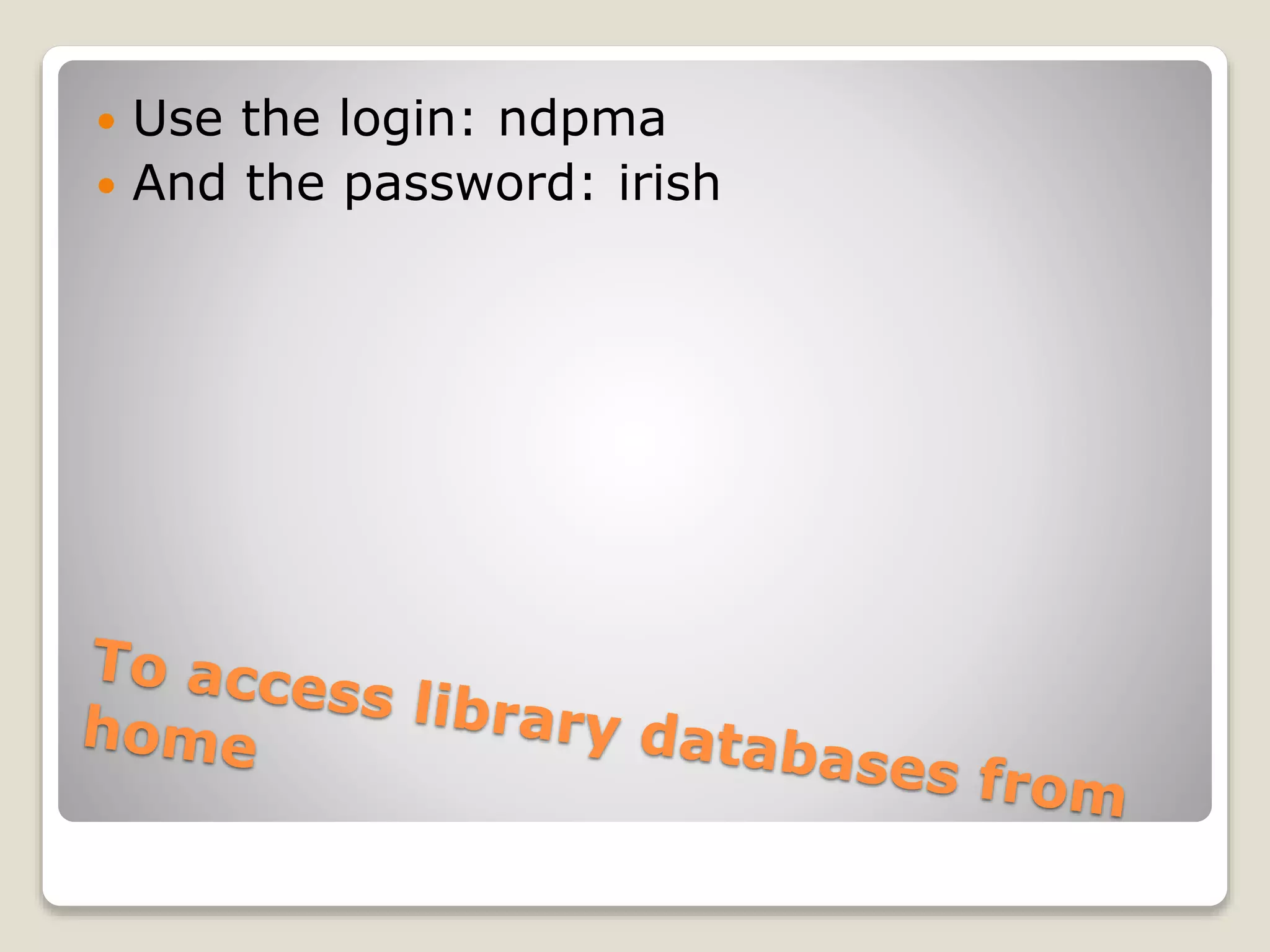
 Use the login: ndpma
 And the password: irish
 Articles from journals and magazines
 Ebooks
 Newspapers
 Images
 Audio
 Video
 Reference (encyclopedias, almanacs,
biographical dictionaries)
 Abstracts
 All articles in peer-reviewed, academic,
and scholarly journals are read and
approved by another scholar in the field
before the article can be published.
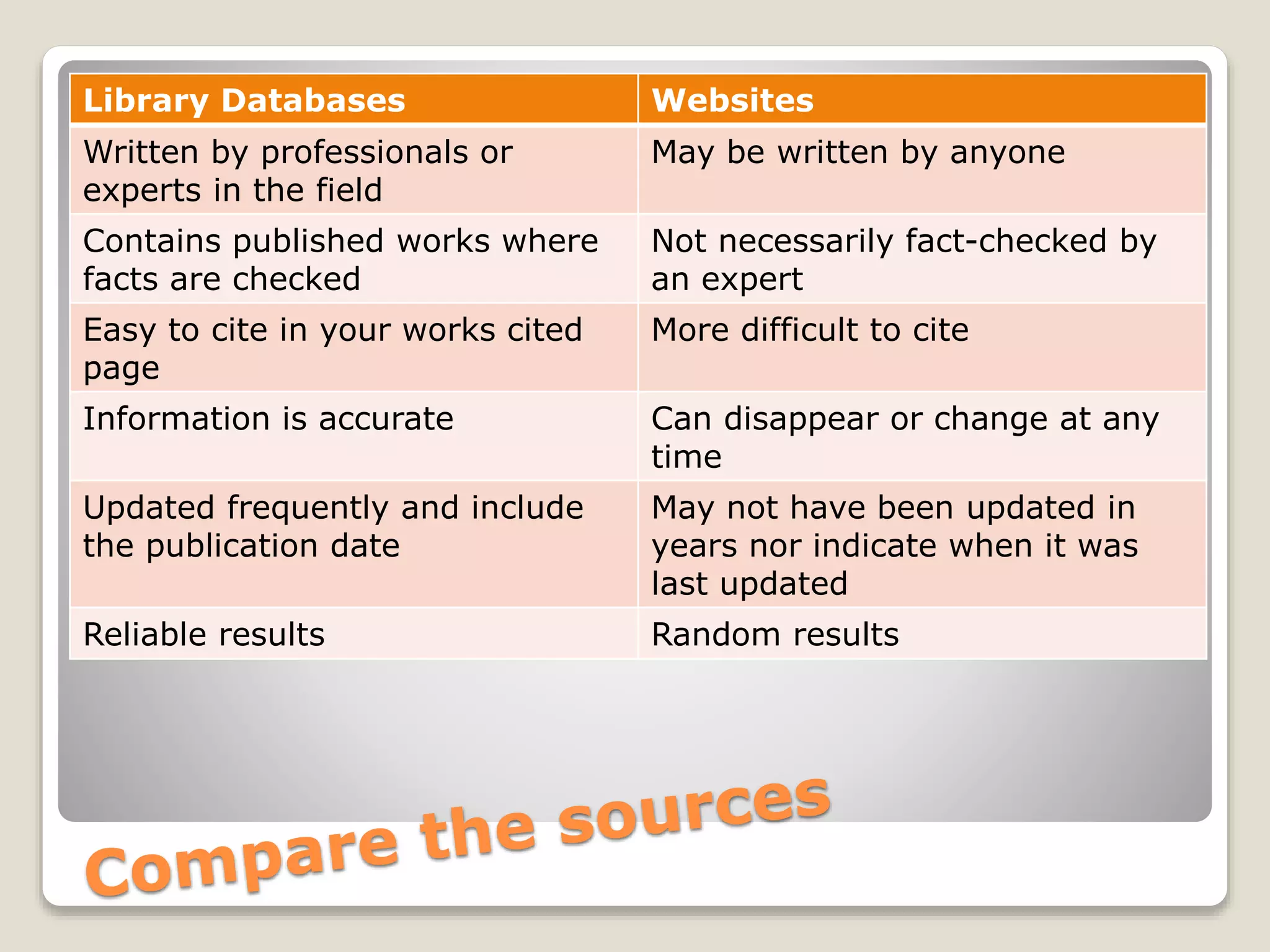
Library Databases Websites
Written by professionals or
experts in the field
May be written by anyone
Contains published works where
facts are checked
Not necessarily fact-checked by
an expert
Easy to cite in your works cited
page
More difficult to cite
Information is accurate Can disappear or change at any
time
Updated frequently and include
the publication date
May not have been updated in
years nor indicate when it was
last updated
Reliable results Random results
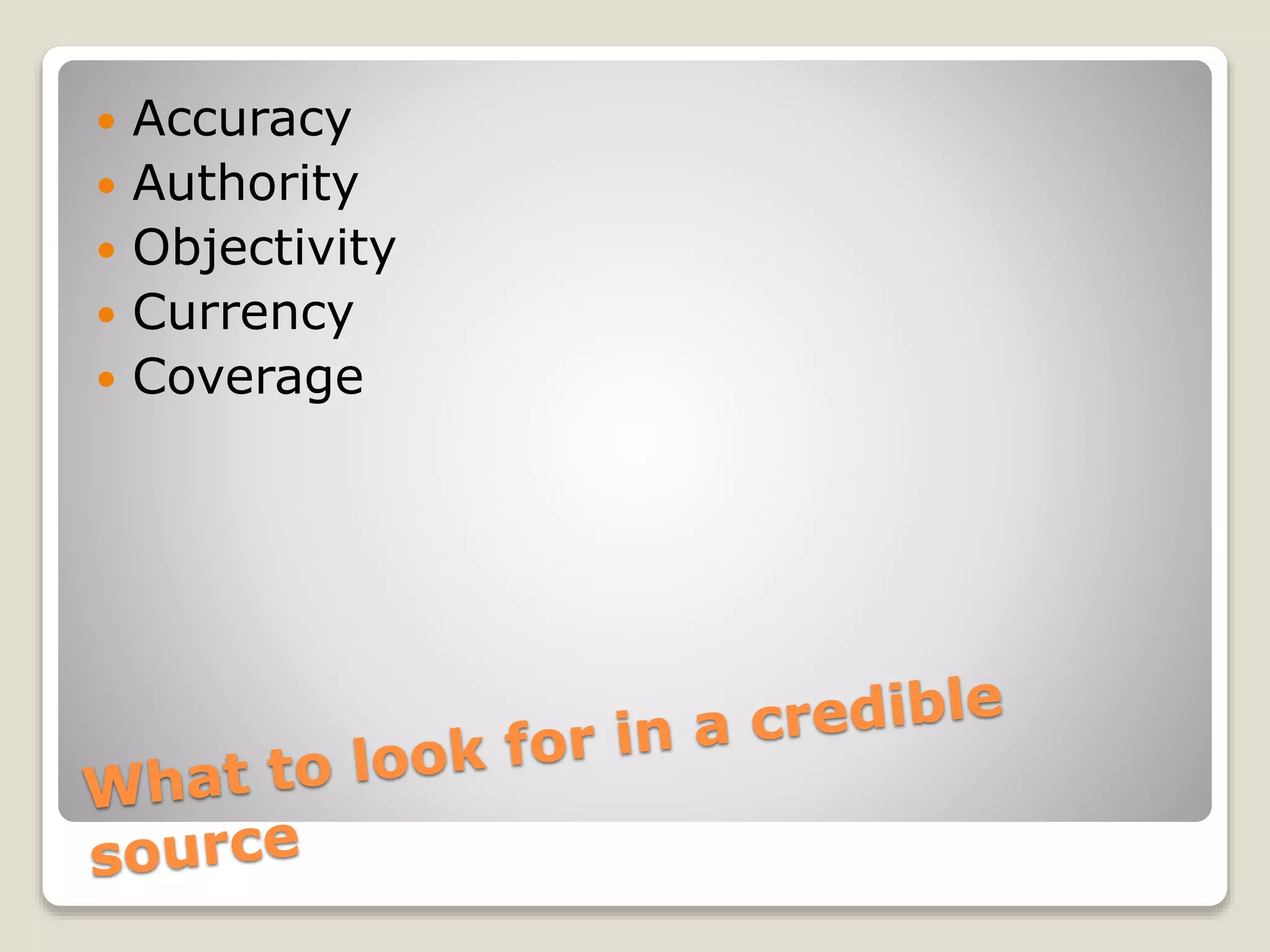
 Accuracy
 Authority
 Objectivity
 Currency
 Coverage
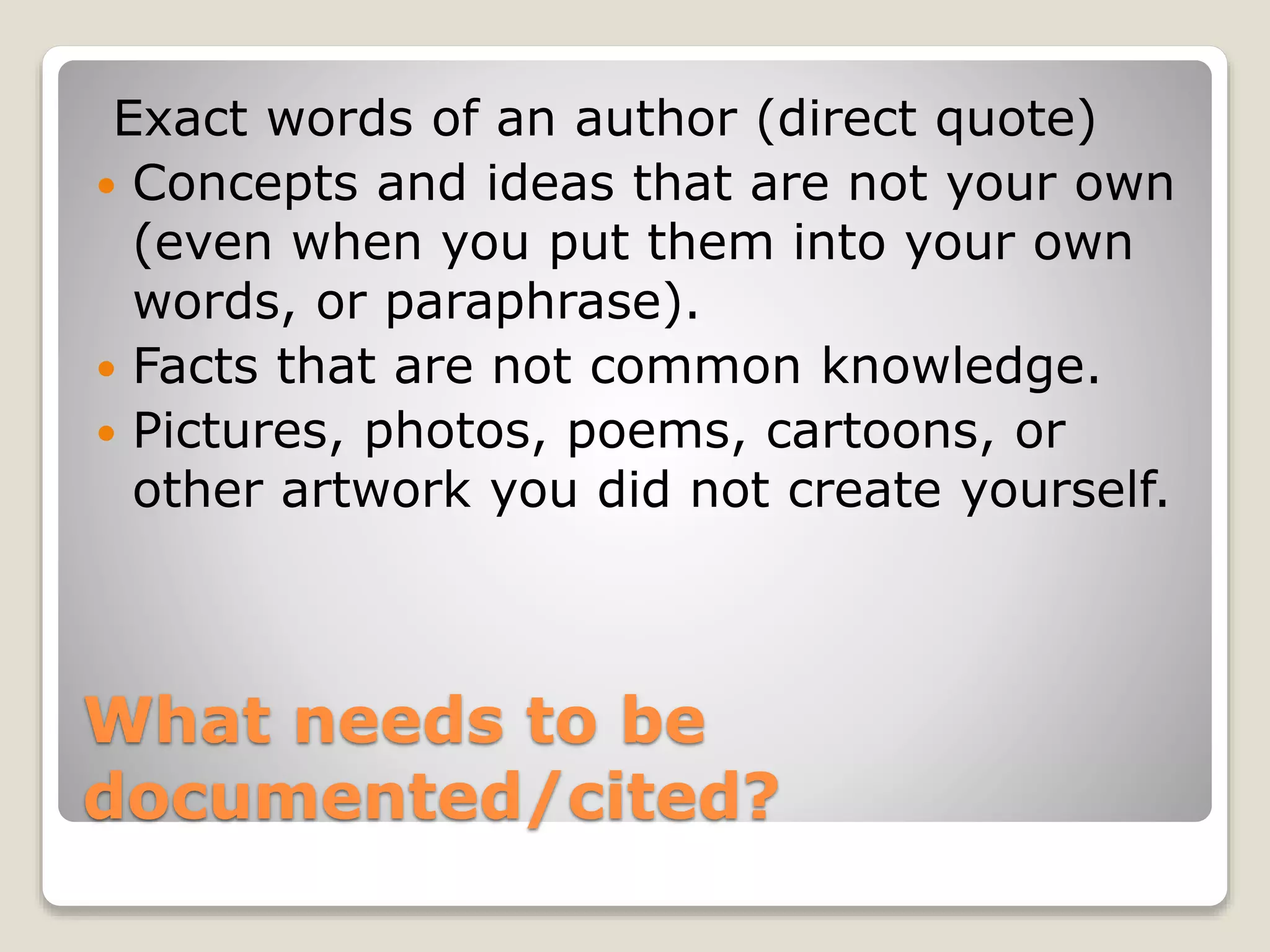
What needs to be
documented/cited?
Exact words of an author (direct quote)
 Concepts and ideas that are not your own
(even when you put them into your own
words, or paraphrase).
 Facts that are not common knowledge.
 Pictures, photos, poems, cartoons, or
other artwork you did not create yourself.
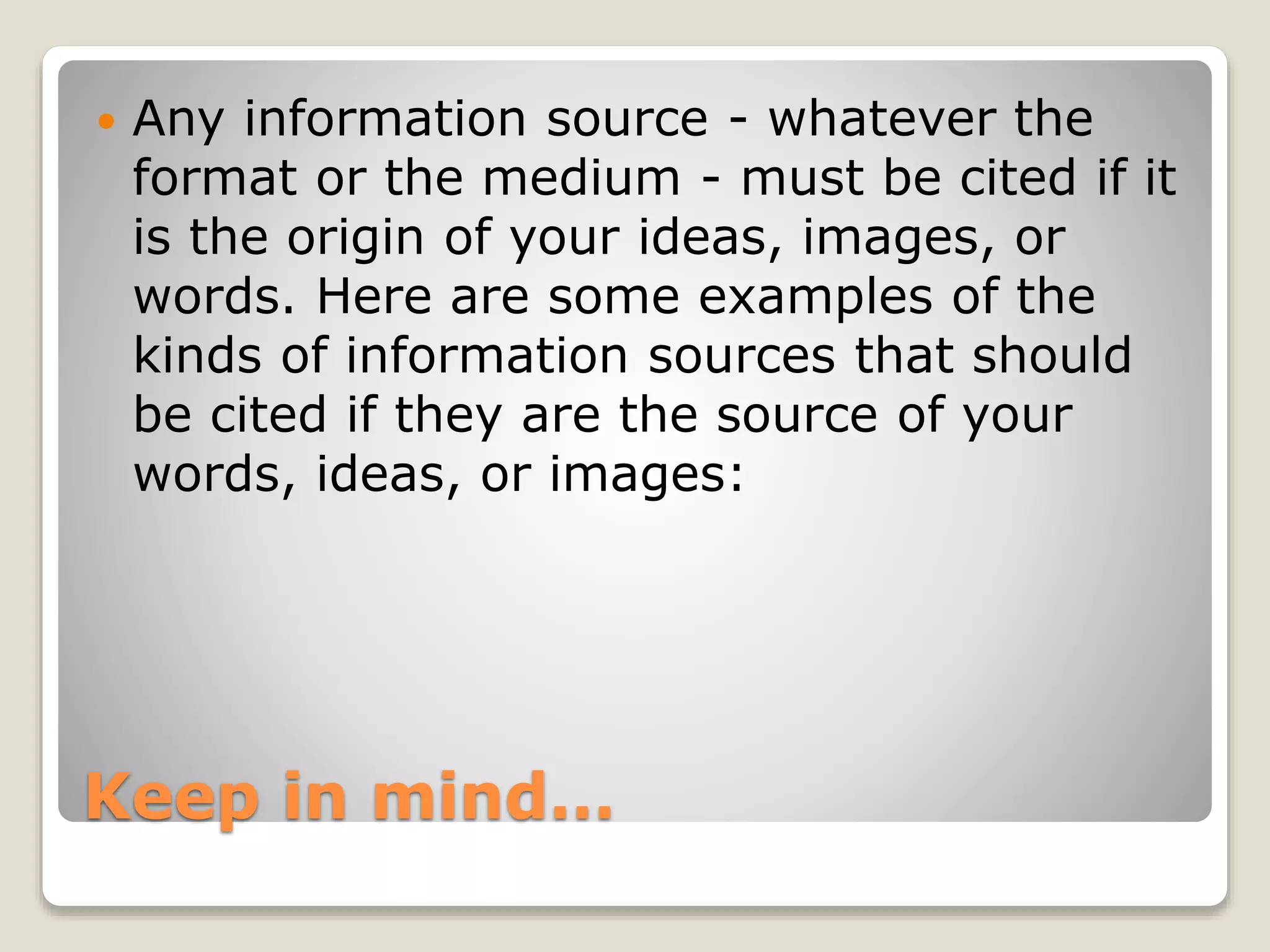
Keep in mind…
 Any information source - whatever the
format or the medium - must be cited if it
is the origin of your ideas, images, or
words. Here are some examples of the
kinds of information sources that should
be cited if they are the source of your
words, ideas, or images:
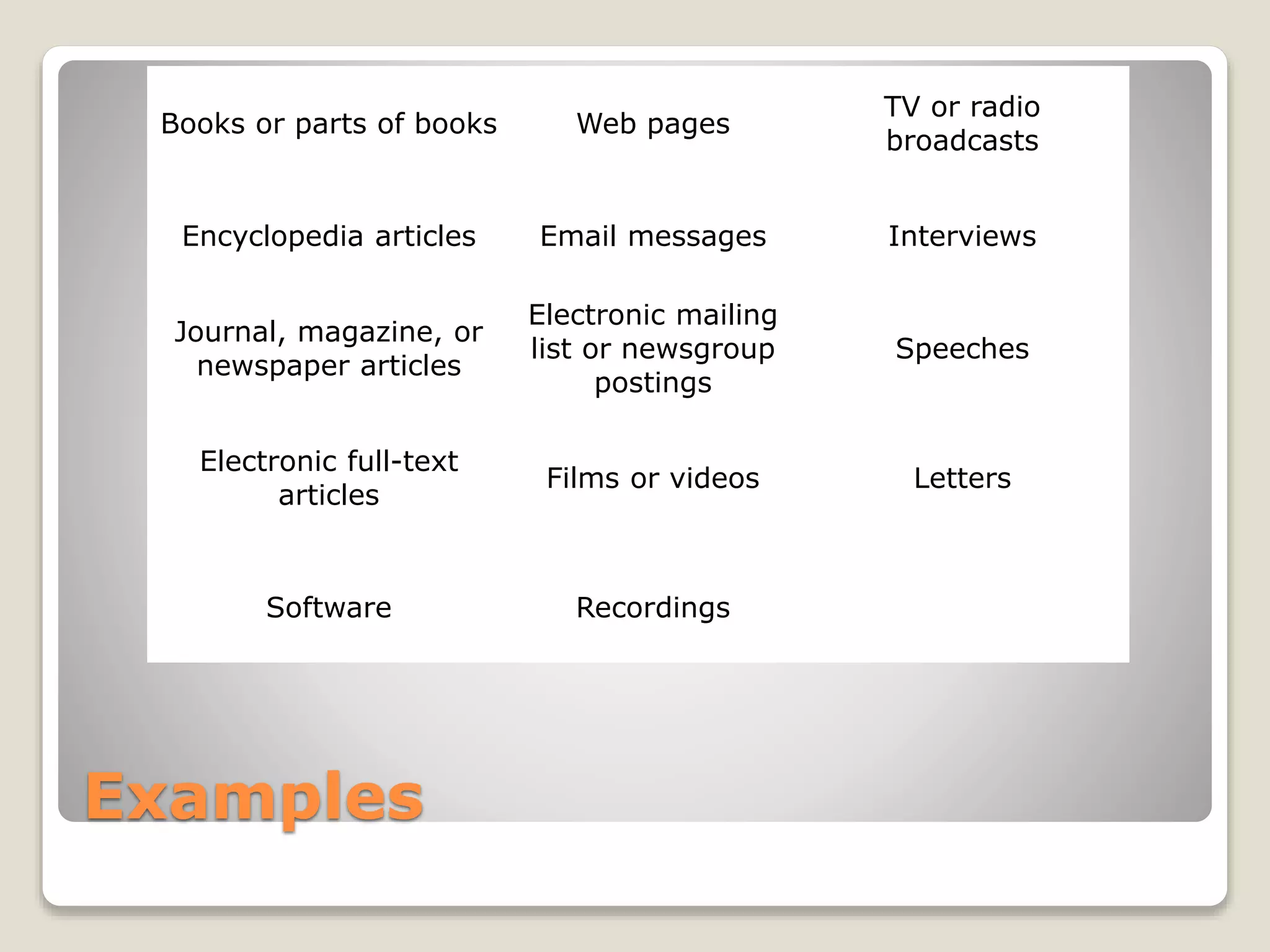
Examples
Books or parts of books Web pages
TV or radio
broadcasts
Encyclopedia articles Email messages Interviews
Journal, magazine, or
newspaper articles
Electronic mailing
list or newsgroup
postings
Speeches
Electronic full-text
articles
Films or videos Letters
Software Recordings
Common Knowledge
 Historical facts: “Abraham Lincoln was the
16th president of the United States.
 Mathematical equations
 Authors of well-known works
Library resources

Library resources

  • 1.
  • 2.
    Learning objectives  Whyusing library databases for research makes it easier to document your sources  How to find the databases on the media center homepage, find articles, and email them to yourself  How to create a skillful internet search
  • 3.
     Electronic index Contains information about published items and is searchable by keyword and subject  Aggregator of published information and institutions must pay for access  Uses the same interface as searching the internet (web browser) but requires login/password to access
  • 4.
     Use thelogin: ndpma  And the password: irish
  • 5.
     Articles fromjournals and magazines  Ebooks  Newspapers  Images  Audio  Video  Reference (encyclopedias, almanacs, biographical dictionaries)  Abstracts
  • 6.
     All articlesin peer-reviewed, academic, and scholarly journals are read and approved by another scholar in the field before the article can be published.
  • 7.
    Library Databases Websites Writtenby professionals or experts in the field May be written by anyone Contains published works where facts are checked Not necessarily fact-checked by an expert Easy to cite in your works cited page More difficult to cite Information is accurate Can disappear or change at any time Updated frequently and include the publication date May not have been updated in years nor indicate when it was last updated Reliable results Random results
  • 8.
     Accuracy  Authority Objectivity  Currency  Coverage
  • 10.
    What needs tobe documented/cited? Exact words of an author (direct quote)  Concepts and ideas that are not your own (even when you put them into your own words, or paraphrase).  Facts that are not common knowledge.  Pictures, photos, poems, cartoons, or other artwork you did not create yourself.
  • 11.
    Keep in mind… Any information source - whatever the format or the medium - must be cited if it is the origin of your ideas, images, or words. Here are some examples of the kinds of information sources that should be cited if they are the source of your words, ideas, or images:
  • 12.
    Examples Books or partsof books Web pages TV or radio broadcasts Encyclopedia articles Email messages Interviews Journal, magazine, or newspaper articles Electronic mailing list or newsgroup postings Speeches Electronic full-text articles Films or videos Letters Software Recordings
  • 13.
    Common Knowledge  Historicalfacts: “Abraham Lincoln was the 16th president of the United States.  Mathematical equations  Authors of well-known works