McNair
    Scholars
Research at the Beach

    Summer
     2012
Library
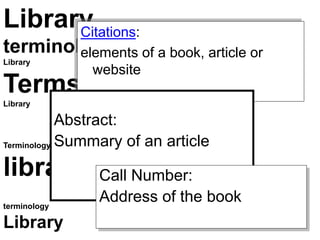
      Citations:
terminology of a book, article or
        elements
Library
              website
Terms
Library

            Abstract:
Terminology Summary of an article


library        Call Number:
terminology
               Address of the book
Library
The Difference between the Internet and Research Databases


       Internet

            Anyone can create a website
            Contain unfiltered information
            You get a lot of junk sites with every search
            Last resort for university level research!
The Difference between the Internet and Research Databases


    Research
    Databases
           Commercially published materials
           Scholarly articles are reviewed by experts
           Databases contents are hand selected
           Use these FIRST for researching a topic
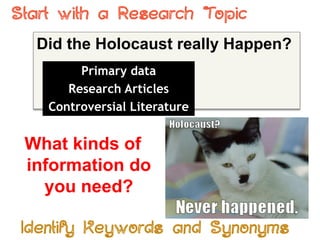
Did the Holocaust really Happen?
       Primary data
     Research Articles
  Controversial Literature


What kinds of
information do
  you need?
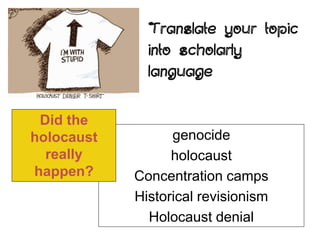
Did the
holocaust         genocide
  really          holocaust
happen?     Concentration camps
            Historical revisionism
              Holocaust denial
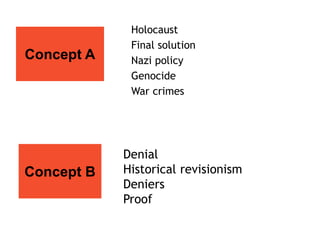
Holocaust
             Final solution
Concept A    Nazi policy
             Genocide
             War crimes


            Denial
Concept B   Historical revisionism
            Deniers
            Proof
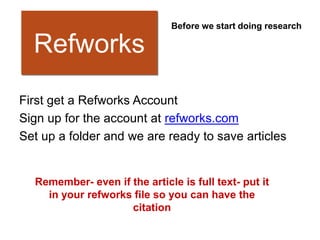
Before we start doing research

  Refworks
First get a Refworks Account
Sign up for the account at refworks.com
Set up a folder and we are ready to save articles


  Remember- even if the article is full text- put it
    in your refworks file so you can have the
                    citation
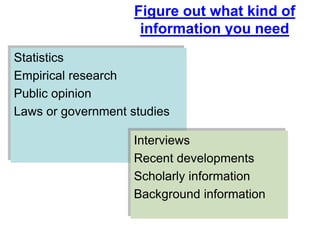
Figure out what kind of
                     information you need
Statistics
Empirical research
Public opinion
Laws or government studies

                    Interviews
                    Recent developments
                    Scholarly information
                    Background information
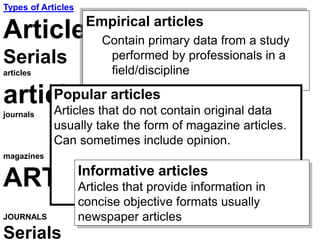
Types of Articles
                     Empirical articles
Articles Contain primary data from a study
Serials                   performed by professionals in a
articles                  field/discipline

articles that do not contain original data
     Popular articles
     Articles
journals
            usually take the form of magazine articles.
            Can sometimes include opinion.
magazines

                    Informative articles
ARTICLES provide information in
     Articles that
                    concise objective formats usually
JOURNALS            newspaper articles
Serials
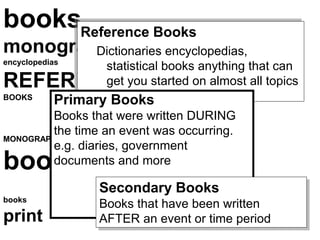
booksReference Books
monographs
        Dictionaries encyclopedias,
encyclopedias
                  statistical books anything that can
REFERENCE         get you started on almost all topics
BOOKS
           Primary Books
         Books that were written DURING
         the time an event was occurring.
MONOGRAPHS
         e.g. diaries, government
books    documents and more

                Secondary Books
books
                Books that have been written
print           AFTER an event or time period
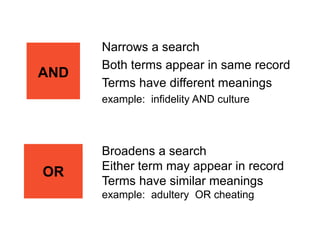
Narrows a search
      Both terms appear in same record
AND
      Terms have different meanings
      example: infidelity AND culture


      Broadens a search
      Either term may appear in record
OR
      Terms have similar meanings
      example: adultery OR cheating
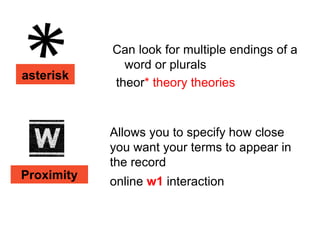
Can look for multiple endings of a
              word or plurals
asterisk
            theor* theory theories


            Allows you to specify how close
            you want your terms to appear in
            the record
Proximity
            online w1 interaction
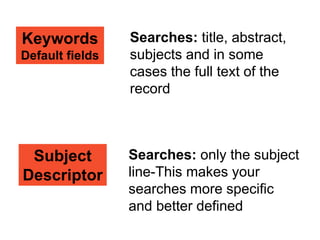
Keywords         Searches: title, abstract,
Default fields   subjects and in some
                 cases the full text of the
                 record


 Subject         Searches: only the subject
Descriptor       line-This makes your
                 searches more specific
                 and better defined
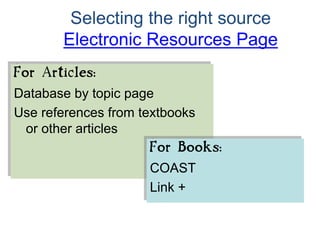
Selecting the right source
       Electronic Resources Page
For Articles:
Database by topic page
Use references from textbooks
 or other articles
                      For Books:
                    COAST
                    Link +
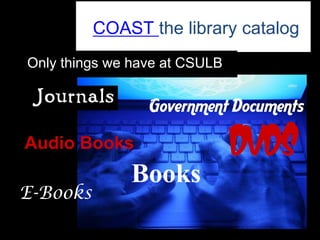
COAST the library catalog
Only things we have at CSULB

 Journals
                 Government Documents

Audio Books                    DVDs
              Books
E-Books
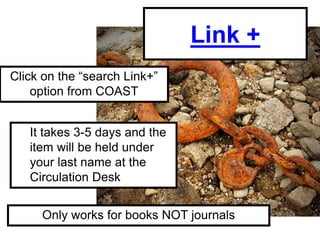
Link +
Click on the “search Link+”
    option from COAST


   It takes 3-5 days and the
   item will be held under
   your last name at the
   Circulation Desk


     Only works for books NOT journals
Review the TWO step
 process for getting
   journal articles
Get citations
            from
     Research Database


citation info located in the
record- usually found on the
   citation or source line
Search for the
     Article

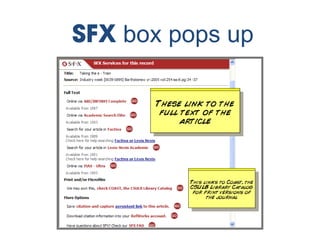
 click on the SFX or
 Get it @ CSULB link


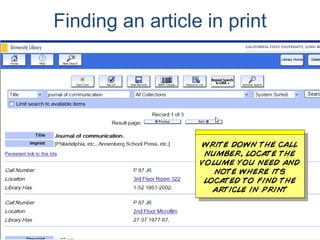
If no link, search the catalog by JOURNAL title
   to see if we own it electronically or in print
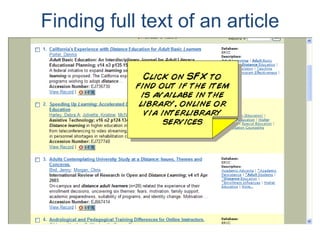
Finding full text of an article
box pops up
Finding an article in print
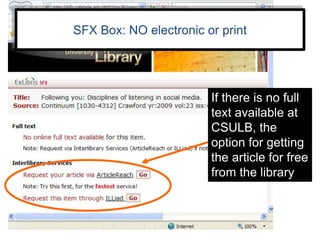
SFX Box: NO electronic or print


                        If there is no full
                        text available at
                        CSULB, the
                        option for getting
                        the article for free
                        from the library
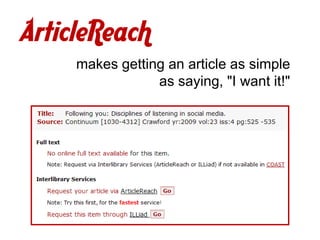
ArticleReach
     makes getting an article as simple
                 as saying, "I want it!"
Citing sources
                         CSULB Citation Builder
                         A citation generator that
                         will format your articles,
                         books and websites


OWL Purdue Writing Guides
This page provides links to a variety of online
examples of citing in both MLA and APA styles
Get a Library Password
Go to Coast
https://coast.library.csulb.edu/patroninfo

Type in your name, CSULB
  I.D. #, and a Password of
  your choice

Confirm Password by typing
  it twice more

If the screen shows your
   name- it worked!


                                  If you forgot your password call: 562 985-5512 and
                                           get it erased so you can create a new one!
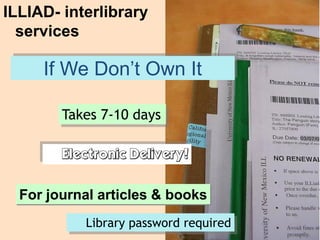
ILLIAD- interlibrary
  services

     If We Don’t Own It

        Takes 7-10 days

        Electronic Delivery!

  For journal articles & books
           Library password required
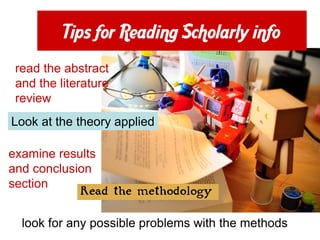
Tips for Reading Scholarly info
 read the abstract
 and the literature
 review
Look at the theory applied

examine results
and conclusion
section
             Read the methodology


  look for any possible problems with the methods
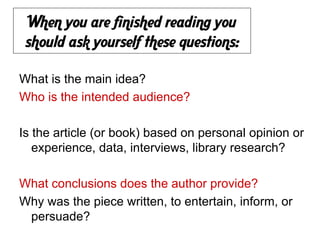
When you are finished reading you
 should ask yourself these questions:

What is the main idea?
Who is the intended audience?

Is the article (or book) based on personal opinion or
   experience, data, interviews, library research?

What conclusions does the author provide?
Why was the piece written, to entertain, inform, or
 persuade?
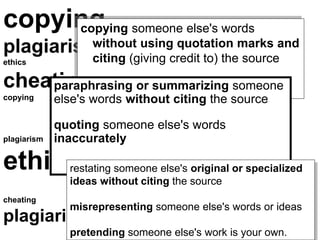
copying someone else's words
     copying
plagiarism (giving credit to) themarks and
          without using quotation
          citing                  source
ethics

cheating
    paraphrasing or summarizing someone
copying      else's words without citing the source

             quoting someone else's words
plagiarism   inaccurately

ethics         restating someone else's original or specialized
               ideas without citing the source
cheating
               misrepresenting someone else's words or ideas
plagiarism
               pretending someone else's work is your own.
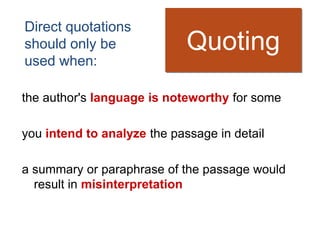
Direct quotations
should only be               Quoting
used when:

the author's language is noteworthy for some

you intend to analyze the passage in detail

a summary or paraphrase of the passage would
  result in misinterpretation
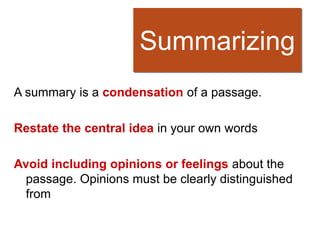
Summarizing
A summary is a condensation of a passage.

Restate the central idea in your own words

Avoid including opinions or feelings about the
  passage. Opinions must be clearly distinguished
  from
Write~N~Cite
Needs to be downloaded onto your computer
Automatically integrated into Microsoft Word
Allows you to do in-text citations in a variety of styles

 For more info check out:
 http://www.refworks.com/refworks/help/Using_Write-N-Cite.htm
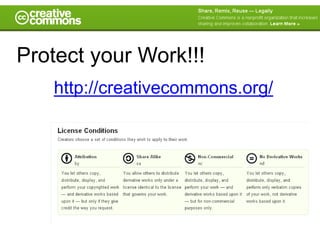
Protect your Work!!!
   http://creativecommons.org/
Librarians by Subject
                                           request an appointment
                                           or send email


                                              Writers Resource Lab
                                              Get help with writing
                                              papers and citing
                                              correctly


Tiffini Travis ttravis@csulb.edu
Yahoo/MSN IM: csulb_librarian AOL/GoogleTalk: csulblibrarian
Twitter: Mojo_Girl or CSULB_Library
Photo credits
http://flickr.com/photos/fotopamp/
http://flickr.com/photos/photoschizo/
http://flickr.com/photos/revlimit/
http://flickr.com/photos/patthebunny27/

McNair scholars

  • 1.
    McNair Scholars Research at the Beach Summer 2012
  • 2.
    Library Citations: terminology of a book, article or elements Library website Terms Library Abstract: Terminology Summary of an article library Call Number: terminology Address of the book Library
  • 3.
    The Difference betweenthe Internet and Research Databases Internet Anyone can create a website Contain unfiltered information You get a lot of junk sites with every search Last resort for university level research!
  • 4.
    The Difference betweenthe Internet and Research Databases Research Databases Commercially published materials Scholarly articles are reviewed by experts Databases contents are hand selected Use these FIRST for researching a topic
  • 5.
    Did the Holocaustreally Happen? Primary data Research Articles Controversial Literature What kinds of information do you need?
  • 6.
    Did the holocaust genocide really holocaust happen? Concentration camps Historical revisionism Holocaust denial
  • 7.
    Holocaust Final solution Concept A Nazi policy Genocide War crimes Denial Concept B Historical revisionism Deniers Proof
  • 8.
    Before we startdoing research Refworks First get a Refworks Account Sign up for the account at refworks.com Set up a folder and we are ready to save articles Remember- even if the article is full text- put it in your refworks file so you can have the citation
  • 9.
    Figure out whatkind of information you need Statistics Empirical research Public opinion Laws or government studies Interviews Recent developments Scholarly information Background information
  • 10.
    Types of Articles Empirical articles Articles Contain primary data from a study Serials performed by professionals in a articles field/discipline articles that do not contain original data Popular articles Articles journals usually take the form of magazine articles. Can sometimes include opinion. magazines Informative articles ARTICLES provide information in Articles that concise objective formats usually JOURNALS newspaper articles Serials
  • 11.
    booksReference Books monographs Dictionaries encyclopedias, encyclopedias statistical books anything that can REFERENCE get you started on almost all topics BOOKS Primary Books Books that were written DURING the time an event was occurring. MONOGRAPHS e.g. diaries, government books documents and more Secondary Books books Books that have been written print AFTER an event or time period
  • 12.
    Narrows a search Both terms appear in same record AND Terms have different meanings example: infidelity AND culture Broadens a search Either term may appear in record OR Terms have similar meanings example: adultery OR cheating
  • 13.
    Can look formultiple endings of a word or plurals asterisk theor* theory theories Allows you to specify how close you want your terms to appear in the record Proximity online w1 interaction
  • 14.
    Keywords Searches: title, abstract, Default fields subjects and in some cases the full text of the record Subject Searches: only the subject Descriptor line-This makes your searches more specific and better defined
  • 15.
    Selecting the rightsource Electronic Resources Page For Articles: Database by topic page Use references from textbooks or other articles For Books: COAST Link +
  • 16.
    COAST the librarycatalog Only things we have at CSULB Journals Government Documents Audio Books DVDs Books E-Books
  • 17.
    Link + Click onthe “search Link+” option from COAST It takes 3-5 days and the item will be held under your last name at the Circulation Desk Only works for books NOT journals
  • 18.
    Review the TWOstep process for getting journal articles
  • 19.
    Get citations from Research Database citation info located in the record- usually found on the citation or source line
  • 20.
    Search for the Article click on the SFX or Get it @ CSULB link If no link, search the catalog by JOURNAL title to see if we own it electronically or in print
  • 21.
    Finding full textof an article
  • 22.
  • 23.
  • 24.
    SFX Box: NOelectronic or print If there is no full text available at CSULB, the option for getting the article for free from the library
  • 25.
    ArticleReach makes getting an article as simple as saying, "I want it!"
  • 26.
    Citing sources CSULB Citation Builder A citation generator that will format your articles, books and websites OWL Purdue Writing Guides This page provides links to a variety of online examples of citing in both MLA and APA styles
  • 27.
    Get a LibraryPassword Go to Coast https://coast.library.csulb.edu/patroninfo Type in your name, CSULB I.D. #, and a Password of your choice Confirm Password by typing it twice more If the screen shows your name- it worked! If you forgot your password call: 562 985-5512 and get it erased so you can create a new one!
  • 28.
    ILLIAD- interlibrary services If We Don’t Own It Takes 7-10 days Electronic Delivery! For journal articles & books Library password required
  • 29.
    Tips for ReadingScholarly info read the abstract and the literature review Look at the theory applied examine results and conclusion section Read the methodology look for any possible problems with the methods
  • 30.
    When you arefinished reading you should ask yourself these questions: What is the main idea? Who is the intended audience? Is the article (or book) based on personal opinion or experience, data, interviews, library research? What conclusions does the author provide? Why was the piece written, to entertain, inform, or persuade?
  • 31.
    copying someone else'swords copying plagiarism (giving credit to) themarks and without using quotation citing source ethics cheating paraphrasing or summarizing someone copying else's words without citing the source quoting someone else's words plagiarism inaccurately ethics restating someone else's original or specialized ideas without citing the source cheating misrepresenting someone else's words or ideas plagiarism pretending someone else's work is your own.
  • 32.
    Direct quotations should onlybe Quoting used when: the author's language is noteworthy for some you intend to analyze the passage in detail a summary or paraphrase of the passage would result in misinterpretation
  • 33.
    Summarizing A summary isa condensation of a passage. Restate the central idea in your own words Avoid including opinions or feelings about the passage. Opinions must be clearly distinguished from
  • 34.
    Write~N~Cite Needs to bedownloaded onto your computer Automatically integrated into Microsoft Word Allows you to do in-text citations in a variety of styles For more info check out: http://www.refworks.com/refworks/help/Using_Write-N-Cite.htm
  • 35.
    Protect your Work!!! http://creativecommons.org/
  • 36.
    Librarians by Subject request an appointment or send email Writers Resource Lab Get help with writing papers and citing correctly Tiffini Travis ttravis@csulb.edu Yahoo/MSN IM: csulb_librarian AOL/GoogleTalk: csulblibrarian Twitter: Mojo_Girl or CSULB_Library
  • 37.