Levosimendan is a first-line drug in the management
of acute heart failure ?
or
in some types of AHF ?
„ Background for the debate ?
1. Introduction of a new drug with a novel mechanism of
action ( discrepancy between clinical trial results )
2. Lack of consensus about the definition and
management of AHF
3. Old dogma „ inotropes are bad“ in heart failure !
Arguments PRO
F. Follath, Zürich
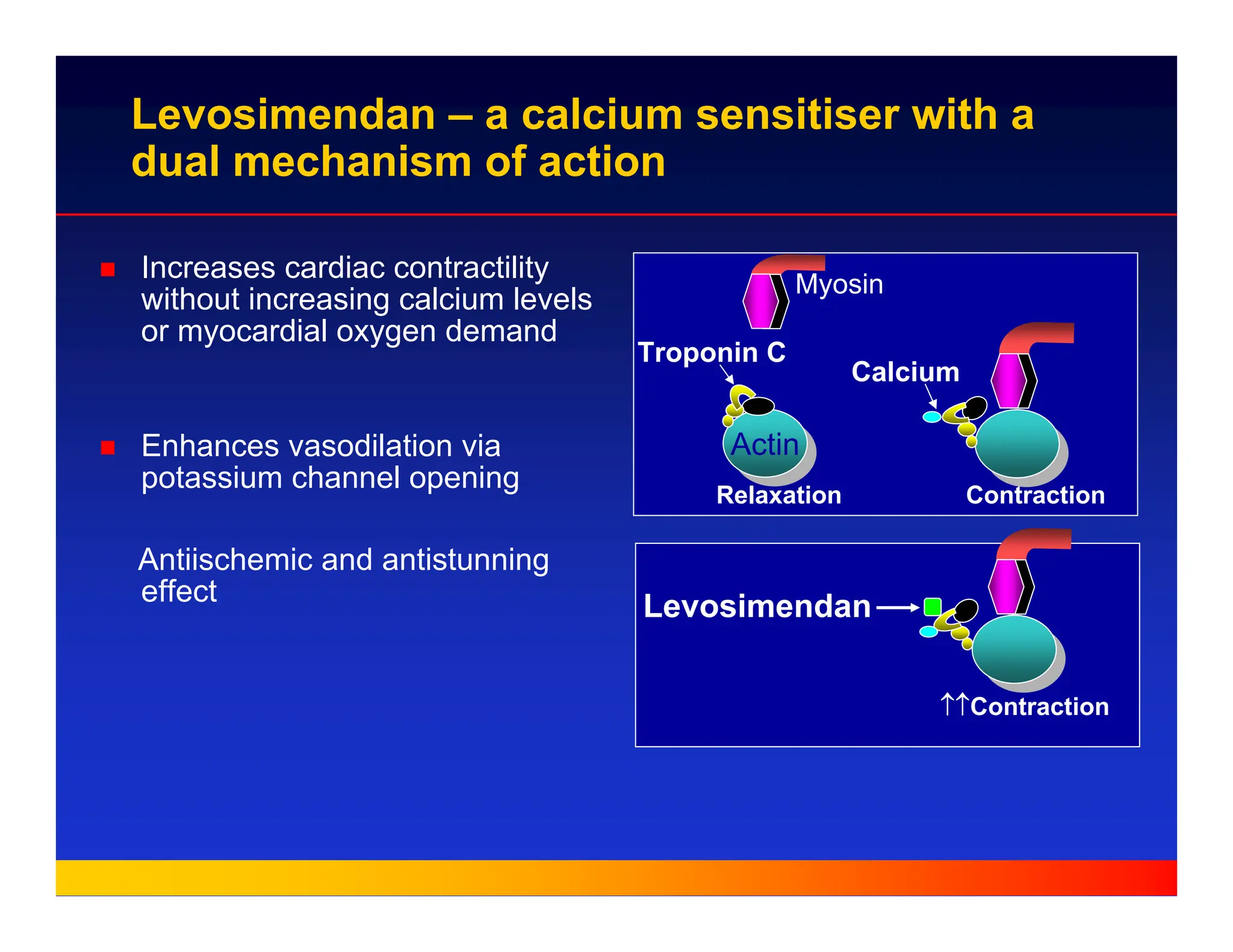
Actin
Actin
Myosin
Troponin C
Calcium
Levosimendan
Relaxation Contraction
↑↑Contraction
Levosimendan – a calcium sensitiser with a
dual mechanism of action
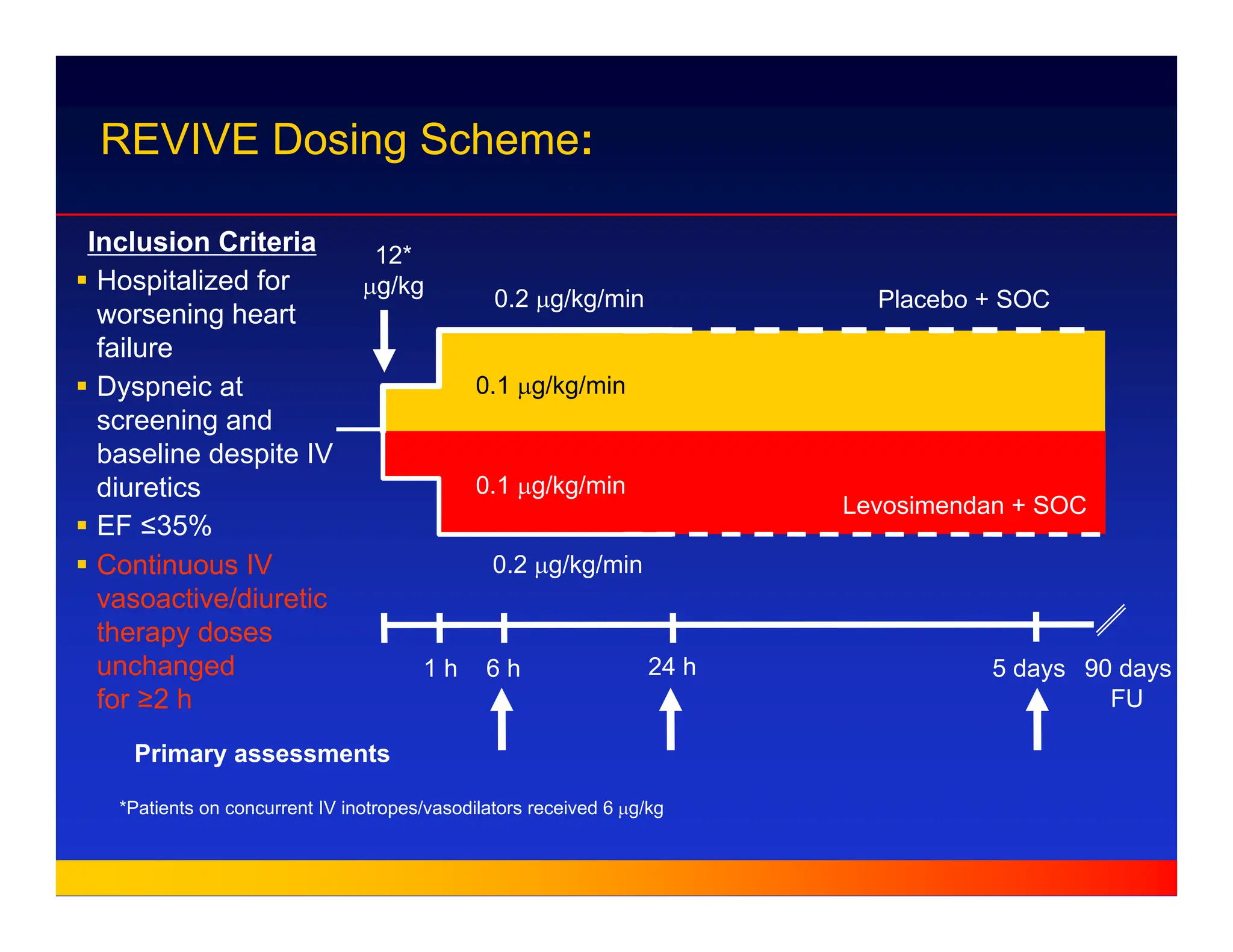
„ Increases cardiac contractility
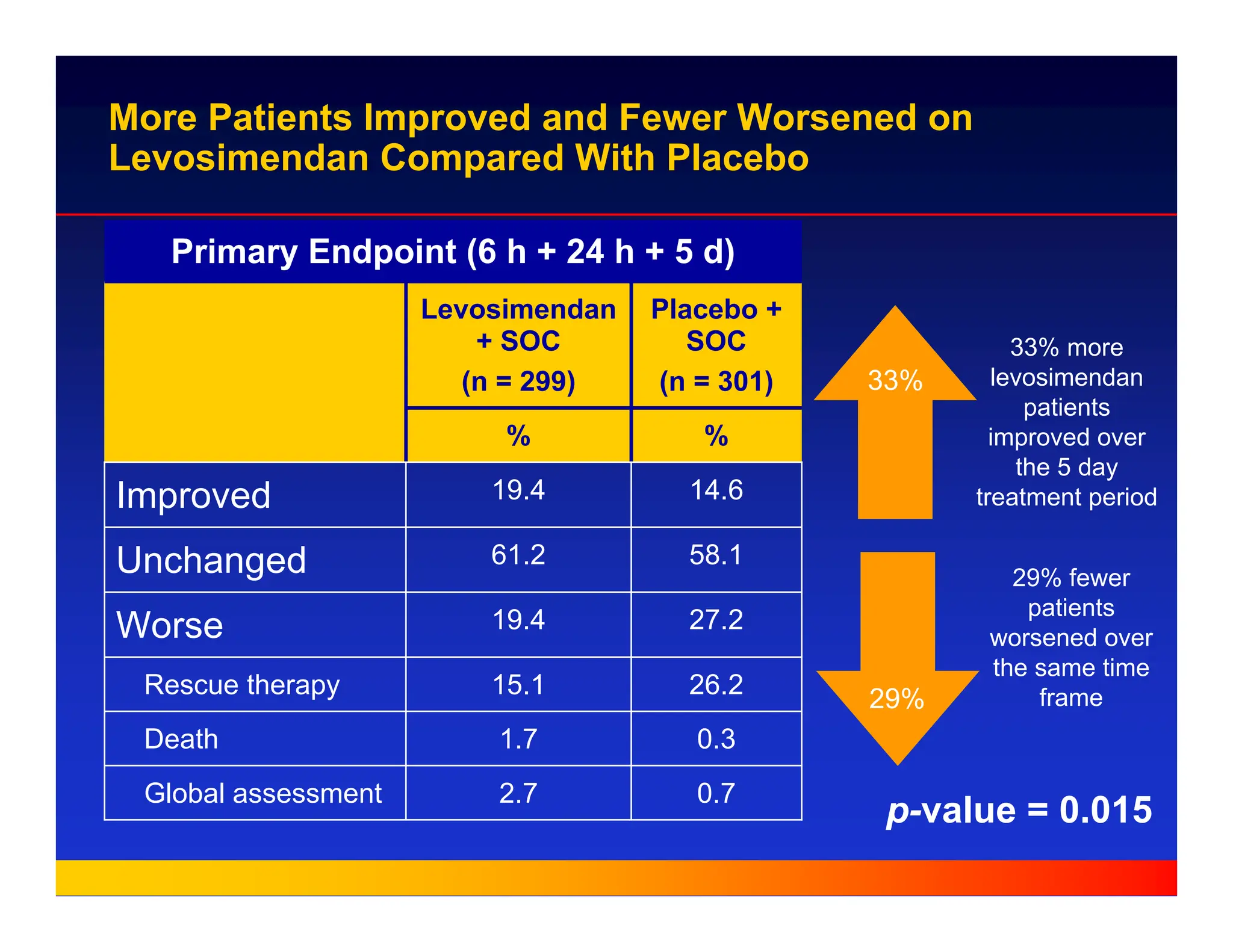
without increasing calcium levels
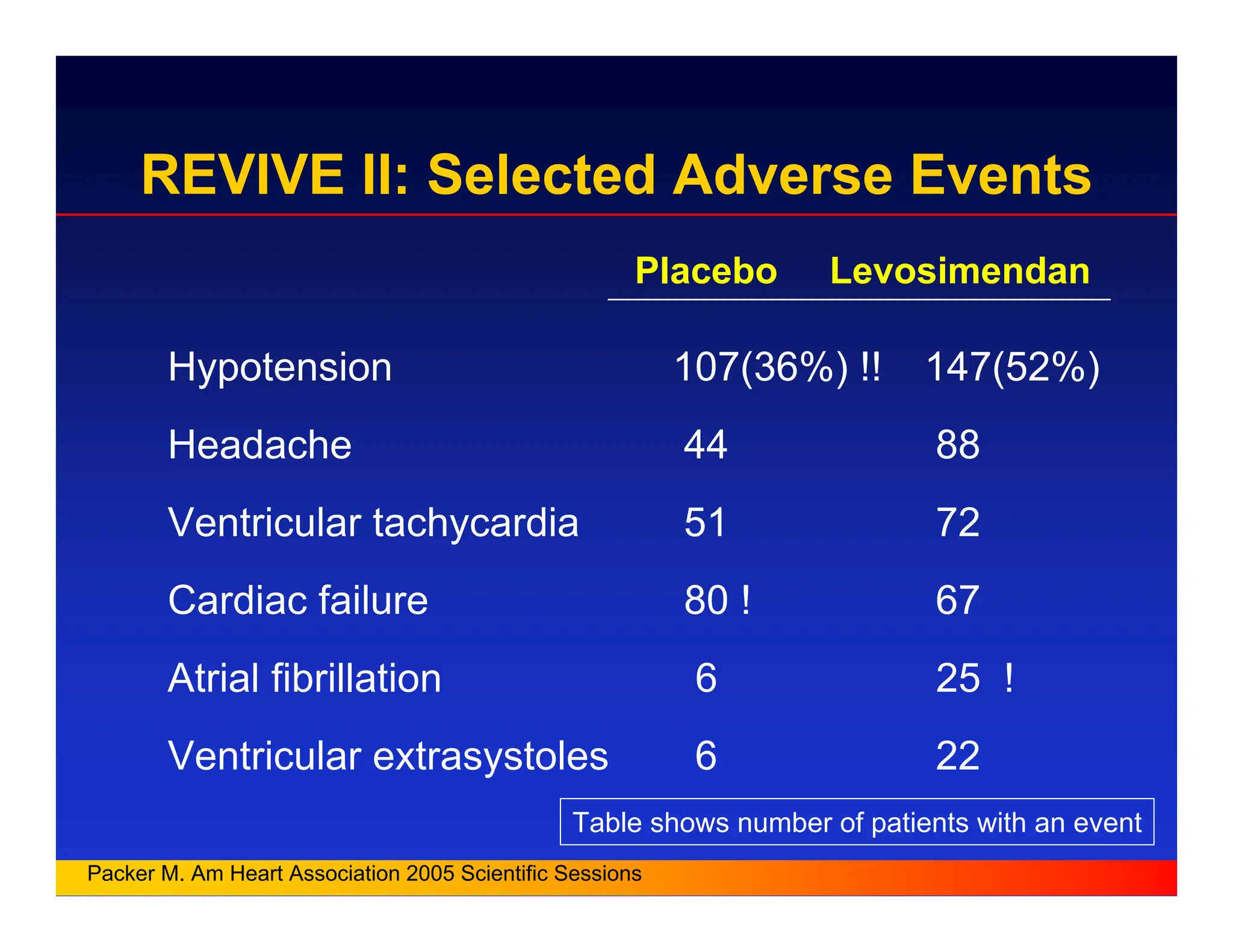
or myocardial oxygen demand
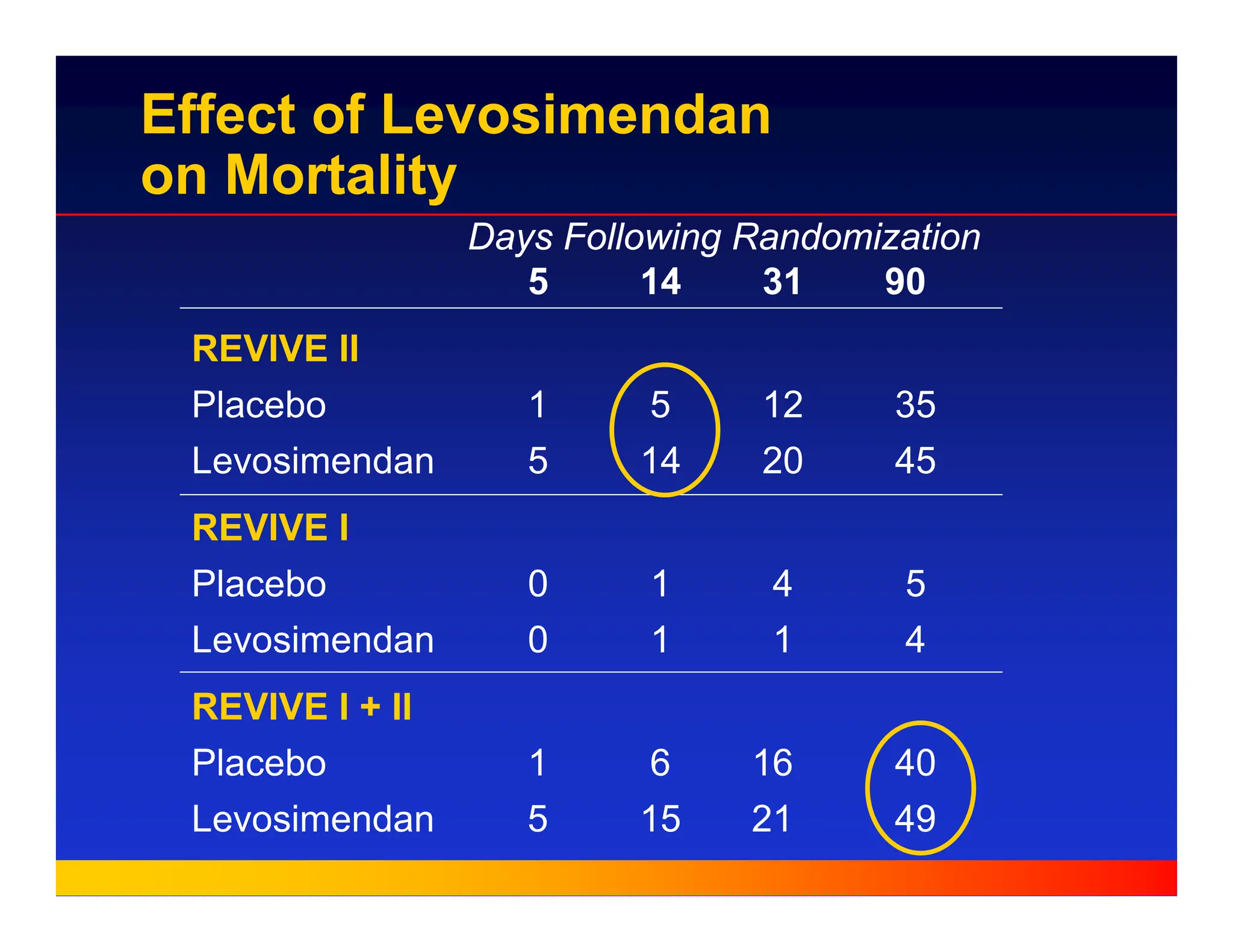
„ Enhances vasodilation via
potassium channel opening
Antiischemic and antistunning
effect
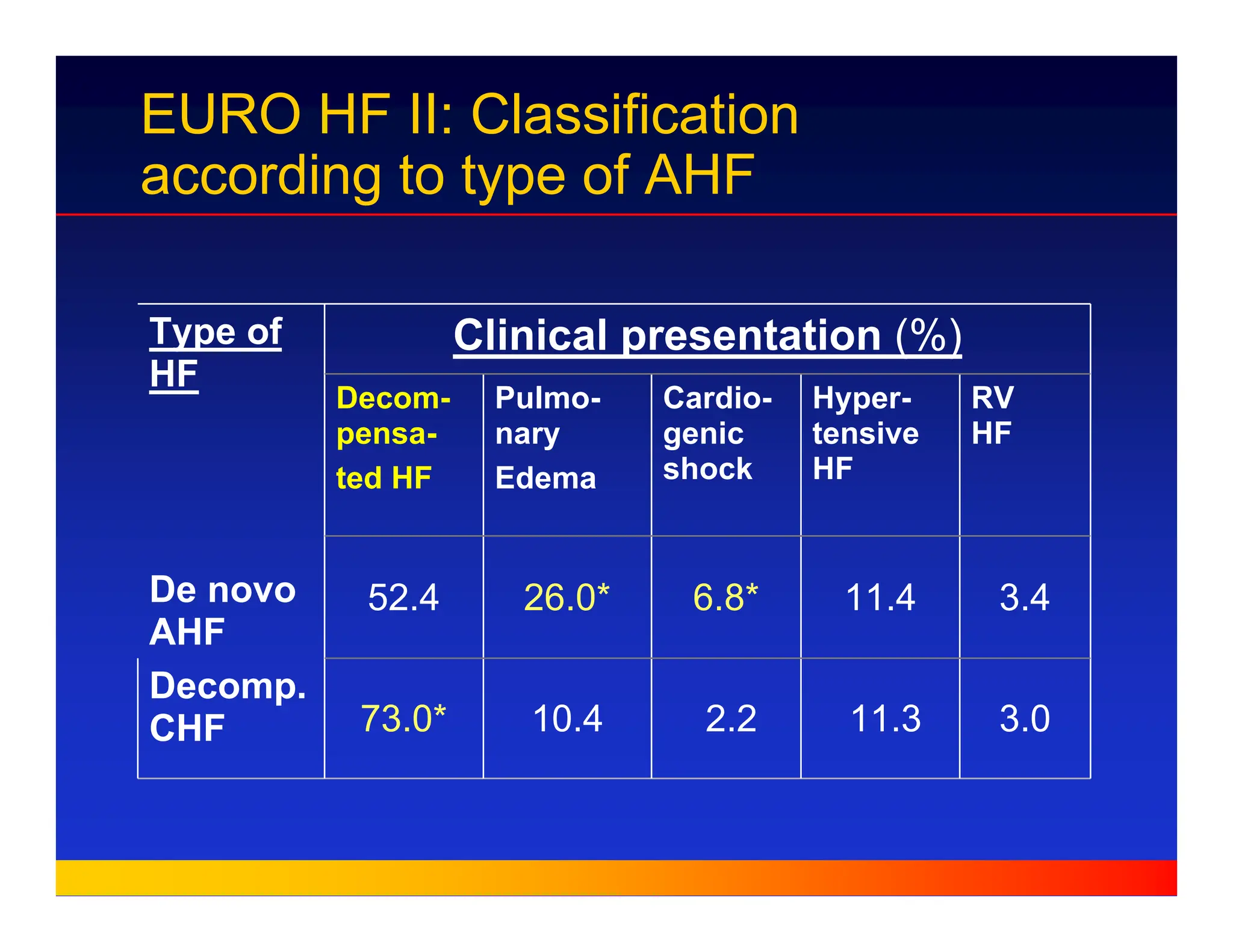
EURO HF II: Classification
according to type of AHF
3.0
11.3
2.2
10.4
73.0*
Decomp.
CHF
3.4
11.4
6.8*
26.0*
52.4
RV
HF
Hyper-
tensive
HF
Cardio-
genic
shock
Pulmo-
nary
Edema
Decom-
pensa-
ted HF
Clinical presentation (%)
Type of
HF
De novo
AHF
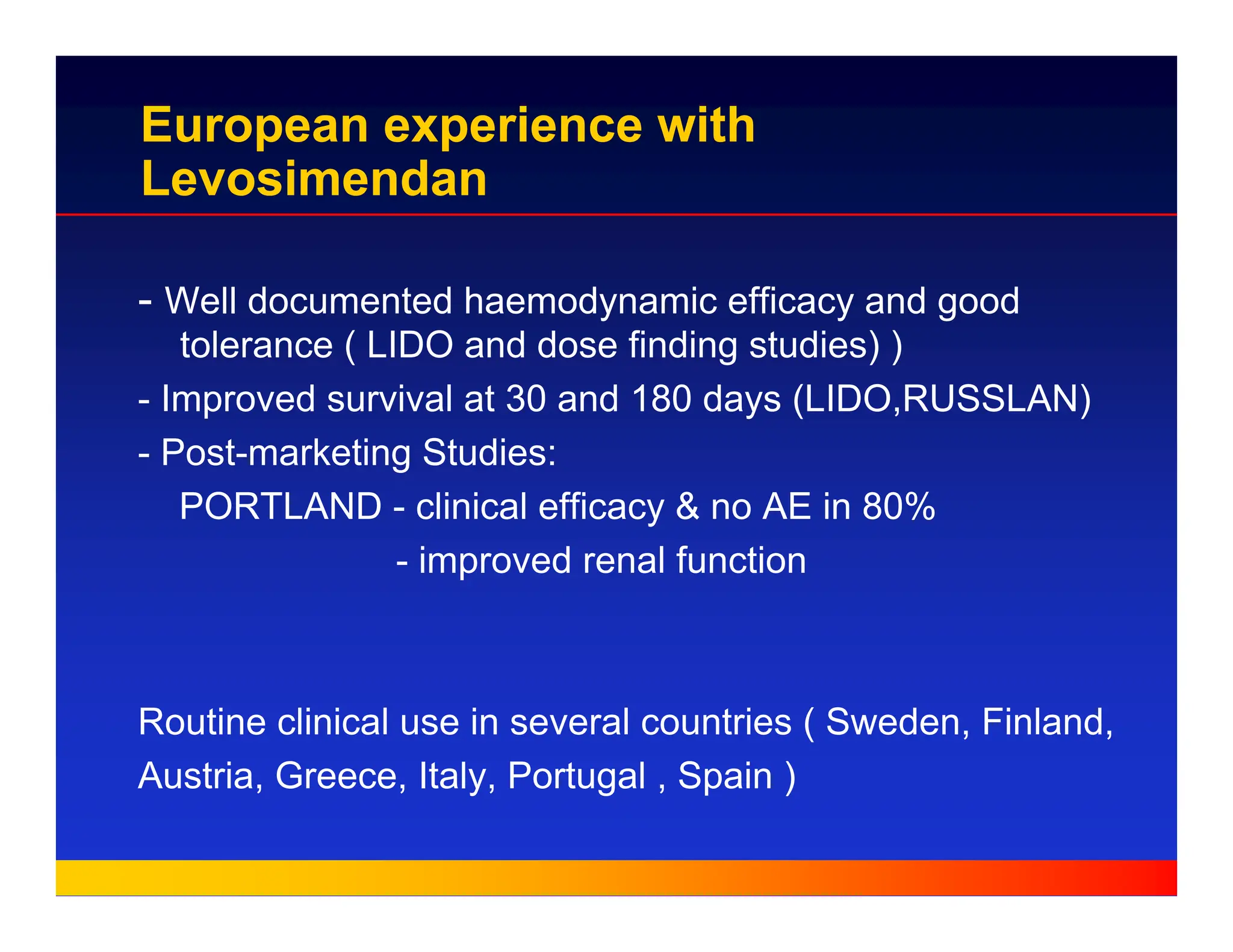
European experience with
Levosimendan
- Well documented haemodynamic efficacy and good
tolerance ( LIDO and dose finding studies) )
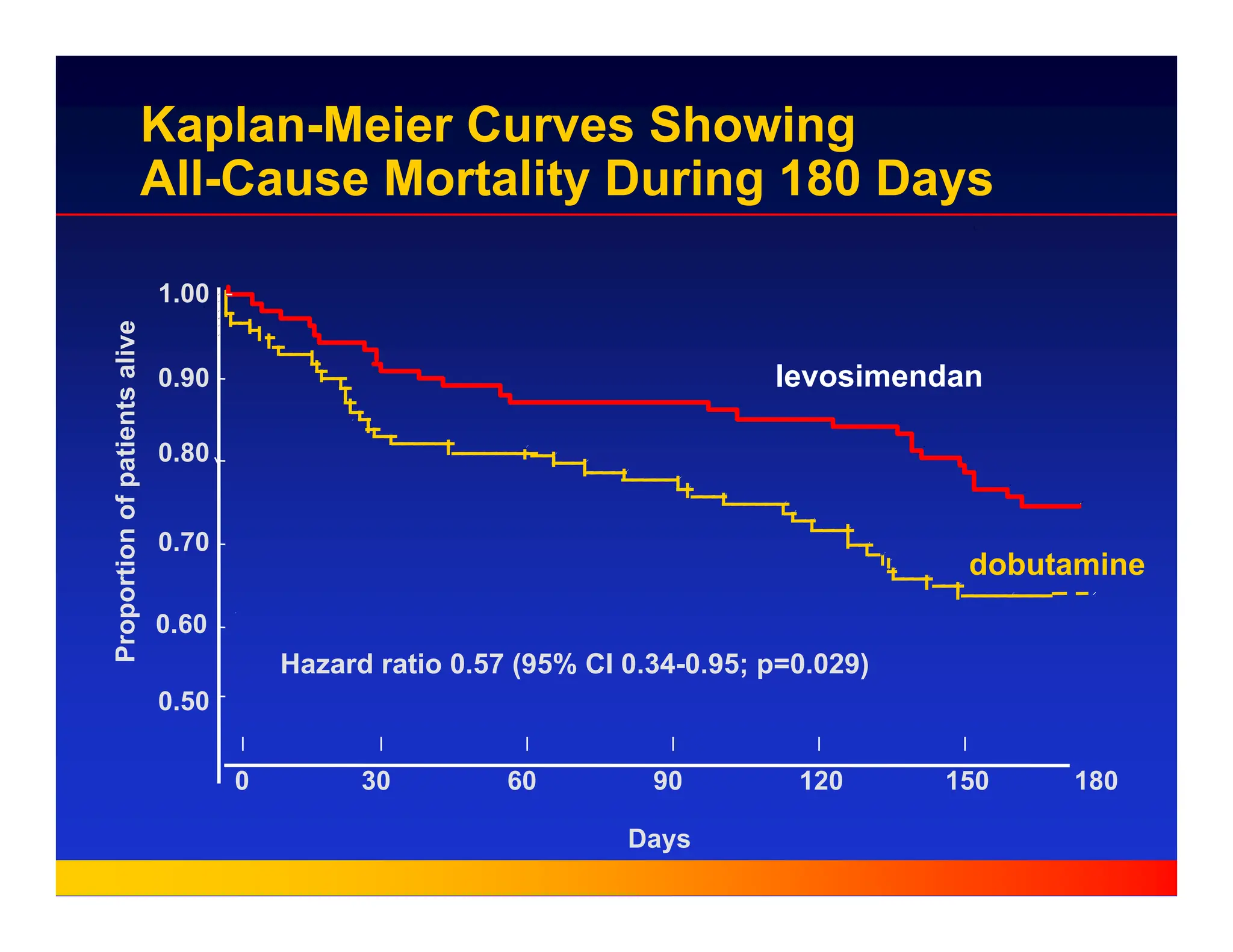
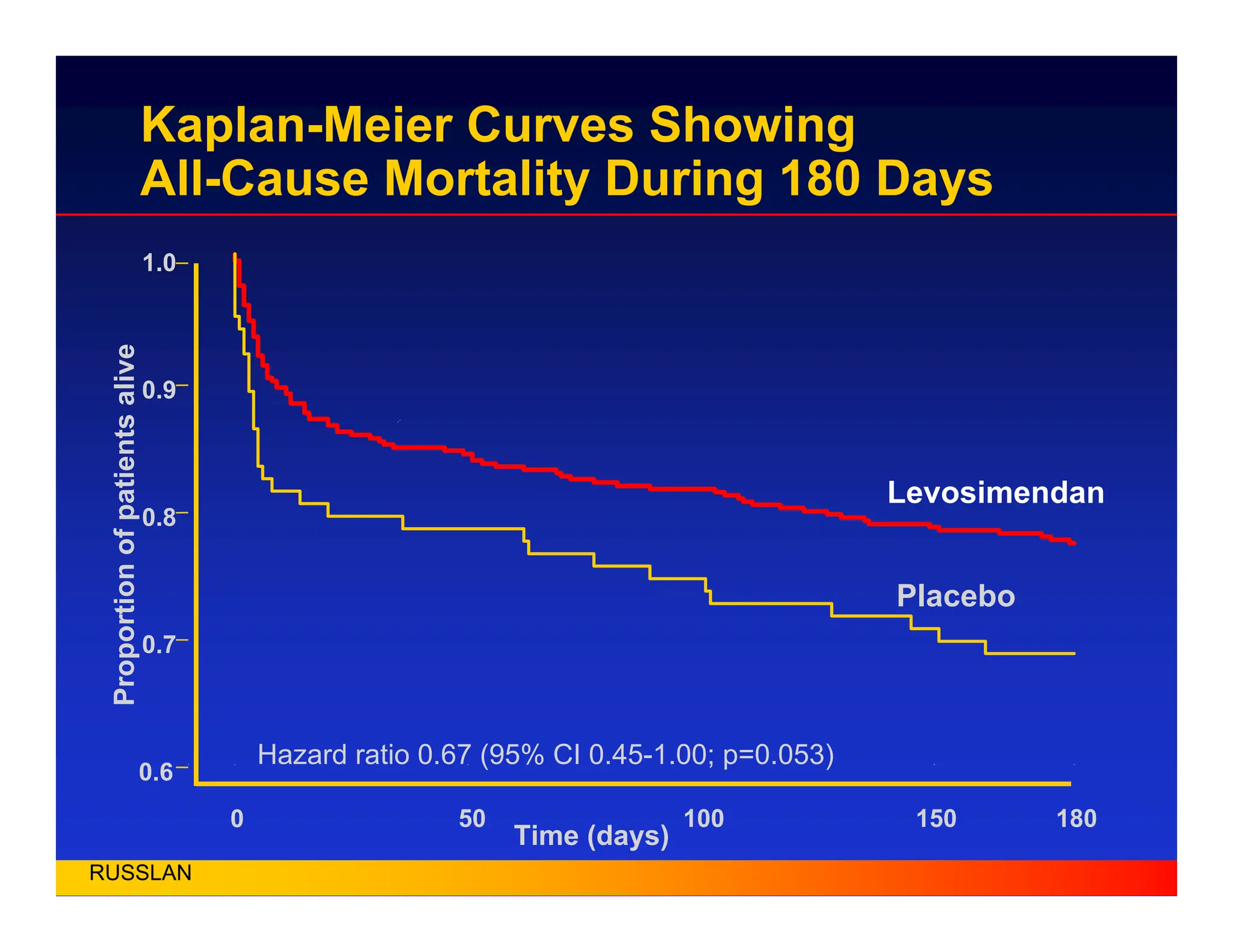
- Improved survival at 30 and 180 days (LIDO,RUSSLAN)
- Post-marketing Studies:
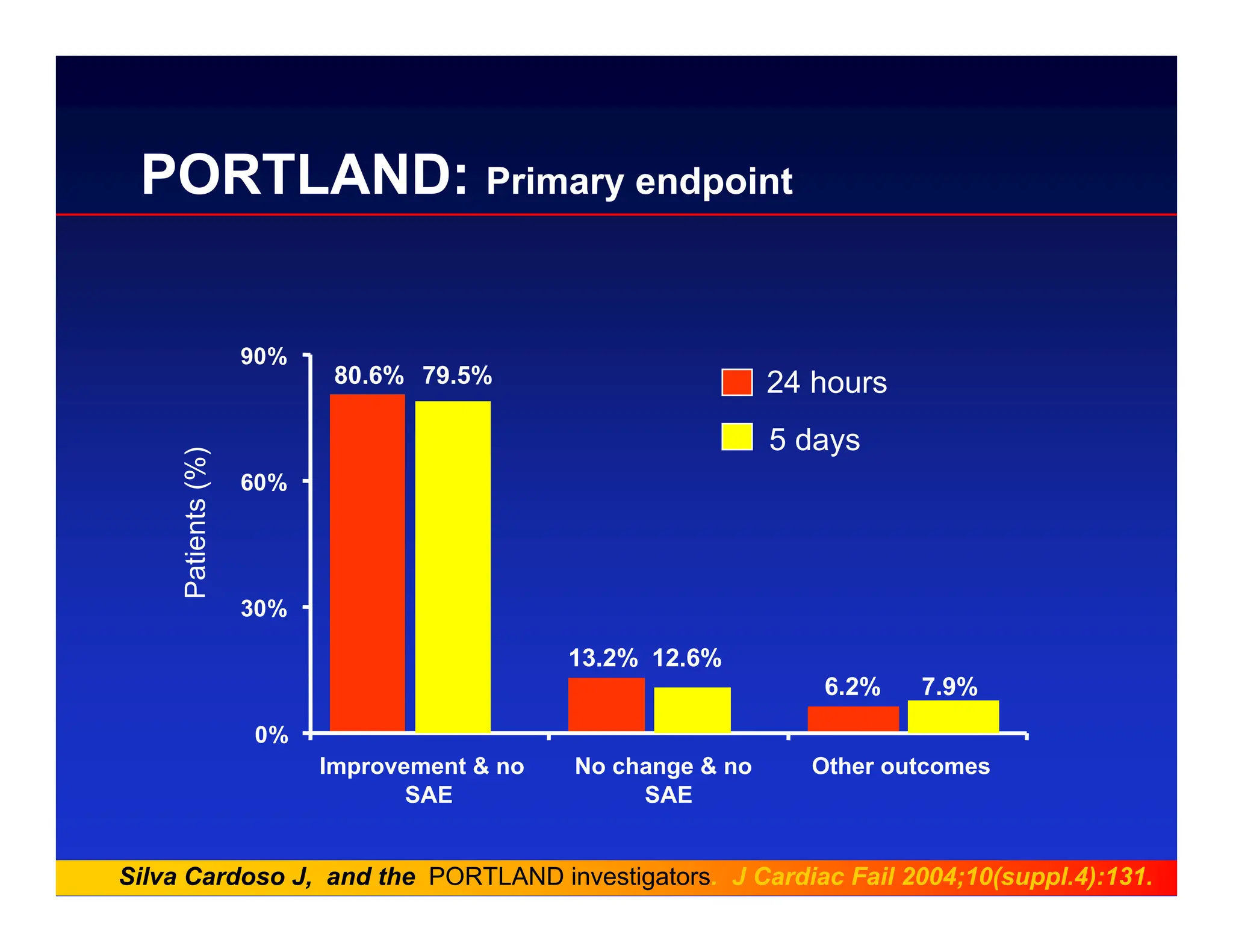
PORTLAND - clinical efficacy & no AE in 80%
- improved renal function
Routine clinical use in several countries ( Sweden, Finland,
Austria, Greece, Italy, Portugal , Spain )
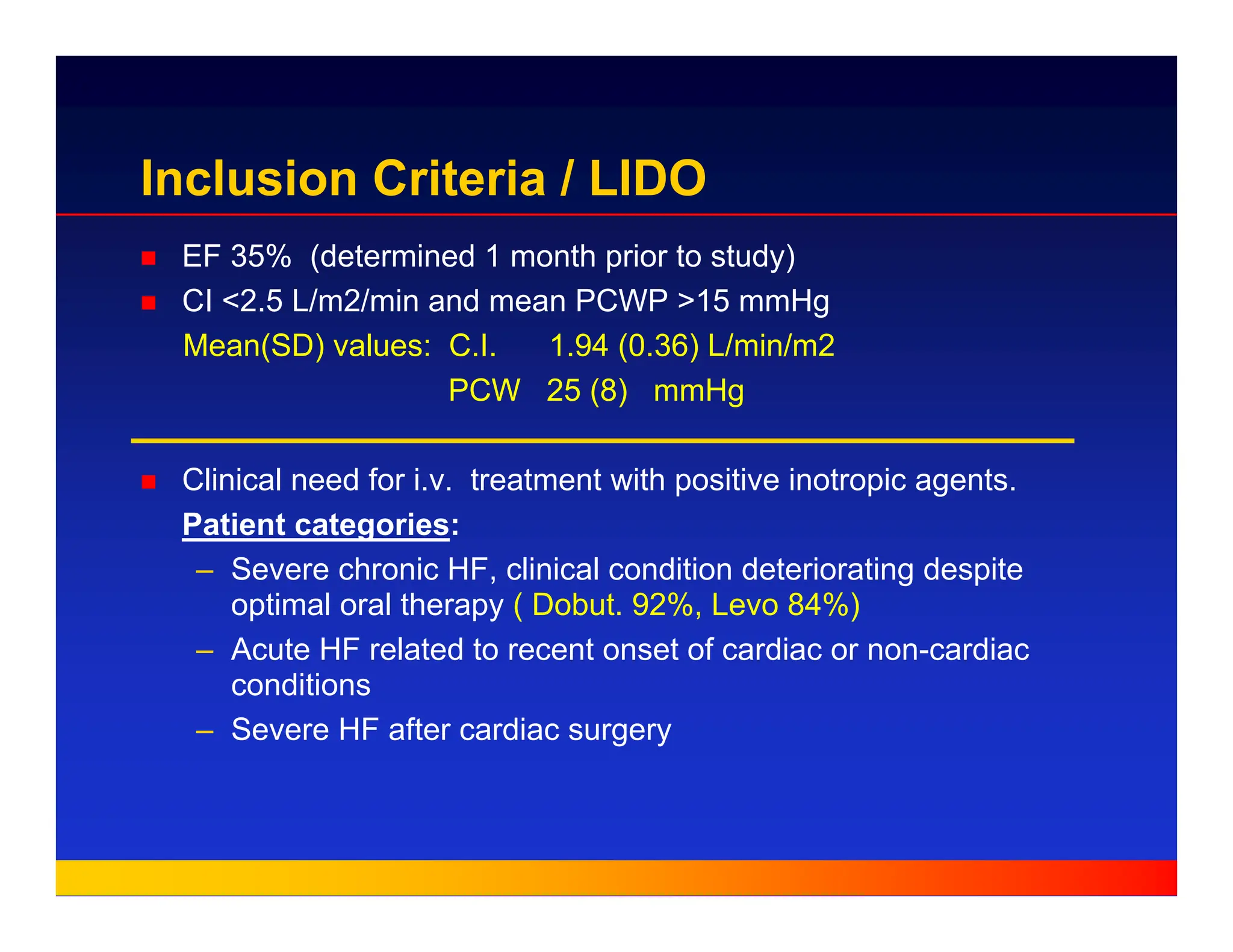
Inclusion Criteria / LIDO
„ EF 35% (determined 1 month prior to study)
„ CI <2.5 L/m2/min and mean PCWP >15 mmHg
Mean(SD) values: C.I. 1.94 (0.36) L/min/m2
PCW 25 (8) mmHg
„ Clinical need for i.v. treatment with positive inotropic agents.
Patient categories:
– Severe chronic HF, clinical condition deteriorating despite
optimal oral therapy ( Dobut. 92%, Levo 84%)
– Acute HF related to recent onset of cardiac or non-cardiac
conditions
– Severe HF after cardiac surgery
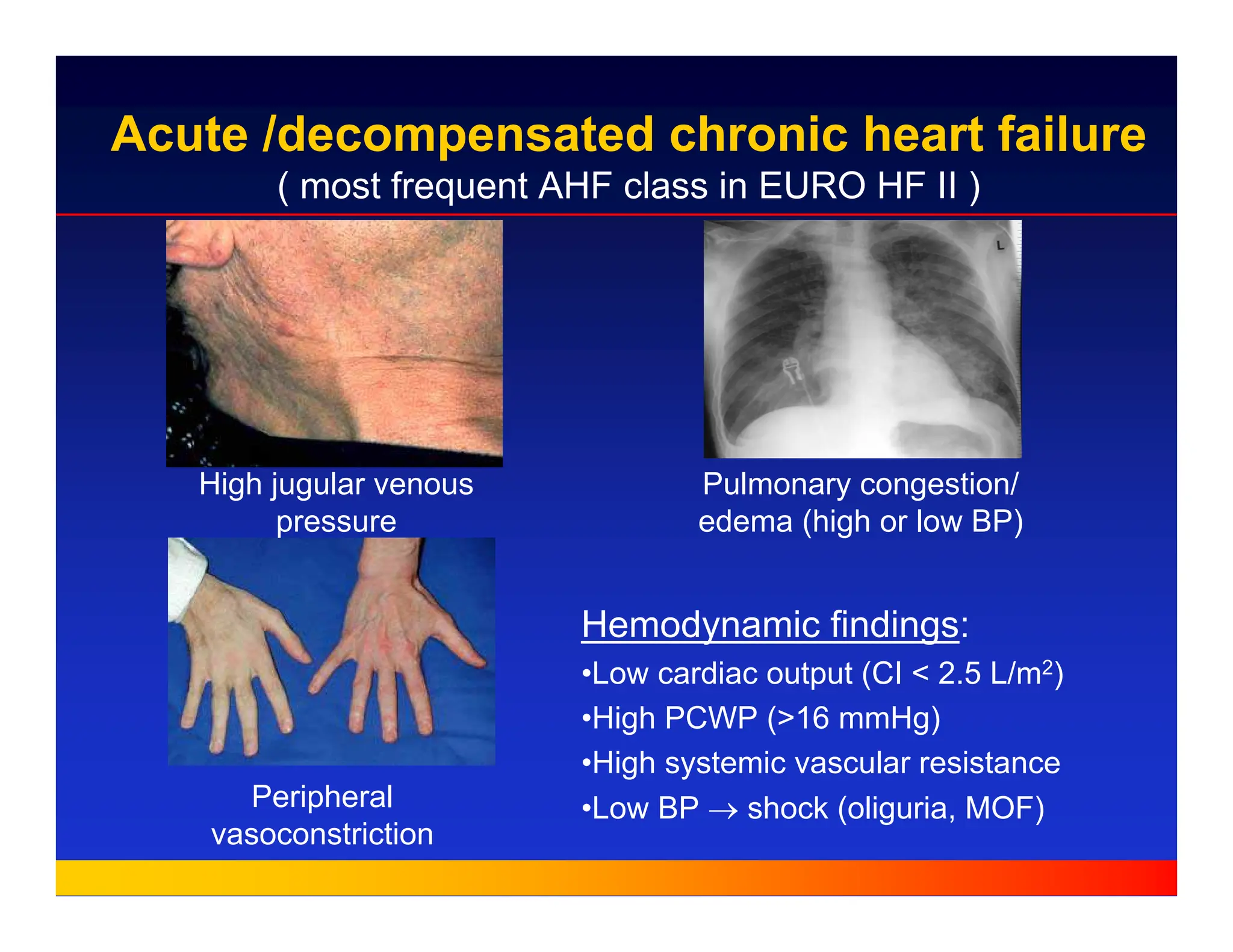
Acute /decompensated chronic heart failure
( most frequent AHF class in EURO HF II )
High jugular venous
pressure
Peripheral
vasoconstriction
Pulmonary congestion/
edema (high or low BP)
Hemodynamic findings:
•Low cardiac output (CI < 2.5 L/m2)
•High PCWP (>16 mmHg)
•High systemic vascular resistance
•Low BP → shock (oliguria, MOF)
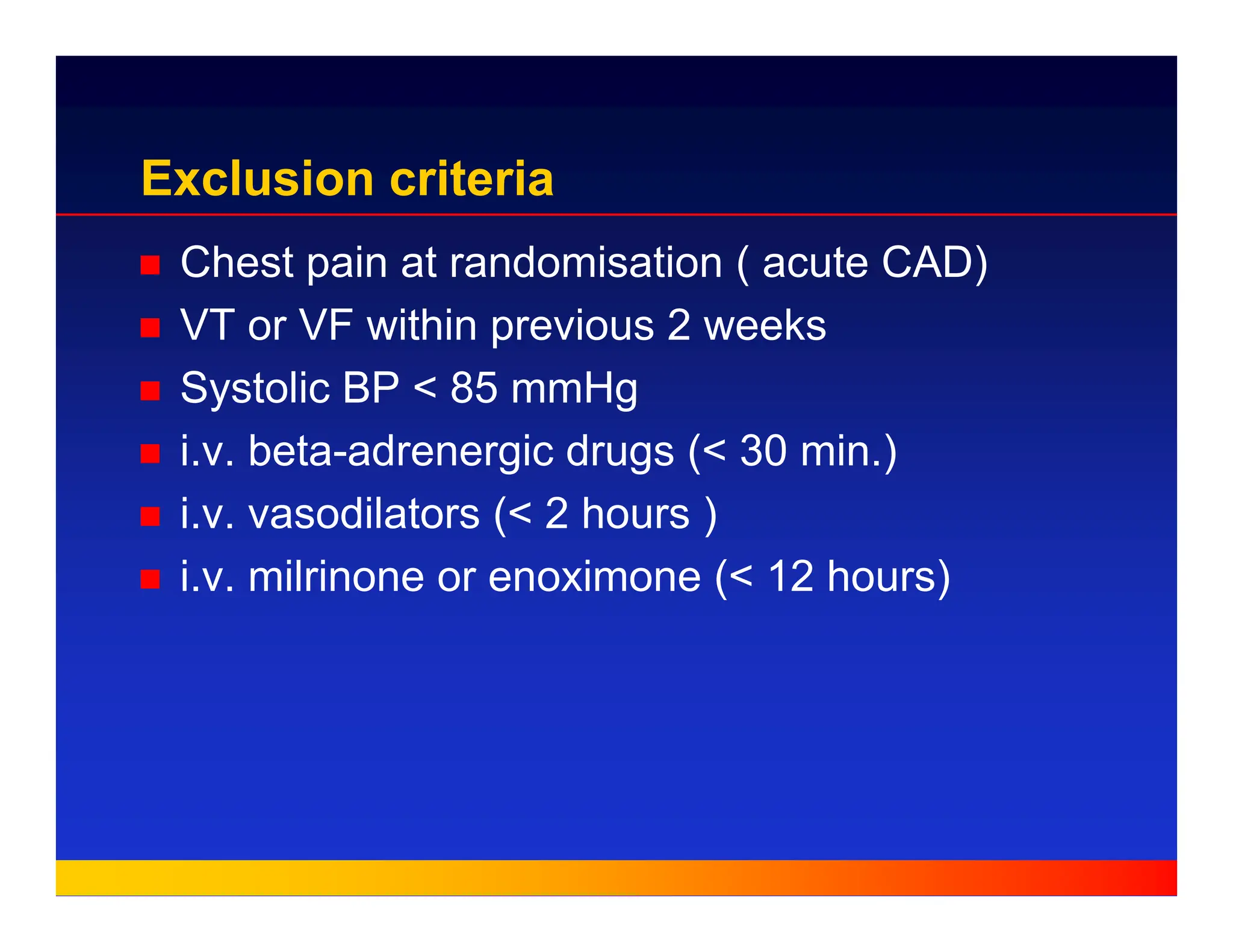
Exclusion criteria
„ Chest pain at randomisation ( acute CAD)
„ VT or VF within previous 2 weeks
„ Systolic BP < 85 mmHg
„ i.v. beta-adrenergic drugs (< 30 min.)
„ i.v. vasodilators (< 2 hours )
„ i.v. milrinone or enoximone (< 12 hours)
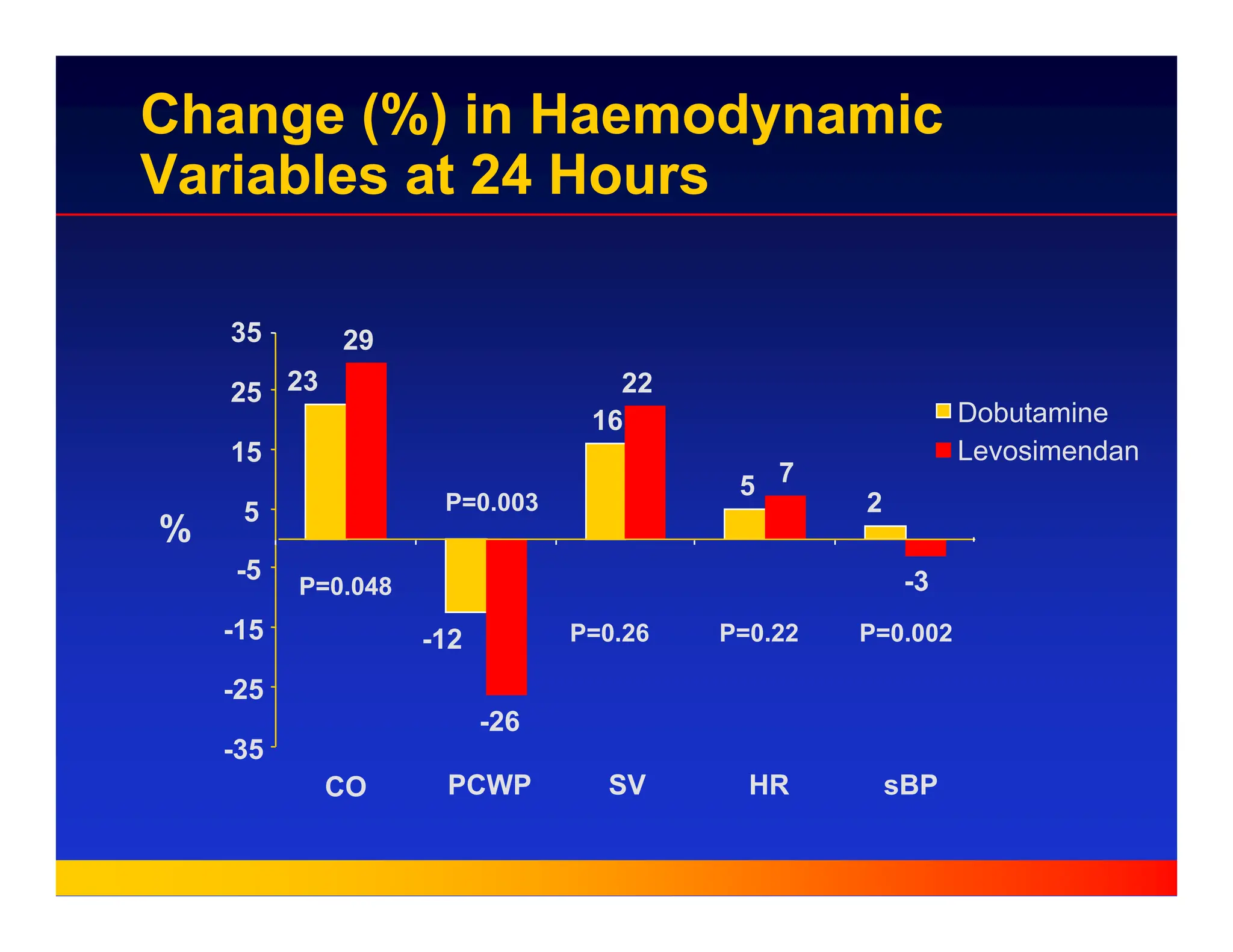
Change (%) in Haemodynamic
Variables at 24 Hours
23
-12
16
5
2
29
-26
22
7
-3
-35
-25
-15
-5
5
15
25
35
P=0.048
PCWP SV HR sBP
%
Dobutamine
Levosimendan
P=0.26 P=0.22 P=0.002
CO
P=0.003
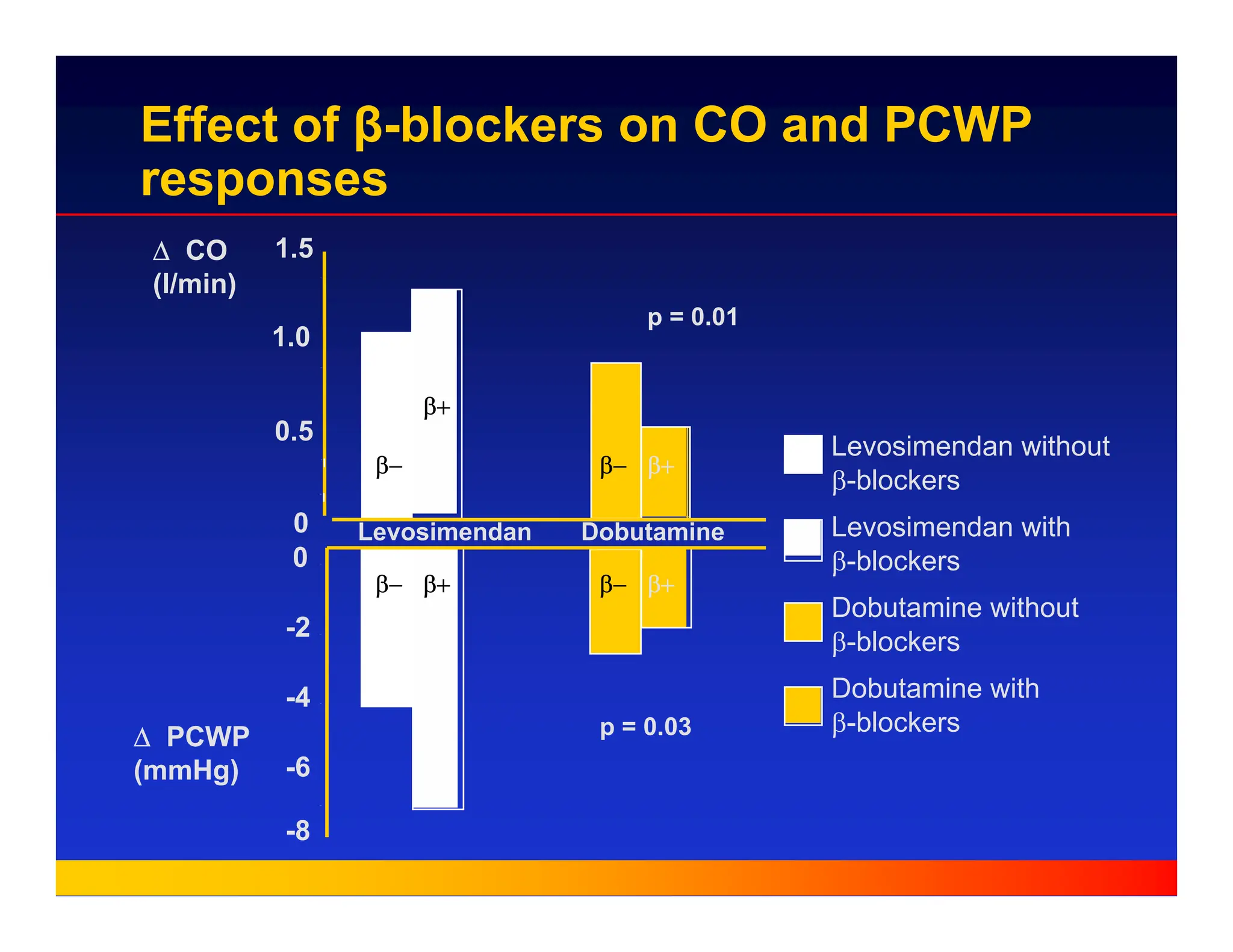
Effect of β-blockers on CO and PCWP
responses
∆ CO
(l/min)
∆ PCWP
(mmHg)
0
0.5
1.0
1.5
Levosimendan without
β-blockers
Levosimendan with
β-blockers
Dobutamine without
β-blockers
Dobutamine with
β-blockers
-8
-6
-4
-2
0
Levosimendan Dobutamine
p = 0.01
p = 0.03
β−
β+
β− β+
β− β+ β− β+
Hazard ratio 0.57 (95% CI 0.34-0.95; p=0.029)
1.00
0.90
0.80
0.70
0.60
Days
0.50
Proportion
of
patients
alive
levosimendan
dobutamine
120 150
90
30
0 60 180
Kaplan-Meier Curves Showing
All-Cause Mortality During 180 Days
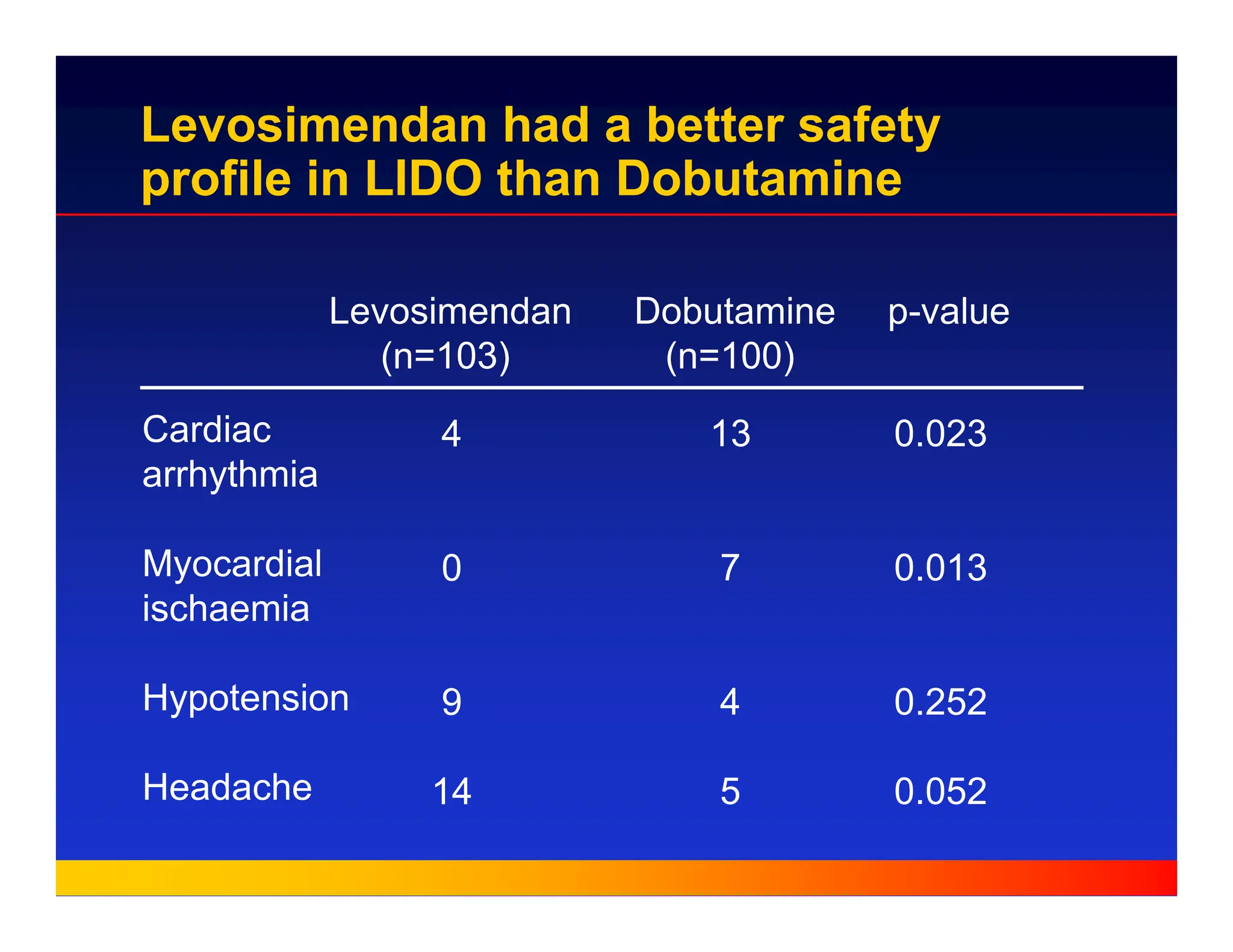
Levosimendan Dobutamine p-value
(n=103) (n=100)
Cardiac
arrhythmia
Myocardial
ischaemia
Hypotension
Headache
4
0
9
14
13
7
4
5
0.023
0.013
0.252
0.052
Levosimendan had a better safety
profile in LIDO than Dobutamine
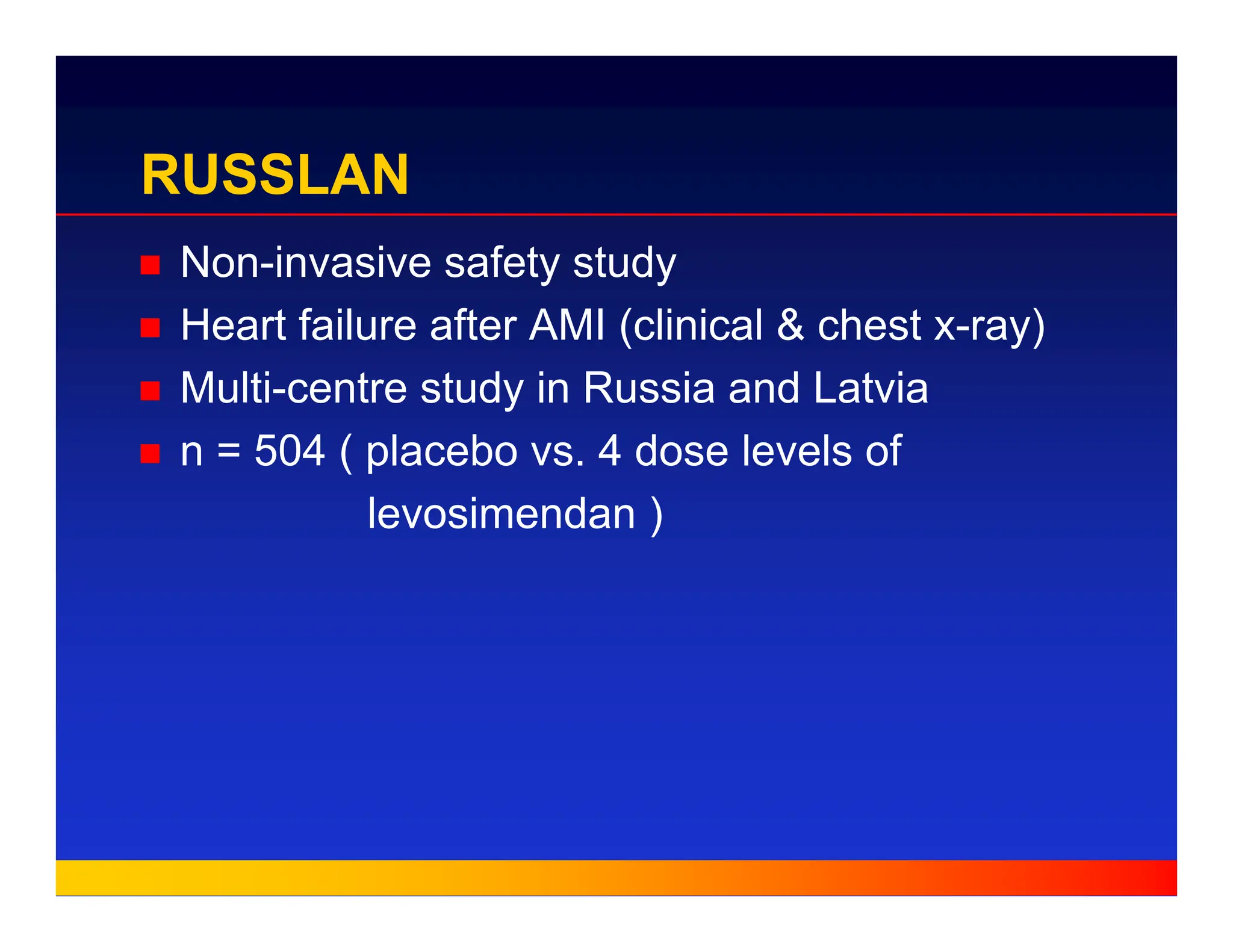
RUSSLAN
„ Non-invasive safety study
„ Heart failure after AMI (clinical & chest x-ray)
„ Multi-centre study in Russia and Latvia
„ n = 504 ( placebo vs. 4 dose levels of
levosimendan )
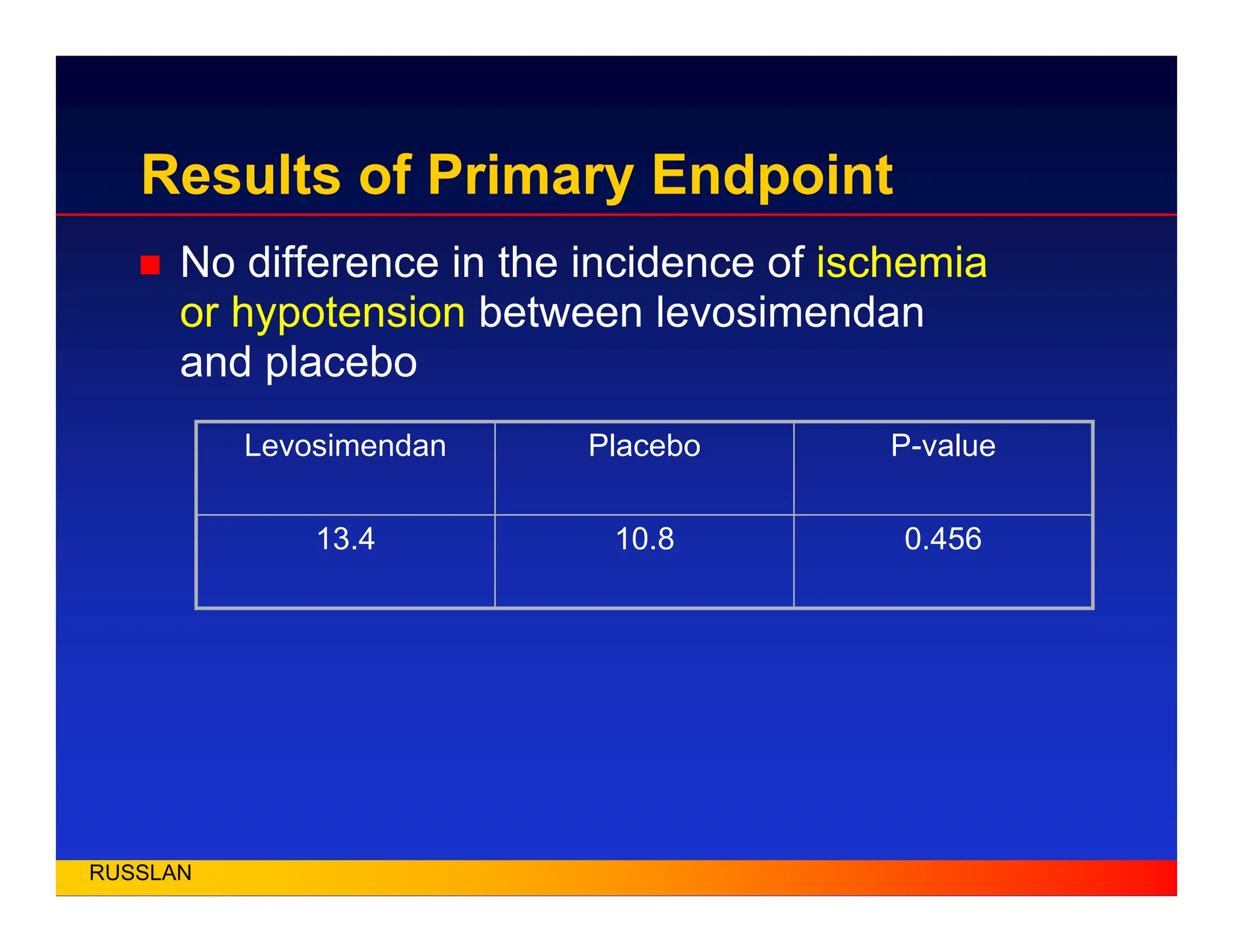
Results of Primary Endpoint
„ No difference in the incidence of ischemia
or hypotension between levosimendan
and placebo
RUSSLAN
0.456
10.8
13.4
P-value
Placebo
Levosimendan
Kaplan-Meier Curves Showing
All-Cause Mortality During 180 Days
Time (days)
Proportion
of
patients
alive
0
0.6
0.7
0.8
0.9
1.0
50 100 150 180
Hazard ratio 0.67 (95% CI 0.45-1.00; p=0.053)
Levosimendan
Placebo
RUSSLAN
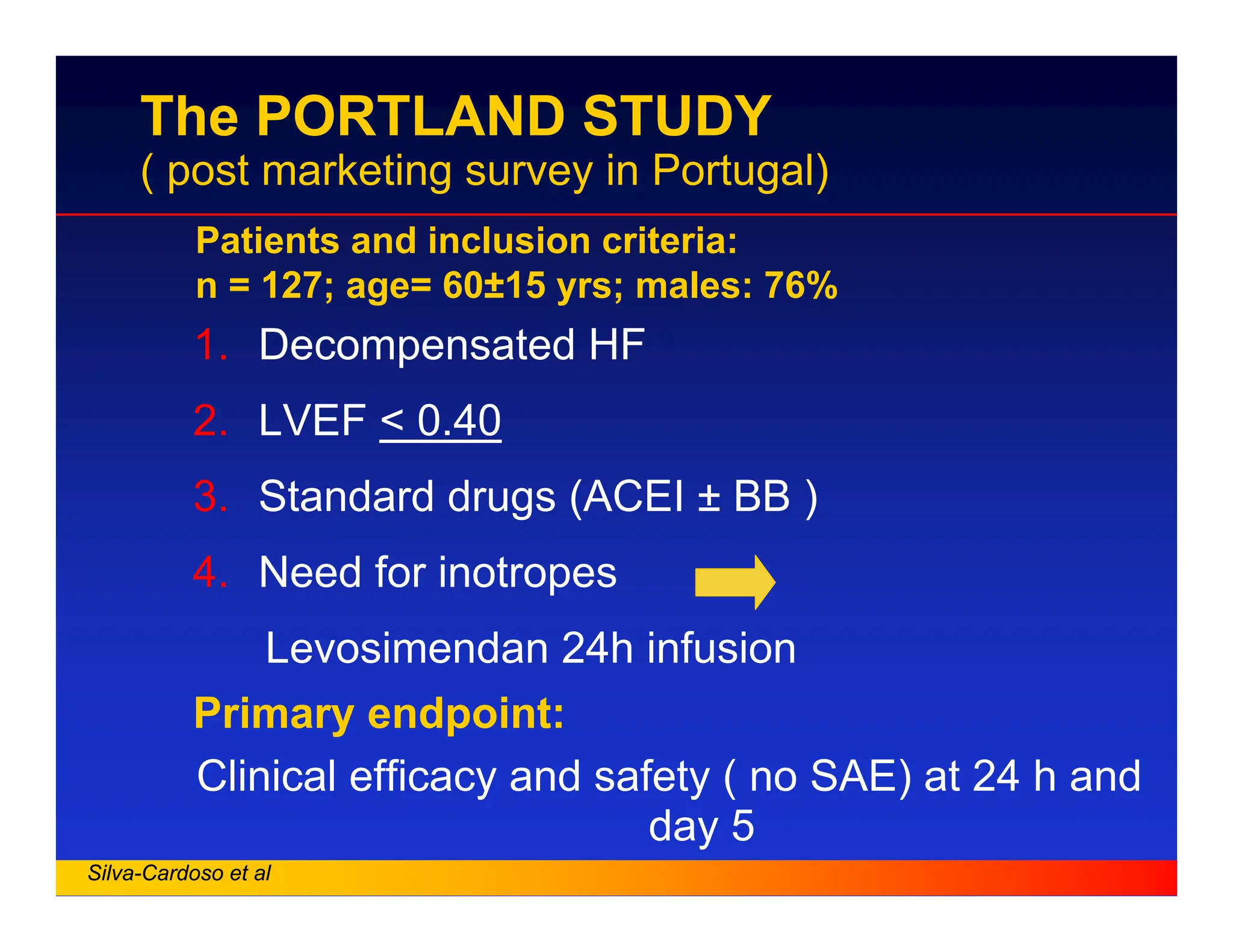
The PORTLAND STUDY
( post marketing survey in Portugal)
1. Decompensated HF
2. LVEF < 0.40
3. Standard drugs (ACEI ± BB )
4. Need for inotropes
Levosimendan 24h infusion
Primary endpoint:
Clinical efficacy and safety ( no SAE) at 24 h and
day 5
Patients and inclusion criteria:
n = 127; age= 60±15 yrs; males: 76%
Silva-Cardoso et al
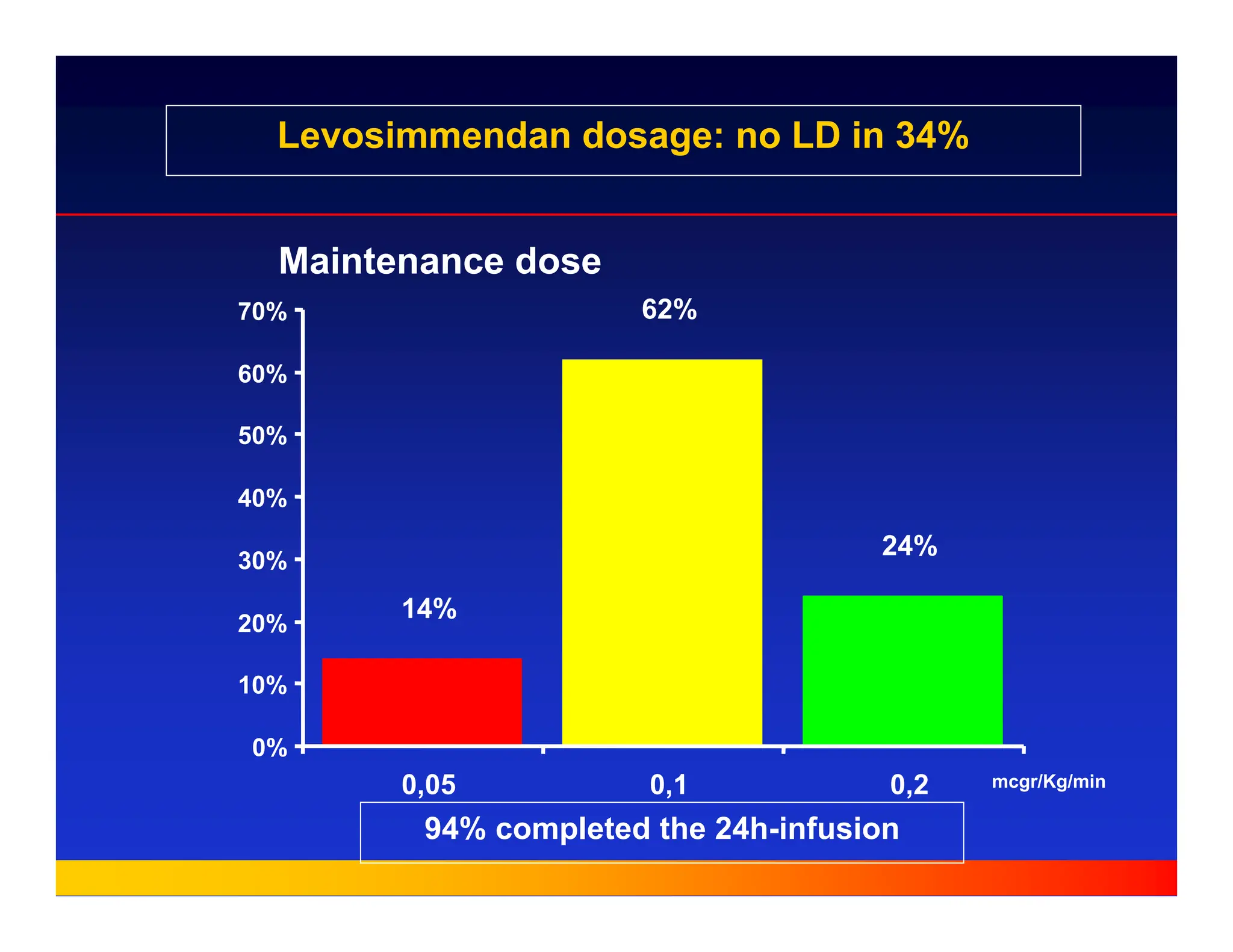
Maintenance dose
mcgr/Kg/min
Levosimmendan dosage: no LD in 34%
14%
62%
24%
0%
10%
20%
30%
40%
50%
60%
70%
0,05 0,1 0,2
94% completed the 24h-infusion
PORTLAND: Primary endpoint
Patients
(%)
80.6%
6.2%
12.6%
0%
30%
60%
90%
Improvement & no
SAE
No change & no
SAE
Other outcomes
79.5%
13.2%
7.9%
24 hours
5 days
Silva Cardoso J, and the PORTLAND investigators. J Cardiac Fail 2004;10(suppl.4):131.
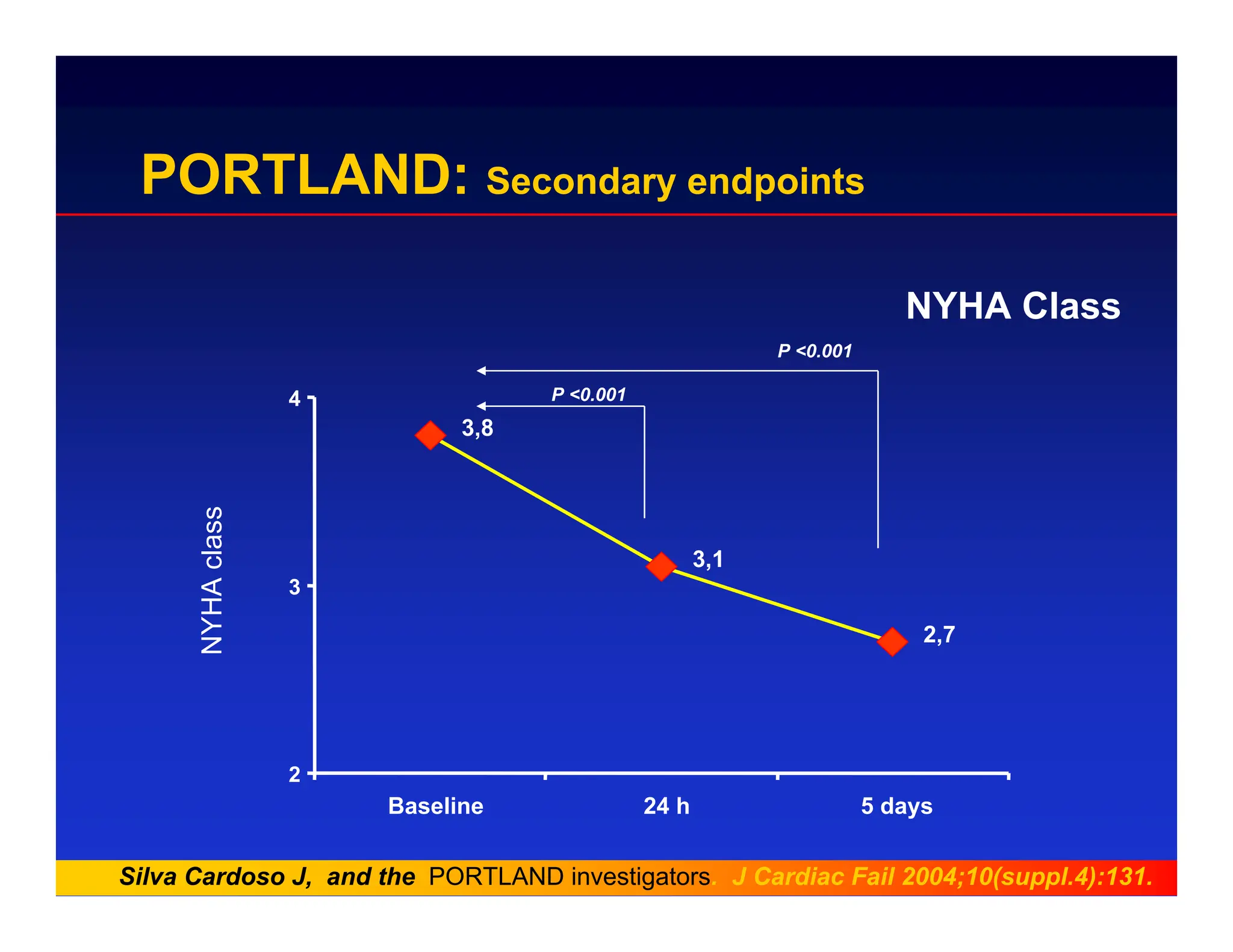
PORTLAND: Secondary endpoints
NYHA Class
NYHA
class
3,8
3,1
2,7
2
3
4
Baseline 24 h 5 days
P <0.001
P <0.001
Silva Cardoso J, and the PORTLAND investigators. J Cardiac Fail 2004;10(suppl.4):131.
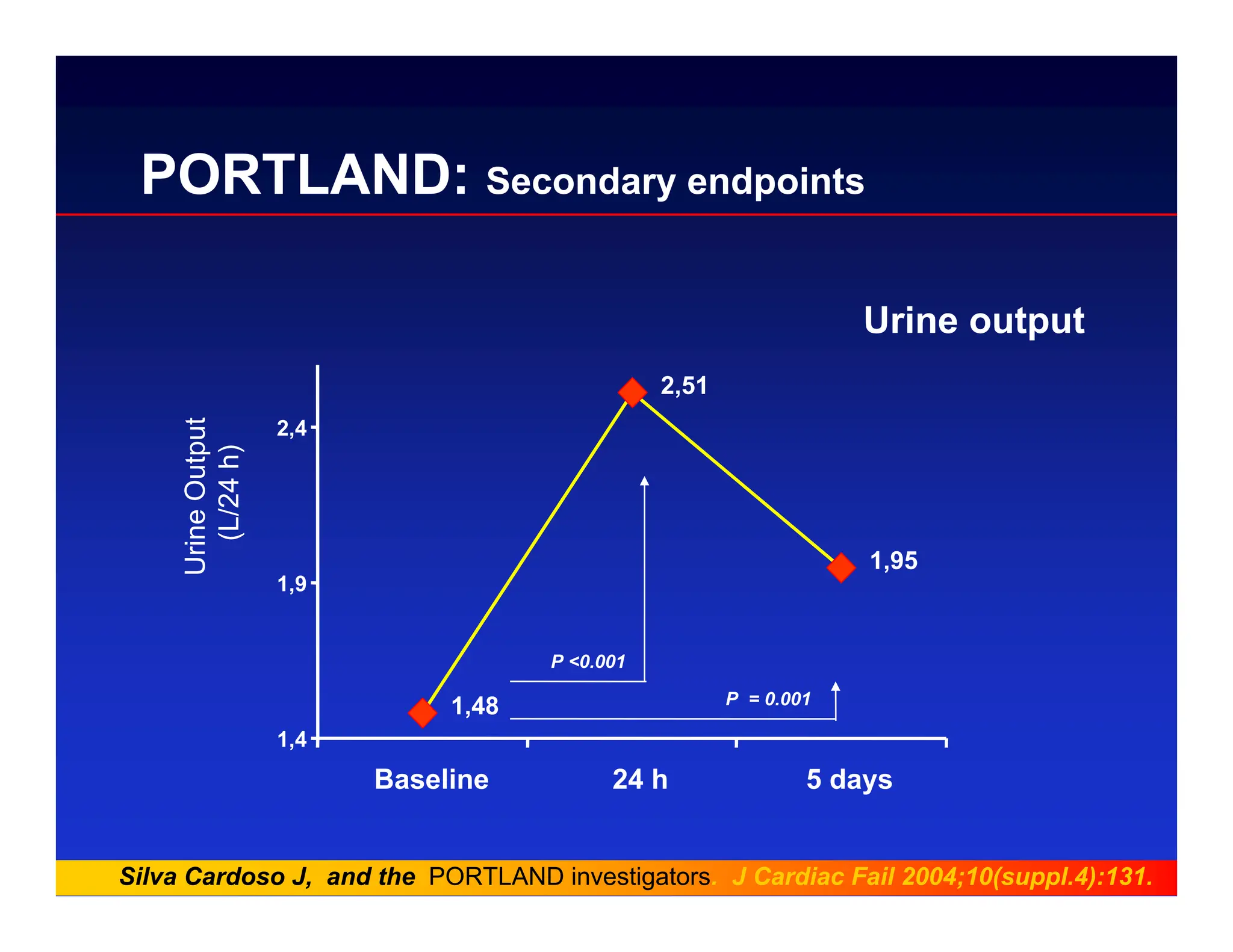
PORTLAND: Secondary endpoints
Urine output
1,48
2,51
1,95
1,4
1,9
2,4
Baseline 24 h 5 days
Urine
Output
(L/24
h)
P <0.001
P = 0.001
Silva Cardoso J, and the PORTLAND investigators. J Cardiac Fail 2004;10(suppl.4):131.
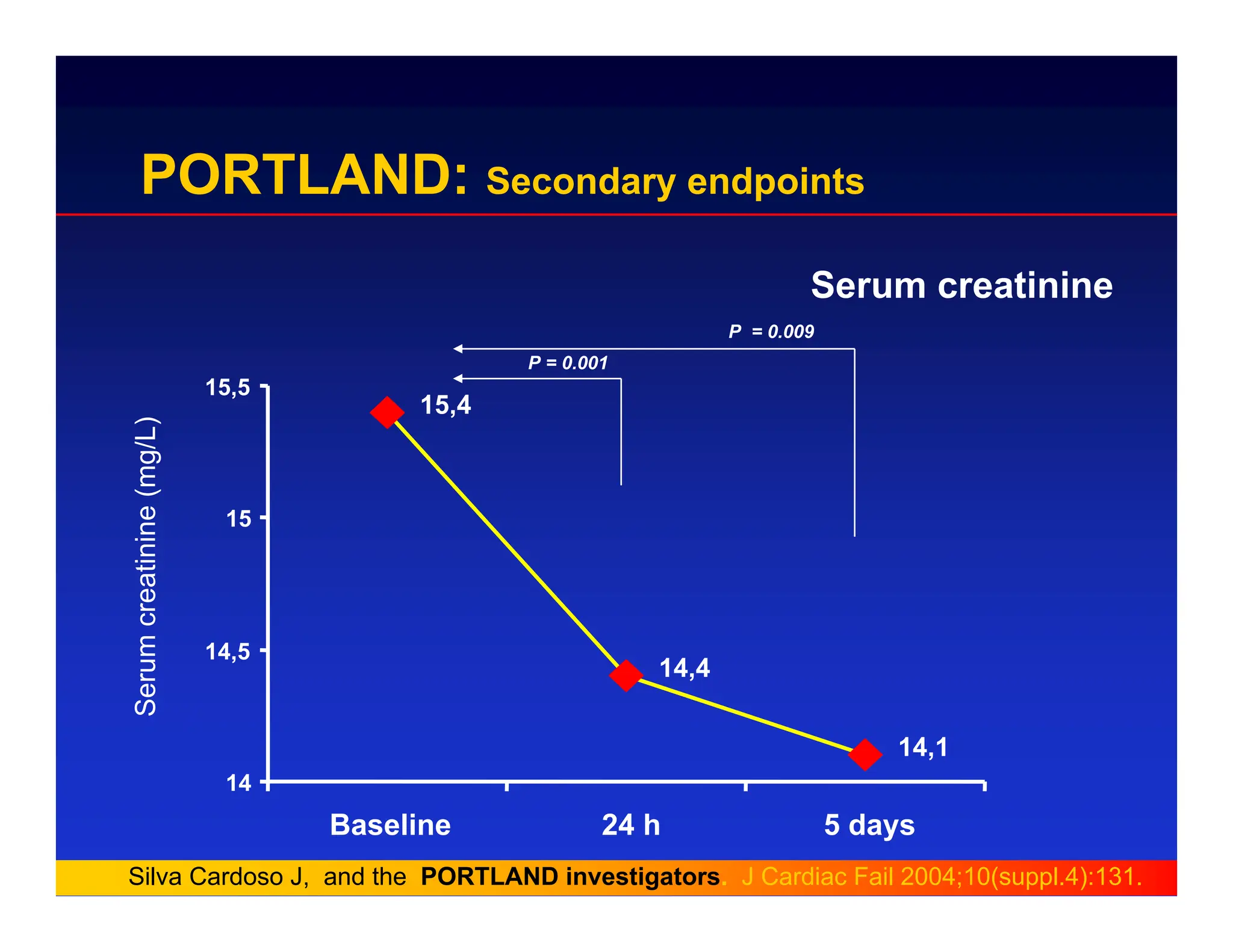
PORTLAND: Secondary endpoints
Serum creatinine
Serum
creatinine
(mg/L)
15,4
14,4
14,1
14
14,5
15
15,5
Baseline 24 h 5 days
P = 0.001
P = 0.009
Silva Cardoso J, and the PORTLAND investigators. J Cardiac Fail 2004;10(suppl.4):131.
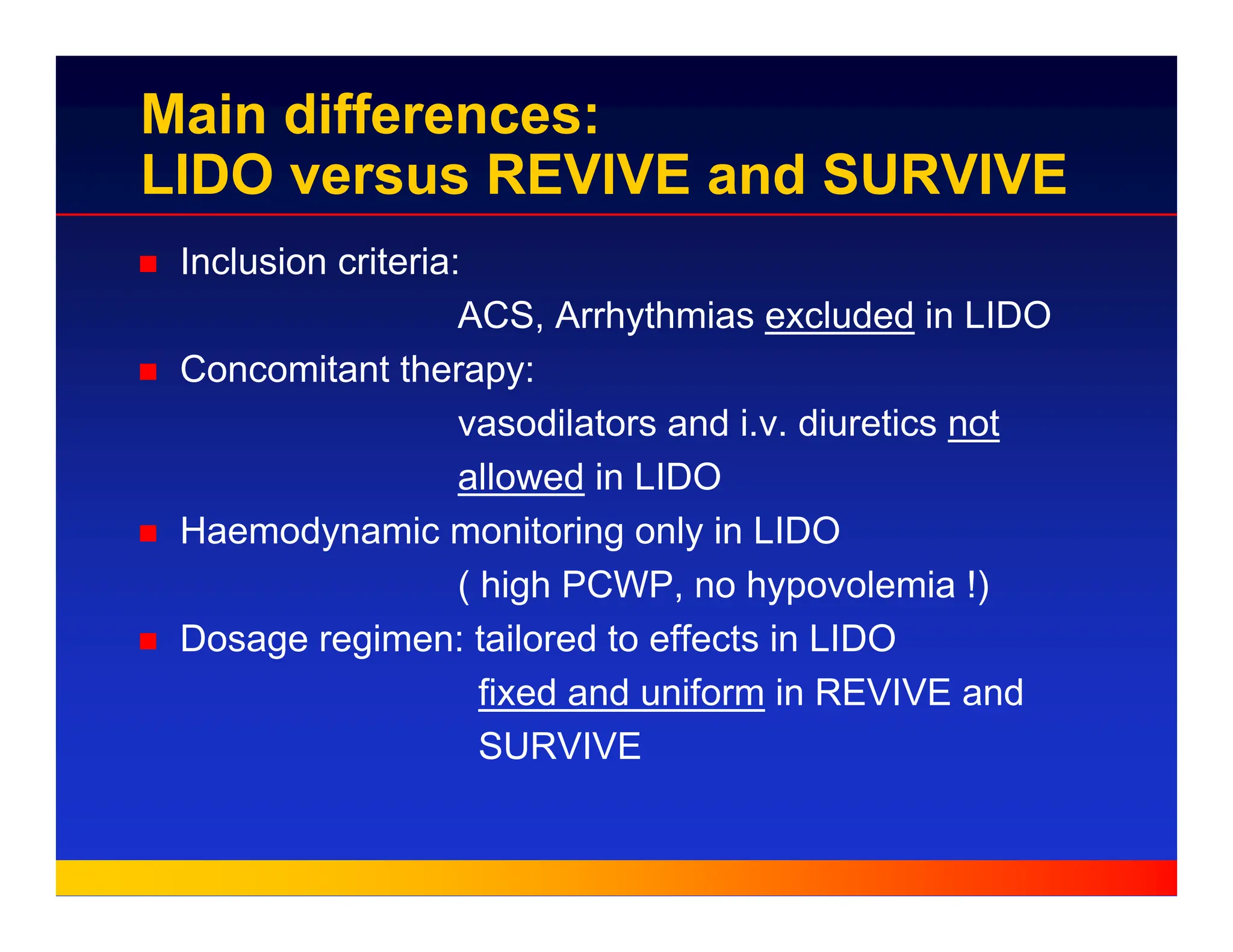
Main differences:
LIDO versus REVIVE and SURVIVE
„ Inclusion criteria:
ACS, Arrhythmias excluded in LIDO
„ Concomitant therapy:
vasodilators and i.v. diuretics not
allowed in LIDO
„ Haemodynamic monitoring only in LIDO
( high PCWP, no hypovolemia !)
„ Dosage regimen: tailored to effects in LIDO
fixed and uniform in REVIVE and
SURVIVE
0.1 µg/kg/min
0.1 µg/kg/min
0.2 µg/kg/min
0.2 µg/kg/min
Placebo + SOC
Levosimendan + SOC
12*
µg/kg
*Patients on concurrent IV inotropes/vasodilators received 6 µg/kg
REVIVE Dosing Scheme:
1 h 5 days
6 h 24 h
Primary assessments
90 days
FU
Inclusion Criteria
ƒ Hospitalized for
worsening heart
failure
ƒ Dyspneic at
screening and
baseline despite IV
diuretics
ƒ EF ≤35%
ƒ Continuous IV
vasoactive/diuretic
therapy doses
unchanged
for ≥2 h
More Patients Improved and Fewer Worsened on
Levosimendan Compared With Placebo
Primary Endpoint (6 h + 24 h + 5 d)
Placebo +
SOC
(n = 301)
Levosimendan
+ SOC
(n = 299)
26.2
15.1
Rescue therapy
0.7
2.7
Global assessment
%
%
0.3
27.2
58.1
14.6
1.7
19.4
61.2
19.4
Death
Worse
Unchanged
Improved
p-value = 0.015
33% more
levosimendan
patients
improved over
the 5 day
treatment period
29% fewer
patients
worsened over
the same time
frame
33%
29%
Placebo Levosimendan
Hypotension 107(36%) !! 147(52%)
Headache 44 88
Ventricular tachycardia 51 72
Cardiac failure 80 ! 67
Atrial fibrillation 6 25 !
Ventricular extrasystoles 6 22
Table shows number of patients with an event
Packer M. Am Heart Association 2005 Scientific Sessions
REVIVE II: Selected Adverse Events
Days Following Randomization
5 14 31 90
REVIVE II
Placebo 1 5 12 35
Levosimendan 5 14 20 45
REVIVE I
Placebo 0 1 4 5
Levosimendan 0 1 1 4
REVIVE I + II
Placebo 1 6 16 40
Levosimendan 5 15 21 49
Effect of Levosimendan
on Mortality
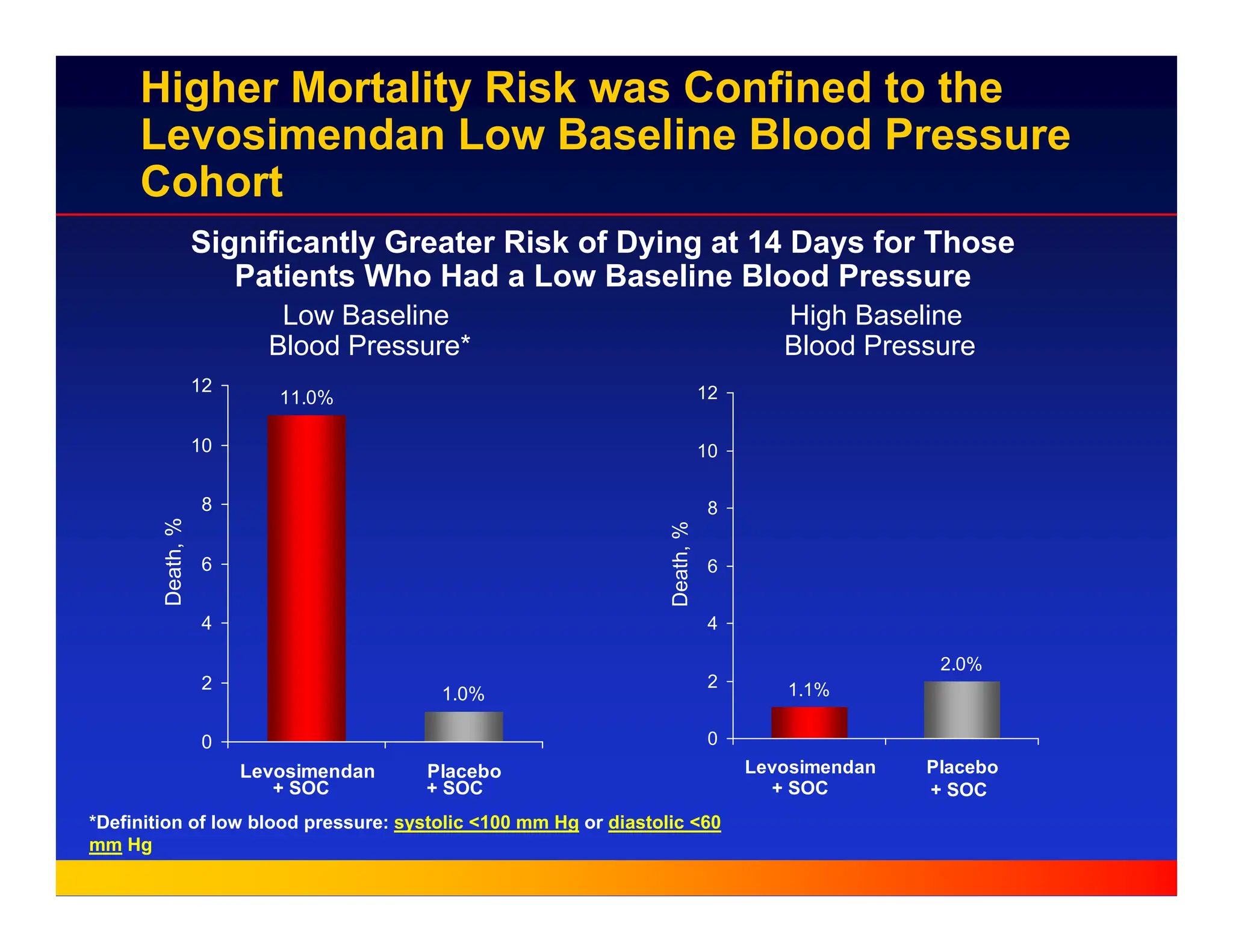
Higher Mortality Risk was Confined to the
Levosimendan Low Baseline Blood Pressure
Cohort
Significantly Greater Risk of Dying at 14 Days for Those
Patients Who Had a Low Baseline Blood Pressure
11.0%
1.0%
0
2
4
6
8
10
12
Levosimendan Placebo
Death,
%
1.1%
2.0%
0
2
4
6
8
10
12
Levosimendan Placebo
Death,
%
Low Baseline
Blood Pressure*
High Baseline
Blood Pressure
*Definition of low blood pressure: systolic <100 mm Hg or diastolic <60
mm Hg
+ SOC + SOC + SOC + SOC
180 Days
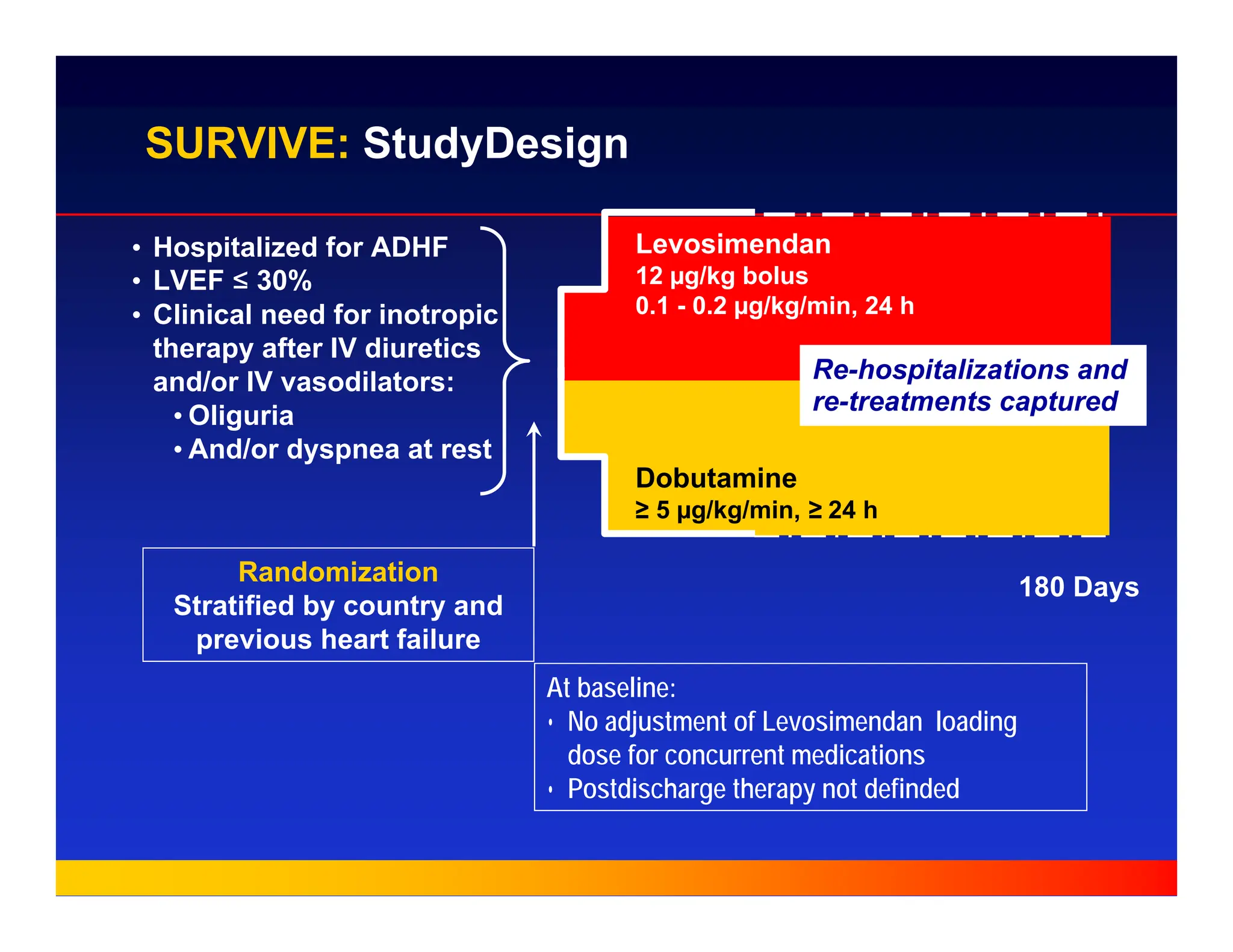
SURVIVE: StudyDesign
Levosimendan
12 µg/kg bolus
0.1 - 0.2 µg/kg/min, 24 h
Dobutamine
≥ 5 µg/kg/min, ≥ 24 h
Randomization
Stratified by country and
previous heart failure
• Hospitalized for ADHF
• LVEF ≤ 30%
• Clinical need for inotropic
therapy after IV diuretics
and/or IV vasodilators:
• Oliguria
• And/or dyspnea at rest
At baseline:
• No adjustment of Levosimendan loading
dose for concurrent medications
• Postdischarge therapy not definded
Re-hospitalizations and
re-treatments captured
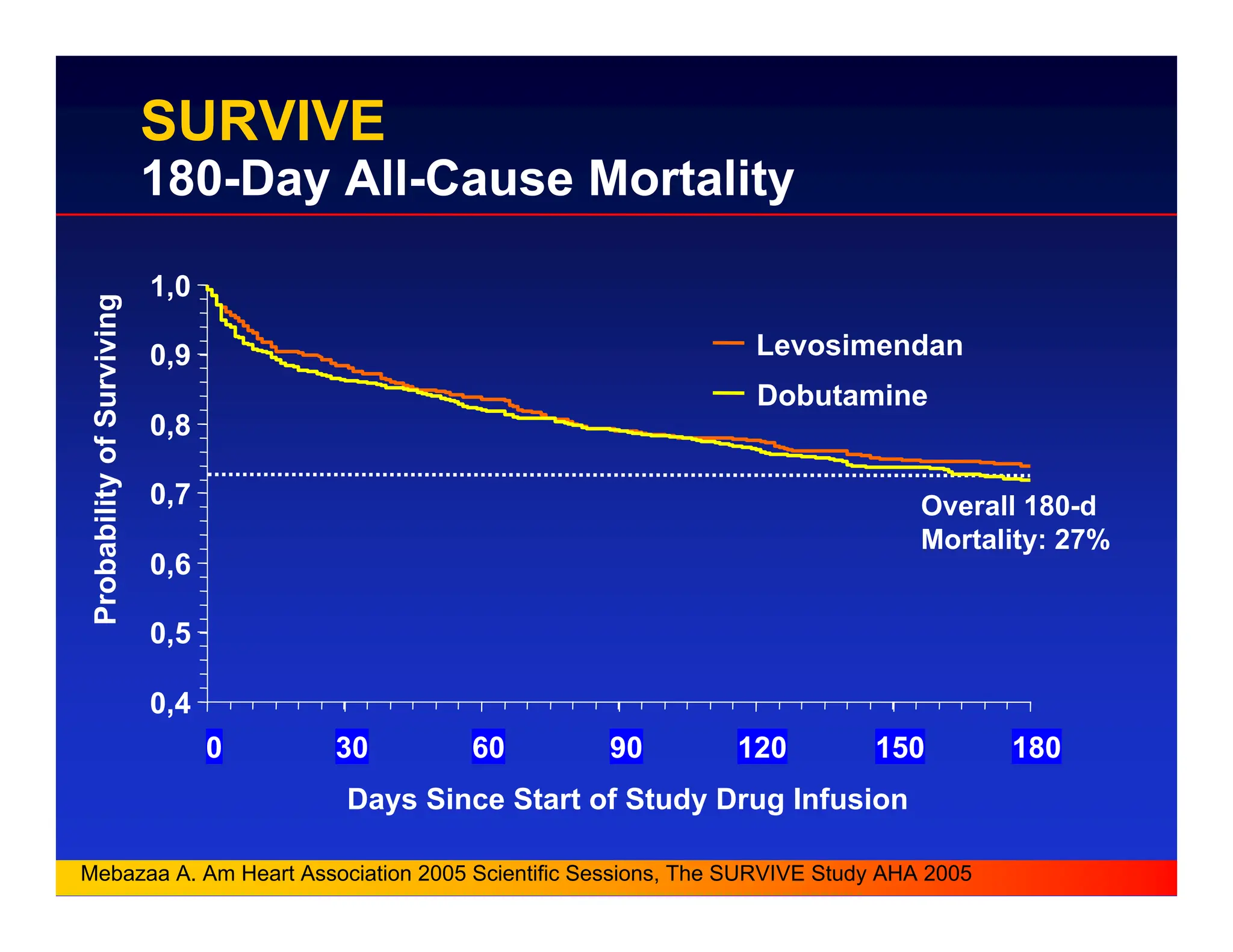
Overall 180-d
Mortality: 27%
0,4
0,5
0,6
0,7
0,8
0,9
1,0
0 30 60 90 120 150 180
Days Since Start of Study Drug Infusion
Probability
of
Surviving
Levosimendan
Dobutamine
Mebazaa A. Am Heart Association 2005 Scientific Sessions, The SURVIVE Study AHA 2005
SURVIVE
180-Day All-Cause Mortality
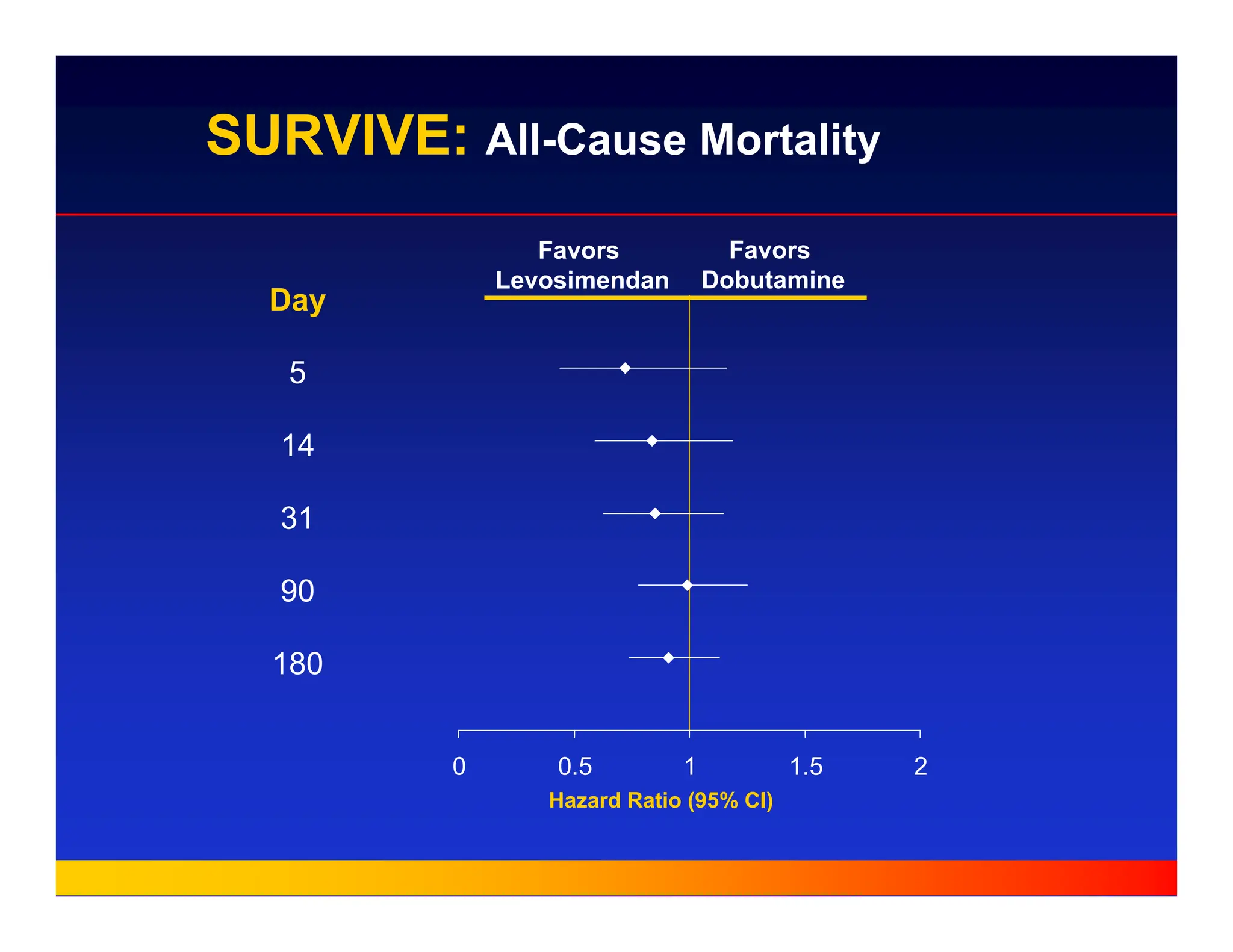
0 0.5 1 1.5 2
Hazard Ratio (95% CI)
Day
5
14
31
90
180
Favors
Dobutamine
SURVIVE: All-Cause Mortality
Favors
Levosimendan
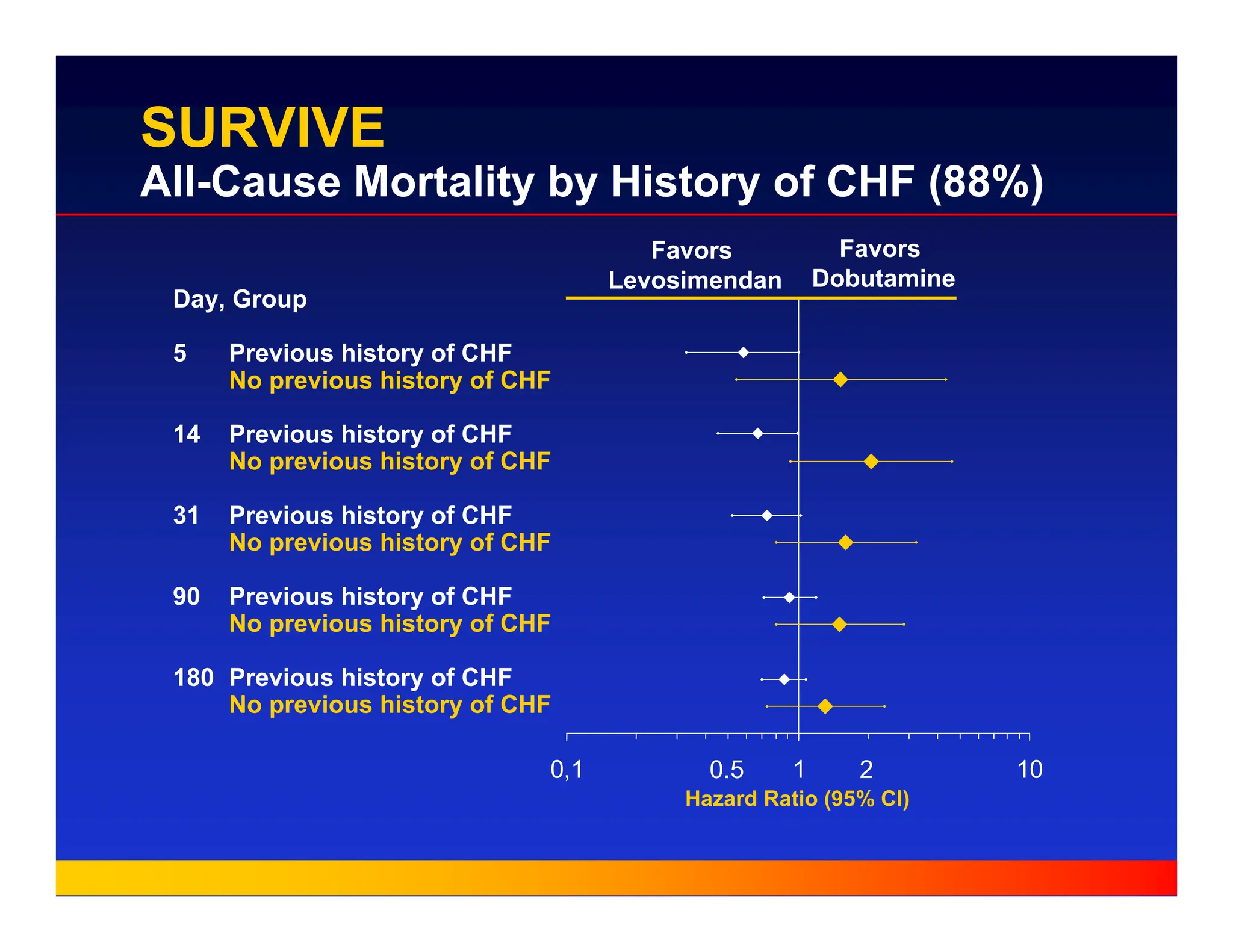
0,1 1 10
Hazard Ratio (95% CI)
Favors
Levosimendan
Favors
Dobutamine
SURVIVE
All-Cause Mortality by History of CHF (88%)
Day, Group
5 Previous history of CHF
No previous history of CHF
14 Previous history of CHF
No previous history of CHF
31 Previous history of CHF
No previous history of CHF
90 Previous history of CHF
No previous history of CHF
180 Previous history of CHF
No previous history of CHF
0.5 2
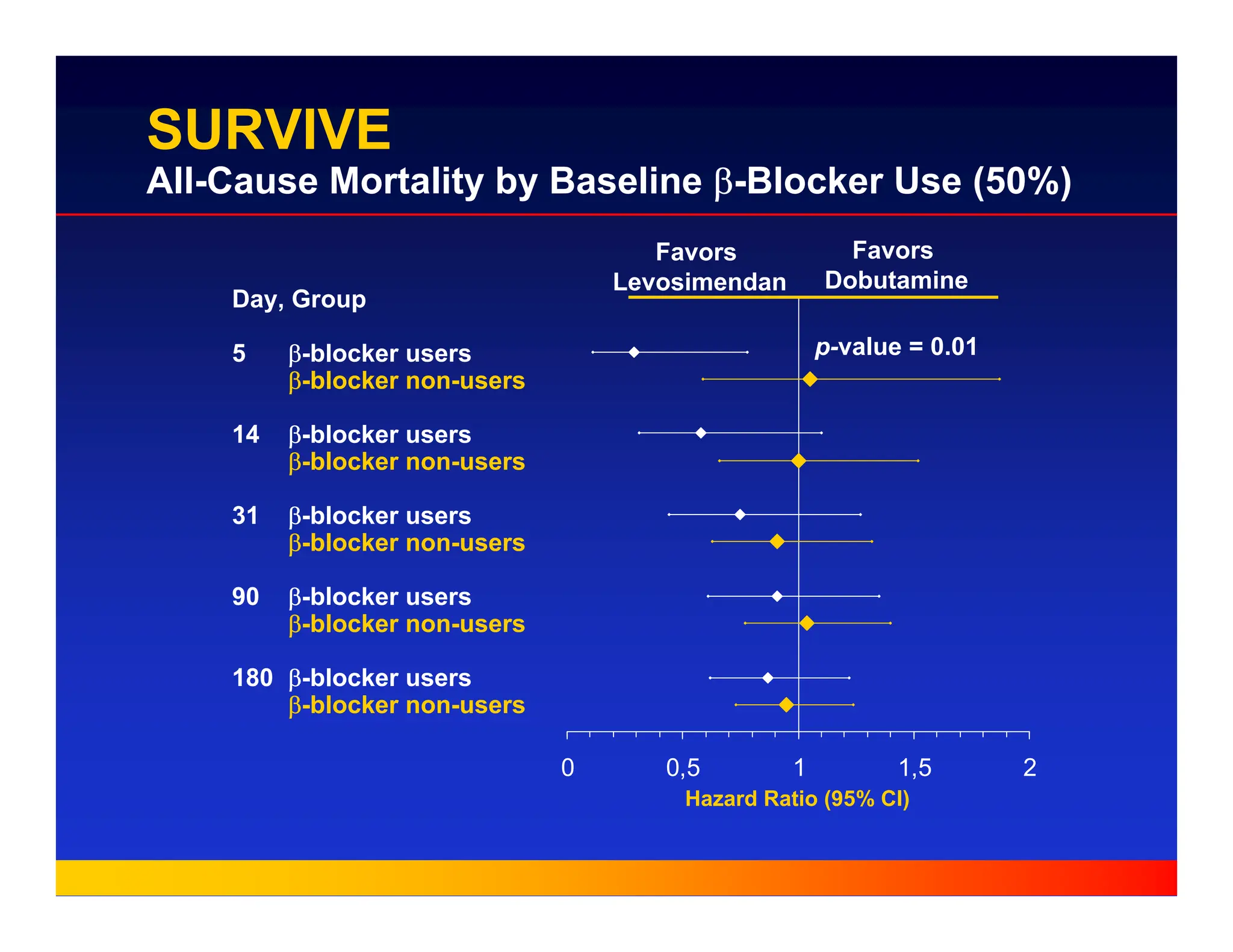
0 0,5 1 1,5 2
Hazard Ratio (95% CI)
Favors
Levosimendan
Day, Group
5 β-blocker users
β-blocker non-users
14 β-blocker users
β-blocker non-users
31 β-blocker users
β-blocker non-users
90 β-blocker users
β-blocker non-users
180 β-blocker users
β-blocker non-users
Favors
Dobutamine
p-value = 0.01
SURVIVE
All-Cause Mortality by Baseline β-Blocker Use (50%)
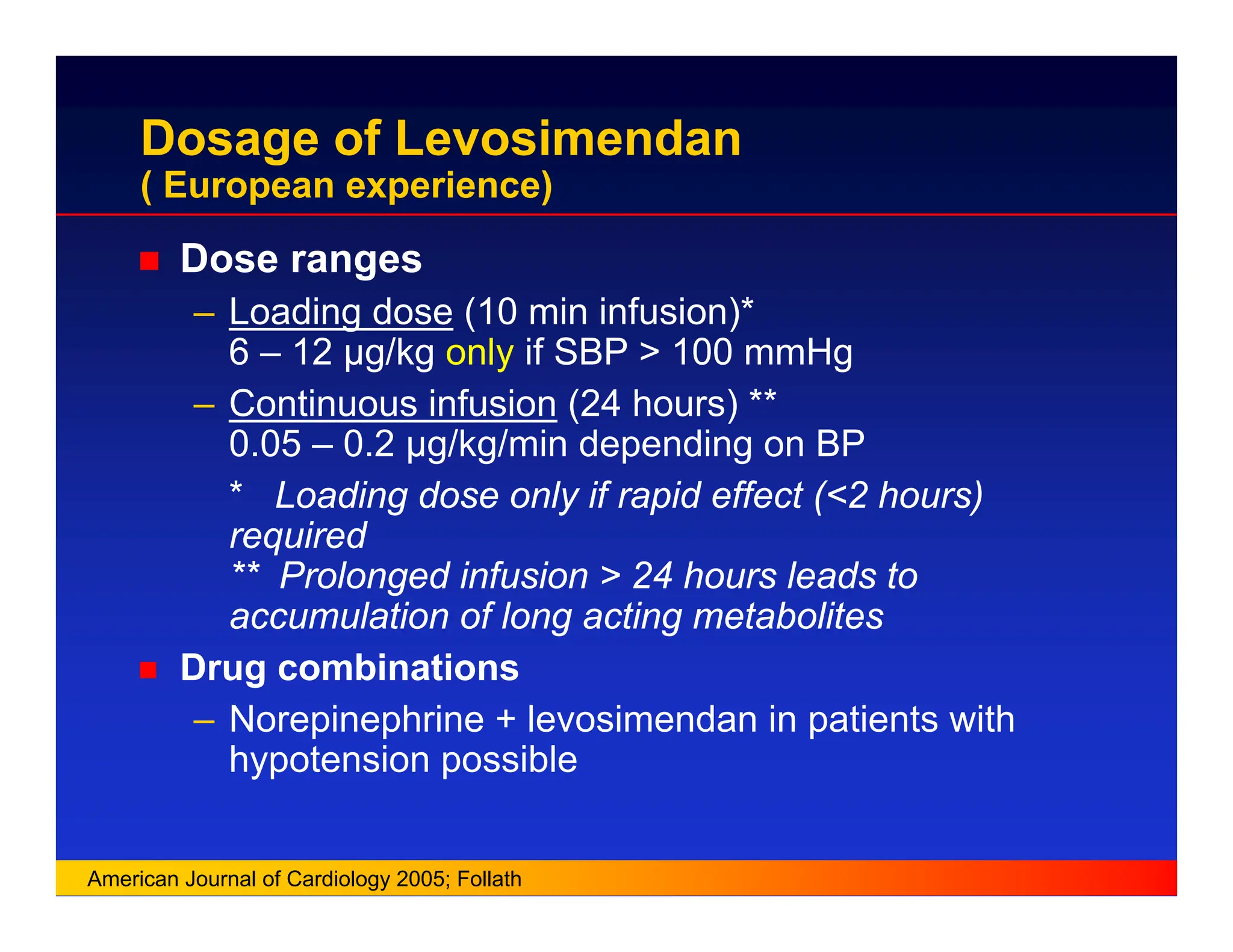
Dosage of Levosimendan
( European experience)
„ Dose ranges
– Loading dose (10 min infusion)*
6 – 12 µg/kg only if SBP > 100 mmHg
– Continuous infusion (24 hours) **
0.05 – 0.2 µg/kg/min depending on BP
* Loading dose only if rapid effect (<2 hours)
required
** Prolonged infusion > 24 hours leads to
accumulation of long acting metabolites
„ Drug combinations
– Norepinephrine + levosimendan in patients with
hypotension possible
American Journal of Cardiology 2005; Follath
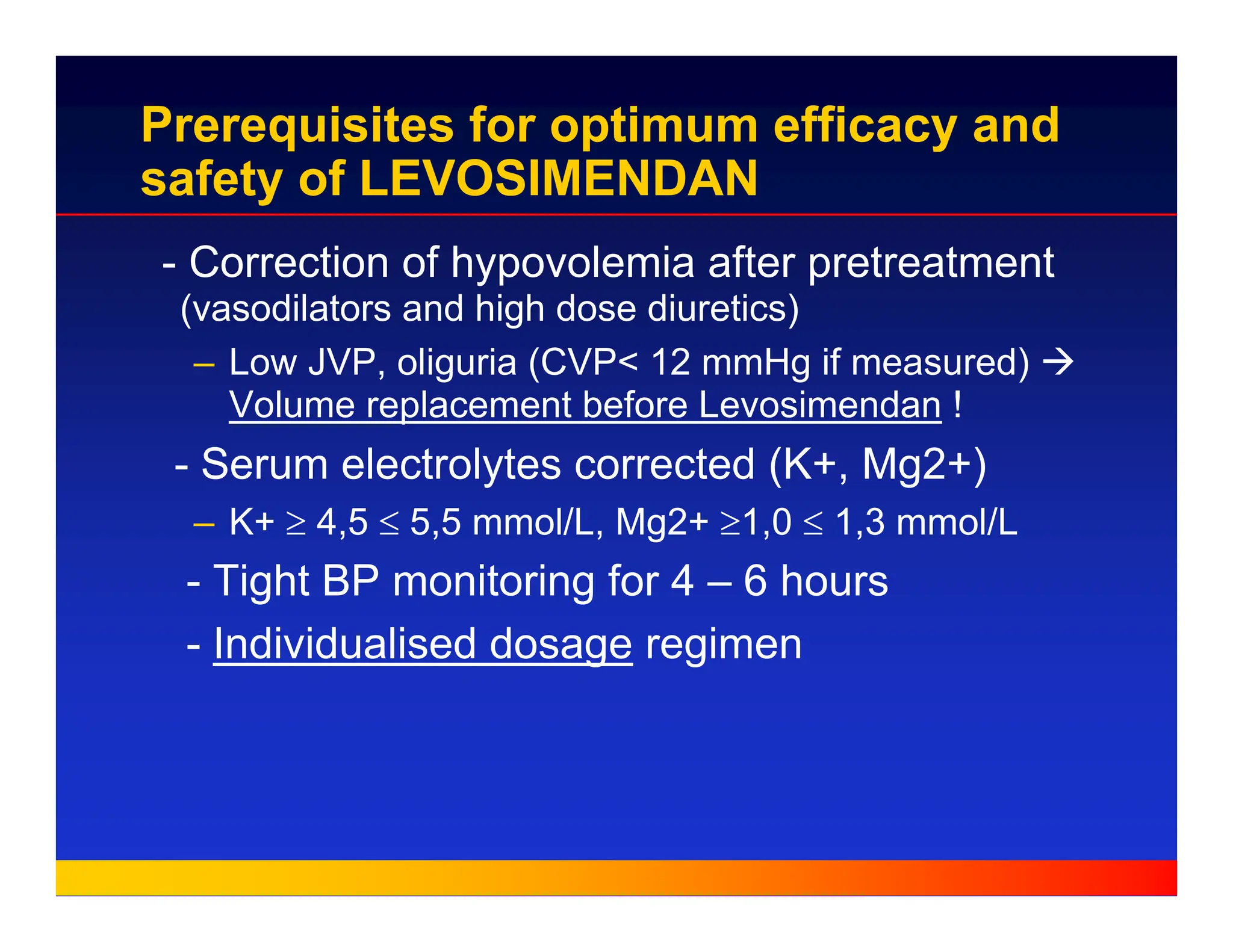
Prerequisites for optimum efficacy and
safety of LEVOSIMENDAN
- Correction of hypovolemia after pretreatment
(vasodilators and high dose diuretics)
– Low JVP, oliguria (CVP< 12 mmHg if measured) Æ
Volume replacement before Levosimendan !
- Serum electrolytes corrected (K+, Mg2+)
– K+ ≥ 4,5 ≤ 5,5 mmol/L, Mg2+ ≥1,0 ≤ 1,3 mmol/L
- Tight BP monitoring for 4 – 6 hours
- Individualised dosage regimen
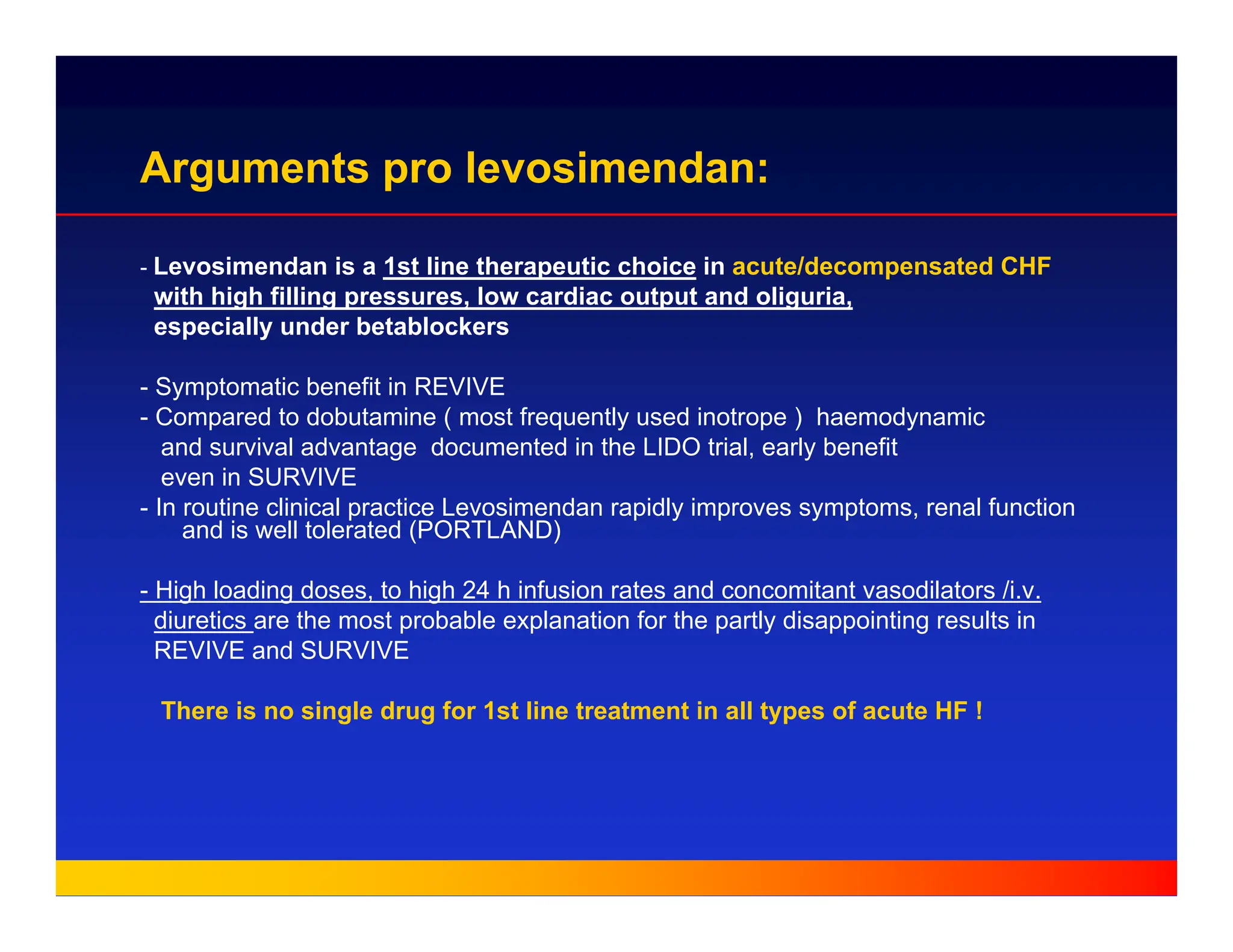
Arguments pro levosimendan:
- Levosimendan is a 1st line therapeutic choice in acute/decompensated CHF
with high filling pressures, low cardiac output and oliguria,
especially under betablockers
- Symptomatic benefit in REVIVE
- Compared to dobutamine ( most frequently used inotrope ) haemodynamic
and survival advantage documented in the LIDO trial, early benefit
even in SURVIVE
- In routine clinical practice Levosimendan rapidly improves symptoms, renal function
and is well tolerated (PORTLAND)
- High loading doses, to high 24 h infusion rates and concomitant vasodilators /i.v.
diuretics are the most probable explanation for the partly disappointing results in
REVIVE and SURVIVE
There is no single drug for 1st line treatment in all types of acute HF !

Follath Heart Failure slides and Heart Failure

  • 1.
    Levosimendan is afirst-line drug in the management of acute heart failure ? or in some types of AHF ? „ Background for the debate ? 1. Introduction of a new drug with a novel mechanism of action ( discrepancy between clinical trial results ) 2. Lack of consensus about the definition and management of AHF 3. Old dogma „ inotropes are bad“ in heart failure ! Arguments PRO F. Follath, Zürich
  • 2.
    Actin Actin Myosin Troponin C Calcium Levosimendan Relaxation Contraction ↑↑Contraction Levosimendan– a calcium sensitiser with a dual mechanism of action „ Increases cardiac contractility without increasing calcium levels or myocardial oxygen demand „ Enhances vasodilation via potassium channel opening Antiischemic and antistunning effect
  • 3.
    EURO HF II:Classification according to type of AHF 3.0 11.3 2.2 10.4 73.0* Decomp. CHF 3.4 11.4 6.8* 26.0* 52.4 RV HF Hyper- tensive HF Cardio- genic shock Pulmo- nary Edema Decom- pensa- ted HF Clinical presentation (%) Type of HF De novo AHF
  • 4.
    European experience with Levosimendan -Well documented haemodynamic efficacy and good tolerance ( LIDO and dose finding studies) ) - Improved survival at 30 and 180 days (LIDO,RUSSLAN) - Post-marketing Studies: PORTLAND - clinical efficacy & no AE in 80% - improved renal function Routine clinical use in several countries ( Sweden, Finland, Austria, Greece, Italy, Portugal , Spain )
  • 5.
    Inclusion Criteria /LIDO „ EF 35% (determined 1 month prior to study) „ CI <2.5 L/m2/min and mean PCWP >15 mmHg Mean(SD) values: C.I. 1.94 (0.36) L/min/m2 PCW 25 (8) mmHg „ Clinical need for i.v. treatment with positive inotropic agents. Patient categories: – Severe chronic HF, clinical condition deteriorating despite optimal oral therapy ( Dobut. 92%, Levo 84%) – Acute HF related to recent onset of cardiac or non-cardiac conditions – Severe HF after cardiac surgery
  • 6.
    Acute /decompensated chronicheart failure ( most frequent AHF class in EURO HF II ) High jugular venous pressure Peripheral vasoconstriction Pulmonary congestion/ edema (high or low BP) Hemodynamic findings: •Low cardiac output (CI < 2.5 L/m2) •High PCWP (>16 mmHg) •High systemic vascular resistance •Low BP → shock (oliguria, MOF)
  • 7.
    Exclusion criteria „ Chestpain at randomisation ( acute CAD) „ VT or VF within previous 2 weeks „ Systolic BP < 85 mmHg „ i.v. beta-adrenergic drugs (< 30 min.) „ i.v. vasodilators (< 2 hours ) „ i.v. milrinone or enoximone (< 12 hours)
  • 8.
    Change (%) inHaemodynamic Variables at 24 Hours 23 -12 16 5 2 29 -26 22 7 -3 -35 -25 -15 -5 5 15 25 35 P=0.048 PCWP SV HR sBP % Dobutamine Levosimendan P=0.26 P=0.22 P=0.002 CO P=0.003
  • 9.
    Effect of β-blockerson CO and PCWP responses ∆ CO (l/min) ∆ PCWP (mmHg) 0 0.5 1.0 1.5 Levosimendan without β-blockers Levosimendan with β-blockers Dobutamine without β-blockers Dobutamine with β-blockers -8 -6 -4 -2 0 Levosimendan Dobutamine p = 0.01 p = 0.03 β− β+ β− β+ β− β+ β− β+
  • 10.
    Hazard ratio 0.57(95% CI 0.34-0.95; p=0.029) 1.00 0.90 0.80 0.70 0.60 Days 0.50 Proportion of patients alive levosimendan dobutamine 120 150 90 30 0 60 180 Kaplan-Meier Curves Showing All-Cause Mortality During 180 Days
  • 11.
    Levosimendan Dobutamine p-value (n=103)(n=100) Cardiac arrhythmia Myocardial ischaemia Hypotension Headache 4 0 9 14 13 7 4 5 0.023 0.013 0.252 0.052 Levosimendan had a better safety profile in LIDO than Dobutamine
  • 12.
    RUSSLAN „ Non-invasive safetystudy „ Heart failure after AMI (clinical & chest x-ray) „ Multi-centre study in Russia and Latvia „ n = 504 ( placebo vs. 4 dose levels of levosimendan )
  • 13.
    Results of PrimaryEndpoint „ No difference in the incidence of ischemia or hypotension between levosimendan and placebo RUSSLAN 0.456 10.8 13.4 P-value Placebo Levosimendan
  • 14.
    Kaplan-Meier Curves Showing All-CauseMortality During 180 Days Time (days) Proportion of patients alive 0 0.6 0.7 0.8 0.9 1.0 50 100 150 180 Hazard ratio 0.67 (95% CI 0.45-1.00; p=0.053) Levosimendan Placebo RUSSLAN
  • 15.
    The PORTLAND STUDY (post marketing survey in Portugal) 1. Decompensated HF 2. LVEF < 0.40 3. Standard drugs (ACEI ± BB ) 4. Need for inotropes Levosimendan 24h infusion Primary endpoint: Clinical efficacy and safety ( no SAE) at 24 h and day 5 Patients and inclusion criteria: n = 127; age= 60±15 yrs; males: 76% Silva-Cardoso et al
  • 16.
    Maintenance dose mcgr/Kg/min Levosimmendan dosage:no LD in 34% 14% 62% 24% 0% 10% 20% 30% 40% 50% 60% 70% 0,05 0,1 0,2 94% completed the 24h-infusion
  • 17.
    PORTLAND: Primary endpoint Patients (%) 80.6% 6.2% 12.6% 0% 30% 60% 90% Improvement& no SAE No change & no SAE Other outcomes 79.5% 13.2% 7.9% 24 hours 5 days Silva Cardoso J, and the PORTLAND investigators. J Cardiac Fail 2004;10(suppl.4):131.
  • 18.
    PORTLAND: Secondary endpoints NYHAClass NYHA class 3,8 3,1 2,7 2 3 4 Baseline 24 h 5 days P <0.001 P <0.001 Silva Cardoso J, and the PORTLAND investigators. J Cardiac Fail 2004;10(suppl.4):131.
  • 19.
    PORTLAND: Secondary endpoints Urineoutput 1,48 2,51 1,95 1,4 1,9 2,4 Baseline 24 h 5 days Urine Output (L/24 h) P <0.001 P = 0.001 Silva Cardoso J, and the PORTLAND investigators. J Cardiac Fail 2004;10(suppl.4):131.
  • 20.
    PORTLAND: Secondary endpoints Serumcreatinine Serum creatinine (mg/L) 15,4 14,4 14,1 14 14,5 15 15,5 Baseline 24 h 5 days P = 0.001 P = 0.009 Silva Cardoso J, and the PORTLAND investigators. J Cardiac Fail 2004;10(suppl.4):131.
  • 21.
    Main differences: LIDO versusREVIVE and SURVIVE „ Inclusion criteria: ACS, Arrhythmias excluded in LIDO „ Concomitant therapy: vasodilators and i.v. diuretics not allowed in LIDO „ Haemodynamic monitoring only in LIDO ( high PCWP, no hypovolemia !) „ Dosage regimen: tailored to effects in LIDO fixed and uniform in REVIVE and SURVIVE
  • 22.
    0.1 µg/kg/min 0.1 µg/kg/min 0.2µg/kg/min 0.2 µg/kg/min Placebo + SOC Levosimendan + SOC 12* µg/kg *Patients on concurrent IV inotropes/vasodilators received 6 µg/kg REVIVE Dosing Scheme: 1 h 5 days 6 h 24 h Primary assessments 90 days FU Inclusion Criteria ƒ Hospitalized for worsening heart failure ƒ Dyspneic at screening and baseline despite IV diuretics ƒ EF ≤35% ƒ Continuous IV vasoactive/diuretic therapy doses unchanged for ≥2 h
  • 23.
    More Patients Improvedand Fewer Worsened on Levosimendan Compared With Placebo Primary Endpoint (6 h + 24 h + 5 d) Placebo + SOC (n = 301) Levosimendan + SOC (n = 299) 26.2 15.1 Rescue therapy 0.7 2.7 Global assessment % % 0.3 27.2 58.1 14.6 1.7 19.4 61.2 19.4 Death Worse Unchanged Improved p-value = 0.015 33% more levosimendan patients improved over the 5 day treatment period 29% fewer patients worsened over the same time frame 33% 29%
  • 24.
    Placebo Levosimendan Hypotension 107(36%)!! 147(52%) Headache 44 88 Ventricular tachycardia 51 72 Cardiac failure 80 ! 67 Atrial fibrillation 6 25 ! Ventricular extrasystoles 6 22 Table shows number of patients with an event Packer M. Am Heart Association 2005 Scientific Sessions REVIVE II: Selected Adverse Events
  • 25.
    Days Following Randomization 514 31 90 REVIVE II Placebo 1 5 12 35 Levosimendan 5 14 20 45 REVIVE I Placebo 0 1 4 5 Levosimendan 0 1 1 4 REVIVE I + II Placebo 1 6 16 40 Levosimendan 5 15 21 49 Effect of Levosimendan on Mortality
  • 26.
    Higher Mortality Riskwas Confined to the Levosimendan Low Baseline Blood Pressure Cohort Significantly Greater Risk of Dying at 14 Days for Those Patients Who Had a Low Baseline Blood Pressure 11.0% 1.0% 0 2 4 6 8 10 12 Levosimendan Placebo Death, % 1.1% 2.0% 0 2 4 6 8 10 12 Levosimendan Placebo Death, % Low Baseline Blood Pressure* High Baseline Blood Pressure *Definition of low blood pressure: systolic <100 mm Hg or diastolic <60 mm Hg + SOC + SOC + SOC + SOC
  • 27.
    180 Days SURVIVE: StudyDesign Levosimendan 12µg/kg bolus 0.1 - 0.2 µg/kg/min, 24 h Dobutamine ≥ 5 µg/kg/min, ≥ 24 h Randomization Stratified by country and previous heart failure • Hospitalized for ADHF • LVEF ≤ 30% • Clinical need for inotropic therapy after IV diuretics and/or IV vasodilators: • Oliguria • And/or dyspnea at rest At baseline: • No adjustment of Levosimendan loading dose for concurrent medications • Postdischarge therapy not definded Re-hospitalizations and re-treatments captured
  • 28.
    Overall 180-d Mortality: 27% 0,4 0,5 0,6 0,7 0,8 0,9 1,0 030 60 90 120 150 180 Days Since Start of Study Drug Infusion Probability of Surviving Levosimendan Dobutamine Mebazaa A. Am Heart Association 2005 Scientific Sessions, The SURVIVE Study AHA 2005 SURVIVE 180-Day All-Cause Mortality
  • 29.
    0 0.5 11.5 2 Hazard Ratio (95% CI) Day 5 14 31 90 180 Favors Dobutamine SURVIVE: All-Cause Mortality Favors Levosimendan
  • 30.
    0,1 1 10 HazardRatio (95% CI) Favors Levosimendan Favors Dobutamine SURVIVE All-Cause Mortality by History of CHF (88%) Day, Group 5 Previous history of CHF No previous history of CHF 14 Previous history of CHF No previous history of CHF 31 Previous history of CHF No previous history of CHF 90 Previous history of CHF No previous history of CHF 180 Previous history of CHF No previous history of CHF 0.5 2
  • 31.
    0 0,5 11,5 2 Hazard Ratio (95% CI) Favors Levosimendan Day, Group 5 β-blocker users β-blocker non-users 14 β-blocker users β-blocker non-users 31 β-blocker users β-blocker non-users 90 β-blocker users β-blocker non-users 180 β-blocker users β-blocker non-users Favors Dobutamine p-value = 0.01 SURVIVE All-Cause Mortality by Baseline β-Blocker Use (50%)
  • 32.
    Dosage of Levosimendan (European experience) „ Dose ranges – Loading dose (10 min infusion)* 6 – 12 µg/kg only if SBP > 100 mmHg – Continuous infusion (24 hours) ** 0.05 – 0.2 µg/kg/min depending on BP * Loading dose only if rapid effect (<2 hours) required ** Prolonged infusion > 24 hours leads to accumulation of long acting metabolites „ Drug combinations – Norepinephrine + levosimendan in patients with hypotension possible American Journal of Cardiology 2005; Follath
  • 33.
    Prerequisites for optimumefficacy and safety of LEVOSIMENDAN - Correction of hypovolemia after pretreatment (vasodilators and high dose diuretics) – Low JVP, oliguria (CVP< 12 mmHg if measured) Æ Volume replacement before Levosimendan ! - Serum electrolytes corrected (K+, Mg2+) – K+ ≥ 4,5 ≤ 5,5 mmol/L, Mg2+ ≥1,0 ≤ 1,3 mmol/L - Tight BP monitoring for 4 – 6 hours - Individualised dosage regimen
  • 34.
    Arguments pro levosimendan: -Levosimendan is a 1st line therapeutic choice in acute/decompensated CHF with high filling pressures, low cardiac output and oliguria, especially under betablockers - Symptomatic benefit in REVIVE - Compared to dobutamine ( most frequently used inotrope ) haemodynamic and survival advantage documented in the LIDO trial, early benefit even in SURVIVE - In routine clinical practice Levosimendan rapidly improves symptoms, renal function and is well tolerated (PORTLAND) - High loading doses, to high 24 h infusion rates and concomitant vasodilators /i.v. diuretics are the most probable explanation for the partly disappointing results in REVIVE and SURVIVE There is no single drug for 1st line treatment in all types of acute HF !