Level GEOGRAPHICAL ASSIGNMENTS ENQUIRIES
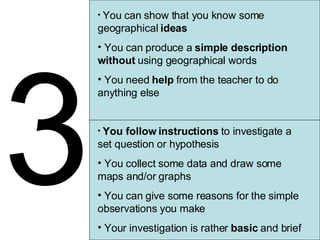
3 You can show that you know some geographical  ideas You can produce a  simple description   without  using geographical words You need  help  from the teacher to do anything else You follow instructions  to investigate a set question or hypothesis You collect some data and draw some maps and/or graphs You can give some reasons for the simple observations you make Your investigation is rather  basic  and brief
4 You can show that  you understand  some geographical ideas You can  describe  things well, with some geographical words included You start to notice that  changes  happen in geographical things, what  causes  these changes and what effects they have You suggest  some possible questions or hypotheses that could be studied You are shown how  to use a range of data collection and presentation techniques. You use a range of  evidence  and language when describing things You are mainly  shown what to do
5 You show that you are able to  explain  geographical ideas using geographical words. You can describe ways people try to  control (manage)  geographical processes. You are starting to  apply  what you know to unfamiliar situations or places  (predict) You identify  good questions or hypotheses You receive  some help  with data collection You select and use  appropriate skills and presentation techniques and select and draw graphs You select and use  evidence to help investigate and write up the project properly using  explanations  and come to  conclusions
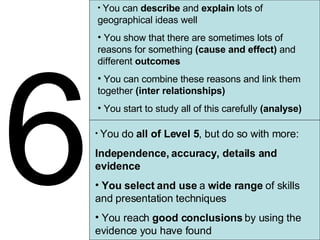
6 You can  describe  and  explain  lots of geographical ideas well You show that there are sometimes lots of reasons for something  (cause and effect)  and different  outcomes You can combine these reasons and link them together  (inter relationships) You start to study all of this carefully  (analyse) You do  all of Level 5 , but do so with more: Independence, accuracy, details and evidence You select and use  a  wide range  of skills and presentation techniques You reach  good conclusions  by using the evidence you have found
7 You can do  all of Level 6 , but with lots of  detail  and to a  good standard You begin to  analyse carefully You can start to add  weight  to each reason, opinion or judgement made about an issue  (evaluate) You can do  all of Level 6  with lots of  detail  and to a very good standard You begin to  analyse very carefully You can weigh up the  strength  of each  reason, opinion or judgement  made about an issue  (evaluate)
8 You can do  all of Level 7  with  no help  from your teacher and to an excellent standard You start to notice and offer explanation for things that do not fit the expected pattern  (anomalies) You show that you understand that geographical things are often  linked in lots of ways (interactions) You can do  all of Level 7  with  no help  and to an excellent standard You start to notice and explain things that do not fit the rule  (anomalies) You show that you understand that geographical things are often  linked in lots of ways (interactions)

Levels

  • 1.
  • 2.
    3 You canshow that you know some geographical ideas You can produce a simple description without using geographical words You need help from the teacher to do anything else You follow instructions to investigate a set question or hypothesis You collect some data and draw some maps and/or graphs You can give some reasons for the simple observations you make Your investigation is rather basic and brief
  • 3.
    4 You canshow that you understand some geographical ideas You can describe things well, with some geographical words included You start to notice that changes happen in geographical things, what causes these changes and what effects they have You suggest some possible questions or hypotheses that could be studied You are shown how to use a range of data collection and presentation techniques. You use a range of evidence and language when describing things You are mainly shown what to do
  • 4.
    5 You showthat you are able to explain geographical ideas using geographical words. You can describe ways people try to control (manage) geographical processes. You are starting to apply what you know to unfamiliar situations or places (predict) You identify good questions or hypotheses You receive some help with data collection You select and use appropriate skills and presentation techniques and select and draw graphs You select and use evidence to help investigate and write up the project properly using explanations and come to conclusions
  • 5.
    6 You can describe and explain lots of geographical ideas well You show that there are sometimes lots of reasons for something (cause and effect) and different outcomes You can combine these reasons and link them together (inter relationships) You start to study all of this carefully (analyse) You do all of Level 5 , but do so with more: Independence, accuracy, details and evidence You select and use a wide range of skills and presentation techniques You reach good conclusions by using the evidence you have found
  • 6.
    7 You cando all of Level 6 , but with lots of detail and to a good standard You begin to analyse carefully You can start to add weight to each reason, opinion or judgement made about an issue (evaluate) You can do all of Level 6 with lots of detail and to a very good standard You begin to analyse very carefully You can weigh up the strength of each reason, opinion or judgement made about an issue (evaluate)
  • 7.
    8 You cando all of Level 7 with no help from your teacher and to an excellent standard You start to notice and offer explanation for things that do not fit the expected pattern (anomalies) You show that you understand that geographical things are often linked in lots of ways (interactions) You can do all of Level 7 with no help and to an excellent standard You start to notice and explain things that do not fit the rule (anomalies) You show that you understand that geographical things are often linked in lots of ways (interactions)