Agriculture and Forestry: Their Potential to Mitigate Climate Change at a Global Scale Sara J. Scherr, Ecoagriculture Partners Land Use Carbon & Poverty Reduction: Challenges & Opportunities Washington, DC, March 13, 2009
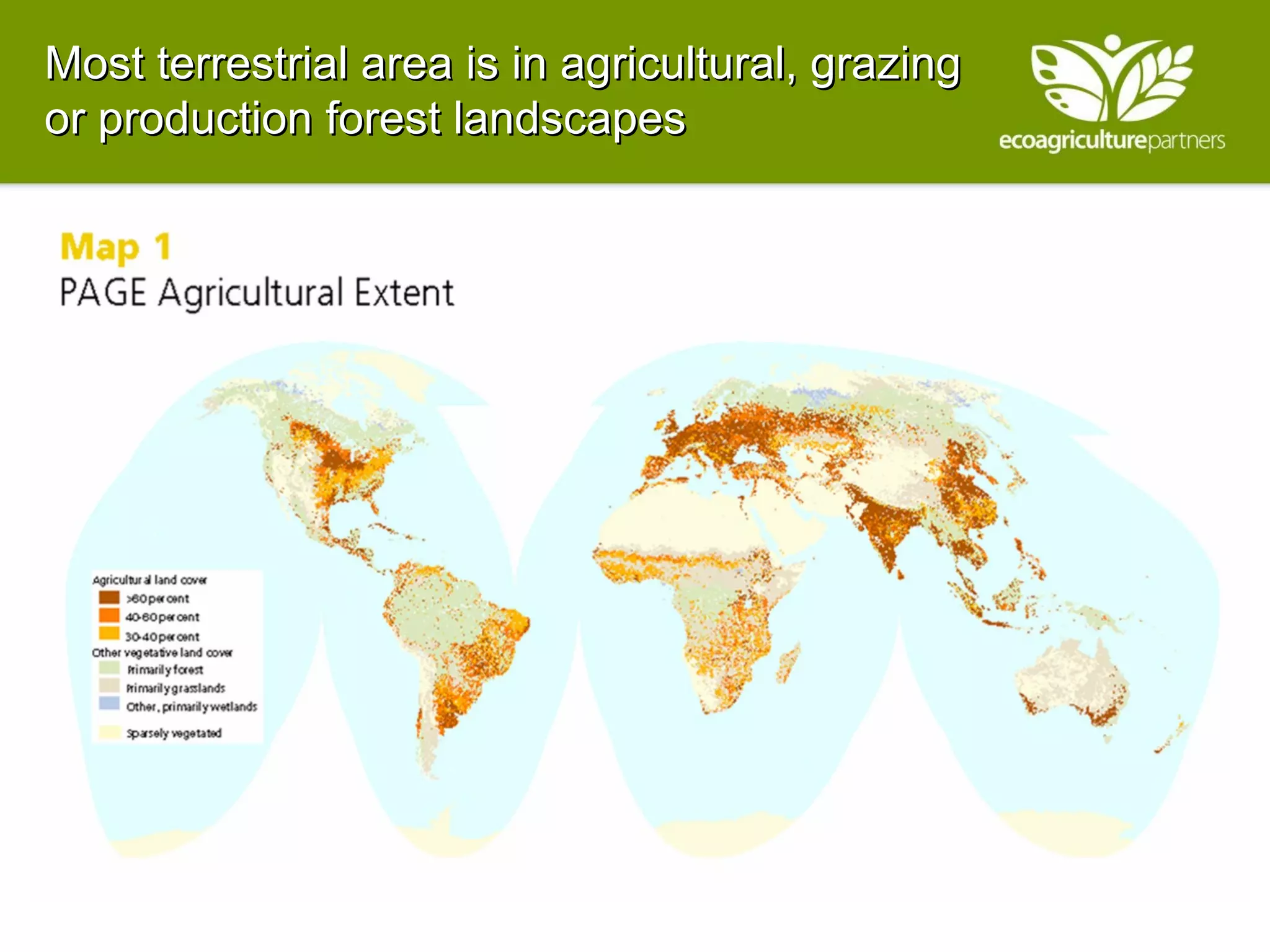
Most terrestrial area is in agricultural, grazing or production forest landscapes
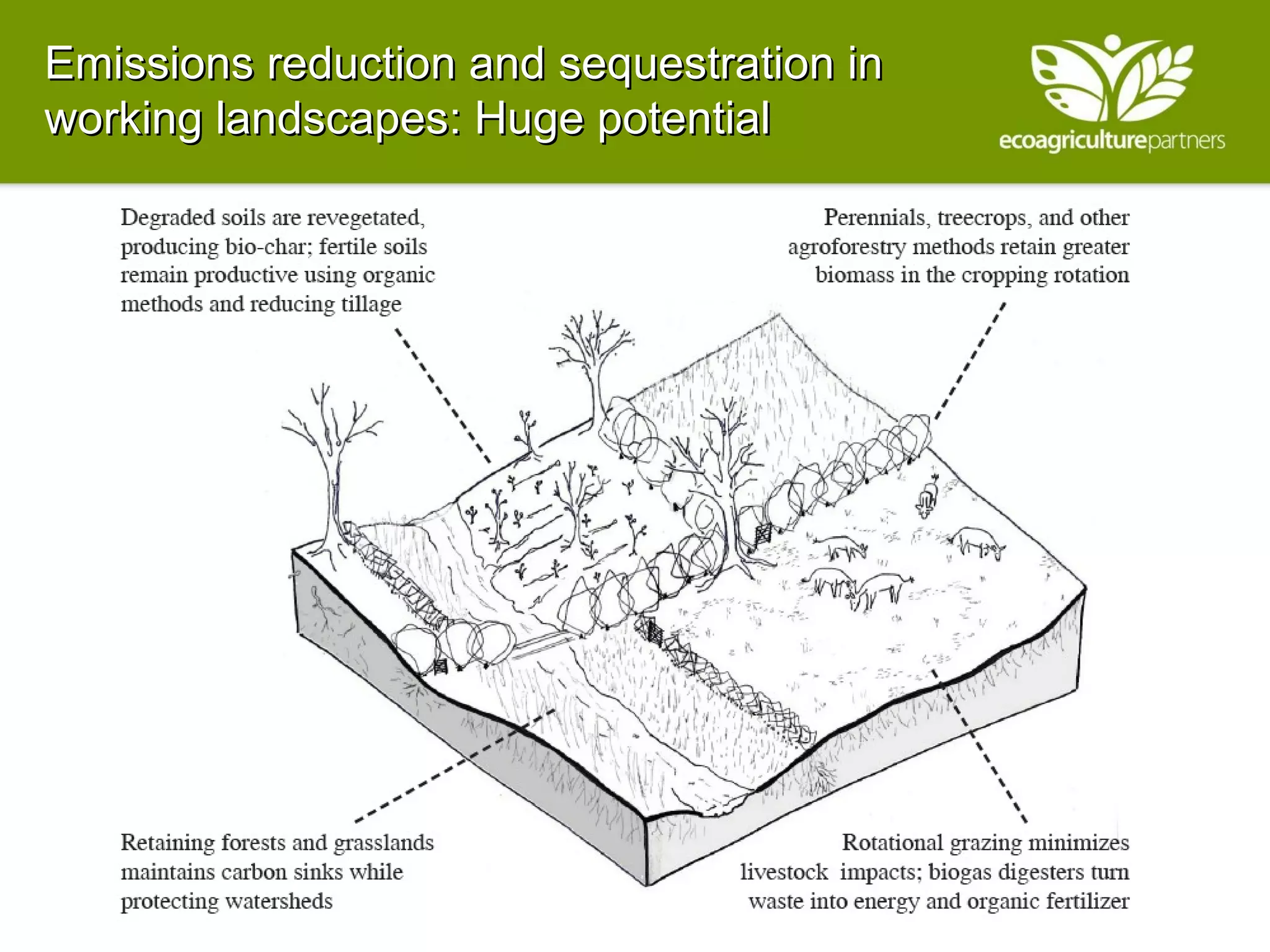
Emissions reduction and sequestration in working landscapes: Huge potential
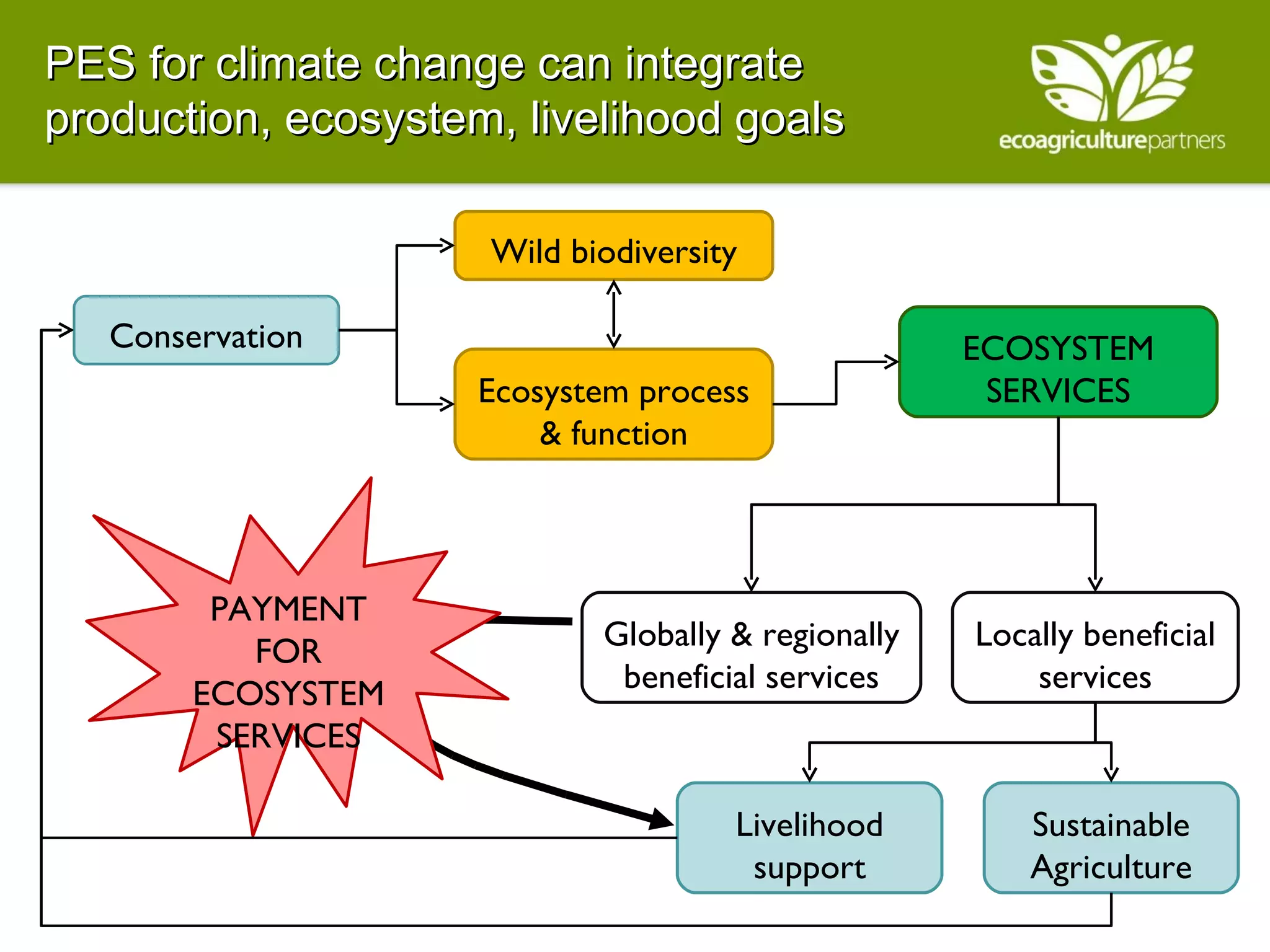
PES for climate change can integrate production, ecosystem, livelihood goals Conservation Ecosystem process & function Wild biodiversity ECOSYSTEM SERVICES Locally beneficial services Globally & regionally beneficial services Sustainable Agriculture Livelihood support PAYMENT FOR ECOSYSTEM SERVICES
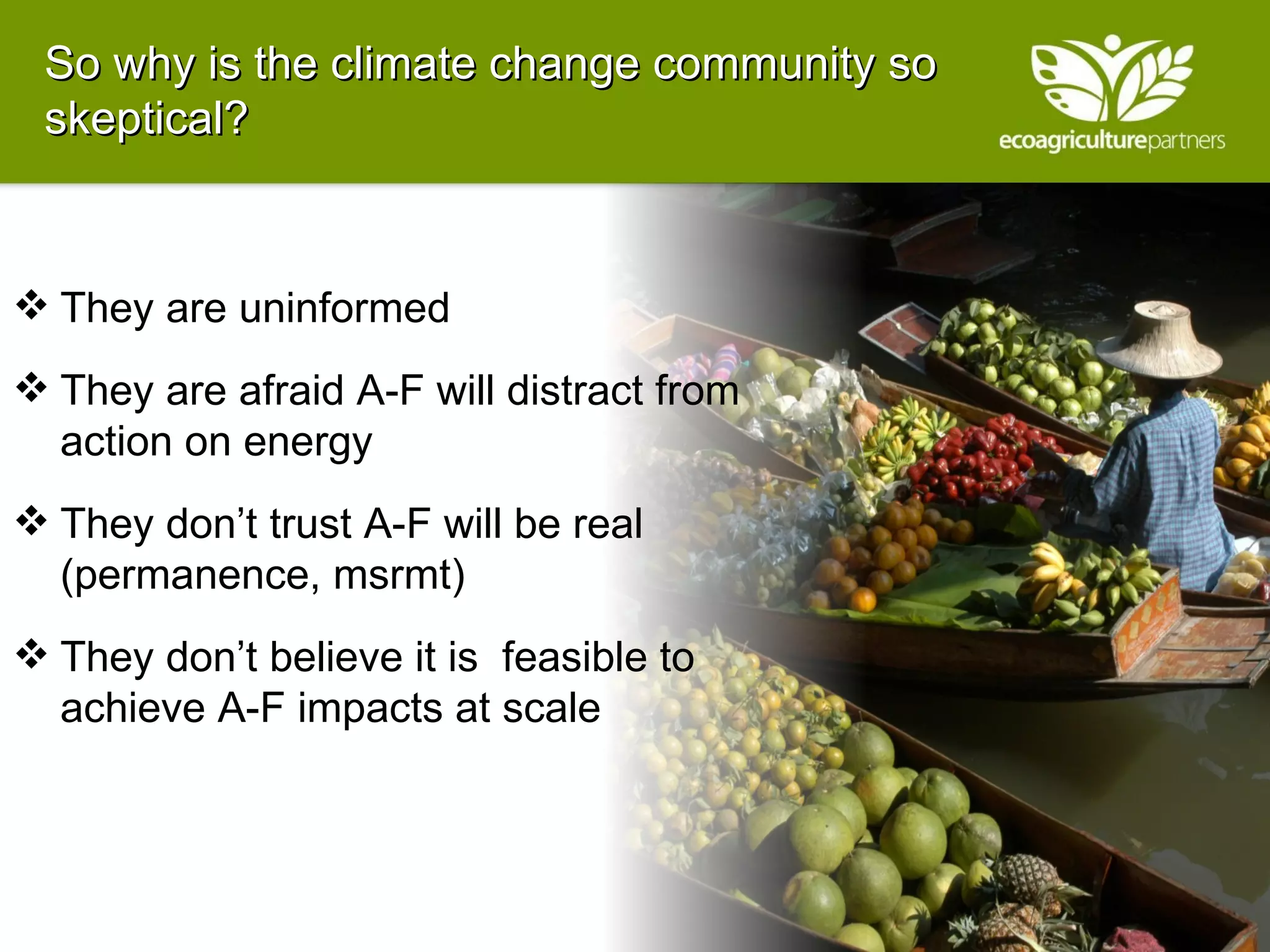
So why is the climate change community so skeptical?  They are uninformed They are afraid A-F will distract from action on energy They don’t trust A-F will be real (permanence, msrmt) They don’t believe it is  feasible to achieve A-F impacts at scale
Challenge 1: Can we mobilize A-F at a  large enough scale to make a difference  for the climate?  Perception of agriculture and forestry as  lagging sectors with weak institutions Climate action to date has focused on small projects, thus few models Smallholders assumed to = small scale Perception of low economies of scale due to site-specificity/diversity of solutions Focus on achieving high impacts per hectare, rather than high total impacts Political reluctance to set climate standards or regulations for agricultural sector
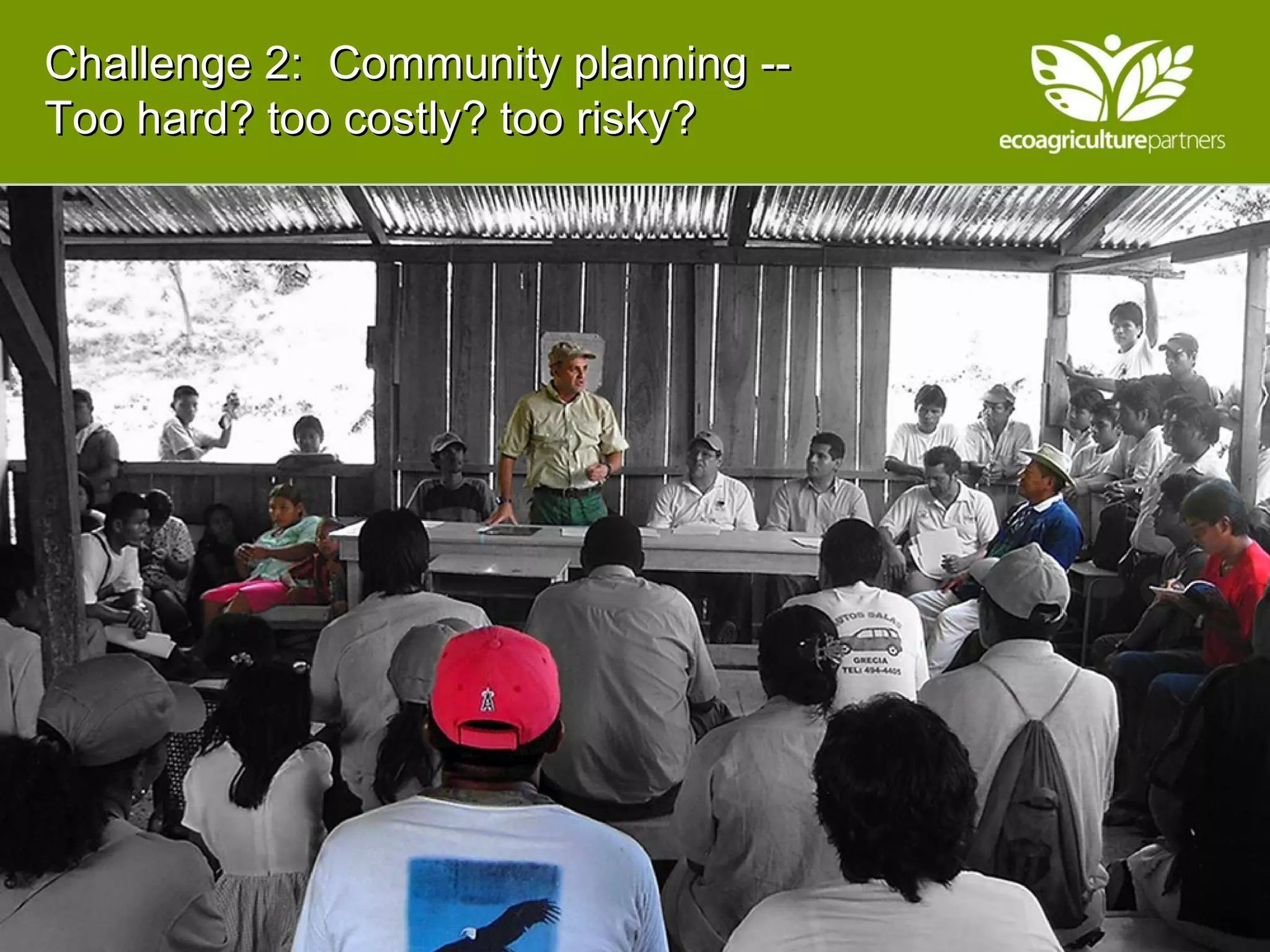
Challenge 2:  Community planning -- Too hard? too costly? too risky?
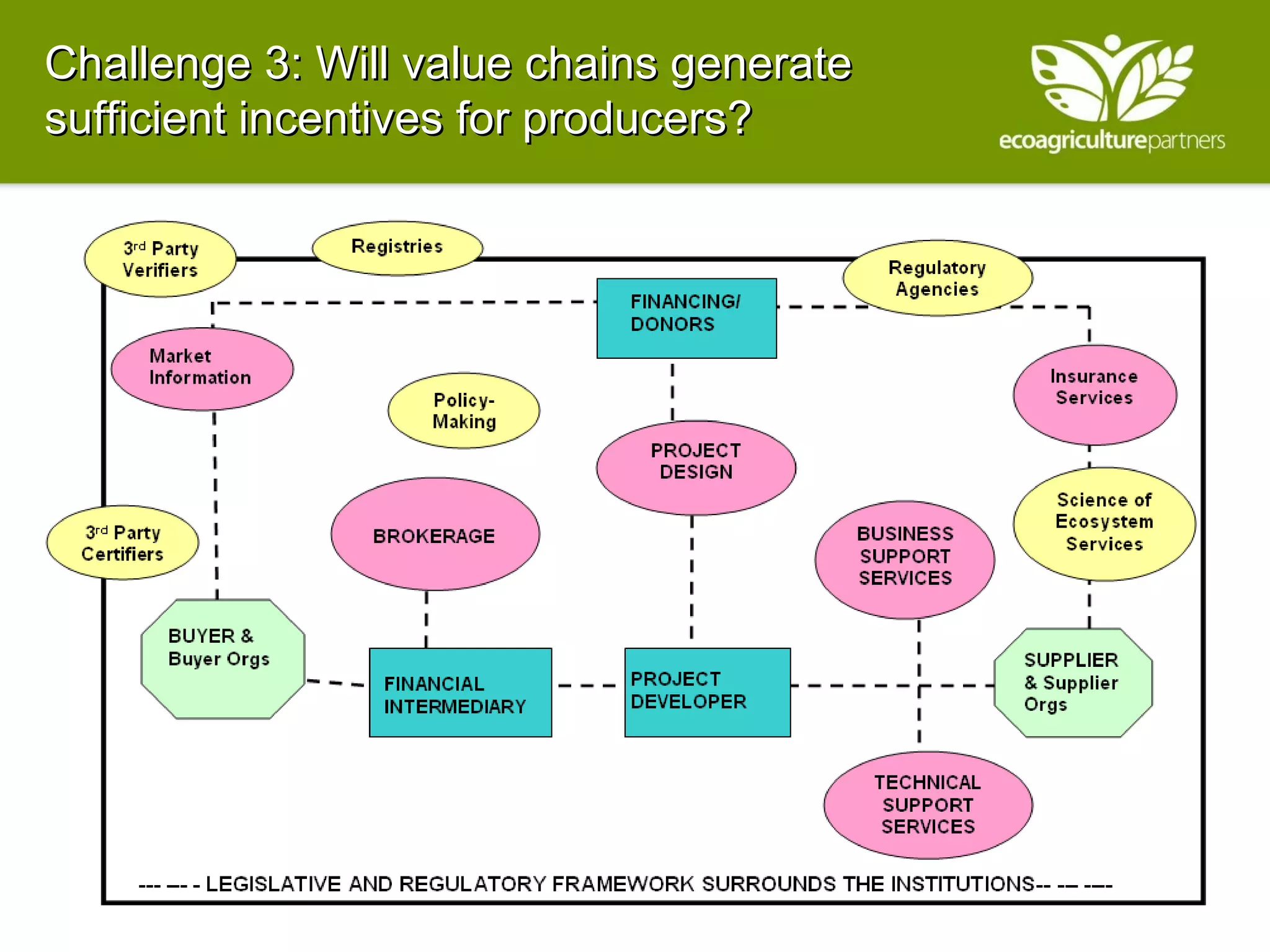
Challenge 3: Will value chains generate sufficient incentives for producers?
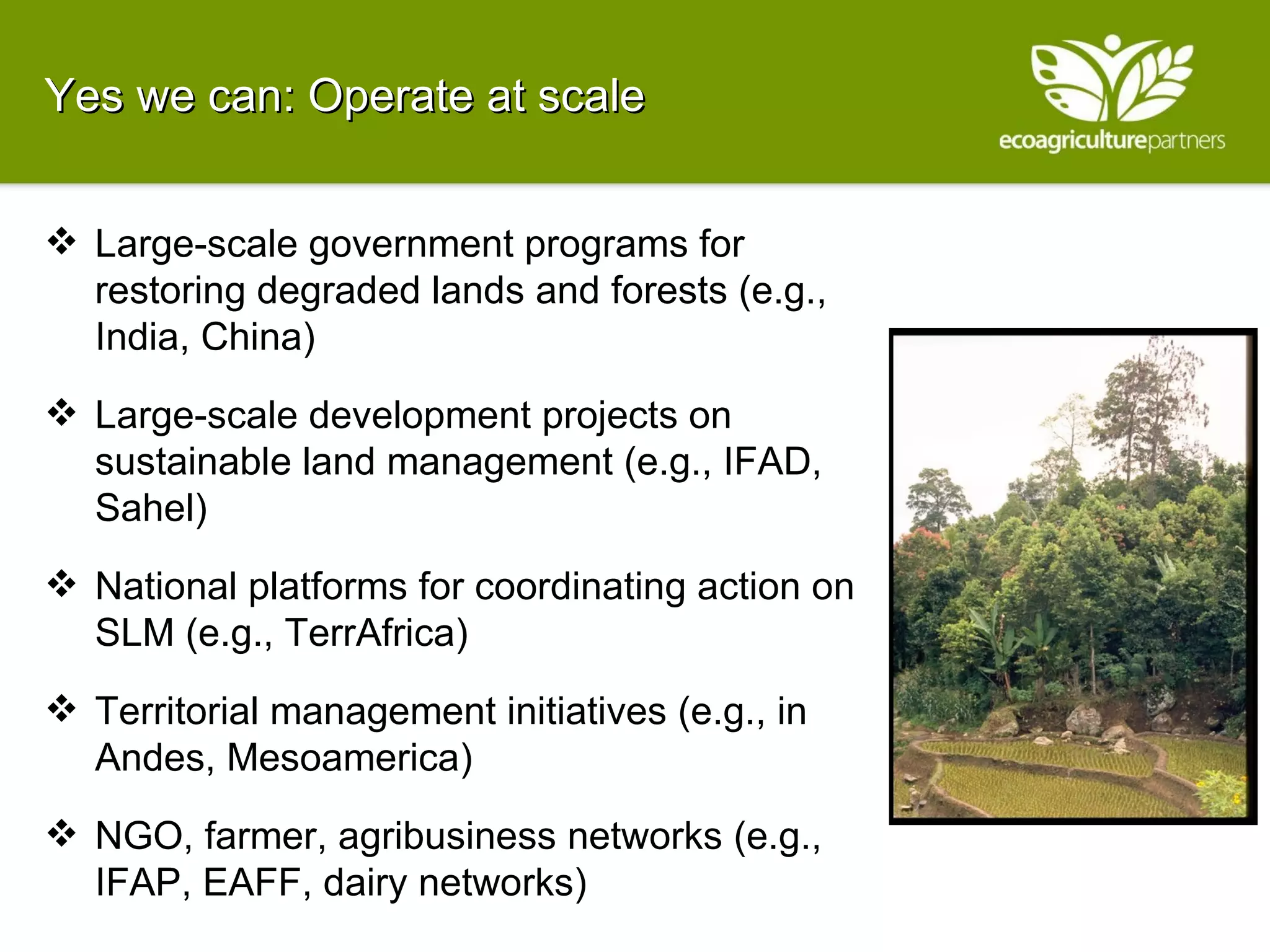
Yes we can: Operate at scale  Large-scale government programs for restoring degraded lands and forests (e.g., India, China) Large-scale development projects on sustainable land management (e.g., IFAD, Sahel) National platforms for coordinating action on SLM (e.g., TerrAfrica) Territorial management initiatives (e.g., in Andes, Mesoamerica) NGO, farmer, agribusiness networks (e.g., IFAP, EAFF, dairy networks)
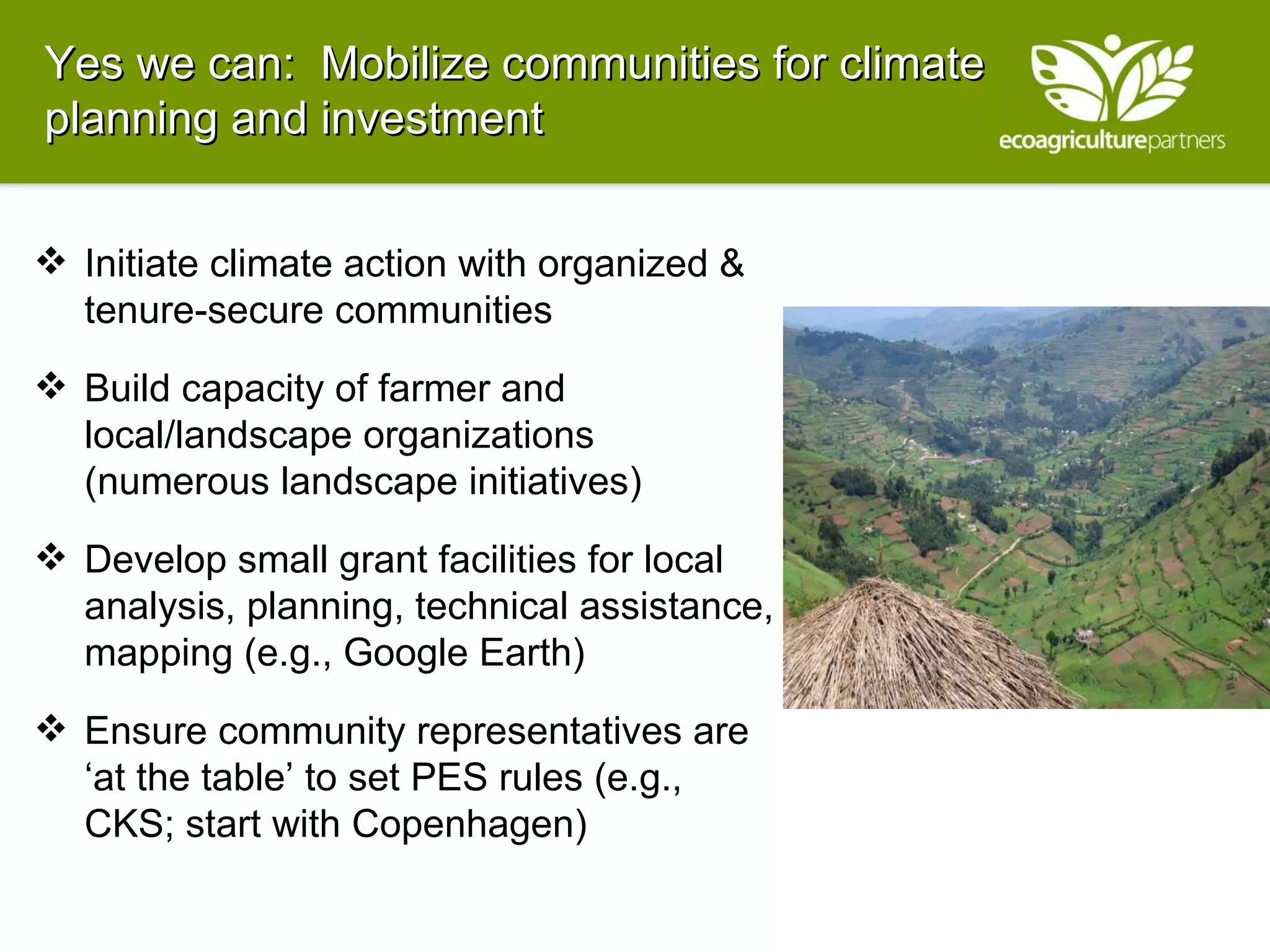
Yes we can:  Mobilize communities for climate planning and investment Initiate climate action with organized & tenure-secure communities Build capacity of farmer and local/landscape organizations (numerous landscape initiatives) Develop small grant facilities for local analysis, planning, technical assistance, mapping (e.g., Google Earth) Ensure community representatives are ‘at the table’ to set PES rules (e.g., CKS; start with Copenhagen)
Yes we can: Build efficient value chains for climate payments to farmers Institutionalize intermediary & bundling services, accountable to farmer clients (e.g., build on farmer coop models) Establish livelihood-focused Carbon Funds (e.g., Food Security Carbon Fund) Utilize landscape-scale planning and monitoring tools (e.g.  www.landscapemeasures.org ) “ Bundle” agricultural products with climate regulation services Incorporate into outgrower schemes (numerous models)
Building support for full inclusion of agriculture & forestry in climate action Building a rigorous case for the potential to scale Document existing programs that can be scaled Document landscape-wide GHG emissions/storage in diverse landscapes Calculate impacts of landscape-wide action Devise concrete strategies for action at scale Pilot country plans where major co-benefits identified for ‘re-carbonizing’ or protecting standing carbon in landscapes Integrate climate action in major agricultural investment programs of donors & development banks Mobilize voluntary carbon market to pilot and document diverse strategies
Thank you… www.ecoagriculture.org

Scherr, Scaling Up Carbon Trading In Land Use 3 09

  • 1.
    Agriculture and Forestry:Their Potential to Mitigate Climate Change at a Global Scale Sara J. Scherr, Ecoagriculture Partners Land Use Carbon & Poverty Reduction: Challenges & Opportunities Washington, DC, March 13, 2009
  • 2.
    Most terrestrial areais in agricultural, grazing or production forest landscapes
  • 3.
    Emissions reduction andsequestration in working landscapes: Huge potential
  • 4.
    PES for climatechange can integrate production, ecosystem, livelihood goals Conservation Ecosystem process & function Wild biodiversity ECOSYSTEM SERVICES Locally beneficial services Globally & regionally beneficial services Sustainable Agriculture Livelihood support PAYMENT FOR ECOSYSTEM SERVICES
  • 5.
    So why isthe climate change community so skeptical? They are uninformed They are afraid A-F will distract from action on energy They don’t trust A-F will be real (permanence, msrmt) They don’t believe it is feasible to achieve A-F impacts at scale
  • 6.
    Challenge 1: Canwe mobilize A-F at a large enough scale to make a difference for the climate? Perception of agriculture and forestry as lagging sectors with weak institutions Climate action to date has focused on small projects, thus few models Smallholders assumed to = small scale Perception of low economies of scale due to site-specificity/diversity of solutions Focus on achieving high impacts per hectare, rather than high total impacts Political reluctance to set climate standards or regulations for agricultural sector
  • 7.
    Challenge 2: Community planning -- Too hard? too costly? too risky?
  • 8.
    Challenge 3: Willvalue chains generate sufficient incentives for producers?
  • 9.
    Yes we can:Operate at scale Large-scale government programs for restoring degraded lands and forests (e.g., India, China) Large-scale development projects on sustainable land management (e.g., IFAD, Sahel) National platforms for coordinating action on SLM (e.g., TerrAfrica) Territorial management initiatives (e.g., in Andes, Mesoamerica) NGO, farmer, agribusiness networks (e.g., IFAP, EAFF, dairy networks)
  • 10.
    Yes we can: Mobilize communities for climate planning and investment Initiate climate action with organized & tenure-secure communities Build capacity of farmer and local/landscape organizations (numerous landscape initiatives) Develop small grant facilities for local analysis, planning, technical assistance, mapping (e.g., Google Earth) Ensure community representatives are ‘at the table’ to set PES rules (e.g., CKS; start with Copenhagen)
  • 11.
    Yes we can:Build efficient value chains for climate payments to farmers Institutionalize intermediary & bundling services, accountable to farmer clients (e.g., build on farmer coop models) Establish livelihood-focused Carbon Funds (e.g., Food Security Carbon Fund) Utilize landscape-scale planning and monitoring tools (e.g. www.landscapemeasures.org ) “ Bundle” agricultural products with climate regulation services Incorporate into outgrower schemes (numerous models)
  • 12.
    Building support forfull inclusion of agriculture & forestry in climate action Building a rigorous case for the potential to scale Document existing programs that can be scaled Document landscape-wide GHG emissions/storage in diverse landscapes Calculate impacts of landscape-wide action Devise concrete strategies for action at scale Pilot country plans where major co-benefits identified for ‘re-carbonizing’ or protecting standing carbon in landscapes Integrate climate action in major agricultural investment programs of donors & development banks Mobilize voluntary carbon market to pilot and document diverse strategies
  • 13.