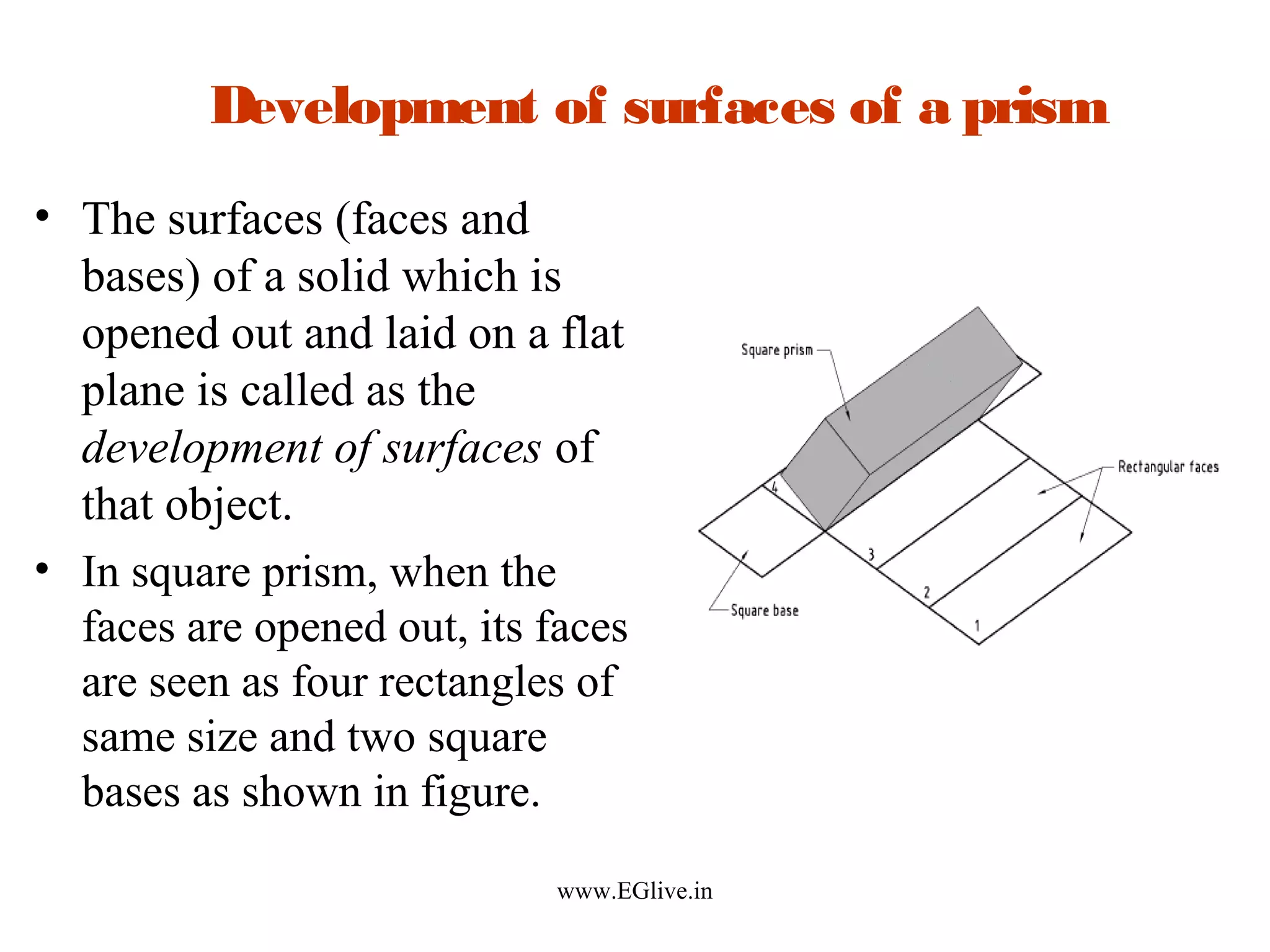
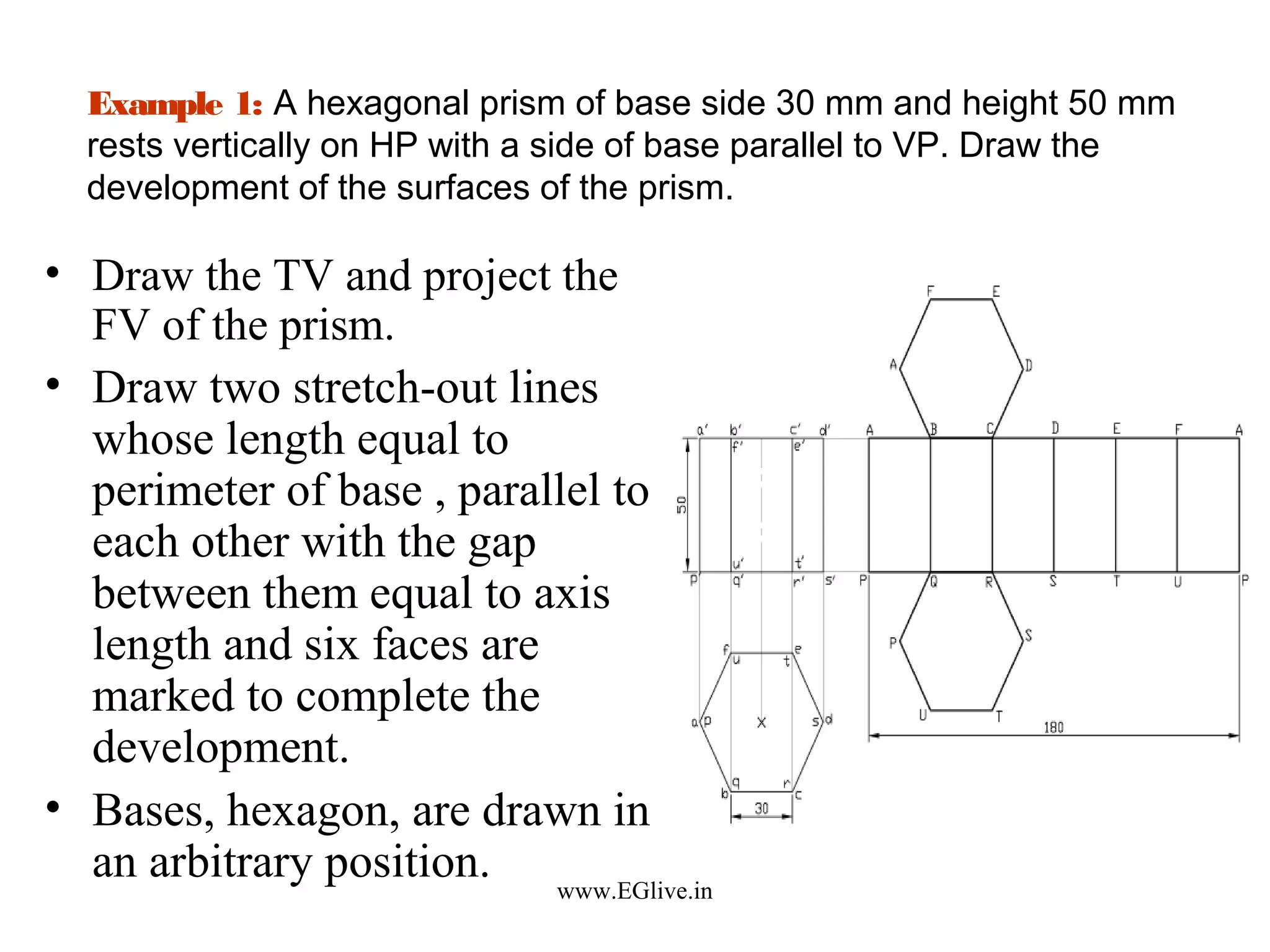
This document discusses the development of surfaces for prisms and cylinders. It defines surface development as opening out the faces and bases of an object onto a flat plane. For prisms and cylinders, the parallel line method is used, in which two lines equal to the base perimeter are drawn parallel at a distance equal to the axis length. Faces are then marked between the lines. Several examples demonstrate how to develop the surfaces of prisms and cylinders when cut by planes. Tips are provided for accurately marking new points and completing the development.