On completion of this lesson you should be able to: 
Identify a range of different animation 
techniques 
Describe how these have changed over time 
Discuss techniques of contemporary 
practice.
Different Styles of Animation 
RECAP 
There are THREE main styles of animation.. 
Can you remember what they are?
Different Styles of Animation 
1)Traditional Hand Drawn Animation 
2) Stop Motion Animation 
3) Computer Generated Animation 
Can you think of any examples?
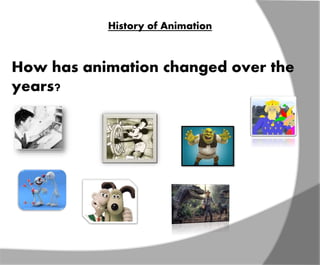
History of Animation 
How has animation changed over the 
years?
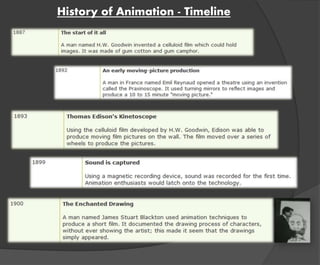
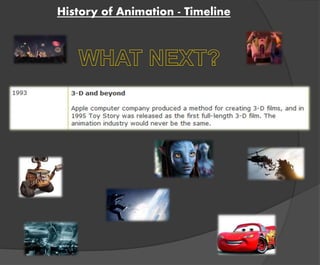
History of Animation - Timeline
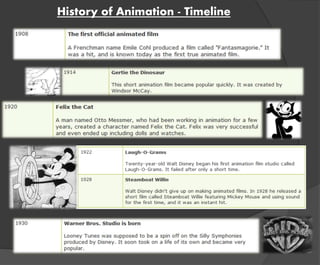
History of Animation - Timeline 
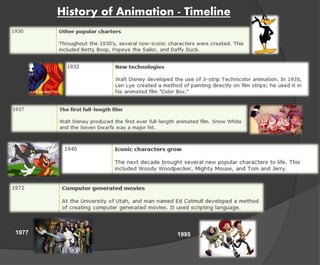
1977 1995
History of Animation - Timeline
Animation - Techniques 
Traditional hand Drawn Stop Motion Computer Generated
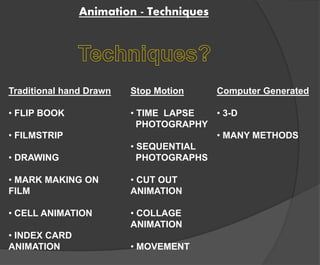
Animation - Techniques 
Traditional hand Drawn 
• FLIP BOOK 
• FILMSTRIP 
• DRAWING 
• MARK MAKING ON 
FILM 
• CELL ANIMATION 
• INDEX CARD 
ANIMATION 
Stop Motion 
• TIME LAPSE 
PHOTOGRAPHY 
• SEQUENTIAL 
PHOTOGRAPHS 
• CUT OUT 
ANIMATION 
• COLLAGE 
ANIMATION 
• MOVEMENT 
Computer Generated 
• 3-D 
• MANY METHODS
Animation - Techniques 
Traditional hand Drawn 
• FLIP BOOK 
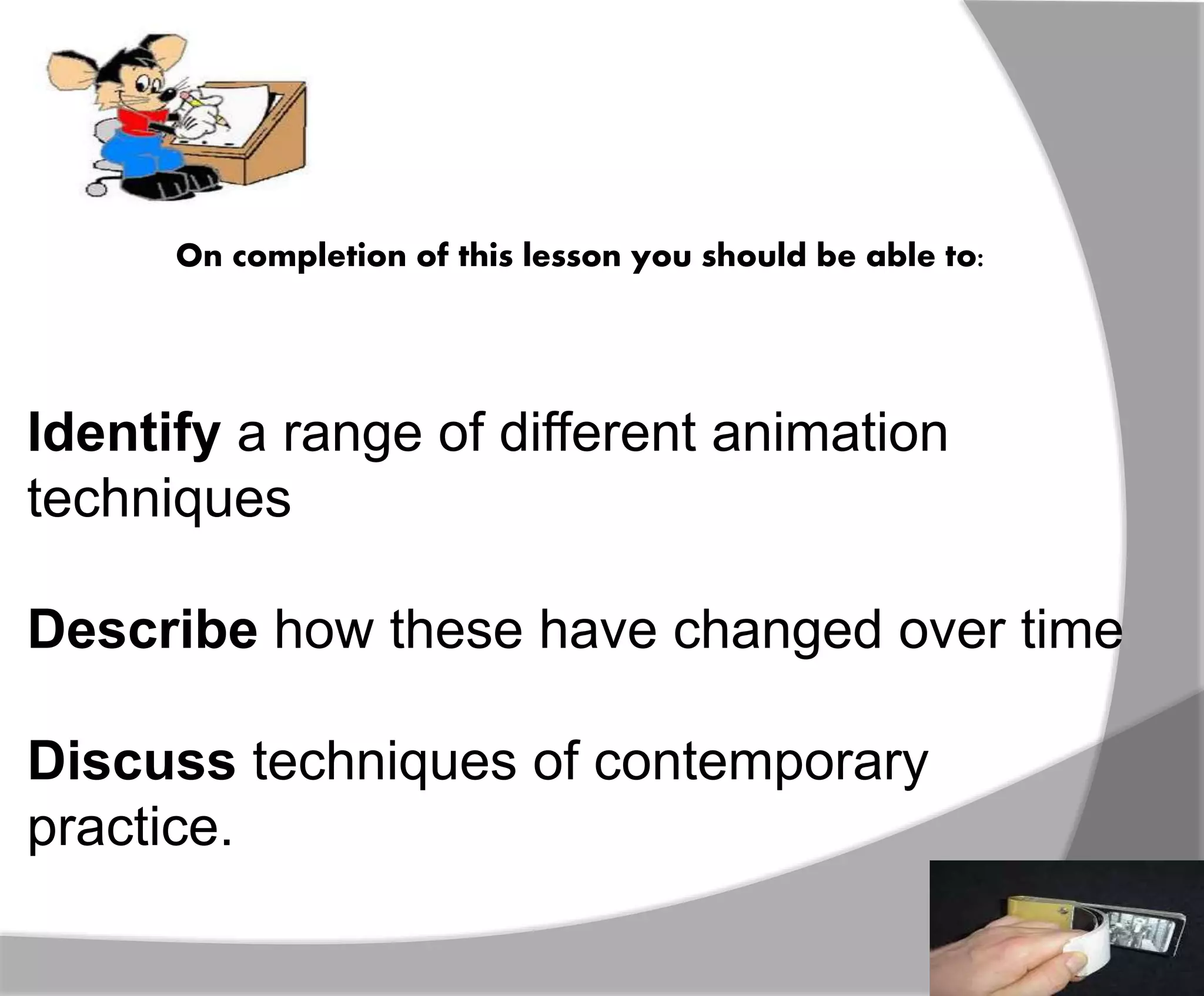
A flip book or flick book is a book with a 
series of pictures that vary gradually from one 
page to the next, so that when the pages are 
turned rapidly, the pictures appear to animate 
by simulating motion or some other change
Animation - Techniques 
Traditional hand Drawn 
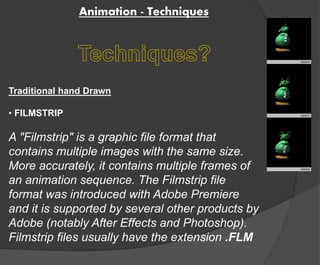
• FILMSTRIP 
A "Filmstrip" is a graphic file format that 
contains multiple images with the same size. 
More accurately, it contains multiple frames of 
an animation sequence. The Filmstrip file 
format was introduced with Adobe Premiere 
and it is supported by several other products by 
Adobe (notably After Effects and Photoshop). 
Filmstrip files usually have the extension .FLM
Animation - Techniques 
Traditional hand Drawn 
• DRAWING 
Traditional animation, is an animation 
technique where each frame is drawn by 
hand. This is the oldest and most historic 
form of animation
Animation - Techniques 
Traditional hand Drawn 
• MARK MAKING ON FILM 
Drawn-on-film animation, also known as direct 
animation or animation without camera, is an 
animation technique where footage is produced by 
creating the images directly on film stock, as opposed to 
any other form of animation where the images or objects 
are photographed frame by frame with an animation 
camera.
Animation - Techniques 
Traditional hand Drawn 
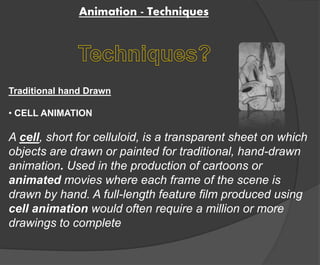
• CELL ANIMATION 
A cell, short for celluloid, is a transparent sheet on which 
objects are drawn or painted for traditional, hand-drawn 
animation. Used in the production of cartoons or 
animated movies where each frame of the scene is 
drawn by hand. A full-length feature film produced using 
cell animation would often require a million or more 
drawings to complete
Animation - Techniques 
Traditional hand Drawn 
• INDEX CARD ANIMATION 
Similar to a flip book with drawings 
made on index cards and then either 
photographed or filmed ready to edit 
into a short animation sequence.
Animation - Techniques 
Stop Motion 
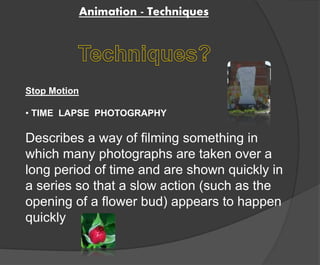
• TIME LAPSE PHOTOGRAPHY 
Describes a way of filming something in 
which many photographs are taken over a 
long period of time and are shown quickly in 
a series so that a slow action (such as the 
opening of a flower bud) appears to happen 
quickly
Animation - Techniques 
Stop Motion 
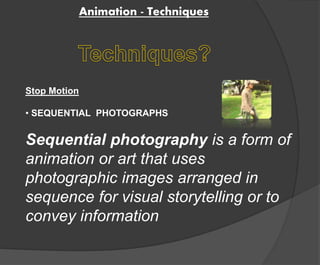
• SEQUENTIAL PHOTOGRAPHS 
Sequential photography is a form of 
animation or art that uses 
photographic images arranged in 
sequence for visual storytelling or to 
convey information
Animation - Techniques 
Stop Motion 
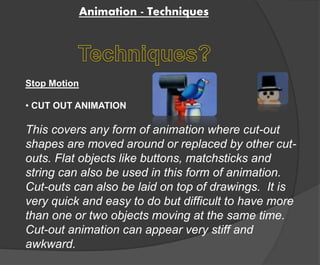
• CUT OUT ANIMATION 
This covers any form of animation where cut-out 
shapes are moved around or replaced by other cut-outs. 
Flat objects like buttons, matchsticks and 
string can also be used in this form of animation. 
Cut-outs can also be laid on top of drawings. It is 
very quick and easy to do but difficult to have more 
than one or two objects moving at the same time. 
Cut-out animation can appear very stiff and 
awkward.
Animation - Techniques 
Stop Motion 
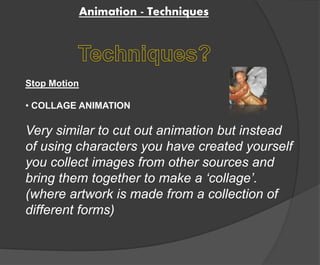
• COLLAGE ANIMATION 
Very similar to cut out animation but instead 
of using characters you have created yourself 
you collect images from other sources and 
bring them together to make a ‘collage’. 
(where artwork is made from a collection of 
different forms)
Animation - Techniques 
Stop Motion 
• MOVEMENT 
This is where the photographs or still images 
are taken after movement has taken place of 
objects.
Animation - Techniques 
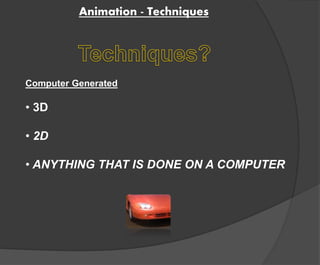
Computer Generated 
• 3D 
• 2D 
• ANYTHING THAT IS DONE ON A COMPUTER
On completion of this lesson you should be able to: 
Identify a range of different animation 
techniques 
Describe how these have changed over time 
Discuss techniques of contemporary 
practice.

Lesson 3 techniques

  • 1.
    On completion ofthis lesson you should be able to: Identify a range of different animation techniques Describe how these have changed over time Discuss techniques of contemporary practice.
  • 2.
    Different Styles ofAnimation RECAP There are THREE main styles of animation.. Can you remember what they are?
  • 3.
    Different Styles ofAnimation 1)Traditional Hand Drawn Animation 2) Stop Motion Animation 3) Computer Generated Animation Can you think of any examples?
  • 4.
    History of Animation How has animation changed over the years?
  • 5.
  • 6.
  • 7.
    History of Animation- Timeline 1977 1995
  • 8.
  • 9.
    Animation - Techniques Traditional hand Drawn Stop Motion Computer Generated
  • 10.
    Animation - Techniques Traditional hand Drawn • FLIP BOOK • FILMSTRIP • DRAWING • MARK MAKING ON FILM • CELL ANIMATION • INDEX CARD ANIMATION Stop Motion • TIME LAPSE PHOTOGRAPHY • SEQUENTIAL PHOTOGRAPHS • CUT OUT ANIMATION • COLLAGE ANIMATION • MOVEMENT Computer Generated • 3-D • MANY METHODS
  • 11.
    Animation - Techniques Traditional hand Drawn • FLIP BOOK A flip book or flick book is a book with a series of pictures that vary gradually from one page to the next, so that when the pages are turned rapidly, the pictures appear to animate by simulating motion or some other change
  • 12.
    Animation - Techniques Traditional hand Drawn • FILMSTRIP A "Filmstrip" is a graphic file format that contains multiple images with the same size. More accurately, it contains multiple frames of an animation sequence. The Filmstrip file format was introduced with Adobe Premiere and it is supported by several other products by Adobe (notably After Effects and Photoshop). Filmstrip files usually have the extension .FLM
  • 13.
    Animation - Techniques Traditional hand Drawn • DRAWING Traditional animation, is an animation technique where each frame is drawn by hand. This is the oldest and most historic form of animation
  • 14.
    Animation - Techniques Traditional hand Drawn • MARK MAKING ON FILM Drawn-on-film animation, also known as direct animation or animation without camera, is an animation technique where footage is produced by creating the images directly on film stock, as opposed to any other form of animation where the images or objects are photographed frame by frame with an animation camera.
  • 15.
    Animation - Techniques Traditional hand Drawn • CELL ANIMATION A cell, short for celluloid, is a transparent sheet on which objects are drawn or painted for traditional, hand-drawn animation. Used in the production of cartoons or animated movies where each frame of the scene is drawn by hand. A full-length feature film produced using cell animation would often require a million or more drawings to complete
  • 16.
    Animation - Techniques Traditional hand Drawn • INDEX CARD ANIMATION Similar to a flip book with drawings made on index cards and then either photographed or filmed ready to edit into a short animation sequence.
  • 17.
    Animation - Techniques Stop Motion • TIME LAPSE PHOTOGRAPHY Describes a way of filming something in which many photographs are taken over a long period of time and are shown quickly in a series so that a slow action (such as the opening of a flower bud) appears to happen quickly
  • 18.
    Animation - Techniques Stop Motion • SEQUENTIAL PHOTOGRAPHS Sequential photography is a form of animation or art that uses photographic images arranged in sequence for visual storytelling or to convey information
  • 19.
    Animation - Techniques Stop Motion • CUT OUT ANIMATION This covers any form of animation where cut-out shapes are moved around or replaced by other cut-outs. Flat objects like buttons, matchsticks and string can also be used in this form of animation. Cut-outs can also be laid on top of drawings. It is very quick and easy to do but difficult to have more than one or two objects moving at the same time. Cut-out animation can appear very stiff and awkward.
  • 20.
    Animation - Techniques Stop Motion • COLLAGE ANIMATION Very similar to cut out animation but instead of using characters you have created yourself you collect images from other sources and bring them together to make a ‘collage’. (where artwork is made from a collection of different forms)
  • 21.
    Animation - Techniques Stop Motion • MOVEMENT This is where the photographs or still images are taken after movement has taken place of objects.
  • 22.
    Animation - Techniques Computer Generated • 3D • 2D • ANYTHING THAT IS DONE ON A COMPUTER
  • 23.
    On completion ofthis lesson you should be able to: Identify a range of different animation techniques Describe how these have changed over time Discuss techniques of contemporary practice.