The history of
  Animation

    By Rebecca Armstrong
Productions
1900’s
Animations
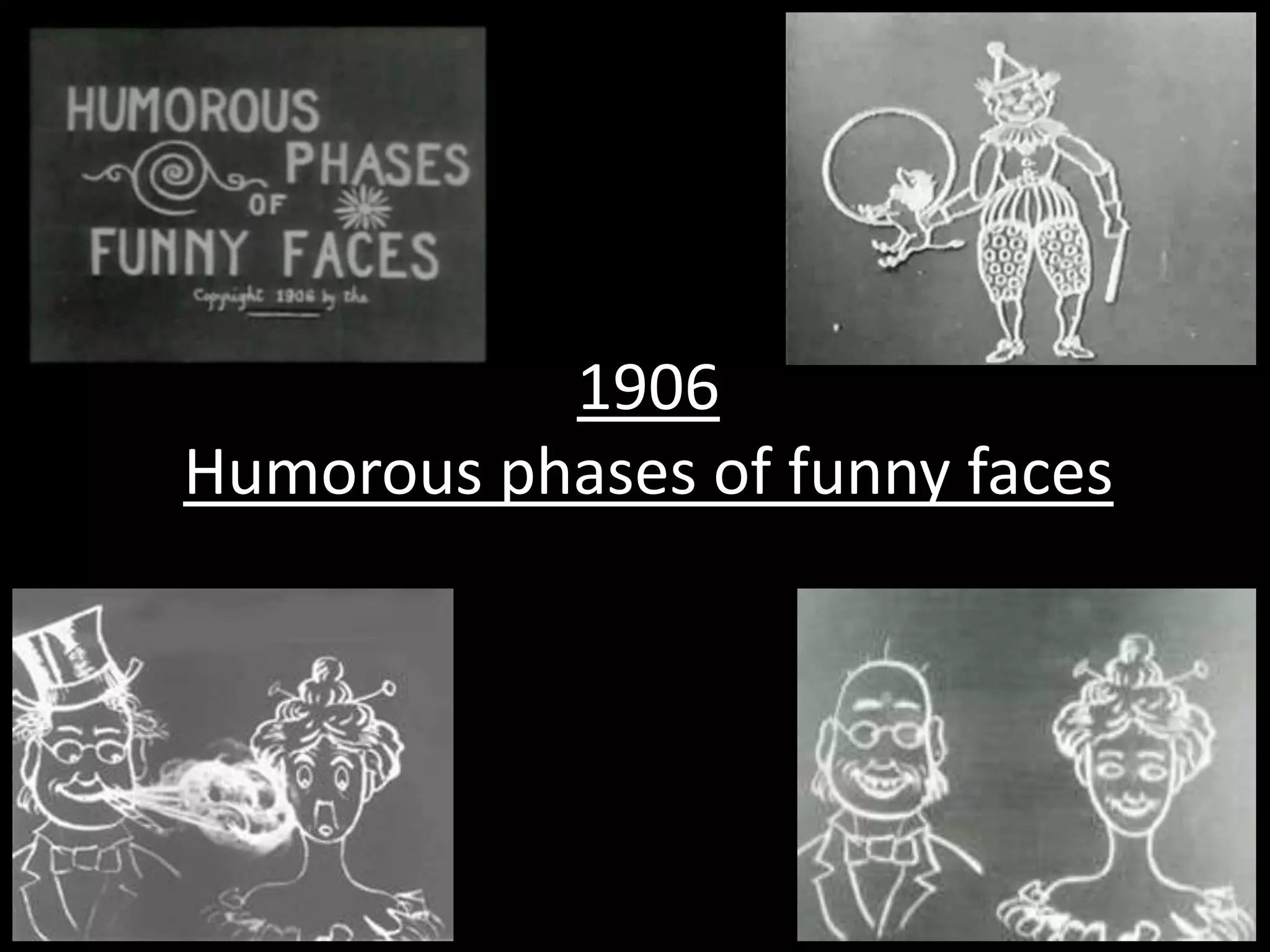
1906
Humorous phases of funny faces
1906
 Humorous phases of funny faces

Humorous Phases of Funny Faces is a silent
cartoon by J. Stuart Blackton released in 1906. It
features a cartoonist drawing faces on a
chalkboard, and the faces coming to life. It is
generally regarded by film historians as the first
animated film. It features movements as where a
dog jumps through a hoop, a scene which actually
uses cutout animation made to look like chalk
outlines. The film moves at 20 frames per second.
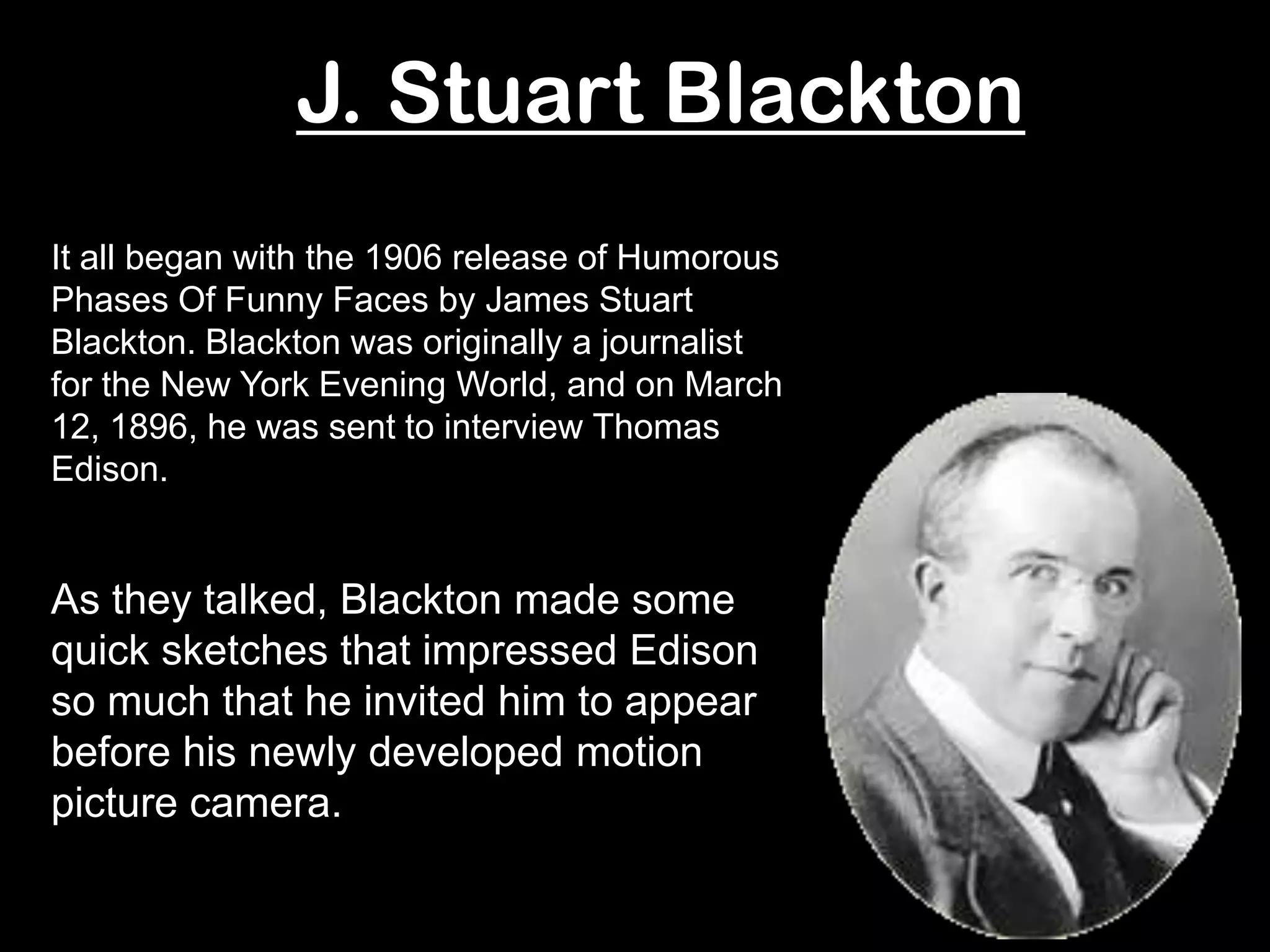
J. Stuart Blackton
It all began with the 1906 release of Humorous
Phases Of Funny Faces by James Stuart
Blackton. Blackton was originally a journalist
for the New York Evening World, and on March
12, 1896, he was sent to interview Thomas
Edison.


As they talked, Blackton made some
quick sketches that impressed Edison
so much that he invited him to appear
before his newly developed motion
picture camera.
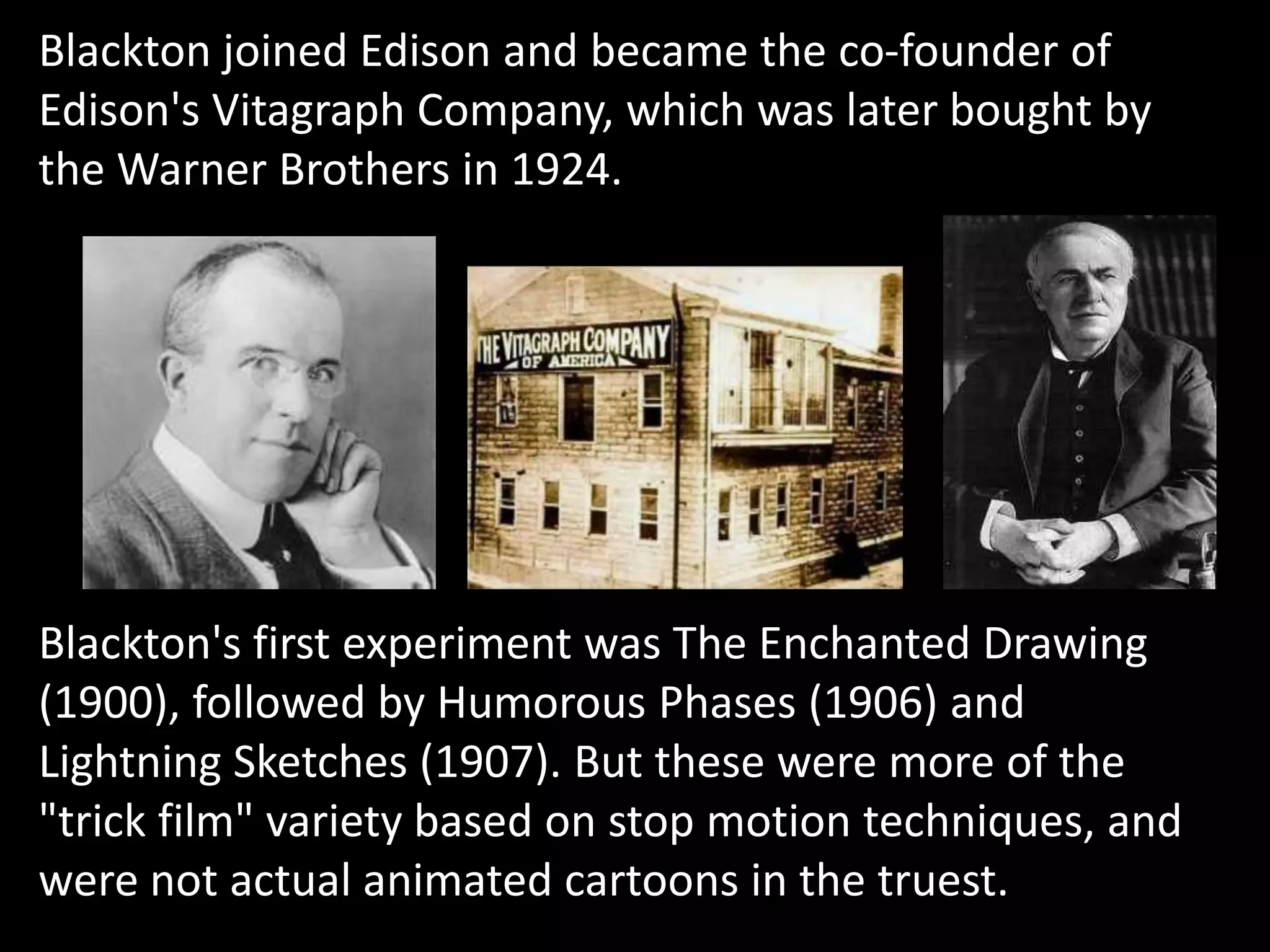
Blackton joined Edison and became the co-founder of
Edison's Vitagraph Company, which was later bought by
the Warner Brothers in 1924.


Blackton's first experiment was The Enchanted Drawing
(1900), followed by Humorous Phases (1906) and
Lightning Sketches (1907). But these were more of the
"trick film" variety based on stop motion techniques, and
were not actual animated cartoons in the truest.
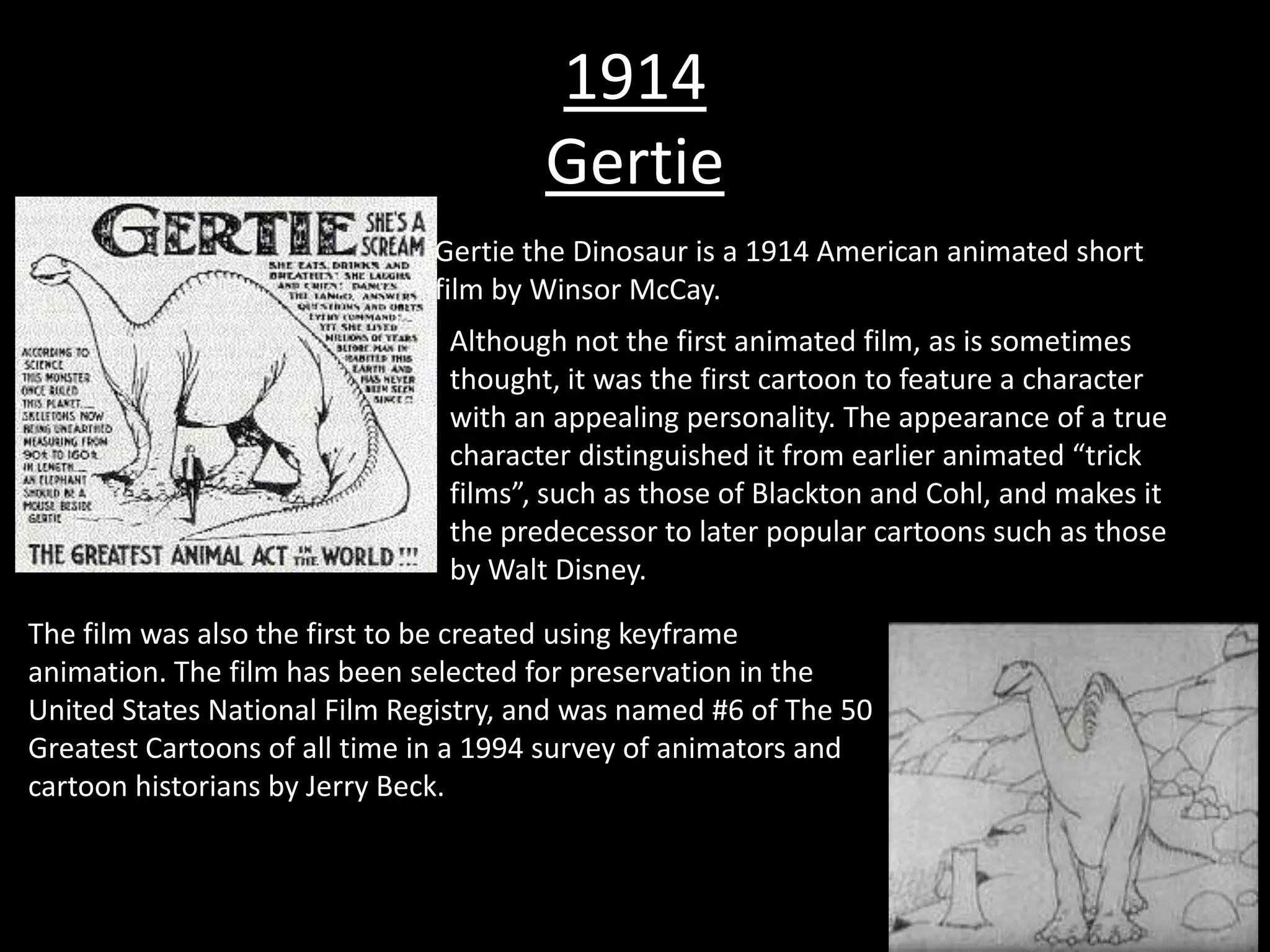
1914
                                       Gertie
                              Gertie the Dinosaur is a 1914 American animated short
                              film by Winsor McCay.
                               Although not the first animated film, as is sometimes
                               thought, it was the first cartoon to feature a character
                               with an appealing personality. The appearance of a true
                               character distinguished it from earlier animated “trick
                               films”, such as those of Blackton and Cohl, and makes it
                               the predecessor to later popular cartoons such as those
                               by Walt Disney.

The film was also the first to be created using keyframe
animation. The film has been selected for preservation in the
United States National Film Registry, and was named #6 of The 50
Greatest Cartoons of all time in a 1994 survey of animators and
cartoon historians by Jerry Beck.
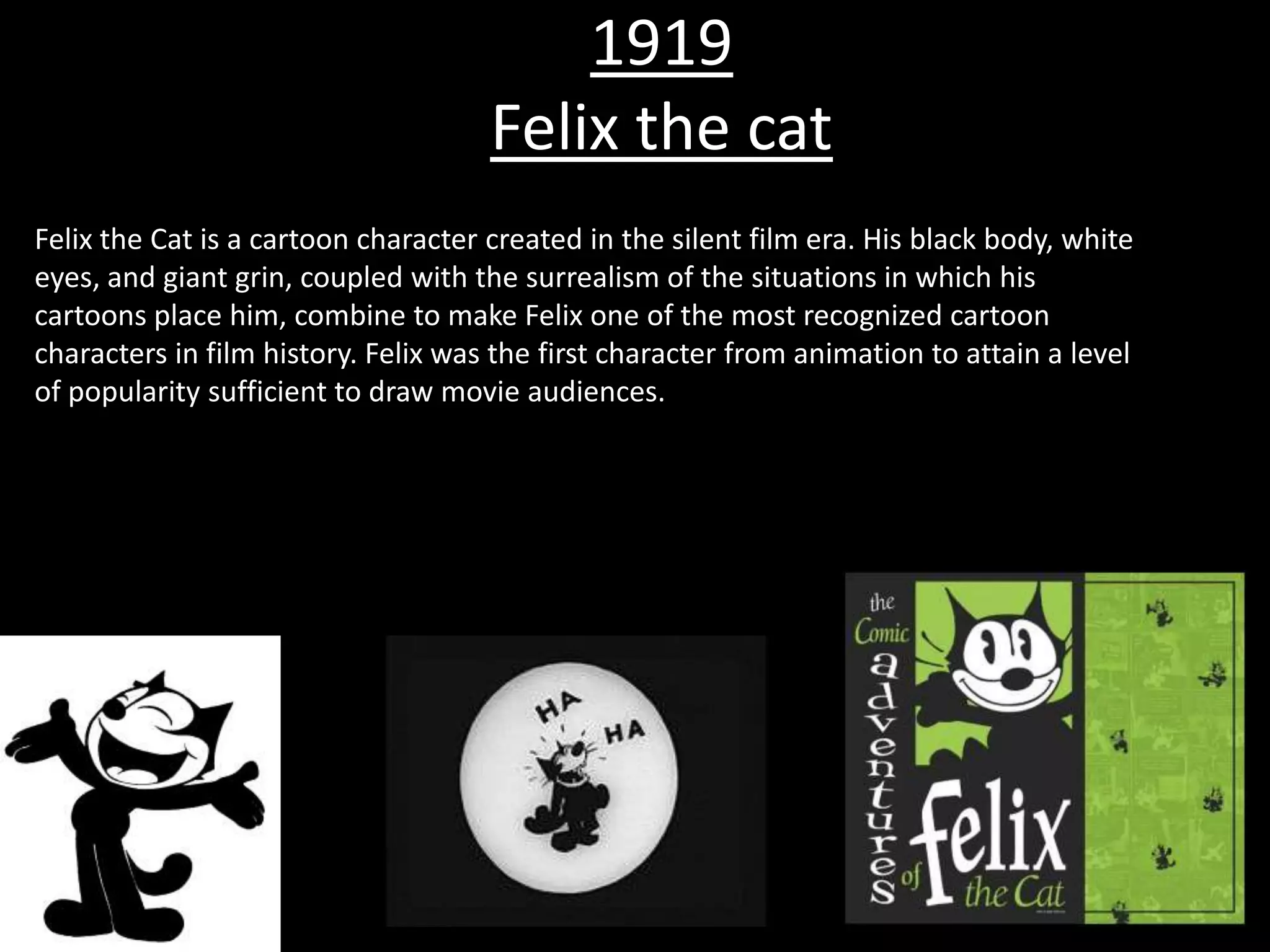
1919
                                     Felix the cat
Felix the Cat is a cartoon character created in the silent film era. His black body, white
eyes, and giant grin, coupled with the surrealism of the situations in which his
cartoons place him, combine to make Felix one of the most recognized cartoon
characters in film history. Felix was the first character from animation to attain a level
of popularity sufficient to draw movie audiences.
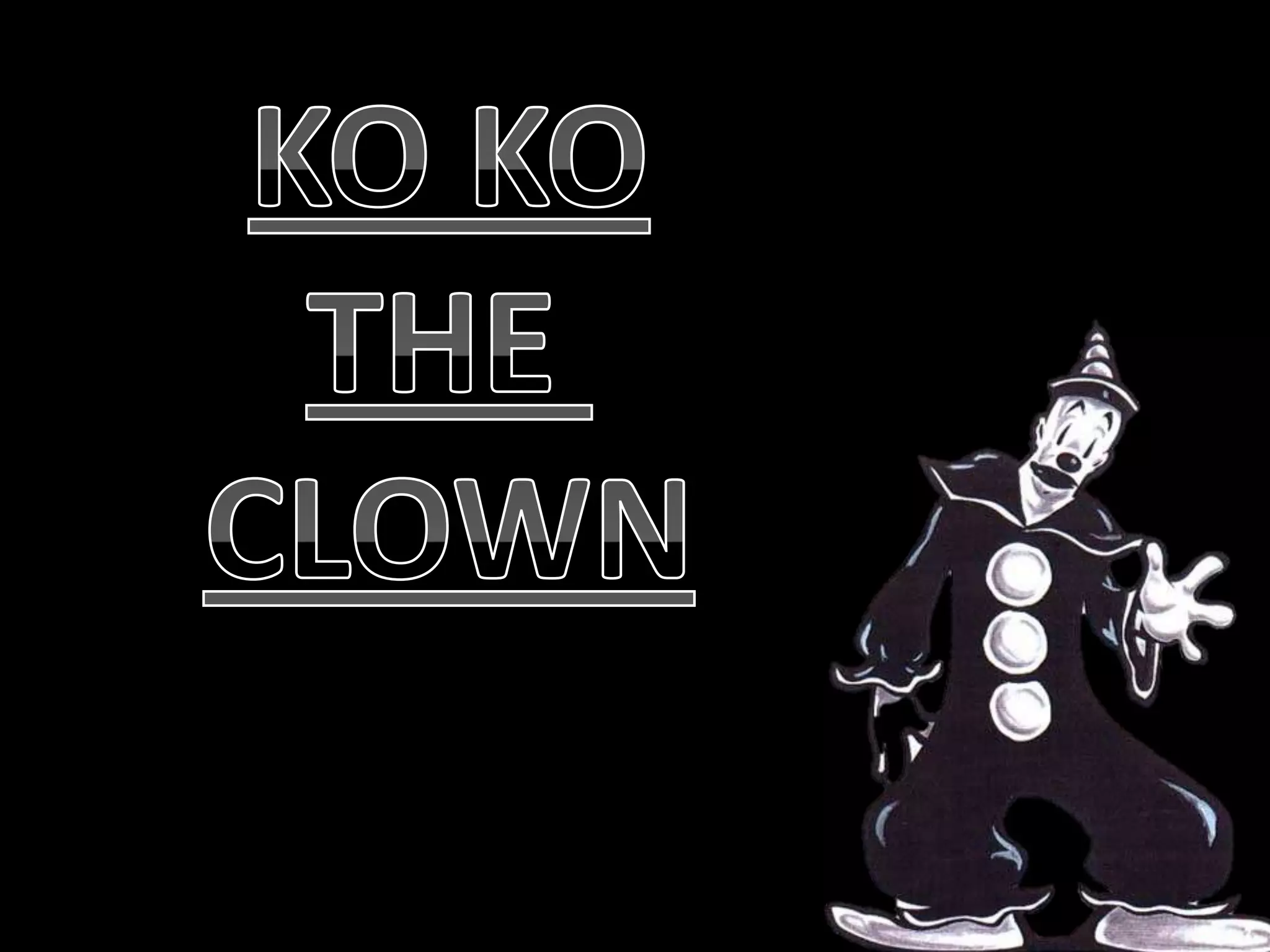
KOKO

History of animation

  • 1.
    The history of Animation By Rebecca Armstrong
  • 2.
  • 3.
  • 4.
  • 5.
    1906 Humorous phasesof funny faces Humorous Phases of Funny Faces is a silent cartoon by J. Stuart Blackton released in 1906. It features a cartoonist drawing faces on a chalkboard, and the faces coming to life. It is generally regarded by film historians as the first animated film. It features movements as where a dog jumps through a hoop, a scene which actually uses cutout animation made to look like chalk outlines. The film moves at 20 frames per second.
  • 6.
    J. Stuart Blackton Itall began with the 1906 release of Humorous Phases Of Funny Faces by James Stuart Blackton. Blackton was originally a journalist for the New York Evening World, and on March 12, 1896, he was sent to interview Thomas Edison. As they talked, Blackton made some quick sketches that impressed Edison so much that he invited him to appear before his newly developed motion picture camera.
  • 7.
    Blackton joined Edisonand became the co-founder of Edison's Vitagraph Company, which was later bought by the Warner Brothers in 1924. Blackton's first experiment was The Enchanted Drawing (1900), followed by Humorous Phases (1906) and Lightning Sketches (1907). But these were more of the "trick film" variety based on stop motion techniques, and were not actual animated cartoons in the truest.
  • 8.
    1914 Gertie Gertie the Dinosaur is a 1914 American animated short film by Winsor McCay. Although not the first animated film, as is sometimes thought, it was the first cartoon to feature a character with an appealing personality. The appearance of a true character distinguished it from earlier animated “trick films”, such as those of Blackton and Cohl, and makes it the predecessor to later popular cartoons such as those by Walt Disney. The film was also the first to be created using keyframe animation. The film has been selected for preservation in the United States National Film Registry, and was named #6 of The 50 Greatest Cartoons of all time in a 1994 survey of animators and cartoon historians by Jerry Beck.
  • 9.
    1919 Felix the cat Felix the Cat is a cartoon character created in the silent film era. His black body, white eyes, and giant grin, coupled with the surrealism of the situations in which his cartoons place him, combine to make Felix one of the most recognized cartoon characters in film history. Felix was the first character from animation to attain a level of popularity sufficient to draw movie audiences.
  • 12.