M O D U L E 1 : L E S S O N 1 0
M O D E L T H E D I S T R I B U T I V E P R O P E R T Y W I T H
A R R A Y S T O D E C O M P O S E U N I T S A S A
S T R A T E G Y T O M U L T I P L Y
Multiplication and the Meaning
of Factors
Fluency Practice
(8 minutes)
 (2 x 7 = ______)
 Let’s skip count by 2’s, using seven fingers on our
hands.
 Let’s see how we can skip count down to find the
answers too. Start at 20.
 What about 2 x 9? 2 x 8?
(distribute Multiply by 2 pattern sheet)
 Let’s get some practice multiplying by 2. Be sure to
work left to right across the page.
Fluency Practice
(4 minutes)
Group Counting
 Let’s count by 4’s—forward and backwards (up to 24)
 Let’s count by 3’s—forward and backwards (up to 30)
Application Problem
(5 minutes)
A guitar has 6 strings. How many strings are there on 3
guitars?
Write a multiplication sentence to solve.
(create a number bond)
Concept Development
(33 minutes)
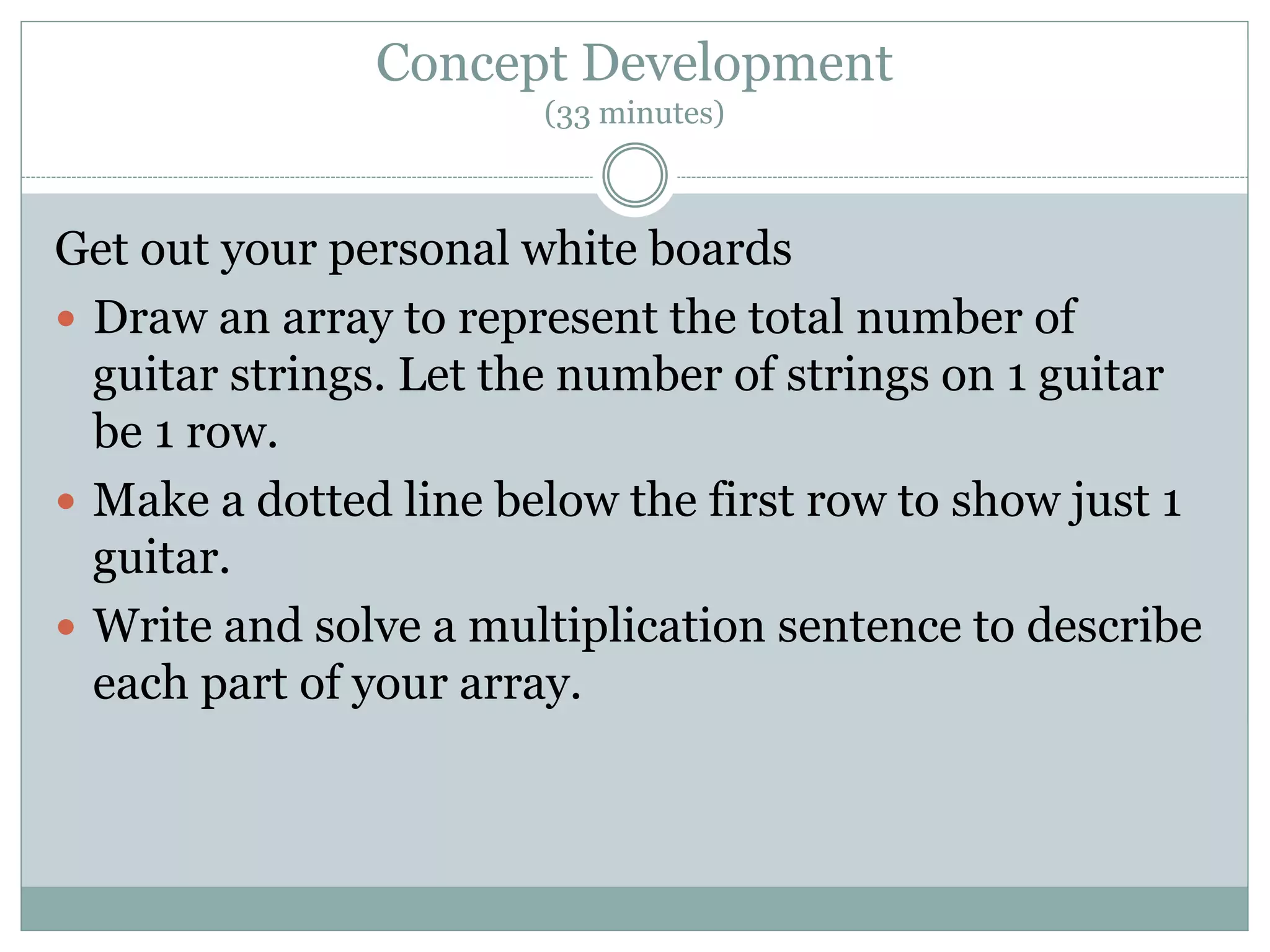
Get out your personal white boards
 Draw an array to represent the total number of
guitar strings. Let the number of strings on 1 guitar
be 1 row.
 Make a dotted line below the first row to show just 1
guitar.
 Write and solve a multiplication sentence to describe
each part of your array.
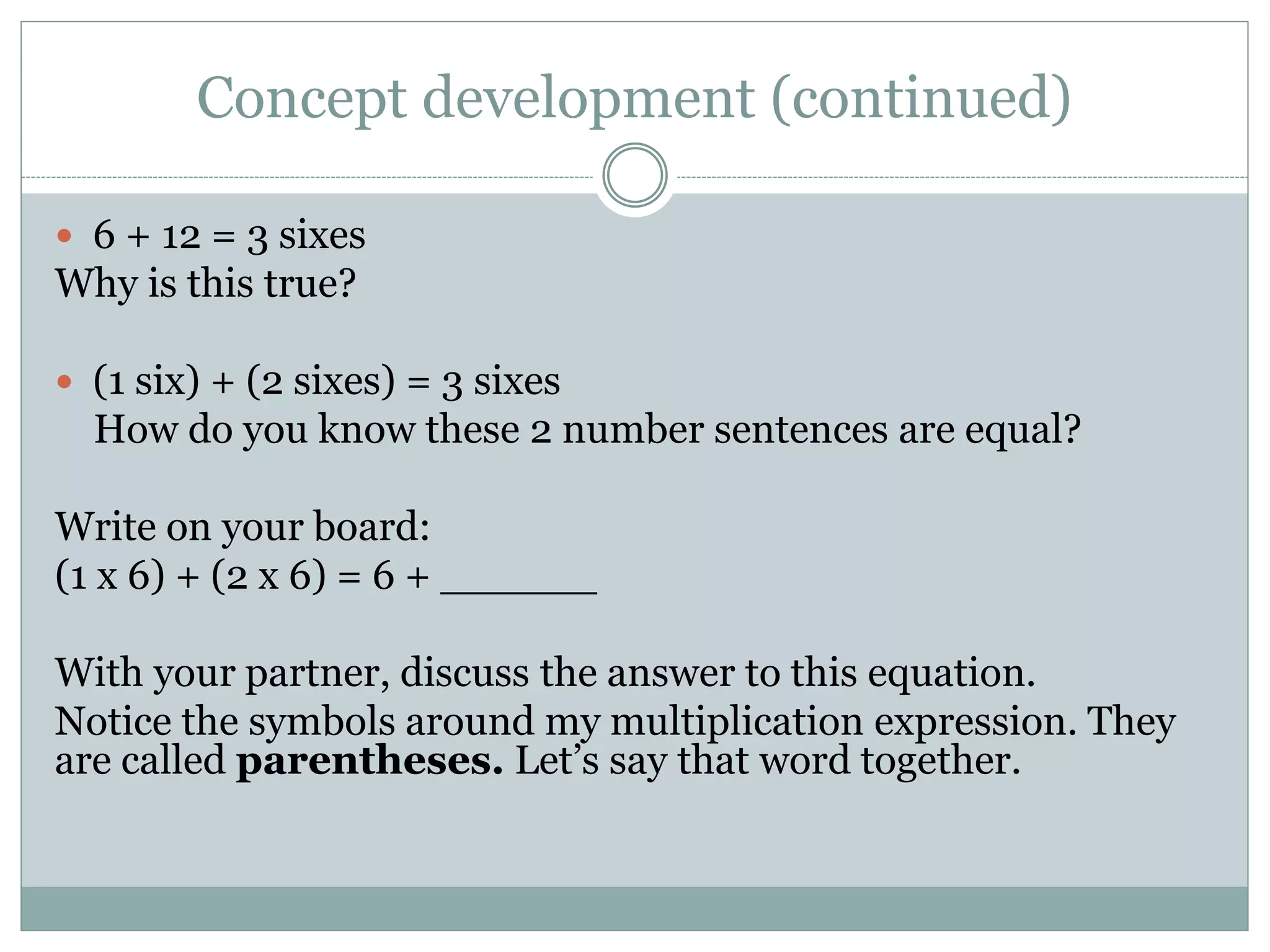
Concept development (continued)
 6 + 12 = 3 sixes
Why is this true?
 (1 six) + (2 sixes) = 3 sixes
How do you know these 2 number sentences are equal?
Write on your board:
(1 x 6) + (2 x 6) = 6 + ______
With your partner, discuss the answer to this equation.
Notice the symbols around my multiplication expression. They
are called parentheses. Let’s say that word together.
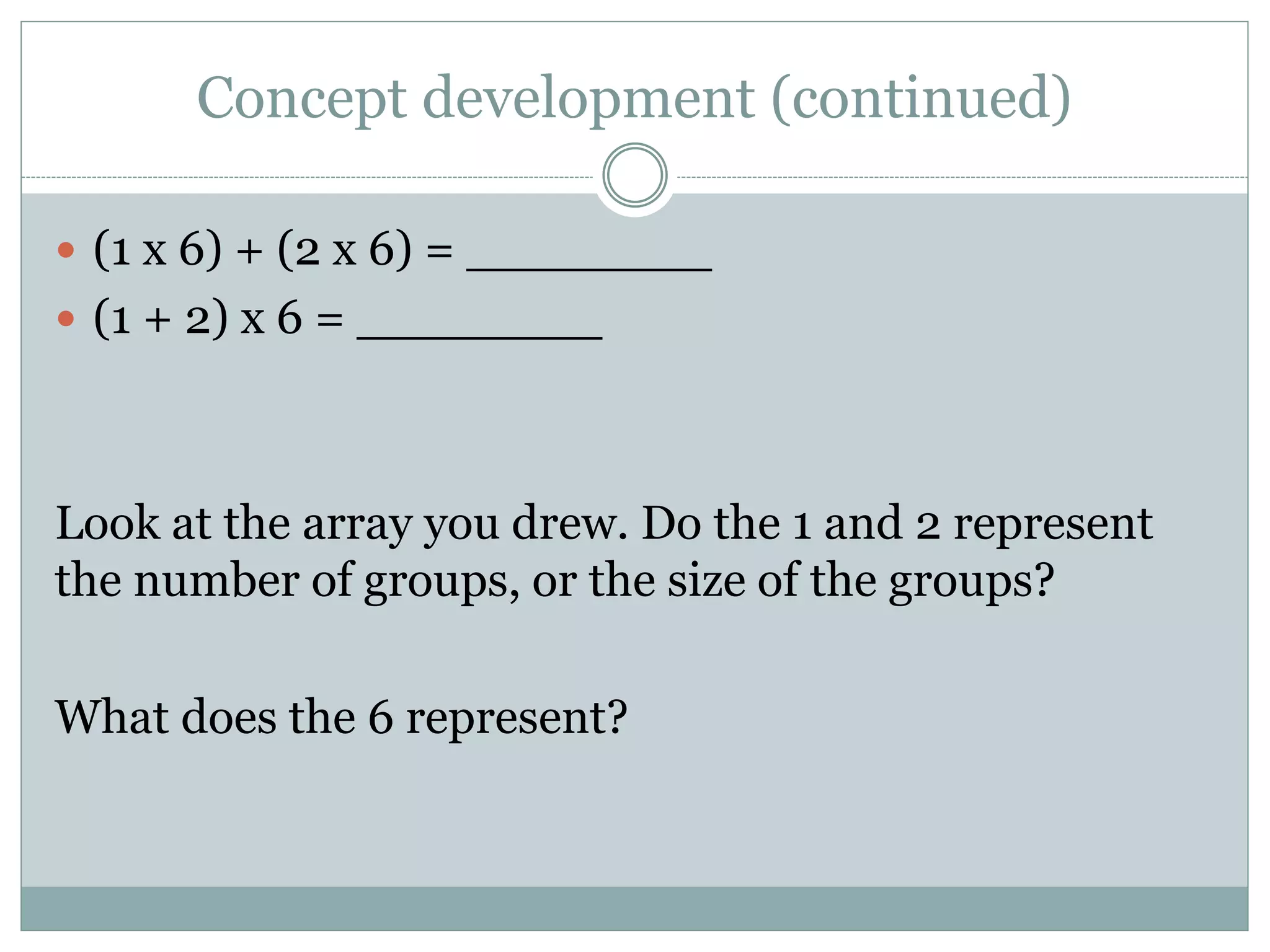
Concept development (continued)
 (1 x 6) + (2 x 6) = ________
 (1 + 2) x 6 = ________
Look at the array you drew. Do the 1 and 2 represent
the number of groups, or the size of the groups?
What does the 6 represent?
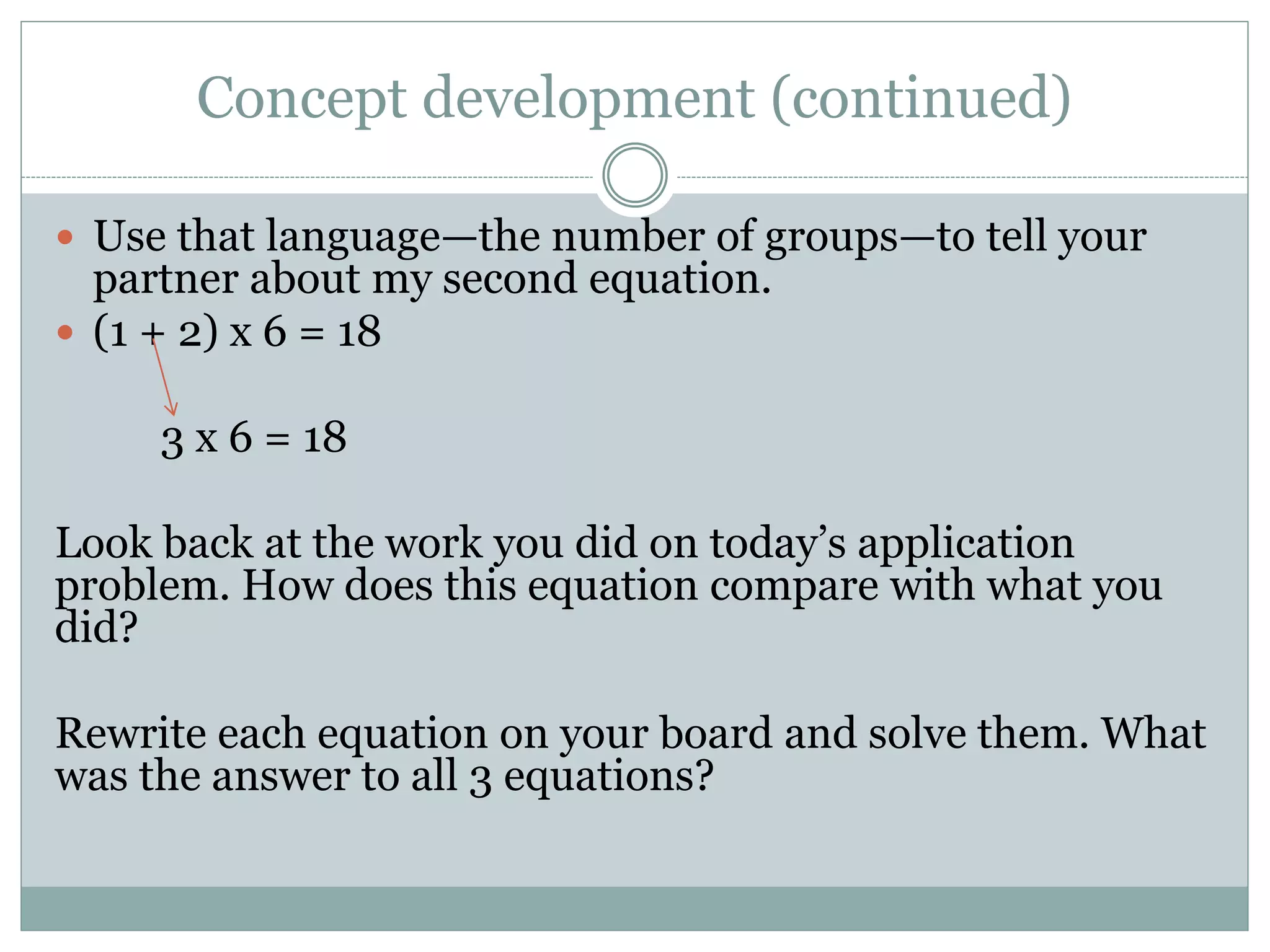
Concept development (continued)
 Use that language—the number of groups—to tell your
partner about my second equation.
 (1 + 2) x 6 = 18
3 x 6 = 18
Look back at the work you did on today’s application
problem. How does this equation compare with what you
did?
Rewrite each equation on your board and solve them. What
was the answer to all 3 equations?
Concept development (continued)
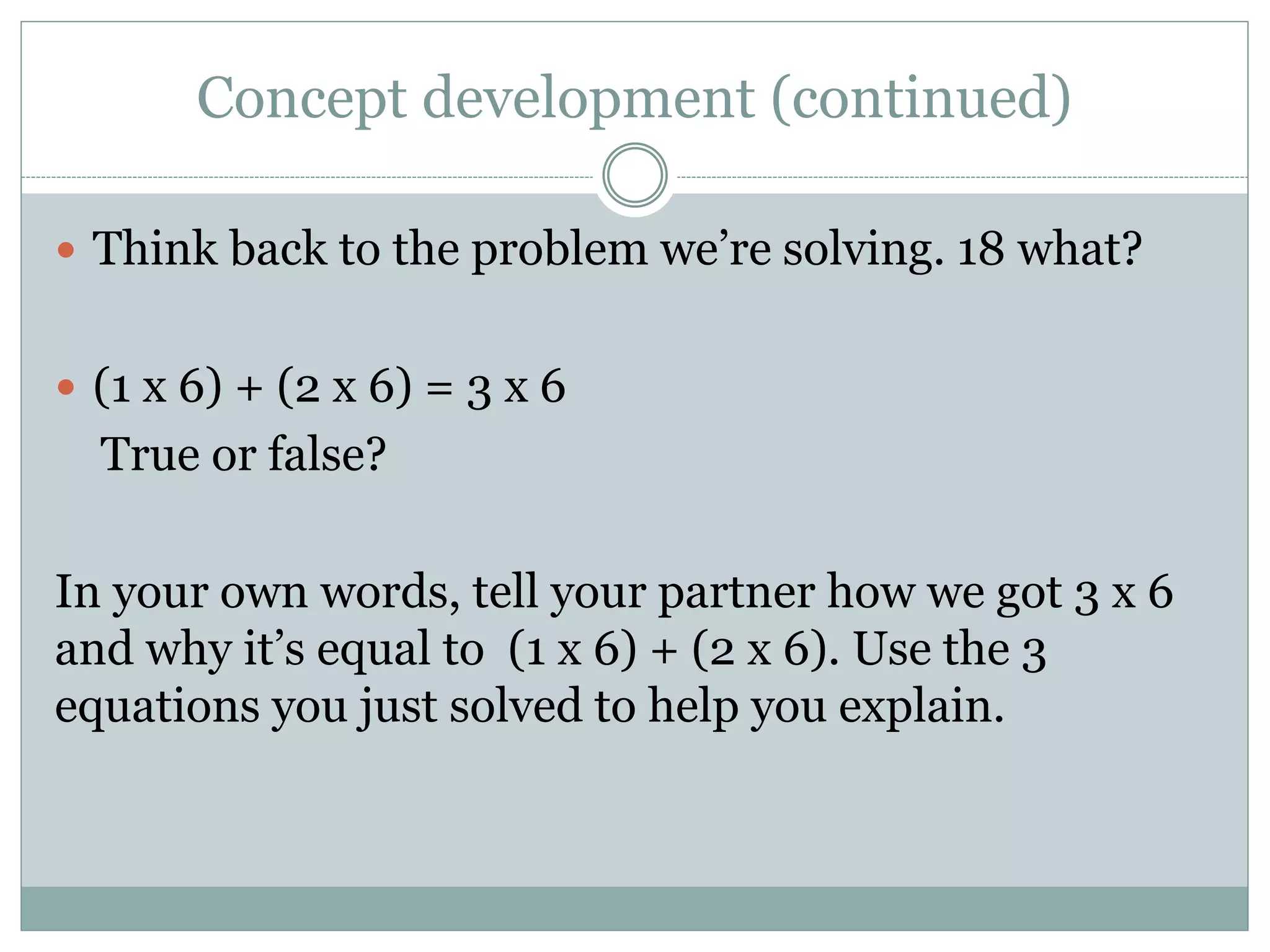
 Think back to the problem we’re solving. 18 what?
 (1 x 6) + (2 x 6) = 3 x 6
True or false?
In your own words, tell your partner how we got 3 x 6
and why it’s equal to (1 x 6) + (2 x 6). Use the 3
equations you just solved to help you explain.
Problem Set
 You have 10 minutes to do you best work and
complete the problem set worksheet.
Student Debrief
 Let’s correct your problem set together.
 In Problems 1 and 2, why might breaking an array
into 2 parts to multiply, add, then solve be easier
than just multiplying the total number of groups
times their size?
Exit ticket
 Complete the exit ticket

Lesson 10

  • 1.
    M O DU L E 1 : L E S S O N 1 0 M O D E L T H E D I S T R I B U T I V E P R O P E R T Y W I T H A R R A Y S T O D E C O M P O S E U N I T S A S A S T R A T E G Y T O M U L T I P L Y Multiplication and the Meaning of Factors
  • 2.
    Fluency Practice (8 minutes) (2 x 7 = ______)  Let’s skip count by 2’s, using seven fingers on our hands.  Let’s see how we can skip count down to find the answers too. Start at 20.  What about 2 x 9? 2 x 8? (distribute Multiply by 2 pattern sheet)  Let’s get some practice multiplying by 2. Be sure to work left to right across the page.
  • 3.
    Fluency Practice (4 minutes) GroupCounting  Let’s count by 4’s—forward and backwards (up to 24)  Let’s count by 3’s—forward and backwards (up to 30)
  • 4.
    Application Problem (5 minutes) Aguitar has 6 strings. How many strings are there on 3 guitars? Write a multiplication sentence to solve. (create a number bond)
  • 5.
    Concept Development (33 minutes) Getout your personal white boards  Draw an array to represent the total number of guitar strings. Let the number of strings on 1 guitar be 1 row.  Make a dotted line below the first row to show just 1 guitar.  Write and solve a multiplication sentence to describe each part of your array.
  • 6.
    Concept development (continued) 6 + 12 = 3 sixes Why is this true?  (1 six) + (2 sixes) = 3 sixes How do you know these 2 number sentences are equal? Write on your board: (1 x 6) + (2 x 6) = 6 + ______ With your partner, discuss the answer to this equation. Notice the symbols around my multiplication expression. They are called parentheses. Let’s say that word together.
  • 7.
    Concept development (continued) (1 x 6) + (2 x 6) = ________  (1 + 2) x 6 = ________ Look at the array you drew. Do the 1 and 2 represent the number of groups, or the size of the groups? What does the 6 represent?
  • 8.
    Concept development (continued) Use that language—the number of groups—to tell your partner about my second equation.  (1 + 2) x 6 = 18 3 x 6 = 18 Look back at the work you did on today’s application problem. How does this equation compare with what you did? Rewrite each equation on your board and solve them. What was the answer to all 3 equations?
  • 9.
    Concept development (continued) Think back to the problem we’re solving. 18 what?  (1 x 6) + (2 x 6) = 3 x 6 True or false? In your own words, tell your partner how we got 3 x 6 and why it’s equal to (1 x 6) + (2 x 6). Use the 3 equations you just solved to help you explain.
  • 10.
    Problem Set  Youhave 10 minutes to do you best work and complete the problem set worksheet.
  • 11.
    Student Debrief  Let’scorrect your problem set together.  In Problems 1 and 2, why might breaking an array into 2 parts to multiply, add, then solve be easier than just multiplying the total number of groups times their size?
  • 12.
    Exit ticket  Completethe exit ticket