Unit – Heart Rate Zones
Lesson 1 – What is Heart Rate?
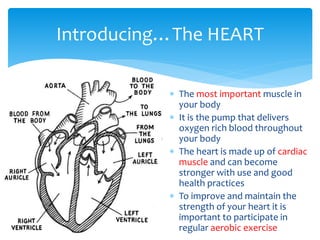
 The most important muscle in
your body
 It is the pump that delivers
oxygen rich blood throughout
your body
 The heart is made up of cardiac
muscle and can become
stronger with use and good
health practices
 To improve and maintain the
strength of your heart it is
important to participate in
regular aerobic exercise
Introducing…The HEART
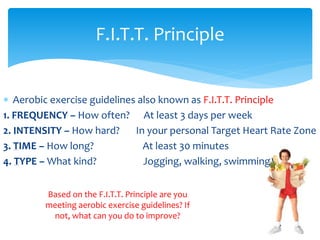
 Aerobic exercise guidelines also known as F.I.T.T. Principle
1. FREQUENCY – How often? At least 3 days per week
2. INTENSITY – How hard? In your personal Target Heart Rate Zone
3. TIME – How long? At least 30 minutes
4. TYPE – What kind? Jogging, walking, swimming
F.I.T.T. Principle
Based on the F.I.T.T. Principle are you
meeting aerobic exercise guidelines? If
not, what can you do to improve?
 The number of times your heart beats per minute (BPM)
 Also known as PULSE
 Normal HR varies from person to person, knowing yours can
be an important health gauge.
Resting Heart Rate (RHR) – heart pumping the lowest amount of
blood because body is at rest
 Normal RHR ranges from 60 – 100 BPM
What is Heart Rate?
 Maximum Heart Rate (MHR) – age related number of BPM of
the heart when working at maximum
MHR= 220 – Age
 Knowing this number along with RHR allows you to find the
correct intensity for your body when being physically active.
 Low intensity, closer to RHR
 High intensity, closer to MHR
 Given this information, where do you think HR should range
during physical activity?
What is Maximum Heart Rate?
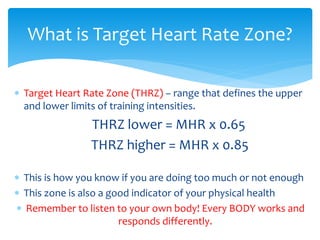
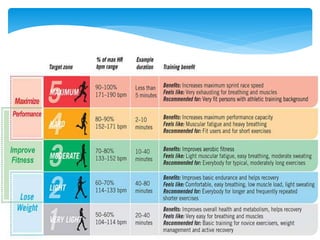
 Target Heart Rate Zone (THRZ) – range that defines the upper
and lower limits of training intensities.
THRZ lower = MHR x 0.65
THRZ higher = MHR x 0.85
 This is how you know if you are doing too much or not enough
 This zone is also a good indicator of your physical health
 Remember to listen to your own body! Every BODY works and
responds differently.
What is Target Heart Rate Zone?
Let’s take a closer look
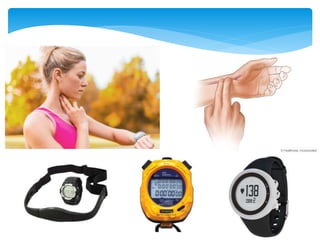
• How to take HR
• HR monitors in Physcial Education
• How to work a stopwatch
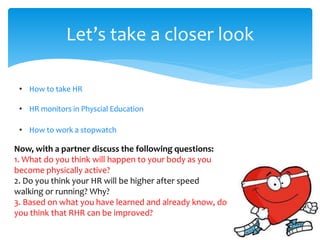
Now, with a partner discuss the following questions:
1. What do you think will happen to your body as you
become physically active?
2. Do you think your HR will be higher after speed
walking or running? Why?
3. Based on what you have learned and already know, do
you think that RHR can be improved?
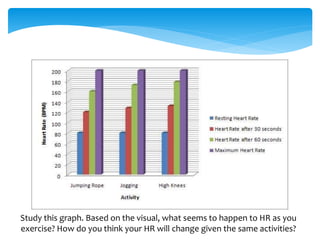
Study this graph. Based on the visual, what seems to happen to HR as you
exercise? How do you think your HR will change given the same activities?

Lesson 1- Heart Rate

  • 1.
    Unit – HeartRate Zones Lesson 1 – What is Heart Rate?
  • 2.
     The mostimportant muscle in your body  It is the pump that delivers oxygen rich blood throughout your body  The heart is made up of cardiac muscle and can become stronger with use and good health practices  To improve and maintain the strength of your heart it is important to participate in regular aerobic exercise Introducing…The HEART
  • 3.
     Aerobic exerciseguidelines also known as F.I.T.T. Principle 1. FREQUENCY – How often? At least 3 days per week 2. INTENSITY – How hard? In your personal Target Heart Rate Zone 3. TIME – How long? At least 30 minutes 4. TYPE – What kind? Jogging, walking, swimming F.I.T.T. Principle Based on the F.I.T.T. Principle are you meeting aerobic exercise guidelines? If not, what can you do to improve?
  • 4.
     The numberof times your heart beats per minute (BPM)  Also known as PULSE  Normal HR varies from person to person, knowing yours can be an important health gauge. Resting Heart Rate (RHR) – heart pumping the lowest amount of blood because body is at rest  Normal RHR ranges from 60 – 100 BPM What is Heart Rate?
  • 6.
     Maximum HeartRate (MHR) – age related number of BPM of the heart when working at maximum MHR= 220 – Age  Knowing this number along with RHR allows you to find the correct intensity for your body when being physically active.  Low intensity, closer to RHR  High intensity, closer to MHR  Given this information, where do you think HR should range during physical activity? What is Maximum Heart Rate?
  • 7.
     Target HeartRate Zone (THRZ) – range that defines the upper and lower limits of training intensities. THRZ lower = MHR x 0.65 THRZ higher = MHR x 0.85  This is how you know if you are doing too much or not enough  This zone is also a good indicator of your physical health  Remember to listen to your own body! Every BODY works and responds differently. What is Target Heart Rate Zone?
  • 9.
    Let’s take acloser look • How to take HR • HR monitors in Physcial Education • How to work a stopwatch Now, with a partner discuss the following questions: 1. What do you think will happen to your body as you become physically active? 2. Do you think your HR will be higher after speed walking or running? Why? 3. Based on what you have learned and already know, do you think that RHR can be improved?
  • 11.
    Study this graph.Based on the visual, what seems to happen to HR as you exercise? How do you think your HR will change given the same activities?