Leptospirosis
Canine typhus or infectious jaundice
Definition
 It is peracute, acute or chronic water born contagious
disease of dogs caused by leptospira interrogans spp.,
characterized by pyrexia, anorexia, depression and signs
of renal and hepatic failure
Etiology
 Leptospira interrogans servoars as:
 L. Icterohaemorrhagica
 L. Conicola
 L. Grippotyphosa
 All serovars are antigenically distinct
 It is flexible filamentous, motile spirochete
 Infected dogs may excrete leptospira in urine intermittently for
months or even years
Epidemiology
 Distribution
 The disease is worldwide and present in Egypt
 Animal susceptibility
 Dogs of all ages are susceptible but cats appears to be resistant
 Mode of transmissions
 Source of infection
 Clinically infected or carrier dogs shed the organisms in urine for months or
even years
 Mode of transmission
 Direct contact through penetration of mucosa of mouth or conjunctiva or
abraded skin
 Ingestion of contaminated materials as infected meats
 Indirect transmission through exposure to contaminated fomites
 Transplacental or venereal and bite wound transmission
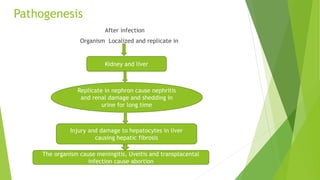
Pathogenesis
After infection
Organism Localized and replicate in
Kidney and liver
Replicate in nephron cause nephritis
and renal damage and shedding in
urine for long time
Injury and damage to hepatocytes in liver
causing hepatic fibrosis
The organism cause meningitis, Uveitis and transplacental
infection cause abortion
Clinical signs
 IP 1-2 w, morbidity rate is variable and mortality rate is low
 Peracute
 fever, depression and anorexia
 Abdominal and renal pain and reluctance to move
 Vascular injury with hematemesis, melena, epistaxis and petechiation
 Terminally, hypothermia, shock and death
 Subacute and chronic form
 Fever, depression, anorexia, abdominal pain and vomition
 Paraspinal hyperesthia due to muscular, meningeal and renal
inflammation
 Peticheal and echymotic hemorrhage
 Deterioration in renal function as anuria or oliguria and frequent
urination
 Uremic breath due to chronic nephritis
 Scanty feces with melena
 Signs of hepatitis as change of fecal color from brown to gray and
icterus
 Occasionally, abortion, uveitis and meningitis may be occur
Postmortem lesions
 Carcass show icteric mm with diffuse petechiation
 Respiratory tract is edematous and lung is congested
 Liver is enlarged with yellow brown discoloration
 Kidney is enlarged, pale or yellow in color and have subcapsular
hemorrhage
 Swelling and focal white spotting in renal cortex
Diagnosis
 Field diagnosis
 It depends on epidemiology, clinical signs and PM lesions of
the disease
Diagnosis
 Laboratory diagnosis
 Samples:
 Urine, Kidney and liver from recently dead animal, blood and serum
 Laboratory procedures
1. Demonstration of organism by dark field microscope
2. Urine anlanysis, proteinuria, hyperbilurinuria
3. Hematological examination, leukopenia then leukocytosis and
thrombocytopenia
4. Serological test as agglutination test or ELISA
5. Culture is difficult because of the organism is fastidious and slow
growth
Differential diagnosis
 The disease misdiagnosed with diseases cause hepatic or renal
damage as:
1. Infectious hepatitis
2. Canine disptemper
Treatment
 Specific antibiotic
 Penecillin G sodium 25.000- 40.000 IU/kg I/V or I/M
 Dihyderostreptomycin 15 mg/kg IM every 12 hr
 Supportive treatment
 Fluid therapy, tonics
 Diuretic as furosemide
Control
 Management
 Isolation and treated the infected animal
 Hygienic disposal of infected materials
 Detection and elimination od carriers and all known shedders
 Prevent contact between dogs and their urine
 Cleaning and disinfectant all infected premises
 Vaccination
 Bivalent leptospira bacterin (L. canicola & L. icterohaemorrhagica)
 It gives at 9, 12 and 15 week of age
 Repeated annually
 The immunization reduce severity and incidence of the disease but
it does not prevent the carrier

Leptospirosis.ppt

  • 1.
    Leptospirosis Canine typhus orinfectious jaundice
  • 2.
    Definition  It isperacute, acute or chronic water born contagious disease of dogs caused by leptospira interrogans spp., characterized by pyrexia, anorexia, depression and signs of renal and hepatic failure
  • 3.
    Etiology  Leptospira interrogansservoars as:  L. Icterohaemorrhagica  L. Conicola  L. Grippotyphosa  All serovars are antigenically distinct  It is flexible filamentous, motile spirochete  Infected dogs may excrete leptospira in urine intermittently for months or even years
  • 4.
    Epidemiology  Distribution  Thedisease is worldwide and present in Egypt  Animal susceptibility  Dogs of all ages are susceptible but cats appears to be resistant  Mode of transmissions  Source of infection  Clinically infected or carrier dogs shed the organisms in urine for months or even years  Mode of transmission  Direct contact through penetration of mucosa of mouth or conjunctiva or abraded skin  Ingestion of contaminated materials as infected meats  Indirect transmission through exposure to contaminated fomites  Transplacental or venereal and bite wound transmission
  • 5.
    Pathogenesis After infection Organism Localizedand replicate in Kidney and liver Replicate in nephron cause nephritis and renal damage and shedding in urine for long time Injury and damage to hepatocytes in liver causing hepatic fibrosis The organism cause meningitis, Uveitis and transplacental infection cause abortion
  • 6.
    Clinical signs  IP1-2 w, morbidity rate is variable and mortality rate is low  Peracute  fever, depression and anorexia  Abdominal and renal pain and reluctance to move  Vascular injury with hematemesis, melena, epistaxis and petechiation  Terminally, hypothermia, shock and death
  • 7.
     Subacute andchronic form  Fever, depression, anorexia, abdominal pain and vomition  Paraspinal hyperesthia due to muscular, meningeal and renal inflammation  Peticheal and echymotic hemorrhage  Deterioration in renal function as anuria or oliguria and frequent urination  Uremic breath due to chronic nephritis  Scanty feces with melena  Signs of hepatitis as change of fecal color from brown to gray and icterus  Occasionally, abortion, uveitis and meningitis may be occur
  • 8.
    Postmortem lesions  Carcassshow icteric mm with diffuse petechiation  Respiratory tract is edematous and lung is congested  Liver is enlarged with yellow brown discoloration  Kidney is enlarged, pale or yellow in color and have subcapsular hemorrhage  Swelling and focal white spotting in renal cortex
  • 9.
    Diagnosis  Field diagnosis It depends on epidemiology, clinical signs and PM lesions of the disease
  • 10.
    Diagnosis  Laboratory diagnosis Samples:  Urine, Kidney and liver from recently dead animal, blood and serum  Laboratory procedures 1. Demonstration of organism by dark field microscope 2. Urine anlanysis, proteinuria, hyperbilurinuria 3. Hematological examination, leukopenia then leukocytosis and thrombocytopenia 4. Serological test as agglutination test or ELISA 5. Culture is difficult because of the organism is fastidious and slow growth
  • 11.
    Differential diagnosis  Thedisease misdiagnosed with diseases cause hepatic or renal damage as: 1. Infectious hepatitis 2. Canine disptemper
  • 12.
    Treatment  Specific antibiotic Penecillin G sodium 25.000- 40.000 IU/kg I/V or I/M  Dihyderostreptomycin 15 mg/kg IM every 12 hr  Supportive treatment  Fluid therapy, tonics  Diuretic as furosemide
  • 13.
    Control  Management  Isolationand treated the infected animal  Hygienic disposal of infected materials  Detection and elimination od carriers and all known shedders  Prevent contact between dogs and their urine  Cleaning and disinfectant all infected premises  Vaccination  Bivalent leptospira bacterin (L. canicola & L. icterohaemorrhagica)  It gives at 9, 12 and 15 week of age  Repeated annually  The immunization reduce severity and incidence of the disease but it does not prevent the carrier