By 
Kristine Cayo 
Leonardo da 
vinci
Table of contents 
About 
Early Life 
Early Career 
Famous Artwork 
Philosophy of 
Interconnectedness 
Later Years
About 
Da vinci
ABOUT 
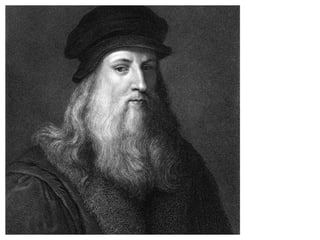
Leonardo Da vinci is considered to be one of 
the greatest painters of all time. 
He was a leading artist and intellectual of 
the Italian Renaissance. 
He is a Italian Polymath- Scientist, 
mathematic, musician, inventor, anatomist, painter, 
sculptor, architect, botanist, and writer. 
Some of his engineer ideas were ahead of 
his time. He had ideas like a helicoptor, tank, 
concentrated solar power, and a calculator.
EARLY 
LIFE
Childhood 
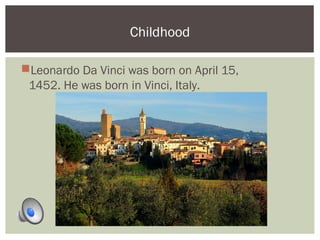
Leonardo Da Vinci was born on April 15, 
1452. He was born in Vinci, Italy.
Mother and Father 
His father was Messer 
Piero Fruosino di 
Antonio da Vinci. 
His mother was a 
peasant. 
They were never 
married. 
Leonardo had a total of 
17 siblings.
EARLY 
Career
Early career 
Leonardo was apprenticed around the age 14 to the 
noted sculptor and painter Andre del Verrocioc 
(Florence). 
He remained with him until 1478 when he then became 
an independent master. 
In 1482 Da Vinci began painting his first commission 
artwork, The Adoration of the Magi, for Florences San 
Donatoa, Scopeto monestry. But, he never did finish 
this piece.
Famous 
Artwork
Famous Artwork 
Mona Lisa 
The Last Supper 
Vitruvian Man 
Lady with an Ermine 
Self-Portrait
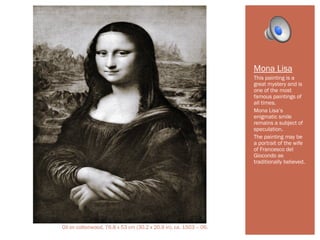
Mona Lisa 
This painting is a 
great mystery and is 
one of the most 
famous paintings of 
all times. 
Mona Lisa’s 
enigmatic smile 
remains a subject of 
speculation. 
The painting may be 
a portrait of the wife 
of Francesco del 
Giocondo as 
traditionally believed. 
Oil on cottonwood, 76.8 x 53 cm (30.2 x 20.9 in), ca. 1503 – 06.
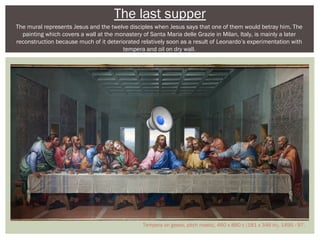
The last supper 
The mural represents Jesus and the twelve disciples when Jesus says that one of them would betray him. The 
painting which covers a wall at the monastery of Santa Maria delle Grazie in Milan, Italy, is mainly a later 
reconstruction because much of it deteriorated relatively soon as a result of Leonardo’s experimentation with 
tempera and oil on dry wall. 
Tempera on gesso, pitch mastic, 460 x 880 c (181 x 346 in), 1495 - 97.
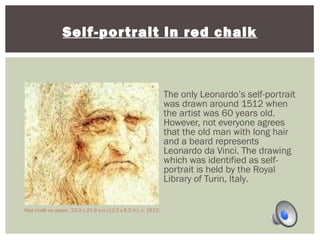
Self-portrait in red chalk 
The only Leonardo’s self-portrait 
was drawn around 1512 when 
the artist was 60 years old. 
However, not everyone agrees 
that the old man with long hair 
and a beard represents 
Leonardo da Vinci. The drawing 
which was identified as self-portrait 
is held by the Royal 
Library of Turin, Italy. 
Red chalk on paper, 33.3 x 21.6 cm (13.2 x 8.5 in), c. 1512.
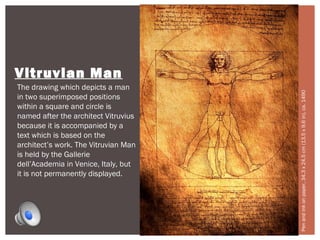
Vitruvian Man 
The drawing which depicts a man 
in two superimposed positions 
within a square and circle is 
named after the architect Vitruvius 
because it is accompanied by a 
text which is based on the 
architect’s work. The Vitruvian Man 
is held by the Gallerie 
dell’Academia in Venice, Italy, but 
it is not permanently displayed. 
Pen and ink on paper, 34.3 x 24.5 cm (13.5 x 9.6 in), ca. 1490.
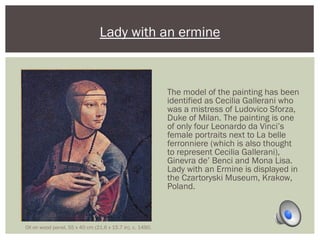
Lady with an ermine 
The model of the painting has been 
identified as Cecilia Gallerani who 
was a mistress of Ludovico Sforza, 
Duke of Milan. The painting is one 
of only four Leonardo da Vinci’s 
female portraits next to La belle 
ferronniere (which is also thought 
to represent Cecilia Gallerani), 
Ginevra de’ Benci and Mona Lisa. 
Lady with an Ermine is displayed in 
the Czartoryski Museum, Krakow, 
Poland. 
Oil on wood panel, 55 x 40 cm (21.6 x 15.7 in). c. 1490.
Philosophy of 
interconnectedness
Leonardo felt that science and art were complementary rather than 
distinct disciplines, and thought that ideas formed in one realm could and 
should inform the other. 
A lot of times da Vinci did not complete a lot of his paintings and projects. He 
spent a lot of time immersing himself in nature, testing scientific laws, 
dissecting bodies and thinking and writing about his observations.
Leonardo da Vinci started writing in notebooks, which are now 
referred to as da Vinci’s manuscripts and codices. These notebooks 
contained: 
Painting 
Architect 
Mechanics 
Human Anatomy
Later Years
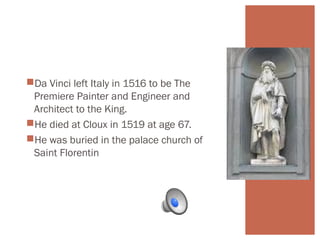
Da Vinci left Italy in 1516 to be The 
Premiere Painter and Engineer and 
Architect to the King. 
He died at Cloux in 1519 at age 67. 
He was buried in the palace church of 
Saint Florentin
Works cited 
 www.history.com/topics/leonardo-da-vinci 
 www.leonardoda-vinci.org 
 www.Biography.com/people/leonardo-da-vinci- 
40396#synopsis 
 http://historylists.org/art/list-of-5-most-famous-artworks- 
by-leonardo-da-vinci.html

Leonardo da Vinci Midterm KC

  • 1.
    By Kristine Cayo Leonardo da vinci
  • 3.
    Table of contents About Early Life Early Career Famous Artwork Philosophy of Interconnectedness Later Years
  • 4.
  • 5.
    ABOUT Leonardo Davinci is considered to be one of the greatest painters of all time. He was a leading artist and intellectual of the Italian Renaissance. He is a Italian Polymath- Scientist, mathematic, musician, inventor, anatomist, painter, sculptor, architect, botanist, and writer. Some of his engineer ideas were ahead of his time. He had ideas like a helicoptor, tank, concentrated solar power, and a calculator.
  • 6.
  • 7.
    Childhood Leonardo DaVinci was born on April 15, 1452. He was born in Vinci, Italy.
  • 8.
    Mother and Father His father was Messer Piero Fruosino di Antonio da Vinci. His mother was a peasant. They were never married. Leonardo had a total of 17 siblings.
  • 9.
  • 10.
    Early career Leonardowas apprenticed around the age 14 to the noted sculptor and painter Andre del Verrocioc (Florence). He remained with him until 1478 when he then became an independent master. In 1482 Da Vinci began painting his first commission artwork, The Adoration of the Magi, for Florences San Donatoa, Scopeto monestry. But, he never did finish this piece.
  • 11.
  • 12.
    Famous Artwork MonaLisa The Last Supper Vitruvian Man Lady with an Ermine Self-Portrait
  • 13.
    Mona Lisa Thispainting is a great mystery and is one of the most famous paintings of all times. Mona Lisa’s enigmatic smile remains a subject of speculation. The painting may be a portrait of the wife of Francesco del Giocondo as traditionally believed. Oil on cottonwood, 76.8 x 53 cm (30.2 x 20.9 in), ca. 1503 – 06.
  • 14.
    The last supper The mural represents Jesus and the twelve disciples when Jesus says that one of them would betray him. The painting which covers a wall at the monastery of Santa Maria delle Grazie in Milan, Italy, is mainly a later reconstruction because much of it deteriorated relatively soon as a result of Leonardo’s experimentation with tempera and oil on dry wall. Tempera on gesso, pitch mastic, 460 x 880 c (181 x 346 in), 1495 - 97.
  • 15.
    Self-portrait in redchalk The only Leonardo’s self-portrait was drawn around 1512 when the artist was 60 years old. However, not everyone agrees that the old man with long hair and a beard represents Leonardo da Vinci. The drawing which was identified as self-portrait is held by the Royal Library of Turin, Italy. Red chalk on paper, 33.3 x 21.6 cm (13.2 x 8.5 in), c. 1512.
  • 16.
    Vitruvian Man Thedrawing which depicts a man in two superimposed positions within a square and circle is named after the architect Vitruvius because it is accompanied by a text which is based on the architect’s work. The Vitruvian Man is held by the Gallerie dell’Academia in Venice, Italy, but it is not permanently displayed. Pen and ink on paper, 34.3 x 24.5 cm (13.5 x 9.6 in), ca. 1490.
  • 17.
    Lady with anermine The model of the painting has been identified as Cecilia Gallerani who was a mistress of Ludovico Sforza, Duke of Milan. The painting is one of only four Leonardo da Vinci’s female portraits next to La belle ferronniere (which is also thought to represent Cecilia Gallerani), Ginevra de’ Benci and Mona Lisa. Lady with an Ermine is displayed in the Czartoryski Museum, Krakow, Poland. Oil on wood panel, 55 x 40 cm (21.6 x 15.7 in). c. 1490.
  • 18.
  • 19.
    Leonardo felt thatscience and art were complementary rather than distinct disciplines, and thought that ideas formed in one realm could and should inform the other. A lot of times da Vinci did not complete a lot of his paintings and projects. He spent a lot of time immersing himself in nature, testing scientific laws, dissecting bodies and thinking and writing about his observations.
  • 20.
    Leonardo da Vincistarted writing in notebooks, which are now referred to as da Vinci’s manuscripts and codices. These notebooks contained: Painting Architect Mechanics Human Anatomy
  • 21.
  • 22.
    Da Vinci leftItaly in 1516 to be The Premiere Painter and Engineer and Architect to the King. He died at Cloux in 1519 at age 67. He was buried in the palace church of Saint Florentin
  • 23.
    Works cited www.history.com/topics/leonardo-da-vinci  www.leonardoda-vinci.org  www.Biography.com/people/leonardo-da-vinci- 40396#synopsis  http://historylists.org/art/list-of-5-most-famous-artworks- by-leonardo-da-vinci.html