Dr.Swathi.N
MGMC & RI
• Anatomy
• Position abnormalities of lens
• Etiopathogenesis
• Classification
• Special types of cataract
Objectives :
Of cataract
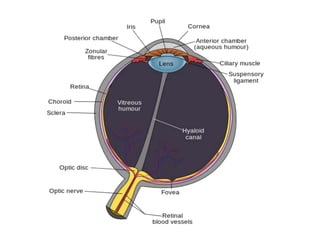
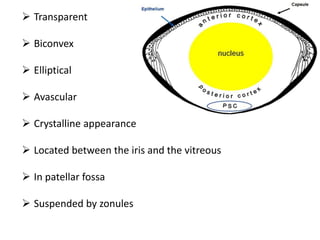
 Transparent
 Biconvex
 Elliptical
 Avascular
 Crystalline appearance
 Located between the iris and the vitreous
 In patellar fossa
 Suspended by zonules
equatorial diameter (adult) : 9-10mm
axial width : 3.5 - 4.0mm at birth,
about 4mm at 40 years
4.75 to 5.0 mm in extreme old age.
Physiological change observed daily?
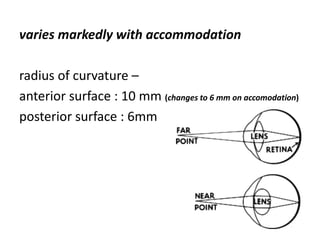
varies markedly with accommodation
radius of curvature –
anterior surface : 10 mm (changes to 6 mm on accomodation)
posterior surface : 6mm
Refractive index : 1.39
Dioptric contribution :15 D
Accommodative power : 15-16 D : At birth
7-8 D : 25 years
2 D : 50 years.
Why decrease with age?
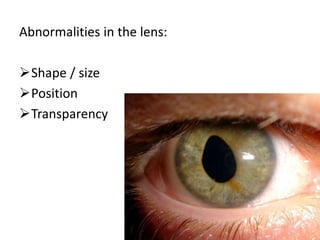
Abnormalities in the lens:
Shape / size
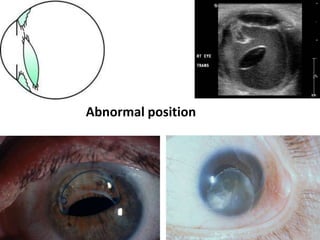
Position
Transparency
Abnormal shape / size :
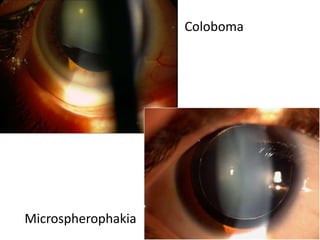
• Coloboma
• Spherophakia
• Microphakia
• Microspherophakia
– ass. with Weil-Marchesani syndrome
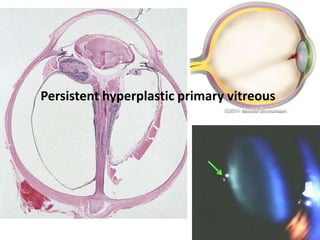
Persistent hyperplastic primary vitreous
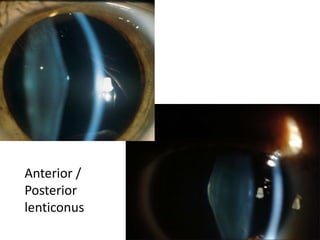
Posterior / anterior lenticonus
Microspherophakia
Coloboma
Persistent hyperplastic primary vitreous
Anterior /
Posterior
lenticonus
Abnormal position
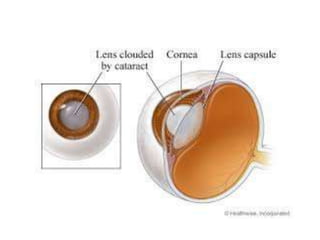
Etiopathogenesis :
• Degeneration & opacification of formed lens
fibres
• Formation of aberrant lens fibres
• Deposition of other materials
• Abnormality of lens proteins – disturbance of
intra- & extra- cellular equilibrium of water &
electrolytes
• Hydration
• Denaturation
• Slow sclerosis
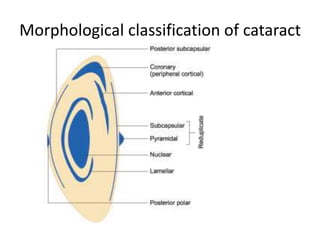
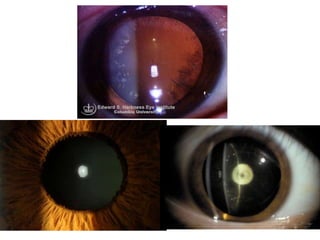
Morphological classification of cataract
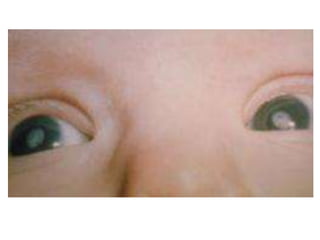
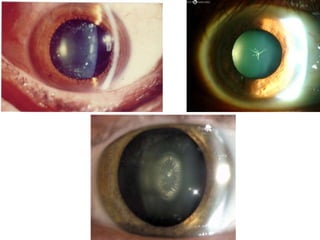
Congenital / Developmental cataract :
• Blue dot cataract
• Sutural cataract – anterior / posterior
• Cataracta centralis pulverulenta
• Zonular cataract
• Fusiform / coralliform
• Nuclear cataract
• Coronary cataract
• Anterior/ postrior polar cataract
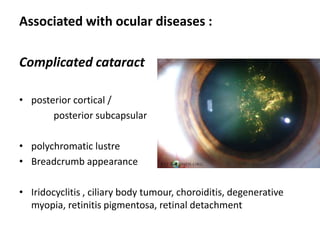
Associated with ocular diseases :
Complicated cataract
• posterior cortical /
posterior subcapsular
• polychromatic lustre
• Breadcrumb appearance
• Iridocyclitis , ciliary body tumour, choroiditis, degenerative
myopia, retinitis pigmentosa, retinal detachment
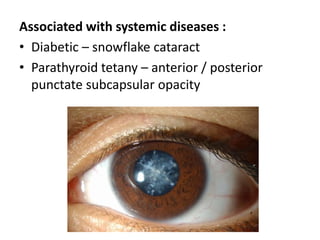
Associated with systemic diseases :
• Diabetic – snowflake cataract
• Parathyroid tetany – anterior / posterior
punctate subcapsular opacity
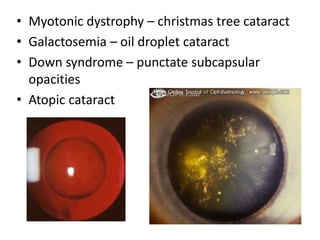
• Myotonic dystrophy – christmas tree cataract
• Galactosemia – oil droplet cataract
• Down syndrome – punctate subcapsular
opacities
• Atopic cataract
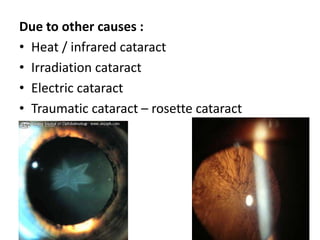
Due to other causes :
• Heat / infrared cataract
• Irradiation cataract
• Electric cataract
• Traumatic cataract – rosette cataract
• Enumerate the cause of cataract in a given age
group (child, middle aged, elderly)
• Zonular cataract
• Traumatic cataract
• Complicated cataract
• Subluxated lens
• Diagnosis of cataract
• Congenital cataract
• Diabetic cataract
Suggested reading
• Etiopathogenesis of cataract
• Symptoms of cataract
• Complications of cataract
Lens i 13.04.16,dr.n.swathi

Lens i 13.04.16,dr.n.swathi

  • 1.
  • 2.
    • Anatomy • Positionabnormalities of lens • Etiopathogenesis • Classification • Special types of cataract Objectives : Of cataract
  • 4.
     Transparent  Biconvex Elliptical  Avascular  Crystalline appearance  Located between the iris and the vitreous  In patellar fossa  Suspended by zonules
  • 5.
    equatorial diameter (adult): 9-10mm axial width : 3.5 - 4.0mm at birth, about 4mm at 40 years 4.75 to 5.0 mm in extreme old age. Physiological change observed daily?
  • 6.
    varies markedly withaccommodation radius of curvature – anterior surface : 10 mm (changes to 6 mm on accomodation) posterior surface : 6mm
  • 7.
    Refractive index :1.39 Dioptric contribution :15 D Accommodative power : 15-16 D : At birth 7-8 D : 25 years 2 D : 50 years. Why decrease with age?
  • 8.
    Abnormalities in thelens: Shape / size Position Transparency
  • 9.
    Abnormal shape /size : • Coloboma • Spherophakia • Microphakia • Microspherophakia – ass. with Weil-Marchesani syndrome Persistent hyperplastic primary vitreous Posterior / anterior lenticonus
  • 10.
  • 11.
  • 12.
  • 13.
  • 16.
    Etiopathogenesis : • Degeneration& opacification of formed lens fibres • Formation of aberrant lens fibres • Deposition of other materials • Abnormality of lens proteins – disturbance of intra- & extra- cellular equilibrium of water & electrolytes
  • 17.
  • 18.
  • 20.
    Congenital / Developmentalcataract : • Blue dot cataract • Sutural cataract – anterior / posterior • Cataracta centralis pulverulenta • Zonular cataract
  • 22.
    • Fusiform /coralliform • Nuclear cataract • Coronary cataract • Anterior/ postrior polar cataract
  • 24.
    Associated with oculardiseases : Complicated cataract • posterior cortical / posterior subcapsular • polychromatic lustre • Breadcrumb appearance • Iridocyclitis , ciliary body tumour, choroiditis, degenerative myopia, retinitis pigmentosa, retinal detachment
  • 25.
    Associated with systemicdiseases : • Diabetic – snowflake cataract • Parathyroid tetany – anterior / posterior punctate subcapsular opacity
  • 26.
    • Myotonic dystrophy– christmas tree cataract • Galactosemia – oil droplet cataract • Down syndrome – punctate subcapsular opacities • Atopic cataract
  • 27.
    Due to othercauses : • Heat / infrared cataract • Irradiation cataract • Electric cataract • Traumatic cataract – rosette cataract
  • 28.
    • Enumerate thecause of cataract in a given age group (child, middle aged, elderly) • Zonular cataract • Traumatic cataract • Complicated cataract • Subluxated lens • Diagnosis of cataract • Congenital cataract • Diabetic cataract
  • 29.
    Suggested reading • Etiopathogenesisof cataract • Symptoms of cataract • Complications of cataract