






















Lend Me Your Brain: Supporting TBI
Survivors around
Executive Function Deficits
www.DrNowell.com
DavidNowell
DavidNowellSeminars
Overview
• Brain overview in 18 slides
• Executive functioning
• Understanding your brain’s
reward-and-planning system
• Q&A&D
BRAIN OVERVIEW IN 18 SLIDES
Appendix A
Peak experiences
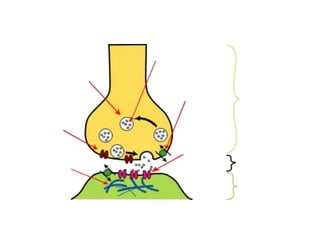
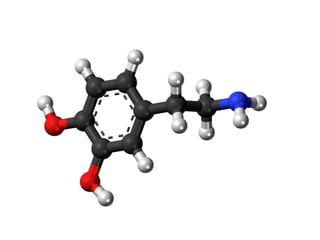
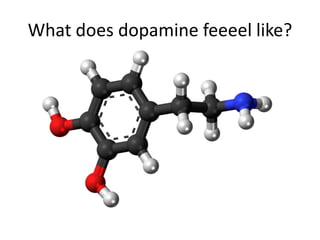
What does dopamine feeeel like?
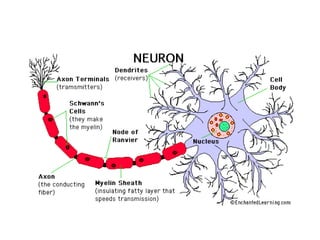
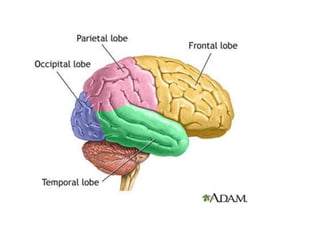
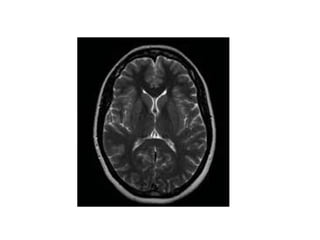
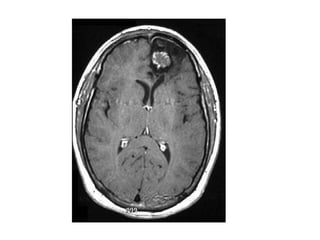
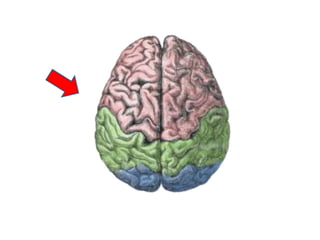
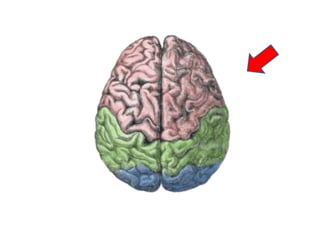
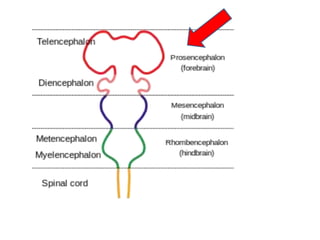
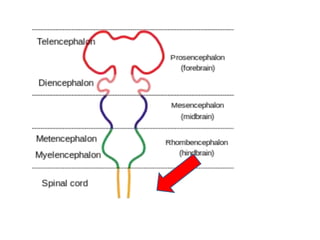
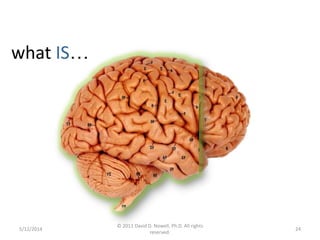
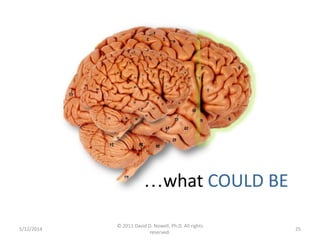
Ways of thinking about the brain
• Left to right
• Top to bottom
• Front to back
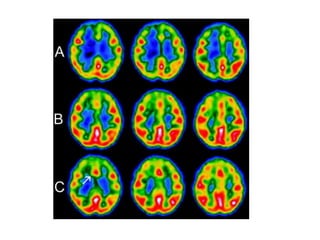
what IS…
5/12/2014
© 2011 David D. Nowell, Ph.D. All rights
reserved.
24
…what COULD BE
5/12/2014
© 2011 David D. Nowell, Ph.D. All rights
reserved.
25
EXECUTIVE FUNCTIONING
The Executive Functions
• Making movies in your head
• Talking to yourself
• Being your own boss
• Thinking and creating “what could be”
5/12/2014
© 2011 David D. Nowell, Ph.D. All rights
reserved.
28
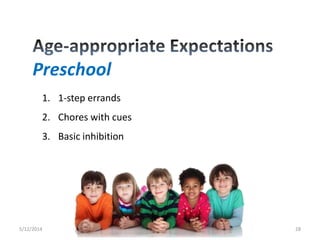
1. 1-step errands
2. Chores with cues
3. Basic inhibition
Preschool
5/12/2014
© 2011 David D. Nowell, Ph.D. All rights
reserved.
29
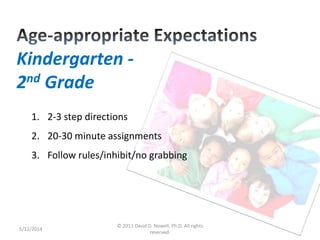
1. 2-3 step directions
2. 20-30 minute assignments
3. Follow rules/inhibit/no grabbing
Kindergarten -
2nd Grade
5/12/2014
© 2011 David D. Nowell, Ph.D. All rights
reserved.
30
1. Simple shopping list
2. Keep track of variable daily schedule
3. Inhibit and regulate even without teacher present
4. Simple delayed gratification (phone)
3rd-5th Grade
5/12/2014
© 2011 David D. Nowell, Ph.D. All rights
reserved.
31
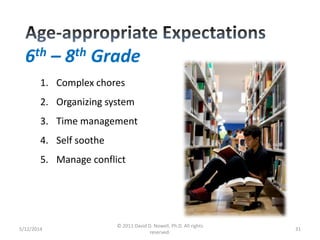
1. Complex chores
2. Organizing system
3. Time management
4. Self soothe
5. Manage conflict
6th – 8th Grade
5/12/2014
© 2011 David D. Nowell, Ph.D. All rights
reserved.
32
1. Independent with assignments
2. Make adjustments based on feedback
3. Inhibit reckless behavior
4. Say “no” to fun activity if other plans already made
5. Take others’ perspective
Teenage-mid 20’s
Impact of Executive Dysfunction on
School and Work
• Problems initiating and completing work.
• Slowed work pace.
• Increased impulsivity.
• Decreased productivity.
• Confusion and increased stress.
• Trouble with generalization of new learning.
• Distractible.
Impact of Executive Dysfunction on
Social Skills
• Loss of friends and social circles.
• Decreased affective regulation.
• Increased impulsivity.
• Increased agitation.
• Decreased perspective-taking.
• Premature return to school/work.
5/12/2014
© 2011 David D. Nowell, Ph.D. All rights
reserved.
35
Lending Your Brain
Capacity
• Guardianship
• Conservatorship
• Representative payee
Meet with your ADHD employee for
regular ongoing feedback
UNDERSTANDING YOUR BRAIN’S
REWARD-AND-PLANNING SYSTEM
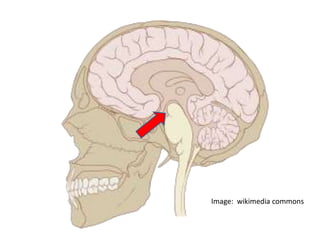
Image: wikimedia commons
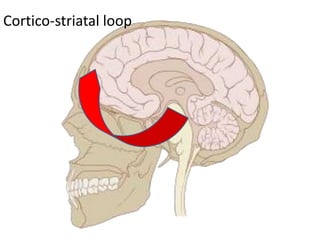
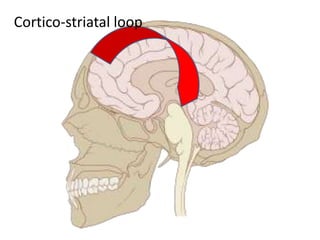
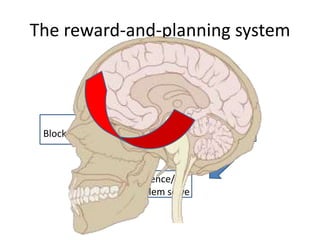
Cortico-striatal loop
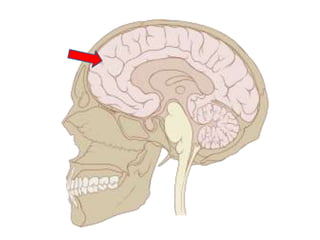
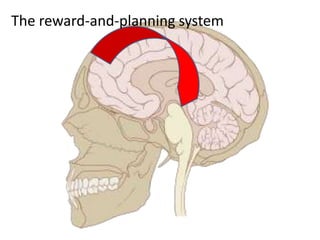
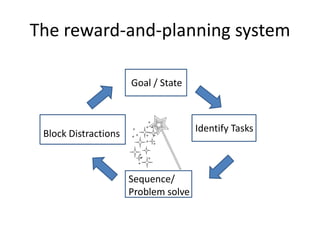
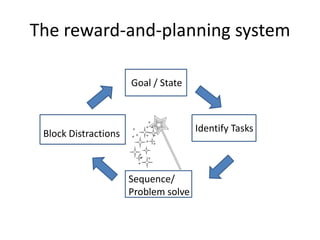
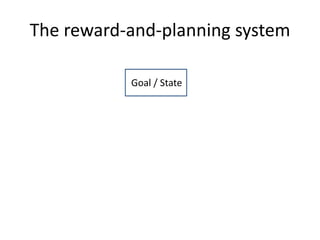
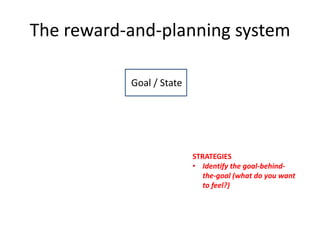
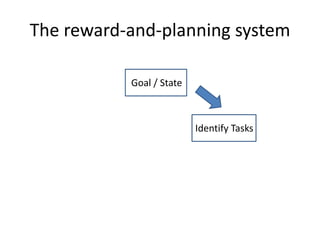
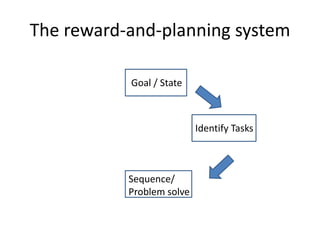
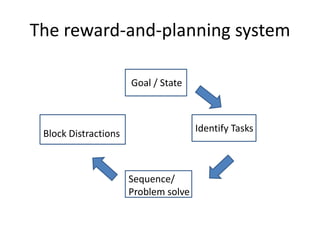
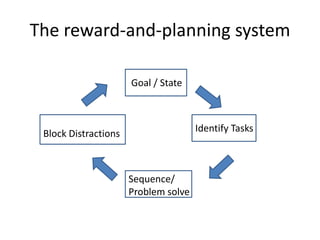
The reward-and-planning system
Goal / State
Identify Tasks
Sequence/
Problem solve
Block Distractions
Ways the reward-and-planning system can
go wrong
• Dante: “My biggest problem is that I want to
do everything all at once!”
Ways the reward-and-planning system can
go wrong
• Inna: “I just get blank. I usually start sitting
more slouched, hold my head with my left
hand, ….you freeze and instead of being able
to think of alternatives, you start thinking to
yourself that you cannot find a logical answer
and you are tempted to avoid it as if it poses a
threat somehow to you.”
Ways the reward-and-planning system can
go wrong
• Hank: “I have things I need to do to improve
my marriage, my health and my financial
situation, but I honestly believe that I have
zero chance of actually making any of those
three things actually get better. ”
The reward-and-planning system
Goal / State
Identify Tasks
Sequence/
Problem solve
Block Distractions
The reward-and-planning system
Goal / State
The reward-and-planning system
Goal / State
STRATEGIES
• Identify the goal-behind-
the-goal (what do you want
to feel?)
The reward-and-planning system
Goal / State
Identify Tasks
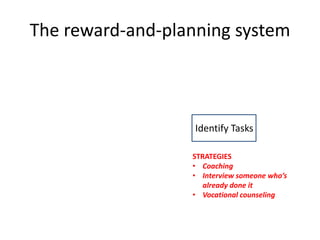
The reward-and-planning system
Identify Tasks
STRATEGIES
• Coaching
• Interview someone who’s
already done it
• Vocational counseling
The reward-and-planning system
Goal / State
Identify Tasks
Sequence/
Problem solve
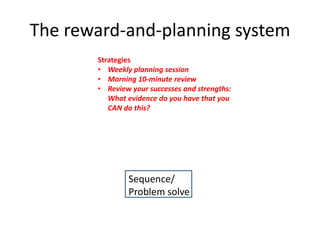
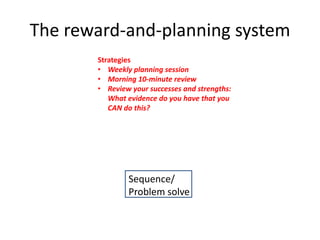
The reward-and-planning system
Sequence/
Problem solve
Strategies
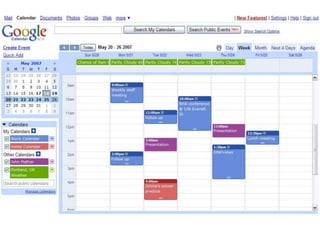
• Weekly planning session
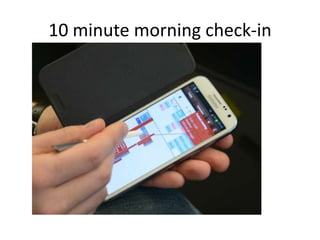
• Morning 10-minute review
• Review your successes and strengths:
What evidence do you have that you
CAN do this?
10 minute morning check-in
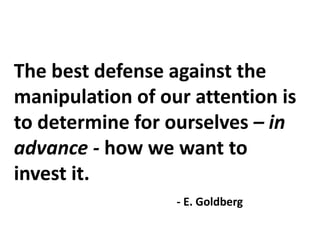
The best defense against the
manipulation of our attention is
to determine for ourselves – in
advance - how we want to
invest it.
- E. Goldberg
easy hard
5/12/2014
© 2011 David D. Nowell, Ph.D. All rights
reserved.
62
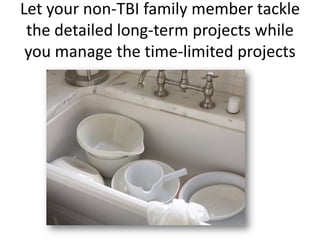
Let your non-TBI family member tackle
the detailed long-term projects while
you manage the time-limited projects
60-Second
Bathroom Cleaning Routine
Shower coach
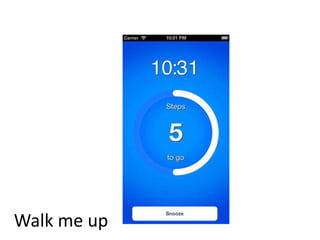
Walk me up
Clocky
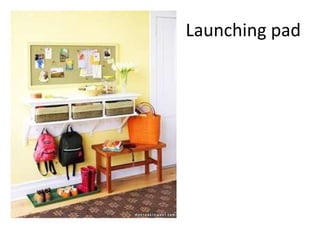
Launching pad
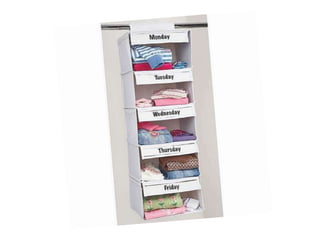
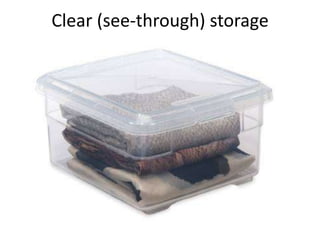
Clear (see-through) storage
The reward-and-planning system
Sequence/
Problem solve
Strategies
• Weekly planning session
• Morning 10-minute review
• Review your successes and strengths:
What evidence do you have that you
CAN do this?
The reward-and-planning system
Goal / State
Identify Tasks
Sequence/
Problem solve
Block Distractions
The reward-and-planning system
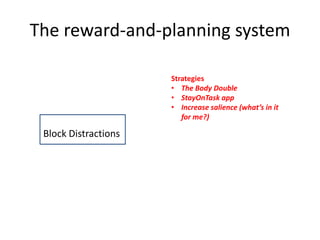
Block Distractions
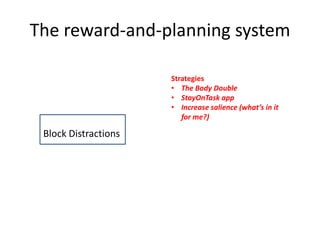
The reward-and-planning system
Block Distractions
Strategies
• The Body Double
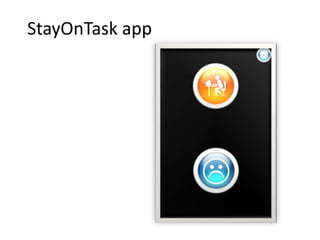
• StayOnTask app
• Increase salience (what’s in it
for me?)
Increase salience
EZ-C Reader
StayOnTask app
The reward-and-planning system
Block Distractions
Strategies
• The Body Double
• StayOnTask app
• Increase salience (what’s in it
for me?)
The reward-and-planning system
Goal / State
Identify Tasks
Sequence/
Problem solve
Block Distractions
The reward-and-planning system
Goal / State
The reward-and-planning system
Goal / State
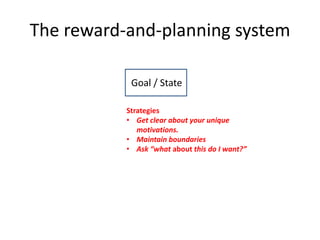
Strategies
• Get clear about your unique
motivations.
• Maintain boundaries
• Ask “what about this do I want?”
The reward-and-planning system
Goal / State
Identify Tasks
Sequence/
Problem solve
Block Distractions
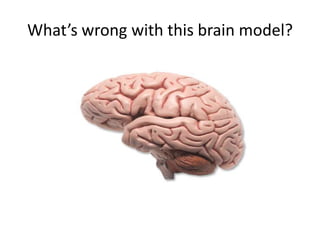
What’s wrong with this brain model?
The “Big 5” Brain Supports
• Sleep
• Exercise
• Nutrition
• Daily calendar review
• Connection
Q & A & D
www.slideshare.net/dnowell
Let’s stay in touch!
Join my e-newsletter list:
 Fill out a card today and drop it in the box.
 Text to join: text DNSEMINARS to 22828
 Sign up on my web site or Facebook page
Visit us on the web: www.DrNowell.com
davidnowell David Nowell Seminars

Lend Me Your Brain: Supporting TBI Survivors around Executive Functioning