At the end of the day I’ll know this
conference has been a success for me
if _____________________.
Overview
• Understanding your brain’s built-in hard-wired
  reward-and-planning system
• Asking 2 questions
• Strategic behavioral inquiry: How exactly did
  you do that?
Assumptions
•   Everybody’s doing the best they can
•   Every behavior serves a function
•   Behavior is not incomprehensible or random
•   Behavior follows patterns which reveal
    themselves to the curious observer free of
    prejudice or blame or theory
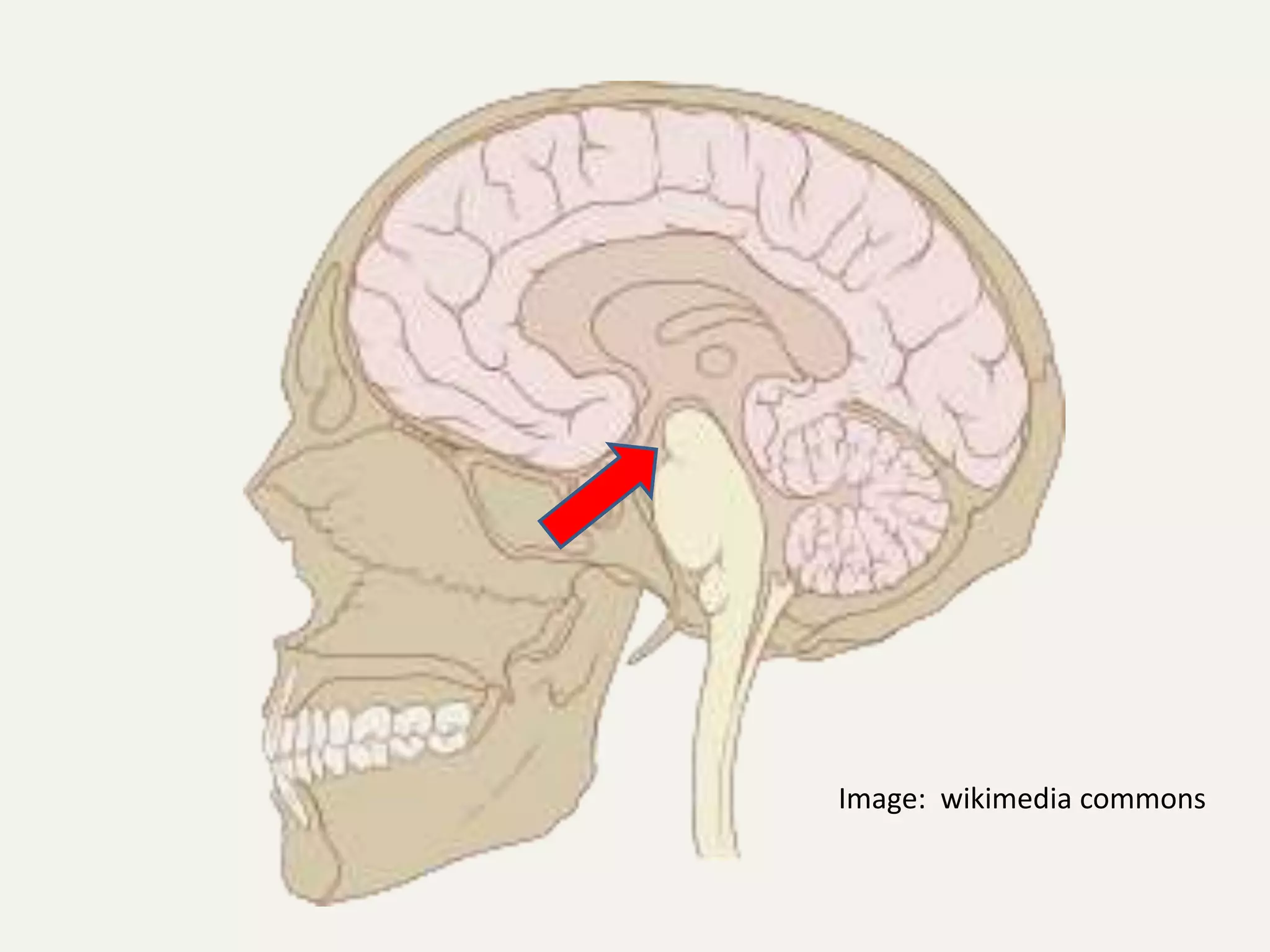
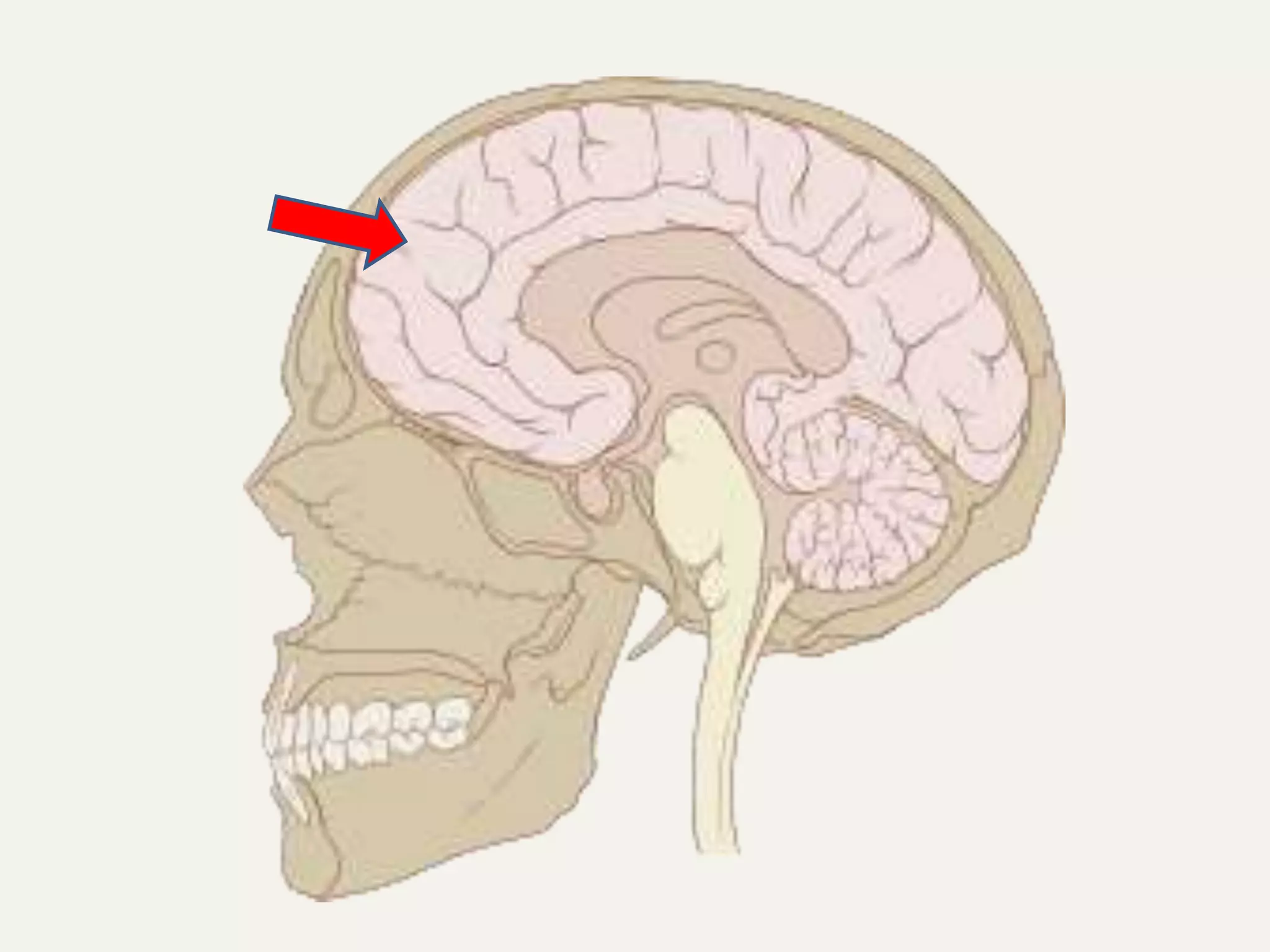
UNDERSTANDING YOUR BRAIN’S BUILT-
IN HARD-WIRED REWARD-AND-
PLANNING SYSTEM
Image: wikimedia commons
© 2011 David D. Nowell, Ph.D. All rights
10/21/2012                                              10
                           reserved.
We don’t do anything we’re not
motivated to do
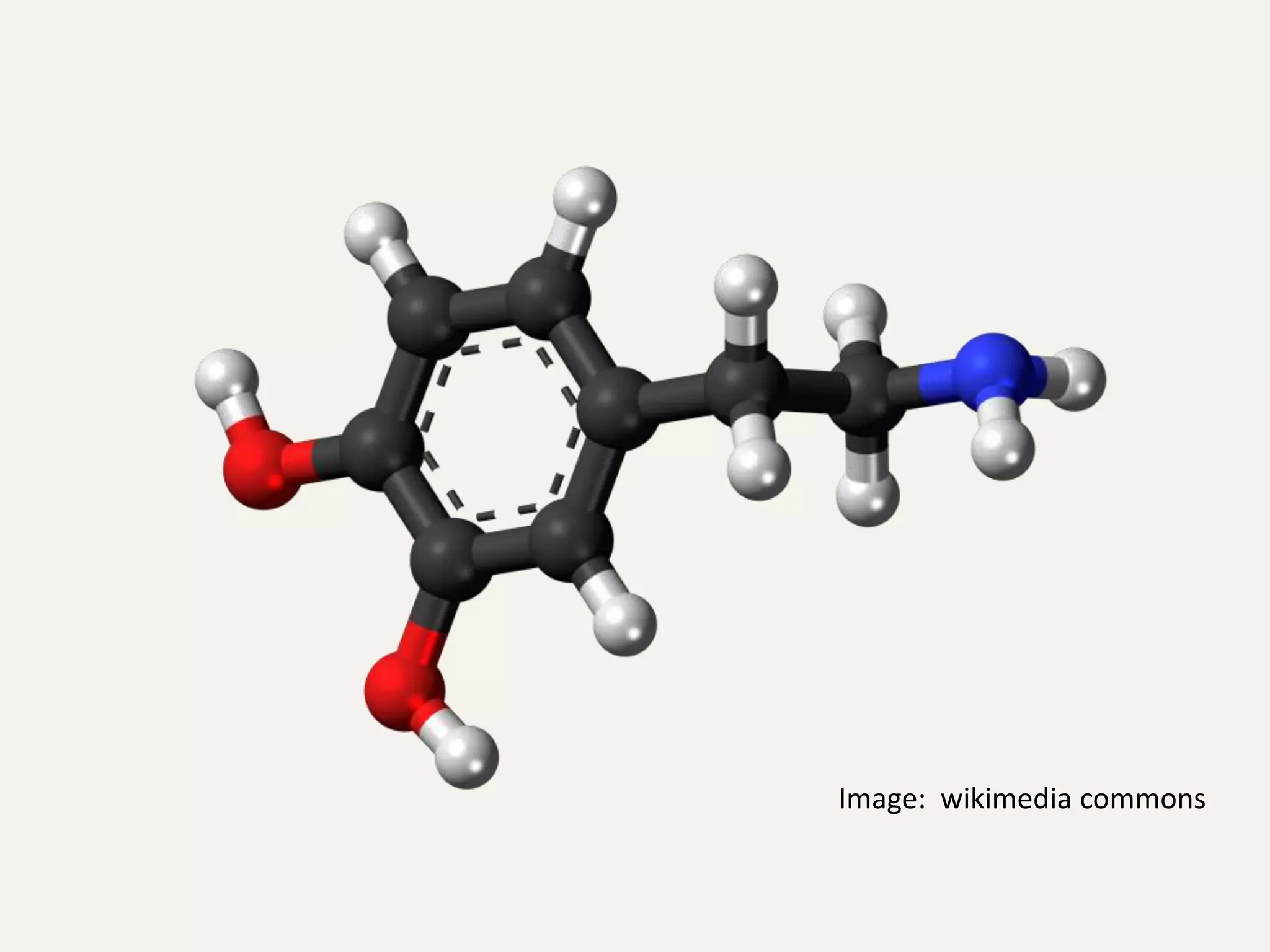
Dopamine is the neurotransmitter of:
• Reward           • Pride
• Motivation       • Success
• Woo hoo!         • Yay!
What does dopamine feeeel like?

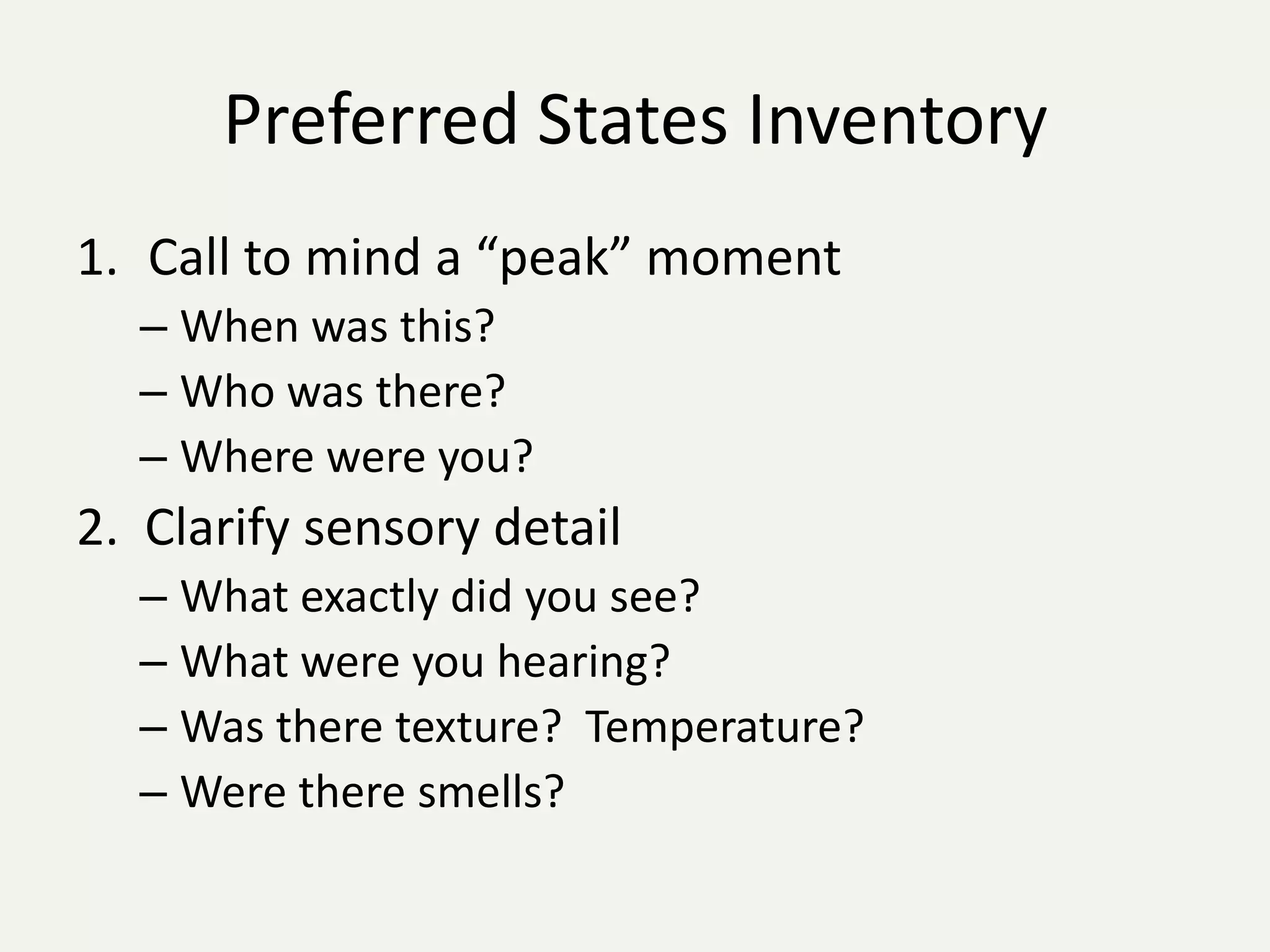
Preferred States Inventory
1. Call to mind a “peak” moment
  – When was this?
  – Who was there?
  – Where were you?
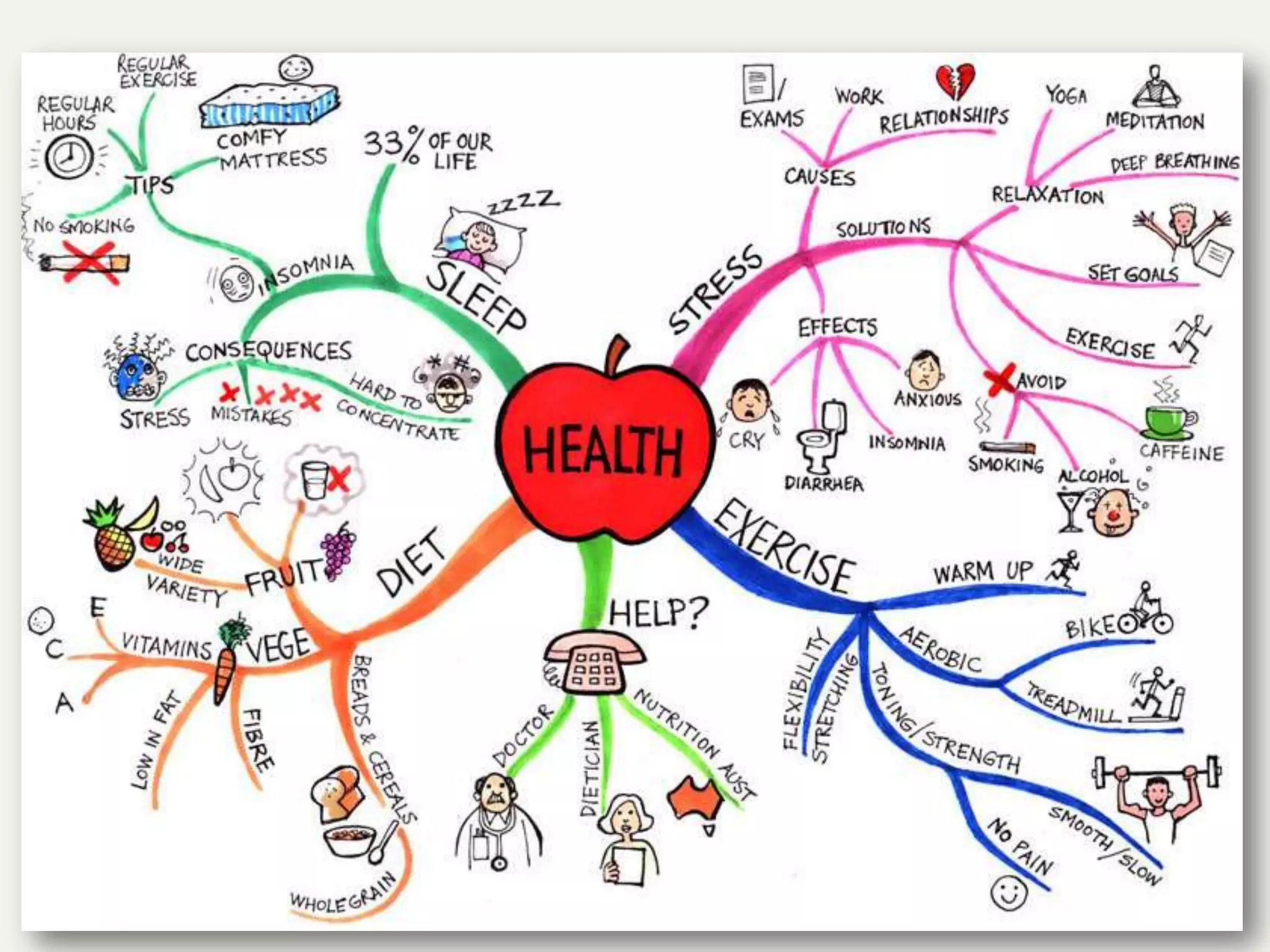
2. Clarify sensory detail
  – What exactly did you see?
  – What were you hearing?
  – Was there texture? Temperature?
  – Were there smells?
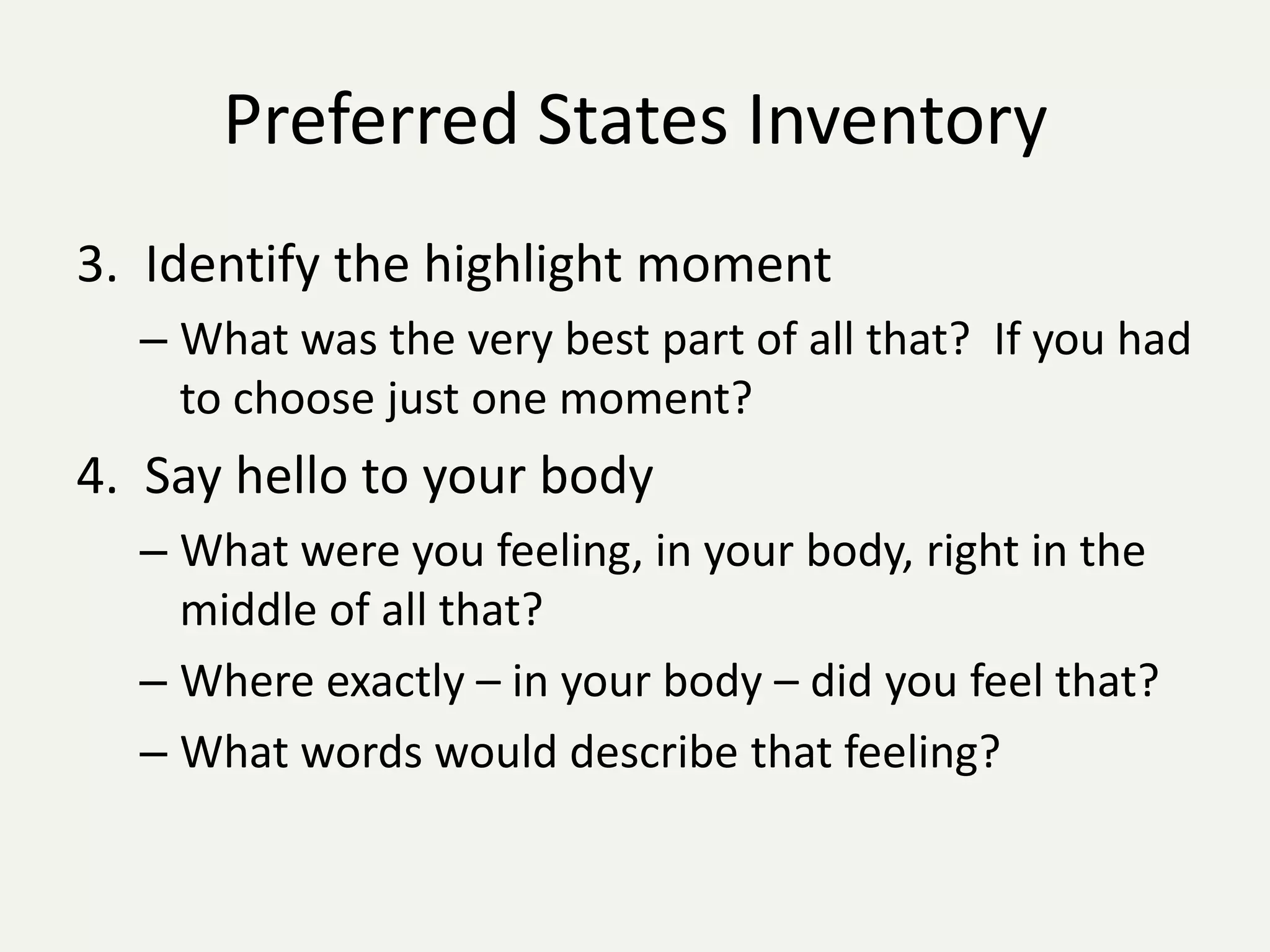
Preferred States Inventory
3. Identify the highlight moment
  – What was the very best part of all that? If you had
    to choose just one moment?
4. Say hello to your body
  – What were you feeling, in your body, right in the
    middle of all that?
  – Where exactly – in your body – did you feel that?
  – What words would describe that feeling?
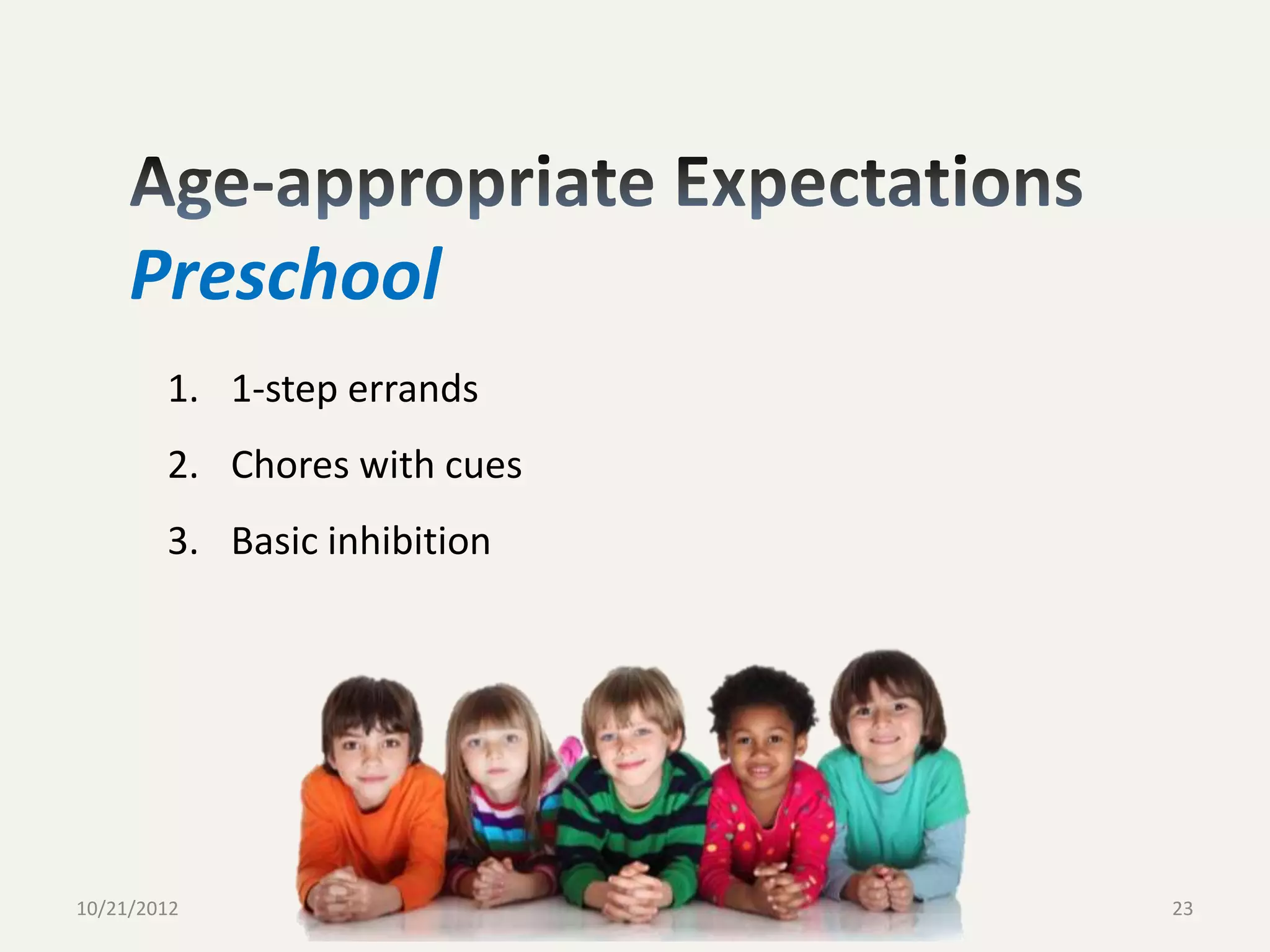
Preschool
        1. 1-step errands
        2. Chores with cues
        3. Basic inhibition


                         © 2011 David D. Nowell, Ph.D. All rights
10/21/2012                                                          23
                                       reserved.
Kindergarten -
2nd Grade
    1. 2-3 step directions
    2. 20-30 minute assignments
    3. Follow rules/inhibit/no grabbing


                       © 2011 David D. Nowell, Ph.D. All rights
10/21/2012                                                        24
                                     reserved.
3rd-5th Grade
             1. Simple shopping list
             2. Keep track of variable daily schedule
             3. Inhibit and regulate even without teacher present
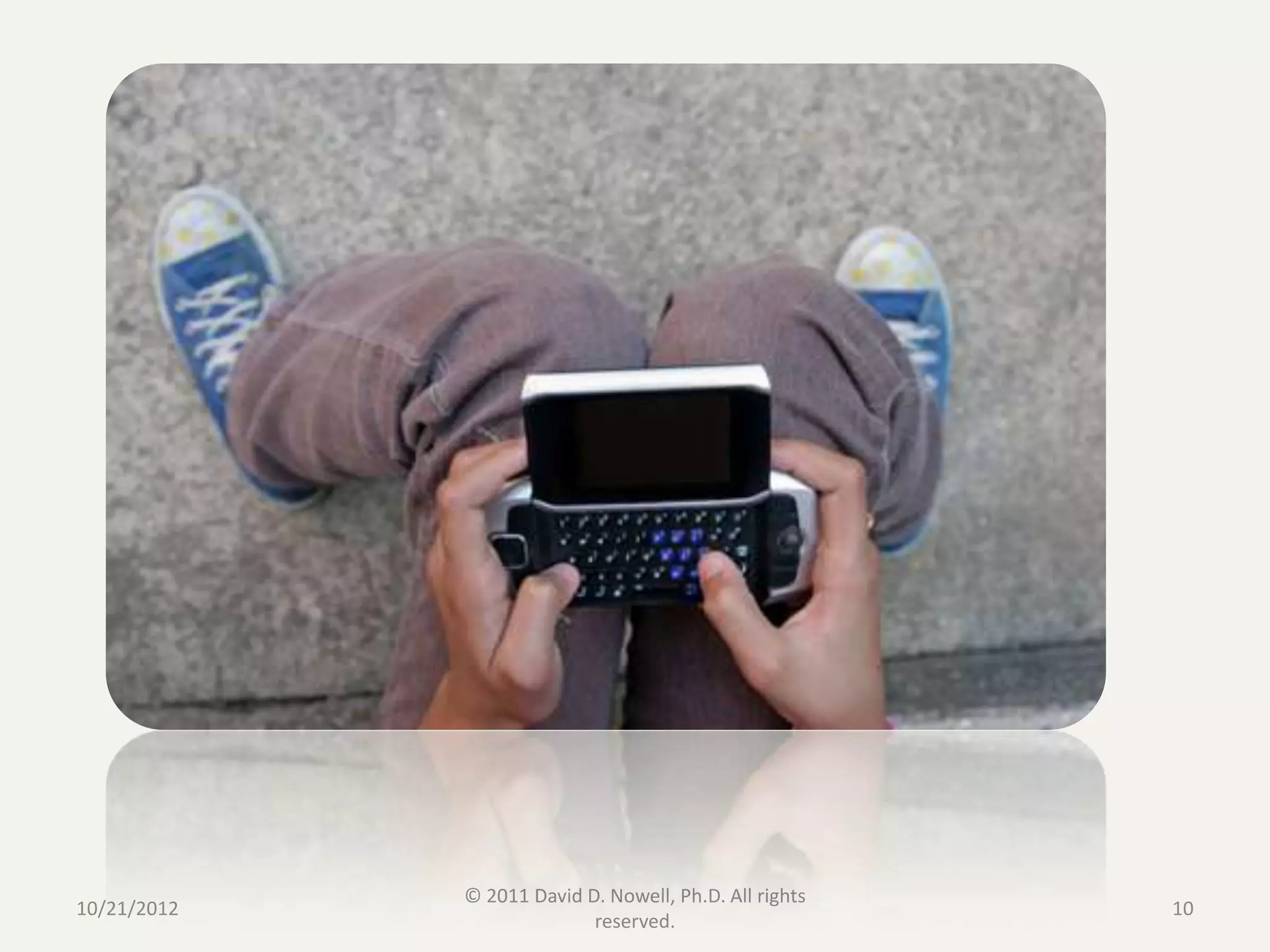
             4. Simple delayed gratification (phone)


                            © 2011 David D. Nowell, Ph.D. All rights
10/21/2012                                                             25
                                          reserved.
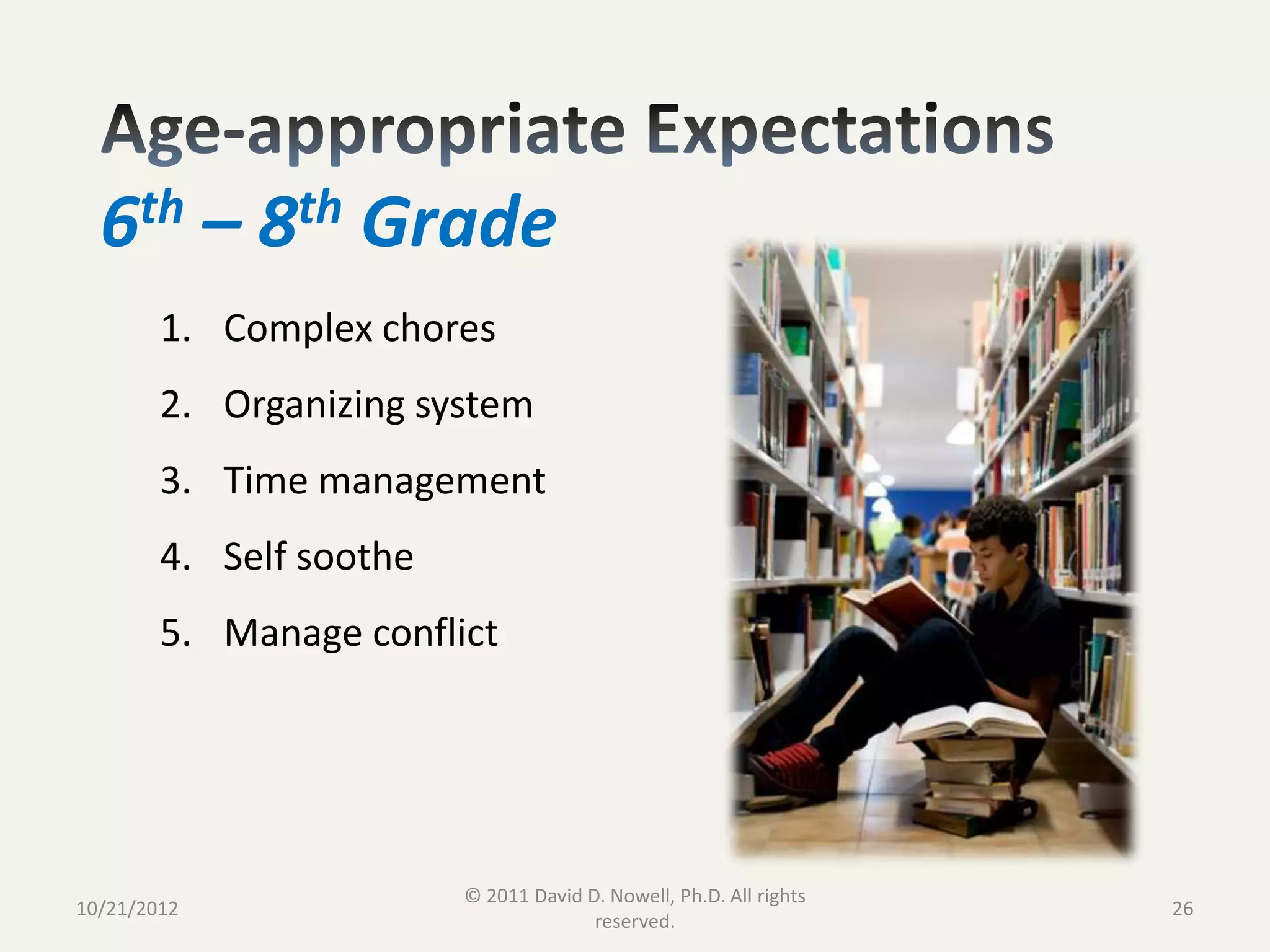
6th – 8th Grade
        1. Complex chores
        2. Organizing system
        3. Time management
        4. Self soothe
        5. Manage conflict


                         © 2011 David D. Nowell, Ph.D. All rights
10/21/2012                                                          26
                                       reserved.
Teenage-mid 20’s
             1. Independent with assignments
             2. Make adjustments based on feedback
             3. Inhibit reckless behavior
             4. Say “no” to fun activity if other plans already made
             5. Take others’ perspective


                             © 2011 David D. Nowell, Ph.D. All rights
10/21/2012                                                              27
                                           reserved.
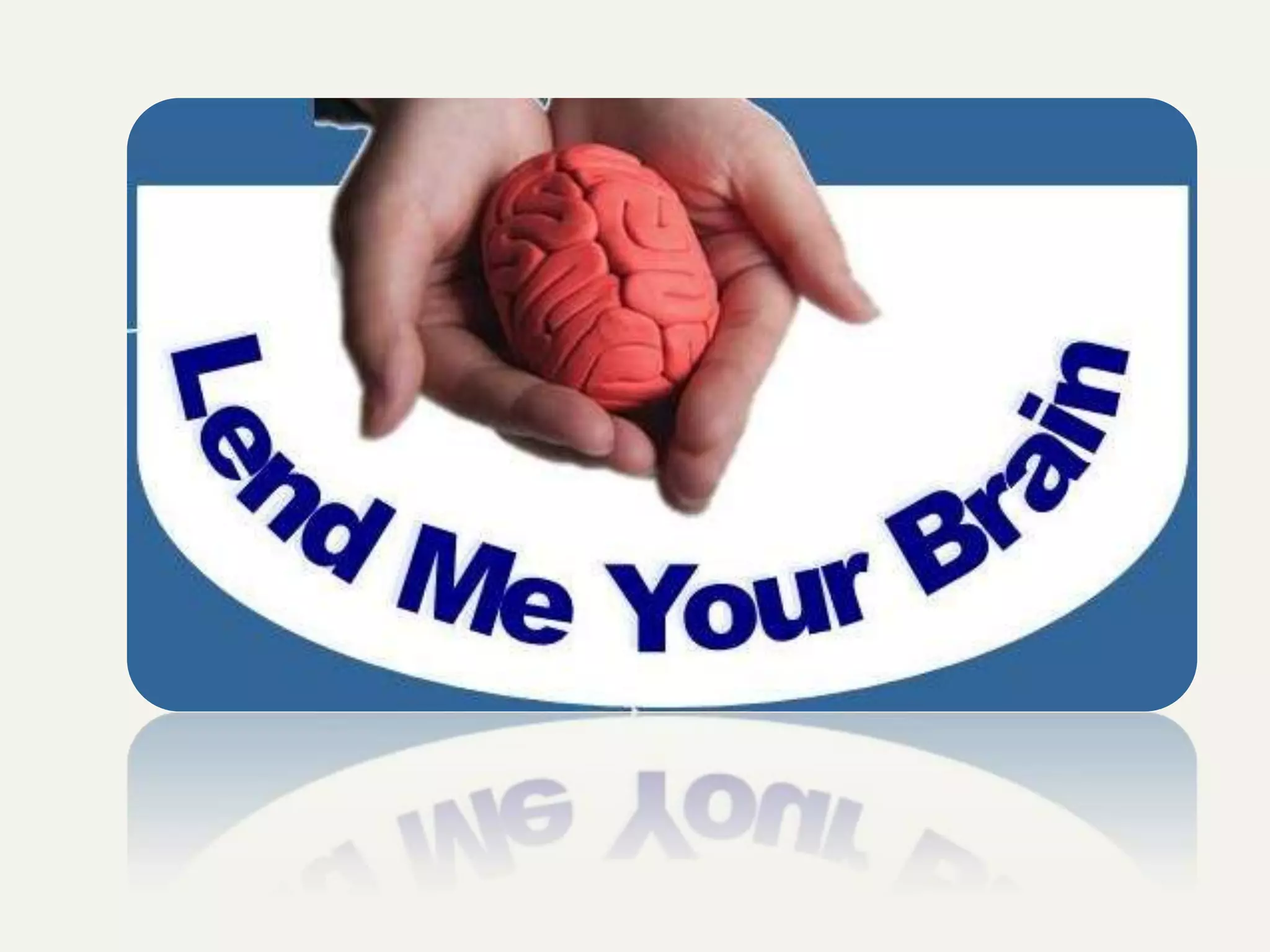
Lending Your Brain


             © 2011 David D. Nowell, Ph.D. All rights
10/21/2012                                              28
                           reserved.
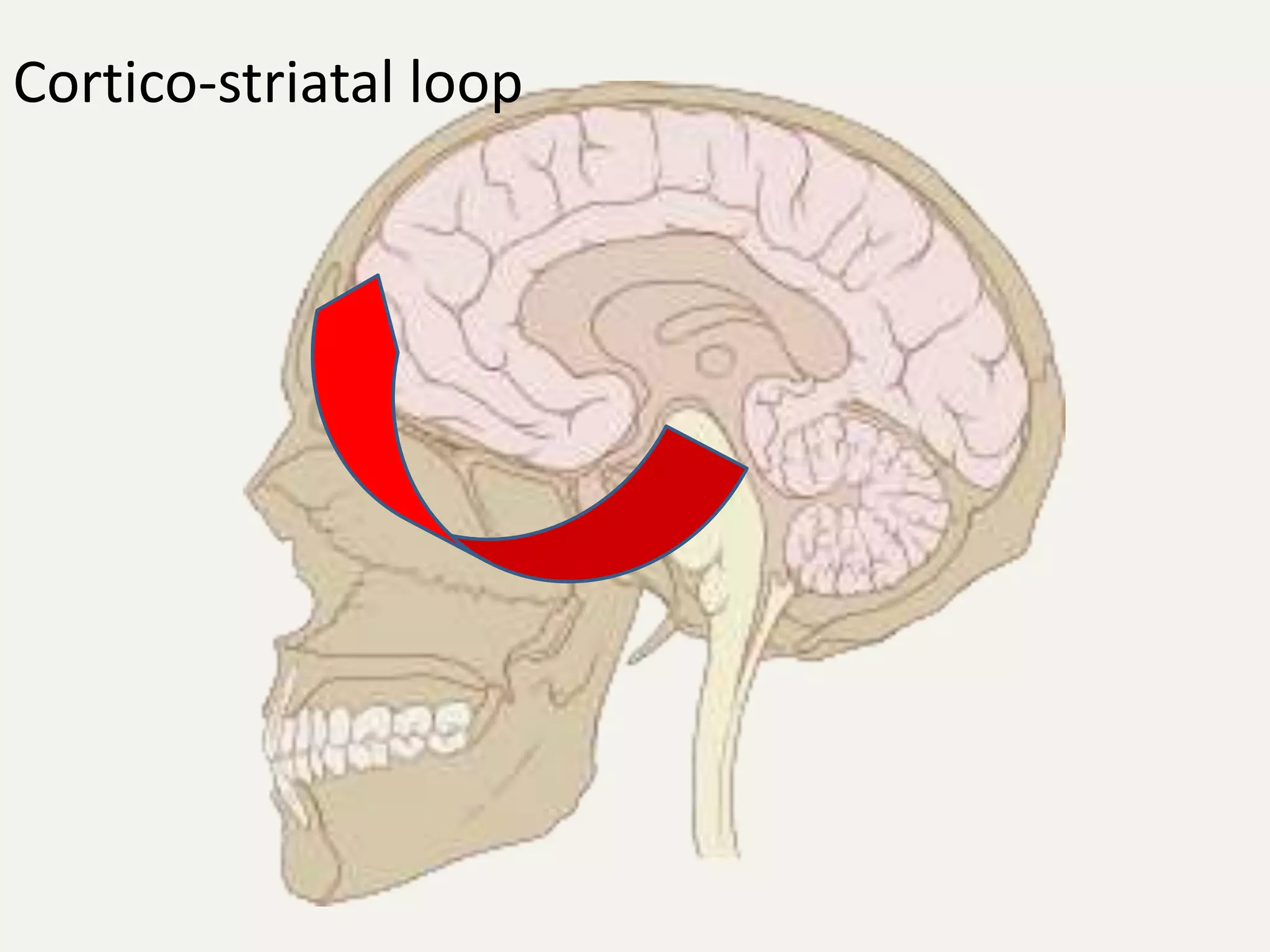
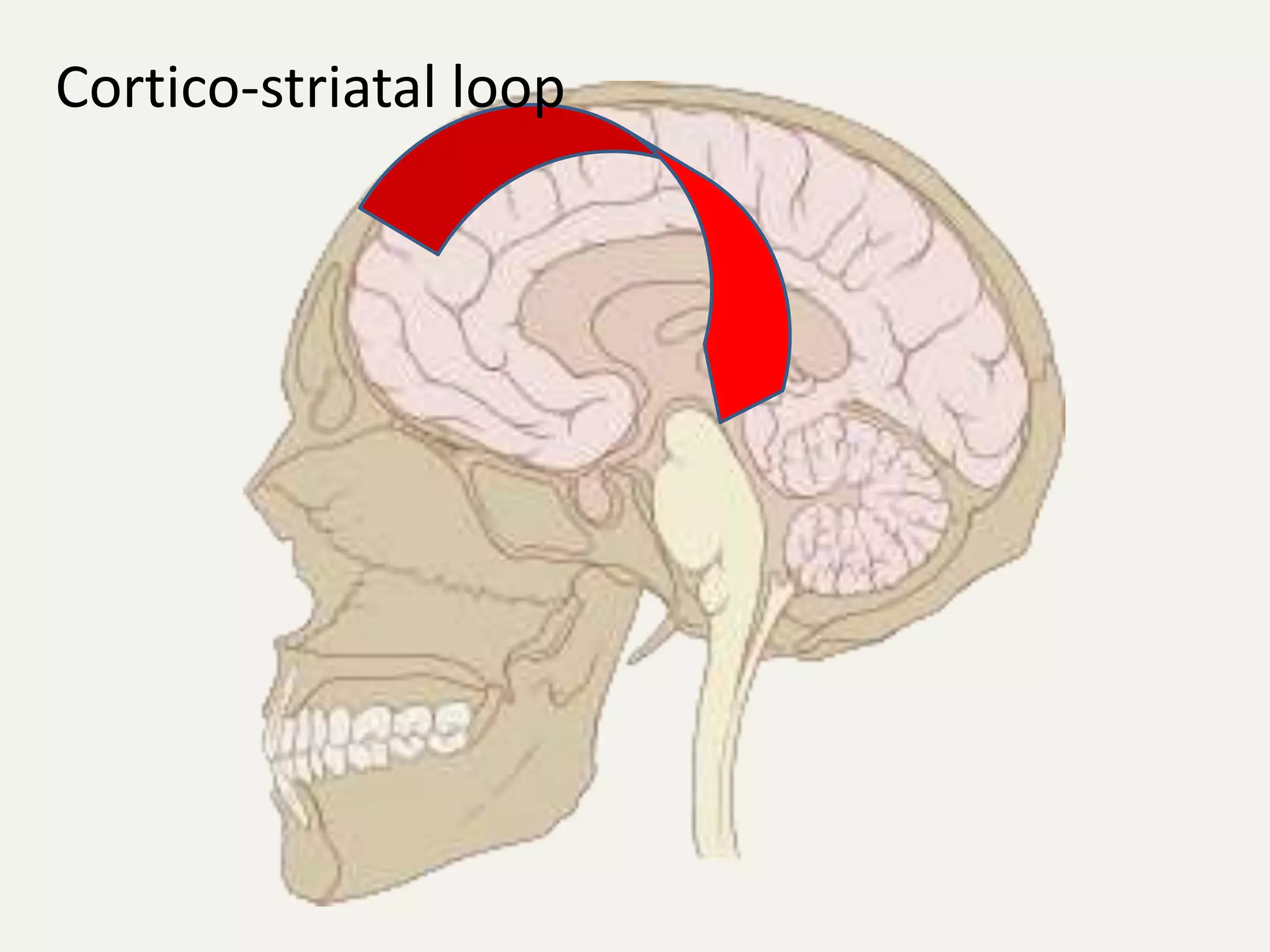
Cortico-striatal loop
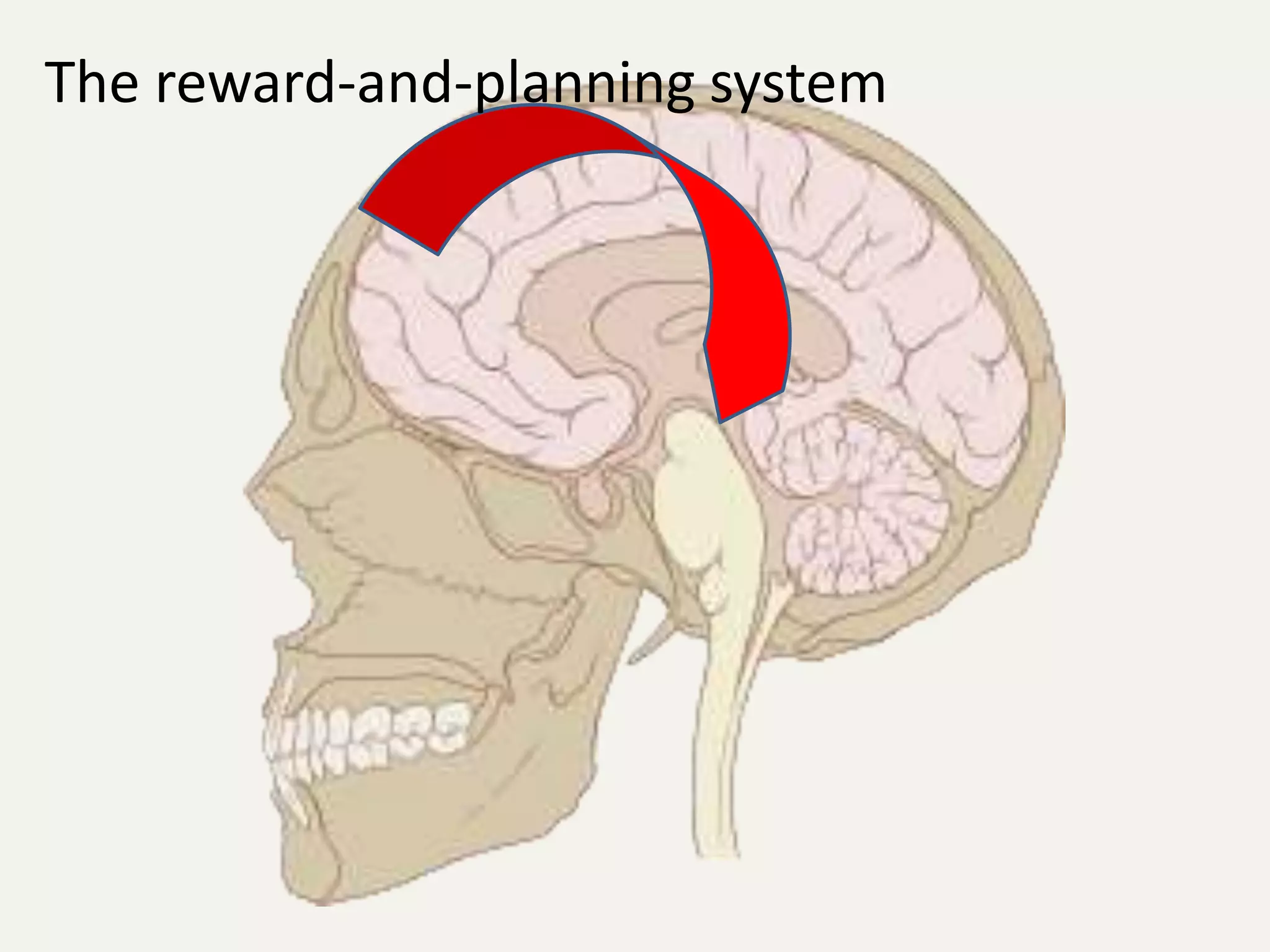
The reward-and-planning system
•   Anticipate goal (state)
•   Identify tasks
•   Sequence / problem-solve
•   Block out distractions
•   Get the reward
Ways the reward-and-planning system
           can go wrong
•   Anticipate goal (state)
•   Identify tasks
•   Sequence / problem-solve
•   Block out distractions
•   Get the reward
Ways the reward-and-planning system
           can go wrong
• Anticipate goal (state)
  – Strategies:
     • Preferred States Inventory
     • Letter from the future
     • Look for the goal-behind-the-goal
Ways the reward-and-planning system
           can go wrong
• Identify tasks
  – Strategies:
     •   Coaching
     •   Interview someone who’s already done it
     •   Vocational counseling
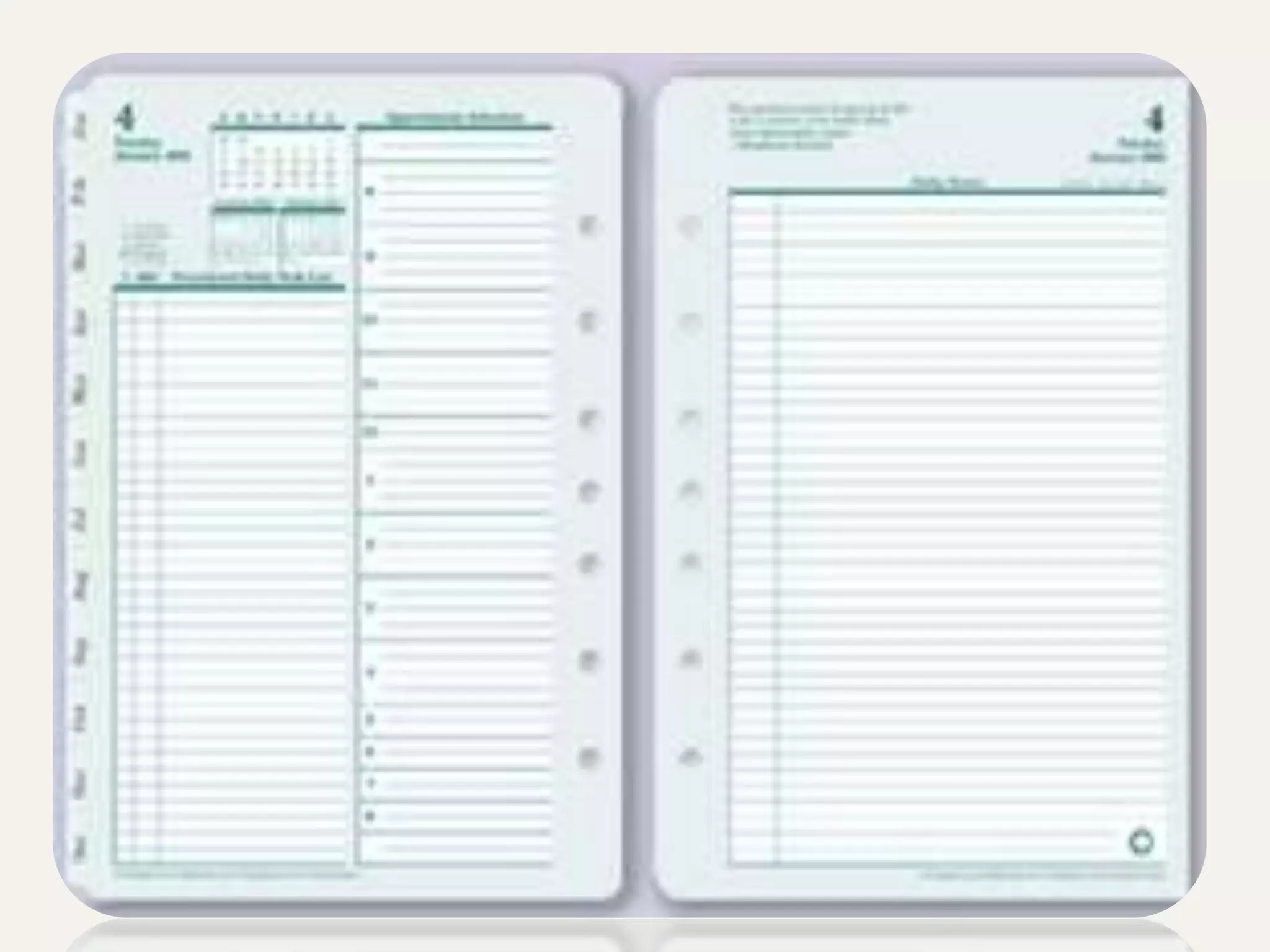
     •   Weekly planning session
The best defense against the
manipulation of our attention is
to determine for ourselves – in
advance - how we want to
invest it.
                  - E. Goldberg
Ways the reward-and-planning system
           can go wrong
• Sequence / problem-solve
  – Strategies:
     • Coaching
     • Project management
     • Review your successes and strengths: What evidence
       do you have that you CAN do this?
     • Psychotherapy
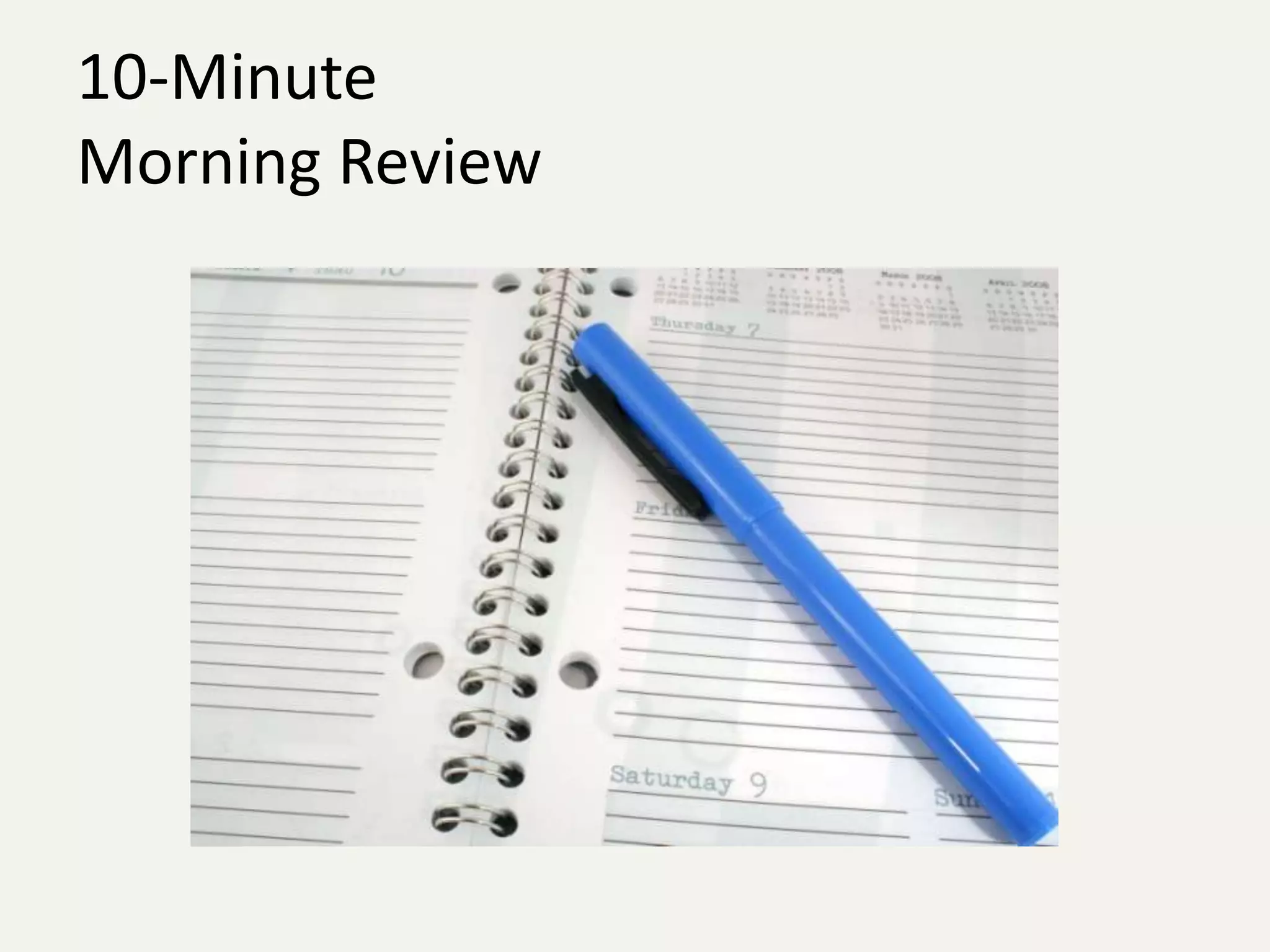
     • Morning 10-minute review
     • Mind-mapping software / apps
Image: Jim Mills @ photoxpress
Ways the reward-and-planning system
           can go wrong
• Block out distractions
  – Strategies:
     •   Eliminate distractions
     •   Increase salience (what’s in it for me?)
     •   Morning 10-minute review
     •   The Body Double
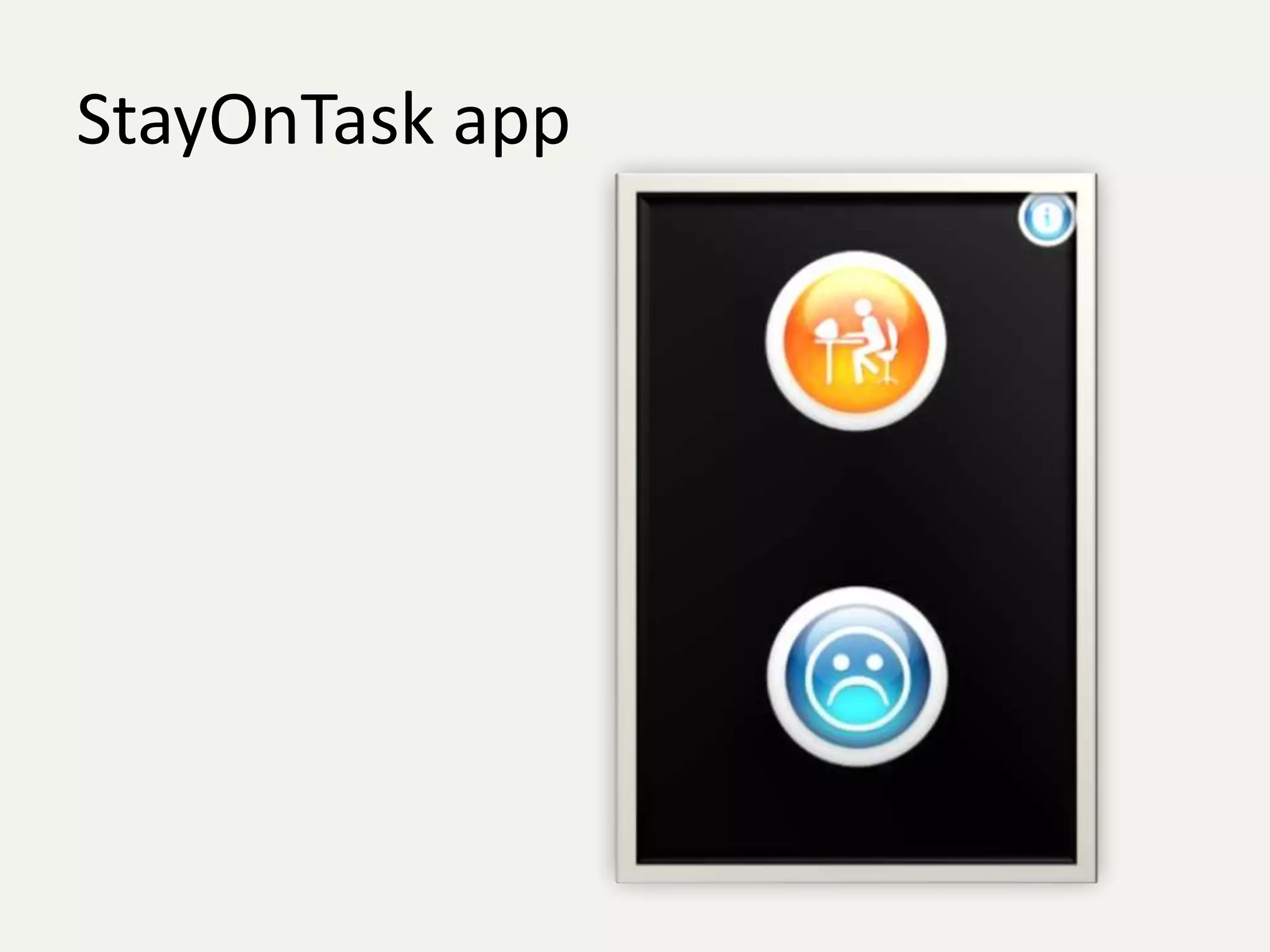
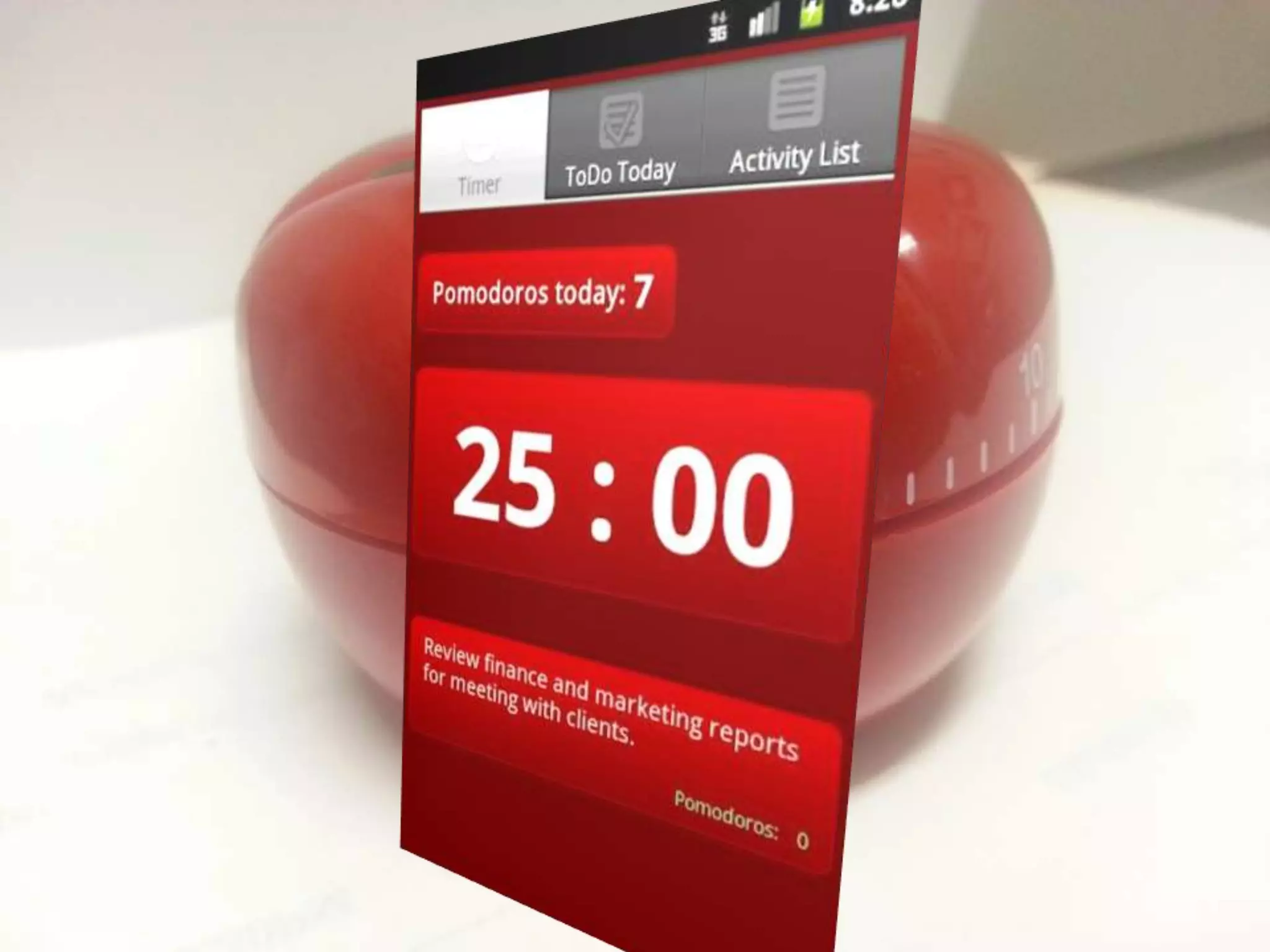
     •   StayOnTask app
Increase salience
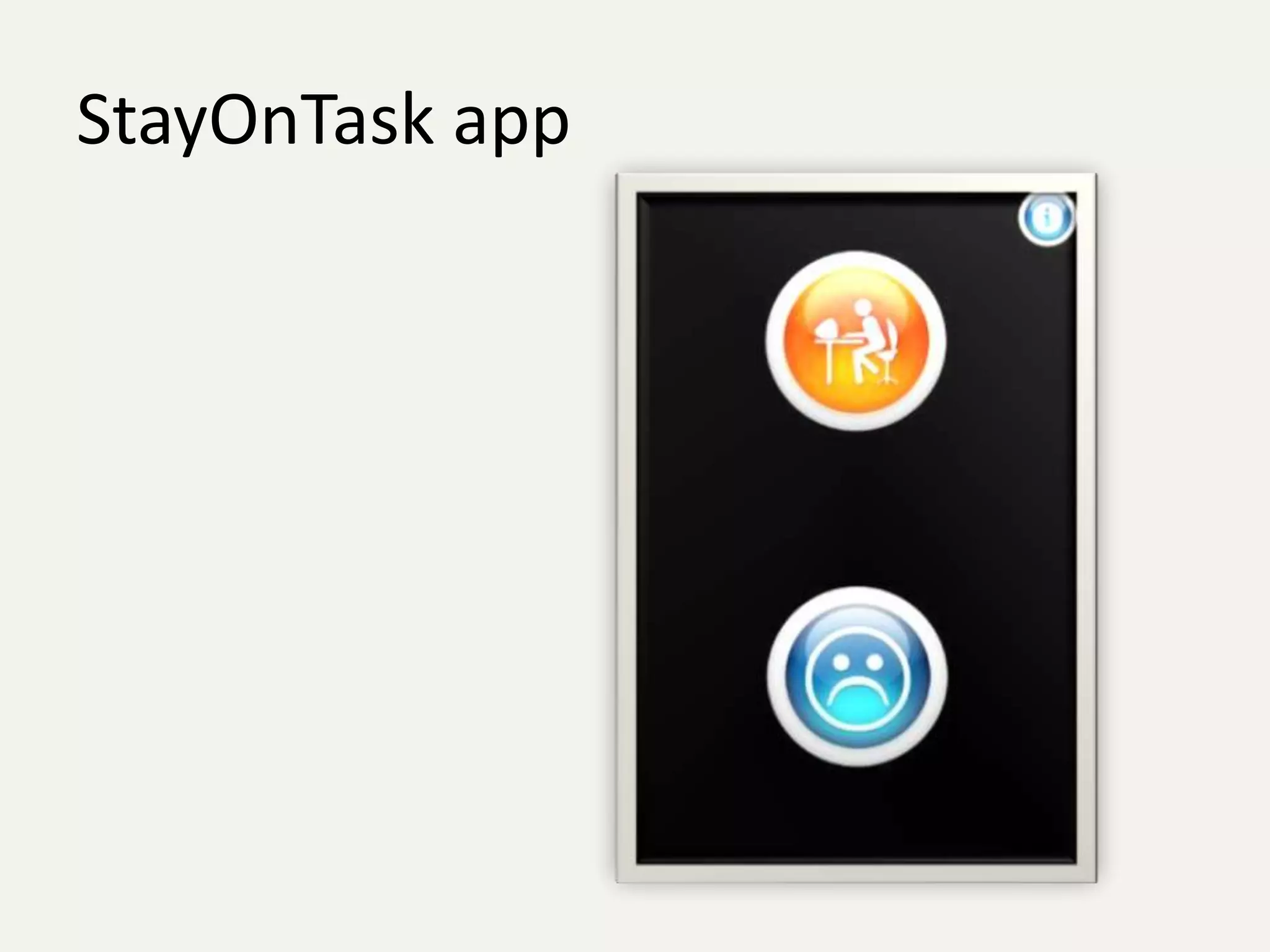
StayOnTask app
Ways the reward-and-planning system
           can go wrong
• Get the reward
  – Strategies
     • Maintain boundaries
     • Ask “what about this do I want?”
     • Get clear about your preferred states. Recognize
       your unique body-based neurological blueprint for
       happiness. Be honest, own it.
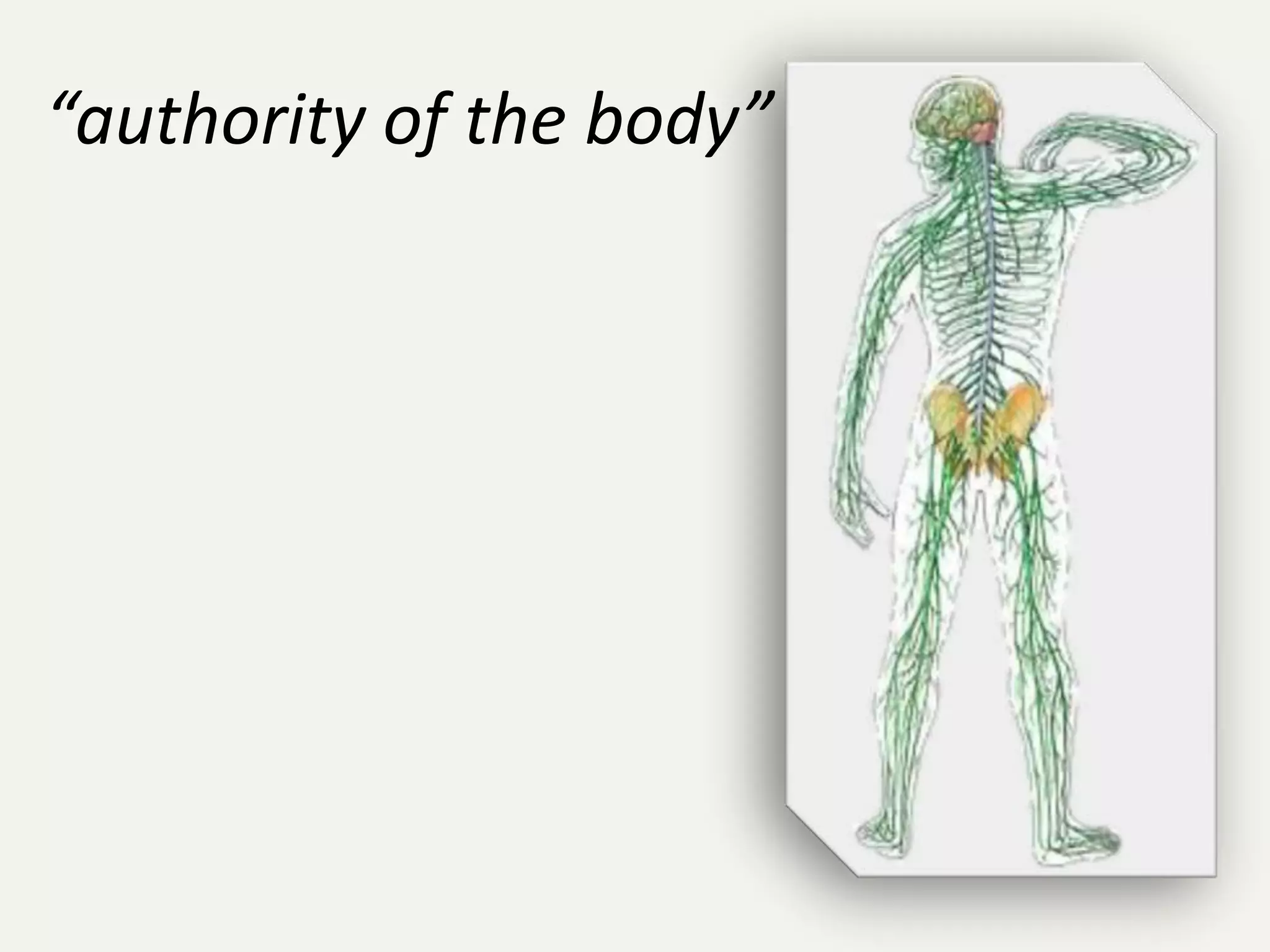
“authority of the body”
38676
ASKING TWO QUESTIONS
Am I having fun now?
  Is this important?


             © 2011 David D. Nowell, Ph.D. All rights
10/21/2012                                              51
                           reserved.
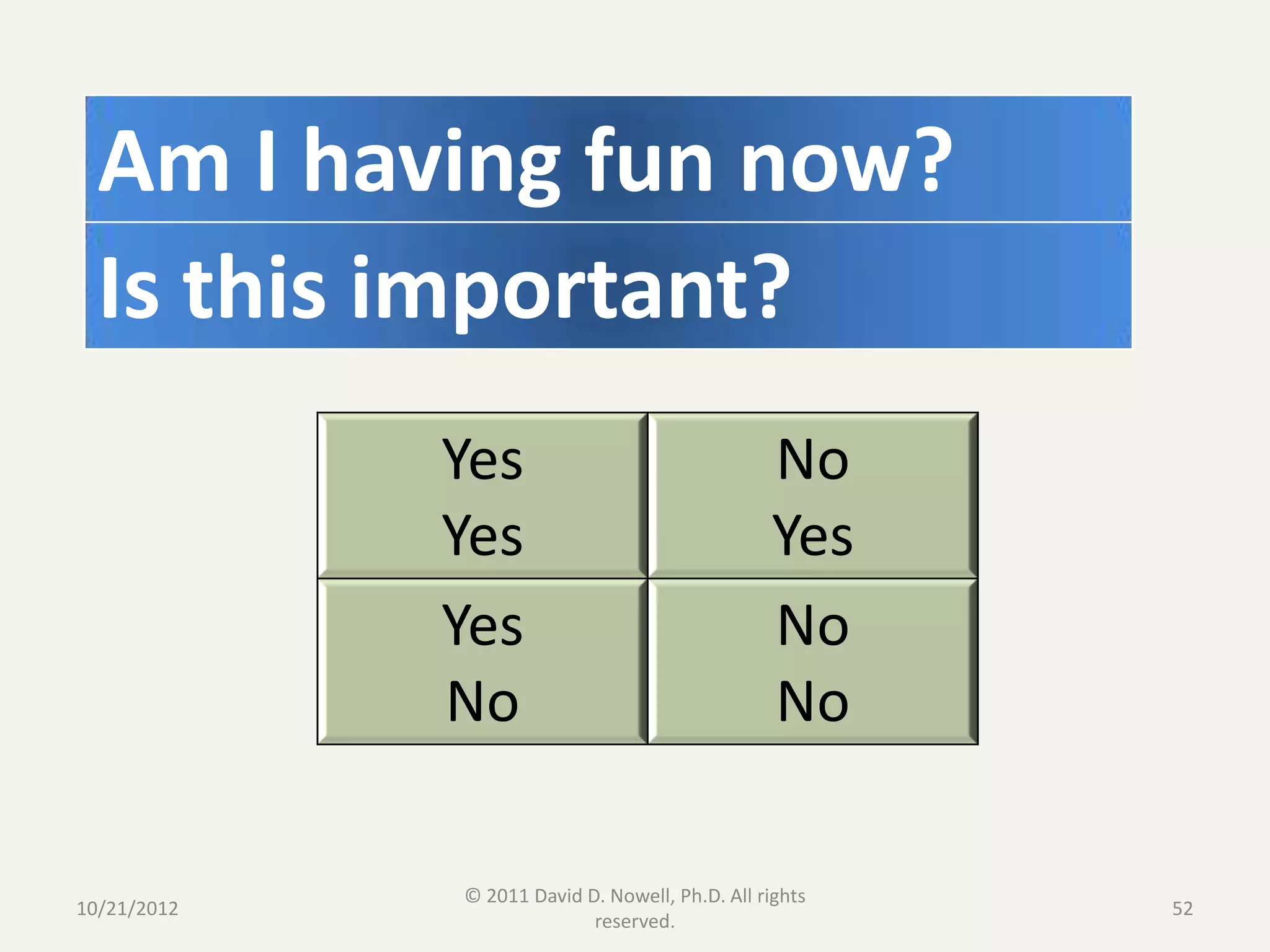
Am I having fun now?
  Is this important?
             Yes                                 No
             Yes                                 Yes
             Yes                                 No
             No                                  No

             © 2011 David D. Nowell, Ph.D. All rights
10/21/2012                                              52
                           reserved.
© 2011 David D. Nowell, Ph.D. All rights
10/21/2012                                              53
                           reserved.
© 2011 David D. Nowell, Ph.D. All rights
10/21/2012                                              54
                           reserved.
© 2011 David D. Nowell, Ph.D. All rights
10/21/2012                                              55
                           reserved.
© 2011 David D. Nowell, Ph.D. All rights
10/21/2012                                              56
                           reserved.
Am I having fun now?
Is this important?
When we focus on leading a
passionate, meaningful life we create a
spectacular ripple effect of inspiration
in the lives around us.
Am I having fun now?
Is this important?


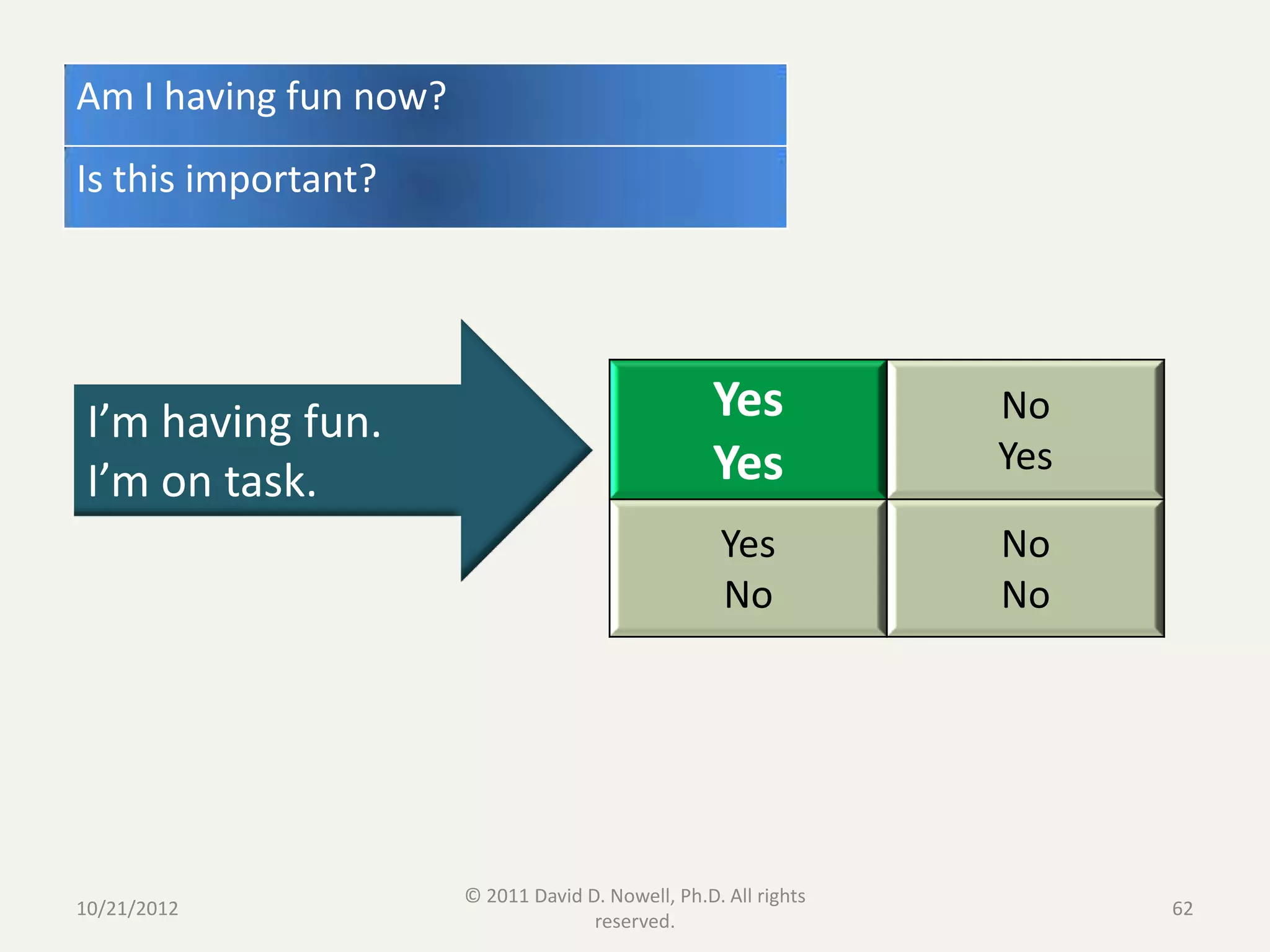
 I’m having fun.                                    Yes           No
                                                    Yes           Yes
 I’m on task.
                                                     Yes          No
                                                     No           No


                       © 2011 David D. Nowell, Ph.D. All rights
10/21/2012                                                              62
                                     reserved.
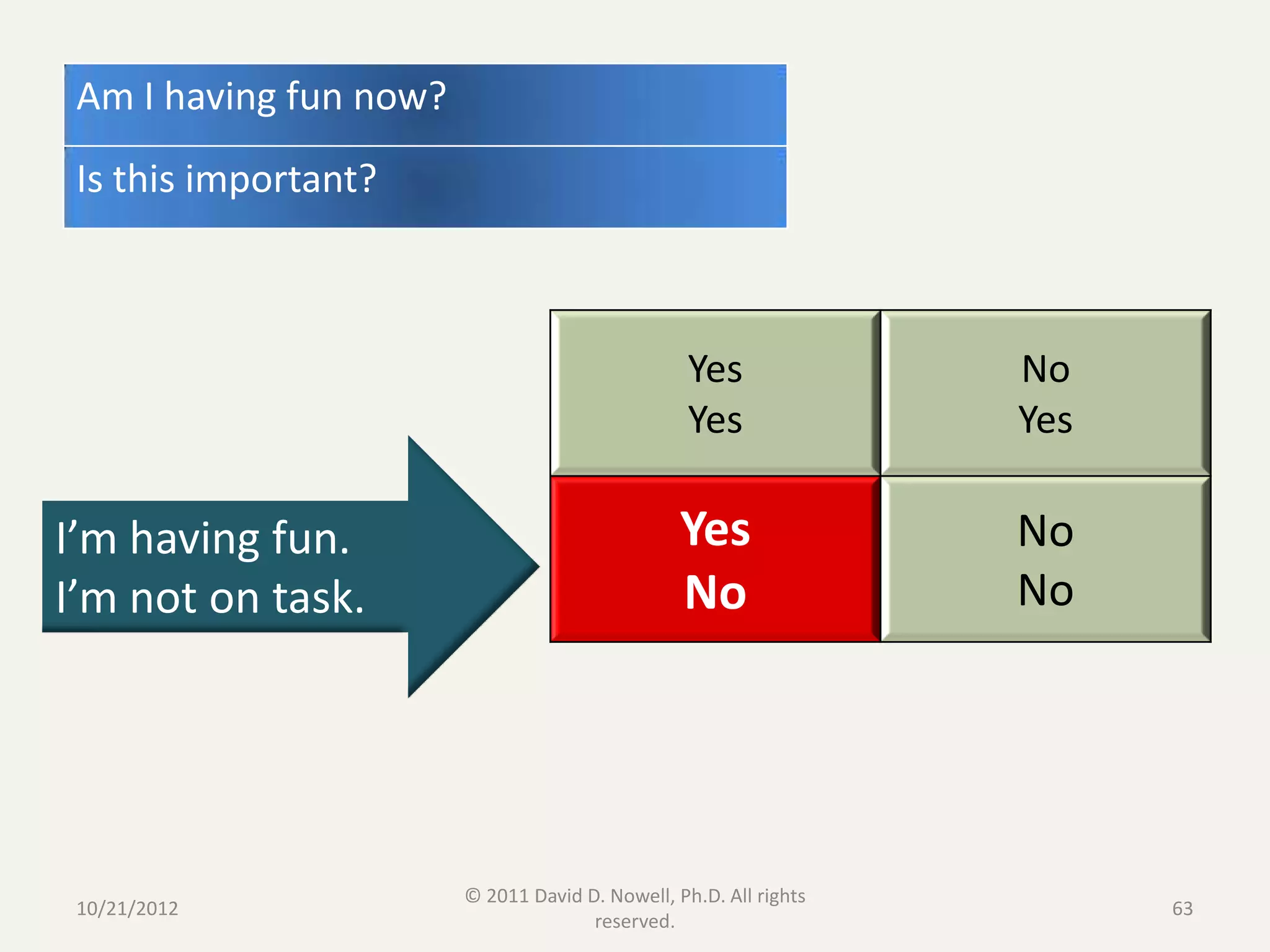
Am I having fun now?
 Is this important?


                                                  Yes              No
                                                  Yes              Yes

I’m having fun.                                  Yes               No
I’m not on task.                                 No                No


                        © 2011 David D. Nowell, Ph.D. All rights
 10/21/2012                                                              63
                                      reserved.
Weekly Planning Session
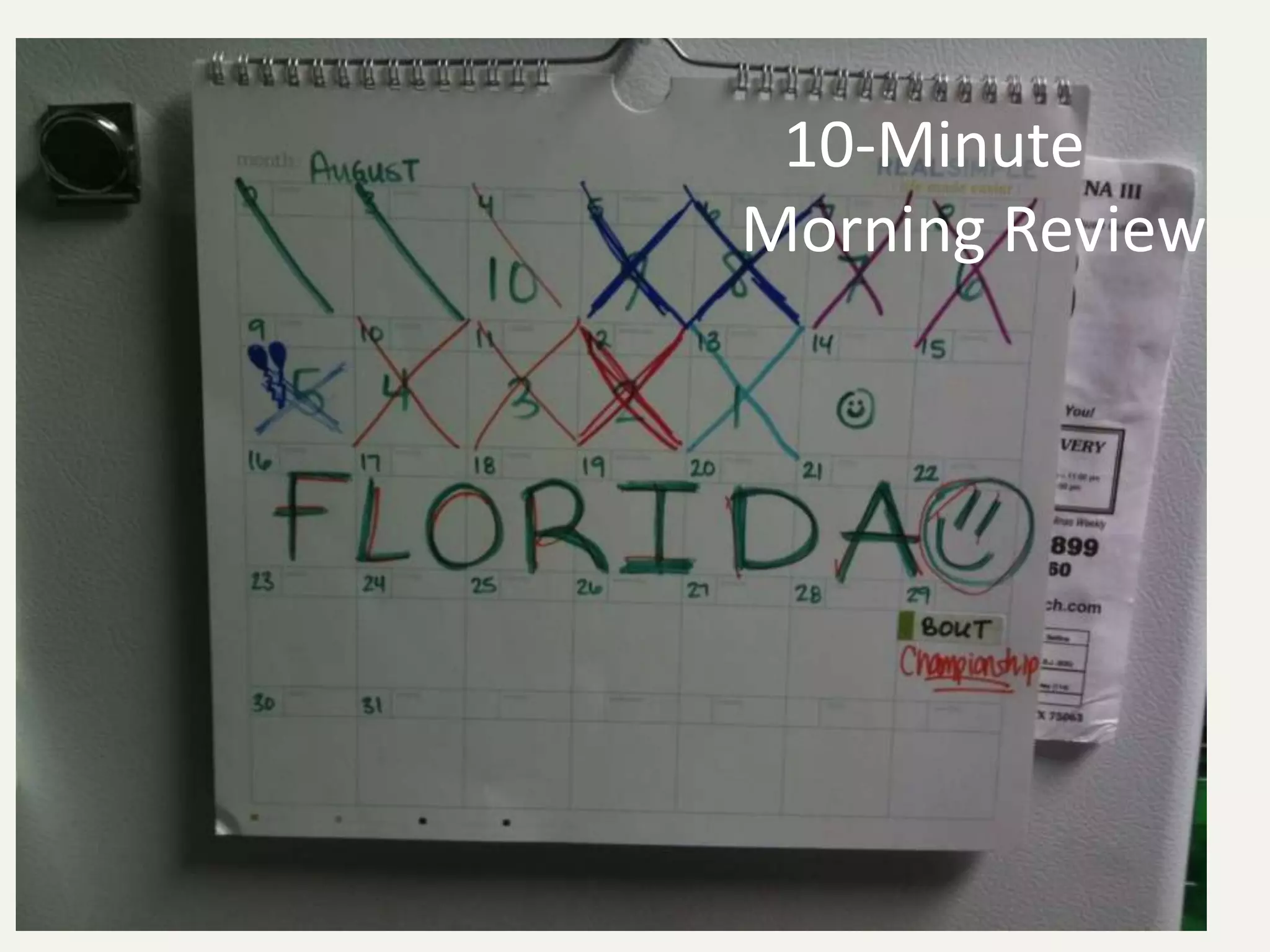
10-Minute
Morning Review
What will you do today that you'll
still remember one year from now??
What’s your One Thing?
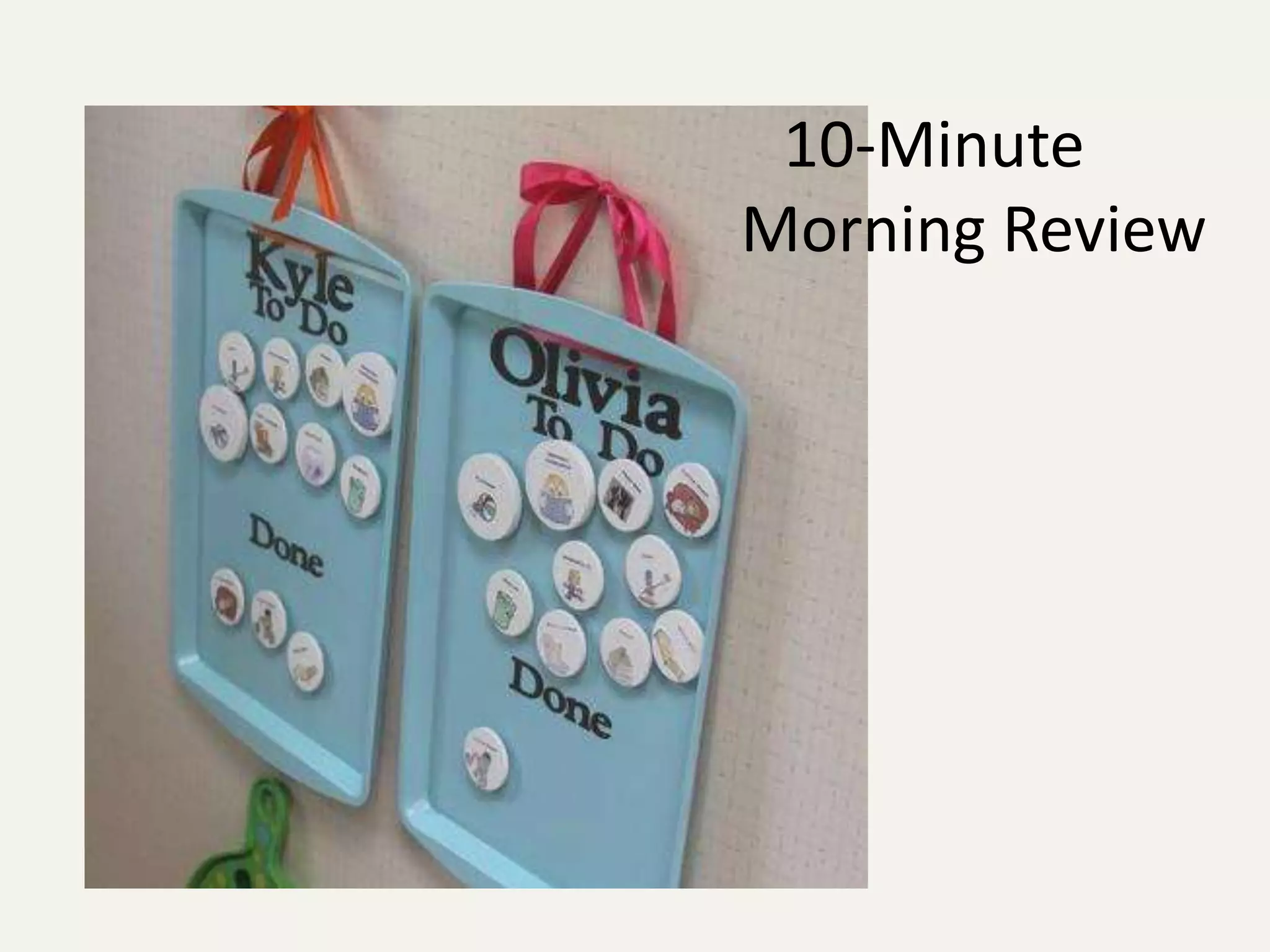
10-Minute
Morning Review
10-Minute
Morning Review
Take Advantage of Natural Breaks in
Your Daily Routine
StayOnTask app
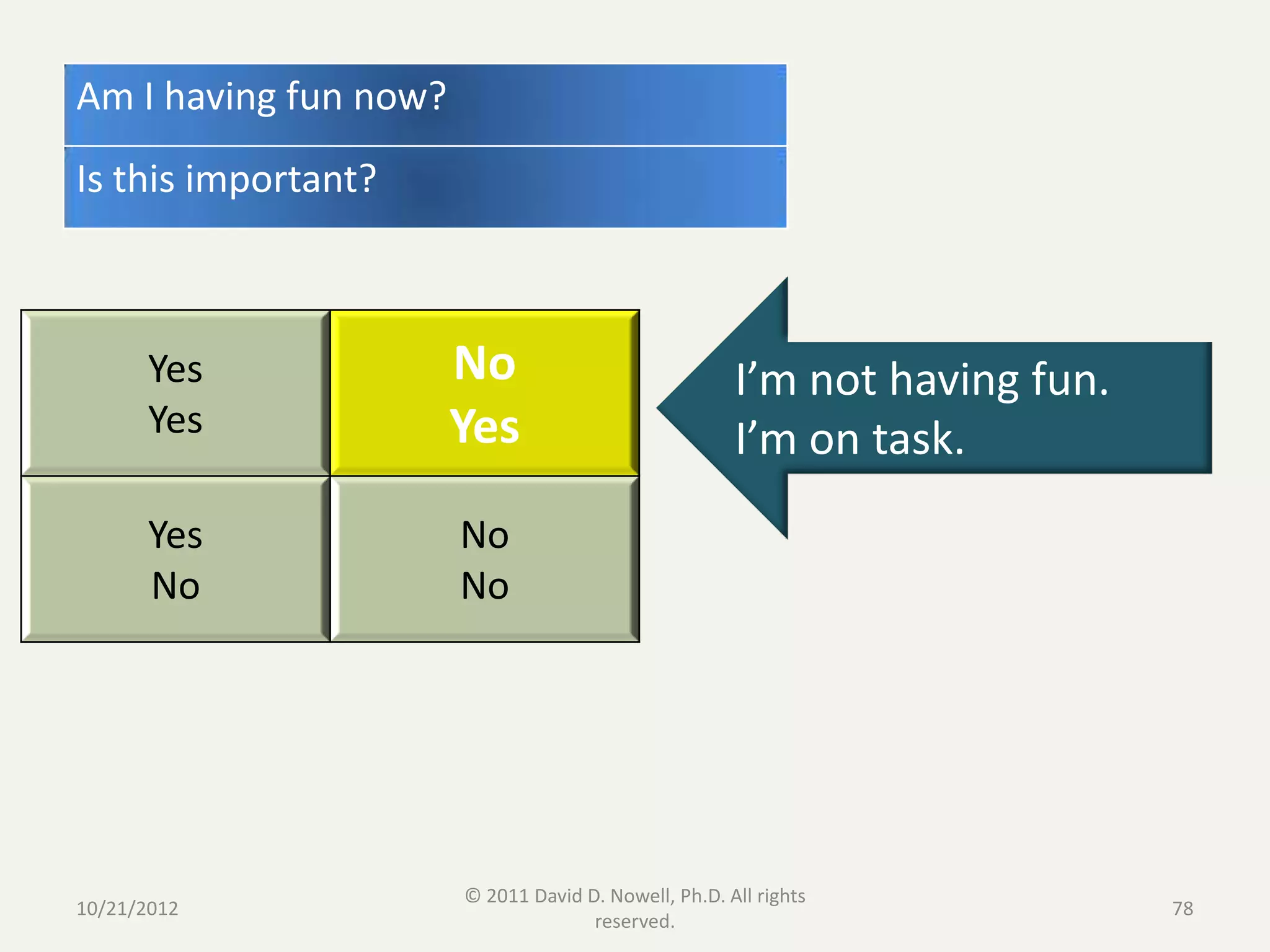
Am I having fun now?
Is this important?


      Yes              No                             I’m not having fun.
      Yes              Yes                            I’m on task.
      Yes              No
      No               No


                       © 2011 David D. Nowell, Ph.D. All rights
10/21/2012                                                                  78
                                     reserved.
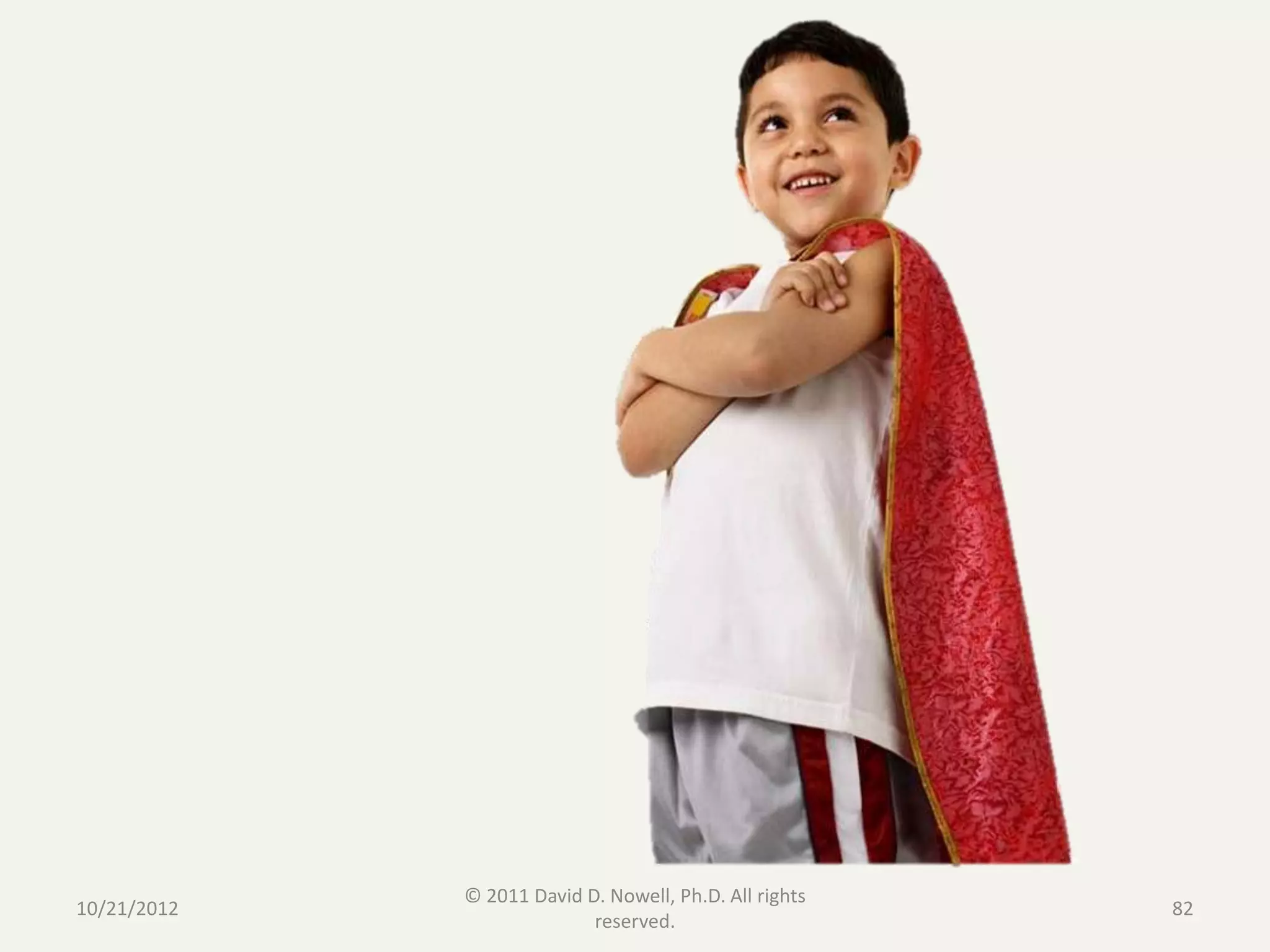
Increase salience
© 2011 David D. Nowell, Ph.D. All rights
10/21/2012                                              81
                           reserved.
© 2011 David D. Nowell, Ph.D. All rights
10/21/2012                                              82
                           reserved.
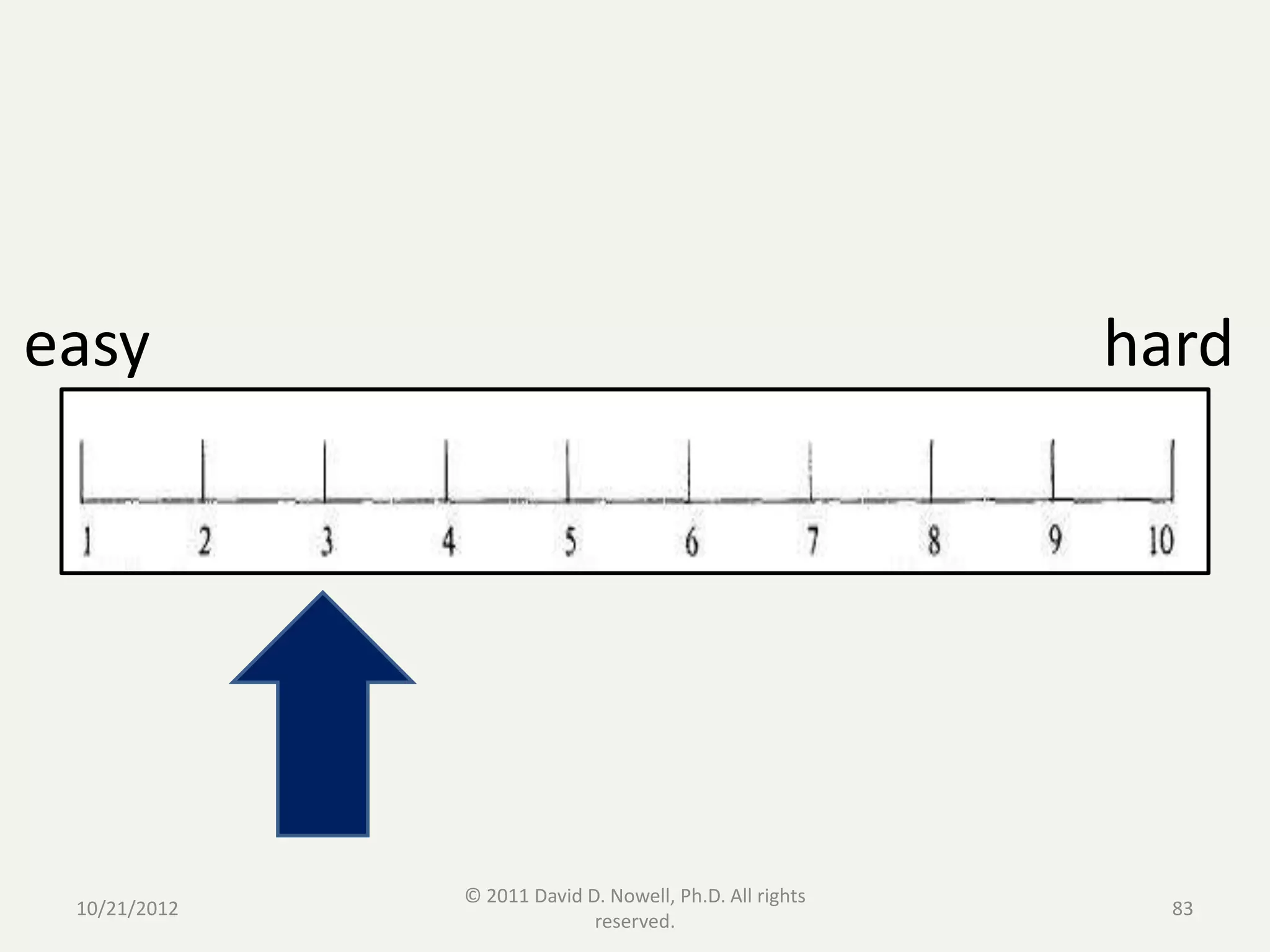
easy                                                     hard


              © 2011 David D. Nowell, Ph.D. All rights
 10/21/2012                                                83
                            reserved.
© 2011 David D. Nowell, Ph.D. All rights
10/21/2012                                              85
                           reserved.
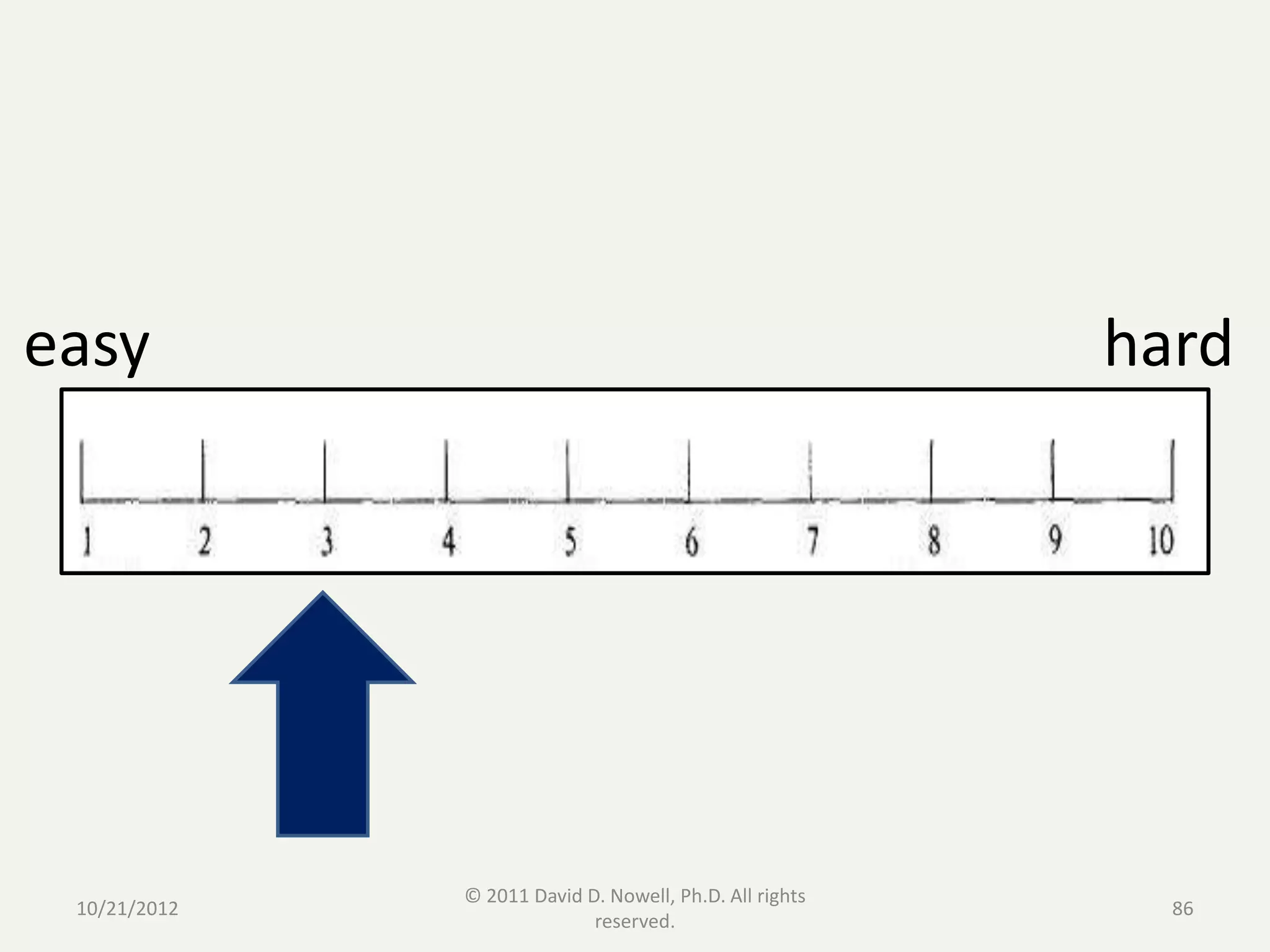
easy                                                     hard


              © 2011 David D. Nowell, Ph.D. All rights
 10/21/2012                                                86
                            reserved.
© 2011 David D. Nowell, Ph.D. All rights
10/21/2012                                              87
                           reserved.
Barter practical / social support
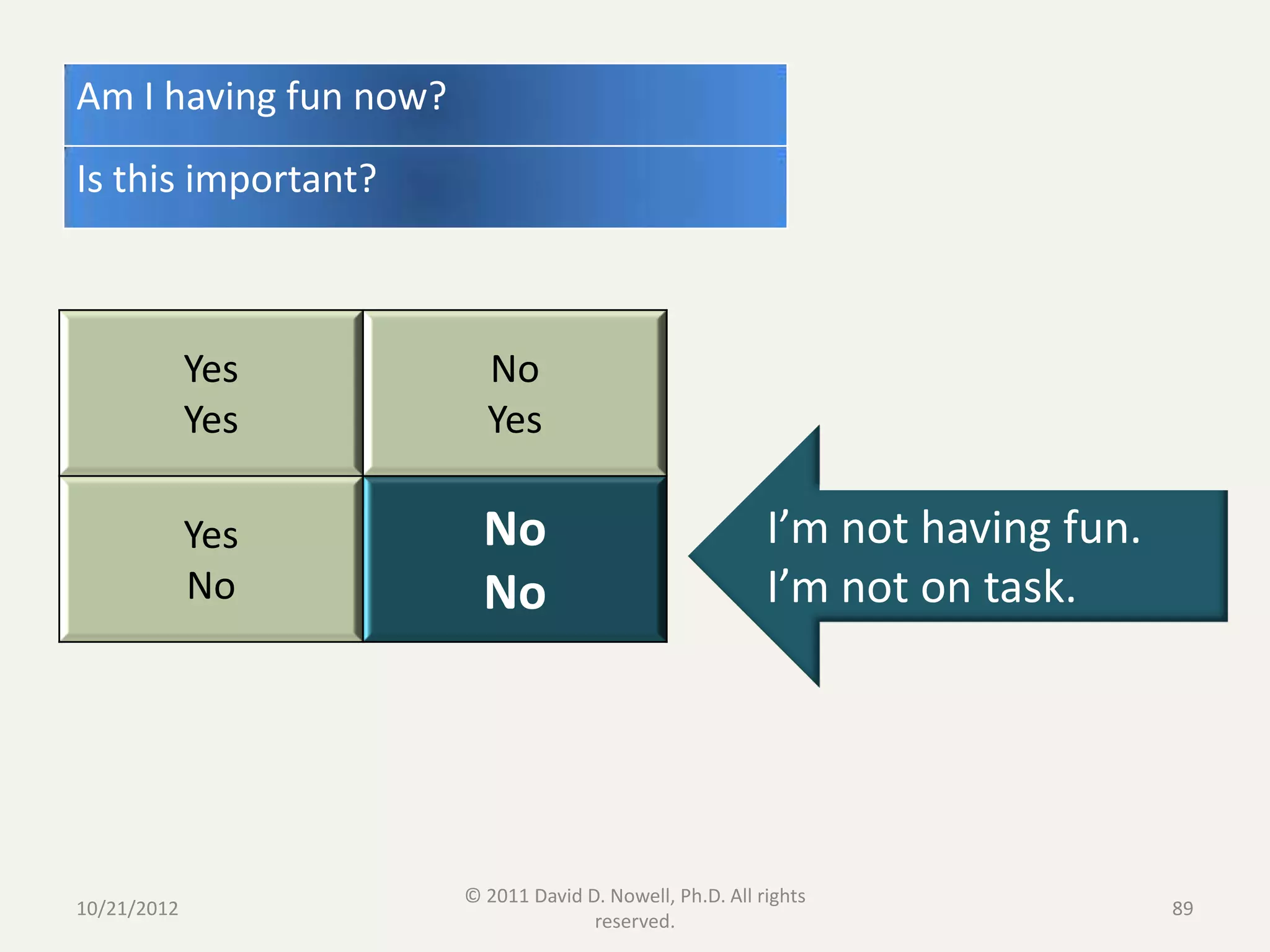
Am I having fun now?
Is this important?


             Yes         No
             Yes         Yes

             Yes         No                               I’m not having fun.
             No          No                               I’m not on task.


                       © 2011 David D. Nowell, Ph.D. All rights
10/21/2012                                                                      89
                                     reserved.
STRATEGIC BEHAVIORAL INQUIRY
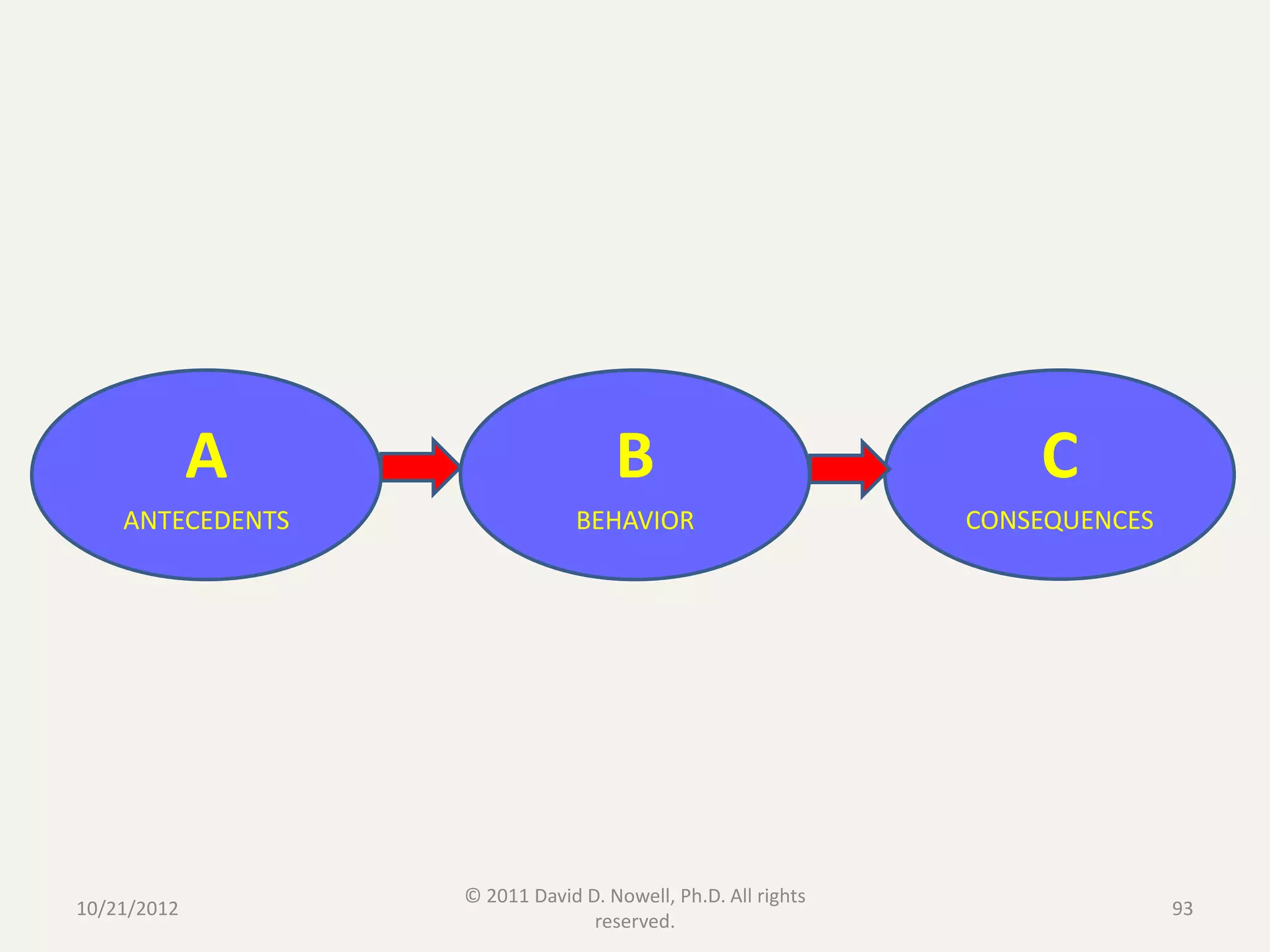
A                     B                             C
    ANTECEDENTS                BEHAVIOR                      CONSEQUENCES


                  © 2011 David D. Nowell, Ph.D. All rights
10/21/2012                                                                  93
                                reserved.
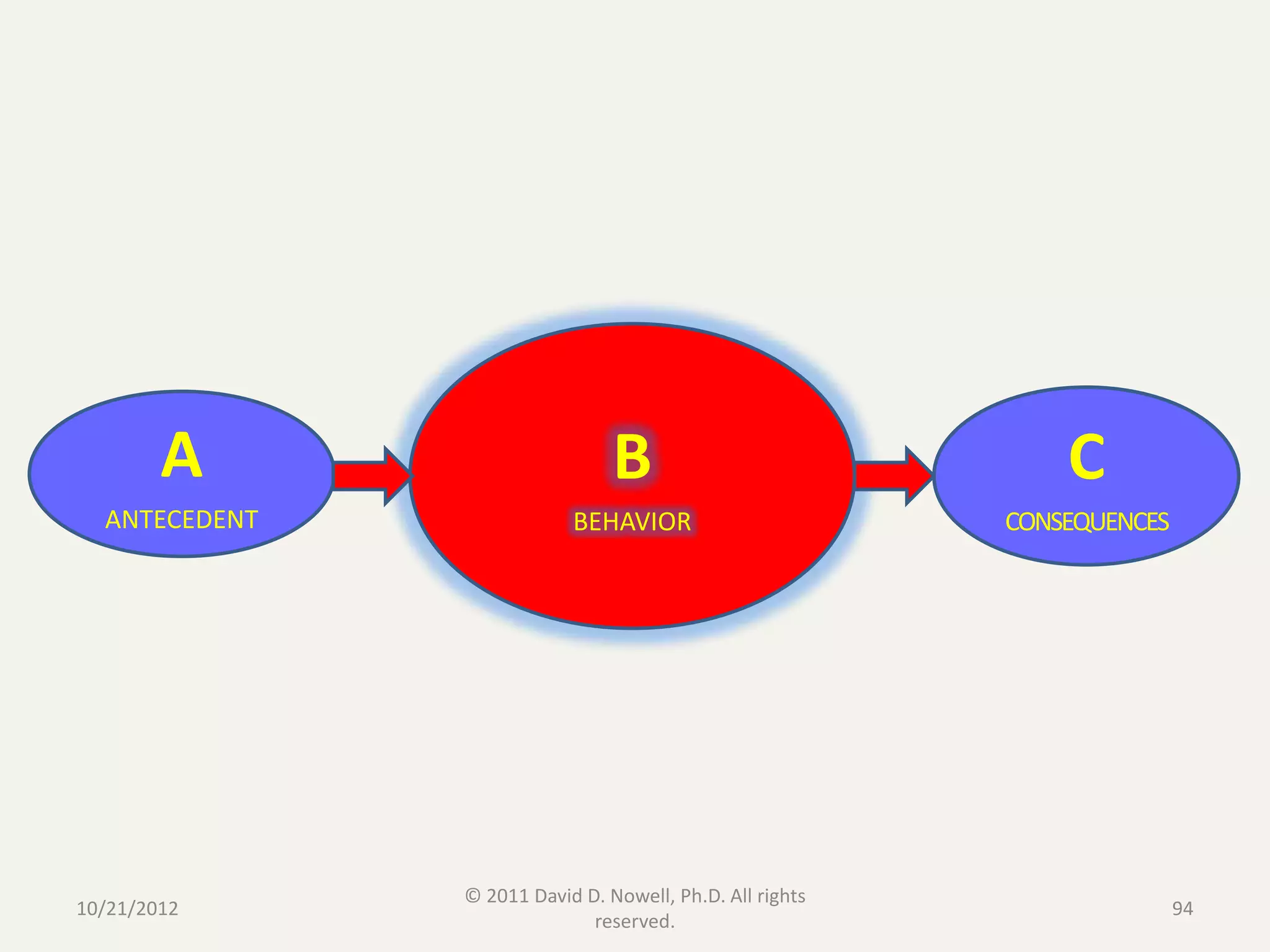
A                       B                             C
  ANTECEDENT               BEHAVIOR                       CONSEQUENCES


               © 2011 David D. Nowell, Ph.D. All rights
10/21/2012                                                               94
                             reserved.
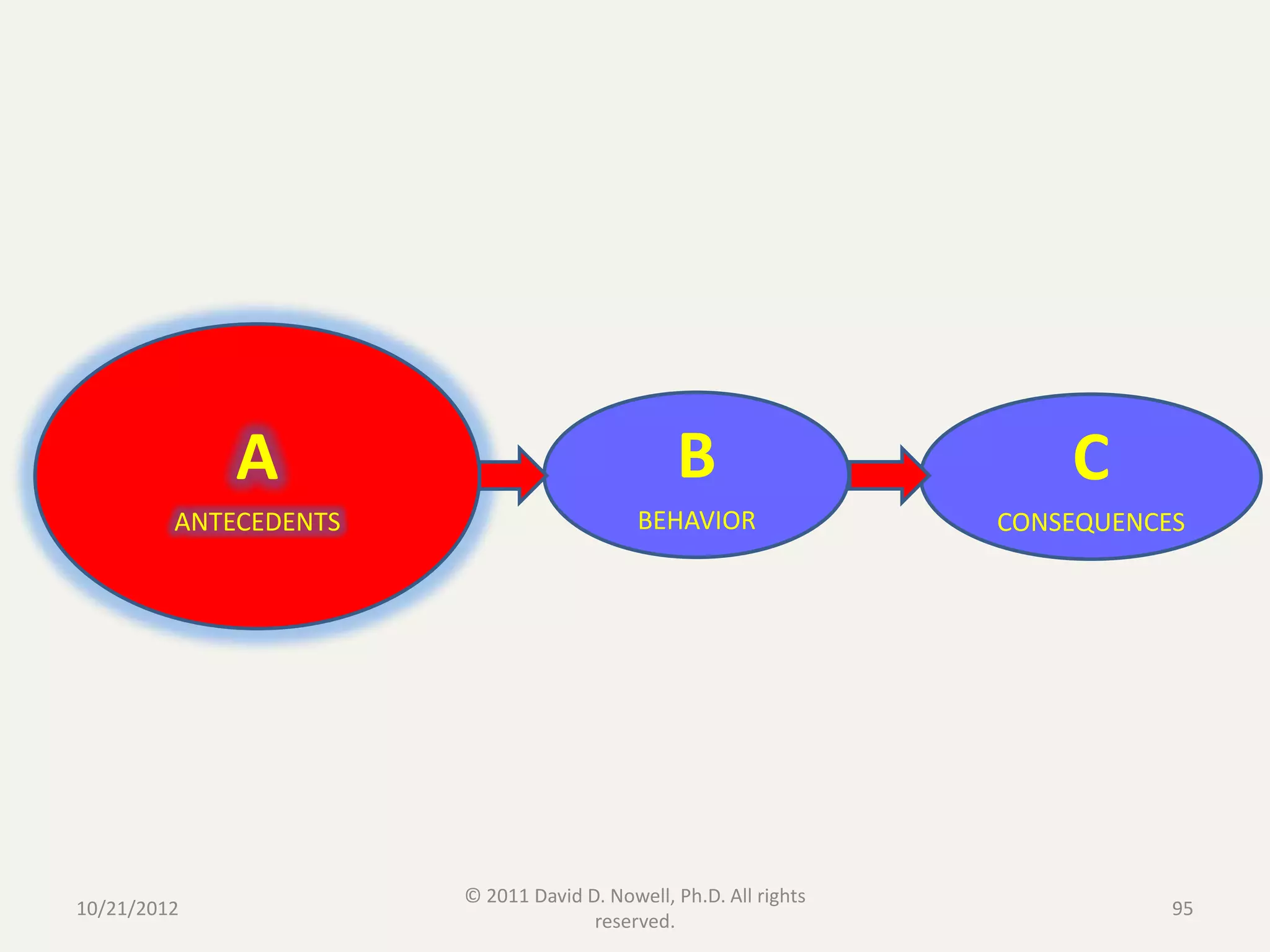
A                                 B                      C
         ANTECEDENTS                       BEHAVIOR               CONSEQUENCES


                       © 2011 David D. Nowell, Ph.D. All rights
10/21/2012                                                                   95
                                     reserved.
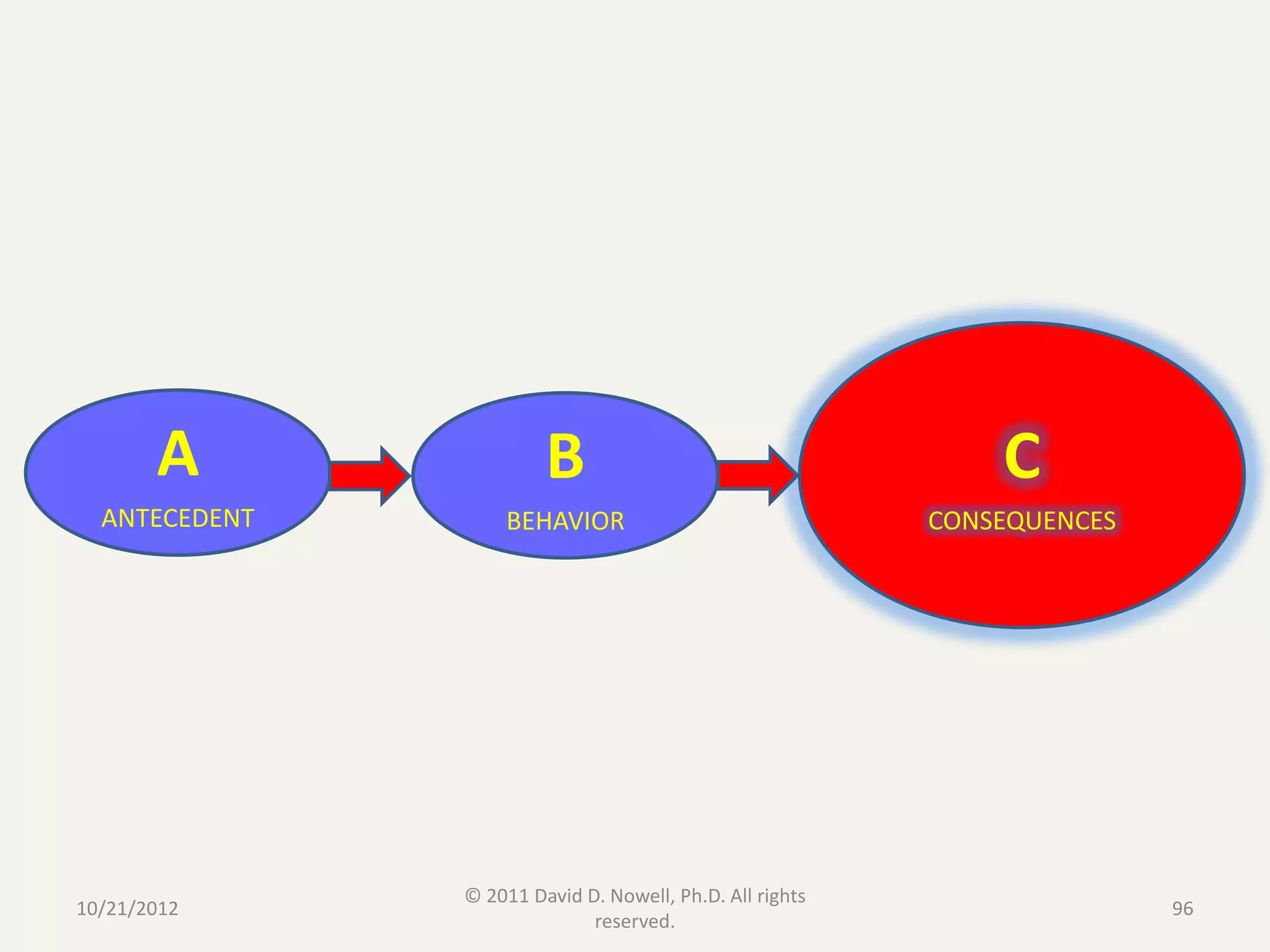
A                B                                     C
  ANTECEDENT       BEHAVIOR                               CONSEQUENCES


               © 2011 David D. Nowell, Ph.D. All rights
10/21/2012                                                               96
                             reserved.
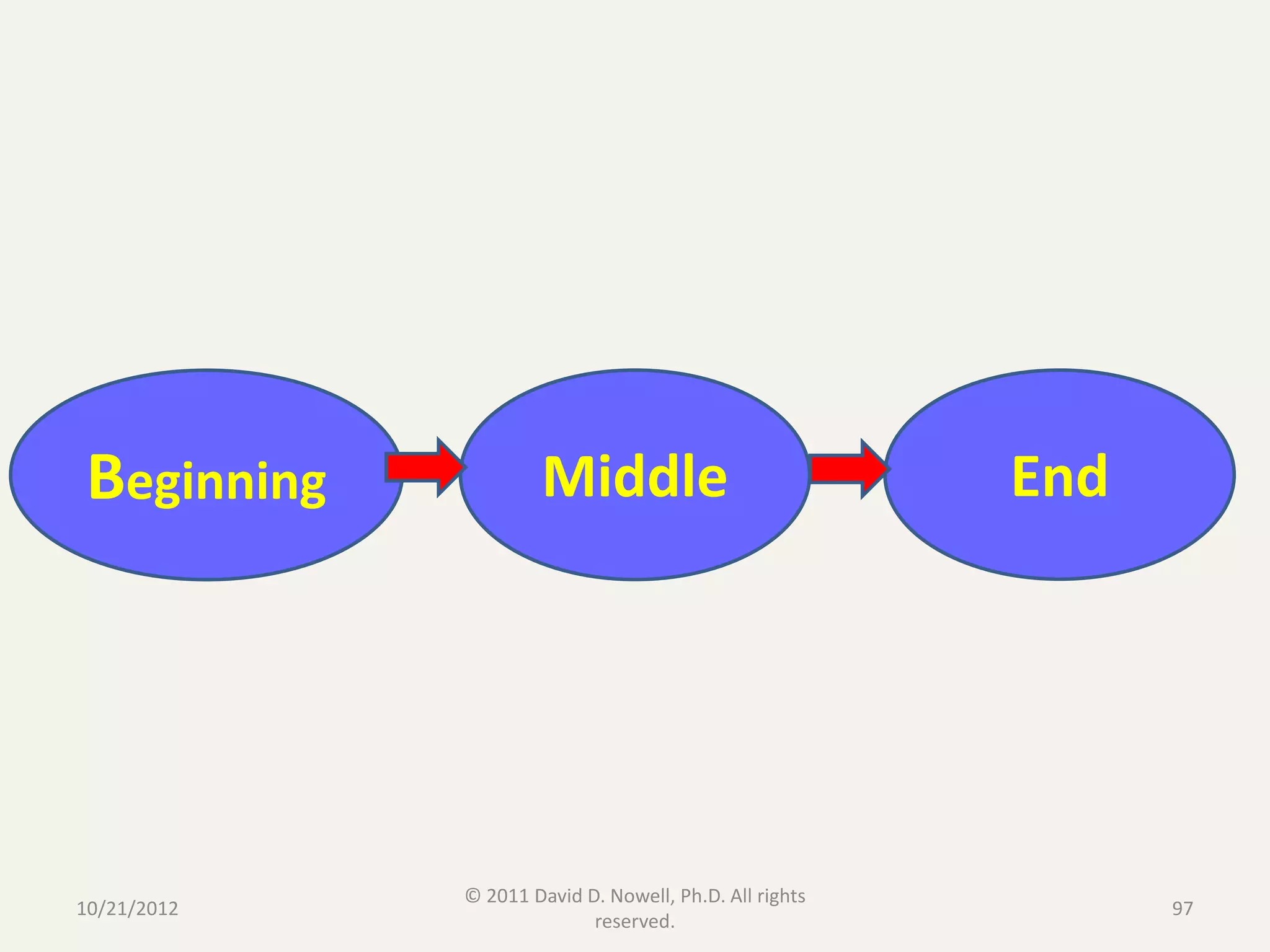
Beginning             Middle                            End


             © 2011 David D. Nowell, Ph.D. All rights
10/21/2012                                                    97
                           reserved.
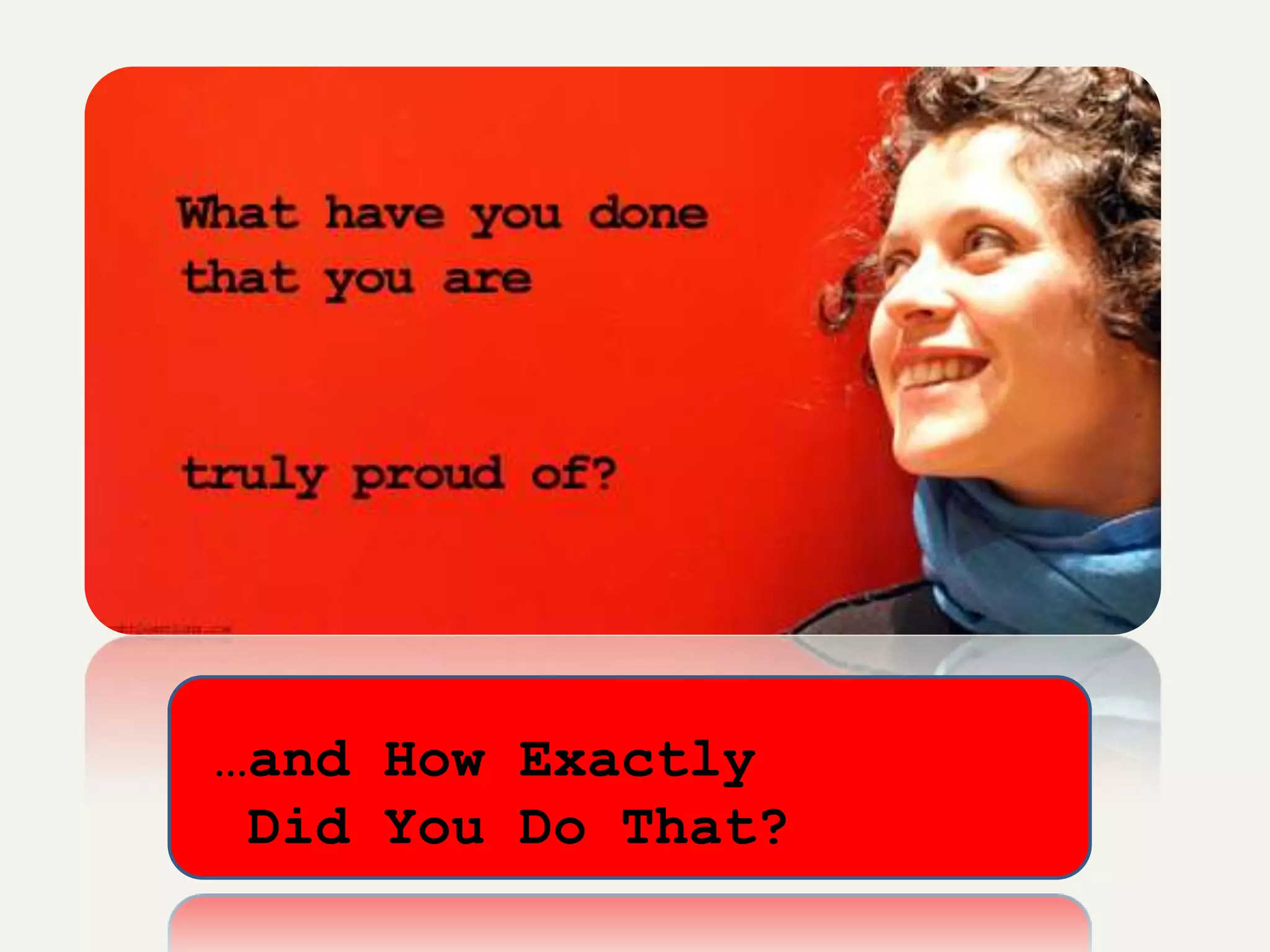
…and How Exactly
 Did You Do That?
© 2011 David D. Nowell, Ph.D. All rights
10/21/2012                                              99
                           reserved.
© 2011 David D. Nowell, Ph.D. All rights
10/21/2012                                              102
                           reserved.
© 2011 David D. Nowell, Ph.D. All rights
10/21/2012                                              103
                           reserved.
More
• Behavioral control
• Choices and options
• Self-regulation
  – Arousal
  – Motivation
  – Mood
Objectives of SBI
• Specific behavioral strategy
• What feeling-goals were associated with the
  goal?
• Motivational level on a scale from 1-10
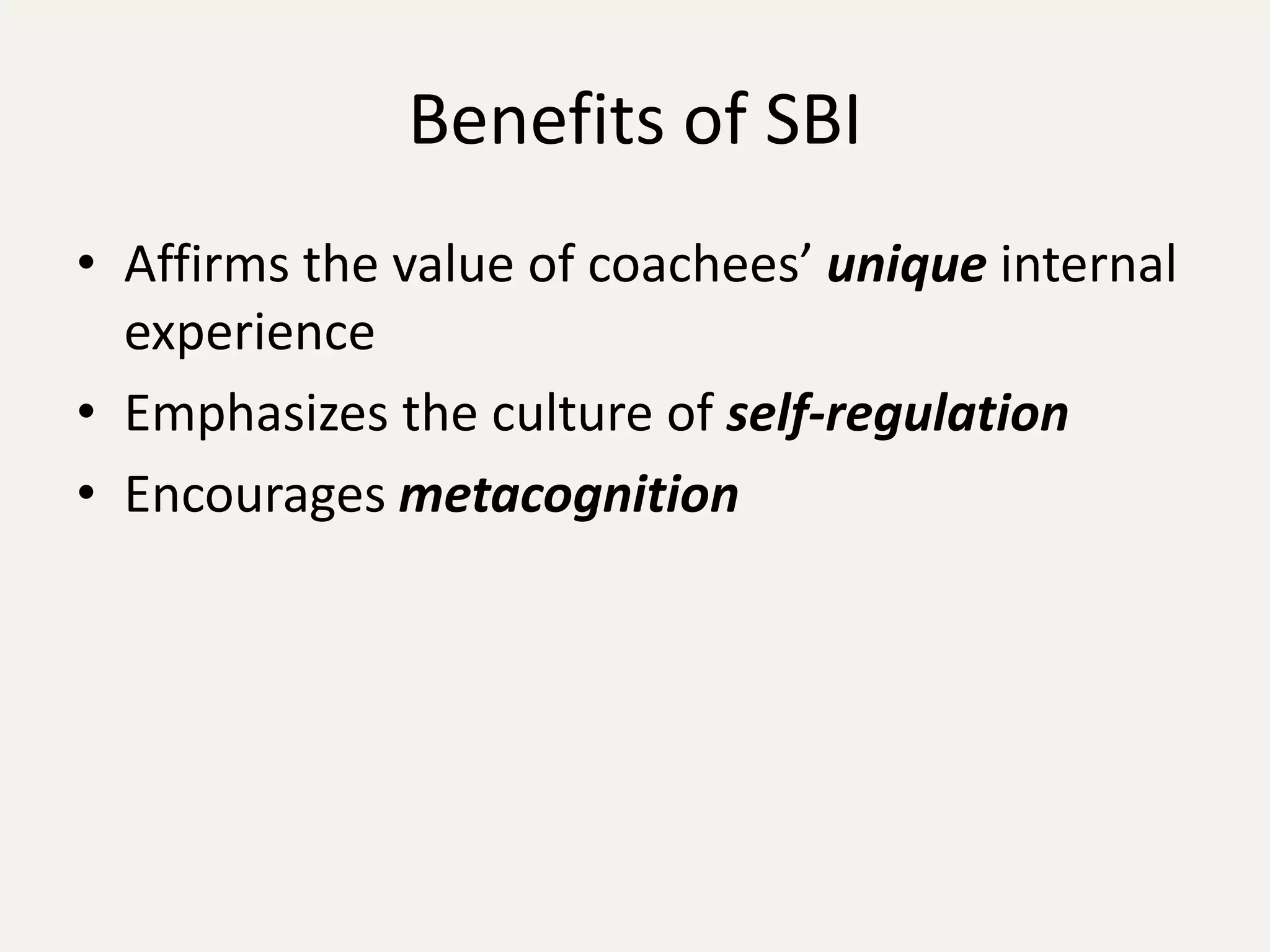
Benefits of SBI
• Affirms the value of coachees’ unique internal
  experience
• Emphasizes the culture of self-regulation
• Encourages metacognition
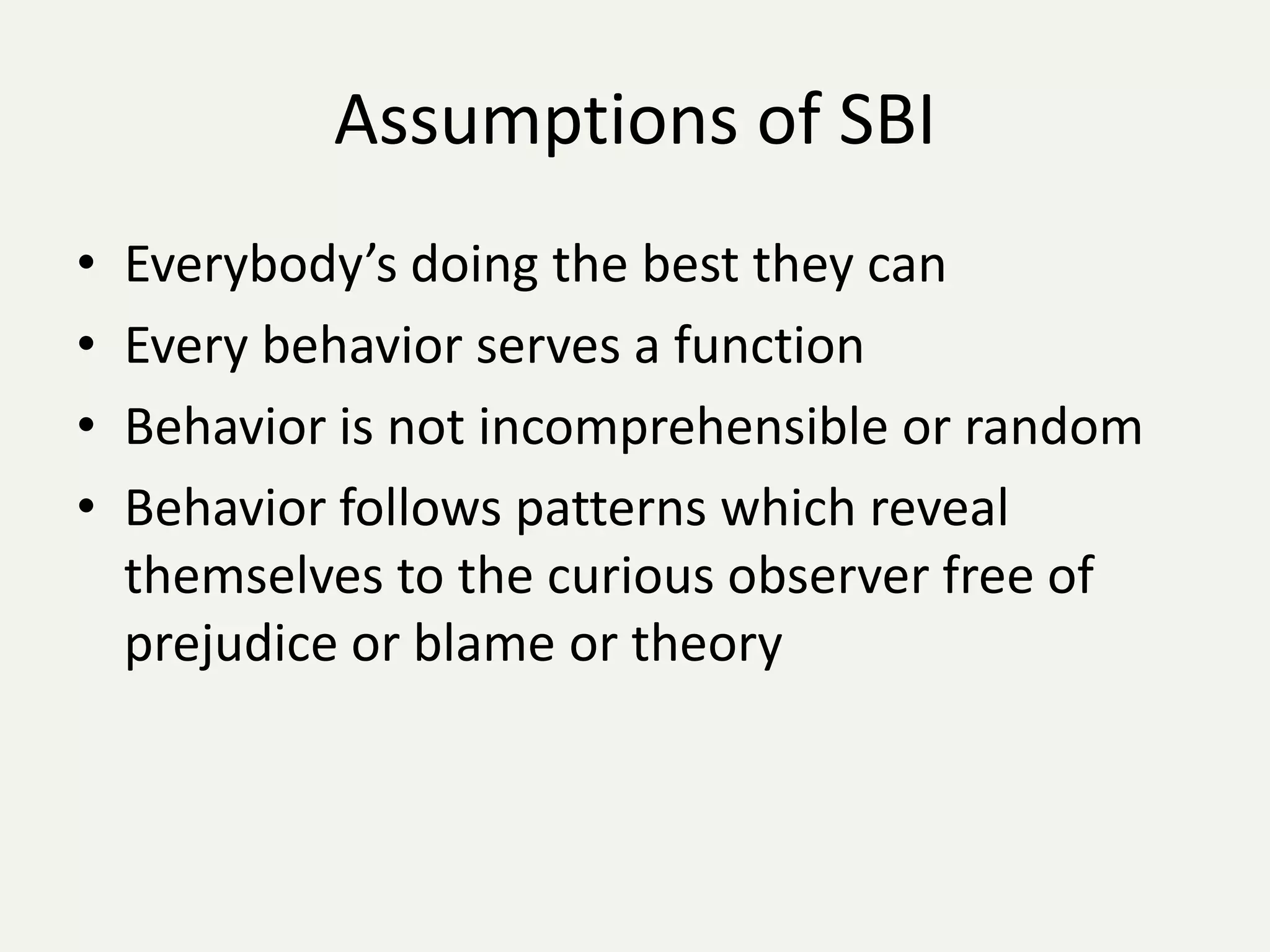
Assumptions of SBI
•   Everybody’s doing the best they can
•   Every behavior serves a function
•   Behavior is not incomprehensible or random
•   Behavior follows patterns which reveal
    themselves to the curious observer free of
    prejudice or blame or theory
How to “do” SBI
• HEDYDT?
HEDYDT?
•   How
•   Exactly
•   Did
•   You
•   Do
•   That
•   ?
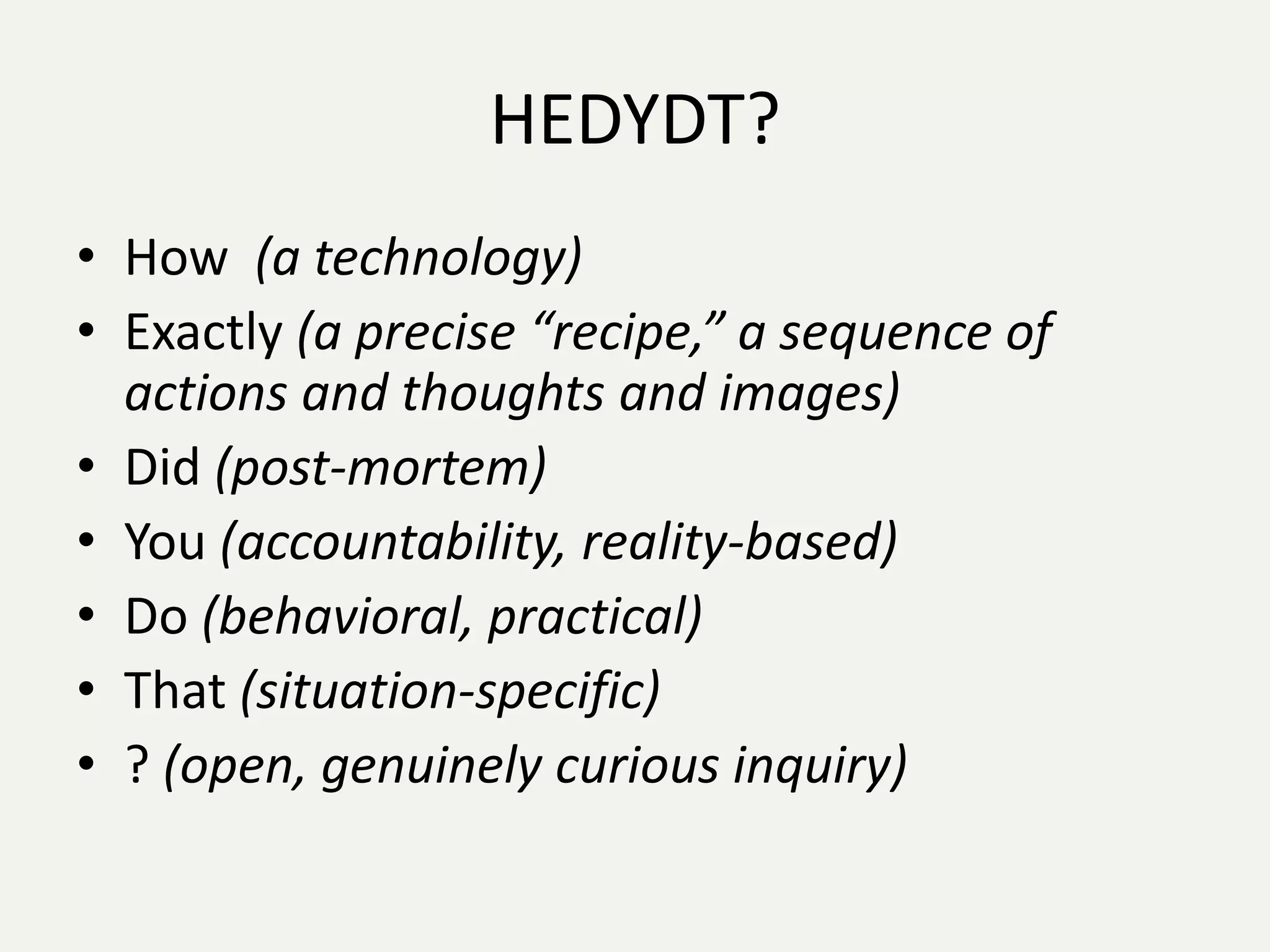
HEDYDT?
• How (a technology)
• Exactly (a precise “recipe,” a sequence of
  actions and thoughts and images)
• Did (post-mortem)
• You (accountability, reality-based)
• Do (behavioral, practical)
• That (situation-specific)
• ? (open, genuinely curious inquiry)
Personal Application
• What habit or practice have you intentionally
  developed? And How Exactly Do You Do That?
• What bad habit persists? And How Exactly Do
  You Do That?
• End-of-day QI
Collect data – allow yourself to fall in
love with the truth
Family/Social Application
• Think of the most important relationship in
  your life right now
  – What do you most admire about him/her?
  – If you had a magic wand, what might you change?
  – What could you do to improve the relationship by
    10% in the next 24 hours?
Clinical Application
• What recurring behavioral problem is showing
  up in your clinic or classroom?
• Note: we aren’t asking “why did you do that,”
  but rather “how exactly did you do that.”


Appendix A
What’s your One Thing?


Appendix C
Summary
• Understanding your brain’s built-in hard-wired
  reward-and-planning system
• Asking 2 questions
• Strategic behavioral inquiry: How exactly did
  you do that?
Living in The Gap
• Compassion
• Self-compassion
Let’s stay in touch!
 Join my e-newsletter list:
   Fill out a card today and drop it in the box.
   Text to join: text DNSEMINARS to 22828
   Sign up on my web site or Facebook page
 Visit us on the web: www.DrNowell.com


     davidnowell               David Nowell Seminars

Addresources lmyb

  • 2.
    At the endof the day I’ll know this conference has been a success for me if _____________________.
  • 3.
    Overview • Understanding yourbrain’s built-in hard-wired reward-and-planning system • Asking 2 questions • Strategic behavioral inquiry: How exactly did you do that?
  • 4.
    Assumptions • Everybody’s doing the best they can • Every behavior serves a function • Behavior is not incomprehensible or random • Behavior follows patterns which reveal themselves to the curious observer free of prejudice or blame or theory
  • 5.
    UNDERSTANDING YOUR BRAIN’SBUILT- IN HARD-WIRED REWARD-AND- PLANNING SYSTEM
  • 6.
  • 7.
  • 9.
    © 2011 DavidD. Nowell, Ph.D. All rights 10/21/2012 10 reserved.
  • 11.
    We don’t doanything we’re not motivated to do
  • 14.
    Dopamine is theneurotransmitter of: • Reward • Pride • Motivation • Success • Woo hoo! • Yay!
  • 16.
    What does dopaminefeeeel like?
  • 17.
    Preferred States Inventory 1.Call to mind a “peak” moment – When was this? – Who was there? – Where were you? 2. Clarify sensory detail – What exactly did you see? – What were you hearing? – Was there texture? Temperature? – Were there smells?
  • 18.
    Preferred States Inventory 3.Identify the highlight moment – What was the very best part of all that? If you had to choose just one moment? 4. Say hello to your body – What were you feeling, in your body, right in the middle of all that? – Where exactly – in your body – did you feel that? – What words would describe that feeling?
  • 20.
    Preschool 1. 1-step errands 2. Chores with cues 3. Basic inhibition © 2011 David D. Nowell, Ph.D. All rights 10/21/2012 23 reserved.
  • 21.
    Kindergarten - 2nd Grade 1. 2-3 step directions 2. 20-30 minute assignments 3. Follow rules/inhibit/no grabbing © 2011 David D. Nowell, Ph.D. All rights 10/21/2012 24 reserved.
  • 22.
    3rd-5th Grade 1. Simple shopping list 2. Keep track of variable daily schedule 3. Inhibit and regulate even without teacher present 4. Simple delayed gratification (phone) © 2011 David D. Nowell, Ph.D. All rights 10/21/2012 25 reserved.
  • 23.
    6th – 8thGrade 1. Complex chores 2. Organizing system 3. Time management 4. Self soothe 5. Manage conflict © 2011 David D. Nowell, Ph.D. All rights 10/21/2012 26 reserved.
  • 24.
    Teenage-mid 20’s 1. Independent with assignments 2. Make adjustments based on feedback 3. Inhibit reckless behavior 4. Say “no” to fun activity if other plans already made 5. Take others’ perspective © 2011 David D. Nowell, Ph.D. All rights 10/21/2012 27 reserved.
  • 25.
    Lending Your Brain © 2011 David D. Nowell, Ph.D. All rights 10/21/2012 28 reserved.
  • 26.
  • 27.
  • 28.
  • 29.
    The reward-and-planning system • Anticipate goal (state) • Identify tasks • Sequence / problem-solve • Block out distractions • Get the reward
  • 30.
    Ways the reward-and-planningsystem can go wrong • Anticipate goal (state) • Identify tasks • Sequence / problem-solve • Block out distractions • Get the reward
  • 31.
    Ways the reward-and-planningsystem can go wrong • Anticipate goal (state) – Strategies: • Preferred States Inventory • Letter from the future • Look for the goal-behind-the-goal
  • 34.
    Ways the reward-and-planningsystem can go wrong • Identify tasks – Strategies: • Coaching • Interview someone who’s already done it • Vocational counseling • Weekly planning session
  • 35.
    The best defenseagainst the manipulation of our attention is to determine for ourselves – in advance - how we want to invest it. - E. Goldberg
  • 37.
    Ways the reward-and-planningsystem can go wrong • Sequence / problem-solve – Strategies: • Coaching • Project management • Review your successes and strengths: What evidence do you have that you CAN do this? • Psychotherapy • Morning 10-minute review • Mind-mapping software / apps
  • 38.
    Image: Jim Mills@ photoxpress
  • 40.
    Ways the reward-and-planningsystem can go wrong • Block out distractions – Strategies: • Eliminate distractions • Increase salience (what’s in it for me?) • Morning 10-minute review • The Body Double • StayOnTask app
  • 41.
  • 42.
  • 43.
    Ways the reward-and-planningsystem can go wrong • Get the reward – Strategies • Maintain boundaries • Ask “what about this do I want?” • Get clear about your preferred states. Recognize your unique body-based neurological blueprint for happiness. Be honest, own it.
  • 45.
  • 46.
  • 47.
  • 48.
    Am I havingfun now? Is this important? © 2011 David D. Nowell, Ph.D. All rights 10/21/2012 51 reserved.
  • 49.
    Am I havingfun now? Is this important? Yes No Yes Yes Yes No No No © 2011 David D. Nowell, Ph.D. All rights 10/21/2012 52 reserved.
  • 50.
    © 2011 DavidD. Nowell, Ph.D. All rights 10/21/2012 53 reserved.
  • 51.
    © 2011 DavidD. Nowell, Ph.D. All rights 10/21/2012 54 reserved.
  • 52.
    © 2011 DavidD. Nowell, Ph.D. All rights 10/21/2012 55 reserved.
  • 53.
    © 2011 DavidD. Nowell, Ph.D. All rights 10/21/2012 56 reserved.
  • 54.
    Am I havingfun now? Is this important?
  • 55.
    When we focuson leading a passionate, meaningful life we create a spectacular ripple effect of inspiration in the lives around us.
  • 59.
    Am I havingfun now? Is this important? I’m having fun. Yes No Yes Yes I’m on task. Yes No No No © 2011 David D. Nowell, Ph.D. All rights 10/21/2012 62 reserved.
  • 60.
    Am I havingfun now? Is this important? Yes No Yes Yes I’m having fun. Yes No I’m not on task. No No © 2011 David D. Nowell, Ph.D. All rights 10/21/2012 63 reserved.
  • 62.
  • 65.
  • 66.
    What will youdo today that you'll still remember one year from now??
  • 67.
  • 68.
  • 69.
  • 70.
    Take Advantage ofNatural Breaks in Your Daily Routine
  • 71.
  • 75.
    Am I havingfun now? Is this important? Yes No I’m not having fun. Yes Yes I’m on task. Yes No No No © 2011 David D. Nowell, Ph.D. All rights 10/21/2012 78 reserved.
  • 76.
  • 78.
    © 2011 DavidD. Nowell, Ph.D. All rights 10/21/2012 81 reserved.
  • 79.
    © 2011 DavidD. Nowell, Ph.D. All rights 10/21/2012 82 reserved.
  • 80.
    easy hard © 2011 David D. Nowell, Ph.D. All rights 10/21/2012 83 reserved.
  • 82.
    © 2011 DavidD. Nowell, Ph.D. All rights 10/21/2012 85 reserved.
  • 83.
    easy hard © 2011 David D. Nowell, Ph.D. All rights 10/21/2012 86 reserved.
  • 84.
    © 2011 DavidD. Nowell, Ph.D. All rights 10/21/2012 87 reserved.
  • 85.
    Barter practical /social support
  • 86.
    Am I havingfun now? Is this important? Yes No Yes Yes Yes No I’m not having fun. No No I’m not on task. © 2011 David D. Nowell, Ph.D. All rights 10/21/2012 89 reserved.
  • 88.
  • 89.
    A B C ANTECEDENTS BEHAVIOR CONSEQUENCES © 2011 David D. Nowell, Ph.D. All rights 10/21/2012 93 reserved.
  • 90.
    A B C ANTECEDENT BEHAVIOR CONSEQUENCES © 2011 David D. Nowell, Ph.D. All rights 10/21/2012 94 reserved.
  • 91.
    A B C ANTECEDENTS BEHAVIOR CONSEQUENCES © 2011 David D. Nowell, Ph.D. All rights 10/21/2012 95 reserved.
  • 92.
    A B C ANTECEDENT BEHAVIOR CONSEQUENCES © 2011 David D. Nowell, Ph.D. All rights 10/21/2012 96 reserved.
  • 93.
    Beginning Middle End © 2011 David D. Nowell, Ph.D. All rights 10/21/2012 97 reserved.
  • 94.
    …and How Exactly Did You Do That?
  • 95.
    © 2011 DavidD. Nowell, Ph.D. All rights 10/21/2012 99 reserved.
  • 96.
    © 2011 DavidD. Nowell, Ph.D. All rights 10/21/2012 102 reserved.
  • 97.
    © 2011 DavidD. Nowell, Ph.D. All rights 10/21/2012 103 reserved.
  • 98.
    More • Behavioral control •Choices and options • Self-regulation – Arousal – Motivation – Mood
  • 99.
    Objectives of SBI •Specific behavioral strategy • What feeling-goals were associated with the goal? • Motivational level on a scale from 1-10
  • 100.
    Benefits of SBI •Affirms the value of coachees’ unique internal experience • Emphasizes the culture of self-regulation • Encourages metacognition
  • 101.
    Assumptions of SBI • Everybody’s doing the best they can • Every behavior serves a function • Behavior is not incomprehensible or random • Behavior follows patterns which reveal themselves to the curious observer free of prejudice or blame or theory
  • 102.
    How to “do”SBI • HEDYDT?
  • 103.
    HEDYDT? • How • Exactly • Did • You • Do • That • ?
  • 104.
    HEDYDT? • How (atechnology) • Exactly (a precise “recipe,” a sequence of actions and thoughts and images) • Did (post-mortem) • You (accountability, reality-based) • Do (behavioral, practical) • That (situation-specific) • ? (open, genuinely curious inquiry)
  • 105.
    Personal Application • Whathabit or practice have you intentionally developed? And How Exactly Do You Do That? • What bad habit persists? And How Exactly Do You Do That? • End-of-day QI
  • 106.
    Collect data –allow yourself to fall in love with the truth
  • 107.
    Family/Social Application • Thinkof the most important relationship in your life right now – What do you most admire about him/her? – If you had a magic wand, what might you change? – What could you do to improve the relationship by 10% in the next 24 hours?
  • 108.
    Clinical Application • Whatrecurring behavioral problem is showing up in your clinic or classroom? • Note: we aren’t asking “why did you do that,” but rather “how exactly did you do that.” Appendix A
  • 109.
    What’s your OneThing? Appendix C
  • 111.
    Summary • Understanding yourbrain’s built-in hard-wired reward-and-planning system • Asking 2 questions • Strategic behavioral inquiry: How exactly did you do that?
  • 112.
    Living in TheGap • Compassion • Self-compassion
  • 113.
    Let’s stay intouch!  Join my e-newsletter list:  Fill out a card today and drop it in the box.  Text to join: text DNSEMINARS to 22828  Sign up on my web site or Facebook page  Visit us on the web: www.DrNowell.com davidnowell David Nowell Seminars

Editor's Notes

  • #2 5 MINUTE OVERVIEW
  • #7 An intervention to increase coachees’ insight about their unique and specific patterns for desired and undesired behaviors. SBI is an approach which is non-judgmental but reality-based, and invites participants to fall in love with reality and to desire reality even more than we desire denial and excuses. SBI assumes that behavior is logical, not random and not incomprehensible. That our behavior follows patterns which are discernible by the curious and engaged observer free of prejudice and blame and theory.
  • #8 NeuroanatomyNeurotransmittersPhenomenology of dopamine and serotonin
  • #9 This is a very abstract or ouside-in understanding of human motivation. We’ll be moving towards in increasingly inside-out understanding.
  • #10 less
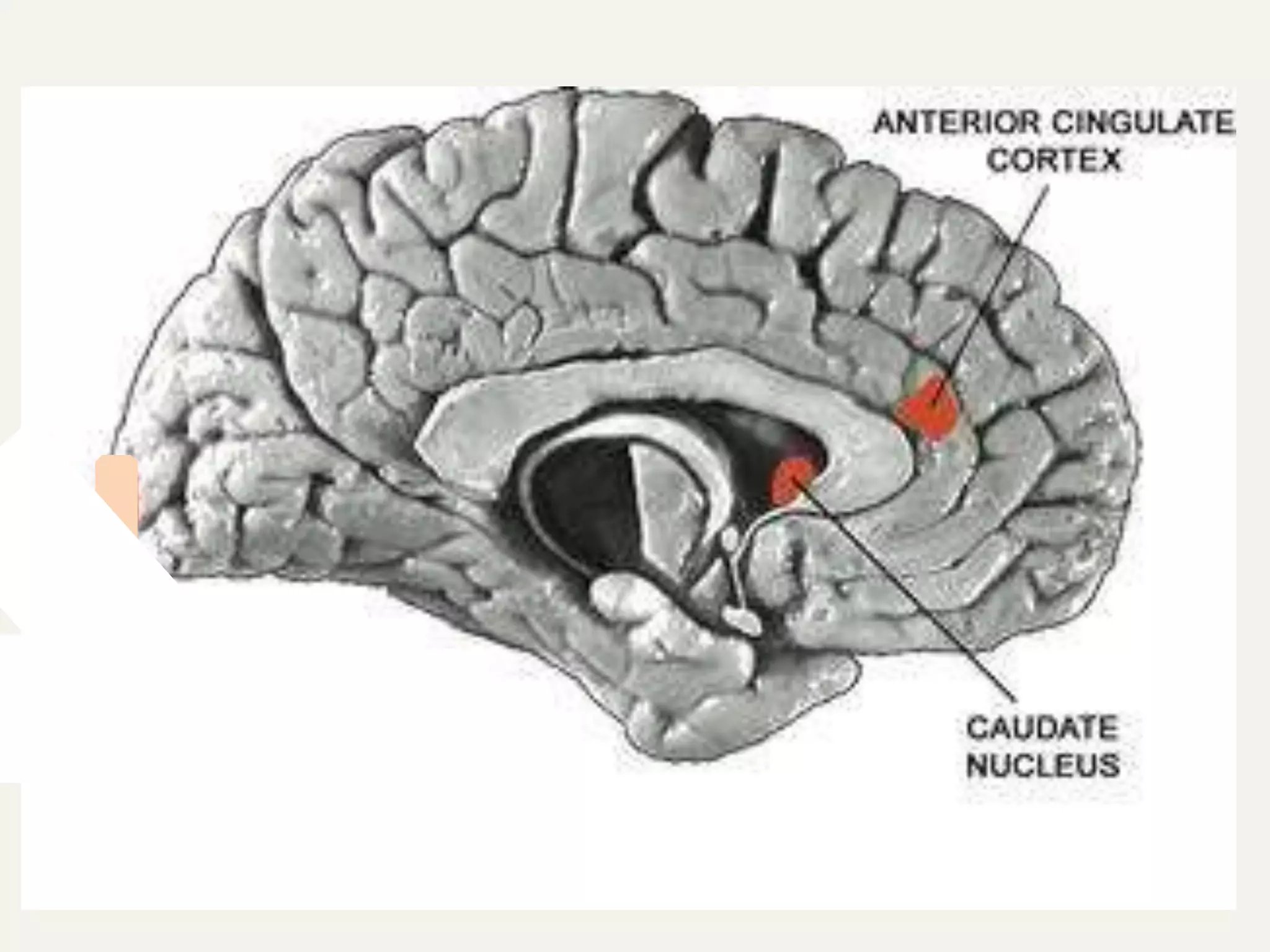
  • #14 Emory University neuroscientists James Rilling and Gregory Berns. They found that the act of helping another person triggers activity in the caudate nucleus and anterior cingulate cortex regions of the brain, the parts involved in pleasure and reward.Ss instructed to plan 5 acts of kindness during week. Lyubomirsky, S., Sheldon, K. M., & Schkade, D. (2005). Pursuing happiness: The architecture of sustainable change. Review of General Psychology, 9, 111-131.
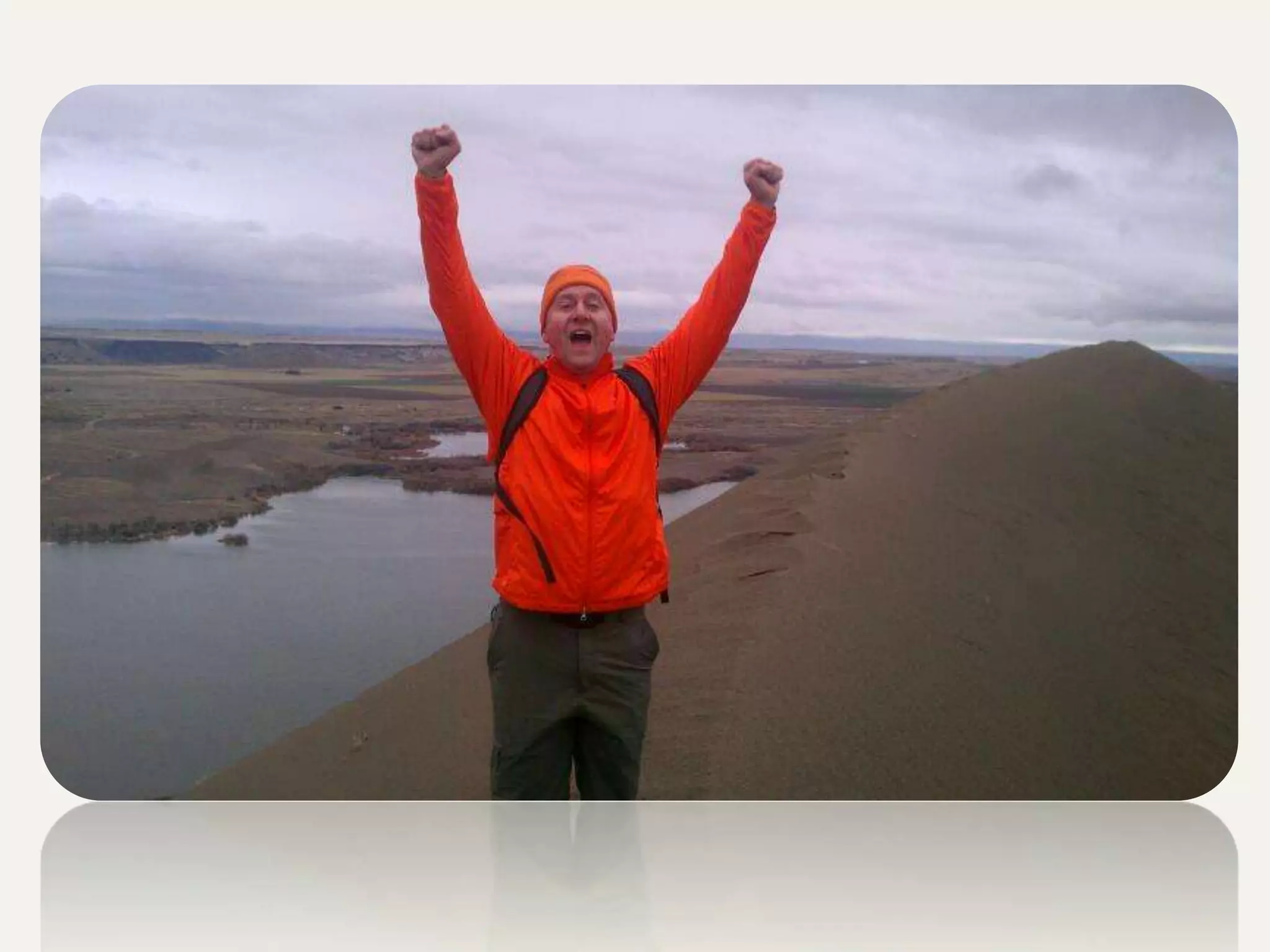
  • #17 Photo of me at sand dunes in idaho
  • #23 NeuroanatomyNeurotransmittersPhenomenology of dopamine and serotonin
  • #24 FIGHTING NUN IN MYSTERY BOX: WHY IS THIS FUNNY? WE HAVE EXPECTATIONS BASED ON AGE, STATUS, ETC.Preschool Run simple errands (e.g., “Get your shoes from thebedroom”). Tidy bedroom or playroom with assistance. Perform simple chores and self-help tasks withreminders (e.g., clear dishes from table, brush teeth,get dressed). Inhibit behaviors: don’t touch a hot stove; don’t runinto the street; don’t grab a toy from another child;don’t hit, bite, push, etc.
  • #25 FIGHTING NUN IN MYSTERY BOX: WHY IS THIS FUNNY? WE HAVE EXPECTATIONS BASED ON AGE, STATUS, ETC.Preschool Run simple errands (e.g., “Get your shoes from thebedroom”). Tidy bedroom or playroom with assistance. Perform simple chores and self-help tasks withreminders (e.g., clear dishes from table, brush teeth,get dressed). Inhibit behaviors: don’t touch a hot stove; don’t runinto the street; don’t grab a toy from another child;don’t hit, bite, push, etc.
  • #26 FIGHTING NUN IN MYSTERY BOX: WHY IS THIS FUNNY? WE HAVE EXPECTATIONS BASED ON AGE, STATUS, ETC.Preschool Run simple errands (e.g., “Get your shoes from thebedroom”). Tidy bedroom or playroom with assistance. Perform simple chores and self-help tasks withreminders (e.g., clear dishes from table, brush teeth,get dressed). Inhibit behaviors: don’t touch a hot stove; don’t runinto the street; don’t grab a toy from another child;don’t hit, bite, push, etc.
  • #27 FIGHTING NUN IN MYSTERY BOX: WHY IS THIS FUNNY? WE HAVE EXPECTATIONS BASED ON AGE, STATUS, ETC.Preschool Run simple errands (e.g., “Get your shoes from thebedroom”). Tidy bedroom or playroom with assistance. Perform simple chores and self-help tasks withreminders (e.g., clear dishes from table, brush teeth,get dressed). Inhibit behaviors: don’t touch a hot stove; don’t runinto the street; don’t grab a toy from another child;don’t hit, bite, push, etc.
  • #28 FIGHTING NUN IN MYSTERY BOX: WHY IS THIS FUNNY? WE HAVE EXPECTATIONS BASED ON AGE, STATUS, ETC.Preschool Run simple errands (e.g., “Get your shoes from thebedroom”). Tidy bedroom or playroom with assistance. Perform simple chores and self-help tasks withreminders (e.g., clear dishes from table, brush teeth,get dressed). Inhibit behaviors: don’t touch a hot stove; don’t runinto the street; don’t grab a toy from another child;don’t hit, bite, push, etc.
  • #29 FIGHTING NUN IN MYSTERY BOX: WHY IS THIS FUNNY? WE HAVE EXPECTATIONS BASED ON AGE, STATUS, ETC.Preschool Run simple errands (e.g., “Get your shoes from thebedroom”). Tidy bedroom or playroom with assistance. Perform simple chores and self-help tasks withreminders (e.g., clear dishes from table, brush teeth,get dressed). Inhibit behaviors: don’t touch a hot stove; don’t runinto the street; don’t grab a toy from another child;don’t hit, bite, push, etc.
  • #30 NeuroanatomyNeurotransmittersPhenomenology of dopamine and serotonin
  • #31 NeuroanatomyNeurotransmittersPhenomenology of dopamine and serotonin
  • #32 NeuroanatomyNeurotransmittersPhenomenology of dopamine and serotonin
  • #38 Insight re: match b/t activities and PSI
  • #45 EXPLAIN WKSHOP’S PURPOSE, INCREASE SALIENCE, RELATE TO PRIOR K’LEDGE
  • #47 APPENDIX F p.a7: WRITE DOWN ?S YOU’VE HAD TO THIS POINT
  • #52 Small group: id activities in each of 4 quadrants
  • #54 Clarifying the 1stquestionWhy is it important that our clients are engaged in commitments and obligations and relationships which are fun?
  • #55 Clarifying the 2nd question
  • #56 Clarifying the 1stquestionWhy is it important that our clients are engaged in commitments and obligations and relationships which are fun?
  • #57 Feel free to substitute a more meaningful word: engaging, pleasant, rewarding. (but not “necessary” or “the right thing” b/c these are more abstract and more distal to the brain-based experience of reward). Fun is proximal to the neurochemistry of actual human brain functioning.
  • #58 A big leap: the 2 questions are intimately bound together
  • #62 Motivational blueprintAlternatives: authority, peer group, mediaNB: many of us are shaped and influenced by peer group, authority, and media (buddha, dharma, sangha). U and your coachee may acquiesce to different authority, and u cn still do great work tgthrAuthority of the bodyBut what if what feels good to me is to eat 5 chocolate pies or to punch the mailman in the face? Is that okay?Two responses: 1) value of community; snd 2) neuroscience (emory research)Emory University neuroscientists James Rilling and Gregory Berns. They found that the act of helping another person triggers activity in the caudate nucleus and anterior cingulate cortex regions of the brain, the parts involved in pleasure and reward.Ss instructed to plan 5 acts of kindness during week. Lyubomirsky, S., Sheldon, K. M., & Schkade, D. (2005). Pursuing happiness: The architecture of sustainable change. Review of General Psychology, 9, 111-131.
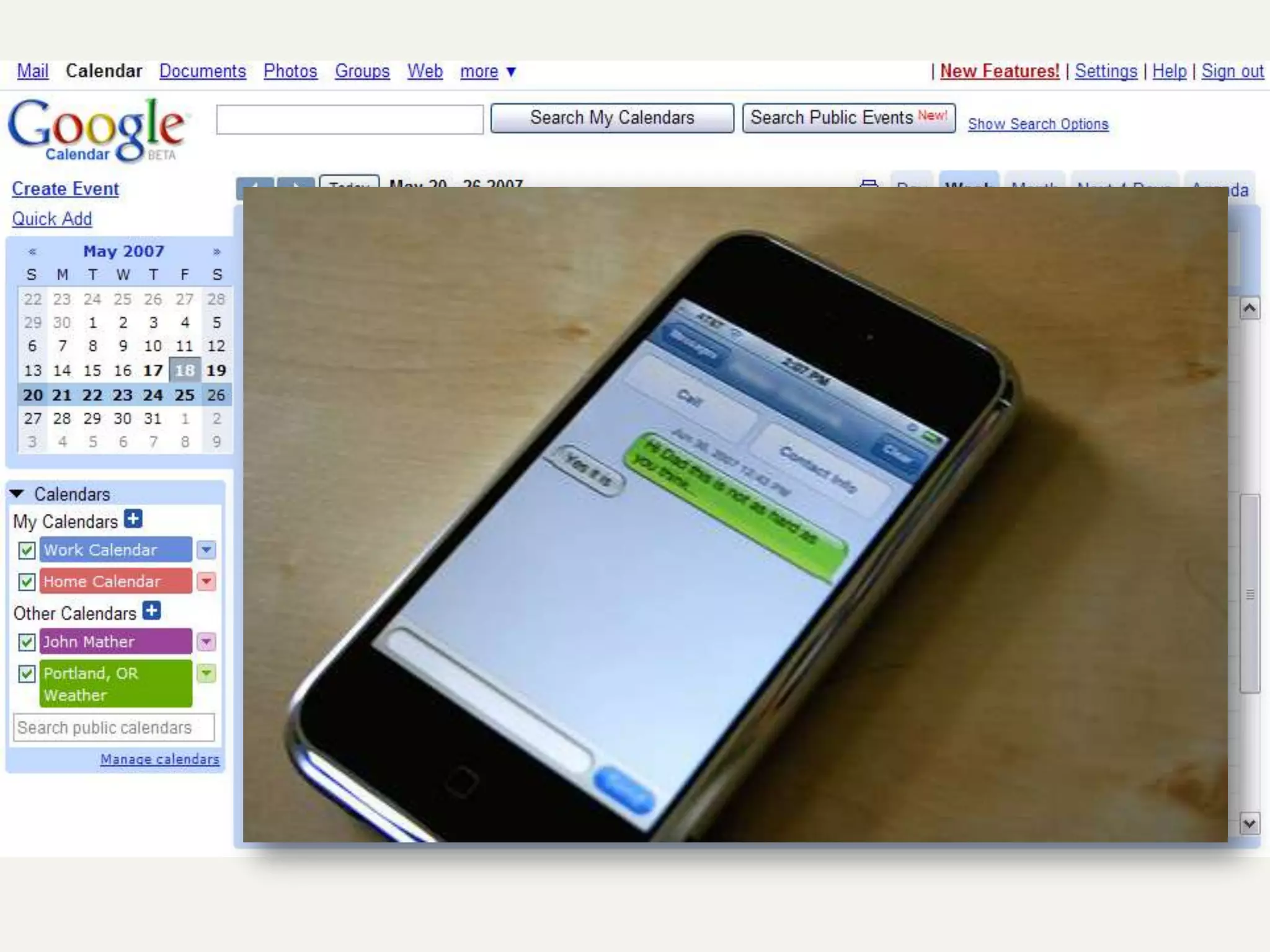
  • #64 Google calendar w/ text f/uSupportive check-ins
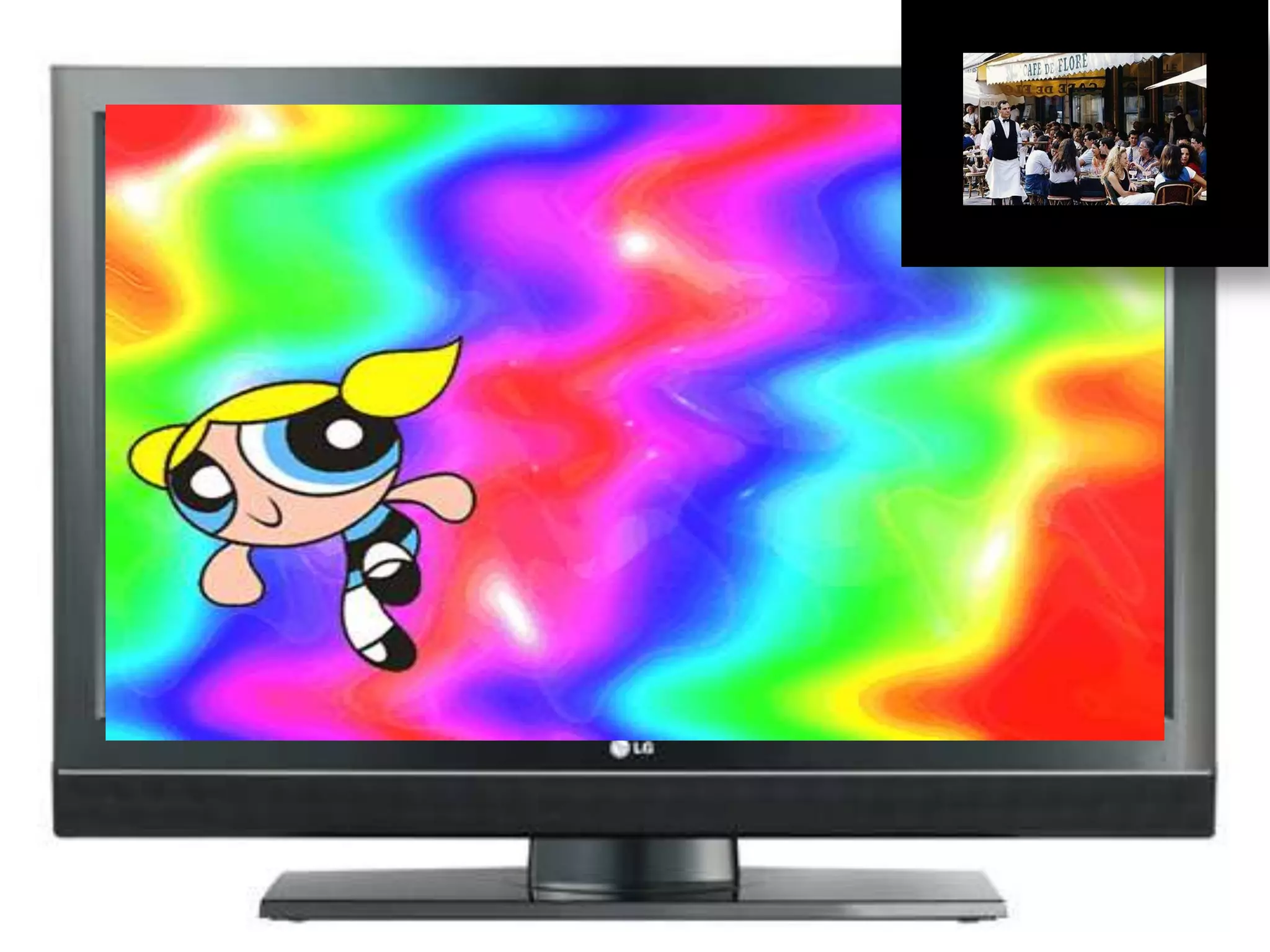
  • #76 Can’t decide whether it’s important? Watch tvvs study french: make it vivid
  • #78 Body doubleHarder than a 3/10?Increase saliency: stimulantrx, “nothing tastes as good as thin feels” – brain cant tell the difference b/t real and imagined….but real is vivider, pairing dull/difficult tasks w/ intrinsic reward (e.g cape, med student)
  • #80 EXPLAIN WKSHOP’S PURPOSE, INCREASE SALIENCE, RELATE TO PRIOR K’LEDGE
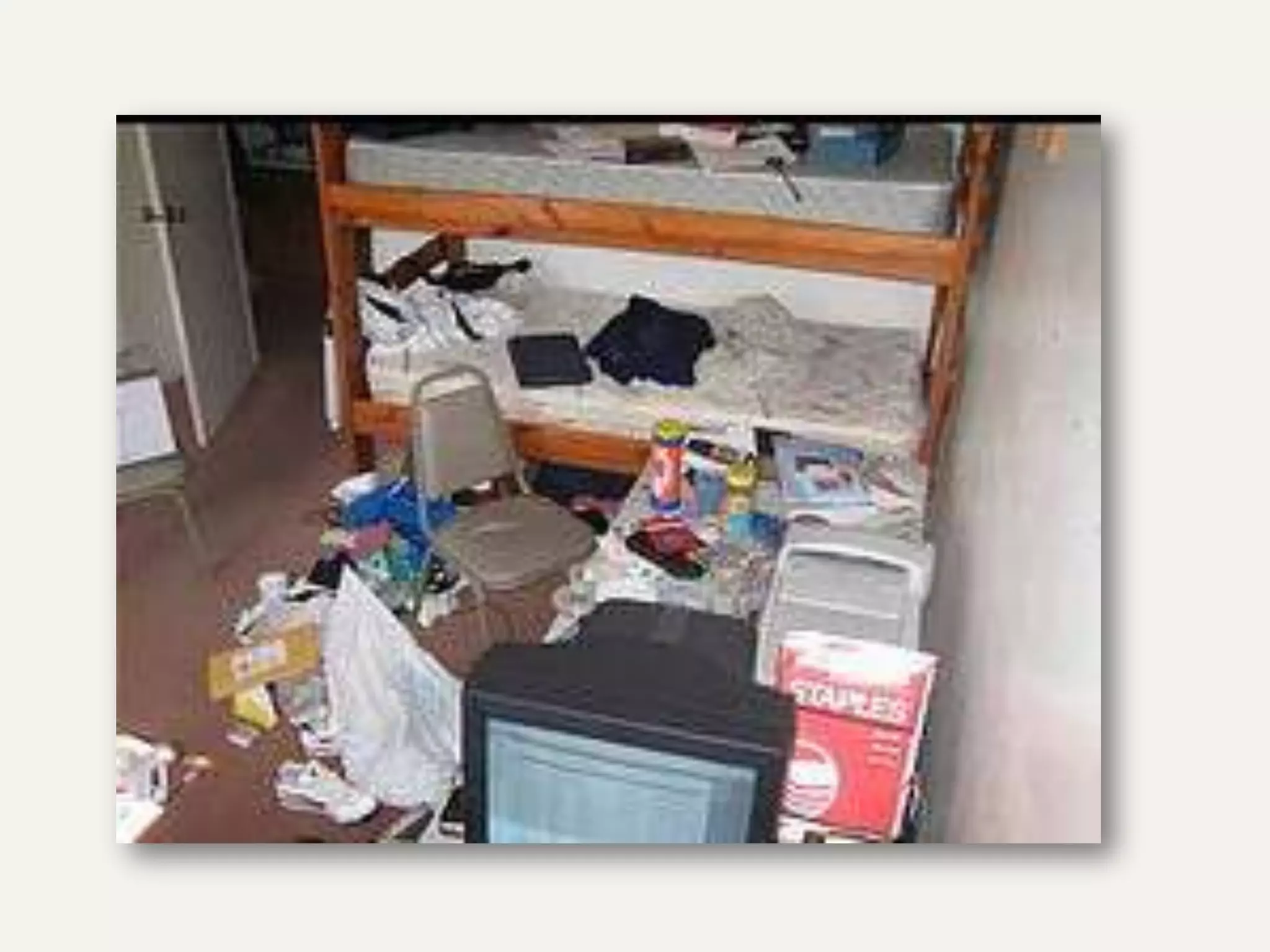
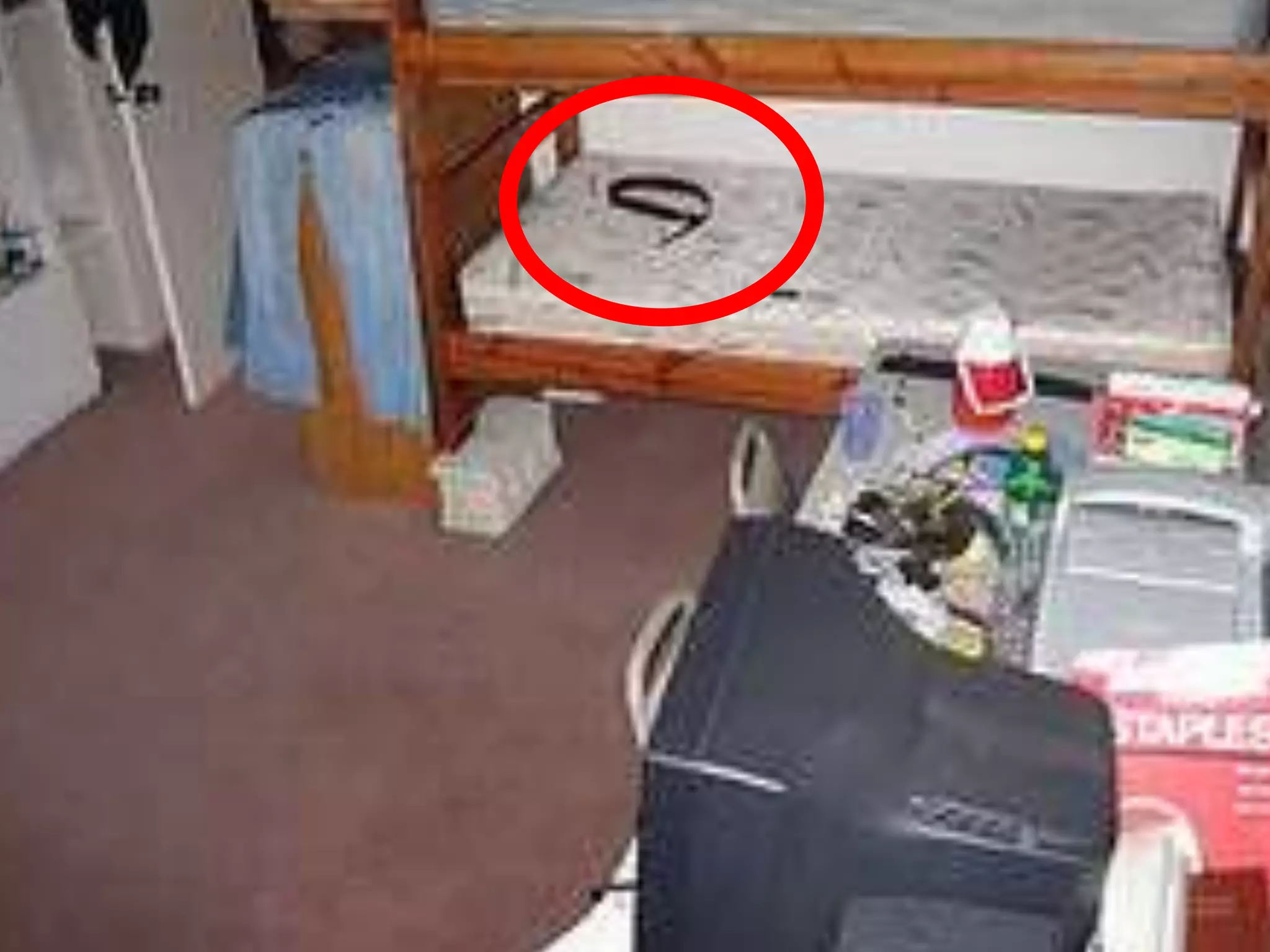
  • #83 STUDY BOX
  • #84 Make task shorter, build in breaks, use salient r+ for afterwards, make steps more explicit, make task more appealing (beat the clock, write steps down on slips of paper, in jar)
  • #86 242”
  • #87 Getting to the gym – esp after full day’s work – is harder than a 3 / 10.
  • #89 Delete 30 FB friendsDelete 3 “friends”Delete 2 commitments or obligations which arent fun or important (trauma survivor at txgiving; west boylstonhxical society; I decided to stop eating foods that make me feel bad)
  • #93 An intervention to increase coachees’ insight about their unique and specific patterns for desired and undesired behaviors. SBI is an approach which is non-judgmental but reality-based, and invites participants to fall in love with reality and to desire reality even more than we desire denial and excuses. SBI assumes that behavior is logical, not random and not incomprehensible. That our behavior follows patterns which are discernible by the curious and engaged observer free of prejudice and blame and theory.
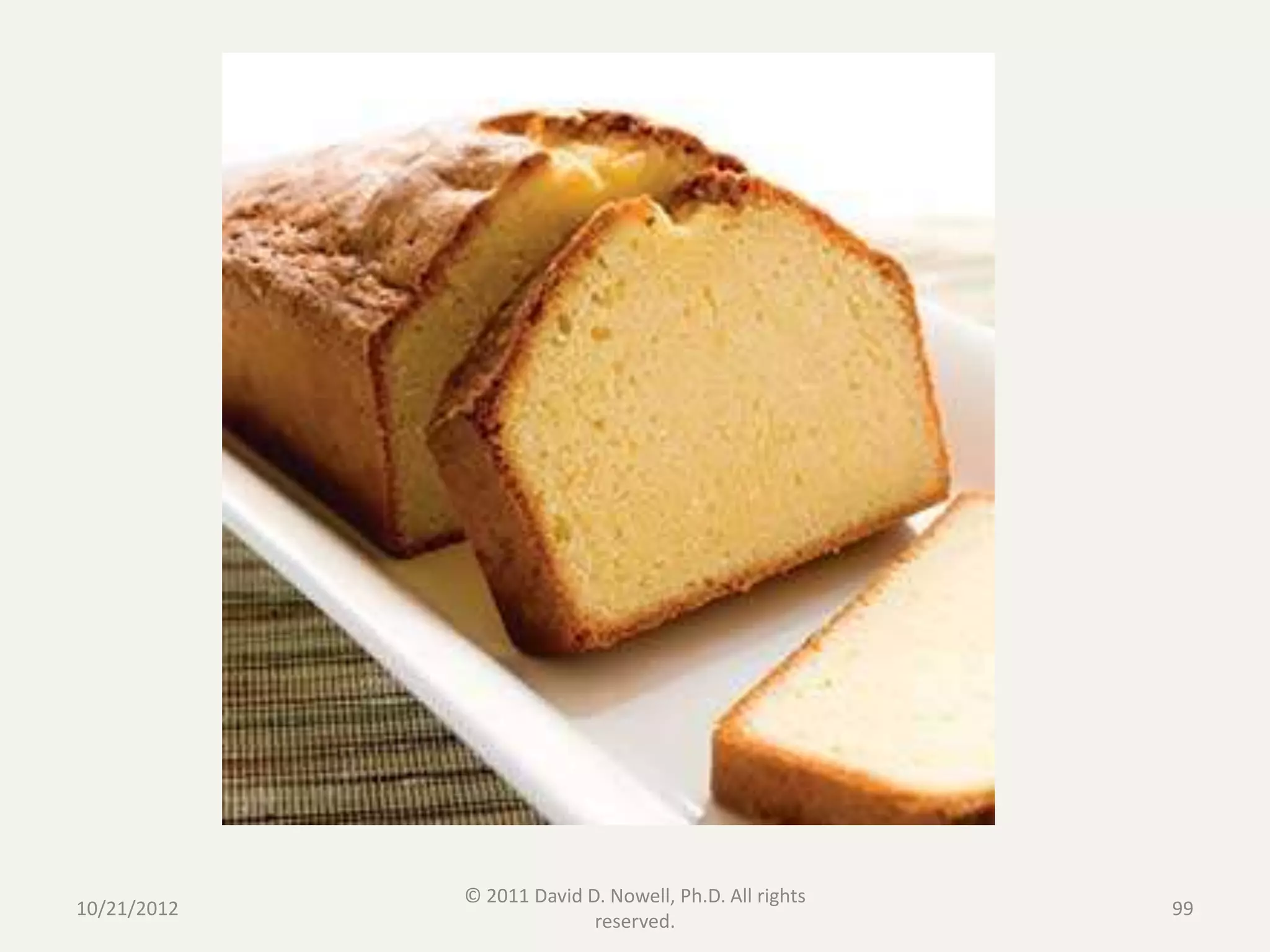
  • #100 Grandma’s # cake – mess up 1 thing…Likewise, you have a recipe…. – change just 1 thing, and u get a diff. outcome.
  • #101 29 times a month he made curfew. That’s great executive fx !
  • #105 If you drive your car off a cliff you will be punished. Not “artifically” but naturalistically and organically. I want my client to know how to text when texting is exactly the right choice. And how to resist text messages in settings which organically punish texting. (like what?)I want her to know exactly when to swear. And to know how to avoid swears in settings which naturalistically punish swearing. (like what?)
  • #120 MYSTERY BOXHAVE ST / VP PUT NAMES OF ATTENDEES IN HATAPPENDIX A p. a2: TO DO