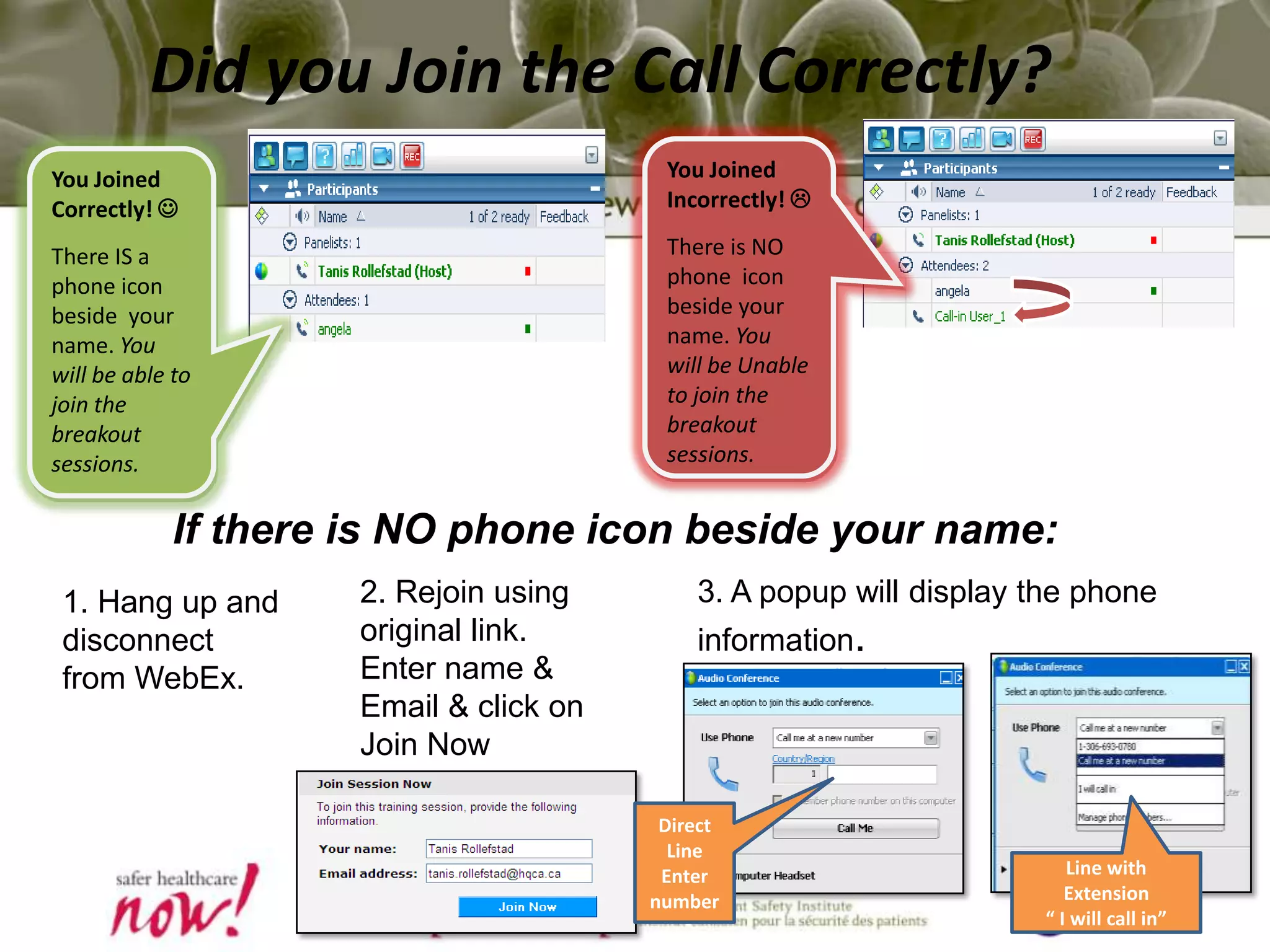
Did you Join the Call Correctly? You Joined Incorrectly! There is NO phone  icon beside your name. You will be Unable to join the breakout  sessions. You Joined Correctly! There IS a phone icon beside  your name. You will be able to join the breakout sessions.If there is NO phone icon beside your name: 3. A popup will display the phone information. 2. Rejoin using original link. Enter name & Email & click on Join Now 1. Hang up and disconnect from WebEx. Direct Line Enter numberLine with Extension “ I will call in”
New Approach to Controlling SuperbugsVirtual Learning Session 2The Discovery Phase:Using Discovery and Action DialogueLiz RykertLeah Gitterman
Agenda:Welcome and IntroductionsThe Discovery PhaseUsing Discovery and Action DialoguesParticipant Break-out SessionsLarger Group DiscussionNext Steps
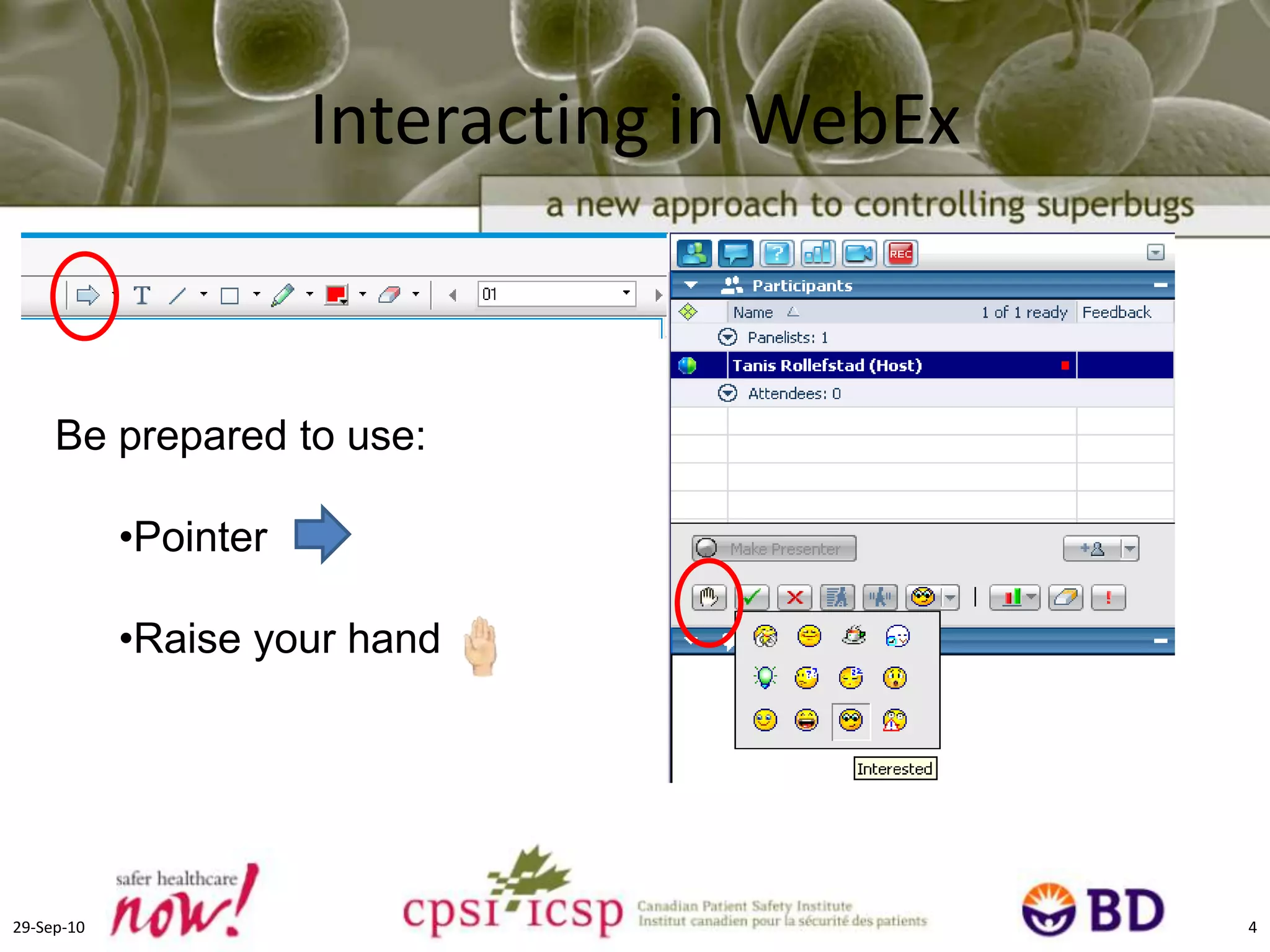
Interacting in WebExBe prepared to use:Pointer
Raise your hand 7-Jun-104
Welcome Teams!
The Premise Of Positive Deviance    No matter how seemingly intractable a problem, in every community there are individuals whose uncommon practices/behaviours enable them to find better solutions to problems than their neighbours who have access to the same resources.
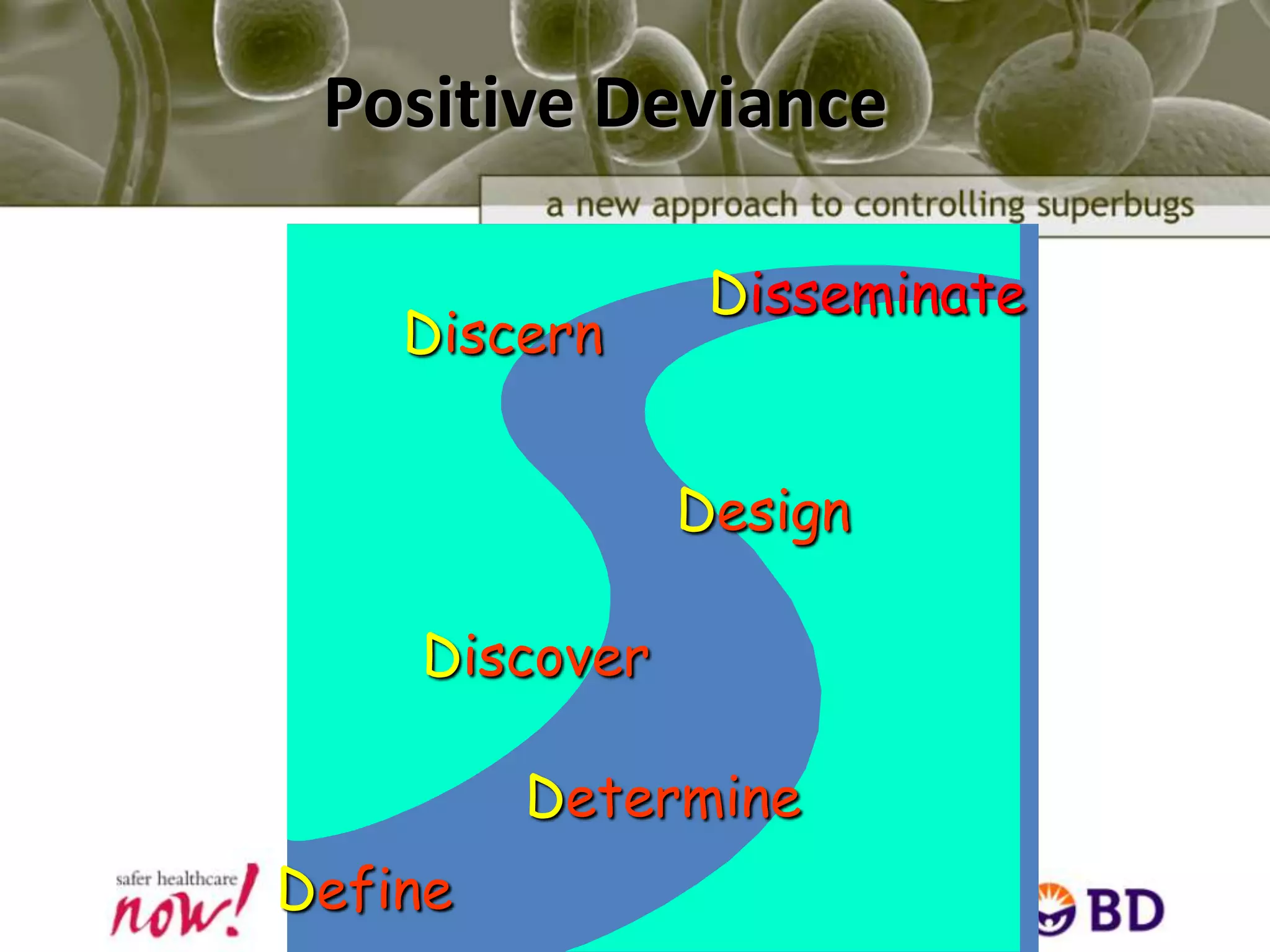
Positive DevianceDisseminateDiscernDesignDiscoverDetermineDefine
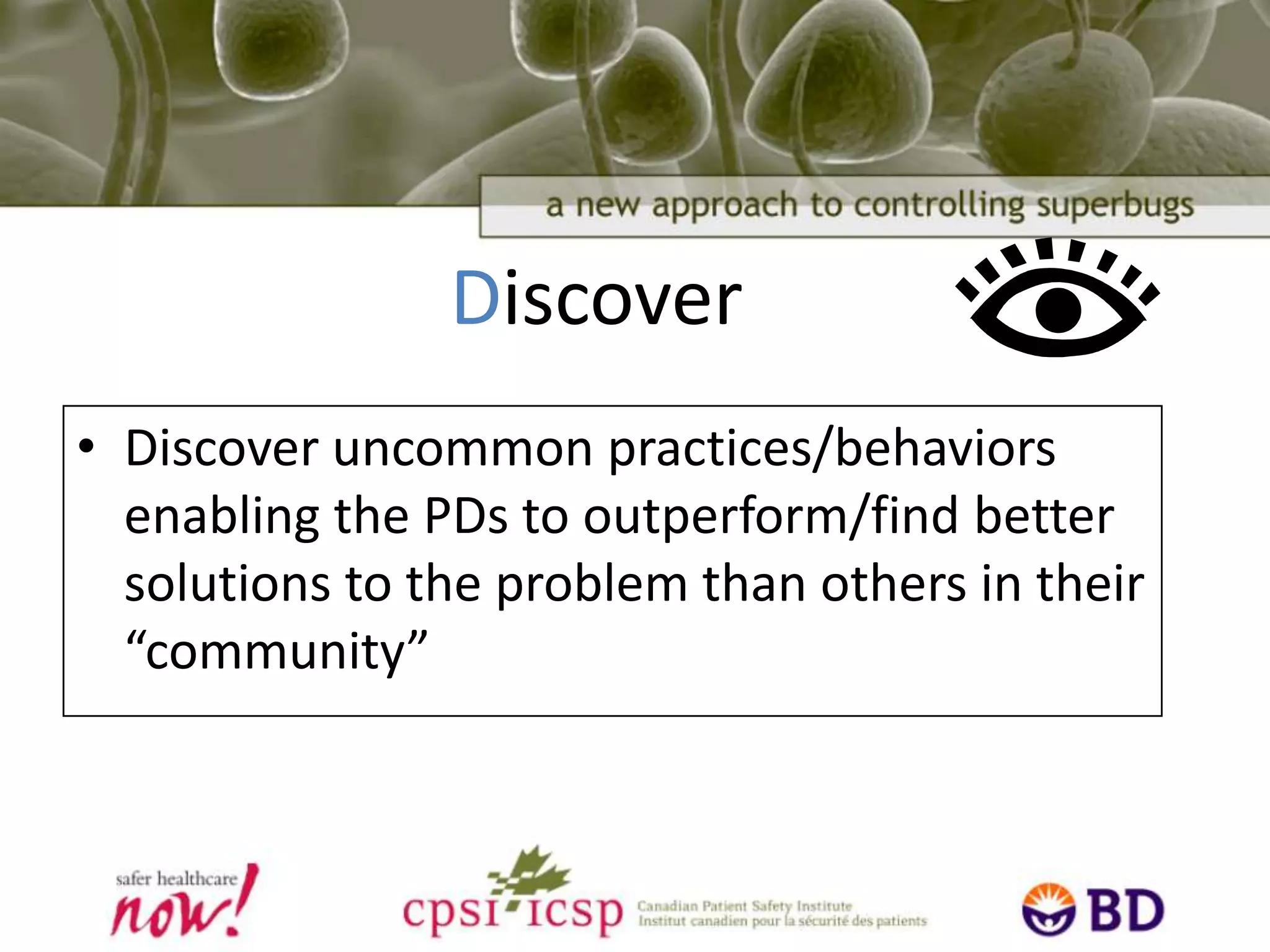
DiscoverDiscover uncommon practices/behaviors enabling the PDs to outperform/find better solutions to the problem than others in their “community”
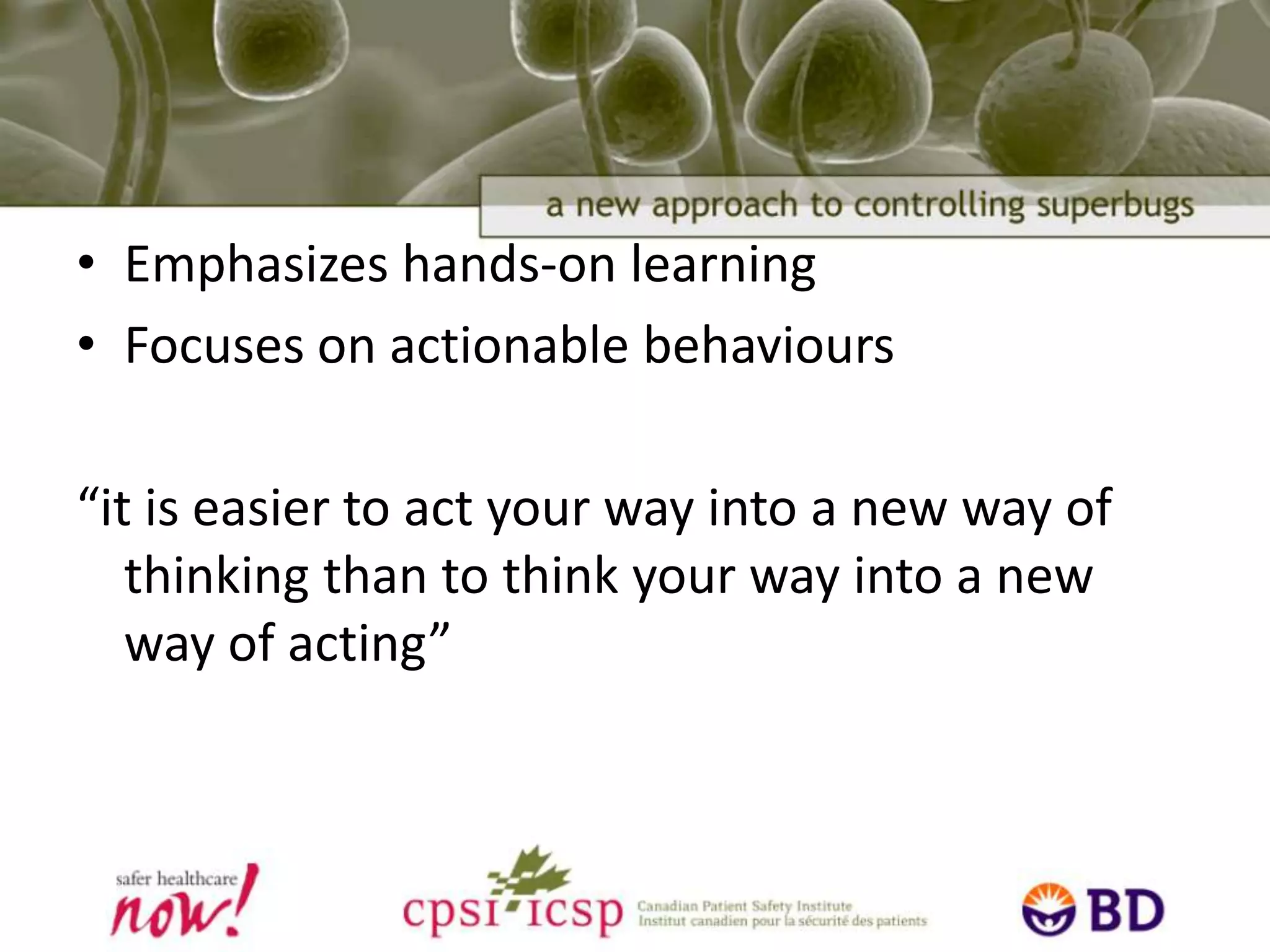
Emphasizes hands-on learning Focuses on actionable behaviours“it is easier to act your way into a new way of thinking than to think your way into a new way of acting”
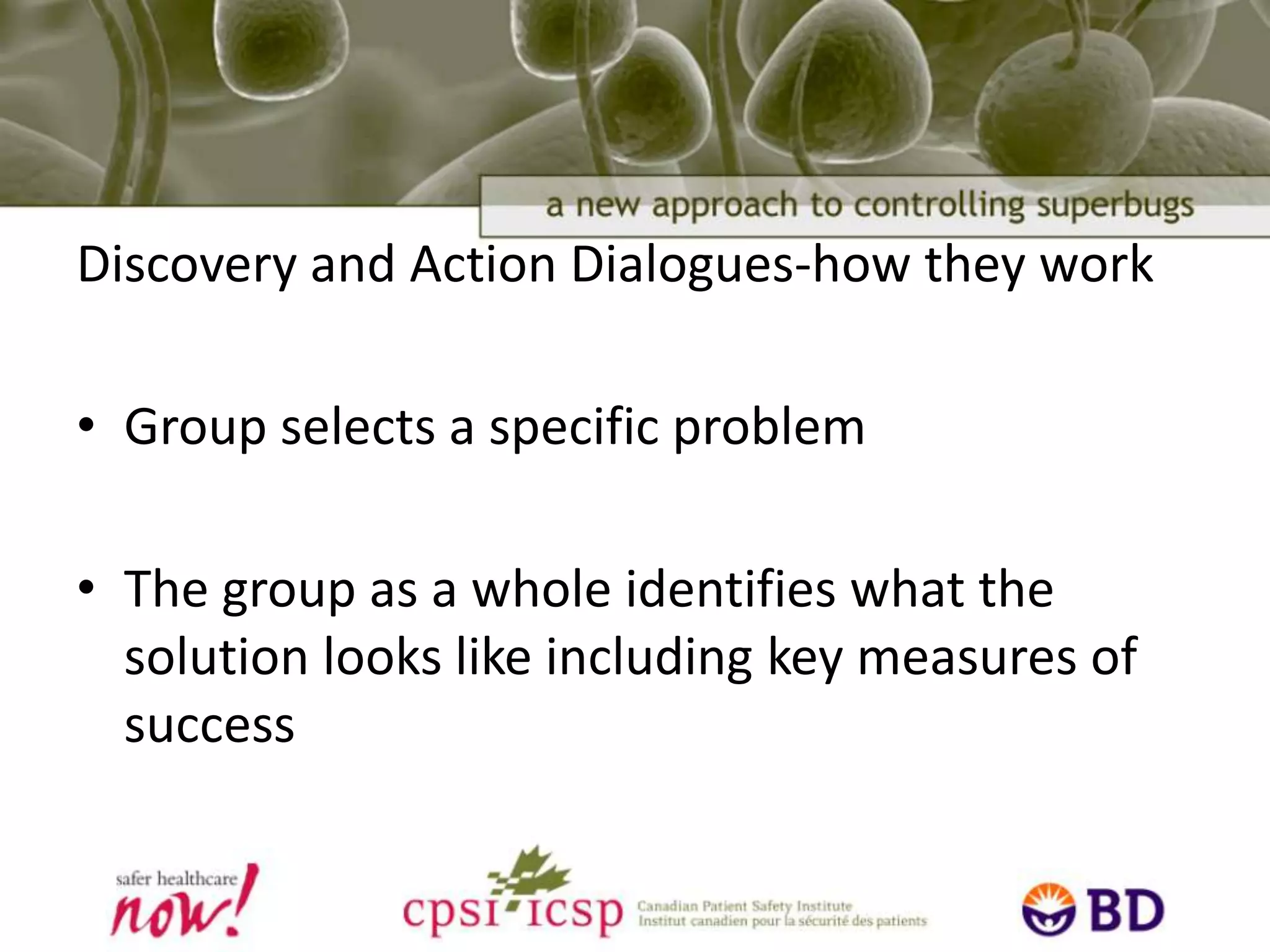
Discovery and Action Dialogues-how they workGroup selects a specific problemThe group as a whole identifies what the solution looks like including key measures of success
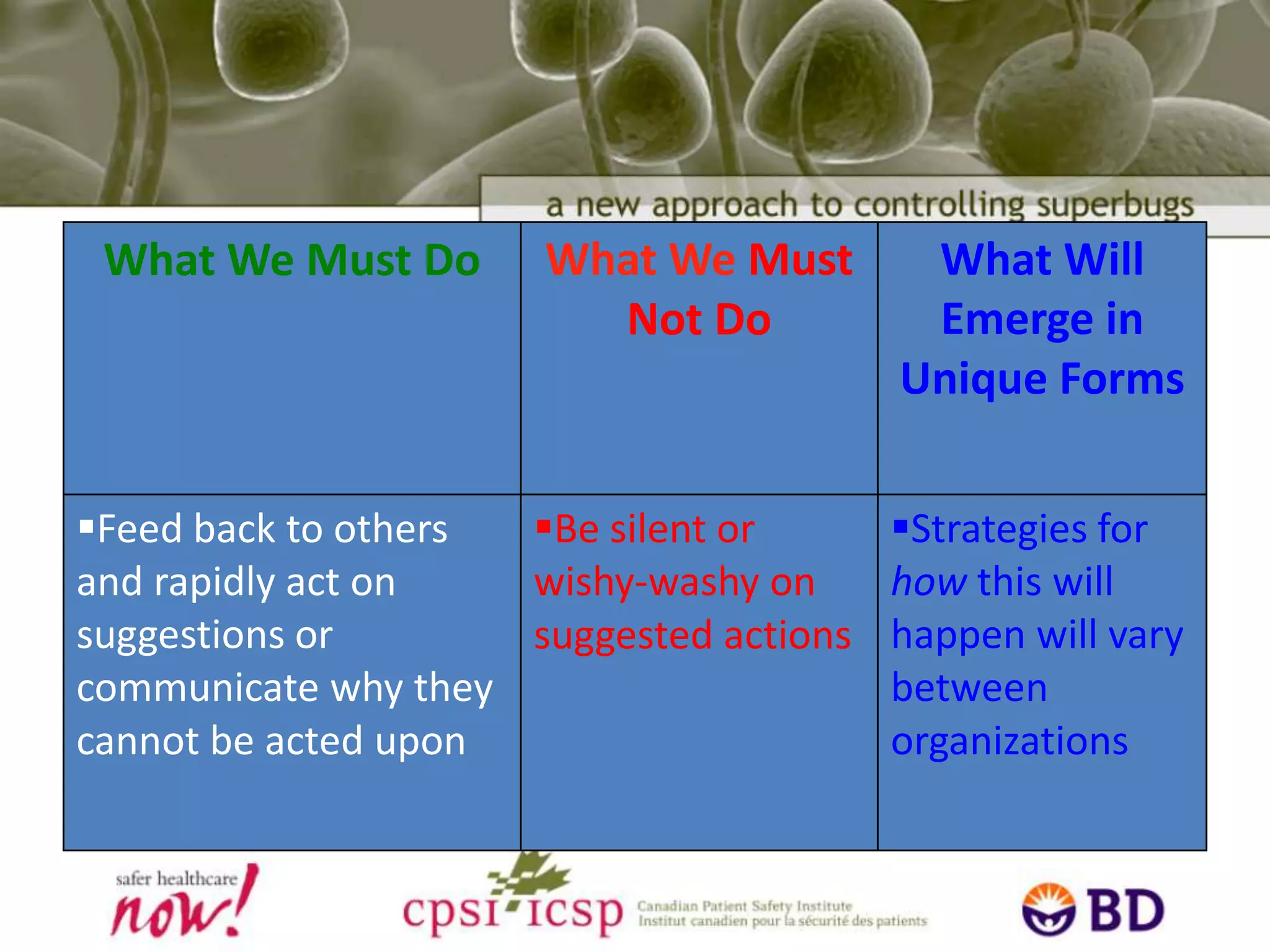
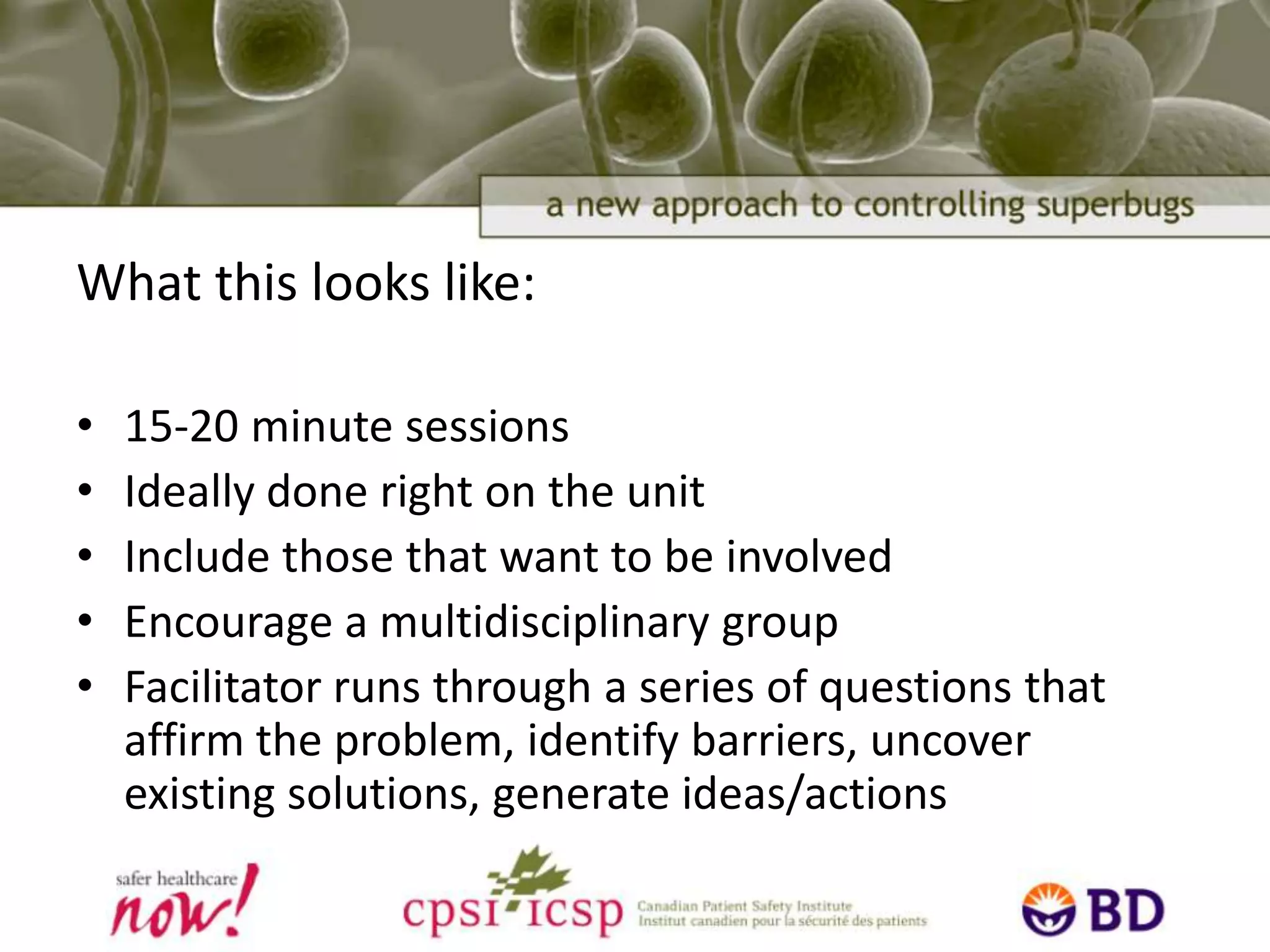
What this looks like:15-20 minute sessions Ideally done right on the unitInclude those that want to be involvedEncourage a multidisciplinary groupFacilitator runs through a series of questions that affirm the problem, identify barriers, uncover existing solutions, generate ideas/actions
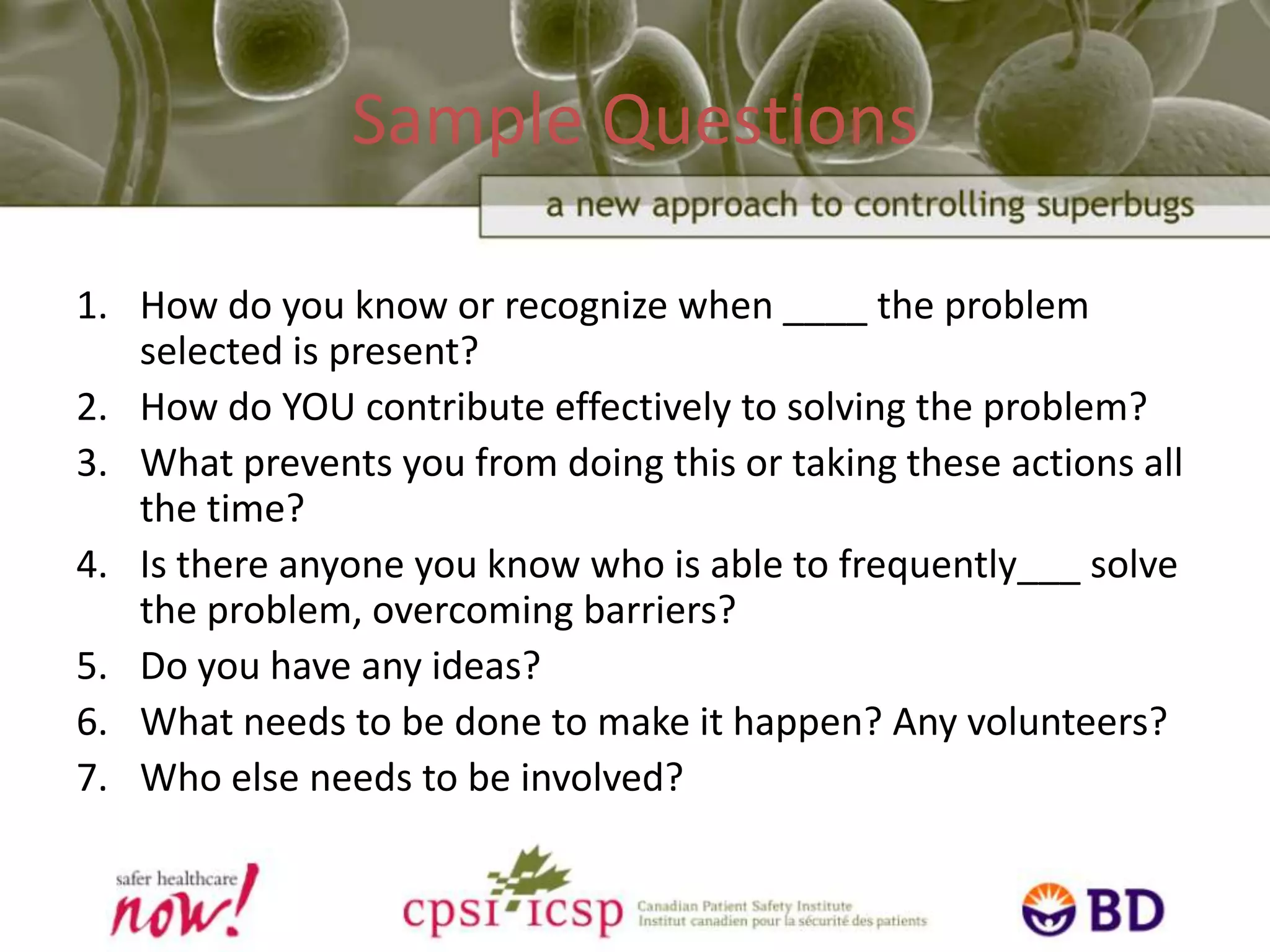
Sample QuestionsHow do you know or recognize when ____ the problem selected is present?How do YOU contribute effectively to solving the problem?What prevents you from doing this or taking these actions all the time?Is there anyone you know who is able to frequently___ solve the problem, overcoming barriers?Do you have any ideas?What needs to be done to make it happen? Any volunteers?Who else needs to be involved?
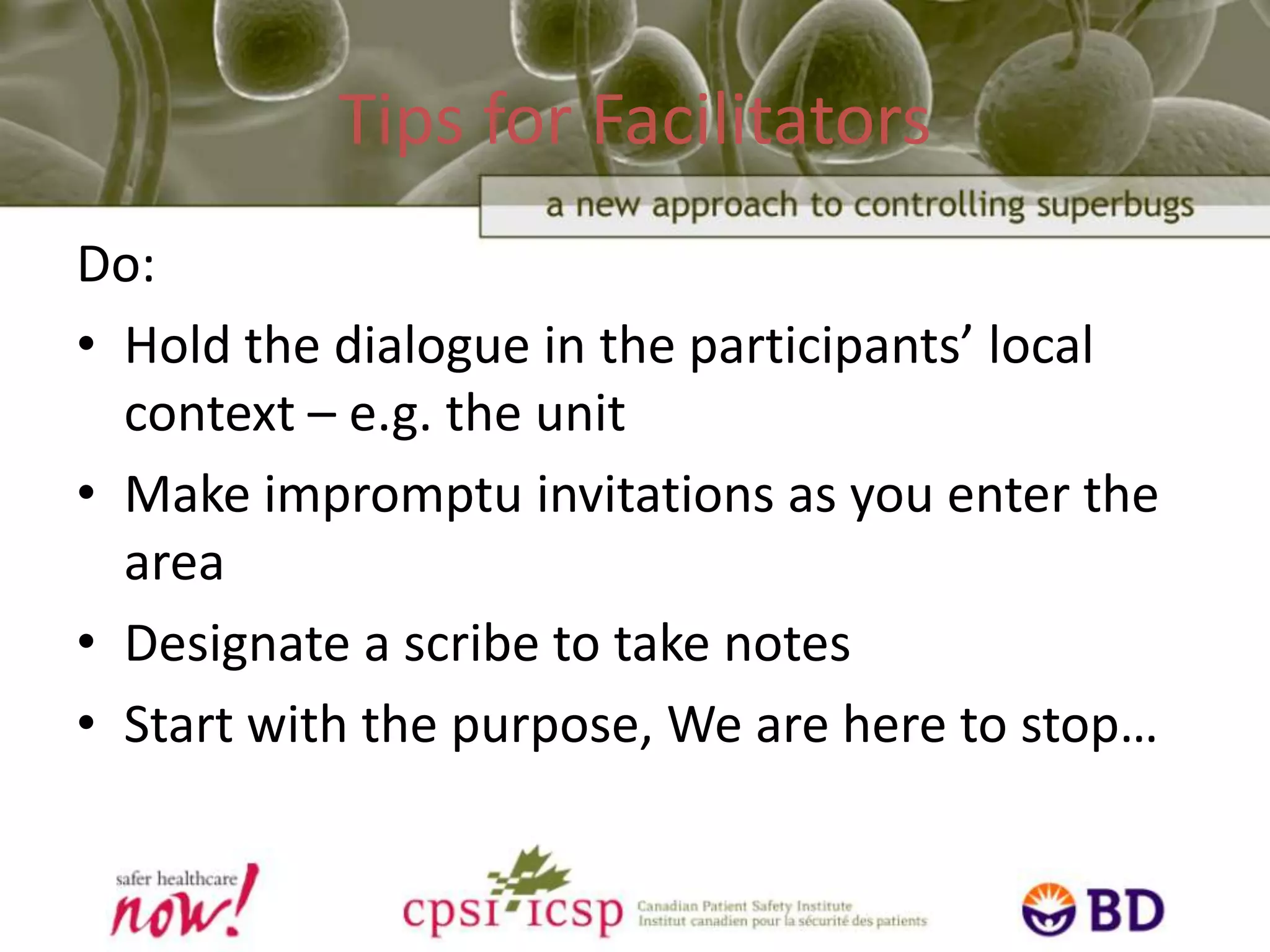
Tips for FacilitatorsDo:Hold the dialogue in the participants’ local context – e.g. the unitMake impromptu invitations as you enter the areaDesignate a scribe to take notesStart with the purpose, We are here to stop…
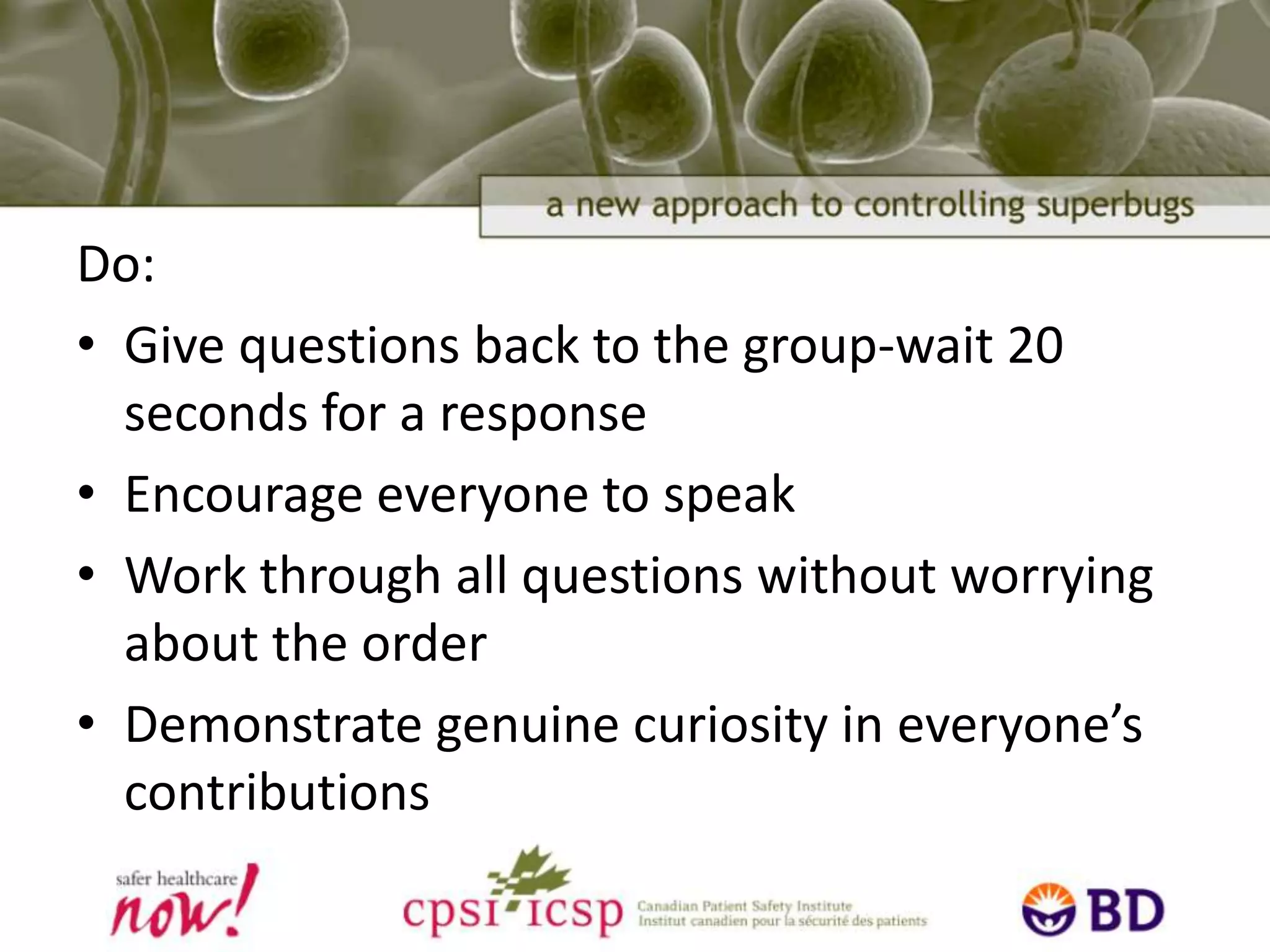
Do:Give questions back to the group-wait 20 seconds for a responseEncourage everyone to speakWork through all questions without worrying about the orderDemonstrate genuine curiosity in everyone’s contributions
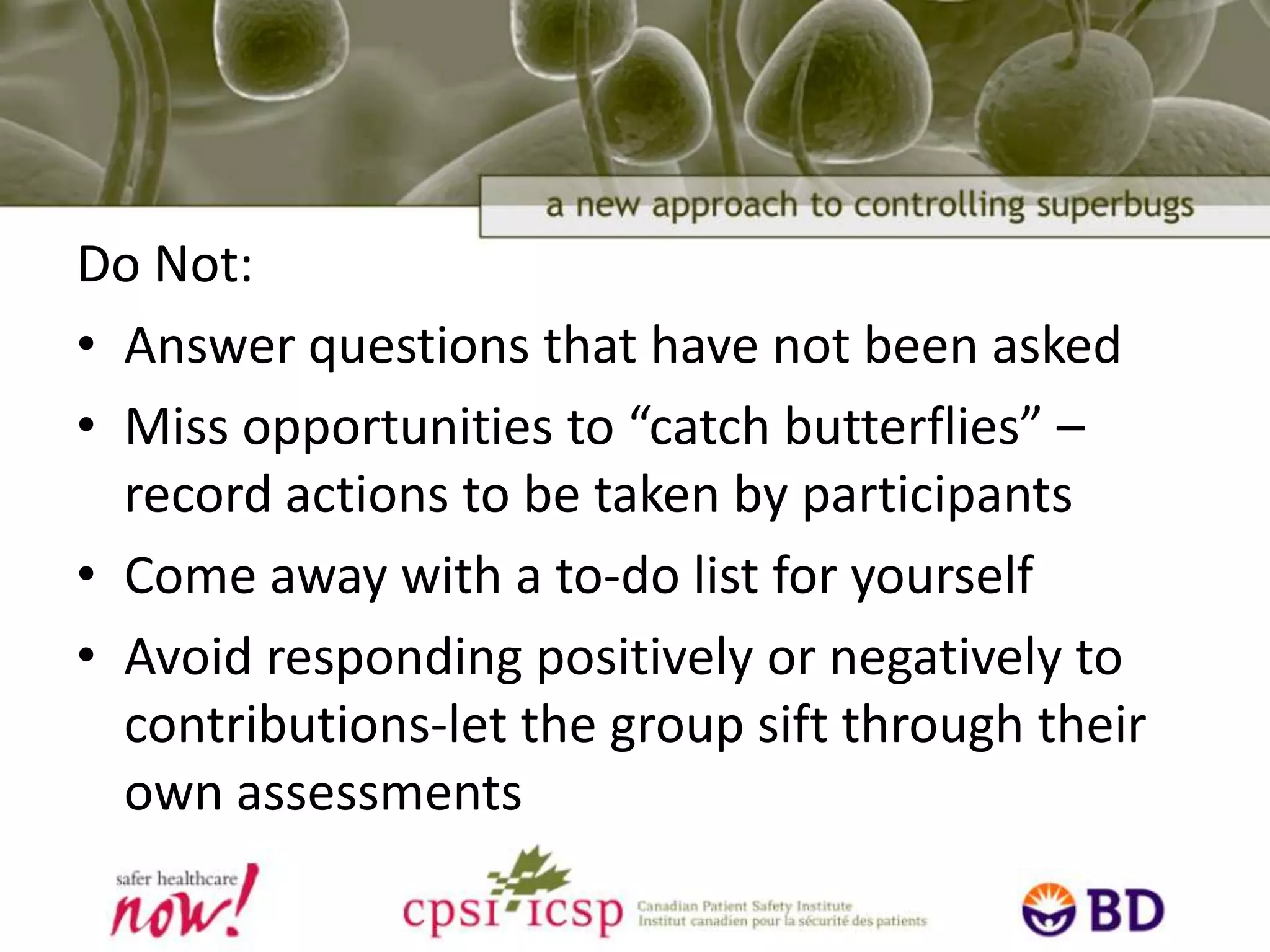
Do Not:Answer questions that have not been askedMiss opportunities to “catch butterflies” – record actions to be taken by participantsCome away with a to-do list for yourselfAvoid responding positively or negatively to contributions-let the group sift through their own assessments
Always remember:“Nothing about me without me”
Take 15Practice a Discovery and Action DialogueOne faculty member per groupChoose a facilitator and scribeUse questions providedAssign roles to everyone in the group (nurse, doc, environmental services, allied health…)
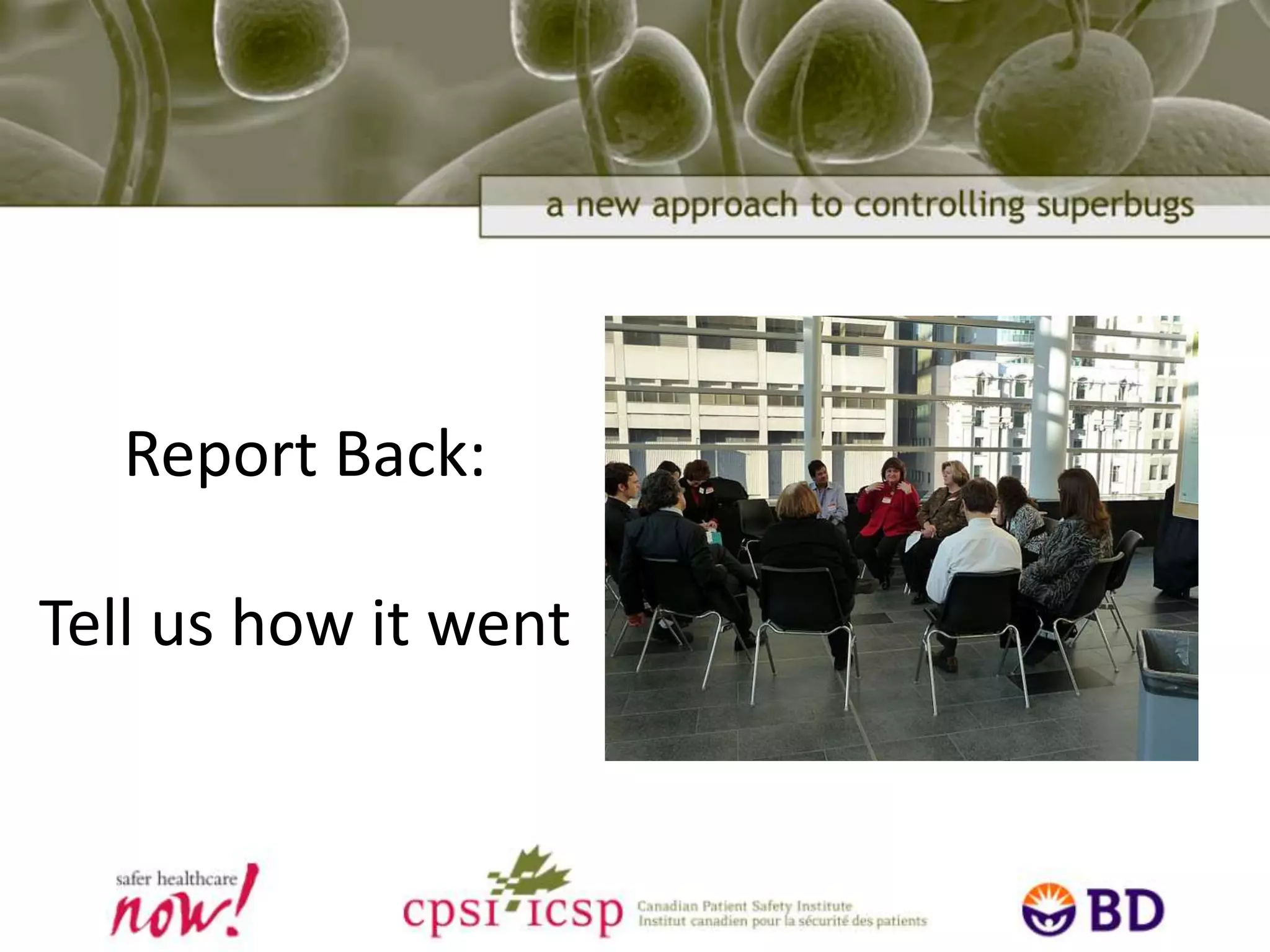
Report Back:Tell us how it went
Quick Poll:Do you feel you have enough information to lead a DAD in your setting and help others to lead one?Have you registered for the CoP?Would you like a follow-up call to assist you to register with and navigate the CoP?
Next StepsContinue to work on core team and “launch”Start using the DAD process on the floorsFollow up regularly with staff after the DAD’sBegin to think about data collection
Faculty office hours: every Monday from 1-2pm ESTNext  learning session: July 12th, 1-2pm ESTCommunity of Practice

Wave 1: Learning Session 2

  • 1.
    Did you Jointhe Call Correctly? You Joined Incorrectly! There is NO phone icon beside your name. You will be Unable to join the breakout sessions. You Joined Correctly! There IS a phone icon beside your name. You will be able to join the breakout sessions.If there is NO phone icon beside your name: 3. A popup will display the phone information. 2. Rejoin using original link. Enter name & Email & click on Join Now 1. Hang up and disconnect from WebEx. Direct Line Enter numberLine with Extension “ I will call in”
  • 2.
    New Approach toControlling SuperbugsVirtual Learning Session 2The Discovery Phase:Using Discovery and Action DialogueLiz RykertLeah Gitterman
  • 3.
    Agenda:Welcome and IntroductionsTheDiscovery PhaseUsing Discovery and Action DialoguesParticipant Break-out SessionsLarger Group DiscussionNext Steps
  • 4.
    Interacting in WebExBeprepared to use:Pointer
  • 5.
  • 6.
  • 7.
    The Premise OfPositive Deviance No matter how seemingly intractable a problem, in every community there are individuals whose uncommon practices/behaviours enable them to find better solutions to problems than their neighbours who have access to the same resources.
  • 8.
  • 9.
    DiscoverDiscover uncommon practices/behaviorsenabling the PDs to outperform/find better solutions to the problem than others in their “community”
  • 12.
    Emphasizes hands-on learningFocuses on actionable behaviours“it is easier to act your way into a new way of thinking than to think your way into a new way of acting”
  • 13.
    Discovery and ActionDialogues-how they workGroup selects a specific problemThe group as a whole identifies what the solution looks like including key measures of success
  • 14.
    What this lookslike:15-20 minute sessions Ideally done right on the unitInclude those that want to be involvedEncourage a multidisciplinary groupFacilitator runs through a series of questions that affirm the problem, identify barriers, uncover existing solutions, generate ideas/actions
  • 15.
    Sample QuestionsHow doyou know or recognize when ____ the problem selected is present?How do YOU contribute effectively to solving the problem?What prevents you from doing this or taking these actions all the time?Is there anyone you know who is able to frequently___ solve the problem, overcoming barriers?Do you have any ideas?What needs to be done to make it happen? Any volunteers?Who else needs to be involved?
  • 16.
    Tips for FacilitatorsDo:Holdthe dialogue in the participants’ local context – e.g. the unitMake impromptu invitations as you enter the areaDesignate a scribe to take notesStart with the purpose, We are here to stop…
  • 17.
    Do:Give questions backto the group-wait 20 seconds for a responseEncourage everyone to speakWork through all questions without worrying about the orderDemonstrate genuine curiosity in everyone’s contributions
  • 18.
    Do Not:Answer questionsthat have not been askedMiss opportunities to “catch butterflies” – record actions to be taken by participantsCome away with a to-do list for yourselfAvoid responding positively or negatively to contributions-let the group sift through their own assessments
  • 19.
  • 20.
    Take 15Practice aDiscovery and Action DialogueOne faculty member per groupChoose a facilitator and scribeUse questions providedAssign roles to everyone in the group (nurse, doc, environmental services, allied health…)
  • 21.
  • 22.
    Quick Poll:Do youfeel you have enough information to lead a DAD in your setting and help others to lead one?Have you registered for the CoP?Would you like a follow-up call to assist you to register with and navigate the CoP?
  • 23.
    Next StepsContinue towork on core team and “launch”Start using the DAD process on the floorsFollow up regularly with staff after the DAD’sBegin to think about data collection
  • 24.
    Faculty office hours:every Monday from 1-2pm ESTNext learning session: July 12th, 1-2pm ESTCommunity of Practice

Editor's Notes

  • #2 Mention: how to raise hand for questionAnnotation ArrowEmoticons
  • #8 Six D’s – See Handbook